EPISD eyes up to $450 million bond election, outlines $1 billion in long-term needs

El Paso Matters

by Claudia Lorena Silva

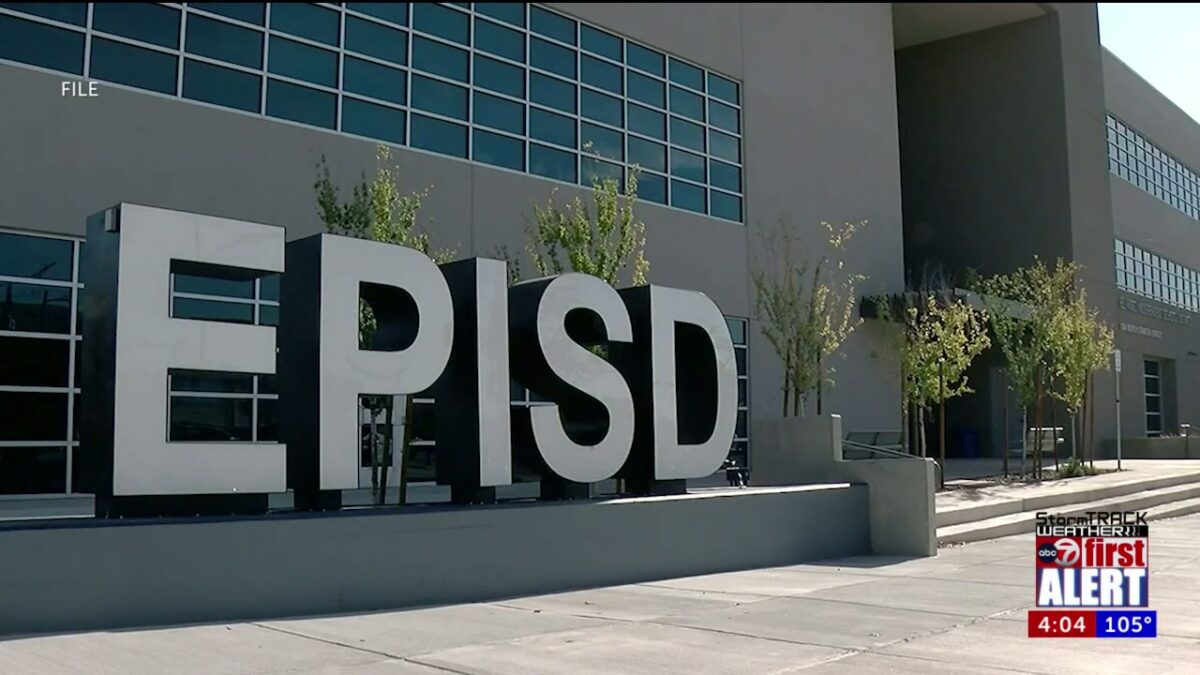
The El Paso Independent School District is considering taking a series of bond proposals to voters in November to begin improving its aging school facilities, making safety upgrades and addressing classroom needs.

Deputy Superintendent David Bates on Tuesday presented a long-range master plan, outlining the cost of addressing all the district’s needs and desired improvements, totaling over $1 billion. Though Bates did not make an official recommendation for the bond, he broke down three potential proposals totaling $445.8 million.

The presentation comes a week after the EPISD board voted to lay off 55 employees under financial exigency to slash expenses and address a deficit that was expected to nearly deplete the district’s savings. A third-party audit, conducted by educational consultant firm MoakCasey, found the district’s financial crisis was caused in part by poor budget tracking practices that had persisted for several years.

“I think it’s a once-in-a-generation opportunity to change what our schools look and feel like for the next generation of El Paso’s kids,” bond committee Chair Georgina Williams told El Paso Matters ahead of the meeting. “If a bond does go forward, and if these trustees put it to the ballot, it’s going to be El Paso that decides, and El Paso has always shown up for its own, and that’s what we may be potentially asking them to do again.”

Bates presented three potential propositions: Proposition A would ask for $409.6 million to upgrade cooling systems, address deferred maintenance, install solar at four elementary schools, improve playgrounds and add green space, among other upgrades. Proposition B would ask for $10.6 million to purchase technological devices for students and teachers, and Proposition C would call for about $25.6 million to renovate athletic stadiums.

District officials plan to give official bond recommendations in early August. The EPISD board is expected to vote Aug. 11 on whether to call for an election.

Bates said the recommended bond would likely range between $430 million and $450 million and claimed a bond would not likely increase the district’s tax rate.

“Our financial adviser is running the actual numbers of what a zero tax increase would get us,” Bates told El Paso Matters.

Though Bates said a bond would not increase the tax rate – the amount charged per $100 of property valuation – homeowners’ tax bills may still increase due in large part to rising home valuations.

Bates said he will have more details in the coming weeks on how a bond would impact homeowners’ tax bills, and plans to create a tax calculator for residents to get an idea of how it would affect them.

EPISD voters last approved a bond in 2016 worth $668 million to renovate schools and rightsize the district. Under the bond, the district closed and consolidated several elementary and middle schools and replaced them with pre-k through eighth-grade campuses. The bond was plagued with payment and construction delays.

District officials earlier this month said the district still had bond money to rebuild Bliss Elementary that had not been spent since it was approved a decade ago.

Bates said his experience working with bigger districts will ensure similar delays don’t happen again.

“Go back and look at the $5.5 billion that I managed in Dallas, and you won’t find the problem. I think I’ll be able to take care of $400 million here,” Bates said.

Committee recommendations

The recommendations for the bond and the master plan were made with guidance from the EPISD Citizens Bond Steering Committee, made up of parents, union leaders and residents from within the district’s boundaries.

The steering committee comprises six subcommittees with different focuses, including technology, safety and security, finance, student experience, athletics and capital renewal.

The district’s priorities within the next two years include converting all evaporative coolers into refrigerated air conditioning, safety and security improvements, structural repairs and replacing outdated equipment, including fire alarms.

Within the next three to five years, the district plans to repair or replace windows, doors, ceilings, sidewalks, masonry and exterior lighting, as well as paint school interiors. In six to 10 years, the district plans to replace lighting with energy-efficient LED fixtures, replace electrical panelboards and transformers and replace elevators.

Under the master plan, the district also plans to install fire suppression systems where they currently don’t exist and install solar panels in 13 of its schools.

The district estimated installing solar panels in four schools would cost about $1.4 million, but could be reduced to about $800,800 with federal incentives. It would cost about $21.8 million to install solar panels in all 69 of its campuses, which could be reduced to $13 million with federal incentives.

The district plans to rebuild Bliss Elementary School, located on Fort Bliss, primarily using funds provided by the U.S. Department of Defense.

EPISD officials are also considering demolishing six closed campuses to turn the land into green spaces and using some of them, including Beall Elementary School which was shuttered in 2019, to expand its pre-kindergarten program.

While committee members disagreed on some aspects of how the bond should be spent, Amanecer People’s Project Director Ana Fuentes said most believed air conditioning improvements were a non-negotiable inclusion.

The “Escuelas Frescas” campaign, launched by Amanecer People’s Project, has a list of 22 El Paso ISD school that they say still run on evaporative air, July 20, 2024. (Corrie Boudreaux/El Paso Matters)

Amanecer, a local environmental nonprofit, launched the Escuelas Frescas campaign in 2024 to push EPISD to upgrade outdated cooling systems in dozens of middle and elementary schools.

“Even folks who sometimes we would think wouldn’t be aligned, we all agree on the need to address this HVAC problem immediately, so that’s also why I feel more hopeful about how things will go in November,” Fuentes told El Paso Matters.

EPISD parent and bond committee member, Diana Ramirez, said they want the district to use the Community Resource Index — which gives campuses a rating based on the number of resources in the neighborhood, such as parks, libraries, healthcare clinics and transportation access — to prioritize the higher-need schools first.

The schools at the bottom quartile of the index, with the least resources nearby, are primarily located in South Central El Paso. This includes Guillen Middle School, Hawkins and Douglass elementary schools, Bowie High School, the San Jacinto Adult Learning Center and the Telles Academy alternative school.

Before the presentation, some committee members, including Fuentes, praised the district’s transparency throughout the steering process.

“The process was much different than other interactions with the district that we’ve had, much more transparency,” Fuentes said.

Most of the information presented Tuesday can be found on the district’s website, along with information on previous steering committee meetings and details on the conditions and needs at each individual campus.

Others, including Familia Unidas Por la Educacion organizer Hilda Villegas, were skeptical of the accuracy of the information used to design the long-range master plan. Familia Unidas is a grassroots educational advocacy organization focused on the Chamizal neighborhood in South Central El Paso.

One of Villegas’ main concerns is that the district’s most recent assessments of campus conditions were conducted under the previous Superintendent Diana Sayavedra, who spearheaded a plan to close schools to address declining enrollment. Under the plan, known as Destination District Redesign, EPISD planned to improve the school that remained open through a bond.

Familias Unidas del Chamizal por la Educación, a grassroots parental advocacy group based in Central El Paso, stand outside the EPISD administrative building in June 2025 to denounce an equity audit it says fails to adequately show inequities in South and Central district schools. (Claudia Lorena Silva / El Paso Matters)

The assessment found the district has three campuses that are in critical condition and 27 in poor condition.

She also worries the plan won’t be sufficient to address the needs of schools in some of the city’s most disadvantaged neighborhoods.

“We’re in the worst condition ever, and right now their whole idea that they need to pass the bond for deferred maintenance is good for us. But there is no plan to address the historic neglect in the barrio, and to rebuild the Bowie feeder pattern due to the neglect,” Villegas said.

Click here to follow the original article.

EPISD to consider up to $450 million in bond proposals, audit finds lack of transparency leading to deficit

Lauren Bly

EL PASO, Texas (KVIA) — Tuesday, El Paso Independent School District Deputy Superintendent David Bates presented a long-range master plan identifying more than $1 billion in potential capital improvement projects to support students in the district.

The report does not represent a proposed bond amount, and any future bond proposal would require review and approval by the Board of Trustees before being considered by voters.  

Bates did break down three potential proposals totaling $445.8 million:

Proposition A: $409.6 million; upgrade cooling systems, address deferred maintenance, install solar at four elementary schools, add green space and more upgrades.

Proposition B: $10.6 million; purchase technological devices for students and teachers.

Proposition C: $25.6 million to renovate athletic stadiums.

In Tuesday night’s meeting, the board learned audit of El Paso Independent School District’s finances found that spending continued despite declining enrollment, leading to a $53 million deficit.

The audit also found that planned savings of more than $10 million did not materialize, and $11 million in spending was not approved by the board.

Mayra Martinez, EPISD’s chief internal auditor, said tha the district’s former CFO and her team were aware of the financial situation but did not communicate this to the board, leading to a lack of transparency and limited corrective action. T

he audit gave 18 recommendations, including stronger financial controls, improved reporting, and increased board oversight.

Click here to follow the original article.

Trubond founder Autumn Shelton joins your Morning News

Andie Lopez Bornet

SANTA BARBARA, Calif. –  Local entrepreneur Autumn Shelton just launched a new functional drink brand called TruBond. 

It’s rooted in the power of adaptogens, nootropics, and the gut-brain connection to help people think clearly and connect more deeply.

TruBond is a passion product that combines her personal story with her background in business and finance, created to help people think clearly, connect deeply, and show up fully in their lives and relationships.

Shelton joins your Morning News to talk about the new product launch.

Click here to follow the original article.

SunLine bus unveiling empowering Ophelia Project

Kiera Seapy

THOUSAND PALMS, Calif. (KESQ) — A new SunLine bus is now hitting the road with a message of empowerment.

SunLine is unveiling a new “Butterfly Bus” that highlights the Ophelia mentorship program, which has helped thousands of Coachella Valley girls build confidence and leadership skills.

The Ophelia program was founded in 2002 and has since trained more than 1,000 mentors and impacted more than 7,000 girls in grades 8-12. The bus features local women leaders and former students who have gone on to successful careers.

The bus features local women leaders and former students who have gone on to successful careers. The story focuses on how mentorship can help young women reach their goals and why organizers hope the bus will inspire the next generation

The Ophelia Project is a team-based mentoring initiative by the John F. Kennedy Memorial Foundation that empowers at-risk middle and high school girls (grades 8–12) in the Coachella Valley. It focuses on building leadership, self-esteem, and academic and career readiness to help young women break the cycle of generational poverty.

For some of the participants, the impact is personal… “It gave me a female role model I never had. And I got to be like, oh, that’s who I should look up to, it just gave me an opportunity to, like, know what I would be eventually in the future” said Alyssa Gunther.

She said Ophelia helped her find guidance and confidence during a rough time, and mentors say support is exactly what the program is designed to provide.

“We try to give them a safe space where they can talk about themselves and what they’re hoping to do.” said Diane Dykema, an Ophelia mentor.

Click here to follow the original article.

Senior safety concerns highlighted by high-profile missing person case

Dakota Makinen

COACHELLA VALLEY, Calif. (KESQ) – A recent case involving NBC’s Savannah Guthrie’s mother is sparking conversations about senior safety and the challenges some older adults face while living independently.

In the Coachella Valley, where many retirees call home, News Channel 3 spoke with local seniors and a security expert about simple precautions, safety technology and ways families can help protect aging loved ones.

Security expert Chris Maidan, CEO and owner of Desert Alarm, says many seniors assume they are safe because nothing has happened to them before — but he says preparation before an emergency is key.

Maidan says devices like wearable panic buttons, cameras and video doorbells can provide an added layer of protection and help seniors get assistance quickly during a security concern, fall or medical emergency.

“A simple panic button can save your life,” Maidan said. “If you need help, you just press the button.”

At the Cathedral City Senior Center, local seniors shared the steps they take to stay safe while maintaining their independence — including keeping phones nearby, locking doors and accepting help when needed.

Experts say the goal is not to make seniors feel afraid in their own homes, but to make sure they have a plan and resources available if an emergency happens.

Click here to follow the original article.

Las Cruces, El Paso dioceses to host prayer pilgrimage on Mt. Cristo Rey

Gabrielle Lopez

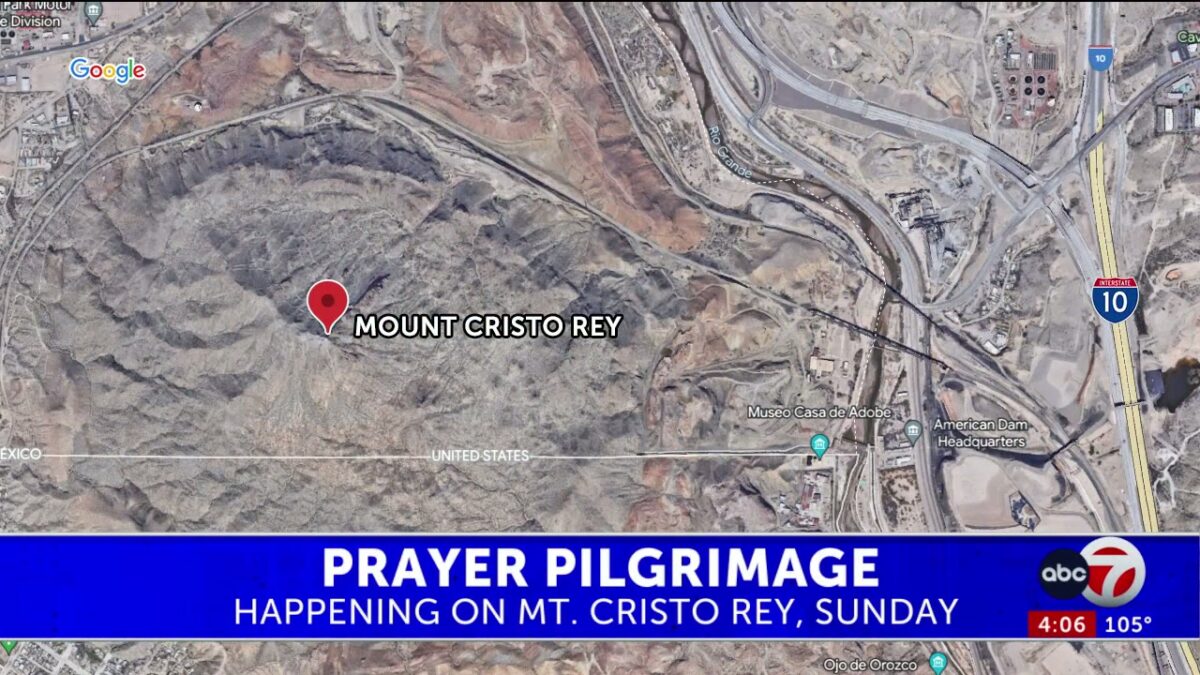
LAS CRUCES, N.M. (KVIA) — Sunday, the Roman Catholic Dioceses of Las Cruces and El Paso will host a pilgrimage on Mount Cristo Rey, according to a news release. The Diocese of Las Cruces said the pilgrimage comes as the U.S. government seeks to expand border wall construction and security south of Mt. Cristo Rey.

As ABC-7 previously reported, the government wants to use eminent domain to take the land for it. Eminent domain is a government power that can take private property for public use.

The Diocese of Las Cruces said during the pilgrimage, participants will “pray for the church and religious freedom throughout the world.”

“This pilgrimage is not against the government, against a policy or anything else,” said Las Cruces Bishop Peter Baldacchino. “It is for the Church; it is for unity and it is for religious freedom.”

The diocese said it told federal authorities and policymakers to “pursue humane and collaborative approaches to border security that uphold the rule of law and the constitutional protections guaranteed to religious institutions and property owners.”

The pilgrimage starts at 4:30 p.m. on June 28, the diocese said. It will start at the parking lot oat 1 Cristo Rey Rd. and will go up the mountain. Bishop Baldacchino will say mass at the pilgrimage.

Click here to follow the original article.

El Paso residents set up water stations to beat the heat

Nina Gallegos

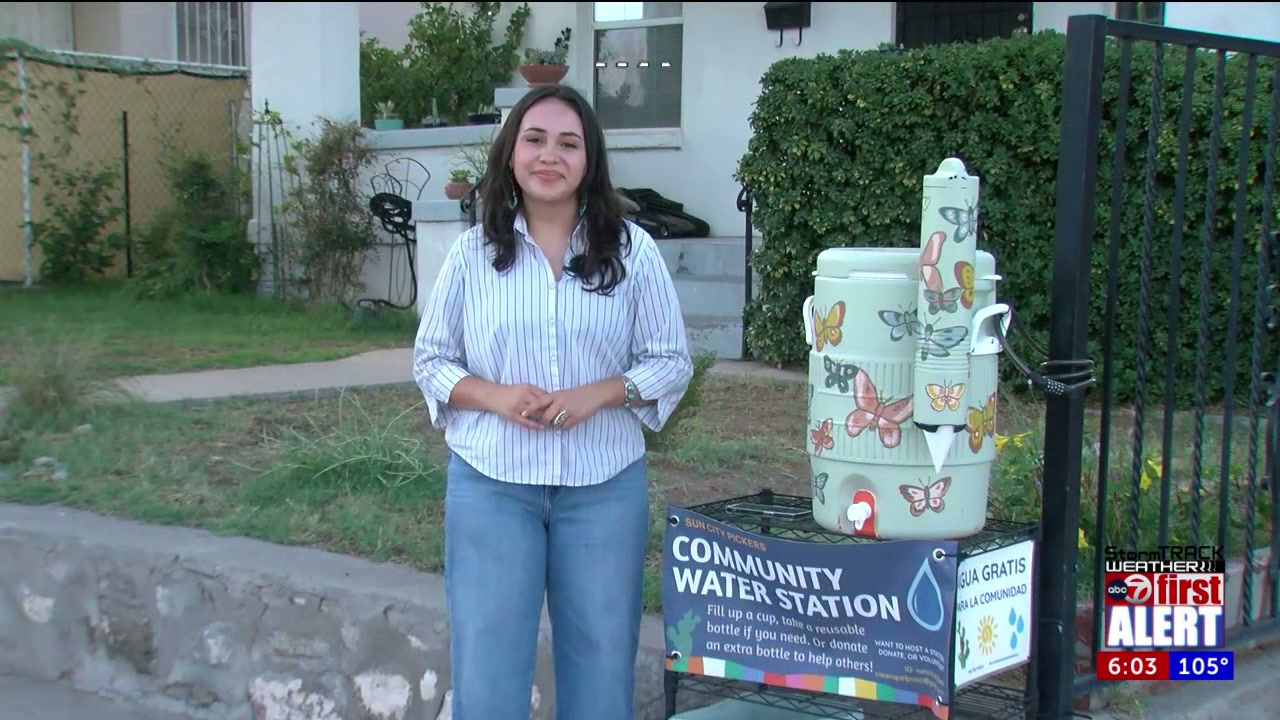
EL PASO, Texas (KVIA) — El Paso locals are putting up community water stations around the city to keep residents cool amid the summer heat. The initiative was started by Sun City Pickers, who just put up its first Downtown water station Tuesday. 

Sun City Pickers is a volunteer-run nonprofit that hosts weekly litter pickups to beautify El Paso and increase sustainability in the community.

You can identify the group’s water stations by seeing a water dispenser with paper cups attached. Some of the dispensers have paintings.

Instagram-এ এই পোস্টটি দেখুন

Community Water Stations (@communitywaterstations) -এর দ্বারা একটি পোস্ট শেয়ার করা হয়েছে

Its Downtown water station is on the corner of Missouri Avenue and Kansas Street outside of Amigo Bail Bonds.

Water station host Jud Burgess explained the importance of the program, noting that people in the area tend to overheat.

“In places like Paso where you have a lack of water and a lack of rain and high temperatures like in mid-100s, you know, people tend to overheat here,” Burgess said. “So this is a great way of just getting people, you know, getting their thirst quenched, but at the same time keeping them healthy and, you know, hydrated.”

Wednesday, El Paso could reach a high of 109 degrees. Staying hydrated can reduce the risk of heat-related illness.

The nonprofit covers the entire cost of setting up these stations.

Local business owner Maria Serrano initially declined when Sun City Pickers first approached her about setting up a community water station outside her business. Serrano recalled a past negative experience where a customer asked for water and then stole a doll from her store.

“Since then I would never give out water,” Serrano said.

Her hesitation was overcome when a volunteer from the nonprofit offered to set up the water station outside her business and pay it.

“I would’ve never thought of it,” Serrano commented.

Serrano now sees a positive impact from the station.

A local artist also views the water stations as a way to beautify the city. She hopes that appreciating the aesthetic of the stations will encourage people to see more beauty in nature around them.

Sun City Pickers is continuing to seek additional locations for water stations, considering both businesses and residential areas.

Click here to follow the original article.

Mary Martin marks a year as Animal Services Director, as county works towards no-kill status

Athena Jreij

RIVERSIDE COUNTY, Calif. (KESQ) – It’s been over a year since Mary Martin took over the Riverside County Department of Animal Services.

Martin came into the role as the county recorded high euthanasia rates across four shelters, with a live-release rate of 71.6% in 2024. Data from the county shows the live-release rate has increased to 81% this year.

It comes as the county is working towards a 90% live-release rate to achieve a ‘no-kill’ status.

“Overall, we’re still trending the right way. This morning when I looked at live-release for the dogs, overall, we’re almost at 90, just under. Can we hold it? I don’t know. It will depend,” Martin said.

Martin credits the progress to more hires, with 17 new veterinarians on staff, transfer flights, 4,000 more spay and neuters in 2025, and increased adoption initiatives.

However, some kennels are still packed and the shelters remain at over 200-percent capacity constantly.

Some activists say the answer is more housing. Martin questions that, but says the county is working on a survey about increasing housing.

“There definitely is a conversation there. When people build housing without programs, then they fill up and we’re right back where we were. We have got to build the infrastructure to go with that space,” she said.

She says a larger issue is the length of stay for animals, who have a lower chance of adoption if they stay at shelters longer than 21 days.

Over the next year, Martin says their focus is finding new adoption programs to shorten length of stays, marketing, and increasing return-to-owner rates.

Click here to follow the original article.

Columbia Police Department educates public ahead of July 1 start of median restrictions

Erika McGuire

COLUMBIA, Mo. (KMIZ)

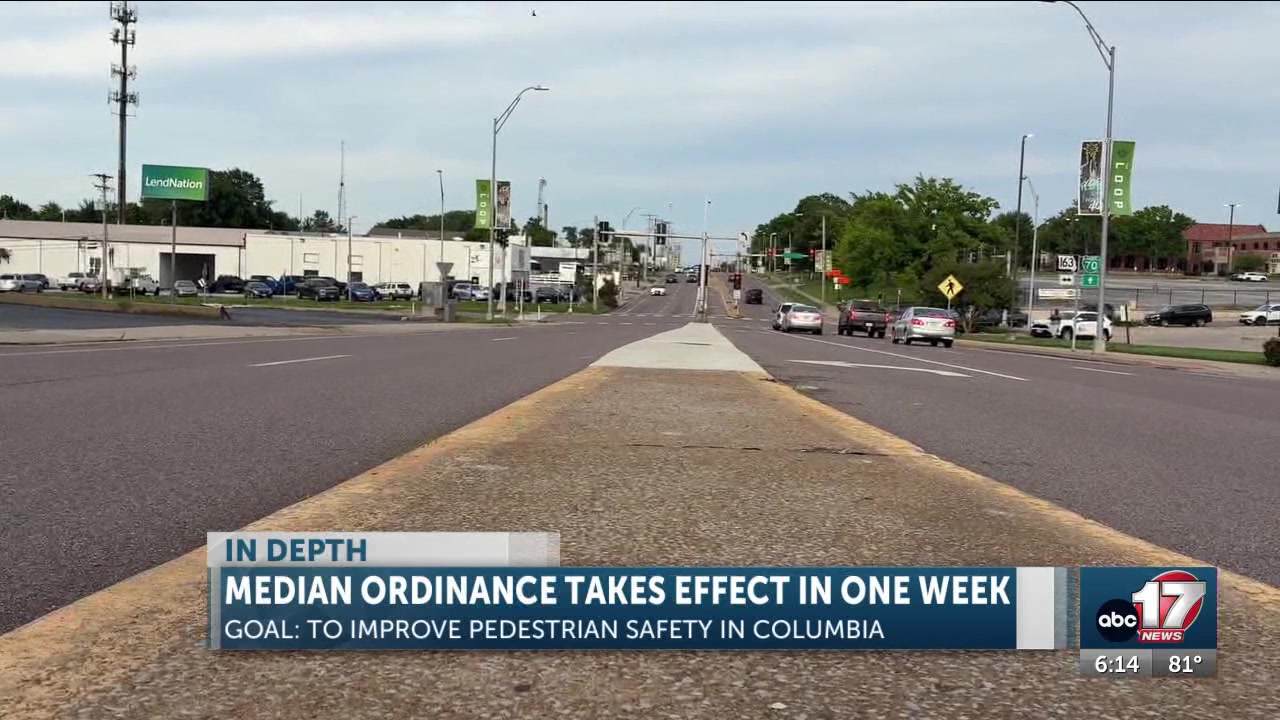
Public education efforts are underway by the Columbia Police Department as the city’s new median ordinance is set to take effect July 1.

CPD Lt. Clint Sinclair, who is overseeing the implementation, said education efforts began the first week of April, providing a three-month window before the law takes effect.

“I think we’re somewhere between 60 and 70 officers on patrol,” Sinclair said. “We pushed our directive saying, ‘Hey, if you’re on patrol and you see conduct that will violate the ordinance when it goes into effect, go ahead and stop and have a conversation with them,’ and then we also have some of our specialty assignments that work with community partners,”

Officers have been provided with a flyer they can distribute, and resource providers are also using the materials as part of the public education effort.

A flyer used to educate the public on the city’s new median ordinance created by the City of Columbia.

The city has also created a webpage outlining the ordinance’s criteria and identifying the areas where it applies, along with sharing videos on CPD’s social media pages.

“We’ve been working on reducing pedestrian fatalities for a long time, and this is another step in that direction,” Sinclair said.

When enforcement begins on July 1, Sinclair said officers will focus on warnings and education before issuing citations for repeat violations.

“We’re always looking for voluntary compliance first, and I would anticipate, as with most things, we try to get people warnings, and it’s the repeated behavior, the repeated conduct that then we’re looking at maybe a citation,” Sinclair said. “Part of the early campaign now is to maybe give those warnings now and give time for people to prepare for the ordinance to come into effect,”

Sinclair said the ordinance is not based on what a person is doing while standing on a median, but rather on their location. City leaders have been adamant about that aspect of the law so that it withstands First Amendment scrutiny.

“It doesn’t talk about panhandling or protesting or demonstrating. It’s just strictly where you are in the roadway, and it doesn’t matter what you’re doing in a median,” Sinclair said. “If you’re asking for money, if you’re protesting something, if you’re fundraising, none of that matters.”

According to the city’s website, remaining on a narrow median after two light cycles will be considered a violation. Officers will address violators and ask for voluntary compliance before writing a ticket.

Sinclair said officers will not put handcuffs on people or take them into custody just for violating the ordinance.

High-priority areas

The 47 identified crash areas where data shows the highest risk of pedestrian-vehicle crashes are where officers will prioritize enforcement, according to the city.

Some of those areas include:

College Avenue and University Avenue

College Avenue and Rollins Avenue

Stadium Boulevard and Monk Drive/Champions Drive

Business Loop 70 and Providence Road.

“We anticipate this being a complaint-driven or work-driven ordinance, meaning that people will be calling in non-emergency or reporting violations,” Sinclair said.

Those who violate the ordinance can face a fine up to $500, but Sinclair says no one would face jail time for a violation.

ABC 17 News rode along in Sinclair’s patrol vehicle to observe the city’s education efforts. During the ride-along, Sinclair contacted two people on medians that would be off-limits under the ordinance. Both said they were already aware of the ordinance and its requirements.

Zachary Gramke, who said he relies on medians to get by day-to-day, said he learned about the ordinance through word of mouth. While standing on a median on College Avenue, which would be in violation of the ordinance, he questioned the policy, saying it limits access to public space.

“It’s a public space, it would be against my rights to remove me unless I’m breaking the law,” Gramke said. “It definitely puts me in touch with people I wouldn’t be able to get in touch with anyway,”

Gramke said he makes anywhere from nothing to $40 a day on medians and will need to find a new location once the ordinance takes effect.

“I may find a different place, but I guess it comes down to how hungry I am. I have 95 cents in my pocket, and my next meal is not promised. I guess I would do whatever I have to do to eat,” Gramke said.

Gramke believes the city should be focused on bigger issues rather than a median ordinance.

‘I think we’ll have to keep them busy with something else. We should be worried about bigger things like downtown shootings and things like that,” Gramke added.

The Columbia City Council passed the ordinance Feb. 2 on a 5-2 vote. Ward 1 Councilwoman Valerie Carroll and Ward 2 Councilwoman Vera Elwood voted against the measure, while Mayor Barbara Buffaloe was among those who voted in favor.

The ordinance regulates road crossing and traffic islands for both motorists and pedestrians at intersections with speed limits of 35 mph or higher, average daily traffic volumes of at least 15,000 vehicles, or medians narrower than 6 feet.

A City of Columbia map pinpoints medians greater than 6 feet wide and marks roads with higher speeds and traffic volumes.

Several intersections in the city are affected, with the five busiest intersections being:

Providence Road and Stadium Boulevard

Providence Road and Broadway

Broadway and Stadium Boulevard

Broadway and College Avenue

Broadway and Old Highway 63

Drivers can no longer hand items to pedestrians from their vehicles. The ordinance also prohibits drivers from stopping in travel lanes in a way that creates a traffic hazard or allowing occupants to exit a vehicle in a travel lane or major corridor intersection, except during an emergency.

Motivated by safety

The city first proposed the ordinance after hiring George L. Crawford & Associates to conduct a street and intersection safety study.

According to the study, between 2019 and 2023, Boone County experienced 3.1% of the state’s pedestrian fatal crashes. During the same period, 20.4% of deadly crashes in the county involved pedestrians, which is above both the national average of 18.7% and the state average of 11.9%.

In Columbia, between 2019 and 2023, the study found the city experienced 2.6% of all pedestrian deaths within Missouri, representing 76% of Boone County pedestrian deaths. It also found that 32% of deadly crashes in Columbia were pedestrian-related, well above both state and national rates.

Local Motion, a Columbia-based group that advocates for transportation equity, said it was initially against the ordinance and was not in favor of its naming.

The group said it is encouraged by the city’s focus on pedestrian safety but believes the ordinance does not address some of the community’s biggest transportation needs, and there were better approaches to improving pedestrian safety rather than regulating pedestrian behavior.

“In our opinion, the ordinance didn’t include some of the things that we felt like were the biggest priorities for improving that like, Complete Streets policy update, which is happening now,” Local Motion CEO Mike Burden said. “Improving and investing more in sidewalks and sidewalk infrastructure, having leading pedestrian intervals that really prioritize pedestrians getting through intersections, having larger refugee island so that folks who need more time crossing a major intersection have an adequate space.”

Click here to follow the original article.

Kinky Creek Fire swells to 350 acres in Bridger-Teton National Forest

Seth Ratliff

JACKSON, Wyo. (KIFI) — Teton Interagency Fire crews are battling the Kinky Creek Fire, a fast-moving, 350-acre wildfire burning in the Bridger-Teton National Forest east of Jackson.

The fire broke out around 4:00 PM on Tuesday, June 23, in the Gros Ventre Wilderness on the Jackson Ranger District, according to a news release from the Bridger-Teton National Forest. Originally estimated at just 5 to 20 acres, the blaze grew rapidly overnight. Fire officials report that the flames are actively spreading through dense timber along a steep slope near upper Gros Ventre Falls, roughly three miles west of Darwin Ranch.

Yesterday, smokejumpers established a secure anchor point to build a fireline at the rear of the fire. Crews are now working to keep the flames on the west side of the Gros Ventre River, while additional resources set up structure protection around Darwin Ranch.

More than 50 personnel, including smokejumpers, fire engine crews, support staff, and air assets like a Type 3 helicopter, are currently on the scene. Fire crews expect additional reinforcements to arrive today to bolster containment efforts. A Type 3 Incident Management Team will arrive on Wednesday evening to assume command, bringing in a multi-agency group of specialists equipped to handle moderately complex, longer-term incidents.

According to the release, fire managers are currently using two strategies to contain the blaze. Currently, crews are using a combination of direct extinguishment, tackling the active flame front head-on, and indirect confinement, building firelines ahead of the flames to steer and trap the fire.

The public is strictly urged to avoid Kinky Creek Road; the Kinky Creek and Clear Creek trails; and Brewster, Lunch, and Chateau lakes so emergency crews can operate safely. The U.S. Forest Service is expected to announce a formal closure order for the area in the coming hours, according to the release.

Click here to follow the original article.