Minneapolis City Council reverses 38-year ban on adult bathhouses, sex venues

By Aki Nace

Click here for updates on this story

    MINNEAPOLIS (WCCO) — The Minneapolis City Council on Thursday voted to overturn a ban on adult bathhouses and sex venues that has been in place for 38 years.

The ordinance creates a licensing framework and updates zoning regulations for the establishments, where consenting adults may engage in sexual activity. Some of the city’s health standards will also be revised to add exceptions to existing indecency laws.

Nine councilmembers voted to repeal the ban. Elizabeth Shaffer and Pearll Warren, who represent Wards 7 and 5 respectively, voted against, while Council Vice President Jamal Osman abstained.

Adult bathhouses and sex venues were a vital part of nightlife prior to the advent of the AIDS crisis in the 1980s. Duluth and St. Paul are among the cities in Minnesota where bathhouses — which serve as community spaces for the LGBTQ+ community — are permitted to operate with varying levels of oversight.

“These are places of refuge and I think it’s important to acknowledge that these establishments were even picketed by signs that said ‘AIDs kill’ and ‘avoid gay bathhouses,'” Councilmember Jason Chavez said at the meeting. “What we’re doing today is clearing the path for a proper public health and zoning framework to follow in the future.”

Chavez noted that Minneapolis was the site of the largest adult bathhouse raid in U.S. history. In 1979 two undercover police officers ticketed 125 guests and criminally charged nine others. The city formally banned bathhouses in 1988.

“Our LGBTQ2S+ communities have long been advocating for this policy,” said Councilmember Robin Wonsley. “Our former president, Councilmember Jenkins, the first Black trans woman to sit on this body and in that particular leadership role, spent years advocating for this policy.”

Shaffer said she would vote against the policy after hearing concerns from her constituents, and added that because of the city’s budget shortfall, “I don’t think this is a top priority for expanding city services.”

A spokesperson for Mayor Jacob Frey’s office released a statement following the vote.

“The mayor will sign bathhouses but as he’s said before, he wants our focus to remain on providing core City services: safe streets, housing, and economic development,” the spokesperson said.

Please note: This story was provided to CNN Wire by an affiliate and does not contain original CNN reporting. This content carries a strict local market embargo. If you share the same market as the contributor of this article, you may not use it on any platform.


Truck driver sentenced to 20 years in I-20 Kaufman County crash that killed five

By S.E. Jenkins

Click here for updates on this story

    Texas (KTVT) — Alexis Osmani Gonzalez-Companioni, the truck driver who failed to notice stalled traffic on Interstate 20 in Kaufman County last June, killing five people, has been sentenced to 20 years in prison after pleading guilty in court on Thursday.

On June 28, 2025, the then-27-year-old struck a Ford F-150 carrying five people, the Texas Department of Public Safety said. Gonzalez-Companioni allegedly fell asleep behind the wheel of his 18-wheeler, failing to see the stalled traffic. Four of the five people in the Ford F-150 were pronounced dead at the scene, while the fifth was care-flighted to a hospital in critical condition, DPS said in a news release.

Texas DPS identified the victims in the F-150 as Billy McKellar, 79, Zabar McKellar, 52, Krishaun McKellar, 45, and 16-year-old Kason McKellar. The fifth injured passenger of the F-150 was identified as 20-year-old Evan McKellar by Texas DPS and family members.

The 18-wheeler driven by Gonzalez-Companioni was then pushed into two other 18-wheelers, causing one to jack-knife and strike a Jeep Compass, a Ford Mustang, and a Honda passenger vehicle, according to Texas DPS. One person in the Jeep Compass struck by the jack-knifed semi was also pronounced dead at the scene, later identified as Nicole Gregory. The Terrell Volunteer Fire Department described the crash as “horrific.”

Gonzalez-Companioni, who is not an American citizen, faced several charges, including five counts of manslaughter, DPS said.

“Three generations … are gone”: Family members give impact statements Several family members of the victims gave victim impact statements in court.

“I didn’t know how I would ever get through this cloud of darkness that you have forced over my life,” one victim said in her statement. “My life will never be the same … I could go on and on, but I am done torturing myself and unrelenting tears of sadness. I have the rest of my life to be reminded of what I can never have again.”

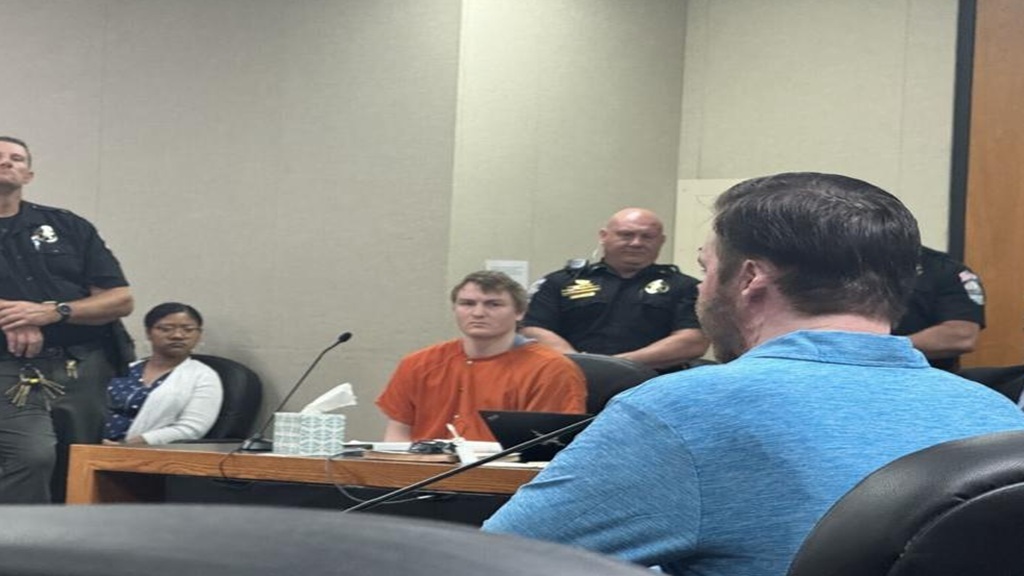
Gonzalez-Campioni put his head down as the victim statements were read.

Evan McKellar, the only survivor of the crash, did not attend on Thursday “because of the mental challenges that this hour would bring to her,” a family member said in court.

Another family member shared a story with the court about a conversation about family that she had with Evan McKellar when she came home from the hospital.

“Evan cried out in anger and said, ‘There are no more McKellars.’ I thought she was just speaking out of grief, but when I think about it: a father’s seed is his son. There are no more McKellar seeds. We lost a grandfather, we lost a father and we lost a son… Three generations of McKellers are gone.”

Sobs could be heard in the court as she spoke.

Please note: This story was provided to CNN Wire by an affiliate and does not contain original CNN reporting. This content carries a strict local market embargo. If you share the same market as the contributor of this article, you may not use it on any platform.

Michigan AG releases 250-page report on clergy abuse in Diocese of Saginaw, naming 38 clergy members

By Paula Wethington

Click here for updates on this story

    Michigan (WWJ) — The Michigan Attorney General’s Office has issued the sixth of what will eventually be seven detailed reports on the topic of Catholic church clergy abuse in the state, this time focusing on the Diocese of Saginaw.

The research in the Diocese of Saginaw reviewed allegations against 37 priests and one deacon, 30 of whom are known or presumed to be dead. The eight others who are living or presumed to be living are not in active ministry. The report said most of the incidents listed that “may have violated Michigan criminal law” all occurred before 2002.

“This report is only possible because of the bravery of so many, from young children to the elderly, coming forward over decades to share their suffering,” said Attorney General Dana Nessel. “As always, I commend their strength and thank them for it. Accountability comes in many forms, and by publishing these accounts, we hope to foster acknowledgment for these survivors and safer communities today.”

The Michigan Department of Attorney General and Michigan State Police began this effort in 2018. So far, the statewide investigation has led to 11 criminal cases resulting in nine convictions.

There are seven Catholic dioceses in Michigan that provide administrative and support services to Catholic parishes and schools at the regional level. Each region is led by a bishop or archbishop. All seven dioceses have cooperated with the AG’s investigation, state officials said.

The Diocese of Saginaw report, released Thursday, is over 250 pages long.

It is a compilation of allegations of sexual misconduct incidents in that region and how the investigations were resolved. The notes include when a clergy person was removed from duties, where applicable.

“The Diocese of Saginaw, like all Dioceses in Michigan, has cooperated fully with the Attorney General’s Office from the beginning of and throughout this investigation. We fully believe in greater accountability and transparency, which is essential in restoring the trust that has been broken, resulting from the misconduct of a few,” Bishop Robert D. Gruss said in response to the report.

Gruss also provided a letter that said in part, “As Bishop of the Diocese of Saginaw, I want to express my deepest sorrows to those who have been victims of abuse by members of the clergy. Please accept my sincere apology for the pain and suffering you have experienced by those who were entrusted with your care. I’m deeply saddened by it all. And, again, I apologize to you on behalf of the Church and our Diocese.”

The Diocese of Saginaw was established in 1938. Its current region is 56 parishes in 11 counties in Eastern and Central Michigan, specifically Arenac, Bay, Clare, Gladwin, Gratiot, Huron, Isabella, Midland, Saginaw, Sanilac and Tuscola counties. The diocese is home to about 100,000 Catholics. More than 680 priests served in the diocese during the 75 years covered in the investigation.

“The Attorney General has not filed criminal charges against any of the priests of the Diocese of Saginaw as a result of this investigation,” the report said.

The previous report, issued in December 2025, reviewed investigations at the Diocese of Grand Rapids. The Detroit report is the last one remaining to be released.

Please note: This story was provided to CNN Wire by an affiliate and does not contain original CNN reporting. This content carries a strict local market embargo. If you share the same market as the contributor of this article, you may not use it on any platform.
Train service suspended on South Shore Line after derailment near East Chicago

By Darius Johnson

Click here for updates on this story

    CHICAGO (WBBM) — Commuter train service on the South Shore Line was suspended Thursday after a derailment, leaving riders scrambling for another way to get to work.

South Shore Line officials said the freight train derailment took place around 9:30 p.m. Wednesday on the South Shore Line along the Indiana Toll Road (I-90) in East Chicago.

The freight train car were tipped and leaning and appeared to be only partially on the tracks.

The derailment resulted in a power outage, which shut down service on the South Shore Line for thousands of commuters. The South Shore Line runs electric trains between downtown Chicago and Indiana, extending as far east as South Bend.

As of 11 a.m., crews were working to replace damaged fiber optic cables that provide communication on the South Shore Line’s Monon and Lakeshore routes.

The new Monon Corridor line runs through Hammond and south to Munster. The Lakeshore Line runs east through Gary, Beverly Shores, and Michigan City before finally terminating at South Bend International Airport. Both lines run along the Metra Electric District tracks, formerly the Illinois Central, from downtown Chicago through the city’s South Side.

Crews were also working to repair the damaged freight train cars, and repair significant damage on the overhead power system.

Officials said they hoped to restore service on the Monon Line on Thursday afternoon. They are aiming to restore Lakeshore Line service as soon as Friday, but passengers will be bused between the Miller station in Gary and Hegewisch station in Chicago until the overhead wires are repaired.

It was not immediately learned whether the derailment was related in any way to the severe weather Wednesday night.

Please note: This story was provided to CNN Wire by an affiliate and does not contain original CNN reporting. This content carries a strict local market embargo. If you share the same market as the contributor of this article, you may not use it on any platform.

‘My attacker is an evil, violent individual.’ 40 years given for setting Vogler ablaze

By Charles Wilborn

Click here for updates on this story

    DANVILLE, Virginia (Danville Register & Bee) — The man responsible for setting Danville City Council member Lee Vogler on fire almost 11 months ago in a brazen and grisly attack will spend 40 years in prison, Danville Circuit Judge James Reynolds ruled Thursday morning.

Shotsie Michael Buck-Hayes pleaded guilty April 16 to charges of attempted first-degree murder and aggravated malicious wounding, avoiding what was scheduled for a weeklong jury trial.

On the aggravated malicious wounding, Reynolds sentenced Buck-Hayes, 30, to life with all but 35 years suspended. On the attempted first-degree murder count, he received 10 years, with five years suspended.

Reynolds went above the guidelines in the sentencing.

The plea came with no deal arranged between defense attorneys and Danville Commonwealth’s Attorney Michael Newman.

An earlier charge of breaking and entering while armed with a deadly weapon was dropped.

On July 30, Buck-Hayes doused Lee Vogler in gas and napalm — a flammable jelly — and then set him on fire at Showcase Magazine, where Vogler works as director of marketing.

Suffering burns on 60% of his body, the attack left Vogler near death. In a miraculous recovery, he was released from the UNC Health Burn Center in Chapel Hill, North Carolina, on Oct. 12, months before doctors thought he’d be able to return to Danville.

That same evening, Vogler attended a Danville City Council meeting.

“I could not be more sorry,” Buck-Hayes said during the three-hour sentencing Thursday morning. However, when asked by Newman about the crime, he said he did not remember it.

During an April plea hearing, Newman showed a video captured by a passerby of Vogler running into the street on fire in front of the magazine’s office at 753 Main St.

Buck-Hayes admitted to Danville Police Department investigators to throwing gas — mixed with Styrofoam — on Vogler, who had an affair with his wife.

A few hours before the fiery attack, Buck-Hayes got a call from his ex-wife that made him feel “rejected,” he told police.

That’s when he began “freaking out,” purchased $3 worth of gasoline and put it in a blue Lowe’s bucket. He added Styrofoam to the gas because he wanted it to burn longer.

When he arrived at Showcase Magazine, Buck-Hayes said he was pacing around the foyer.

When he saw Vogler, he told police the council member appeared to be “terrified.”

That’s when he doused him in gas, “and proceeded to chase him around the building,” he said on video.

When the pair got outside, that’s when Buck-Hayes set Vogler on fire on the street.

Buck-Hayes was found later in the day in his vehicle at the intersection of Jefferson Avenue and Wilson Street, only a few blocks from where the attack happened.

Vogler and his family — wife, mother and father — all testified about how their lives had changed in an instant. All viewed it was nothing short of a nightmare.

“It’s like a bad nightmare that replays over and over,” his father, Jack Vogler, said.

Although the council member recovered, he still endures pain daily and has trouble doing the simplest of tasks, such as tying his shoe or buttoning his shirt.

Vogler also returned as a middle school baseball coach this spring, but he wasn’t able to hold a glove or demonstrate to the young boys how to slide into a base.

“Perhaps the most painful is the loss of connection with my children,” Vogler explained, reading from a statement to the court.

Kingston and Ava are still worried about their father, family members said.

Vogler called it “pain I would not wish on my worst enemy.”

The affair Buck-Hayes moved to the United States from England with his American fiancée when he was about 24. They were married in 2021.

But the couple separated in June 2024. They had been living apart since Sept. 30, 2024, according to court documents.

Buck-Hayes contradicted that in court, saying that he and his ex-wife, identified as Mary Alice, were still seeing each other up until the attack.

“We were sexually active,” he testified. “The divorce was not the end of our relationship.”

Buck-Hayes said that he had tried to work on the marriage, giving up all of his “bad habits” except smoking cigarettes.

He was also working on his career.

When they were together, he asked his wife what she most wanted. The response was a house with a “grand staircase.”

That’s when he decided to become a construction worker after being at Midtown Market in Danville.

Before the attack, he worked at Eckerd Connects, a residential boys academy in Yanceyville, North Carolina.

Vogler’s wife, Blair, testified that she had been around Buck-Hayes five or six times.

Buck-Hayes referenced one of those occasions, the Shrimp Festival in Danville in 2024. That event normally happens in September.

Both couples wanted to continue the party after the event and went to Food Lion to pick up beer.

“Mary Alice and Lee had been uncomfortably close,” he said, referring to before that day.

Vogler excused himself to go to the restroom. A few minutes later, Mary Alice did the same thing.

Buck-Hayes then went to the restroom to see what was going on.

“They were in an embrace,” he said of finding Vogler and his wife together, while not sure if they were kissing or not.

“I was level 10 upset” at the time, Buck-Hayes said, but took no action.

Mental issues Buck-Hayes said he “cut everyone off” when his marriage started becoming rocky, and he worked 16 hours a day for seven days a week.

He sought mental health help locally but credited going to Virginia Baptist Hospital in Lynchburg as the “best thing that has ever happened to me.”

Naomi Buck, his mother, who traveled from England for the sentencing, said her son suffered from mental issues and was prescribed medication while in high school.

When marriage problems started to surface, others around him noticed.

Kenneth Crews, Mary Alice’s grandfather, met Buck-Hayes in 2019. Mary Alice went to college in England for years.

“Everybody loves Shotsie,” Crews testified. “I love the guy.”

He said Buck-Hayes “always wanted to help everybody.”

However, his mood changed.

“He was trying to save his marriage,” Crews said.

Donald “Bill” Cosner, who worked with Buck-Hayes at Midtown Market, also saw him decline as the marriage became shaky.

It was also in September 2024 — the same time as the Food Lion incident — that daily phone calls between Buck-Hayes and his mom started to grow more infrequent.

She was concerned and considered contacting the police over her worries, but decided not to since there wasn’t a crime that would involve the authorities.

After he was arrested, he showed suicidal tendencies that prompted Buck-Hayes to be sent to Central State Hospital in Dinwiddie County in August.

Dr. Meagan Cogbill, the assistant medical director there, saw Buck-Hayes about 10 times.

Up until then, he had only been diagnosed with bipolar disorder. She said he also had a borderline personality disorder and post-traumatic stress disorder, commonly called PTSD. She devised a new medication plan to help.

The violence Newman bluntly said Buck-Hayes knew what he was doing the day of the attack and even came up with a brutal plan to make the fire on Vogler burn hotter.

“He wanted to kill Lee Vogler,” Newman said, explaining that Buck-Hayes was mad at his wife and not at Vogler, since the affair had ended some time earlier.

To that, Buck-Hayes started to shake his head, and Newman continued.

“This has everything to do with revenge,” the commonwealth’s attorney said. “He wanted to burn alive” Vogler.

Vogler’s mom, Rhonda, said Buck-Hayes showed no remorse at the plea hearing as video of her son running across the street on fire was played.

Rhonda Vogler said the July 2025 calendar remains in her home on the day her life changed.

“I was ambushed and violently attacked,” Vogler described of the incident. “My attacker is an evil, violent individual.”

Jack Vogler, looking directly at Buck-Hayes, ended his statement to the court in a loud voice.

“You are a coward,” he told Buck-Hayes, who was making eye contact, as he did with all family members.

In fact, he often nodded during their statements.

The defense argued for a lighter sentence — within the guidelines — saying that Buck-Hayes accepted responsibility and could be rehabilitated.

Newman countered that argument, again referencing that Buck-Hayes said Thursday he didn’t remember the incident.

After Thursday’s proceedings, Buck-Hayes instructed his attorneys to appeal the sentence, they confirmed to media outside.

Reynolds ordered Danville Sheriff Mike Mondul to have Buck-Hayes transferred to the Virginia Department of Corrections “as soon as possible.”

When he does get out of prison, he will be on probation tied to good behavior.

Please note: This story was provided to CNN Wire by an affiliate and does not contain original CNN reporting. This content carries a strict local market embargo. If you share the same market as the contributor of this article, you may not use it on any platform.

Former teacher pleads guilty to coercing minor into sex, child porn production

By Andy Tallman

Click here for updates on this story

    MISSOULA, Montana (Missoulian) — A Missoula man pleaded guilty Wednesday morning to one count of coercing or enticing a minor into sex and one count of child abuse material production.

Cody Davis, 42, appeared before Judge Donald Molloy in Missoula’s federal courthouse. He was charged in April with three counts of producing child sexual exploitation material, one count of possessing it and three counts of coercion and enticement, all felonies.

As part of a plea agreement, all but two of the charges were dropped.

Davis is a former Clinton teacher who previously taught at several school districts, in Helena, Cascade and Targe Range School outside of Missoula, the Office of Public Instruction told the Missoulian in January.

He resigned from teaching in 2024. The Board of Public Education voted unanimously in March to suspend his teaching license, and will decide after the criminal case is concluded whether to permanently revoke his license.

For the first charge, Davis pleaded guilty to attempting to use the internet to coerce or entice someone under 18 living in Missoula County into sex between July and December of 2025. This charge carries a possible penalty of 10 years to life in prison, a $250,000 fine, and five years to life of probation.

According to Office of Public Instruction lawyer Brenton Craggs, Davis was communicating via Signal with an undercover officer.

The second charge Davis admitted to was of child pornography production. Davis pleaded guilty to enticing a Montana minor to engage in sexually explicit behavior for the purpose of making child sexual exploitation material.

This charge carries a possible penalty of 15 to 30 years in prison, a $250,000 fine, and five years to life of probation.

Davis is being held in the Missoula County jail pending sentencing, which is set for Oct. 22.

Andy Tallman is the criminal justice reporter for the Missoulian.

Please note: This story was provided to CNN Wire by an affiliate and does not contain original CNN reporting. This content carries a strict local market embargo. If you share the same market as the contributor of this article, you may not use it on any platform.

Documents: 93-year-old was stabbed, strangled after suspect walked away from an arson scene

By JoBeth Davis

Click here for updates on this story

    KANSAS CITY, Mo. (KMBC) — A Kansas City, Missouri, woman made her first appearance in court Wednesday after being charged in connection with the murder of a 93-year-old woman. Documents state that same suspect is linked to an alleged arson at a home on the same block.

Kelisha Reeves has been charged with first-degree murder in connection with the death of 93-year-old Diana Barco.

Barco was found dead in her home on North Briarcliff Road from apparent bodily trauma on June 9.

Probable cause documents in this case — and a domestic incident at a nearby home — paint a grim tale.

Firefighters wounded while battling blaze at home on North Briarcliff: The Kansas City Fire Department was called to a home near 3800 North Briarcliff Road just before 5:30 p.m. on June 8 to find smoke and flames coming from a single-story home.

That fire displaced one adult and one child who were home at the time of the fire, but were not injured.

Three firefighters were taken to the hospital with minor injuries as a result of fighting this fire.

At the time, the Kansas City Police Department’s Bomb and Arson Unit was called in to investigate.

Body found at nearby home one day later: Police were called to a home in the same block around 11:30 a.m. on June 9 after someone reportedly found a body.

Police said officers were directed to a home where they found a woman suffering from apparent bodily trauma. She was pronounced dead on the scene, and her death was upgraded to a homicide investigation on June 10. Authorities released the information to the public regarding the homicide investigation on June 11.

At the time, KMBC 9 News asked Kansas City police if the two incidents were related. A spokesperson for KCPD said they did not know if the incidents were related, but that investigators were working to develop leads.

Murder charges announced in Briarcliff homicide: On Tuesday, the Clay County Prosecutor’s Office announced that Kelisha Reeves had been charged in connection with the death of a 93-year-old woman.

In a social media post, the office stated that Reeves “caused the death of the victim by acts of homicidal violence” at a residence on Briarcliff Road between June 8 and June 9.

The victim’s name was not initially released, and prosecutors did not say if or how Reeves knew the victim.

Charging documents reveal suspect connection between homicide and arson: Kelisha Reeves was arraigned in a Clay County court on Wednesday. Probable cause documents in the homicide case released around the same time identified Barco and linked Reeves to the nearby arson investigation.

In the documents, authorities state a caretaker had stopped by the home to check on Barco. The caretaker saw Barco’s walker outside of the home but couldn’t find Barco.

As the caretaker was walking through the house, they found Barco’s body inside a bathroom and called 911.

The caretaker told police that things inside the home didn’t look right. Barco’s body was found in the home’s bathtub, while a bench normally sitting in the tub had been pulled out and was sitting next to a window. Someone had thrown a sheet over the window in the bathroom. There was also a picture sitting on that bench that “should not have been in there.”

Forensic examiners noted that it appeared Barco had suffered multiple stab wounds to the back of her head and neck area, and that she had apparently been strangled. Detectives noted the shower head with a hose in the bathroom had been pulled out of the wall and was found near Barco’s body at the scene.

Family members also told police that a single credit card was missing from Barco’s wallet.

Detectives noted in the probable cause documents that a domestic incident with property damaged happened at a nearby home hours before an arson report, and in both cases, Kelisha Reeves was listed as the suspect. Reeves had last been seen walking north from the burning home, saying, “If I can’t have a place to live, neither can you.”

The home where Barco was found was approximately 450 feet north of the home that burned.

In addition, when Reeves was found by police in Jasper County, Missouri, she had a credit card with her believed to be Barco’s.

Documents state that Reeves told detectives a woman living in the area saw her crying and told her to come over to her home and that she would keep Reeves safe. Reeves told police the woman gave her some water to drink and let her sleep on a bench in front of the home. Reeves also said the woman gave her a credit card “to use to get to a safe place far away.”

Prosecutors have requested a $1 million bond in this case.

Please note: This story was provided to CNN Wire by an affiliate and does not contain original CNN reporting. This content carries a strict local market embargo. If you share the same market as the contributor of this article, you may not use it on any platform.

New Orleans Four remembered for their historic impact to American history

By Darryl Forges

Click here for updates on this story

    NEW ORLEANS (WDSU) — More than 60 years ago, four young Black girls in Louisiana, known as the New Orleans Four, made history by integrating schools in New Orleans, enduring resistance and creating a lasting impact on civil rights.

Leona Tate, Gail Etienne, and Tessie Prevost walked up 18 steps to McDonogh 19 Elementary School on Nov. 14, 1960, guided by U.S. marshals and Ruby Bridges, who simultaneously integrated Frantz Elementary.

“I had no clue at all what I was doing, or what I was about to do,” said Tate.

The integration was met with backlash, as large crowds protested outside the schools.

Tate recalled thinking it was a parade outside the school.

“I knew a parade passed on the street, and that’s what I was looking for, and I want to know why I had to go to school on Mardi Gras, and no one else got to watch the parade. My mom explained to me that it wasn’t the case.”

Dr. Raynard Sanders says these six-year-olds impacted not only Louisiana but the nation.

“Those four little girls met resistance that was unseen on national television,” said Sanders. “The nation began to see four little girls. They began to see it a bit differently, and all of this aggression and then saying they were gonna take their kids outta school singing 2,4,6,8 we don’t want to integrate.”

The resistance was immediate. White parents pulled their children from the school, leaving the girls as the only students.

“It was a class full of students when we got in there, but by the end of the day, they were all gone,” Tate said.

The girls had to stay close, play in stairwells, and endure covered classroom windows.

“We had to endure a lot for it to work, because if we gave up, it wouldn’t have happened,” Tate said.

Today, Gail Etienne lives in Oklahoma City, Tessie Prevost passed away in 2024, Ruby Bridges continues her advocacy through the Ruby Bridges Foundation, and Leona Tate has purchased McDonogh 19, the school where she made history.

The building now serves as an exhibit named after Tate, Prevost, and Etienne, offering visitors a glimpse into the challenges the girls faced.

“I want all students to come here and walk in our shoes, and experience what we went through, because they think it happened so long ago it doesn’t matter anymore, but it does,” Tate said.

Reflecting on the legacy of the New Orleans Four, Tate said their contribution to civil rights is “priceless, unending.”

Please note: This story was provided to CNN Wire by an affiliate and does not contain original CNN reporting. This content carries a strict local market embargo. If you share the same market as the contributor of this article, you may not use it on any platform.

‘Everywhere I go, I have to prove I was married to him,’ widow says as she fights for what’s hers

By Hannah McDonald

Click here for updates on this story

    OAK GROVE, Kentucky (WTVF) — Lori Hathaway just wants access to the belongings she and her late husband shared.

Keith Hathaway died in November after having a stroke. The couple had downsized and moved to Oak Grove, Kentucky, storing their belongings at Storage Sense in Clarksville with plans to sell them at a yard sale. The lease was in Keith’s name only.

“I never missed a payment, every month it’s been paid, in my name. But they say since it was in his name, I got to go to court,” Lori said.

I stopped at the office at Storage Sense. The office manager explained it is company policy to lease all rentals to a single customer.

So, was there a way to prevent this from ending up in court?

Estate attorney April Harris Jackson says situations like Lori’s can sometimes be avoided — in both Tennessee and Kentucky — by setting up accounts to transfer automatically when someone dies. However, some banks and private companies, like storage facilities, set their own rules. But naming a beneficiary or joint owner can often help families avoid court.

“If you’ve done the planning well and kept up with the planning, usually the goal is not to have to go through probate,” Jackson said.

Right now, Lori faces $379 in probate small claims court fees to reclaim belongings in storage that she says were jointly hers and her husband’s.

“Ever since he passed, everywhere I go, I have to prove I was married to him,” Lori said.

Lori admits she and her late husband did not plan for life after one of them passed away.

Jackson recommends every adult plan for the worst while hoping for the best — and says it is usually easier to start younger and adjust over time.

The goal, she says, is making sure someone you like and trust is designated to make emergency decisions on your behalf — both financial and medical — before it ever comes to that.

“Making sure everything you have and want in an emergency is planned for,” Jackson said.

One of the biggest misconceptions Jackson sees is that a will is the finish line. It isn’t.

“A last will and testament is intended to go through probate. The will is hopefully the backup plan. We want to use the other tools in our toolbox so we don’t have to go through probate,” Jackson said.

Jackson says one of the most basic planning documents every adult should have is an advance directive, sometimes called a living will. This form outlines your wishes for CPR, life support, and hospice care if you are ever unable to speak for yourself.

One of the most effective tools, she says, is a beneficiary designation.

“Anything that has a beneficiary designation goes directly to the person designated rather than probate… You can designate in many, many circumstances what you want to have happen and let the institution know,” Jackson said.

Please note: This story was provided to CNN Wire by an affiliate and does not contain original CNN reporting. This content carries a strict local market embargo. If you share the same market as the contributor of this article, you may not use it on any platform.

Mom’s Meals helps feed Iowa’s homeless youth

By Natalia Gomez del Campo

Click here for updates on this story

    DES MOINES, Iowa (KCCI) — One of the drop-in services of the Iowa Homeless Youth Centers in Des Moines is daily meals. During the summer season, when the number of people it serves rises, food donations become essential.

Mom’s Meals, an Iowa-founded organization that serves over 60 locations across the U.S., donated 240 individually packaged shelf-friendly meals.

“We want to make sure that we’re supporting the community that has served us well for many, many years,” said Tracy Smith, vice president of marketing at Mom’s Meals.

Tracy Smith, a Mom’s Meals spokesperson, says nutrition is essential to well-being.

“Sometimes just having access to food can provide that stability, dignity, and just one less thing to worry about during difficult times.”

The long-term goal is to end youth homelessness for good, said Austin Neal, the center’s community engagement coordinator.

He says each year, they serve close to 10,000 meals, and this year, it could creep up to 12,000. To him, combating hunger sets a child up for success.

“Without basic needs, what more can they do? Once we fill that basic need, we can dream with them a little bit,” said Neal.

The Iowa Homeless Youth Centers serves youth ages 18-24, as well as youth ages 16-17 with some programs. It also serves families. Last year, close to 425 people got services.

Neal says it takes a village, from the food pantry to volunteers to Mom’s Meals, to make a difference.

Smith urges Iowans to spread the word to those in need about Mom’s Meals, and Neal hopes to see more people volunteer at the youth center.

Please note: This story was provided to CNN Wire by an affiliate and does not contain original CNN reporting. This content carries a strict local market embargo. If you share the same market as the contributor of this article, you may not use it on any platform.