Problem Solvers: Jefferson County Leaders, Businesses Call for more Transparency from OHA over Algae Bloom Advisories

Kelsey Merison

JEFFERSON COUNTY, Ore. (KTVZ) — Jefferson County leaders and tourism advocates are calling on the Oregon Health Authority to provide clearer communication and greater transparency regarding recreational advisories for harmful algae blooms, arguing the warnings are creating confusion and hurting the local economy. 

The concerns center around advisories issued for Lake Billy Chinook and other Oregon waterways. While local officials say they support efforts to protect public health, they believe current messaging is discouraging visitors from recreating in the area. 

“We’re not against public health in any way, shape, or form,” said Jefferson County Commissioner Kelly Simmelink. “We want our recreators to come here and feel safe and be safe and have a great time and make memories. It’s just almost becoming impossible at this point.” 

Tourism officials report economic impacts

Debbie Taylor, executive director of the Madras-Jefferson County Chamber of Commerce, said the county has already seen economic impacts tied to confusion surrounding algae bloom advisories. 

“As the Chamber of Commerce, we’re all about events, information, and tourism,” Taylor said. “We see tourists enter our office every day, coming through town and asking questions, whether it’s an email inquiry or it’s over the phone, asking about what’s happening. We are seeing a lot of confusion and a lot of information that is not clear.” 

Taylor said lodging numbers have declined compared to previous years and there was a 1.5 million dollar drop in overall travel spending from 2024 to 2025. 

“I talked to one of our predominant lodging partners in the community, and they let me know they were consistently down 5% for boating visitors who would normally stay overnight,” she said. 

Overall travel spending (not just lodging spend) from visitors that stay in campgrounds and RV parks in Jefferson County was down 6.3% from ’24 to ’25, equating to a drop of $1.5mil 

Overnight Stays in Jefferson County for “other” property types, which includes camping and RVs, decreased by 32,000 person nights from ’24 to ’25. 

According to Taylor, visitors and even residents often assume the lake is closed when advisories are issued. 

“Two days ago, my husband and I were driving home and we saw some kids that we knew playing in a body of water,” she said. “We said, ‘What are you guys doing here?’ And they said, ‘Well, Lake Billy Chinook’s closed.'” 

Taylor said that misconception is becoming increasingly common. 

“That is the information that we need to get out there,” she said. “Jefferson County is open for business. Tourism is still happening. Understand what the precautions are that are out there. Take the necessary steps to protect yourself.” 

Commissioner: Tourism-dependent businesses are struggling 

Commissioner Simmelink said tourism is a critical part of Jefferson County’s economy, and advisories can have ripple effects throughout the community. 

“At the end of the day, to me, in representing my constituents here, it’s about the economics of things,” Simmelink said. “We have kids that have summer jobs down there that are now not working full time. We have businesses that have a lot at stake, and these cancellations are really killing them.” 

He said the impacts extend far beyond resorts and marinas. 

“Not to mention the local gas stations and grocery stores and everybody else that relies on these tourism dollars coming into this community,” he said. “This is a community that’s already one of the most distressed in the state.” 

Taylor echoed those concerns, noting Lake Billy Chinook attracts more than a million visitors annually. 

“We’re feeling it here because we get over a million visitors to Lake Billy Chinook every year,” she said. “Whether it’s the generational families that come every year to recreate or those that are just discovering it, there’s a million people that come every year.” 

She said the economic effects spread throughout the county. 

“That affects everything from our state park reservations to our cabins, to our restaurants, to our gas stations. It affects everybody all the way down.” 

Questions about advisory process 

Jim Cyr, a spokesperson for Oregon Recreational Providers, said his concerns began after an advisory was issued last year. 

“We had an advisory come out last year in June, and we’re like, ‘What in the world is going on?'” Cyr said. “We hadn’t had an advisory in five years.” 

He said he spent hundreds of hours researching the issue. 

“I probably have 400 to 500 hours worth of research in this, and the more I dug into it, the more I’m like, nothing makes sense.” 

Cyr argues that Oregon is relying on guidance that has not been updated in years. 

According to Cyr, the World Health Organization updated its recommendations in 2021 based on newer research, while Oregon continues to use standards originally established in 2007 by the EPA. 

Dating back years 

Simmelink and Cyr say this algae has always been around but believe these advisories have been picking up in recent years without the data to back them up. 

“This is not new,” Simmelink said. “Blue-green algae is not new. The toxins are not new. We’ve been involved in this for years with the recreational provider group as well as other commissioners around the state.” 

Simmelink said local officials became increasingly concerned after discussions with OHA began ramping up again late last year. 

“We were a number of years without any kind of advisories,” he said. “Then all of a sudden we’re talking about a protocol and how they’re going to do things going forward.” 

According to Cyr, advisories were issued annually between 2015 and 2019 before largely disappearing for several years. 

“From 2015 to 2019, we had alerts every single year,” Cyr said. “Then from 2020 through most of 2024, there were zero advisories until late 2024.” 

Debate over testing and scientific guidance 

Cyr said part of his concern centers on what he believes are outdated standards being used to trigger advisories. 

“The World Health Organization revamped the limits and put all the new studies together,” Cyr said. “The Oregon Health Authority is currently using a standard that they originally established in 2007, and it’s never changed since then.” 

Cyr believes those updates should be considered as OHA evaluates future advisories. 

He also questioned how advisories are issued when water sampling results differ across locations. 

Referring to a recent Lake Billy Chinook advisory, Cyr said he requested testing data from OHA and found that some locations passed while others exceeded advisory thresholds. 

“I wanted to know what the test results were,” he said. “They did four tests on Lake Billy Chinook. Two passed and two failed.” 

Cyr also questioned OHA’s use of satellite imagery to help identify potential algae blooms and said he would like more information about how those decisions are made. 

“There needs to be some transparency,” Cyr said. “We’ve asked a lot of questions and we’d love to get answers.” 

Local officials point to lack of reported illnesses 

Simmelink said one factor driving local concerns is the absence of reported illnesses associated with Lake Billy Chinook. 

“I’ll come back to the point that there are zero reported cases,” he said. “I’m the Public Health Liaison for Jefferson County. I know that we have had zero cases reported.” 

Cyr made a similar argument, saying local stakeholders have repeatedly asked OHA for documented cases connected to the area.

“If this was what they say it is, there’d be all kinds of documented illnesses,” Cyr said. “There are zero confirmed (human) illnesses that they have shown us for Lake Billy Chinook.” 

The Oregon Health Authority maintains that advisories are intended to help prevent potential exposure to harmful algae and cyanotoxins before illnesses occur. 

While Jefferson County has not seen any reported human illnesses from these algae blooms, there have been reports of dogs getting sick from exposure. 

Visitors often mistake advisories for closures 

Taylor said one of the biggest challenges is the way information spreads online. 

“In the digital era, that information comes out and gives a perception,” she said. “Not everybody’s going to scroll to the bottom to get that information.” 

She said many visitors see alarming language in advisories and conclude the lake is closed entirely. 

“We want to see the line of cars through town,” she said. “We want to see people asking questions about where they can go and what they can explore.” 

Recreation continues despite advisories 

Taylor said many residents continue to recreate at Lake Billy Chinook while following common-sense precautions. 

She pointed to a tourism promotional video shoot that recently took place at the reservoir. 

“We had talent that was in the water for that,” Taylor said. “They were splashing in the water and going off a slide into the water. None of my talent has gotten sick.” 

Taylor said local residents generally understand how to avoid visible algae accumulations and take additional precautions when necessary. 

“Those of us that have been here for years know that if you’re sensitive or have a compromised immune system, take a shower, avoid getting water in your face, and understand the precautions,” she said. 

Simmelink agreed. 

“If you’re on the dock and you see a big bunch of green goop, yeah, probably not a great idea to stick your nose into it, you know?” he said. 

Calls for local control 

Simmelink said he would like to see local governments play a larger role in how advisories are communicated to the public. 

“I believe that if we were able to handle this locally with signage and information to make sure citizens knew, that would be huge,” he said. 

He emphasized that local leaders are not opposed to testing or monitoring waterways. 

“We’re not against testing,” Simmelink said. “There are things they need to test for, and we understand that’s going to continue to happen.” 

Instead, he said local officials would like greater involvement in determining how information is shared with visitors. 

“I’d like to see a little more local control, especially in the messaging,” he said. 

Simmelink also questioned why only a small percentage of Oregon waterways are routinely monitored. 

“One of the biggest things that sticks to me is that 97% of the lakes aren’t even checked,” he said. “For us, that is really not a good message to be sending out to the public. That, ‘There’s no advisories there, so it’s probably safe.’ They have the same water. Throughout this whole region, we have the same water.”

Taylor agreed that clearer statewide communication would benefit both visitors and local communities. 

“If you’re going to have a precaution and an advisory, you need to make that signage identifiable,” she said. “It needs to be a unified message. It needs to have the same statement for every body of water.” 

Calls for more transparency 

Cyr said local stakeholders have attended meetings with OHA but feel their concerns have not been fully addressed. 

“We asked a lot of tough questions and we didn’t get any answers,” Cyr said. “The transparency is kind of the issue that we see.” 

Simmelink said he would prefer a system that relies more heavily on local notification and signage rather than broad public advisories. 

“I believe that if we were able to handle this locally with signage and information to make sure that citizens knew, that would be huge,” he said. “We want people to be healthy. We want people to have fun. We want people to create memories and come back.” 

Looking ahead 

Local officials and business leaders are not asking the state to stop monitoring waterways or issuing health guidance. 

The Oregon Health Authority has said recreational advisories are intended to inform the public about potential exposure to harmful algae and cyanotoxins so people can make informed decisions about water recreation. 

For Jefferson County leaders and business owners, the goal is finding a balance between public safety and protecting a tourism economy that many local families depend on. 

OHA’S response 

KTVZ News reached out to the Oregon Health Authority in regard to this story, requesting an interview or a statement. It provided the following statement: 

Ensuring the health and safety of people recreating in Oregon’s many lakes, reservoirs, streams, rivers is Oregon Health Authority’s top priority. 

OHA recognizes that Oregon’s many water bodies provide opportunities for people to have fun with family and friends, and to stay cool during periods of high temperatures. 

OHA acknowledges the critical importance of businesses near Lake Billy Chinook in supporting the local economy. 

OHA does not have the authority or interest in “closing” a water body when issuing a recreational advisory. An advisory is just that – advice for people to take certain actions to protect their health. But we also know that issuing an advisory may result in some people foregoing a visit to a water body, or prompt difficult questions from visitors, business owners and community members. 

That’s why, when issuing a recreational advisory due to the presence of a cyanobacteria (harmful algae) bloom (cyanoHAB) at a water body, OHA always encourages people to still visit the water body and enjoy activities such as fishing, bird watching and canoeing. OHA also explains that boating is OK as long as boat speeds don’t create excessive water spray, which can increase risk of inhaling cyanotoxins. 

But to protect people’s health, OHA must issue an advisory when it knows about the presence of a toxin-producing cyanoHAB at a river, lake or reservoir, and give people information on how they can protect themselves, such as avoiding swimming and other water activities with a high risk of swallowing water or inhaling water droplets in areas of the water body where blooms are present. 

The risks of not warning the public about the presence of cyanoHABs at water bodies are too great: OHA does receive reports from people who have been exposed to cyanotoxin blooms in water bodies and gotten sick. We also know that dogs and children are at particularly high risk of severe illness because of their size and type of activity in the water. And, sadly, each year OHA does receive reports of dog deaths. 

The Recreational HAB Advisory Program is a joint effort between OHA and DEQ, the status of OHA’s advisories and precautions are continually assessed throughout the bloom season, and these advisories and precautions are updated as soon as actionable information becomes available. For the most up-to-date information on the status of advisories and precautions, people can visit www.healthoregon.org/hab

We want the people of Oregon to have a safe, healthy and happy summer while recreating at Oregon’s many rivers, lakes and reservoirs, but to stay vigilant in watching for cyanoHABs and avoiding areas of these water bodies that are foamy, scummy, thick like pea-green or blue-green paint, or where brownish-red mats are present. As we say at OHA: When in doubt, stay out! 

Click here to follow the original article.

American Legion Post 519 renovating kitchen to better serve veterans

Timothy Foster

PALM SPRINGS, Calif. (KESQ) — American Legion Post 519 Renovating Historic Kitchen to Better Serve Veterans

American Legion Post 519 in Palm Springs is undergoing a major kitchen renovation this summer as part of a broader effort to improve services for local veterans and preserve one of the city’s historic buildings.

The project, funded in part through the City of Palm Springs’ Measure J program and support from local historic preservation partners, will replace aging kitchen equipment with modern commercial appliances, install the post’s first commercial dishwasher, upgrade flooring and walls, improve food preparation space, and expand storage capacity.

Built in 1948, the American Legion building is designated as a Class One Historic Site in Palm Springs. The post has long served as a gathering place for veterans, offering affordable meals, live entertainment, and a place to connect with fellow service members.

According to post leaders, the renovation will allow the kitchen to operate more efficiently and eventually expand meal service. Their goal is to have the kitchen open seven days a week for lunch, compared to the limited service currently offered only a few days each week. The upgraded kitchen will also better support weddings, community events, and other rentals that help generate revenue for the nonprofit organization.

Although the kitchen is temporarily closed, post leaders say they are committed to making sure veterans continue to have access to food throughout the renovation. The post is partnering with local food vendors, bringing in food trucks, and exploring additional temporary dining options while construction continues.

One of those partners is Dad’s Burgers, owned by Coachella Valley resident Daniel Sandoval. Sandoval has been serving veterans at the post during the renovation after previously providing meals at the Veterans of Foreign Wars post in Desert Hot Springs. He says many veterans depend on the American Legion not only for meals but also for companionship, making it important to continue food service while the kitchen is unavailable.

Sandoval has operated Dad’s Burgers for about five years as a pop-up business throughout the Coachella Valley. His long-term goal is to open a brick-and-mortar restaurant. Community members can follow @dadsburgers760 on Instagram for weekly locations.

Veterans who regularly visit Post 519 say the Legion provides far more than a meal. For many, it is a place to spend time with friends, stay connected to the veteran community, and find support from others who share similar experiences.

The kitchen renovation is expected to take approximately six to eight weeks, although post officials acknowledge the timeline could change as crews continue work inside the nearly 80-year-old historic building.

Despite the construction, American Legion Post 519 will remain open throughout the renovation. Leaders encourage veterans and community members to continue visiting for events, live entertainment, and temporary food service while the kitchen improvements are completed.

Once finished, officials say the renovated kitchen will help the post serve more veterans, expand community programming, and preserve the historic facility for generations to come.

Click here to follow the original article.

Burn ban issued for Bingham County until September 30

Curtis Jackson

BLACKFOOT, Idaho (KIFI)—A burn ban has been issued for Bingham County beginning Friday, June 26, 2026.

The Bingham County Commissioners, along with the Blackfoot, Aberdeen, and Shelley/Firth Fire Chiefs issued the burn ban on Friday. The burn ban is effective through September 30, 2026.

BBQ grills and small backyard cooking fires in firepits can still allowed.

The ban will prohibit open burning, recreational fires, or fireworks within the Wildland-Urban Interface areas of Bingham County.

Currently issued burn permits are no longer valid and no new burn permits will be issued until further notice.

Any fires started during the burn ban are subject to fines, cost of damages and cost of fire suppression. Residents are asked to be extra vigilant, as one small mistake could quickly escalate into a fast-moving fire that could threaten the entire community. Residents who have questions regarding the burn ban or fireworks are encouraged to contact their local fire department or district.

Ban Details: 

Prohibited: No open burning, recreational fires, or fireworks are allowed within the Wildland-Urban Interface (WUI) areas of Bingham County. 

Exemptions: Commercial gas fire pits and food preparation appliances (such as gas grills or charcoal briquettes) remain permitted when used strictly according to manufacturer instruction. 

Fireworks: Only non-aerial fireworks are permitted in non-WUI areas, which are generally defined as areas where homes or other infrastructure meets or intermingles with undeveloped wildland or other vegetation. 

Per Idaho State Code, aerial fireworks are strictly prohibited everywhere except for approved professional displays. 

Click here to follow the original article.

Boonville casino robbery suspect’s arrest detailed by police in Illinois

Matthew Sanders

COLUMBIA, Mo. (KMIZ)

Police in Bloomington, Illinois, say a suspect in a Mid-Missouri casino robbery was arrested without incident this week.

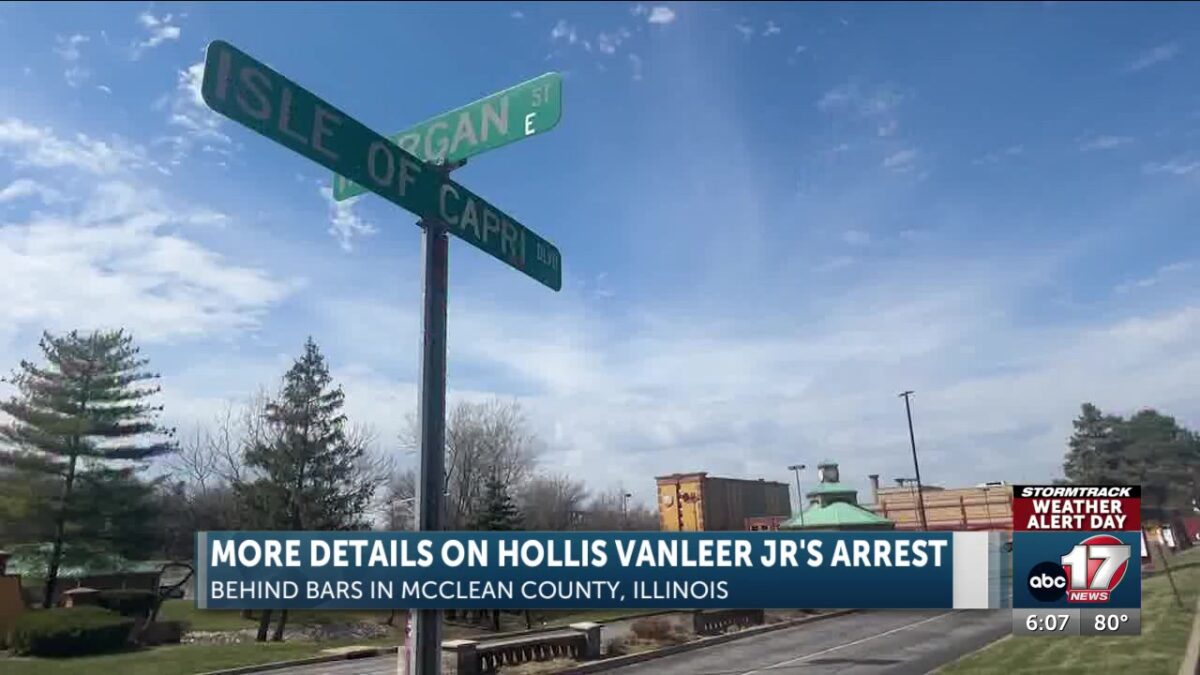
Hollis C. Vanleer Jr., 21, was arrested Wednesday afternoon by Bloomington police and U.S. Marshals, according to a release from the Bloomington Police Department. Police arrested Vanleer during a traffic stop, and he was taken to the McLean County, Illinois, Detention Facility, the release states.

Vanleer remained in Illinois on Friday, awaiting extradition to Cooper County.

Vanleer has been on the run since March 25, when authorities say he and Benjamin Charles, 20, used guns to rob the Isle of Capri casino in Boonville. He’s been charged with armed robbery, armed criminal action and first-degree assault.

The pair, who were carrying guns when they entered the casino, allegedly took about $1.28 million from the main money drawer, court documents say. Vanleer hit a patron who tried to interfere before the pair got away in a Ford Taurus, court documents in previous reporting say.

The Ford was later abandoned in Howard County.

Charles remains in the Cooper County Jail on charges of first-degree robbery, armed criminal action and evidence tampering. His next hearing is July 27.

Vanleer is charged separately in Illinois with selling marijuana, a crime related to a stolen vehicle and criminal trespassing.

Click here to follow the original article.

America’s 250th Birthday Bash: A Weeklong Celebration in El Paso

Nichole Gomez

El paso, TX (KVIA-TV)-Celebrate America’s 250th birthday with a week full of excitement! Fort Bliss MWR and Destination El Paso are teaming up to bring you the biggest celebration in 250 years. The festivities start with Pop Goes the Fort on Saturday, June 27, at Biggs Park, and continue all week. Downtown El Paso will also join in, with celebrations leading up to Saturday, July 4. Enjoy festive events, family-friendly activities, live entertainment, and plenty of patriotic spirit as the city honors this special occasion.

https://bliss.armymwr.com/calendar/event/pop-goes-fort-and-americas-250th-birthday-8-days-celebrations/7261980/109336

https://visitelpaso.com/america250

Click here to follow the original article.

Good Vibes Only: UTEP Dinner Theatre rocks audiences this summer

Rosemary Garcia

EL PASO, Texas (KVIA)—This summer, the UTEP Dinner Theatre is inviting audiences to an exhilarating production of ‘School of Rock: The Musical.’ Starting Friday, June 26th, through July 18th, audiences can expect performances full of energy, live music and good humor for the whole family!

The musical is an adaptation of the popular 2003 film. It revolves around Dewey Finn, a wannabe rock star who poses as a substitute teacher.

Fernando Romero plays Finn during the UTEP production. “You can expect a lot of amazing music, a lot of fun energy. You’re going to expect a lot of blaring lights and sounds and a lot of very, very talented adults and kids in this amazing production of School of Rock!”

Jaime Barba, the interim director of the UTEP Dinner Theatre told ABC-7 that the cast and crew have been preparing every weeknight for three hours for the last 10 weeks.

“The costumes, the sets, the lights, all of that is done here in this theater locally. And I think that’s one thing that people like when they come see our shows, because like I said, we try to do next-to- professional here at UTEP,” Barba said.

The cast is made up of adults and includes 12 children.

“Yes. They can act, sing and dance, but several of them play live music on stage. The guitars, the bass player, the keyboardist and the drummer all play their instruments live on stage,” the interim director said.

The show also features songs from the popular movie with a musical score that’s perfect for pop and rock lovers.

“You can see and hear all of their hard work, all of their talents. Everything that they put into this show kind of come together to create this kind of artistic monster, if you will. And it’s fantastic. The kids are really, really good.”

Romero said he is eager to bring the iconic Jack Black character to my life!

“I’m so honored to be here to give 100% of my energy into this part, because it’s so much, so much jumping and running and a lot of facial expressions and, you know, and it’s it’s an absolute honor to be here and to play this part,” he said.

For ticket information, click here.

If you have a Good Vibes Only story, please e-mail rosemary.garcia@kvia.com.

Click here to follow the original article.

El Paso Police Department Seeks Applicants for Academy Class

Nichole Gomez

El Paso, TX (KVIA-TV)- The El Paso Police Department is now taking applications for the 144th Police Academy class. The deadline to apply is August 25. You can apply for the paid, 8.5-month Police Trainee program or join the free, multi-week Citizen Police Academy for community members.

https://www.joineppd.com/academy

Click here to follow the original article.

TxDOT Rolls Out Sobriety Awareness Truck

Nichole Gomez

El Paso, TX (KVIA-TV)- Most drivers do not mean to harm anyone, but last year, impaired driving led to 1,254 deaths on Texas roads. In 2025, El Paso saw 14,724 traffic crashes, which caused 54 deaths and 248 serious injuries, according to the Texas Department of Transportation. That same year, El Paso had 501 DUI-related crashes involving drugs or alcohol, resulting in 17 deaths and 29 serious injuries. During the July Fourth holiday in 2025, there were 6 DUI-related crashes in El Paso, with 1 death and no serious injuries.

Every day in Texas, three people lose their lives because someone made a choice that could have been avoided.

To help drivers remember the real cost of driving under the influence, the Texas Department of Transportation (TxDOT) is taking a truck that once delivered beverages on a statewide tour. Now, this truck serves as a reminder to always drive sober and to drive like a Texan—kind, courteous, and safe.

The beverage truck has been turned into a place to learn about sober driving. Visitors can check out educational materials and interactive stations that show the dangers of impaired driving through hands-on activities. Visit on Friday, June 26, from 7 p.m. to 11 p.m. at San Jacinto Plaza, 111 West Mills Ave, El Paso, TX 79901.

Click here to follow the original article.

How Daniel Boone laid the foundation for Missouri and the American Frontier

Olivia Hayes

DEFIANCE, Mo. (KMIZ)

His name is on significant landmarks around the Show-Me State and in Boone County, like the Daniel Boone Regional Library or the Daniel Boone Little League Fields.

But who was Daniel Boone?

While he wasn’t from Missouri, he made the state his home for much of his life, helping to form it into what it is today.

Boone was born in Pennsylvania in November 1734 and went on to live in a number of states, from North Carolina to Kentucky, eventually laying roots on land that would later become Missouri.

“He lived about 22 years here in Missouri before he passed away,” said Derek Van Booven, the lead interpreter at the Daniel Boone Home property. “A lot of Daniel’s life is setting up the foundations for what his kids and for what other early Americans will end up doing in the creation of Missouri.”

Daniel Boone arrived in 1799 on land known as Spanish Illinois or Upper Louisiana. It’s now Defiance, Missouri, in St. Charles County. Boone was given a land grant of 850 acres and 600 acres for everyone who arrived with him. Boone never lived on his 850 acres, eventually selling it off in pieces to help settle debts and get his family on a firm financial footing.

“Daniel, some of his younger kids and his extended family network were some of the first Americans to arrive west of the Mississippi River in Spanish territory,” Van Booven said.

The Boone family lived there from 1800 onward, with his son Nathaniel building the main home starting in 1807 and finishing it in 1817. It is a four-story limestone structure built in a prime location right near the Femme Osage Creek — a mansion of sorts for the time period.

The Boone home in Defiance, Missouri. (KMIZ)

According to Van Booven, Boone was named a syndic and a commandant by the Spanish government for the commissioned land.

“He was, sort of the executive and judicial and military authority for everyone living in this area, which they called the Femme Osage District after the river,” Van Booven said. “He was actually in charge of distributing land to people, who got what land, who was allowed to come into this specific area, and so it stays a very sort of Boone neighborhood for a long, long time.”

Daniel stayed on his daughter Jemima Callaway’s property in present-day Marthasville for some time, but later moved with Nathan and his family in his last few years of life.

Despite the home being known for Daniel Boone, and owned by his son Nathan, the two men were probably there the least, with the fur trade, land surveying and speculation being how the family made most of its wealth. The Boones also operated a salt works further up the river in Mid-Missouri, which later became known as the Boone’s Lick, a name that has stood the test of time.

“A lot of the roads coming into this area still to this day run along the Femme Osage Creek,” Van Booven said. “So even our modern transportation systems and highways can be traced back to these waterways and the old Native American roads that were here when the Boones were first coming into the area.”

The Boone’s Lick Trail from St. Charles to a salt lick in Howard County helped fuel the growth of several Mid-Missouri cities. The road passed through Fulton, helping to make it the Callaway County seat, and helping with Columbia’s growth in the city’s early years.

Boone’s Lick Country, also known as Boonslick, is still known as a cultural region of Missouri, with the salt lick itself now a state historic site in Howard County.

The work at the lick and elsewhere would take the men away from the property for weeks or even months at a time.

Those holding down operations on the home property also helped produce a delicacy of the time, only available in the nearby woods, the sugar cone. Everything year-round was influenced by the seasons and the weather, and it was a massive team effort.

“This would be one of the few sort of sweet treats that you might get throughout the year. But it takes a lot of labor to produce this,” Van Booven said. “Hours of collecting the sap, gathering it into large basins and then boiling it down, and that’s an almost all-day process.”

Collecting maple sugar and the production of sugar cones was a big staple of early life in Missouri as it was a natural sugar, you could barter with it and sometimes even get hard cash for it at the market. That exact process was what took the life of Daniel’s wife, Rebecca, in 1813 when she caught pneumonia from the cold, according to Van Booven. Nathan’s wife, Olive, moved into the matriarchal role over the property.

A replica of a sugar cone at the Boone home in Defiance, Missouri. (KMIZ)

A mixed legacy

The Boones didn’t build their wealth on their own — they also owned slaves.

“We have a record of the Boones being slave holders from at least the late 1780s onwards, from tax records, from census data, and from their own writings,” Van Booven said. “This was an exploitative relationship at the end of the day, even though it was smaller scale, even though they were living in closer proximity to the Boones.”

The enslaved helped build the majority of the home’s 2.5-foot-thick limestone walls. They did most of the cooking, they also processed the majority of the animal hides brought back from hunting trips and produced much of the clothing.

The highest confirmed number of slaves on the Boones’ property was 12, which Van Booven said is sizable for Missouri at the time. The total would have been higher when factoring in the extended Boone family network in the region.

Much of their impact comes without a name attached to it, such as the work of Nathan’s wife’s enslaved body servant and possible midwife, only known to history as “Olive’s Girl.” Olive’s Girl built the first chimney in the Boone home and raised 12 of Nathan and Olive’s 14 children to adulthood, a rarity for the time period.

“This really high rate of survival and all the descendants that come through Nathan and Olive’s line may very well be thanks to a woman who we were never given her actual name,” Van Booven said. “We don’t know what happened to her, but she left her fingerprints all across this house and in the very memories of the family.”

Many of Nathan and Olive’s children go on to marry into other families with last names significant to Missouri’s history: Zumwalts and Van Bibbers. Other Boone grandchildren married into other familiar last names like Callaway, Randolph or Morgan. Panthea Grant Boone even married one of Missouri’s first governors, Lilburn Boggs.

“Daniel has close to 70 grandkids. He goes on to have well over 300 great-grandchildren and thousands of modern descendants,” Van Booven said.

A parcel map that shows the Boone family land grant at the Boone home in Defiance, Missouri. (KMIZ)

Historical records also recount Derry Coburn, who assisted Boone on his hunting trips in later years as arthritis began to break down his physical abilities.

“Derry was someone who had been enslaved by the Boone family for quite some time, likely trafficked from Kentucky like most of their household,” Van Booven said. “He would be doing things like taking care of the camp, helping to process the hides the Boones bring in, making sure basically everything was running smoothly and that was not something that he had a choice in.”

According to Van Booven, Coburn lived long enough to eventually see himself freed by the Boone family in his late 60s. Another man named Sam is also believed to have made his way to freedom from the property of Daniel Morgan Boone, reportedly in the company of a woman, Van Booven said.

“We can’t understand Daniel fully without talking about the enslaved people who helped make his lifestyle possible, but from whom he was also learning as well,” Van Booven said. “It was an enslaved man at Boonesborough, the town named after Daniel, that helped teach Daniel how to make black powder, which, for somebody who made his living largely on a rifle, that was an indispensable skill that was handed down through an African American man.”

It’s unclear how the Boones treated their enslaved workers, but the family was invested in the system of slavery.

The legacy of Daniel Boone also crossed paths with the indigenous tribes of Missouri at the time.

“A lot of their wealth was also built off of land speculation and land surveys, which were only profitable if native peoples were removed from the areas those speculations and surveys were taking part in,” Van Booven said.

Indigenous relations

The region was one of the centers for the Mississippian culture, and the city of Cahokia, now part of the modern-day St. Louis metro area, was larger than London at its height. Refugee native groups like the Shawnee, the Delaware, and the Cherokee were also coming into Missouri around the same time to escape American westward expansion.

“The impetus for the Spanish Empire to invite Daniel and other Americans like him into the area, is that they are meant to be a buffer between the Spanish settlements and the Osage or Wahzhazhe nation,” Van Booven said.

The Osage was the dominant power of Missouri at the time Daniel arrived. The Spanish had just gone to war with the Osage nation a few years prior, in 1793. The Osage still had trade dominance on the waterways and powerful connections.

Van Booven described Boone’s relationship with the Native Americans as mostly peaceful but tense at times. Boone’s most common interactions with them revolved around poaching, which is also where many of the problems arise. The Boone family and other settlers would often cross into Native American lands to hunt.

“There’s a particular account in the late 1810s where Nathan and a fellow of his were stopped while they were beaver hunting, and because it had been a repeat offense, they were actually stripped of everything and left to find their way home in the winter,” Van Booven said.

That winter, the Osage had reached a crisis point in their food supply and had already warned the settlers about poaching on their lands.

These tribal tensions also bled into the War of 1812. While Daniel did not fight in the war, two of his adult sons and many of his grandchildren did, according to Van Booven. The state government later passed a law in the late 1830s that prohibited any native person from being within the stated boundaries of the state of Missouri, without the specific permission of an acting agent and without a pass. That law was not repealed until the late 20th century, Van Booven said.

“To this day, there is no native reservation within the state of Missouri. None of the nations that were exiled during the Boones’ period have been able to return as nations to Missouri,” Van Booven said.

Daniel Boone died less than one year before Missouri was ratified as a state; he was 85 years old. It’s unclear what his cause of death was, but Van Booven said he struggled with arthritis and poor eyesight for many years before he died. Boone was also significantly older for a time period that was quite war-ridden and lacked access to quality medical care.

Even though Boone’s life ended, his legacy was just beginning. The Boone family stayed affluent and important for years to come in Missouri’s history.

“Two of his relatives were involved in the Missouri convention, which created our first constitution. His son, Nathan, would go on to be involved with surveying projects. His son, Daniel Morgan, helped survey the site for Jefferson City. They’re involved in multiple treaty negotiations with the Osage Nation,” Van Booven said.

Lasting legacy

The room where Daniel Boone died at the Boone home in Defiance, Missouri. (KMIZ)

Daniel Boone is also used as a symbol of sorts for the forward push of Manifest Destiny in the formative years of United States history.

Daniel was buried with his wife Rebecca in a Marthasville cemetery and unbothered for a little more than a decade, until graverobbers paid a visit in the mid-1830s. Following that, the Boone family commissioned a local blacksmith and stone carver to produce new Missouri limestone grave markers.

Those headstones can be found today in Fayette, Missouri, at the Central Museum of History on the Central Methodist University Campus. Joseph Morris, a summer intern and local history teacher, said the new stones marked the Marthasville gravesites from 1836 to 1845 until they were disturbed again.

“The State of Kentucky sent a few representatives of the Frankfort Cemetery Commission to disinter the Boone couple and move them to the Frankfort City Cemetery, where they currently reside today,” Morris said.

This move by Kentucky was the start of a dispute that spanned more than 150 years with the state of Missouri.

“Both cemeteries claim him, both cemeteries say that they are the rightful resting place of Daniel Boone. So it’s a great big question mark, we really don’t know where Daniel Boone is,” Morris said.

Though legal proceedings have calmed since the 1990s, questions linger over communication with the Boone family about the bodies being moved, according to Morris. The only family member known to be present at the exhuming of the bodies in 1845 was Rebecca Bryan Boone’s nephew, Marion McKinney. McKinney later confirmed the limestone markings’ authenticity to the Central Museum, according to Morris.

Morris said the bodies were not properly exhumed either, with many of the bones for both Daniel and Rebecca being left behind.

“We know that, of the remains that they took femurs, ribs, skulls and the bones that were intact and stable enough to be transported,” Morris said.

Once brought to Kentucky, it took the state 17 years to erect a formal monument in the Frankfort Cemetery for Daniel and Rebecca, and a lot happened during that period.

“The Frankfort City Cemetery received some pretty harsh shelling and artillery bombing during a battle during the Civil War, and the grave sites at Frankfort were grave robbed throughout the Civil War as well,” Morris said. “The Boone family has been grave robbed at least three times that we know of.”

The Marthasville limestone markings arrived at the Central Museum of History 120 years ago after being donated by friends of the Boone family from the Defiance area.

“These stones represent not only the last tangible touchstone that we have to an American archetype, but they also represent an opening chapter into his postmortem life,” Morris said.

Daniel and Rebecca’s original tombstones have never been recovered.

It doesn’t take a person long to find some place or something influenced by Daniel Boone and his family in Missouri. The names of at least five counties in Mid-Missouri alone are influenced by Boone and his family.

Click here to follow the original article.

Former Moberly police officer found guilty of murder

Sutton Parker

HUNTSVILLE, Mo. (KMIZ)

A judge has found a former Moberly police officer guilty in the murder of a woman who confronted him at his front door,

Judge Robert Koffman found David Heyde guilty of second-degree murder in the case of Baily Scott at the end of his bench trial Friday morning.

Koffman ruled that there was no evidence that Heyde acted in self-defence.

The bench trial got underway Thursday in Randolph County. Heyde was accused of shooting and killing Scott on his property last July.

Scott was found with a gunshot wound in her right torso outside Heyde’s home on July 6, 2025.

Heyde told police he fired two shots at Scott, court documents say. He claimed self-defense, saying Scott hit him during an argument after she alleged he was “attempting to kill birds at the front of his property,” according to the probable cause statement.

Scott “had no obvious signs of trauma or injury to either of her hands,” the statement says.

Heyde waived his right to testify, and his defense did not call on any new individuals to take the stand as the trial wrapped up Friday. The state argued in closing that the evidence did not support legal use of deadly force.

The state also pushed back on claims by Heyde that he was hit by Scott, noting that in several interviews, Heyde used different language to describe the encounter.

The defense argued that, regardless of the wording, Heyde had been consistent in interviews that there had been some sort of physical altercation.

The defense also claimed that Heyde had every reason to believe that he was in fear of his life, and that was the ultimate reason for Heyde’s use of deadly force.

Click here to follow the original article.