Federal judge temporarily blocks Trump administration’s attempt to dismantle Boulder’s NCAR lab


By Claire Lavezzorio

Click here for updates on this story

    BOULDER, Colorado (KMGH) — A federal judge has temporarily blocked the Trump administration’s first major attempt to dismantle the National Center for Atmospheric Research, offering supporters of the iconic lab a moment of relief.

NCAR, framed by the Flatirons and considered a crown jewel of climate research, employs more than 800 people.

Monday’s ruling by Senior U.S. District Judge R. Brooke Jackson keeps the lab intact for now, by blocking the transfer of the lab’s Supercomputing Center in Cheyenne, Wyo. to new management with the University of Wyoming.

NCAR uses the supercomputing center for computing capacity and data storage.

In the ruling, the judge noted the push for a transfer of management by the U.S. National Science Foundation (NSF) may have been retaliatory, writing it may “have been motivated by the Trump Administration’s dispute with the State of Colorado.”

According to the ruling, that dispute began in December 2025, when President Trump called Governor Polis “weak and pathetic” for refusing to release Tina Peters. Coincidentally, Peters was released on the same day of the ruling.

On Tuesday, Denver7 spoke with Carlos Martinez, a former NCAR employee who now is a senior climate scientist the Union of Concerned Scientists — an advocacy organization representing 20,000 scientists across the country. He celebrated the decision, but said more work needs to be done.

“The ruling from the judge was very welcome news,” Martinez said.

Martinez said the stakes for NCAR extend well beyond Boulder.

“Now more than ever, funding staffing, and the data that NCAR has is so critical for our preparedness and understanding of our changing climate,” Martinez said.

The Boulder Chamber has fought to protect the lab since the dispute between the Trump administration and Colorado began. Jonathan Singer, senior director of policy programs for the chamber, described what losing NCAR would mean.

“I hope we never go there, but it was foundational in defining who Boulder is today, and so it would be a massive blotch on Boulder, but also the nation as well,” Singer said.

Scientists are celebrating the ruling but say more work needs to be done to protect the lab — whether through community support or efforts at the national level.

“Congress has a really critical role here, and not just providing funds to NCAR, but writing iron-clad language that keeps all of NCAR intact,” Martinez said.

Governor Polis released a statement in response to the ruling which said in part, “I am pleased the court recognized the serious harm this transfer would cause and I, alongside Colorado’s federal delegation, remain committed to protecting Colorado’s research ecosystem from the Trump Administration’s unjust attacks.”

This story was reported on-air by a journalist and has been converted to this platform with the assistance of AI. KMGH verifies all reporting on all platforms for fairness and accuracy.

Please note: This story was provided to CNN Wire by an affiliate and does not contain original CNN reporting. This content carries a strict local market embargo. If you share the same market as the contributor of this article, you may not use it on any platform.

High School senior uses Rubik’s cube skills to teach 8th graders math

By Mike Castellucci

Click here for updates on this story

    ARAPAHOE COUNTY, Colorado (KMGH) — Joshua Maupin has known he wanted to be a teacher since elementary school. On Tuesday, he got his chance.

The Eaglecrest High School senior spent time at the Cherry Creek Innovations Campus working alongside teacher Amy Jaster before heading to Prairie Middle School to teach an 8th grade math class — using Rubik’s cubes.

Jaster said the experience is part of a broader mission.

“One of my missions in this program is to change how we see teaching. Teaching is a great career,” Jaster said.

Maupin, who started solving Rubik’s cubes in 4th grade, used the puzzle to connect math concepts to students in a hands-on way. The Cherry Creek Foundation provided a Rubik’s cube for every student in the class.

“I am a senior at Eaglecrest High School right now, graduating next week. I’m going to teach you Rubik’s and connect it to math,” Maupin told the class.

The 8th graders had mixed reactions as they worked through the puzzle.

“It’s making me lose brain cells,” one student said.

“It kind of makes sense, some parts of it,” another student said.

Jaster said Maupin’s ability to connect with students is what sets him apart.

“You got people like Josh who can bring it to real life fun and not a chore, that’s when you start opening doors for students,” Jaster said.

For Maupin, the day only reinforced what he has long believed about his future.

“I’m just excited to become a teacher in the future, cause it’s what I wanted to do for a long time,” Maupin said.

After the bell rang and the lesson wrapped up, Maupin said his plans have not changed.

“Oh, for sure,” Maupin said, when asked if teaching is still in his future.

This story was reported on-air by a journalist and has been converted to this platform with the assistance of AI. KMGH verifies all reporting on all platforms for fairness and accuracy.

Please note: This story was provided to CNN Wire by an affiliate and does not contain original CNN reporting. This content carries a strict local market embargo. If you share the same market as the contributor of this article, you may not use it on any platform.

Motorcyclist serious hurt in Camden County crash

Jazsmin Halliburton

COLUMBIA, Mo. (KMIZ)

A 47-year-old Roach man was seriously hurt in a motorcycle crash just before 12:30 a.m. Thursday in Camden County.

According to a Missouri State Highway Patrol crash report, the man was driving a 2001 Harley Davidson Sportster on Irontown Dr. north of Tick Lane. The man swerved to avoid a deer, went off the left side of the road and overturned.

He was taken to Lake Regional Hospital with serious injuries.

The report states that the man was not wearing a helmet at the time of the crash. The motorcycle has extensive damage.

Click here to follow the original article.

Driver found guilty in Deer Park nail salon crash that killed 4 people, including off-duty NYPD officer

By Alexa Herrera

Click here for updates on this story

    New York (WCBS, WLNY) — A Long Island man was found guilty of second-degree murder Thursday for the crash at a Deer Park nail salon that killed four, including an off-duty police officer.

Police said Steven Schwally drunkenly rammed his car into the Hawaii Nail and Spa in June 2024. He did not deny causing the horrific crash nearly two years ago, but did deny that he was intoxicated at the time.

Schwally was on trial for more than a dozen charges, including four counts of murder. He could spend 27 years-to-life in jail. He previously turned down a 22-years-to-life plea deal.

The horrific crash Prosecutors said the Dix Hills man stopped at a liquor store to buy two bottles of Long Island iced tea on June 28, 2024 before he barreled through a parking lot. Surveillance video showed Schwally crashing into the business at 78 miles per hour on Grand Avenue.

His blood-alcohol level was .17, more than twice the legal limit, prosecutors said.

The crash killed salon owner Jiancai Chen, 37, and two employees, Meizi Zhang, 50, and Yan Xu, 41. Off-duty NYPD officer Emilia Rennhack, a 30-year-old newlywed to a detective, also died. Nine people, including a 12-year-old girl, were hospitalized. Schwally was also injured.

Alcohol or leg problem? Schwally’s lawyer said he was a handicapped driver whose right leg locked up on the gas pedal when the crash happened.

“He was not intoxicated, and from day 1 we said he had a problem with his leg and he could not remove his leg from the gas pedal,” said defense attorney Christopher Cassar.

The defense also claimed a video of the crash shows he tried to avoid the accident, and his blood alcohol test was inaccurate.

“That’s contaminated,” Cassar said.

Please note: This story was provided to CNN Wire by an affiliate and does not contain original CNN reporting. This content carries a strict local market embargo. If you share the same market as the contributor of this article, you may not use it on any platform.

This giant salmonella-carrying invasive lizard is spreading in Georgia — officials say it must be stopped.

By Christopher Harris

Click here for updates on this story

    Georgia (WUPA) — Georgia is home to a wide range of wildlife, from white-tailed deer and wild turkeys to black bears and American alligators. But lurking in the grasslands and forest clearings of at least two southeastern counties is a scaly intruder that state wildlife officials say poses a serious threat to native animals and crops alike.

It’s the Argentine black and white tegu.

According to the Georgia Department of Natural Resources, this large lizard, native to South America, has established a wild population in Toombs and Tattnall counties in southeast Georgia, and the agency is working urgently to assess and eradicate it.

What exactly is a tegu? The Argentine black and white tegu, known scientifically as Salvator merianae, is the largest of all tegu species. DNR describes it as black to dark gray with white speckled bands across its back and tail. Adults can grow up to 4 feet long and weigh 10 pounds or more, and they can live up to 20 years.

Hatchlings, which can be about 6 to 8 inches long, have a distinctive bright green coloration on their heads that fades at around one month old.

The lizards are active during the day and are fast-moving, ground-dwelling creatures. But don’t let that fool you, DNR says they are also strong swimmers capable of staying submerged for extended periods of time.

Why do Georgia officials consider tegus dangerous? Wildlife officials say tegus pose a significant threat to several native Georgia species, particularly those that nest on the ground.

DNR says tegus will eat the eggs of ground-nesting birds, including quail and turkeys, and other reptiles, such as American alligators and gopher tortoises, both protected species.

Their diet doesn’t stop there. According to DNR, tegus will also consume chicken eggs, fruit, vegetables, plants, pet food, carrion and small live animals, ranging from grasshoppers to young gopher tortoises.

There are also concerns that tegus could spread exotic parasites to native wildlife and cause bacterial contamination of crops. Research shows tegus, like most reptiles, carry salmonella.

Adding to the concern is how quickly they can reproduce. Females reach reproductive age after their second season of winter dormancy and can lay around 35 eggs per year, with hatching in Georgia expected in June and July.

How did tegus get to Georgia? DNR points to the exotic pet trade as a primary pathway. The agency warns residents to do their research before purchasing exotic pets and to never release them into the wild.

Since December 2023, Argentine black and white tegus have been classified as wild animals in Georgia and cannot be kept as pets unless they were registered with DNR and tagged before that date. Importing and breeding tegus in the state is also illegal.

What should Georgia residents do they spot a tegu? If you see a tegu in the wild, dead or alive, DNR wants to know about it. Residents are asked to note the location, take a photo if possible and report the sighting here.

As for what residents can do beyond reporting: on private property, tegus can be legally trapped or killed year-round with the landowner’s permission and in accordance with local ordinances.

On state Wildlife Management Areas, tegus may be taken with firearms that are legal for the current hunting season on that specific WMA. Trapping tegus on WMAs is not permitted.

DNR also advises residents in Toombs and Tattnall counties to keep pet food inside, fill holes that could serve as shelter and clear yards of brush piles and other debris that tegus might use for cover.

What’s being done at the state level? Since 2022, DNR has led trapping efforts in the affected counties in partnership with the U.S. Geological Survey and Georgia Southern University.

Trapped tegus are humanely euthanized, and their diet and reproductive status are documented at Georgia Southern. DNR says it is also responding to reported sightings elsewhere in the state, emphasizing that early detection and rapid response are key to preventing tegus from spreading further.

Please note: This story was provided to CNN Wire by an affiliate and does not contain original CNN reporting. This content carries a strict local market embargo. If you share the same market as the contributor of this article, you may not use it on any platform.
Overcrowding pushes Buncombe County detention into safety crisis, sheriff says

By Kimberly King

Click here for updates on this story

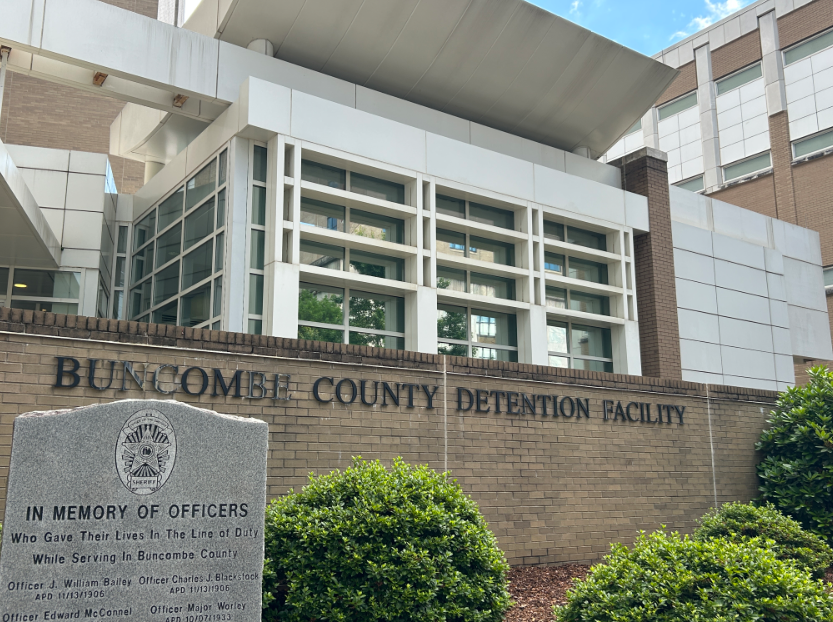
    BUNCOMBE COUNTY, N.C. (WLOS) — Jail overcrowding has reached what Buncombe County Sheriff Quentin Miller calls a safety crisis, forcing detention staff to place beds in areas never intended to house inmates.

The Buncombe County Detention Facility population reached 543 inmates on May 31, well above the 470 inmates staff say is the maximum population for safe operations.

Miller and detention leaders say a combination of increased bookings, longer stays and the implementation of Iryna’s Law have contributed to the growing population.

Detention facility staff told News Thirteen they struggle to handle the many mentally ill inmates who end up at the jail. Many also have substance use issues. News Thirteen has reported in the past the area’s main mental hospital is often full with little or no room for patients due to demand. Miller has said in the past the jail has become a place where people struggling with drugs or mental illness end up charged with crimes.

Miller says overcrowding is creating risks for both inmates and staff.

“In my opinion, safety is what is the concern — safety of the detainees and safety of the deputies who work there,” Miller said. During a tour with News 13, detention leaders showed areas where multiple mattresses have been placed on floors inside holding cells, commonly known as “drunk tanks,” to accommodate the growing inmate population. Some single-person cells are now housing two inmates, with one sleeping on a mattress on the floor.

Staff say violence inside the jail is increasing.

“We are seeing an increase of violence with our officers getting assaulted, detainees fighting each other,” said Major Jillian Banks, the detention facility’s operations supervisor.

“Urine is being tossed on staff, feces being tossed on them,” said Capt. Vivian Bacote, a jail operations supervisor. “Our staff is not trained to take care of the mentally ill.”

During the tour, a fourth-floor housing unit dedicated to inmates with mental health issues and disciplinary problems was filled with detainees. One inmate in a cell stood on a metal shelf several feet above the floor before a supervisor directed him to come down.

Staffing shortages are compounding the problem. Detention leaders say the jail currently operates with about 18 officers per shift but needs closer to 30 to safely manage the population.

“Every model we show, shows the numbers increasing,” said Capt. Jeffrey Littrel, another jail operations supervisor.

Jail data shows the population of people awaiting trial has increased 20% compared to a year ago, while misdemeanor cases have risen 12%.

Detention leaders point to Iryna’s Law as a major factor behind the increase. The law, formally known as House Bill 307, took effect Dec. 1, 2025, after being enacted in response to the fatal stabbing of 23-year-old Iryna Zarutska on a Charlotte light-rail train.

The law expanded the number of offenses requiring secured bonds or limiting pretrial release options for defendants.

“Because of Iryna’s Law that went into effect in December, we need people to get out of jail,” Banks said. She added that judicial officials have limited flexibility under the law.

“The magistrates court and judges, their hands are tied. You have to have a bond,” Banks said.

Multiple defense attorneys previously told News 13 the law has resulted in more defendants being held on secured bonds or no bond, increasing the number of people who remain in jail while waiting for their cases to move through the court system.

Miller says the challenges are not unique to Buncombe County and are being felt at jails across North Carolina. During a presentation to county commissioners Tuesday, he said he is aware of at least one county jail operating more than 250 inmates above capacity.

Detention leaders say solutions could include diverting low-level offenders from jail, increasing mental health resources and moving criminal cases through the court system more quickly.

Please note: This story was provided to CNN Wire by an affiliate and does not contain original CNN reporting. This content carries a strict local market embargo. If you share the same market as the contributor of this article, you may not use it on any platform.

GKN Aerospace launches community initiatives to support Orange County evacuees after chemical crisis

By Dean Fioresi

Click here for updates on this story

    ORANGE COUNTY, California (KCAL, KCBS) — GKN Aerospace officials have announced a series of community support initiatives intended to help the thousands of Orange County residents who were forced to evacuate their homes when the Garden Grove-based facility became the center of a chemical crisis in late May.

In a news release shared on Wednesday, approximately two weeks after the incident began at the aerospace facility on Western Avenue, officials said that they had funded $3 million to Orange County United Way’s OC Community Resilience Fund “to provide assistance to those affected by the recent evacuation of areas surrounding GKN’s Garden Grove facility.”

“The company is also committing an additional $1 million to support broader community initiatives across Orange County,” the release said. “GKN earlier funded $1 million to the American Red Cross to support residents directly impacted by evacuation orders when those orders were in effect.”

People affected by the six-day ordeal were urged to contact 211 Orange County, where they would be connected with local health and human services resources to learn more about available aid.

“By working with a trusted local organization with the infrastructure to mobilize resources quickly, we hope to help expedite assistance to those most in need,” said GKN Senior Vice President Steve Carlin, in a statement. “We will continue to engage with community leaders, work with the authorities, and help the community move forward.”

GKN’s Community Update website also contains a list of frequently asked questions regarding the incident, the current status and information for people and businesses seeking assistance from the community resilience funds.

The announcement comes as cleanup continues following the hazardous material incident that began on Thursday, May 22, when Orange County Fire Authority crews were dispatched for reports of a chemical leak at GKN. Upon arrival, they found that a tank containing methyl methacrylate, a highly flammable and toxic substance, had a failed cooling system. The self-heating substance was at risk of a “catastrophic explosion” or leak, which would have affected thousands of people in the surrounding areas.

After days of working to mitigate the incident, firefighters said that the risk of a BLEVE, or “Boiling Liquid Expanding Vapor Explosion” event, was no longer on the table after the tank cracked and released pressure from inside.

Once residents were allowed to return home, 50,000 of which were placed under mandatory evacuation orders for at least five days, several lawsuits were filed against GKN Aerospace and hundreds of community members flooded a special city hall meeting to demand accountability from the company.

While the incident was still developing, Orange County District Attorney Todd Spitzer also said that he had launched a probe into the GKN, asking anyone working at the company to be a whistleblower and report any wrongdoings.

Please note: This story was provided to CNN Wire by an affiliate and does not contain original CNN reporting. This content carries a strict local market embargo. If you share the same market as the contributor of this article, you may not use it on any platform.

Couple charged after keeping hundreds of ‘street rats’ in home, court docs say

By Rachael Lardani

Click here for updates on this story

    STEELTON, PA (WGAL) — A Dauphin County couple is facing multiple charges after police say hundreds of “street rats,” some reportedly as large as small cats, were discovered living in a condemned home in hazardous and unsanitary conditions, according to the Steelton Borough Police Department.

Authorities identified the couple as Thomas Busch, 37, and Jennifer Busch, 43, both of Steelton.

WGAL News 8 obtained court documents detailing what investigators found inside the home on South Harrisburg Street.

Foul odor leads to severe rat infestation

According to court documents, officers were called to the home on April 15, 2026, after receiving a report of a foul odor coming from the property.

When police arrived, they said they immediately noticed a strong odor consistent with ammonia and saw a large number of flies around the home. Investigators also reported that black bags had been placed over the windows, preventing a clear view inside.

Inside the residence, police said they found:

A severe rat infestation throughout the home Numerous large rats inside the residence, some described as the size of small cats Extensive rat feces, urine and nesting material A strong odor consistent with animal waste and decomposition Rats housed in confined, overcrowded cages Dead rats left inside some cages Evidence of dead rats stored in a deep freezer Several hundred rats outside cages, including under the back porch and roaming the backyard

Home had already been condemned

Court documents state the home had been condemned since July 2025, with an additional condemnation notice posted in October 2025 because of the severe rat infestation.

Neighbors told police they had seen the couple entering and living inside the property despite being told it was unsafe and uninhabitable, according to officials.

Woman captured 150 baby rats to care for, police say

According to police, Jennifer told investigators that she had been personally caring for the rats.

Authorities said the couple told police they had euthanized some of the rats using carbon dioxide because they believed it was a safer alternative to professional extermination methods.

Jennifer told police that she had captured approximately 150 baby rats and acknowledged that additional rats had been killed under her and Thomas’s care, according to the documents.

Police said an SPCA animal cruelty officer advised that the rats were likely Norway rats, commonly known as sewer rats, which can carry diseases transmissible to humans and animals.

Fire hazards, structural damage, animal waste

Investigators said the dangerously elevated ammonia levels and accumulation of feces, urine and waste created major health and safety hazards for both people and animals.

According to police, the property posed several serious risks, including:

Bodily injury, illness and suffering to the animals Exposure to disease for neighboring residents and first responders Fire hazards from exposed wiring throughout the property Structural damage caused by urine and ammonia, including weakened flooring

Charged

Jennifer and Thomas were each charged with:

Aggravated cruelty to animals Criminal trespassing Cruelty to animals Neglect of animals Recklessly endangering another person

The incident remains under investigation. Stay with WGAL for updates as we learn more.

Please note: This story was provided to CNN Wire by an affiliate and does not contain original CNN reporting. This content carries a strict local market embargo. If you share the same market as the contributor of this article, you may not use it on any platform.
3-week nationwide kidnapping case ends in pursuit, arrest of suspect

By Layza Pinero Resto

Click here for updates on this story

    LEE COUNTY, Florida (WBBH) — A man is in custody after the Lee County Sheriff’s Office says he kidnapped a victim and dragged her across the country for three weeks, eventually leading to his arrest after a vehicle crash and foot chase in Collier County.

In a news conference on Thursday, LCSO said that Floyd Stuck, 41, kidnapped a victim and drove her across the country for three weeks, initially claiming that they were going to fly to New York to visit family.

Sheriff Marceno said that after the trip started, while on the way to the airport, Stuck began acting erratically and told the victim that their plans had changed. Marceno added that Stuck handed the victim documents containing personal information on her family, and threatened to harm them if she didn’t comply with his demands.

What started as a three-day trip to New York, LCSO said, turned into a three-week kidnapping that spanned the entire country, with the two travelling through Louisiana, Oklahoma, Nevada and other states.

LCSO said Stuck took the victim’s phone and threatened to kill her if she told law enforcement about him. Stuck also reportedly choked the victim and tied her up.

While the pair were in San Diego, California, LCSO said that Stuck threatened to kill the victim again. The victim, after three days, managed to escape Stuck by jumping off of a balcony and running to a neighbor to call law enforcement, LCSO said.

Afterward, Marceno said Stuck used multiple fake numbers to harass the victim. On May 20, the victim returned to Lee County after spending time in the hospital.

LCSO said that on Tuesday, Stuck was seen on surveillance video trying to put an AirTag on the victim’s car. LCSO said the victim called them about the AirTag. Afterward he was seen driving down Coconut Road. LCSO said he ditched his car and used a rideshare service to travel to Collier County.

While in Collier County LCSO said Stuck rented a U-Haul. The Collier County Sheriff’s Office said on Wednesday that they were assisting LCSO in tracking Stuck after he had driven away from a traffic stop.

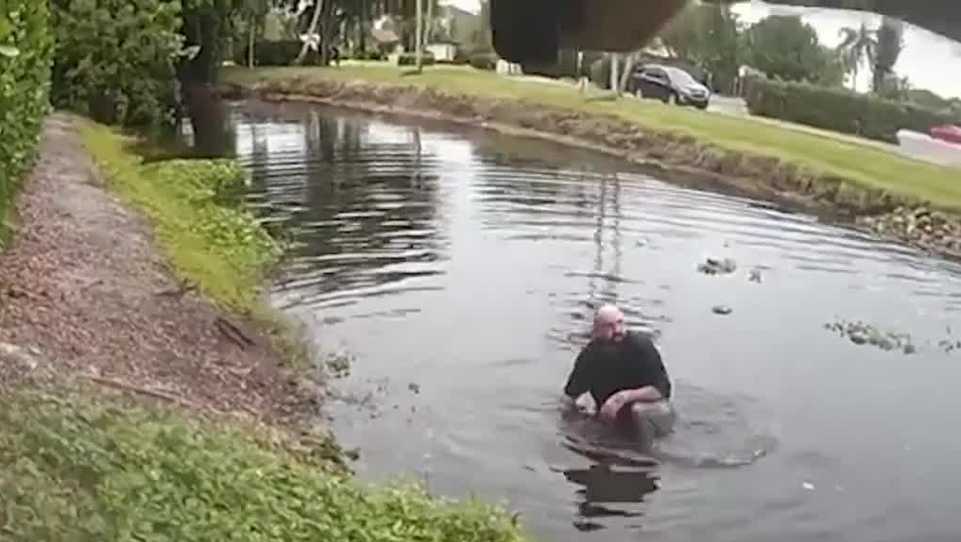
After a chase, Stuck reportedly crashed his U-Haul into a tree near Lakewood Boulevard when deputies deployed stop sticks. CCSO said he ran away from the crash before he was eventually caught in a pond and surrendered to a K-9 deputy.

Stuck was arrested by Collier County deputies and booked into the Naples Jail Center on fleeing and eluding charges.

LCSO said in their news conference that Stuck, who is facing kidnapping, aggravated stalking and unlawful installation of a tracking device charges, also reportedly used fake bombs to commit robberies in Maryland.

CCSO told Gulf Coast News that Stuck will be transferred to the Lee County Jail for his warrants.

Please note: This story was provided to CNN Wire by an affiliate and does not contain original CNN reporting. This content carries a strict local market embargo. If you share the same market as the contributor of this article, you may not use it on any platform.

Man accused of sexually assaulting woman in cemetery deemed sexually violent predator

By Kaitlin Corbett

Click here for updates on this story

    MANCHESTER, N.H. (WMUR) — A man accused of violently attacking and raping a woman in a Manchester cemetery in 2021 is being civilly committed after a yearslong legal battle.

Amuri Diole was found incompetent to stand trial for charges related to that incident, but he will still remain in custody.

A judge agreed with prosecutors Wednesday and ruled that Diole is a sexually violent predator.

Under New Hampshire law, a sexually violent predator is “a person who has been convicted of a sexually violent offense and suffers from a mental abnormality or personality disorder that makes the person likely to engage in sexual violence if not confined in a secure facility for long-term control, care and treatment.”

This type of civil commitment is rare, and it will keep Diole in custody for up to five more years.

Before the 2021 assault, prosecutors said they tried to have Diole held on separate assault charges, but he was released. Shortly after, he was accused of sexually assaulting a woman at knifepoint and threatening to kill her when she screamed for help.

“We need to see if he has or suffers from, you know, a severe mental health disorder, a mental defect, or personality disorder that makes him likely to commit more crimes like this,” said Patty LaFrance, legal analyst.

He was found at the scene and arrested.

“It’s for those situations where you do have somebody who is still dangerous, maybe has maxed out because they have not completed the sexual offender program up at prison, and they’re basically saying, ‘Yep, I’m going to get out and do it again. And there’s nothing you could do to stop me.’ Now, there is. So that’s what this law was created for,” LaFrance said.

The civil commitment ruling can be reviewed in five years.

Please note: This story was provided to CNN Wire by an affiliate and does not contain original CNN reporting. This content carries a strict local market embargo. If you share the same market as the contributor of this article, you may not use it on any platform.