Colorado team uses sonar, underwater drone to recover drowning victims and evidence

By Olivia Young

Click here for updates on this story

    DENVER, Colorado (KCNC) — A Colorado water recovery team is preparing for what they worry could be a busy summer season.

CBS Colorado tagged along with Colorado Parks and Wildlife’s Marine Evidence Recovery Team for a training demonstration on Chatfield Reservoir, covering how the team recovers drowning victims and evidence.

From above, it’s not possible to clearly see what’s underwater. But a special drone equipped with sonar and a camera gives responders eyes below the surface.

CPW’s Grant Brown, Michael Haskins and Brian Phillips oversee boating safety in Colorado.

“Collectively, we’re the boating safety program statewide,” said Brown, Colorado Boating Safety Program manager.

They serve on the Marine Evidence Recovery Team (MERT), with 14 members based across the state who are ready to respond to tragedies on the water anywhere in Colorado within 24 hours. But they’re not the rescuers. They’re there to recover bodies, boats and other evidence.

“If someone has drowned in a lake, and we are requested, we will go out to assist with recovering that drowning victim. We can also just find any underwater evidence, so if a boat sinks, or if we’re looking for something that is underwater that needs to be either detected or recovered,” Brown said.

Their boats are equipped with a basic sonar transducer commonly used by anglers called a Humminbird, as well as a towable sonar torpedo that can be deployed.

“These bright white dots right there, those are probably fish,” said Phillips, MERT team leader and flatwater investigator, reading the sonar image from the torpedo. “We can go down here, we can zoom in and look at it, see what it is.”

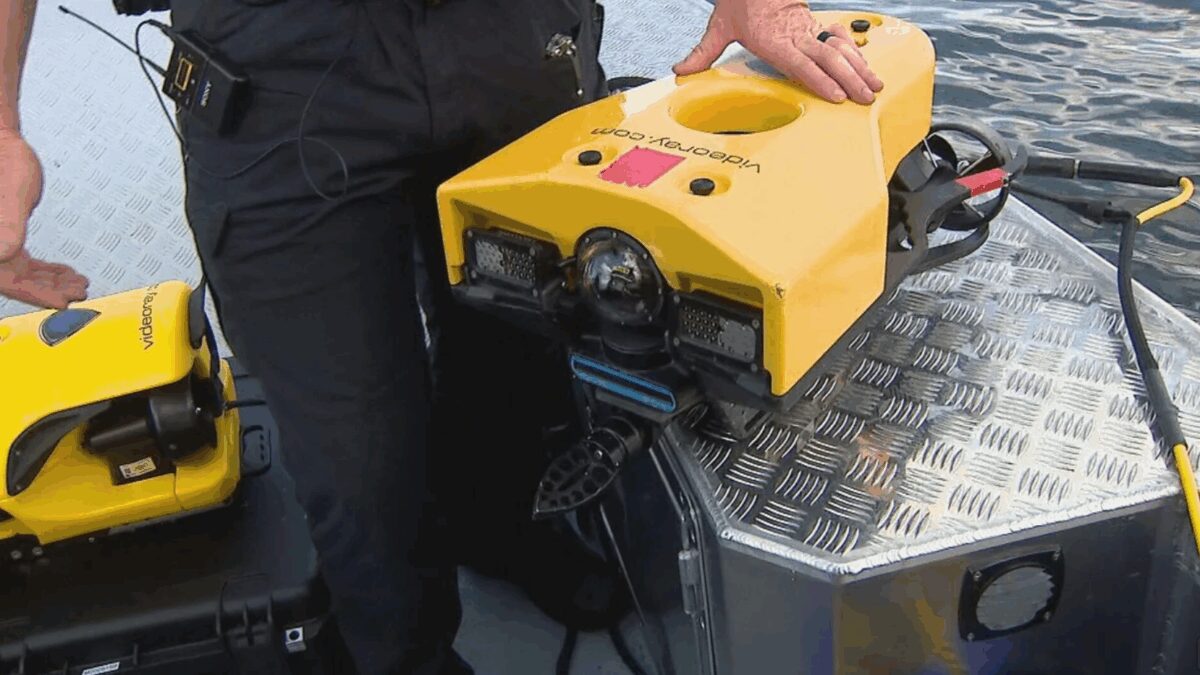
And most importantly, they use a remote-operated vehicle, or ROV. It’s an underwater robot and drone equipped not just with sonar but also with a camera.

“We’re gonna function test our robot before we throw it over. So Brian’s gonna run through the propellers and run the claw, and I’m just gonna let him know it’s working,” said Haskins, a MERT team member and swift water investigator.

After the test was successful, the men threw the device into the water.

“You see, I’ve got a little bit of a shadow right there, so I know I’m close to an object. Well, now I’m just going to switch to the camera, and then I’m just going to move forward a little bit,” Phillips said, reading the ROV’s monitor. “So there it is, that’s the boat, there’s the bow eye, that’s the bow, it’s actually sitting, the rear end of it is down into the silt right there.”

Earlier this year, the team discovered a boat that sank in 2016 and was never recovered after its occupants were rescued.

“This is where we kind of exposed that registration number,” Phillips said. “That’s how we figured out what boat it was.”

Brown says it’s still being decided whether this boat will be removed, and it may be recovered as part of a training exercise with South Metro Fire’s dive team.

The ROV also has a grabber arm that largely replaces the need for a human diver.

“We can get right up to it. We can poke it, we can bump it,” Phillips said.

“So we manipulate that, you can grab on to the person, ideally clothing, and we have that tether we’re pulled into the surface and then recover them,” Brown said.

He says the team got their first ROV in 2018, and while they still may work with dive teams in some cases, the robot has made their jobs easier.

“Tricky part with [before 2018] is, we’re getting a diver ready to go and all geared up. If let’s say we’re looking for a drowning victim, though. Sometimes on sonar, we’re like, ‘That could be the person!’ But sometimes it’s not, it’s going to be a tree, some other anomaly underwater,” Brown said.

The team records and preserves everything as evidence.

“It is, until proven otherwise, a crime scene. So, [an] underwater crime scene, it is filming that bottom and everything around what we’re looking for,” Brown said.

A March drowning at Lake Pueblo was the first time the team was dispatched this year. They don’t just respond to state-owned bodies of water; they will also come out at the request of any municipality or law enforcement agency, even assisting in criminal investigations where evidence or bodies may be underwater.

The team wants to do as few recoveries as possible this summer. So Brown wants everyone to remember important safety tips.

“Please wear a life jacket, even if you can swim, wear a jacket. Oftentimes, the drowning victims that we have recovered, they were great swimmers. So, I think that’s a common misconception that people that drown just can’t swim. So, wear a life jacket, take a boater safety class, don’t drink and boat, and just know before you go,” Brown said.

He adds that while it may feel hot on the boat, the cold water can shock your body if you get into or fall into it. Try to stay calm and catch your breath. He reiterates that the single best thing you can do to save your life is wear a life vest.

Please note: This story was provided to CNN Wire by an affiliate and does not contain original CNN reporting. This content carries a strict local market embargo. If you share the same market as the contributor of this article, you may not use it on any platform.

Community gets first look at Obama Presidential Center at My Brother’s Keeper Alliance Family Reunion

By Shardaa Gray

Click here for updates on this story

    CHICAGO, Illinois (WBBM) — The Obama Presidential Center does not open to the public for another two weeks, but a group of young men and community leaders recently held a panel discussion inside on how they can make an impact on their communities.

“I honestly just want more. I want to see more progress being done in my community,” said Justin Harris, a recent college graduate who was part of the discussion.

Harris also shared his story of how he met former President Barack Obama.

“When I actually had the moment to actually be in the same room with him, I shared that moment with him, and that was captured live on TV. So, I still have that video, and that holds dearly to my heart to this day,” he said.

Last Wednesday, Harris joined others from the mentoring group My Brother’s Keeper inside the Obama Center. The My Brother’s Keeper Alliance Family Reunion was the first such event to be held there. The Obama Foundation launched My Brother’s Keeper in 2014 to help improve the lives of boys and young men of color.

The group opened their panel discussion with the Leo High School Choir performing on stage.

“I think it was fitting, because the grand opening of the presidential center and having all of this energy even before it opens, and to christen the place was pretty special,” said My Brother’s Keeper director Vondale Singleton.

Trey Baker led the panel discussion, talking about how young men can make a difference in their own communities, an inspiration from former President Obama.

“I think when you have that level of storytelling, it inspires you. And I think it inspired everybody in the room as we were talking about how MBK Chicago was going to be situated to be a part of that mission,” he said.

The My Brother’s Keeper Alliance Family Reunion is a major gathering hosted by the Obama Foundation. It serves as an empowering convening for youth advocates, change-makers, and young men of color to connect, discuss leadership, and build strategies for their communities.

“It brought so much joy to my heart to see so many familiar faces, and not just any faces, but boots on the ground; organizational leaders and young people, ambassadors sharing their stories about change and hope, which is what I believe our president represents,” Singleton said.

A massive “Welcome Home” message inside the Obama Presidential Center let the next generation know it is a safe place.

“It’s for all of us, because when you have resources like the museum, and the recording studio, and the basketball court, and the community garden; all of these spaces, what it tells me is that it’s not just about access, it’s about empowering connection,” Baker said.

The Obama Presidential Center opens to the public on June 19. Officials expect 1 million people to visit every year.

Please note: This story was provided to CNN Wire by an affiliate and does not contain original CNN reporting. This content carries a strict local market embargo. If you share the same market as the contributor of this article, you may not use it on any platform.
World Cup fans may need more than an hour to go through security at Boston Stadium

By Riley Rourke, Paul Burton

Click here for updates on this story

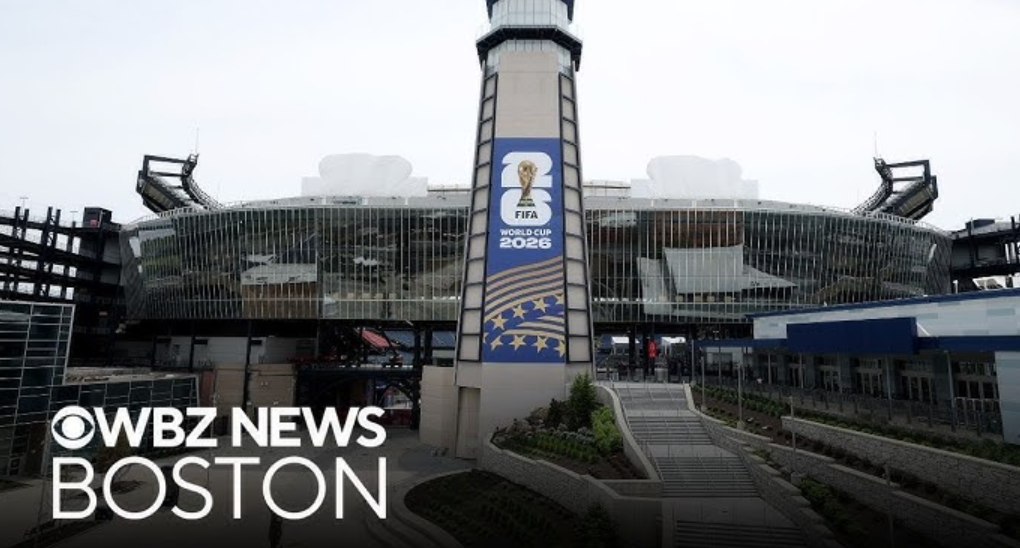
    BOSTON, Massachusetts (WBZ) — It could take fans over an hour to go through security for the FIFA World Cup matches at Boston Stadium, according to Foxboro Police Chief Michael Grace.

“We want your experience to be memorable for all the right reasons. Plan ahead, know your transportation route and arrive early,” Grace said. “These layered security protocols are in place to ensure your safety. So give yourself time and be patient.”

Grace said that fans should plan to arrive in time to watch the pre-match entertainment.

Police will be stationed at the entrances and exits of Boston Stadium throughout the tournament, and the stadium will close to non-ticket holders starting Tuesday. Fans will also be unable to board a Boston Stadium Train without an accompanying match ticket. Patriot Place and the Mass General Brigham Healthcare Center will remain open to the public during match days.

“We strongly encourage you to utilize the many fan zones across the Boston, Providence and surrounding communities,” Grace said.

There will be no ticket sales at the stadium.

Security for World Cup at Boston Stadium Over 50 local police departments, federal agencies, and State Police will be involved in the security effort across the state. Around 85 National Guard members will also be available to help provide any additional security throughout the tournament.

Police will be stationed on public transportation to the events as well as at any entrances/exits to Boston Stadium.

“Massachusetts is no stranger to hosting large-scale events; however, the scope and duration of the World Cup does make it unique,” Massachusetts State Police Colonel Geoffrey Noble said.

Boston Police Commissioner Michael Cox said to expect a larger police presence throughout the city, with officers in uniform and plain clothes on bikes, motorcycles, and more.

“Remember all laws apply – public drinking, providing alcohol to minors, and open containers of alcohol or consumption of marijuana in public and use of fireworks are illegal and will be enforced,” Cox said.

Local, state, and federal officials will also host daily meetings with security officials in other host cities to ensure everyone remains safe during the tournament. The FBI is not currently aware of any threats against the Boston Stadium matches.

State Police ask that anyone call 911 if they notice anything suspicious. He said that it may take longer for international numbers to get through, but said there are interpreters available if people do not speak English.

Reusable water bottle ban Deputy Commissioner of the Department of Public Health, Dr. Jess Zeidman, at the press conference emphasized the importance of drinking enough water during the hot summer games.

“The most important advice to all the fans and visitors during the World Cup is to drink plenty of water,” Dr. Zeidman said. “Drink water, not soda, not beer, nor margaritas. They don’t count for hydration; in fact, they can worsen dehydration.”

But on Wednesday, FIFA announced that it would ban reusable water bottles from all matches, citing safety concerns.

Boston 2026 vice president and chief security officer Ryan Winmall said they are looking for ways to ensure that the public, staff, referees and teams remain fully hydrated during the games without having to purchase water.

Zeidman recommended that people refrain from spending too much time out in the sun. She emphasized that urban areas and the Boston Stadium could reach temperatures of over 90 degrees on some days.

“Our summers can be really, really intense,” Zeidman said.

What items are banned from the World Cup matches? Drones, fireworks, smoke devices, flares, weapons, noisemakers and any other pyrotechnics are banned from both World Cup matches and the FIFA Fan Festival at Boston City Hall Plaza.

Some other items that are banned include:

Matches and lighters Professional camera equipment including lights, tripods and cameras Seat cushions with zippers/pockets Banners larger than 6.5 x 5 ft unless pre-approved Alcohol Folding chairs Laser pointers Umbrellas Strollers/baby seats Scooters, bikes, rollerblades, skateboards Inflatable items such as balloons, balls, and more Drugs unless medically approved Outside food or drink unless medically necessary For a full list, click here. FIFA emphasized that anyone attempting to enter the stadium with a banned item may be denied entry.

Boston Stadium bag policy Boston Stadium and FIFA have a strict clear bag policy. The approved bags are:

Small wallets or wristlets no bigger than 6.5″ x 4.5″ One gallon clear freezer bags no larger than 11″ x 11″ Clear, vinyl or PVC bags no larger than 12″ x 12″ x 6″

Please note: This story was provided to CNN Wire by an affiliate and does not contain original CNN reporting. This content carries a strict local market embargo. If you share the same market as the contributor of this article, you may not use it on any platform.

Where do the fish at the New England Aquarium in Boston come from? They’re not plucked from the ocean.

By Alyssa Andrews

Click here for updates on this story

    BOSTON, Massachusetts (WBZ) — Have you ever wondered where all the fish in the New England Aquarium in Boston come from? If you think they’re all just plucked from the ocean, think again.

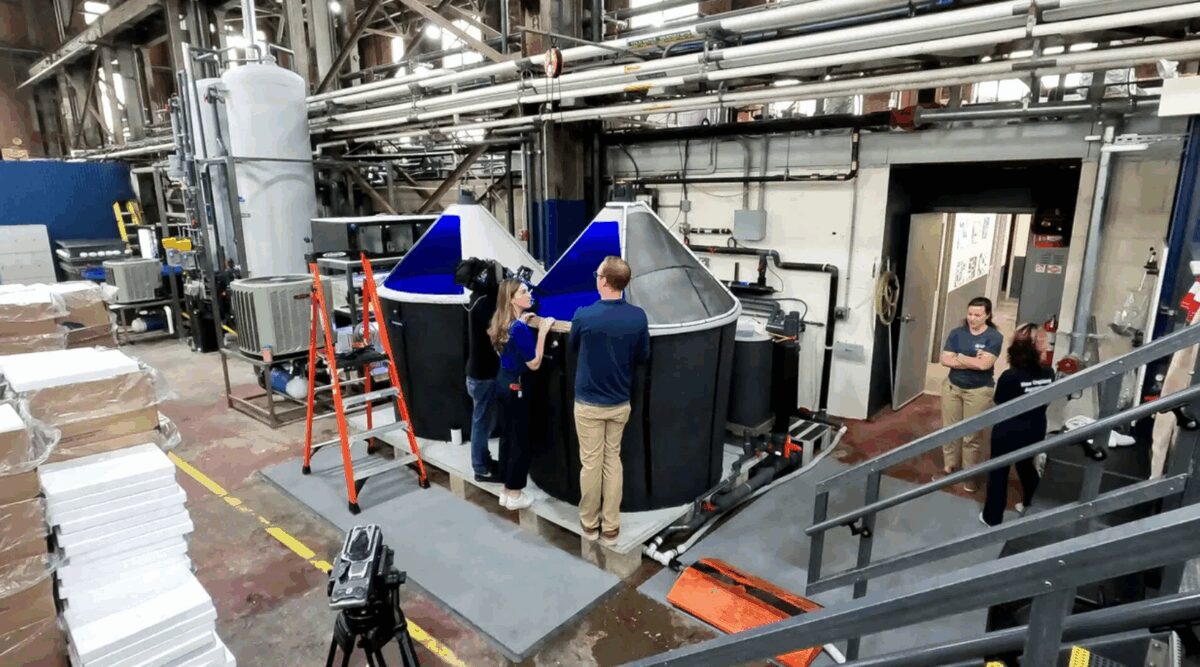
Twelve miles down the road, away from the hustle and bustle of the city, you’ll find a quiet aquaculture center located in Quincy.

“Our giant ocean tank is our largest exhibit at the aquarium and 80% of the population in that tank was raised here in Quincy,” says Monika Schmuck, the Manager of Sustainability in the Fishes Department.

Raising fish in Quincy Sustainability is a top priority at this facility. And it’s her job to make sure that happens.

“The whole program is to bolster fish in our own exhibits and pick species that we like to display for the public, but also take less from the wild and be able to do things sustainably behind the scenes,” Schmuck said.

Plenty of firsts happen here in Quincy. Right now, they’re working on becoming the first team to raise Creole Wrasse fish.

As the Curator of Aquatic Collections, Michael O’Neill is working through questions that nobody has the answer to yet. With over 35 thousand species of fish, there’s a lot left to discover.

“In our spare time, we’re going to focus our efforts on a species that’s never been done before, but folks would love to be able to show in their exhibits. And so we are chipping away at learning what it takes to raise this species,” O’Neill said.

Creating breeding conditions for fish It’s an incredibly precise craft to create the best breeding conditions possible. Something the ocean does naturally with ease.

“The long process that it takes to raise an animal from egg to adulthood, it takes years. And it takes a lot of really tiny little food. It takes a lot of people, you know, tinkering and trying to understand the science behind it and trying again and again,” Schmuck said. “There’s a lot of failures.”

And some conditions just can’t be replicated. While you can control for the temperature, food and lighting, some fish need a specific season to mate. Or even the correct moon phase.

“When we have a full moon, and around the full moon, we’re going to start to see more breeding activity from this group of fish. So we’ll come in next morning and check the screens and if we have a bunch of eggs, we’ll move them along,” O’Neill said.

All of the planning pays off in the end when they get to send the fish off to the aquarium and add to aquaculture research.

“It definitely is hard to raise fish from eggs, but it adds to the science for other public aquariums to use, and also other researchers. It adds to being able to understand fish in the wild better, because we understand where they come from, where their life history is, as we see how they progress through larvae,” Schmuck said. “And then when we get to put them back on exhibit, it’s really rewarding.”

Please note: This story was provided to CNN Wire by an affiliate and does not contain original CNN reporting. This content carries a strict local market embargo. If you share the same market as the contributor of this article, you may not use it on any platform.

Local nonprofits partner to raise awareness around gun violence

Olivia Hayes

COLUMBIA, Mo. (KMIZ)

Mom’s Demand Action Missouri and Powerhouse Community Development led a joint effort against gun violence Friday night.

In light of National Gun Violence Awareness Day, the groups gathered with and for survivors of gun violence at Douglass Park in Columbia. Attendees wore orange in solidarity.

Two of those in attendance included Kimberly Jordan-Sheeley and her mother Karen Jordan. The Jordan family has lost at least five of its own family members in Columbia shootings: James Hickem, Antonio Houston, Demetrius Ware, Sam Baldwin and Corey Jordan.

Corey Jordan, Kimberly’s brother and Karen’s son, was shot and killed in the same park Friday night’s event was held at.

“The security here in Douglass Park, I think we need to take a look at that,” Jordan-Sheeley said.

Jordan-Sheeley called for more community collaboration as one way to combat the issue of gun violence.

“Everybody has to come together from the First Ward to the Fifth Ward. One or two people just can’t do it, one or two agencies can’t do it. We all have to come together, it’s a community problem,” Jordan-Sheeley said.

Jordan said stricter gun laws could have changed the outcome in her son’s case, and others facing the same thing.

“A gun was owned by someone else and was given to the person, or it was allowed in an area where that person easily got it and committed that crime,” Jordan said.

Columbia’s state representatives echoed Jordan’s sentiments, but detailed a number of roadblocks to get there.

“There’s all these political talking points. Politicians blame this group, the city blames this group, some people say it’s a family issue, but we need to figure it out,” state Rep. David Tyson Smith (D-Columbia) said.

“You’ve got teenagers out in the middle of the night and they have guns on them and there’s nothing the police can do to take those guns away,” state Rep. Kathy Steinhoff (D-Columbia).

Steinhoff ad Tyson Smith also called on parents to take action in hopes of curbing the issue of youth gun violence.

“Kids today, even young adults today, they have grown up playing video games that have massive violence involved with incidents,” Steinhoff said.

“Parents need to step up, put a lock on your kids. Don’t let your kids out in the middle of the night,” Tyson Smith said.

Click here to follow the original article.

Versailles man dies in Morgan County crash

Ryan Shiner

COLUMBIA, Mo. (KMIZ)

A 66-year-old Versailles man was killed in a crash on Friday afternoon on Route W in Morgan County near Old Marvin Cutoff Road, a crash report from the Missouri State Highway Patrol says.

The report says the man drove a 2023 Chevrolet Silverado southbound and it went off the left side of the road after he failed to negotiate a turn. He hit two highway signs and hit a creek bed, which led to the vehicle overturning, the report says.

The man was pronounced dead at University Hospital and his body was brought to Kidwell Garber Funeral Home in Versailles, the report says. He did not wear a seatbelt at the time of the crash, according to the report.

The Silverado was totaled. MSHP reports do not name those involved in crashes.

Click here to follow the original article.

Healing from the Teton Dam: Families of those lost honored at Friday memorial

David Pace

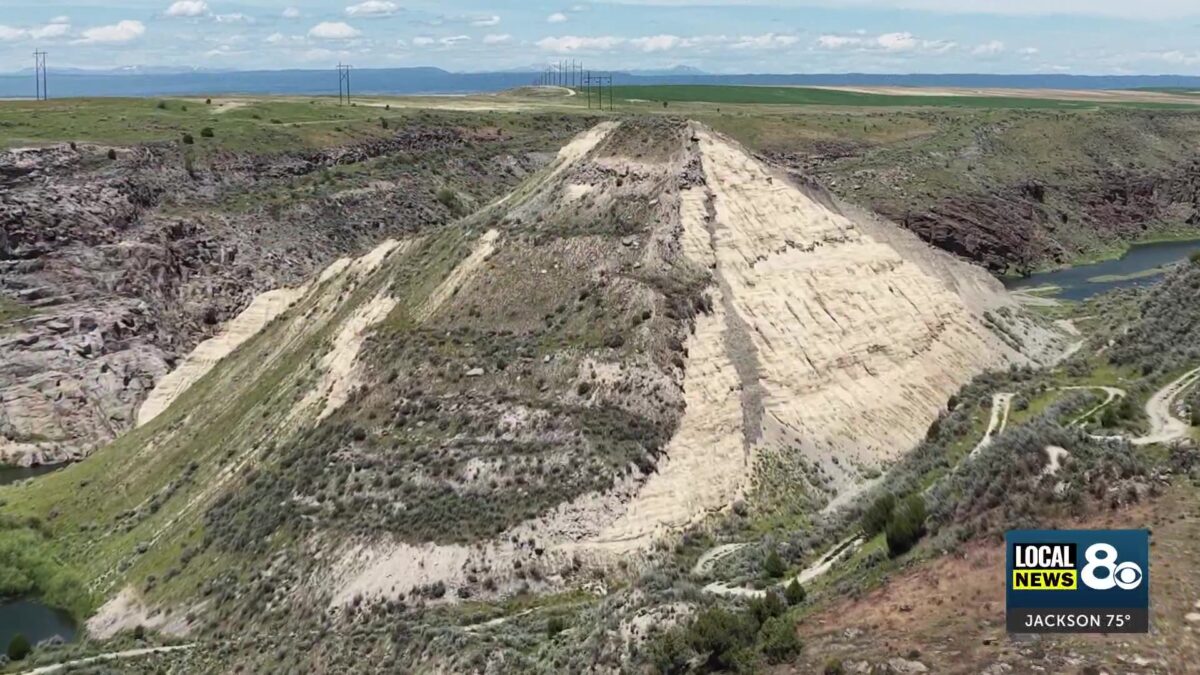
NEWDALE, IDAHO (KIFI) – Dozens of Idaho leaders honored the men and women who overcame unbelievable devastation unleashed when a wall of water 80 feet high surged out of the Teton Dam 50 years ago.

“In Sugar City there wasn’t much left,” said Idaho Lieutenant Governor Scott Bedke, who at the time was a recent high school graduate assisting in recovery efforts. “We spent a lot of time in people’s homes closer to Rexburg, just literally shoveling mud into buckets and carrying them upstairs and dumping it into wheelbarrows or dump trucks.”

As a teenager, Lt. Gov. Scott Bedke left Oakley, Idaho, to assist with recovery efforts.

Family members of the eleven people who lost their lives as a result of the flood were invited to a commemorative ceremony at the site of the dam Friday.

“Loved ones were taken suddenly without warning,” said Bureau of Reclamation Senior Advisor Linnea Melbye. “Homes, farms and ways of life built through generations were sucked away in minutes as the torrent of floodwaters surged through the Upper Snake River Plain. Entire communities including Sugar City, Rexburg and Wilford were forever changed.”

Bureau of Reclamation Senior Advisor Linnea Melbye offers a moving tribute to victim’s families.

Others recalled the flood’s immense power and the ensuing devastation.

“We stood at water’s edge and watched all the commotion that was happening that day,” said Idaho Water Resource Board Chairman Jeff Raybould. “Saw the house float through Smith Park and down Main Street pretty much intact.”

Idaho Department of Water Resources Chairman Jeff Raybould recollects memories and lessons from surviving the Teton Dam flood in Rexburg.

Bureau of Reclamation Regional Director Roland Springer shared a letter from State Representative Rod Furniss recollecting the flood.

“We could hear the roar of the oncoming water, punctuated by the sharp explosions of breaking infrastructure,” he said.  “Then came a sound I will never forget. An eerie, agonizing screech of twisting metal. It was the sound of immense friction, like giant sheets of iron rubbing together under unimaginable force. Sensing the immediate peril, my father yelled, ‘We better get the hell out of here!’ As we fled, a police officer at the perimeter informed us we had escaped by the narrowest of margins. The wall of water was only a mile behind us.”

Bureau of Reclamation Columbia-Pacific Region Acting Regional Director Roland Springer oversees 54 reservoirs and more than 70 dams and dikes in the Northwest.

Following the disaster, the Bureau of Reclamation evaluated the failure and transformed its Dam Safety program.

“What emerged – this aftermath was a profound transformation in how we design, how we evaluate, and how we manage dams,” said Bureau of Reclamation Dam Safety Engineer Peggy Mott. “The Teton Dam failure became the catalyst for building the Bureau of Reclamation’s modern dam safety program. This is a program that today is recognized across the nation and around the world for its rigor, its transparency, and its commitment to protecting the public.”

Bureau of Reclamation Dam Safety Chief Peggy Mott has invested her career implementing the Dam Safety Program created after the failure of the Teton Dam.

Fifty years later, the legacy and impact of the Teton Dam lives on.

The War Birds from Rexburg’s Legacy Flight Museum perform a “Missing Man” formation Friday over the Teton Dam site.


Click here to follow the original article.

US Rep. Gabe Vasquez seeks report on what caused El Paso airport closure

Gabrielle Lopez

(KVIA) — New Mexico Congressman Gabe Vasquez spoke before the Department of War and the Federal Aviation Administration asking for more information on the closure of the El Paso International Airport in February.

Rep. Vasquez introduced amendments pushing the DOW to provide a report on its coordination with the Department of Homeland Security and the FAA.

He also asked for an explanation on what caused the airport to temporarily shut down.

On Feb. 11, the FAA announced a 10-day closure of the El Paso airport for security concerns. The restrictions lifted within hours.

“There was no communication, no coordination,” Rep. Vasquez told ABC-7. “In this last National Defense Authorization Act that I was just debating yesterday, we have a full report coming on exactly what happened, how to prevent it, how to strengthen that interagency coordination.”

Both amendments passed the committee hearing and will be considered by the House of Representatives.

Rep. Vasquez will face Republican nominee Greg Cunningham in November for New Mexico’s Second Congressional District.

Click here to follow the original article.

Juárez mom arrested, accused of chaining 9-year-old son

Gabrielle Lopez

CIUDAD JUÁREZ, Chihuahua (KVIA) — Friday, Municipal Public Security Secretary officers in Juárez rescued a 9-year-old boy chained inside a home in the Toribio Ortega neighborhood. They arrested the boy’s mother, 35-year-old Leyma L. J. for alleged domestic violence, the Juárez Municipal Government said.

Officers in the neighborhood were patrolling when a community hotline reported the boy, according to the Juárez Municipal Government.

When they went to the reported address, they heard cries for help coming from the inside. They found the boy with a chain fastened around his ankle, according to a news release.

The boy said his mother restrained him to stop him from leaving the house, the Juárez Municipal Government said.

After being rescued, the boy went to the social work department for care and shelter, officials said.

Click here to follow the original article.

Another lake in Fayette closes

Ryan Shiner

COLUMBIA, Mo. (KMIZ)

The City of Fayette announced on its social media on Friday that another lake will be closed until further notice.

D.C. Rogers Lake closed at 4 p.m. Friday because of “recent storm impacts, elevated water levels, as well as ongoing work associated with the D.C. Rogers Wing Wall construction project,” the city wrote.

This is the second lake to close this week in the city.

Peters Lake closed on Wednesday because the spillway washed out, the city wrote.  

Click here to follow the original article.