Drought emergency declared in Oregon counties, 17 of 36 now affected

Kelsey Merison

Update: Adding video

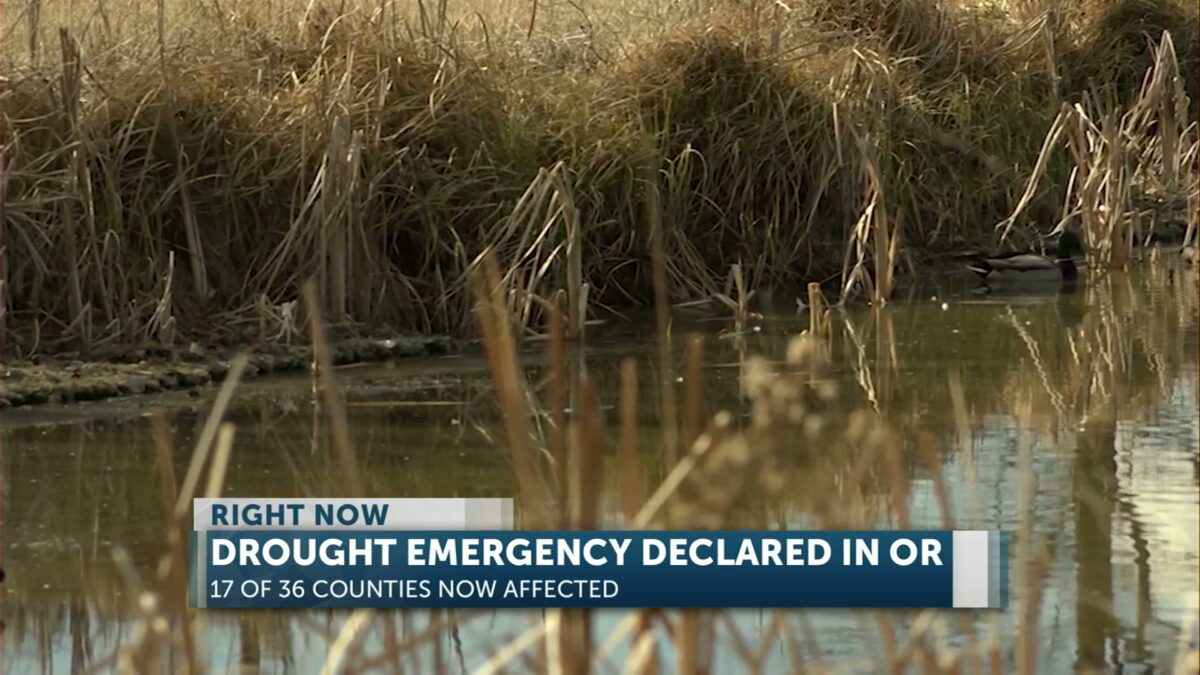
SALEM, Ore. (KTVZ) — Governor Tina Kotek has declared a drought emergency for Douglas, Gilliam, Harney, Lake and Malheur counties in Oregon. This declaration brings the total number of Oregon counties under drought emergency status to 17 out of 36.

The declaration, issued through Executive Order 26-09, directs state agencies to coordinate and prioritize assistance for the affected areas. This marks the fourth drought declaration in Oregon during 2026.

Drought conditions are expected to significantly affect Oregon’s farms, ranches, recreation and tourism sectors, drinking water availability, fish and wildlife habitats, and other natural resource-dependent activities. Extreme dryness will likely shorten the growing season, decrease water supplies and increase wildfire risk.

The drought declaration unlocks emergency tools for affected communities. These tools include assistance for local water users and expedited review processes through the Oregon Water Resources Department.

According to the U.S. Drought Monitor, as of May 19th, Douglas County was entirely in drought conditions ranging from moderate to extreme. 85% of the county was experiencing severe to extreme drought, with 11% in extreme drought. Standardized Precipitation Evapotranspiration Index values for the current water year also show moderate to severe drought conditions, with some areas at extreme levels.

Harney County was 82% in moderate to severe drought, with 6% classified as severe drought, as of May 19th, according to the U.S. Drought Monitor. Lake County showed 88% in moderate to severe drought, including 5% in severe drought. Both counties have seen conditions worsen over the past 60 days, with SPEI values increasingly reflecting extreme drought in much of Lake County and some extreme drought levels in Harney County.

Malheur County was 63% in moderate to severe drought, including 40% classified as severe drought, as of May 19th. Conditions have worsened over the past 30 days, with SPEI values reflecting severe to extreme drought across much of the county. Gilliam County had 40% of its area experiencing moderate to severe drought, with 6% classified as severe drought. SPEI values indicate abnormally dry to moderate drought in the southern half of Gilliam County, with the rest near normal, though much of the county has been drier than normal over the past 60 days.

Previous drought declarations in 2026 include Baker, Deschutes, and Umatilla counties in March. This was followed by declarations for Crook, Grant, Jackson, Jefferson, Morrow, and Wallowa counties in April and for Coos, Klamath, and Wheeler counties in May. Seasonal climate and drought outlooks indicate that drought conditions in the newly declared counties are likely to persist.

The Oregon Water Supply Availability Committee and state natural resource partners continue to monitor water conditions closely. State and local officials will coordinate with federal and Tribal partners. Conditions will be closely monitored by state natural resource and public safety agencies, including the Oregon Water Resources Department and the Oregon Department of Emergency Management.

Click here to follow the original article.

City of Pomona apologizes after “inappropriate images” appear in recreation guide

By Austin Turner, Nicole Comstock

Click here for updates on this story

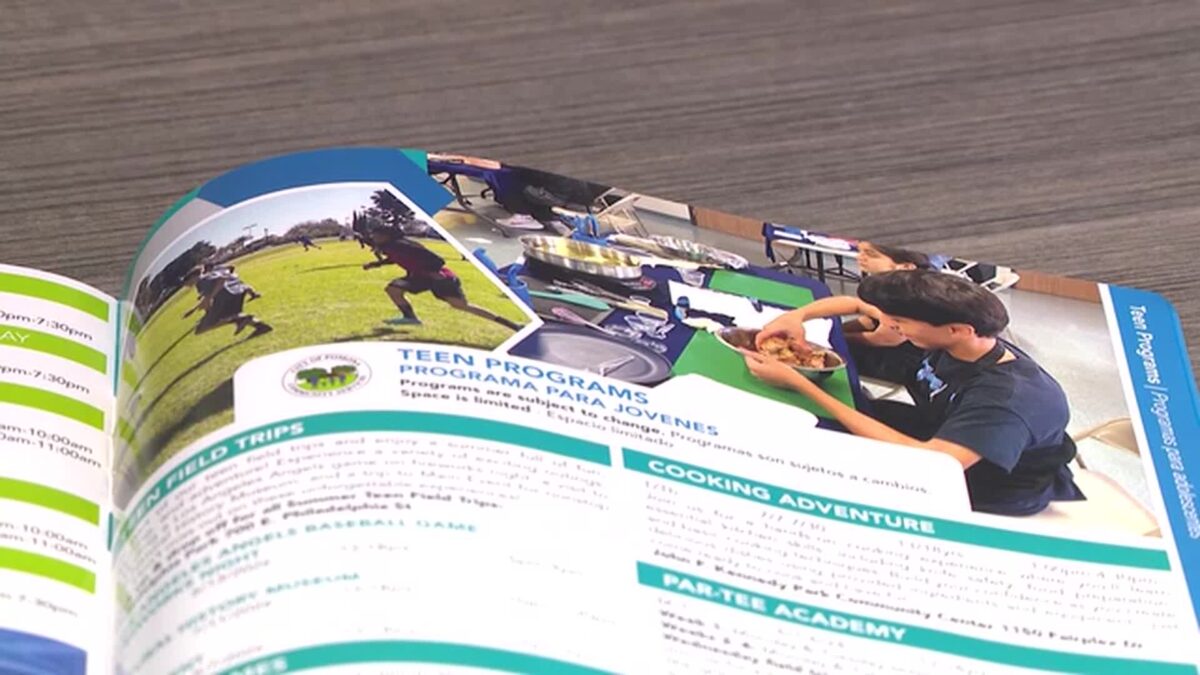
    POMONA, California (KCAL, KCBS) — The city of Pomona says it’s working to identify how “inappropriate images” appeared in its summer recreation guide.

In a news release, the city said it’s aware that “some copies” of the recently distributed guide include images that should not have appeared.

“We sincerely apologize to our community, especially to families and children who may have been affected,” the release said. “This content does not reflect the City’s values, and we take this matter very seriously.”

Assistant City Manager Mark Gluba told CBS LA that at least two copies contained pornographic material, as well as other color discrepancies. The images were printed onto the guide, rather than being physical inserts.

“Inappropriate images that we would not associate with our children and families, or with anything that the city stands for,” said Pomona City Manager Anita Scott.

The images were on the guide’s second page, under the “Movies in the Park” header.

A digital edition of the guide appears on the city’s website, although no inappropriate images appear inside.

Pomona said further distribution of the physical edition has been suspended, and an investigation into how the images were printed is underway in coordination with its publishing and printing partners.

“We are working to identify the cause and strengthen safeguards to prevent this from happening again,” the release said. “We recognize this incident has damaged public trust and are committed to transparency as we review the issue and implement corrective actions.”

Scott said that al publications were reviewed by city officials before they were sent to a third-party vendor for printing. Of the 25,000 people on the mailing list for the recreation guide, only a few have reported receiving copies with the explicit images, Scott said, noting that they’ve recovered two of the copies so far.

“We do take the responsibility very serious, and look forward to rebuidling that trust with the company and that begins with transparency and a full investigation,” Scott said.

Please note: This story was provided to CNN Wire by an affiliate and does not contain original CNN reporting. This content carries a strict local market embargo. If you share the same market as the contributor of this article, you may not use it on any platform.

US inflation tops 4% for first time in three years as oil prices jump

CNN

This story was originally published by CNN. Click here for live updates.

(CNN) — Annual inflation rose to a three-year-high of 4.2% in May, underscoring how elevated energy prices are rippling through the US economy, according to new data from the Bureau of Labor Statistics.

Prices rose 0.5% on a monthly basis, driven higher by the US-Israeli war with Iran, the latest Consumer Price Index shows. The higher cost of energy accounted for 60% of the monthly increase.

Overall food prices and grocery prices didn’t rise as fast as they did in April, increasing 0.2% and 0.1%, respectively, versus 0.5% and 0.7%.

Economists were expecting prices to rise 0.5% from the month before and for the annual rate to accelerate to 4.2% from the 3.8% reported in April, according to FactSet estimates.

“[4.2%] is still too hot for comfort, but the more important news was that the increase was concentrated mainly in energy, especially gasoline, rather than spreading widely across the economy,” economist Sung Won Sohn, a professor of finance and economics at Loyola Marymount University, wrote in a note on Wednesday.

The underlying inflation trends are running more muted. The closely watched “core” CPI gauge that strips out food and energy rose a slower-than-expected 0.2% from April, bringing the annual rate to 2.9%.

Still, May’s inflation data highlights the affordability concerns for Americans ahead of the midterms and puts fresh focus on President Donald Trump’s pledge to lower prices.

May’s release is the first inflation report since Kevin Warsh was sworn in as the chair of the Federal Reserve, succeeding Jerome Powell. With inflation moving in the wrong direction and the labor market showing signs of resilience, economists expect the US central bank to keep rates unchanged — or even consider raising them.

Overall prices aren’t rising as sharply as they did in March and April; however, the past three months have seen the fastest pickup in price hikes since the April through June period of 2022, when inflation was climbing to a 41-year high.

That’s an unsettling throwback; however, economists say that this bout of inflation isn’t expected to be as bad as the last one – current projections have CPI topping out in the range of 4.5% to 5% this year, as opposed to 9.1%.

Still, the latest war-driven price shock adds yet another layer of fast-rising prices, further compounding the effects of five years of high inflation. Affordability pressures are building, and Americans are likely to have an even harder time keeping up.

The fast-rising prices are outstripping workers’ paychecks, and that gap is widening: Annual real (inflation-adjusted) wages declined for the second month in a row, with the loss widening to 0.7% from 0.3% in April.

That could further erode Americans’ purchasing power, potentially weakening a critical economic engine in the process.

Stock futures pared some losses after the data report. S&P 500 futures were down 0.45%, compared to being down 0.75% before the report. Treasury yields were unchanged.

This story is developing and will be updated.

Click here to follow the original article.

AWC celebrates first female president

Madeline Murray

YUMA, Ariz. (KYMA) – Arizona Western College (AWC) welcomed a new chapter in its history this week as Dr. Reetika Dhawan officially began her tenure as the institution’s president.

Her appointment marks a historic milestone, making her the first woman and the first person of color to serve as president in the college’s 63-year history.

Dr. Dhawan, who has been part of the AWC community since 2008, says her first priority is listening to those she serves.

“The first 30, 60, and 90 days will be listening sessions,” Dhawan said. “My first listening session is on June 24th, where I want to see what the community wants from us.”

Throughout the summer, she plans to meet with students, employees, community leaders, and regional partners as she develops the vision and priorities for her presidency.

A key focus for Dhawan is strengthening student success and ensuring students feel supported throughout their educational journey.

When asked what message she wants to share with Arizona Western College students, Dhawan emphasized the college’s commitment to them.

“We exist because of them and they deserve the best, and we will make sure we deliver what they deserve,” she said.

In addition to supporting students, Dhawan hopes to expand partnerships with universities and continue conversations with local employers about workforce needs in the Yuma area.

She believes those collaborations will help create stronger opportunities for students while supporting the region’s economic growth.

Dhawan’s journey to the presidency spans more than two decades in education. She began her teaching career in India before moving to the United States and eventually joining AWC as an adjunct instructor.

Over the years, she has held several leadership roles and helped develop initiatives focused on entrepreneurship, workforce development, and student achievement.

She also hopes her appointment serves as an example for young women aspiring to leadership positions.

“I feel like it provides perspective for every young female that there is a possibility for anything,” Dhawan said. “The sky is the limit, and if I can achieve that, anyone else can achieve that.”

AWC leaders say Dhawan brings both institutional knowledge and a strategic vision for expanding the college’s impact on student success, workforce development, and regional economic growth.

As she begins her presidency, Dhawan says she is excited to continue Arizona Western College’s legacy of transforming lives through education and partnerships while helping shape the future of the institution and the communities it serves.

Click here to follow the original article.

Man credits St. Jude with saving his life nearly 60 years ago

By Brenda Teele

Click here for updates on this story

    SHREVEPORT, Louisiana (KTBS) — When Darrin McEachern walks through the doors of St. Jude Children’s Research Hospital, staff members are often surprised to learn just how long he has been part of the hospital’s history.

McEachern was just 2 years old when he arrived at St. Jude in 1967 after being diagnosed with Acute Lymphoblastic Lymphoma. Now 60, he is among the hospital’s longest-term survivors and remains a passionate supporter of the institution he credits with saving his life.

“I was always sick. I could never get well,” McEachern recalled.

His journey began in Shreveport, where physician Dr. Donald Mack recognized something was seriously wrong and escorted the toddler to St. Jude. At the time, the Memphis hospital was still in its early years and pioneering new treatments for childhood cancers and other catastrophic diseases.

For his mother, Doris Sue Polston, the diagnosis and the trip to Tennessee marked the beginning of an uncertain and frightening chapter.

“I remember us going to St. Jude and going through all of the stuff,” Polston said. “They kept us for three years, and that was the longest three years I ever spent.”

Polston still remembers flying out of Shreveport with her son and being met by hospital staff upon arrival.

“They took us right into St. Jude,” she said.

Treatment options for pediatric brain tumors were far different in the late 1960s than they are today. Families often traveled long distances for specialized care, and many were separated for extended periods while children underwent treatment.

“It separated a lot of families,” McEachern said. “One parent being with the child.”

The trips between Shreveport and Memphis were long and difficult. McEachern remembers his grandparents helping the family purchase a car and modifying it so he could lie down comfortably after painful medical procedures.

Yet through years of treatment, his mother never left his side.

“I was very strong because of her and the good Lord,” he said.

Today, he sees the results of those efforts every time he returns to the hospital.

During a recent survivor study visit, McEachern met a young patient facing circumstances similar to those he experienced nearly six decades ago.

“It reminded me of myself,” he said. “That was me back in 1967.”

The encounter highlighted how much has changed for families. Modern patients often have access to regional affiliate clinics closer to home, reducing the burden of repeated long-distance travel. Housing programs also allow families to remain together during treatment.

“That’s a blessing for a lot of parents,” McEachern said.

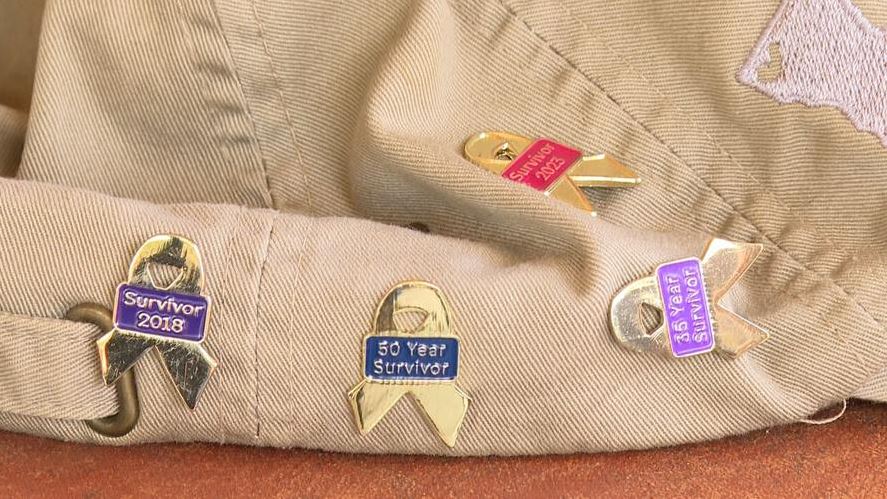
As one of St. Jude’s long-term survivors, McEachern receives commemorative pins marking milestones in his journey. One of his most treasured recognizes 50 years of survivorship.

The hospital also sends annual ornaments that have become part of his family’s Christmas traditions.

For McEachern, those reminders represent more than personal milestones. They symbolize the impact of decades of research funded through donations and community support.

“The money brought in so much research,” he said.

Now, as KTBS 3 continues its partnership with the St. Jude Dream Home Giveaway, McEachern hopes his story serves as a reminder of what those donations can accomplish.

A frightened 2-year-old boy who arrived at St. Jude in 1967 is now a husband, father and survivor whose life spans nearly six decades beyond a diagnosis that once carried far fewer treatment options.

“Thank you for your money and your donations,” McEachern said. “Be sure and buy a ticket for the Dream Home.”

For his family, St. Jude was more than a hospital.

“Once our child is diagnosed with any kind of cancer, that’s our home until they get home,” McEachern said.

Please note: This story was provided to CNN Wire by an affiliate and does not contain original CNN reporting. This content carries a strict local market embargo. If you share the same market as the contributor of this article, you may not use it on any platform.

Arizona Secretary of State seeks reelection

Adrik Vargas

YUMA, Ariz. (KYMA) – Arizona Secretary of State Adrian Fontes stopped in Yuma Tuesday as he campaigns for reelection, laying out what he says are his priorities are and the role his office plays across the state.

In our interview, Secretary Fontes said the Secretary of State’s office handles more than just elections. He pointed to three main responsibilities:

Serving as the state’s Chief Election Officer

Overseeing business services like notaries and support for small businesses

Managing Arizona’s state library, archives, and public records.

On election security, Fontes said Arizona already has multiple layers of safeguards in place.

“You have security for your personnel, you’ve got security for your facilities, you’ve got security in the ballots themselves, and then you’ve got your security in the information technology system,” he said.

He added that with additional funding, the state could modernize and update systems used by counties every day.

Fontes also addressed claims of widespread election fraud, saying they don’t hold up without evidence.

“If the person making an accusation brings evidence, then we can talk about that evidence. But there is none,” he said.

Looking ahead, Fontes said that if reelected, one of his priorities would be maintaining access to voting while keeping confidence in the system.

He said Arizona’s mail-in voting system is already secure and supports efforts to keep voting accessible while following state laws on voter ID and proof of citizenship.

Fontes encouraged Arizonans to stay informed on the issues and participate in upcoming elections in July and November.

Click here to follow the original article.

Proposed QuikTrip could be coming to Yuma; residents voice concerns at city hall rezoning meeting

Lauren Duffel

YUMA, Ariz. (KYMA) – One of the nation’s most popular convenience store chains may be on its way to Yuma, and locals had the opportunity to share their thoughts at the rezoning meeting at City Hall Tuesday night.

Residents are upset about the proposed plan of a QuikTrip coming to Yuma.

The proposed location for “QuikTrip,” better known as “QT,” is on the southwest corner of Araby Road and 26th Street.

Christian Magana with the City of Yuma said, “In regards to this process, we are at the beginning stages of the process, and we really want to get public comment and input.”

Locals shared their concerns about the traffic in the area and are very against the convenience store’s proposed location.

Janice Edgar, a local resident, said, “The hard thing is that I know it’s a good business and I’d love to have it there but with all the extra diesel trucks there they’re going have around that’s probably the biggest issue for me.”

The proposed development would feature a convenience store as well as gasoline fueling stations with 10 gasoline pumps and six diesel pumps.

Magana added, “Right now, it’s just about the rezoning. We are still wanting to see if the rezoning will happen and then from there, we will see if something will get built or not.”

The applicant is requesting that approximately 7.08 acres at the southwest corner of Araby Road and 26th Street be rezoned from agriculture to general commercial use.

At this point, the plans are still in the early stage and must first go before City Council. We’ll continue to provide you updates as more information becomes available.

Click here to follow the original article.

First class of air traffic controllers trained on simulators in Queens graduates from Vaughn College

By Tim McNicholas

Click here for updates on this story

    NEW YORK (WCBS) — Nine of the nation’s newest air traffic controllers just completed their training in Queens as part of a new program to fight the air traffic controller shortage.

Yanni Agrotis from Melville spent months training on simulators at Vaughn College in Queens.

“It feels like there’s duty to be done, and it feels like I’m putting my badge on my shoulder like I’m ready to handle something very important,” Agrotis said.

New FAA controllers like Agrotis used to have to travel to Oklahoma City to train. But a new FAA program allows aviation-focused colleges like Vaughn to train controllers on campus. We first told you about the plan about a year ago.

Vaughn College President Sharon DaVivo says it’s a big draw for controllers who want to train close to home, and more.

“So it’s expanding the number of seats the federal government has to train air traffic controllers,” DaVivo said.

Nine trainees joined the program, and all nine completed it. Now, they’ll head to air traffic control towers across the country to launch their careers with the FAA. They’ll still require additional training at those towers before they can become fully certified controllers.

The staff at Vaughn says, when combined with other schools in the program, the FAA is gaining about 100 new controllers.

“But that’s 100 more they didn’t have last year, right? So all of this helps to grow the air traffic controllers,” DaVivo said.

She’s hoping to expand Vaughn’s program to 15 trainees this fall.

As for Agrotis and the other eight graduates?

“The instructors were very welcoming. They were tough, but they did it in a nice way. So they prepared us for being in a stressful situation,” Agrotis said.

They hope to start working at towers within a few weeks.

Please note: This story was provided to CNN Wire by an affiliate and does not contain original CNN reporting. This content carries a strict local market embargo. If you share the same market as the contributor of this article, you may not use it on any platform.

Teens rescue man after kayak overturns in pond: “His head kept on going under”

By Juli McDonald

Click here for updates on this story

    NORWOOD, Massachusetts (WBZ) — With the school year winding down, you can find a group of Norwood high schoolers up the road on Willett Pond, enthusiastic junior members of the Walpole Fish and Game Club.

“Probably like three to four times a week. We all love fishing. It’s really fun. We get to take a boat out all by ourselves,” said sophomore Sean Needham.

Last week as the winds picked up, they were about to call it a night – when they noticed an overturned kayak, and a man in a poorly fitting life preserver.

“From far away it looked like the guy in the water was swimming and we kept on asking if he was OK,” recalled Devin Dwyer.

“It was really loose. He was sinking through it, so his head kept on going under,” Needham added.

The friends said a woman with the man explained he is autistic and nonverbal. While one of them leaned to balance out their boat, the other two worked together, pulling the man safely onto theirs, and earning high praise from witnesses on shore.

“They did exactly what they were supposed to do. We teach them how to fish and tie knots and all that but the important stuff about being safe when you’re on the water and wearing a life preserver. They remember what we told them,” said witness Jim Kane, who’s been a member of the club for more than 30 years.

The club recognized the teen heroes, who not only acted quickly, but treated the man with compassion and kindness. After he was safely back on land, witnesses helped the man dry off and made sure he and his companion were not hurt.

“We were all raised to do the right thing if someone needs help,” Needham said.

“It was honestly pretty scary. Got kind of nervous but I’m just glad we were at the right place at the right time,” Nick Serratore said.

Please note: This story was provided to CNN Wire by an affiliate and does not contain original CNN reporting. This content carries a strict local market embargo. If you share the same market as the contributor of this article, you may not use it on any platform.

Carriage horse collapses, dies in Central Park, renewing calls to ban industry

By Adi Guajardo

Click here for updates on this story

    NEW YORK (WCBS) — A carriage horse collapsed and died in Central Park on Tuesday, distressing parkgoers who witnessed it all.

It’s renewing a push to ban carriage horses in the city.

It happened around 7:30 p.m. on 72nd Street near Central Park West.

Carriage driver Nurettin Kirbiyik said he was giving a carriage ride when Deniz, his 16-year-old horse, collapsed.

“I was going on a run, and I saw a horse on the floor struggling to breathe,” witness Clara Bermudz said.

She said moments later, the carriage horse stopped breathing.

“In two seconds, horse died. Just shake and I feel like he’s going to pee. He just died,” Kirbiyik said. “I lose like somebody from my family.”

“I’m shaking now just talking about it,” witness Danielle Leeann Chin said. “This is the second time that I’ve seen a horse carriage incident in 10 months.”

Kirbiyik and a spokesperson for TWU Local 100, the union representing carriage horse drivers, said Deniz was in good health and went to the vet back in January.

TWU Local 100 spokesperson Christina Hansen called this a sudden medical emergency and said the horse will be taken to Cornell University for a necropsy.

The nonprofit organization New Yorkers for Clean, Livable, and Safe Streets (NYCLASS) is advocating for Ryder’s Law, which would ban horse carriages in New York City. It was named after a horse that collapsed on a Manhattan street back in 2022 and died several months later.

“This is a nightmare,” NYCLASS Executive Director Edita Birnkrant said. “Our message to the Speaker Julie Menin and the City Council and the mayor is, we have got to pass Ryder’s Law this year. We have another horse that dropped dead in an agonizing death. We’ve had six violent incidents.”

Hansen denied accusations that carriage horses are overworked.

“It’s not true. You know, these horses are literally strolling in the park,” she said. “They think that any work is overwork. This is an easy job for horses.”

The City Council Committee on Health voted against Ryder’s Law back in November. NYCLASS said they have scheduled a rally for Wednesday afternoon on the steps of City Hall to reintroduce the law.

Please note: This story was provided to CNN Wire by an affiliate and does not contain original CNN reporting. This content carries a strict local market embargo. If you share the same market as the contributor of this article, you may not use it on any platform.