Free Lunch Program Returns to Santa Barbara Library for the Summer

Patricia Martellotti

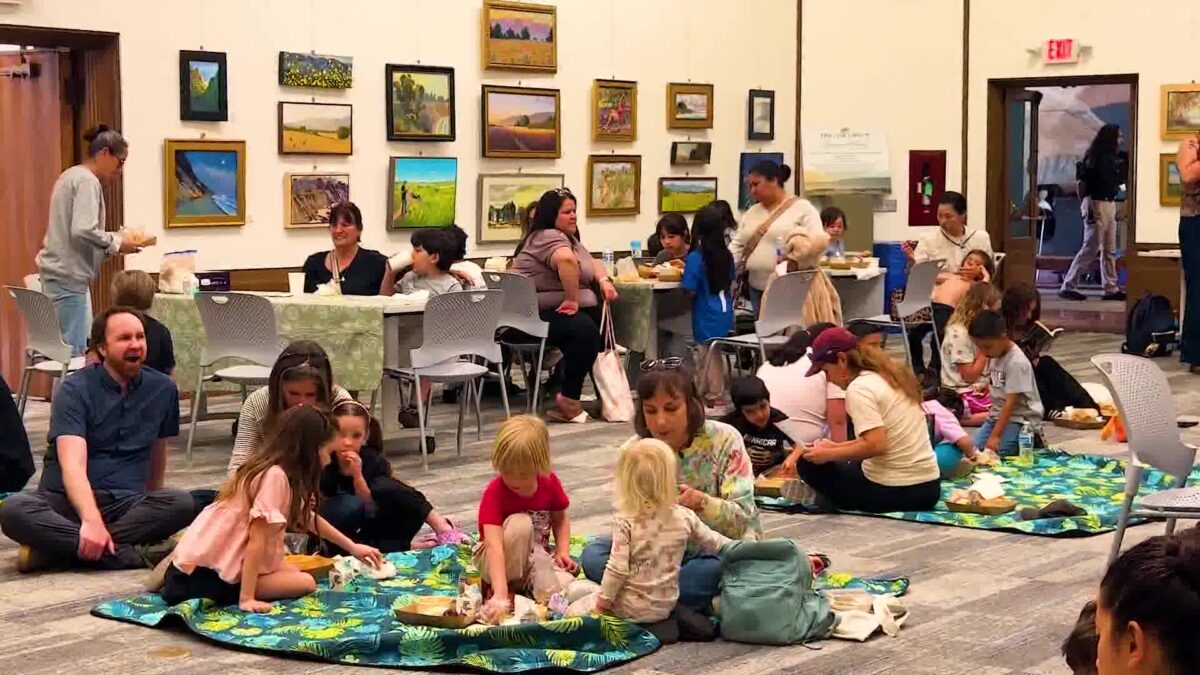
SANTA BARBARA, Calif. (KEYT) – Free USDA-funded lunches for children and teens are now being served in Santa Barbara through the summer.

The lunches are served on weekdays at the Santa Barbara Central Library from noon to 1:00pm.

The program requires no registration, paperwork, or income verification.

The lunches help fill the summer meal gap while school is out.

The free lunches will continue through August 14.

For more information, visit Lunch at the Library.

The Latest Breaking News, Weather Alerts, Sports and More Anytime On Our Mobile Apps. Keep Up With the Latest Articles by Signing Up for the News Channel 3-12 Newsletter.

Click here to follow the original article.

High Fire Zones Targeted for Critical Brush Reduction Plans

John Palminteri

SANTA BARBARA COUNTY, Calif. (KEYT) – An aggressive schedule is underway to clear brush and reduce fire dangers, and this week a month-long project begins in Mission Canyon.

The community behind Rocky Nook Park and the Old Mission above Foothill Road (Highway 192) is one of the more densely populated areas on the South Coast with limited access in and out of the area.

It is also a major corridor for hikers on Tunnel Trail.

The Botanic Gardens is nestled in the same area and is a fire prevention concern as well as the homes.

The brush clearing work is coordinated by the Santa Barbara County Fire Safe Council. It was awarded a grant to provide free curbside chipping services for residents throughout certain areas of the south coast of Santa Barbara County.

This will reduce fire risks around their homes. Part of that includes creating a year-round defensible space in designated neighborhoods.

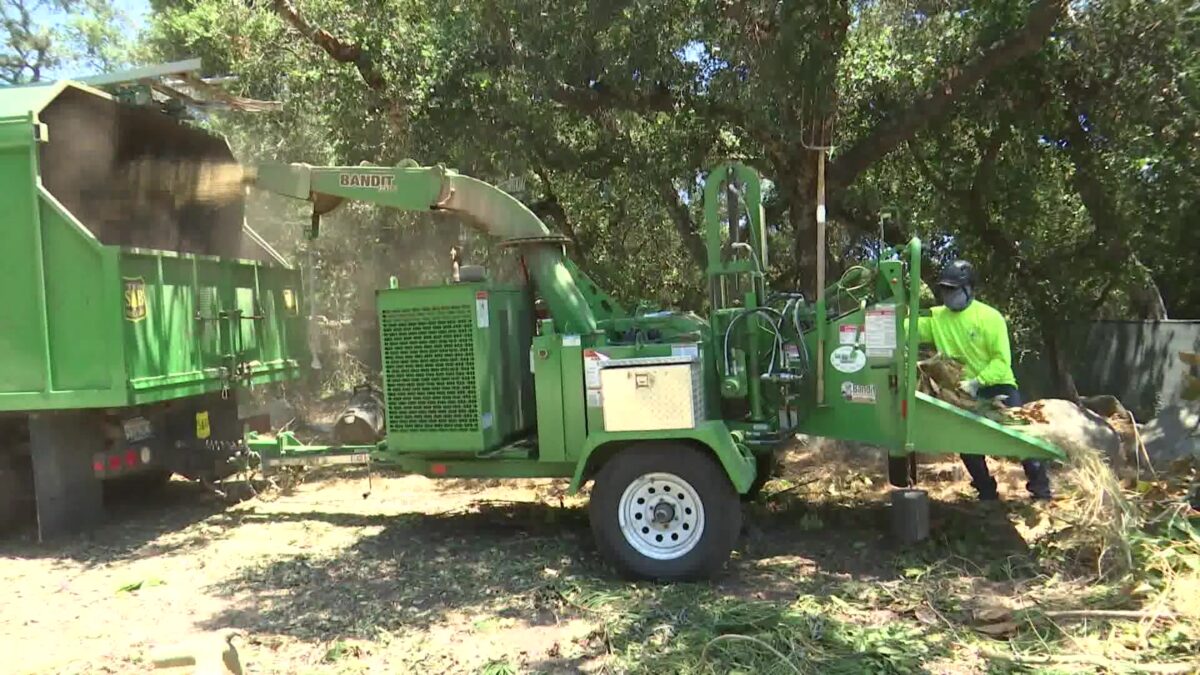
Residents do the cutting and a contractor will chip the vegetation on-site and take it away.

Charles Harris with the Santa Barbara County Fire Safe Council said, “they can do this on their own but it gives the homeowner way more incentive when a local organization like ours is out here helping them do it.”

Residents in Mission Canyon and other neighborhoods where this service is taking place, have received notices via postcards. They also received a presentation at a recent town hall meeting on fire prevention hosted by the Mission Canyon Homeowners Association.

Neighborhoods in coastal Santa Barbara County were selected based off of their Fire Severity Risks determined by CAL FIRE, density of surrounding vegetative fuels, topography, and determined need by local fire authorities.

On designated weeks, homeowners can clear the brush and leave it out front or in a specific area.

Harris said, “and we will drive through the neighborhood and chip it. In Mission Canyon the roadways are tight and so it is not an option for residents to stack it right in front or the house in this case there are big turnouts where people can stack it and we can come get it.”

They are also able to get the chips from the project for free if they need them for ground cover or landscaping.

Standing next to a crew from S B Tree Care a large pile was being reduced to chips by a special grinding machine. Harris said a week ago a similar pile was there. “This is probably two tons of material right here. Through this program last year, we produced a thousand tons of chips so people make use of it.”

The Latest Breaking News, Weather Alerts, Sports and More Anytime On Our Mobile Apps. Keep Up With the Latest Articles by Signing Up for the News Channel 3-12 Newsletter.

Click here to follow the original article.

Longtime Santa Maria skating rink facing potential closure

Dave Alley

SANTA MARIA, Calif. (KEYT) – A longtime skating rink in Santa Maria is facing potential closure later this year.

“It’s in jeopardy,” said  Tobin Flamm, Central Coast Sports Arena co-owner. “If we don’t figure out what we’re going to do by October, we will likely be closing.”

Central Coast Sports Arena, which has operated at the Santa Maria Fairpark since 1997, will have its current lease end in just over four months.

“Their lease is due in October,” said Santa Maria Fairpark Interim CEO Todd Ventura. “We’ve given them a model that if they can get there, then they’re more than welcome to stay.”

However, Sports Arena ownership said it may not be able to financially reach a deal with the Fairpark, which may cause the family-owned business to shut down permanently.

“It’s a pivotal moment,” said Flamm. “There’s been a lot of uncertainty, and it’s been very difficult to absorb and I’m still absorbing this.”

Ventura said the Sports Arena lease has been undervalued for years and has made an effort to work with its ownership to come up with a new deal that makes better financial sense for the Fairpark.

“Everything we do is self-funded here,” said Ventura. “We have to look at market value on all of our properties, all of our buildings, all of our rentals, everything, and that’s the one obvious area that we’ve been coming up short. it’s just the finances, you know, we’re just really driven by the finances of the Fairpark. It takes a lot to operate this place and we have a fiduciary responsibility to make sure we’re doing the job.”

With its lease soon expiring, Sports Arena ownership is now reaching out to the public and is seeking assistance from the community in an effort to find a new place to relocate, or to find a way to extend its lease with the Fairpark.

A “Save Our Rink” campaign is now underway with a stated goal to find a new home before the current lease expires.

“We just want to spread the message and make sure the community is aware of what’s going on and try to see what they can do to help,” said Flamm. “If we decide on relocating to another facility, we need assistance and building a team around us that can help us with making a better decision for relocating the business. We would like to keep the business open and we would like to relocate, but we can’t do it ourselves.”

With the effort now underway, ownership is the process of actively looking at existing facility, commercial and warehouse properties, sponsorship opportunities, community partnerships, as well as funding and investment solutions.

“It’s very difficult,” said Flamm. “I’ve been making contact with agencies and property managers to see what we can do to relocate. It’s a very difficult facility to find that’s available right now, and so we need we need support with people and business people that can help us either find an available property or building that can house such a business model.”

At the same time the Sports Arena is looking at potential new sites, the Fairpark is also exploring new options for the 19,000 square foot building, which is the largest facility on the 34 acre property.

“We have already had an interested party come in and offer us more in just capital improvements than our entire contract with the Central Coast Sports Arena, in exchange for using the building four times a year and doing a revenue split with us for the events that they put on,” said Ventura. “I’m not really at liberty to talk about who and what, but financially it puts us significantly ahead of where we are.”

Should the Sports Arena close or leave, Ventura added a reimagined usage for the building may have a different business model than it currently has.

“It’s not going to necessarily be somebody who has that building day after day, month after month for a long term contract,” said Ventura. “It may look more like an interim type situation where it’s a promoter, for example, who might be putting on different indoor concerts in a building of that size, where we can attract different types of entertainment, whether it be comedic or bands, etc. in a building of that size, indoors. It really gives us a lot of variety that we can program into the building and it opens up a world of opportunities for us as a whole.”

Another usage Ventura spoke about is the potential for a new partnership with the City of Santa Maria to create new recreational opportunities.

“There is some impetus where we might be able to partner with the City of Santa Maria and do indoor pickleball courts,” said Ventura. “That’s a win for everybody. The City wins because they’re always being pushed for more open space, more usable field space, more larger, more diverse buildings to do volleyball, pickleball, indoor soccer, all those kinds of things, and all of those are on the table as we continue to work closely with the City and the Chamber of Commerce. It really gives us a lot of variety that we can program into the building.”

While the Sports Arena has been in business since 1997, the building has been home to roller skating dating back to the 1950s.

Currently, the building is used as an inline skating rink for youth and adult hockey leagues, the Cal Poly club hockey team, as well as recreational skating.

Flamm estimated about 1,000 people use the rink each rink.

“We’re the only indoor skating and hockey rink on the Central Coast,” said Flamm. “The local the closest hockey rink that’s indoor is San Jose and LA. We have youth learn to skate, learn to play programs open to all ages. We have tournament teams. We even have professional high end tournament teams come in and travel and compete here. We have public skates, birthday parties. We host private skating events. We also do a lot of stuff with the local schools and churches.”

Those who use the rink are hoping it will be saved in some capacity, either remaining at the Fairpark or in a new location.

“It would be a huge loss,” said Brittany Anderson-Cain, who has a 12-year-old son and husband that play hockey in the arena. “The uncertainty is really upsetting for all of us, but if we reach out to the community and enough people know about it, then all the support will come in and support it so that we don’t lose something so unique and important to the community.” 

However the final outcome turns out, Ventura praised the Sports Arena for its longtime contributions to the Santa Maria Valley and Central Coast, and should a deal not materialize, emphasized it will be due to the Board of Directors making a financially driven decision for the longevity and the health of the Fairpark. 

“The Central Coast Sports Arena is an icon on the Santa Maria community and really up and down the coast,” said Ventura. “We wish him the best of luck. They’re great people. They’ve been here a long time. They really do offer a service to our community. We wish them nothing but the best of luck. We just want to make sure that the fairgrounds has longevity and we’re putting on programing for our community that is appropriate and going to be here for a while.”

The Latest Breaking News, Weather Alerts, Sports and More Anytime On Our Mobile Apps. Keep Up With the Latest Articles by Signing Up for the News Channel 3-12 Newsletter.

Click here to follow the original article.

Harvard Pulls Out Of The Cuyama Valley

Melinda Burns

Melinda Burns, Special for the Santa Barbara News-Press

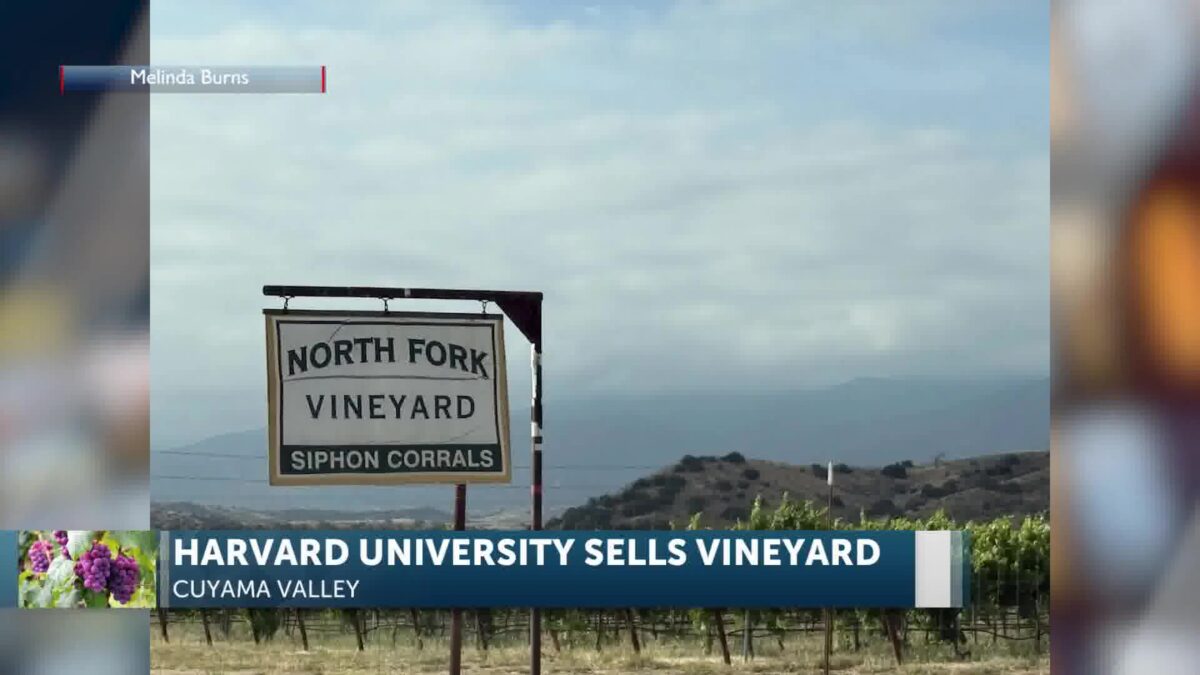
CUYAMA VALLEY, Calif. (KEYT) – Back in 2014, the company overseeing Harvard University’s $36 billion endowment fund decided it would be a good investment to grow grapes on an old cattle ranch in the Cuyama Valley, a dry agricultural region where the underground water basin had been depleted by decades of over-pumping.

So, Brodiaea Inc., a wholly owned subsidiary of the Harvard Management Co., the university’s investment arm, bought the North Fork Cattle Co. ranch, a 7,600-acre property that straddled both sides of Highway 166. It was part of a historic land grant known as the “Cuyama Rancho.

Brodiaea drilled 16 wells and planted an 840-acre vineyard, the largest in the valley. No zoning permit was required to grow grapes. Harvard became one of the largest water users in this land of little rain.

Local residents speculated that the university’s investment firm had set its sights on becoming a seller in some lucrative future water market. But around March of this year, they said, the workers at the North Fork vineyard were abruptly laid off.

This May, public records show, Brodiaea sold the North Fork Ranch and its abandoned vineyard to Rancho Cuyama No. 2, a limited liability company registered in Texas to Dustin Noblitt, a manufacturer of western lifestyle products, and James Ontiveros, a vintner who grew up in the Santa Maria Valley.

Transfer taxes recorded by the county on May 22 show that the North Fork Ranch sold for about $5 million. Brodiaea had purchased it for $10 million in 2014 — without the vineyard in place, the records show.

In 2025, the ranch at 7400 and 7401 Highway 166 was assessed by the county at $38 million.

The new owners

Noblitt, Ontiveros and representatives for Brodiaea and Harvard Management, which now oversees a $56 billion endowment fund for the university, did not respond to requests for comment this month on the sale of the North Fork Ranch.

Public records show that Ontiveros is a co-founder of Grapevine Capital Partners, the San Luis Obispo-based agricultural investment firm that developed and managed the North Fork vineyard. Matthew Turrentine, also a co-founder of Grapevine Capital, is the Chief Executive Officer of Brodiaea.

Ontiveros owns the Rancho Ontiveros, Alta Maria and Rancho Viñedo vineyards and the Rancho Dominion and Rancho Potrero cattle ranches, all in the Santa Maria Valley.

Noblitt, a resident of Garland, Tex., is the CEO of the Pro Equine Group, Inc., a manufacturer, marketer and distributor of western products such as ropes and saddles; and its sister company, RHE Hatco, a manufacturer of western hats and apparel, including the Stetson brand.

The LinkedIn pages for Noblitt and Ontiveros show that they both entered California Polytechnic State University in 1994 and graduated in the late 1990s.

Looming water cutbacks

Brodiaea had faced significant challenges at its Cuyama Valley vineyard in recent years, the record shows.

For starters, the valley is on the state’s list of groundwater basins in “critical overdraft.” About twice as much water is being pumped out every year as can be replenished. Portions of the valley get less than eight inches of rain per year.

At 840 acres, the North Fork vineyard was the largest in the valley. Severe cutbacks in agricultural pumping will be required in the region to bring the depleted groundwater basin back into balance. Photo by Carl Perry.

Under state law, the Cuyama basin must be brought back into balance by 2040. To reach that goal, the valley’s Groundwater Sustainability Agency estimates that agricultural pumping will have to be cut back by at least 50 percent.

In 2024, agency records show, Brodiaea was the eighth largest water user in the valley, pumping about six times as much water as the community district that provides water to New Cuyama, population 700.

In 2021, the top two water guzzlers in the valley — the land companies for Grimmway Enterprises and Bolthouse Farms, the world’s largest carrot corporations — filed a water rights lawsuit against all other valley landowners, forcing them to hire lawyers and make a case for their water allocations before a Los Angeles Superior Court judge. The suit could drag on for years more.

Early on, Brodiaea tried but failed to convince the judge that the North Fork Ranch property was located in a separate water basin and should not be included in the water rights lawsuit.

Then, in 2023, Brodiaea tried but failed to obtain a county permit to build two large storage reservoirs, or “frost ponds,” at its North Fork vineyard. The company was proposing to spray the water on the grapevines during winter to prevent new leaf buds from curling up and turning black in a frost.

But a number of smaller farm and ranch owners, including some who had been in the valley for generations, opposed the project, saying the ponds would worsen the groundwater overdraft, even as the state was trying to reverse the trend.

Members of Harvard’s faculty and student body, weighed in too. At a hearing on the project, one researcher spoke of what she saw as “deep contradictions” between Harvard’s promotion of sustainability and climate justice in its classrooms, “even as it threatens local residents and farmers.”

Ultimately, the county Planning Commission rejected the frost pond proposal.

Robbie Jaffe, who co-owns a small vineyard and olive orchard in the foothills at the western end of the valley, where the North Fork Ranch is located, said she was shocked when Brodiaea drilled 16 wells for grapes, more than a decade ago. On her five acres, Jaffe said, she is “dry farming” her orchards, relying chiefly on rainfall and saving every drop.

Jaffe said she hoped the new North Fork owners would consider the “needs of the community and the devastating situation of Cuyama’s groundwater” in developing their plans for the ranch.

“There’s not enough water to grow a massive vineyard anywhere in the Cuyama Valley,” Jaffe said

“Vine graveyards”

Bloomberg News has reported that, beginning in 2012, as part of its strategy of investing directly in agricultural projects around the world, the Harvard Management Co. spent $100 million buying more than a dozen vineyards, mostly on the Central Coast, including the North Fork Ranch. The grapes were sold to other vintners who blended them into their wines.

It appears to have been a gamble that did not pay off. According to the WineBusiness Monthly, a trade publication, Brodiaea has since sold off thousands of acres of vineyards in San Luis Obispo County that it was managing for the university’s endowment fund.

Harvard is not alone in abandoning its grapes. Wine sales are in a historic downturn, as alcohol consumption in the United States hits historic lows. There’s been a generational drop in wine drinking; and cheap imports are hurting the industry, too.

According to some estimates, about 50,000 acres of grapes would need to be pulled from production in California to bring the supply into balance with demand. That’s in addition to the removal of nearly 40,000 acres last year. “Vine graveyards” now lie scattered throughout wine regions such as the Napa and Sonoma valleys.

Kerry Mormann, a Berkshire Hathaway realtor specializing in Central Coast ranch land, said that vineyards are not selling because of the overproduction of grapes in California.

“The vineyard market is dead,” Mormann said.

Melinda Burns is an investigative reporter with more than 40 years of experience covering immigration, water, science and the environment. She was a senior writer at the News-Press during a 21-year career at the paper, ending in 2006.

This story was originally published by the Santa Barbara News-Press.

Click here to follow the original article.

Shop Local Rancho Mirage cards give shoppers and diners extra purchasing power

Jeff Stahl

Rancho Mirage, Calif. — The City of Rancho Mirage is helping local businesses and restaurants this summer, and helping people stretch their dollars.

The “Shop Local Rancho Mirage Gift Card” program’s latest offer is a 50-percent bonus to anyone who purchases a Shop Local gift card. There’s a week to go for this latest deal, which has to be purchased and used by Friday, June 19.

It’s good at approximately 70 local Rancho Mirage businesses, offering customers discounts on dining or shopping purchases while also helping retailers and restaurants during our typically slower summer months.

Rancho Mirage City Councilmember Steve Downs said, “So the whole idea is to provide an incentive for residents to go to our restaurants, go to our retail businesses, spend money at our retail businesses at times of the year when it makes sense to incent them to do that and help our businesses.”

A $200 gift card purchase will also include an extra $100 from the city, giving purchasers $300 to spend at Rancho Mirage businesses.

Down said, “It’s a great program for the employees; they stay employed. And it’s a great program for our residents. They get a great benefit from it.”

Downs says the city has issued nearly 3,800 gift cards and helped support businesses to the tune of $600,000 since starting the program two years ago.

Another bonus offer will launch on July 22 if approved by the city council to support the chamber’s Taste of Summer Rancho Mirage.

You can purchase a gift card here: https://rancho-mirage-ca.yiftee.com/

Click here to follow the original article.
Suspect arrested after shooting that damaged vehicle in Mecca

Jesus Reyes

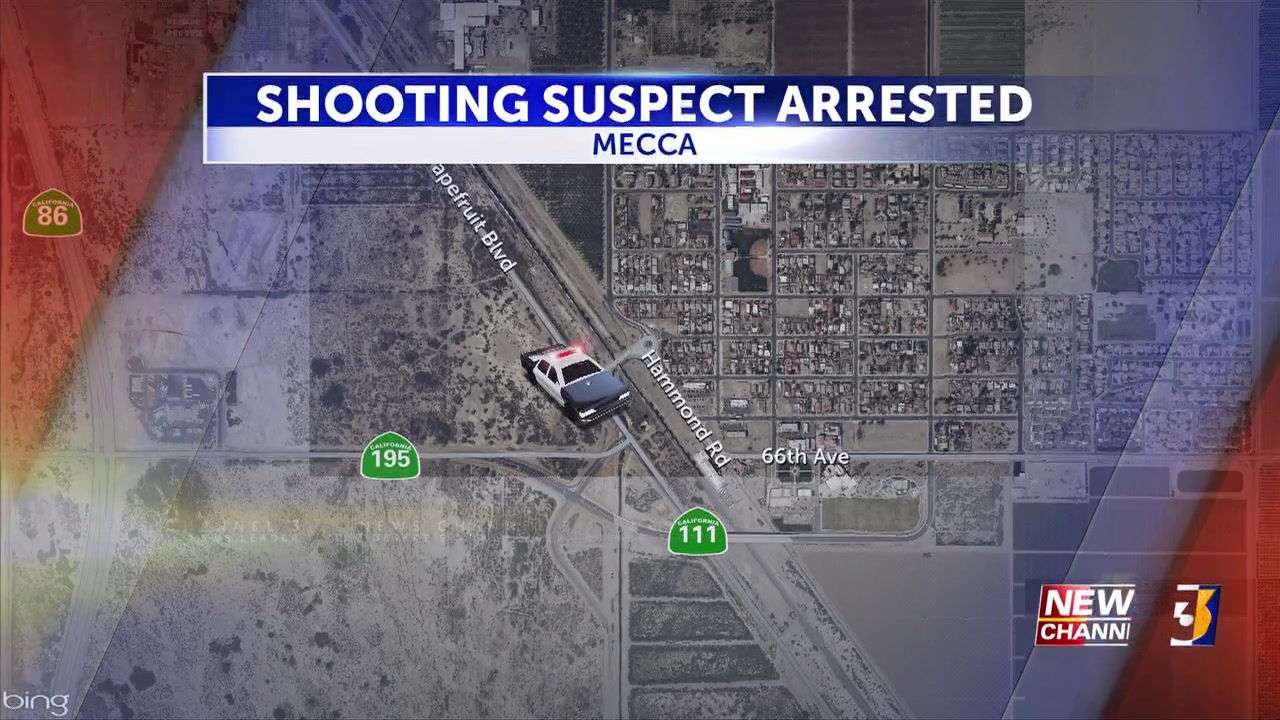
MECCA, Calif. (KESQ) – Police continue to investigate a shooting that damaged a vehicle Friday evening in Mecca.

The shooting was reported at around 6:10 p.m. near the area of Grapefruit Boulevard and 4th Street.

“Upon arrival, deputies spoke to the reporting party, who described a shooting incident that occurred in the area of Grapefruit Boulevard and 4th Street and provided a description of the involved vehicles,” reads an email from the Sheriff’s Department.

Deputies were able to find evidence of a shooting. Additional deputies located a vehicle in the area of 66th Avenue and Highway 86 that matched the description of the involved vehicle.

The agency noted that deputies contacted the driver, who reported damage to their vehicle consistent with gunshots. The driver was determined to be the victim of the shooting and reported no injuries.

During the course of the investigation, Thermal Station deputies were able to locate the suspect vehicle which fled from the area.

Thermal Station patrol, along with the assistance of the East Regional Gang Task Force and the La Quinta Special Enforcement Team apprehended the suspect. A search warrant was served on the suspect’s vehicle and place of residence where evidence related to the incident was located.

The suspect was later booked into jail and is pending arraignment.

Stay with News Channel 3 for any new developments.

Click here to follow the original article.
Registered sex offender compliance operation in Indio leads to two arrests

Jonathan Ramont

INDIO, Calif. (KESQ) – On June 13, 2026, members of the Indio Police Department’s Street Crimes Unit (SCU), Major Crimes Unit (MCU), Post-Release Accountability and Compliance Team (PACT), and the Riverside County Child Exploitation Team (RCCET) conducted a registered sex offender compliance operation throughout the City of Indio.

The operation focused on verifying compliance with California’s sex offender registration requirements and ensuring registrants were residing at their reported addresses.

During the operation, investigators conducted compliance checks at 14 registered sex offender residences. Ten registrants were contacted, verified to be living at their reported addresses, and found to be in compliance with their registration requirements.

Four registrants were determined to be out of compliance for failing to update their address information as required by law. Criminal cases will be submitted to the Riverside County District Attorney’s Office for filing consideration.

In addition, investigators arrested Emilio Diaz, age 32, on an outstanding misdemeanor warrant. Daniel Candelario Delgadillo, age 54, was also arrested for violating the terms of his felony probation after being found in possession of drug paraphernalia.

Registered sex offender compliance operations are conducted periodically to verify compliance with state registration laws, hold offenders accountable, and enhance public safety. The Indio Police Department say they remain committed to proactive enforcement efforts that support community safety and ensure compliance with registration requirements.

Click here to follow the original article.

Families beat the heat at the Palm Desert Aquatic Center

Timothy Foster

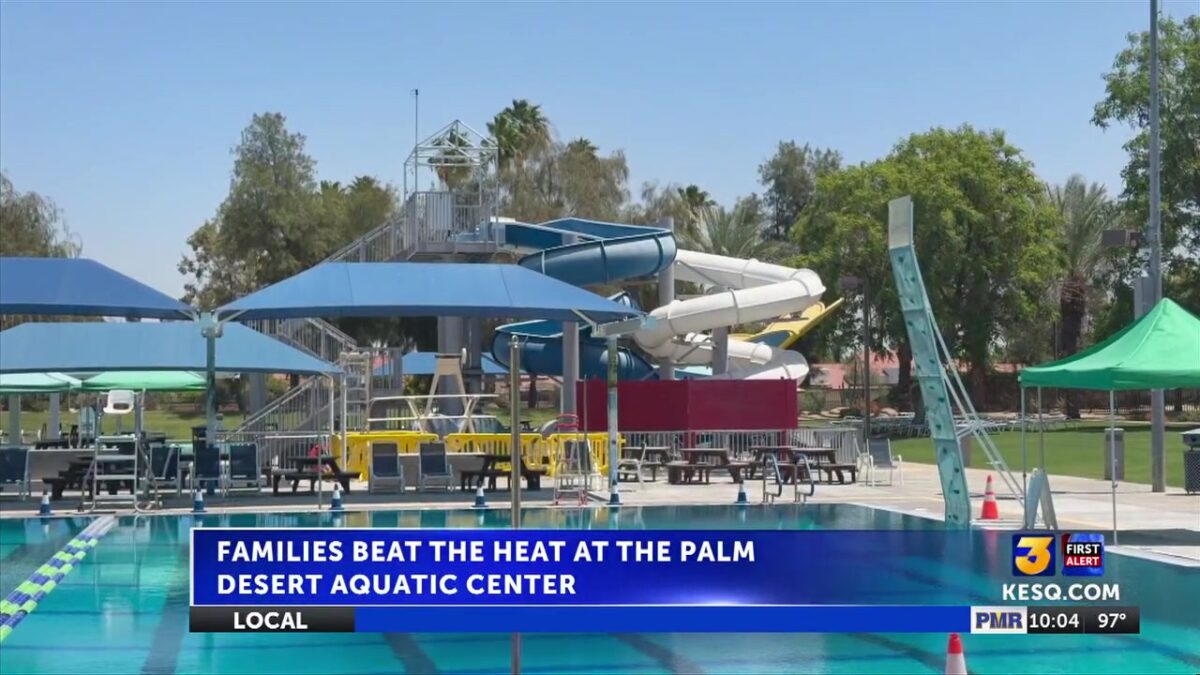
PALM DESERT, Calif. (KESQ) — As triple-digit temperatures return to the Coachella Valley, many families are looking for ways to stay cool while enjoying summer break. The Palm Desert Aquatic Center is proving to be a popular destination for both local residents and visitors.

Guests at the water park said the facility offers a fun way to escape the desert heat while spending time with family and friends. Many shared that swimming and enjoying the attractions make summer more enjoyable, especially during the hottest days of the year.

Visitors also highlighted the importance of practicing heat safety. They recommended staying hydrated, wearing lightweight clothing, taking breaks from the sun, and limiting time outdoors during peak heat.

For active children and athletes, drinking plenty of water and avoiding overexertion are especially important as temperatures continue to climb.

Families from across Southern California said the Palm Desert Aquatic Center’s pools, water slides, obstacle course, and shaded areas make it an appealing place to cool off during the summer months.

Health experts recommend drinking water regularly, seeking shade or air-conditioned spaces, and checking on vulnerable family members during periods of extreme heat.

As the Coachella Valley heads into another long, hot summer, the Palm Desert Aquatic Center is offering families a safe and refreshing way to beat the heat and enjoy the season.

Click here to follow the original article.
Indio hosts first-ever Pride celebration in downtown

Timothy Foster

INDIO, Calif. (KESQ) — The City of Indio marked a milestone Friday night with its first-ever Pride celebration, bringing live music, community resources, and families together in the heart of downtown.

The free, all-ages event took over Center Stage from 6:00 p.m. to 9:30 p.m., featuring performances from Julian and the Band, Giselle Woo & The Night Owls, and Mariachi Arcoíris. Food vendors and community booths were also set up throughout the space, creating a festival-like atmosphere in downtown Indio.

Organizers said the goal of the event was to create a welcoming environment that celebrated and supported the LGBTQ+ community while encouraging broader community connection across the Coachella Valley.

The Center Coachella was on site, offering outreach and resources for attendees and helping connect community members with local support services.

Indio Mayor Elaine Holmes said the celebration reflected the city’s values of inclusion and diversity, saying Indio embraces everyone and embraces diversity and culture, and that the community is welcome in the city.

City leaders and organizers said they hope the inaugural event will grow in the coming years and become an annual tradition in downtown Indio.

Click here to follow the original article.

Dr. Carreón Foundation awards 120 scholarships to Coachella Valley students

Timothy Foster

INDIO, Calif. (KESQ) — More than 100 students from across the Coachella Valley are one step closer to achieving their educational goals after receiving scholarships from the Dr. Carreón Foundation.

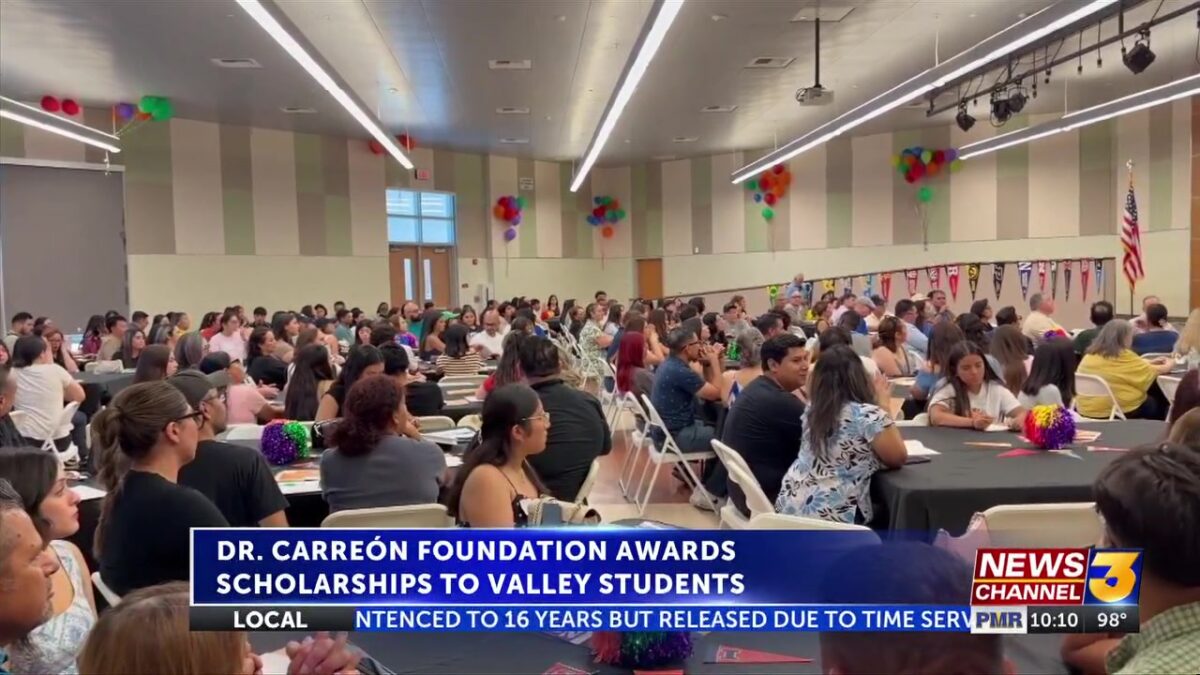
The nonprofit organization celebrated its annual scholarship awards ceremony Sunday at Shadow Hills High School, recognizing the Class of 2026 and students continuing their higher education. This year, the foundation awarded 120 scholarships totaling more than $360,000.

Foundation Executive Director Ricardo Loretta said the event brings together students, families, educators, donors, and community leaders to celebrate the recipients’ hard work and dedication while encouraging them as they continue their educational journeys.

The foundation also marked another milestone, celebrating its selection as the 2026 Outstanding Philanthropic Organization by the Association of Fundraising Professionals.

For scholarship recipient Emely Chavez, a fourth-semester nursing student, the financial assistance comes at a critical time.

Chavez said the scholarship will help cover the growing costs of college as she enters her final year of studies. As a first-generation college student, she said community support like this helps students pursue careers that may not have been possible otherwise.

She hopes to become an emergency room nurse and remain in the Coachella Valley, serving patients in her hometown.

Local leaders say the scholarships have a lasting impact beyond helping students pay for tuition.

Indio City Councilmember Glenn Miller, who has helped review scholarship applications for the foundation, said rising costs for tuition, housing, transportation, and other expenses make financial assistance more important than ever. He noted that many recipients go on to attend universities across the country before returning to the Coachella Valley to give back to their communities.

La Quinta City Councilmember Steve Sanchez said education should not be limited by financial barriers. He added that scholarships help students focus on their studies and invest in their futures, ultimately benefiting the entire region.

The Dr. Carreón Foundation was established in 1991 by the late Dr. Reynaldo J. Carreón to promote educational opportunities. In 2023, the scholarship program expanded to support students from all minority ethnic backgrounds.

With this year’s awards, the foundation has provided nearly $3 million in scholarships to almost 1,420 students since its founding. Recipients have gone on to attend schools both locally and nationwide, including College of the Desert, CSUSB Palm Desert, UCLA, USC, MIT, and Harvard University.

Foundation leaders say the continued growth of the scholarship program has been made possible through community partnerships, individual donors, local Rotary clubs, OneFuture Coachella Valley, Desert Healthcare District & Foundation, and other supporters.

Funds raised through the annual scholarship luncheon will help support next year’s scholarship recipients.

Click here to follow the original article.