World Cup fans, NYC commuters deal with travel impacts during match day

By Elijah Westbrook, Christine Sloan, Ali Bauman

Click here for updates on this story

    NEW YORK CITY, New York (WCBS) — It was a Gridlock Alert Day in New York City for the second 2026 Men’s World Cup match at MetLife Stadium on Tuesday afternoon.

World Cup fans and New York City commuters were urged to plan ahead. Officials warned international soccer fans and New Yorkers alike not to drive around Midtown.

The evening rush coincided with the end of the 3 p.m. match between Senegal and France.

Traffic was impacted in Midtown Manhattan, with several streets around Penn Station closed off. Others had restricted access throughout the day, until 8 p.m.

NJ Transit service at Penn Station was reserved for ticketholders for several hours before the match to accommodate the crowd. Non-ticketholders needed to take an alternate route.

Thousands headed home at the same time

Commuters at Penn Station on Tuesday morning said they expected crowded conditions later, but some were optimistic after Saturday’s opening match went smoother than expected.

“I feel NJ Transit is going to be prepared for it. They’ve been planning this for a long time, and I think everything should work out fine,” said one rider.

“It’s going to be hectic. But you gotta do what you gotta do…at the end of the day, it is what it is,” said commuter Anindita Holder.

Fans urged to use NJ Transit Officials have been urging fans attending the matches at MetLife to arrive early and purchase transportation tickets. It’s also recommended to use mass transit and avoid non-essential driving.

Tuesday was true test for NJ Transit, one it believed it passed with flying colors. Officials said it carried 26,000 people from MetLife on its rail and bus system in approximately 70 minutes.

“Everyone was there like helping people get through. The police were really good. It was really easy,” one fan said.

The train to the stadium were up and running hours before kickoff.

“We saw a significant number of ticketgoers buying their tickets for mass transit just in the hours before the game,” Mayor Zohran Mamdani said. “We’d also say that there continues to be additional capacity on NJ Transit, and so for those who have yet to buy their tickets, that is one way that we are going to encourage them to do so.”

Official stadium shuttle buses were completely sold out.

Some fans shelled out $250 for parking at the American Dream mall and walked through a tunnel to MetLife, while others hoofed it to the stadium. Restaurants inside the American Dream were expected to stay open through midnight.

Commuters were cautioned to brace themselves for longer travel times throughout the region.

The impact was expected to be so significant that Jersey City Public Schools dismissed students at 12:45 p.m. to avoid the afternoon traffic crunch.

The first World Cup match at MetLife on Saturday brought more than 80,000 fans, with 21,000 of them taking trains and buses. But it also bought severe gridlock, with many fans stranded. Even rideshare apps could not handled the surge, and that was over the weekend.

Adi Guajardo contributed to this report.

Please note: This story was provided to CNN Wire by an affiliate and does not contain original CNN reporting. This content carries a strict local market embargo. If you share the same market as the contributor of this article, you may not use it on any platform.

Neighborhood frustrated with home taken over by content creators

By Nicole Comstock

Click here for updates on this story

    ENCINO, California (KCAL, KCBS) — On a quiet street in Encino, one massive modern home stands out from the rest. It’s not because of the curb appeal, but because of the content allegedly created on the property.

“We could just see these girls,” said one neighbor who didn’t want to share her name. “They have like a gym in front of the garage, and they were doing handstands on each other in g-strings. I mean, they just looked nude.”

Neighbors said the content creators come to the home, seeking a place to film viral videos and large parties, which have drawn unwanted attention to the community.

“There was a swatting incident here,” another neighbor said. “We had to hide in the back of the house with our animals because police were here, SWAT teams.”

CEO of Creators Inc Andy Bachman, who owns the home, said his talent agency manages digital content creators and changed their policy after the swatting incident “because that’s obviously an annoyance and something I can’t have happening.”

Bachman admitted that many of the creators have OnlyFans accounts. He added that they are welcome to shoot their own videos at the house, but said no adult content is filmed there.

“We’re really proud of the work we do,” Bachman said. “We’re really proud of the work we do. We support content creators. We comply with the law. We respect our neighbors. And we’ll continue advocating for the rights of entrepreneurs to build businesses in the modern economy.”

Neighbors argued that the activities at the home conflict with residential zoning laws and are better suited for a commercial property.

“It’s not just the morality,” a neighbor said. “It’s the fact that they’re running a business in a residential neighborhood. It’s not like they’re baking bread. There’s a constant stream of people coming in and out.”

Another neighbor said the home has hosted events that bring “50 to 100 cars or more.”

“Using the street as a bathroom,” the neighbor said. “It’s just kind of gross.”

The residents said they have filed complaints with the City of Los Angeles but believe they’re getting the runaround. Bachman said that it’s because his company is not doing anything wrong.

“Content creators work from home as well. Millions of Americans work from home today,” Bachman said. “The question isn’t whether someone works from home, it’s whether they’re complying with local laws.”

Please note: This story was provided to CNN Wire by an affiliate and does not contain original CNN reporting. This content carries a strict local market embargo. If you share the same market as the contributor of this article, you may not use it on any platform.

Colorado’s first rainwater harvesting pilot moves to water court, researchers look to the practice amid drought

By Olivia Young

Click here for updates on this story

    DOUGLAS COUNTY, Colorado (KCNC) — Amid Colorado’s drought, researchers are hoping to make better use of the rain the state does get.

Coloradans may have heard about rain barrels that homeowners can use for yard irrigation, but the state has also authorized up to 10 pilot programs for large-scale rainwater harvesting.

One Douglas County community was the only one to apply to be a pilot site: Sterling Ranch. The community describes itself as the leader in water-conscious development in Colorado. Sterling Ranch was designed with efficient irrigation and xeriscaped landscapes featuring native plants.

But they’re not the only ones exploring how rainwater harvesting could help solve Colorado’s water problems.

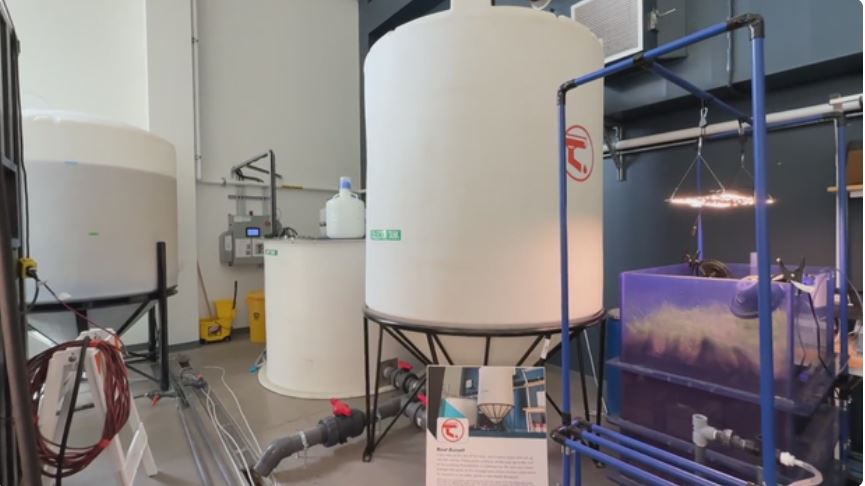
Colorado State University professor Sybil Sharvelle is using the roof of the Hydro Building at CSU Spur to capture rainwater and water native plants outside.

“Water from those roof drains drains down into those black pipes, comes into this tank, then gravity flows over to the next tank and is then, from there, pumped outdoors,” said Sharvelle. “We so far have not had to use potable water to supplement the irrigation.”

She’s hoping to learn how much water can be saved this way and how to navigate challenges like contamination and downstream water rights.

“We’ve had to develop what’s called a water augmentation plan. What that does is ensure that downstream water users are not impaired by our use of the roof runoff at this building. So what we have to do is actually track all of the water that comes into our storage tanks and how much we use for irrigation. We then report that to the Colorado Department of Water Resources, and then they report that to Denver Water,” said Sharvelle. “So these projects have been really good for us to learn the processes for properly accounting for these water uses, so that we can be sure that we’re not impacting the downstream users.”

Sterling Ranch has been preparing to do the same thing on a neighborhood-wide scale for years.

“We’re sitting right above what will be Colorado’s very first rainwater harvesting basin,” said Britta Strother, director of planning for Dominion Water and Sanitation District, which serves Sterling Ranch.

In 2010, Sterling Ranch became the site of the first rainwater harvesting pilot project in Colorado. For the last 15 years, Dominion Water and Sanitation has studied rainfall, runoff, soil infiltration and vegetation use in Sterling Gulch.

“There is an actual physical berm that goes across, and that is it. That is where the water will flow,” said Strother.

Researchers determined that there is enough harvestable rainfall within the Sterling Gulch drainage to support a meaningful supplemental water supply. Now Dominion is in water court, seeking the green light to begin using that water for the irrigation of parks and common spaces in the community.

The pilot’s project manager says Dominion’s water court filing seeks authorization to harvest approximately 111 acre-feet of water annually.

“We’re hoping that someday, when it rains, so not this year, there could be upwards of 400 acre-feet of water stored that will be used for outdoor irrigation,” said Strother. “This is, or could be, one of the great solutions for the water supply shortage in Colorado.”

Since 2024, CU professor Aditi Bhaskar has been studying runoff from Sterling Ranch, testing quantities of potentially dangerous nutrients like phosphorus and nitrogen to understand the impact of a largely xeriscaped community’s runoff on downstream users.

“Sterling Ranch is the only one that’s a neighborhood-wide thing, and I think that that’s really unique about the project, and it’s had a lot of impact because of that scale. I’d like to see a lot more projects at that scale start to come up, so that we can learn more about the potential,” said Sharvelle.

Sharvelle wants to keep studying rainwater harvesting so more communities can get the most out of every precious drop.

“This provides another source of water, other than our potable drinking water, and allows us to make use of local water sources as our supplies become more and more diminished,” said Sharvelle.

She says that, eventually, the practice may even be used to harvest drinking water. Right now, it is only legal to harvest rainwater for irrigation purposes.

“That is a first step, to use it for irrigation and maybe toilet flushing, like non-potable purposes. But I think there’s a lot of movement toward thinking about how we could make use of these water sources for potable applications,” said Sharvelle.

Unfortunately, the state’s rainwater harvesting pilot program sunset last year.

So, while Sterling Ranch can move forward, other communities would likely need legislative action extending that program before they could start their own programs.

Please note: This story was provided to CNN Wire by an affiliate and does not contain original CNN reporting. This content carries a strict local market embargo. If you share the same market as the contributor of this article, you may not use it on any platform.

Solar-powered lighting pilot program seeks to curb copper wire theft in Louisville

By Norman Seawright

Click here for updates on this story

    LOUISVILLE, Kentucky (WLKY) — A new program in Louisville is aiming to curb copper theft and vandalism, with help from the Kentucky Transportation Cabinet.

The work is happening near the I-64 and I-71 interchange, where crews were closing a lane to remove older light poles on the shoulders and replace them with solar-powered lights.

Carlos E. Sanchez, President of AT&T Kentucky and a member of Louisville Metro’s Critical Infrastructure Task Force, said copper theft had been hitting the company’s infrastructure around three times a day.

“When they cut the copper—many times, of course, these thieves are not very careful—they also cut our fiber lines,” Sanchez said.

Louisville Mayor Craig Greenberg said the task force is trying several approaches.

“One of the things that we’re doing now, yes, is piloting some solar-powered lights,” Greenberg said.

Sanchez said the effort is already showing results. “Copper theft is down, from January 2025 to January 2026, by 90%, and interestingly enough, for the past three months of 2026, we have had zero copper theft in Louisville Metro,” Sanchez said.

Other solutions include technology upgrades, making it harder to sell stolen copper, and offering rewards for tips that lead to prosecution.

AT&T offers a $10,000 reward for any lead that is arrested, prosecuted and leads to a conviction, Sanchez said.

Greenberg praised the work.

“I’ve incredibly proud of the work that they have done, really reducing the amount of copper wire theft that has happened in our community over the past many months. It’s a collaboration between the private sector, between Louisville Metro government,” Greenberg said.

Sanchez believes it’s a trailblazing approach.

“Other cities across the country are now using this initiative, this step that Louisville took a couple of years ago in, in making sure that copper theft is really addressed,” Sanchez said.

Sanchez said the problem is also affecting other parts of Kentucky, including Pike County in eastern Kentucky.

Please note: This story was provided to CNN Wire by an affiliate and does not contain original CNN reporting. This content carries a strict local market embargo. If you share the same market as the contributor of this article, you may not use it on any platform.

Aurora reservoir water levels only 55% full; Colorado city’s storage is well below average

By Michael Abeyta

Click here for updates on this story

    AURORA, Colorado (KCNC) — The first day of summer has yet to arrive, and already water in the City of Aurora is at a premium. Storage levels in their reservoirs are at 55%.

However, it’s not all bad news when it comes to conserving water in Aurora during Colorado’s drought so far.

“We have had a lot of people comply, and that’s been awesome,” said Shonnie Cline, Aurora Water’s Deputy Director of Internal and External Affairs.

She says most people have been doing their part and that this spring’s storms have helped in one aspect.

“It’s slowed up demand. So, people aren’t necessarily needing to water and they are turning off their sprinklers when they’re getting rain, which has been great,” said Cline.

But it’s not all good news, either. The storms didn’t increase reservoir levels.

“We will continue to see those storage levels decrease because, really runoff is for all intents and purposes, over,” said Cline.

Those levels are historically low this year.

“If you look at over a 10-year average, we’re normally sitting at about 74% of full at this time of year. So, we’re obviously down from where we were,” said Cline.

So, Aurora Water says the fight to save what water we have continues. They need residents to continue to follow Stage 1 water restrictions.

“Because what could push us into a Stage 2 restriction, which would take you down to one day a week of watering and even more in enforcement, is if people are not following the current Stage 1 water restrictions,” said Cline.

That means watering only two days a week and not during the hours of 10 a.m. and 6 p.m. Aurora Water says they know it’s not easy, but it’s also necessary.

“Seeing your lawns turn yellow is very hard, and it’s going to be happening more as we get into the heat of summer,” said Cline.

Aurora Water says lots of people have asked them if data centers are contributing to the problem. They say the data centers that are in Aurora are low water usage by law.

Please note: This story was provided to CNN Wire by an affiliate and does not contain original CNN reporting. This content carries a strict local market embargo. If you share the same market as the contributor of this article, you may not use it on any platform.
Mississippi teen recovers from traumatic brain injury, defying expectations

By Allie Ware

Click here for updates on this story

    JACKSON, Mississippi (WAPT) — A Mississippi teenager is defying expectations after surviving a traumatic brain injury and multiple life-threatening injuries from a January accident.

On Jan. 3, 17-year-old Landyn Simmerman was accidentally hit by a vehicle while helping a friend who had wrecked. The accident left him with a traumatic brain injury and his family was preparing for the worst.

Simmerman suffered a broken pelvis, femur, hip, ribs, facial fractures, two collapsed lungs, and a stroke. Doctors performed a craniectomy, removing half of his skull to relieve pressure on his brain.

Simmerman was placed in an induced coma for two weeks before being moved to Atlanta for specialized inpatient physical therapy and weeks of medical treatment.

“It’s been a little scary. The surgeries are not fun at all,” Simmerman said.

Doctors warned that recovering from a traumatic brain injury would be a long road, but Simmerman applied his competitive nature to his recovery, amazing his doctors and family.

“He was very determined through this whole thing, even when he was hurting really bad, he was determined to keep going and get better,” his mother, Britney Parker, said.

“All the recovery times they gave us, I cut them in half,” Simmerman added.

As part of his recovery, Simmerman underwent multiple surgeries, including having a custom skull created to replace the part of his own that was removed.

“They made me a fake skull and put me to sleep and put it in and screwed it in,” he said.

Although Simmerman does not remember the accident or his time in the hospital, his progress has been remarkable.

“We don’t take a single breath for granted anymore,” Parker said.

Doctors have said it could take up to a year for his brain to fully heal, and Simmerman has learned that the effects of brain injuries are not always visible to others.

“It takes time for your brain to heal,” Parker said. “We have also learned that effects from brain injuries don’t always look visible to other people.”

This fall, Simmerman will start his senior year of high school and is looking forward to returning to normal teenage activities.

“Driving, playing baseball, and getting back to school and just being normal, normal life,” he said.

The scars remain, and so do some challenges, but Simmerman’s determination to keep going has been unwavering.

This month, Simmerman completed his outpatient physical therapy program and is now focusing on speech therapy to ensure his cognitive abilities are fully regained.

Please note: This story was provided to CNN Wire by an affiliate and does not contain original CNN reporting. This content carries a strict local market embargo. If you share the same market as the contributor of this article, you may not use it on any platform.

30 Years Later: How Louisville brought the Slugger bats home

By Sam Carter

Click here for updates on this story

    LOUISVILLE, Kentucky (WLKY) — The Louisville Slugger is as quintessentially Louisville as bourbon or the Hot Brown.

But did you know that, from 1974 through 1996, the iconic baseball bats were made in Jeffersonville, Indiana?

According to Jack Hillerich, president and CEO of Hillerich and Bradsby, it was a promise from then-Mayor Jerry Abramson that pushed him to bring Slugger home.

“[The mayor said] Don’t worry about it, Jack,” Hillerich recalled. “If you build it and you don’t like it, I will buy it back from you.”

For his part, Abramson, who grew up working at his family’s grocery store across the street from the original Slugger factory, views luring the bat maker back to Louisville as one of his most satisfying accomplishments during his 21 years as mayor.

“Personally, this might be one of the most successful projects I worked on, without a doubt,” Abramson said. “We brought it back to Louisville.”

In July, the Slugger Museum and Factory will celebrate 30 years since it opened. According to the museum, approximately 7 million people have walked through the building since it first opened. Hillerich, when asked if he ever expected to reach that number of visitors, got philosophical.

“The most important things are unknown and unknowable. I didn’t have a clue how many people would come; I just knew we had to do it because it had to be done,” Hillerich said.

On July 13, the Factory and Museum will begin a week of programming celebrating 30 years at its Main Street Location.

Please note: This story was provided to CNN Wire by an affiliate and does not contain original CNN reporting. This content carries a strict local market embargo. If you share the same market as the contributor of this article, you may not use it on any platform.

Cold case arrest brings murder charge in 1986 South Carolina teen killing

By Chloe McCoy

Click here for updates on this story

    GREENVILLE, South Carolina (WYFF) — A decades-old Greenville, South Carolina, murder case has led to an arrest after cold case investigators revisited the 1986 killing.

The Greenville County Sheriff’s Office said on April 7, 1986, the body of 18-year-old Chelsie Yvonne Moss was found in the woods near Fair Street and Kerns Avenue. Her death was ruled a homicide after investigators determined foul play was a factor.

In 2023, the Greenville County Cold Case unit began investigating the unsolved death and, after over three years of work, were able to determine probable cause after forensic evidence was presented.

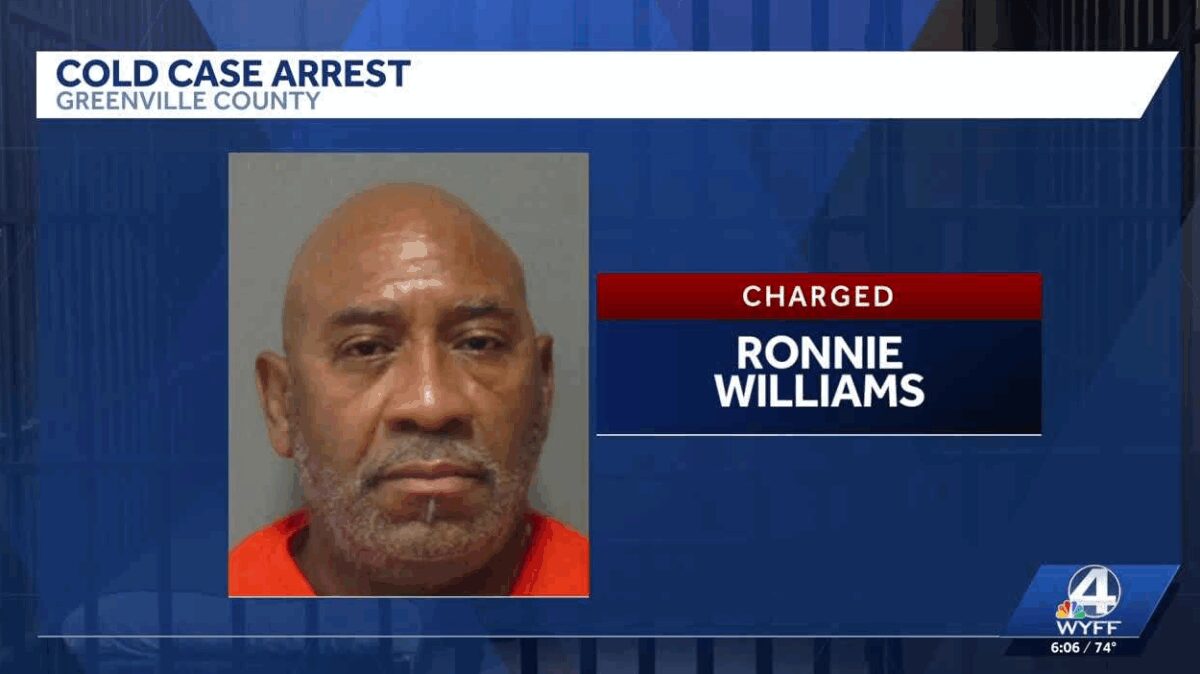
Investigators announced on Tuesday that the suspect, 64-year-old Ronnie Lee Williams, has been charged with murder.

Williams is currently in the custody of the South Carolina Department of Corrections on unrelated homicide charges from a murder conviction in 1989. He is awaiting a bond hearing on the new charges.

Deputies are still actively gathering information in the case. Officials say Chelsie was known to frequent the area of Pendleton St. and the West End in Greenville. If you knew Chelsie or encountered her, deputies encourage you to reach out. Officials emphasize that no detail is too small.

Anyone with information about Ronnie Lee Williams can anonymously reach out to Crime Stoppers of Greenville at 23-CRIME.

Please note: This story was provided to CNN Wire by an affiliate and does not contain original CNN reporting. This content carries a strict local market embargo. If you share the same market as the contributor of this article, you may not use it on any platform.

Woman bitten by baby shark in Naples shares safety reminder

By Kyle Schmidt

Click here for updates on this story

    NAPLES, Florida (WBBH) — A woman in Naples was bitten by a baby shark near Third Avenue South after accidentally stepping on it, nearly losing her toe in the process.

She shared images of the aftermath with Gulf Coast News and explained that she did not realize some sharks lie in the sand like stingrays. She urged others to shuffle their feet while walking in the water to prevent similar encounters.

Nick Holloway, a visitor, said, “It’s a little disturbing, but I mean it’s not something you really think of.”

At Naples Beach, residents shared their thoughts on the incident. Nelia Semenenko, who has lived in Naples for four years, said, “Never, never, I live here now 4 years. People never saw sharks.”

Scientists warn that shark sightings may increase due to the strong El Niño this year, which is expected to warm the waters.

The Florida Fish and Wildlife Conservation Commission advises swimmers to stay in groups, avoid wearing shiny jewelry that could attract sharks, and refrain from entering murky water.

Ricardo Botelho, who was fishing in the area, said, “When the water is like that, it’s a little dangerous.”

Botelho added, “Just being more cautious, especially when the water is not that clear.”

Please note: This story was provided to CNN Wire by an affiliate and does not contain original CNN reporting. This content carries a strict local market embargo. If you share the same market as the contributor of this article, you may not use it on any platform.

Repaving of Southmoor Drive in Fountain nearly complete; six-year closure to end soon

Scott Harrison

FOUNTAIN, Colo. (KRDO) — The ongoing saga of Southmoor Drive should be over soon, as crews in the past week have completed most of the repaving work needed there.

A half-mile of the street overlooking Fountain Creek — from the American Legion on the south end to Paladin Place on the north end — has been closed to traffic since the spring of 2020 because of severe erosion concerns.

Remaining work includes striping (applying new lane markings) and installing a guardrail on the creek street at its nearest point to the creek, and a city spokesman said that the street should officially reopen before the 4th of July holiday.

Earlier this year, the Fountain City Council allocated $450,000 for the project, after $7.5 million in erosion mitigation in the creek was performed by the Fountain Creek Watershed District.

The city saved money on asphalt costs by using a process that recycled the old pavement with new asphalt on-site.

“It means that our voices have been heard,” said Tracee Spencer, a member of American Legion Post 38. “This has been an ongoing issue for the last, maybe, six years or so. And it’s caused a burden for the neighborhood and to the businesses around here. So, we’re very excited to have it open.”

Click here to follow the original article.