Pie shop off I-80 voted best in the U.S.

By Cecilio Padilla

Click here for updates on this story

    AUBURN, California (KOVR) — A Northern California pie shop has been voted the best in the country.

Ikeda’s California Country Market, a family-owned bakery and specialty grocery store with locations in Auburn and Davis, was named Best Pie Shop in USA Today’s 10 Best Readers’ Choice Awards on Wednesday.

“What began as a simple fruit stand has evolved into a must-visit destination where the country charm remains authentic and the pie selection vast,” USA Today wrote.

Located just off Interstate 80, Ikeda’s is known for its fresh fruit pies, savory pies, cream pies and other baked goods.

“We’ve been doing our pies for 50 to 60 years now, and we use very fresh ingredients,” co-owner Derick Ikeda said.

The family-owned bakery said it owes its success to its loyal customers.

“We’re always using, if not farm-quality fruit, then high-quality fruit,” Ikeda said.

Ikeda’s has two locations: its original spot in Auburn and another in Davis.

Please note: This story was provided to CNN Wire by an affiliate and does not contain original CNN reporting. This content carries a strict local market embargo. If you share the same market as the contributor of this article, you may not use it on any platform.


Terminal cancer patient getting more precious time with family from specialized brain mapping surgery

By Molly McCrea

Click here for updates on this story

    BAY AREA (KPIX) — A Bay Area cancer patient is making more memories and living longer than his initial diagnosis thanks to a groundbreaking treatment for his particularly aggressive form of brain cancer.

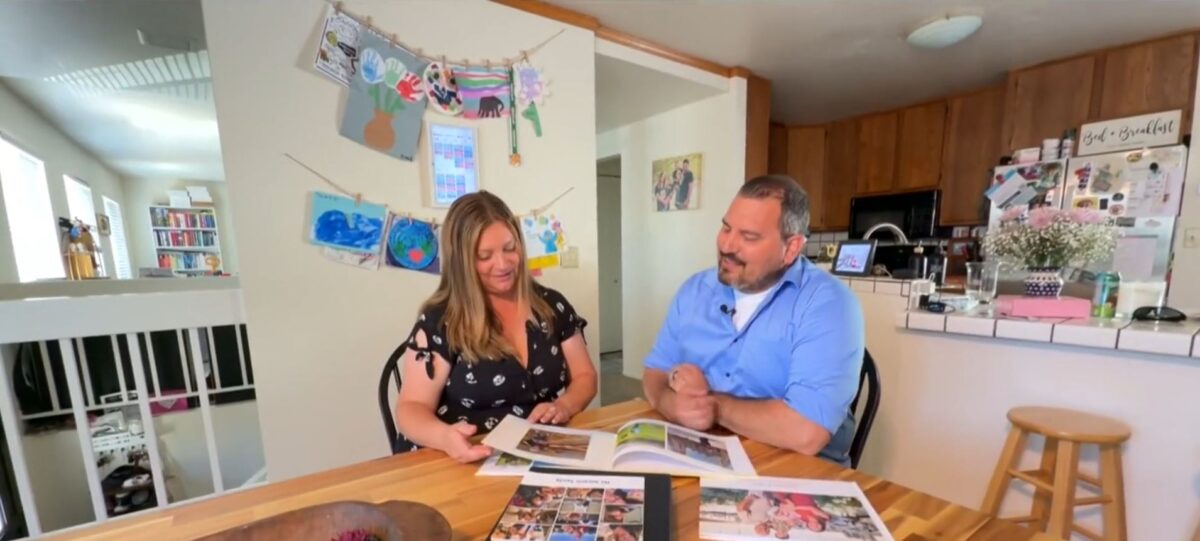
Bay Area resident Joe Quirarte and his wife Ashleigh recently sat around their kitchen table and flipped through family photo albums. Each page brought back so many good memories: of the couple falling in love, getting married, becoming parents to 4-year-old David and 2-year-old Stella. The albums show the family living in Germany, where Quirarte served in the U.S. Army, traveling the world, and even going to 49ers games.

“Joe is the most wonderful dad and husband,” remarked Ashleigh Quirarte. “It’s actually one of the things that drew me to him first was knowing how great of a dad he would be.”

Quirarte knows exactly what he wants to do on this upcoming Father’s Day.

“I didn’t know a year and a half ago if I’d even be around to see Father’s Day this year. And so, I plan on just hugging my kids as tightly as possible,” he explained.

After retiring from two decades of military service, a year and a half ago Quirarte suffered a seizure.

“I woke up in a hospital bed and there was a doctor telling my wife and I to please take a seat and that’s never a good thing and he told me I had terminal brain cancer and gave me a year and half to live,” he said.

Doctors diagnosed the 38-year-old with glioblastoma multiforme, the most aggressive and deadliest form of brain cancer that weaves tenacles of tumors throughout the brain.

“There was a lot of shock, and then a very strong resolve to get the most time we could for Joe and to make that time as meaningful as possible,” said Ashleigh.

A chance at that time came from Dr. Mitch Berger, a neurosurgeon at the University of California, San Francisco. Berger pioneered a surgical technique that uses brain mapping in the operating room.

“The way I look at it is that we’re fighting fiercely for every patient’s life,” Berger said.

The approach takes out as much tumor as possible, while preserving important brain functions. The brain mapping involves putting the patient to sleep for the initial opening of the skull. The patient is then awakened as the neurosurgeon applies a mild, targeted electrical current to specific points on the brain, and has the patient perform a task, such as counting, naming objects, or even playing a musical instrument.

If the tiny pulse causes the patient to stumble, the neurosurgeon knows to avoid those areas while maximizing tumor removal.

A recent international study published in The Lancet Oncology involving 16 institutions reveals even with slow-growing gliomas, patients undergoing the treatment can live for decades after their initial diagnosis.

In Quirarte’s case, his prognosis went from 1 1/2 years to three, perhaps five more years of good quality life.

“Even if we can provide them with a short-increased interval of life, it’s worth everything to do that,” Berger said. “To give them the time that they deserve to be with their families and to live as long as possible with a good quality of life.”

Quirarte hopes he has enough time to set a good example to both his children, by treating their mother with great respect and love.

“I’m just grateful to still be around,” Quirarte mused, saying he wants to hug, kiss, and goof around with his kids on Father’s Day.

“I think about what I want our kids to remember and know about Joe,” said a tearful Ashley Quirarte. “The very first thing that comes to mind is how much he loves them. And how wonderful of a dad he is. And I am just so thankful that we are going to spend this Father’s Day as a family, together.”

Please note: This story was provided to CNN Wire by an affiliate and does not contain original CNN reporting. This content carries a strict local market embargo. If you share the same market as the contributor of this article, you may not use it on any platform.
Pastor helped launch safe parking sites at churches for homeless residents

By Sharon Chin

Click here for updates on this story

    PENINSULA, California (KPIX) — Nearly 40 percent of Santa Clara County’s unhoused population, or almost 4,000 people, sleep in their vehicles.

A Peninsula pastor is one of the first in the Bay Area to help provide a safe place for them while they search for housing in expensive Silicon Valley.

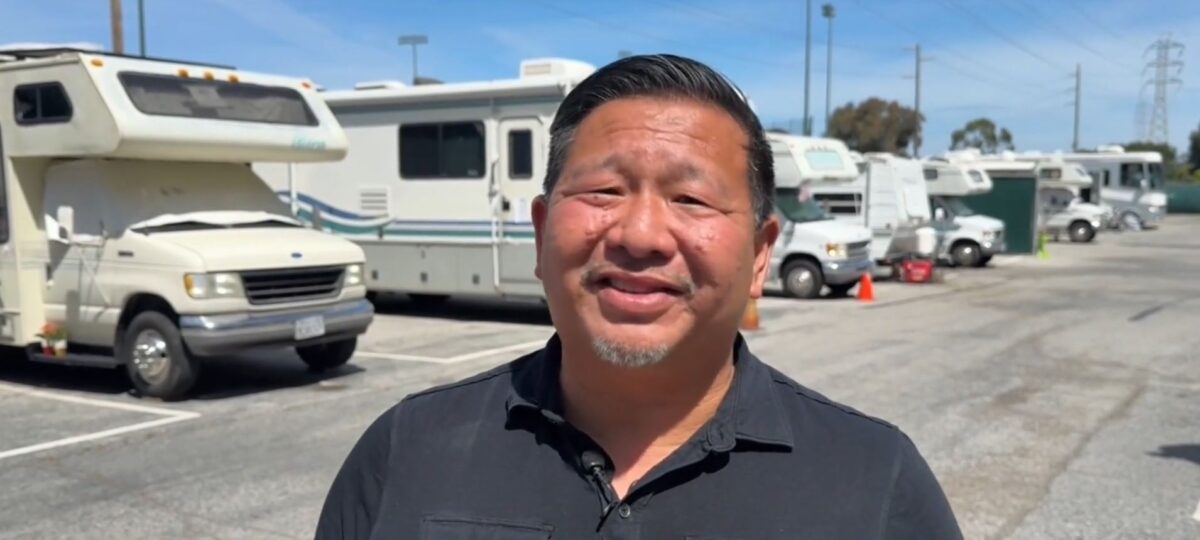
Pastor Brian Leong recalls a life-changing moment at a ministers’ conference several years ago when the speaker challenged the audience.

“If your church burned down tomorrow, would anybody in the community care?” he said. “That was a devastating question for me, because I know the answer right away, which is, ‘No.'”

So, Leong approached the office of County Supervisor Joe Simitian about what local churches could do.

The response: How about opening church parking lots as safe spaces for people living in their vehicles?

Churches had already begun to do so in Santa Barbara.

Leong pitched the community service idea he received to a gathering of faith leaders.

“‘Do you think you guys would want to do that?’ All of them said, ‘Yes, let’s do it,'” he recalled.

So, Leong started Move Mountain View in 2018, starting with six parking spaces at two churches, including his own church, Lord’s Grace and St. Timothy’s Episcopal. Today, the city and county-funded nonprofit manages 140 spaces in nine lots in Mountain View and Palo Alto.

About half the spots are occupied by families like Andres’

“Pretty much amazing. Treated like a family,” he said.

Andres, father of a newborn, can safely park the RV that his family’s been living in since he and his wife both lost their jobs months ago.

“It’s healthy. It’s clean. It’s organized,” Andres said of the safe parking lot. “The way that we look at it, it’s like going camping with a good family, a huge family. So, yeah, it’s amazing. “

But it’s not permanent.

Leong says the nonprofit must enforce a recent county policy that says after 120 days, clients have to leave if they cannot show they’re actively seeking housing.

All clients do get a case worker to help connect them with resources.

And Operations Manager David Temple adds that guests find support, security, and stability.

“Babies have been born in this lot. We’ve even had a wedding on this lot,” said Temple.

Nonprofit partners provide donations of food, clothes and more.

The Palo Alto location on Geng Road, a former city-owned firehouse, offers the widest range of on-site resources: a laundry and showers, kitchen, food pantry, and even a children’s library.

In July, a few dozen more parking spaces will be added to the Shoreline Amphitheater parking lot, bringing the total to about 200 spaces the nonprofit manages.

To qualify as a guest in a safe lot, one must live, work or have children going to school in Mountain View or Palo Alto, or be a senior citizen with living with a disability. You must have a valid driver’s license and a registered vehicle.

Since Leong began Move Mountain View, more than 600 people have found housing.

“In order to do this work, you have a big heart. And you want to serve. And Pastor Leong, obviously as a pastor, he has a big heart,” said Temple.

A heart transformed through service.

“It’s just made me more compassionate and understanding of people we often don’t look at,” Leong said.

So, for starting Move Mountain View’s safe parking lots for people living in their vehicles, this week’s CBS News Bay Area ICON Award goes to Pastor Brian Leong.

Please note: This story was provided to CNN Wire by an affiliate and does not contain original CNN reporting. This content carries a strict local market embargo. If you share the same market as the contributor of this article, you may not use it on any platform.
‘Without this, I wouldn’t be here’: 14-year-old survives e-bike crash thanks to helmet

By Katija Stjepovic

Click here for updates on this story

    KAYSVILLE, Utah (KSTU) — A Utah family is sharing their story after a 14-year-old’s full-face helmet saved his life during an e-bike crash in July 2025.

Ledger Christensen was riding his e-bike with friends near Davis High School when the crash happened. He remembers little of the incident.

“I was just with my friends hanging out. We went down to the gas station by Davis High School. And we were just hanging out there and that’s all I can remember,” Ledger said.

His mother, Brooke Christensen, got the call shortly after. “I just remember hearing Quinn say, you know, yelling, Brooke, Ledger’s been in an accident,” Brooke said.

Ledger was found laying in the middle of 200. When Brooke reached him, he was conscious — but barely.

“I remember him opening his eyes and looking at me and he goes, Mom, something’s wrong. And then he passed out,” Brooke said.

At the hospital, his condition worsened. Scans revealed a brain bleed in the lower part of his brain. Doctors called it a miracle he survived. “He just wasn’t responding,” Brooke said.

Facing the possibility of losing her son, Brooke turned to prayer. “I just said a prayer like, please, please, please. And at that point my husband looked at me and said, I think we need to call the kids,” Brooke said.

Ledger began to turn a corner when his older brother arrived at the hospital. “When his oldest brother got there is when he started to turn. You could immediately see it,” Brooke said.

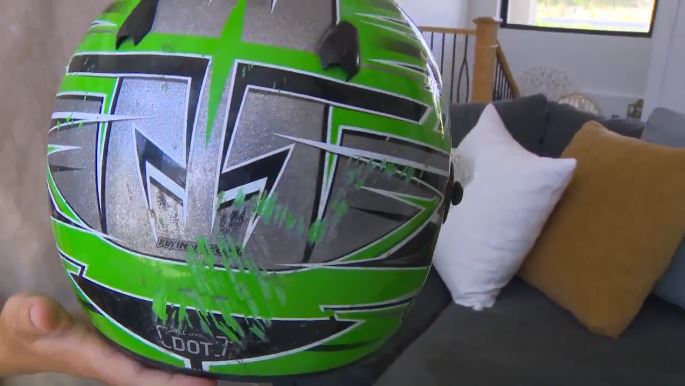
According to the Christensens, doctors credited the full-face helmet Ledger was wearing with limiting the trauma to his brain.

“All the doctors said if I was wearing a half-faced, I would have died,” Ledger said.

Katherine Stokes, a registered nurse at Intermountain Health, explained why full-face helmets are so critical in e-bike crashes. “So that full face helmet is really crucial because you could end up with facial fractures, orbital fractures, which then transfers trauma into your brain,” Stokes said.

Under Utah law, e-bike riders under 21 years old are required to wear a DOT-approved motorcycle helmet. However, there is no requirement that the helmet be a full-face model.

Brooke said wearing a full-face helmet was a condition of buying the bikes in the first place. “I remember the deal when we bought the bikes was, there’s no question you’ll wear a full face helmet, and if I ever see you not with a helmet on, they’re gone,” Brooke said.

On the day of the crash, Brooke wasn’t there to enforce that rule — but Ledger followed it anyway. “I wasn’t there to remind him. So he did that on his own, and I’m grateful that he did,” Brooke said.

Ledger now keeps his damaged helmet as a reminder of how close he came to losing his life.

“I kept it to remember how lucky I am,” Ledger said. “Without this, I wouldn’t be here,” he said.

The experience left a lasting impression on the teenager, who hopes other young riders will make the same choice he did. “Makes you realize how lucky you are. That some kids didn’t make the choice to wear the helmet and it turned out really bad for them,” Ledger said.

This story was reported on-air by a journalist and has been converted to this platform with the assistance of AI. KSTU verifies all reporting on all platforms for fairness and accuracy.

Please note: This story was provided to CNN Wire by an affiliate and does not contain original CNN reporting. This content carries a strict local market embargo. If you share the same market as the contributor of this article, you may not use it on any platform.
‘It felt easier’: Healing Hearts uses equine therapy to expand mental health support in Mountain Home

By Sahana Patel

Click here for updates on this story

    MOUNTAIN HOME, Idaho (KIVI) — Mental health resources are limited in rural communities like Mountain Home, but one counselor is offering therapy far from a traditional office.

Alexandra Yewcic, a former Air Force member, opened Healing Hearts in April after struggling to find the kind of care she needed herself.

Idaho’s Department of Health and Welfare reports that every county in the state is facing a shortage of mental health professionals. Yewcic hopes to offer a more personal approach, particularly for Mountain Home’s military community.

“I was being seen, and it just did not feel personal at all,” Yewcic said. “I did not like how I was treated.”

The equine therapy practice partners with her horse rescue, Chasing Chances Rescue. Clients can step outside to spend time with horses, allowing them to relax and open up in a different environment.

“Letting them know that horses have gone through traumatic stuff as well and they’ve learned to re-trust people again, so that people can learn to re-trust some people,” Yewcic said.

Sisters Kaidyn and Khilynne Uelman said they never felt comfortable with traditional therapy. For Kaidyn, the outdoor setting made a difference.

“It just feels more open, being like out here and talking about things instead of being closed off,” Kaidyn Uelman said.

“I don’t like talking to people, but with Alex, I like talking to her. She’s open and actually listens,” Khilynne Uelman said.

Yewcic said horses are incredibly intuitive, often responding to a person’s body language, facial expressions, and emotions.

“Horses are just amazing, they just know how we feel before we even realize that’s how we’re feeling,” Yewcic said.

For Kaidyn, that connection is what makes equine therapy so meaningful.

“Most of them are shy, and kind of don’t like people, and I’m like that,” Kaidyn said.

Yewcic said Healing Hearts accepts several of the insurance plans most commonly used in Mountain Home, including Medicaid, Tricare and Blue Cross Blue Shield.

This story was initially reported by a journalist and has been, in part, converted to this platform with the assistance of AI. KIVI verifies all reporting on all platforms for fairness and accuracy.

Please note: This story was provided to CNN Wire by an affiliate and does not contain original CNN reporting. This content carries a strict local market embargo. If you share the same market as the contributor of this article, you may not use it on any platform.

Juneteenth Eats: The history behind traditional foods eaten on the holiday

By Micah Smith

Click here for updates on this story

    DENVER (KMGH) — As Denver prepares to host one of the largest Juneteenth celebrations in the U.S., food vendors will be a big part of the weekend festivities.

Juneteenth is a celebration of June 19, 1865, the day Union Army troops arrived in Galveston, Texas and informed enslaved African Americans that they were finally free, two years after the Emancipation Proclamation was issued.

“Enslaved people had heard about the Emancipation Proclamation and the Civil War. The big factor is that the Union army arrived and could enforce their freedom,” said Adrian Miller, a culinary historian popularly known as The Soul Food Scholar. “Some people did escape, and they managed to make it past Union lines, but most people were still stuck on those plantations, and so it was a cause of jubilation. And right after that, you know, people gravitated to cities and celebrated.”

Miller said these celebrations were called emancipation celebrations.

“Juneteenth is one of those. So, the early celebrations were a mix of reverence, usually hosted by a church, so there would be sermons, there would be prominent citizens brought in,” Miller said. “There was a time for enslaved people in that community to actually talk about what they went through, so people would never forget. And then you got to the party, so the parties would have certain foods. It’s a mix of their West African heritage, European influences, and also the Indigenous culture, all coming together. So, you see this playing out through food.”

He said barbecue was especially important.

“Juneteenth is a summer holiday in Texas. So, what are people going to be eating in Texas in June? And so, over time, a Juneteenth trinity does emerge. So, you’ve got barbecue, usually pork spare ribs, brisket, chicken, and then sausages. In the Black community, we have a coarsely ground spicy sausage, we call hot links,” Miller said.

He said traditional foods associated with Juneteenth share one quality: the color red.

“The belief was that the color red symbolizes the blood shed by enslaved Africans, and so that becomes the symbolic food of Juneteenth,” Miller said. “But over time, people have started embracing other red foods. So, red velvet cake is now a popular dessert on Juneteenth.”

Miller said through his research he uncovered newspaper stories and oral histories repeatedly mentioning red foods.

Even though Denver’s Juneteenth festival has grown tremendously through the decades, Miller said the city’s emancipation celebration was initially recognized on a different date.

“We actually celebrated emancipation on Sept. 22 and the reason why we did that is that’s the anniversary of when President Abraham Lincoln gave the nation a heads up that the Emancipation Proclamation was coming, so it was, like, a 90-day heads up,” he explained. “In Colorado, we were celebrating that — that was our emancipation tradition,” Miller said. “It started shifting in the 1960s or so, and it’s because all these Texans started showing up in Colorado, and I have to say, Texans are the biggest cheerleaders for their culture. And so they got here, and they said ‘Hey, y’all don’t have Juneteenth. Well, we’re going to start it.’ So, 1950s (and) 60s, Juneteenth starts to gain momentum here.”

Miller said Denver’s Juneteenth celebration remains strong because of what it represents.

“When I do a presentation on Juneteenth, I just say it’s the latest word on freedom, because we’re not fully free yet, so it’s reminder that freedom is fleeting, and we have to continue to work on it to make sure we have the freedoms that are guaranteed under the Constitution, politically, socially, economically, and then also that we feel that we’re part of this nation, truly part of this nation,” Miller said.

Denver’s 2026 Juneteenth celebration will be held Friday, June 19 through Sunday, June 21 along Denver’s Welton Street corridor.

Please note: This story was provided to CNN Wire by an affiliate and does not contain original CNN reporting. This content carries a strict local market embargo. If you share the same market as the contributor of this article, you may not use it on any platform.

7 of 14 Oahu beaches tested this weekend failed water quality levels

By Paul Drewes

Click here for updates on this story

    HONOLULU (KITV) — More than just big surf has been hitting our shores, so have contaminants from raw sewage.

At the beach, you may pay attention to the conditions on the water like the surf or the wind, but do you think about the conditions in the water?

“I don’t see pollution. I know Hawaii is really good about being environmentally respectful and conscious. So we don’t see any garbage in the water at all,” said Dreeny Chen, who is visiting from Texas.

But what you can’t see, can be a problem.

“What we look for is Enterococcus, which is a fecal indicator bacteria,” said Arleen Velasco, the Co-coordinator for Surfrider Foundation’s Blue Water Task Force.

If enterococcus is found, that is an indication that dangerous, disease-causing pathogens are also present in the water from raw sewage.

Which is why the state and the Surfrider Foundation routinely test various beaches.

Many routinely have high levels of the bacteria.

“Levels over 130 are considered bad. We tested two beaches this last time and the test said over 24,000,” added Velasco.

Those two beaches on East Oahu, were just some of the 7 out of 14 sites that failed to meet recreational health standards during testing this weekend.

Waterways carry down this raw sewage to the ocean, so proximity to river mouths make a difference in levels.

The area around the Ala Moana canoe ramp tested high, but just offshore at Ala Moana Bowls, the levels were low at the surf break.

“Winds affect the currents. So if you have strong winds, you can have stronger currents, and that just allows for better flush of bacteria,” stated Velasco.

Big surf, can also mix up the higher levels of contaminants in the water.

“It also tends to churn up more with those big swells. So yesterday, the surfers called it a little bit more itchy, but today seems to be a lot better,” said Haleiwa resident Lindsay McGill.

She spends a lot of time at the ocean, including watching her son surf and pays attention to water conditions — including cleanliness of the ocean.

“I know a lot of people in my community are definitely concerned about it,” added McGill.

That is also the case for Chen, who is visiting from Dallas with her family. Her daughters love spending time at beaches.

“So I kind of do my research before we go out. I try to look at the beach bacteria content. My kids, I’ve done that since they were little, because they had eczema. And I know that you can get bacterial infections if you have open wounds,” added Chen.

But for those who do not look ahead of time, signs are not posted at Oahu beaches when they are contaminated, and people are not kept out of the water.

While the Surfrider website shows the seven beaches that failed this weekend’s testing, the state’s Clean Water Branch only listed a Brown Water Advisory on Oahu’s North Shore.

“Honestly, the sites are kind of all over the place. I’m just being honest. For Oahu, in general, there was just maybe a few places that were monitored,” added Chen.

Some feel the state should do more testing and notification, so everyone knows about the conditions of our waters.

“It should be a high priority. It’s our tourism industry, it’s our health, it’s the health of this island for our future generations, it’s a big deal,” added Velasco.

Please note: This story was provided to CNN Wire by an affiliate and does not contain original CNN reporting. This content carries a strict local market embargo. If you share the same market as the contributor of this article, you may not use it on any platform.

Police investigating fight at Milwaukee Walgreens

By Jacob Murphy

Click here for updates on this story

    MILWAUKEE (WDJT) — An investigation is underway after a fight inside Milwaukee’s popular Walgreens on Brady Street.

Police say it happened early Saturday, June 13.

A video posted on Facebook shows multiple individuals crowded inside the Walgreens, appearing to be fighting and throwing items on the shelves. Two individuals wearing security vests were also inside the store at the time and were seen in the video attempting to separate those fighting.

Warsame Youb works across the street and says fights like this have become a common theme at the Walgreens.

“It’s fights almost every single day,” Youb said. “Never go there, it’s not even safe for people, especially when you close, when people close the bars.”

According to police, a 25-year-old woman was taken into custody. Officials say the circumstances that led up to the incident are under investigation.

Potential charges will be reviewed by the Milwaukee County District Attorney’s Office.

Natalie Esparza lives a block away from the Walgreens and sometimes can’t avoid it due to a lack of parking.

“It is one where you are just a little bit more on your toes, and there’s always something happening because it’s on a corner,” Esparza said. “I haven’t had the best experiences there as a woman.”

Esparza says the Walgreens has gained a reputation, and fights like this one happen often.

“Based on the fact that there’s altercations there and there’s a lot of things that raise tension over there, I think it would be nice to have some security there just on a consistent basis so everyone can go there that wants to go there,” Esparza said.

Please note: This story was provided to CNN Wire by an affiliate and does not contain original CNN reporting. This content carries a strict local market embargo. If you share the same market as the contributor of this article, you may not use it on any platform.

Wisconsin Capitol display honors children lost to gun violence; lawmakers renew push for gun safety as memorial grows

By Meredith Hackler

Click here for updates on this story

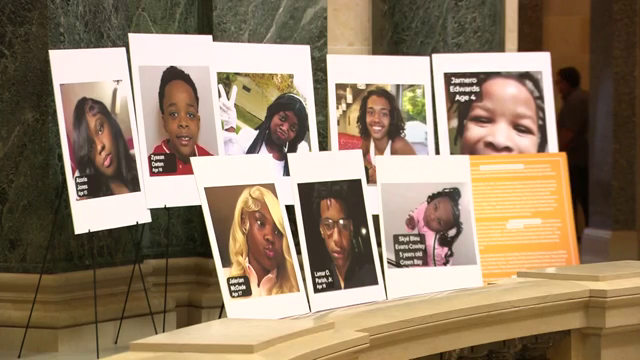
    MADISON Wisconsin (WDJT) — Inside the Wisconsin state capitol, the entire month of June, there will be photos of Wisconsin children lost to gun violence.

It serves as a powerful reminder of the human toll. The senator who began displaying these pictures in the Capitol rotunda State Sen. LaTonya Johnson started doing so in 2023. The state senator from Milwaukee says each year the memorial grows, despite her efforts to pass gun reform which she feels will solve the issues of gun violence across the state.

According to the Wisconsin Anti Violence Effort, 87% of Wisconsinites including 83% of republicans support universal background checks. Senator Johnson says the legislation she keeps bringing forward continues to fail in the legislature.

“If we are not going to do legislation to prevent their deaths then we are going to make it uncomfortable for people to walk past these children and not acknowledge the fact that they were here and they mattered,” Johnson said.

Wisconsin law currently allows private gun sales without background checks, which gun safety advocates say is leading to gun getting the wrong hands.

“Gun violence is the leading cause of death for kids and teens in this country and in this state,” Nick Matuszewski the executive director of the WAVE Educational Fund said.

Another concern for this organization and others is the planned closure of the State Office of Violence Prevention.

The office was created by executive action in January 2025 and is expected to shut down when its funding runs out at the end of this year. A closure that these advocates worry will make gun violence worse in the state.

“These are programs where you work with individuals that are most at risk of being both perpetrators and victims of gun violence and ensure that they are given everything they need to break out of these cycles of violence that they have been trapped in,” Matuszewski said.

As the names and faces of the display and the capitol grow year over year leadership at the capitol is set to change too. Assembly Speaker Robin Vos is retiring, and Wisconsin Senate Majority Leader Devin LeMahieu is not seeking re-election.

Democrats are hopeful they can gain the majority in the senate and potentially the assembly. If they do, they are hopefully that new leadership can mean a change in the way the legislature handles its response to gun safety.

“Making sure that people have legal purchases only protects everyone involved because no one wants to lose a life due to senseless gun violence,” Senator Johnson said.

Another law these advocates would like passed is an Extreme risk law. According to WAVE, extreme risk laws allow families and law enforcement officers to ask a judge for an extreme risk protection order (ERPO). An ERPO can temporarily prohibit someone from purchasing or possessing a gun, if they are at imminent risk of harming themselves or others.

A Marquette Law School poll from March of 2025 found 85% of Wisconsinites want extreme risk laws, including 79% of Republicans and 98% of Democrats.

Please note: This story was provided to CNN Wire by an affiliate and does not contain original CNN reporting. This content carries a strict local market embargo. If you share the same market as the contributor of this article, you may not use it on any platform.
Popular Cliff Drive Overlook Parking Area Closed for 30 Days

John Palminteri

SANTA BARBARA, Calif. (KEYT) – The popular overlook along Cliff Drive in Santa Barbara has been closed off for cars while a study is done. The roadway remains open.

The City of Santa Barbara temporarily closed off the parking area above Hendry’s Beach near Hope Ranch for 30 days. This is part of an evaluation to consider safety and operational improvements in the future.

Special barricades have been put up on both sides of the street.

During the closure the city’s staff will test some options for the future in the area and monitor traffic flow and speeds.

The location has, for years, been a favorite spot to view the ocean, sunsets, and take a break. From this site you can see down the coast for miles in one direction and out to UC Santa Barbara and the airport in another direction.

The Latest Breaking News, Weather Alerts, Sports and More Anytime On Our Mobile Apps. Keep Up With the Latest Articles by Signing Up for the News Channel 3-12 Newsletter.

Click here to follow the original article.