DOE Secretary visits Idaho Falls for Nuclear Energy event

Par Kermani
IDAHO FALLS, Idaho (KIFI) — Energy leaders, government officials and members of the nuclear industry gathered at the Mountain America Center Thursday to celebrate what they called a new “Golden Era of Nuclear Power” following a major milestone at Idaho National Laboratory.
The event featured a keynote address from U.S. Department of Energy Secretary Chris Wright, who highlighted the growing momentum behind the nation’s next generation of nuclear energy.
Earlier in the day, Wright toured Idaho National Laboratory, where he met with companies developing advanced reactors, visited the DOME test bed and saw the Radiant reactor under construction.
The visit followed a milestone at the laboratory, where Wright and INL officials celebrated the completion of a zero-power fueled criticality demonstration for Antares Nuclear’s advanced reactor design, the Mark-0.
“It is fitting that on the eve of our nation’s 250th anniversary, we are witnessing a historic moment for American energy,” Wright said in a statement. “For the first time in more than four decades, a new privately developed non-light-water reactor has reached criticality in the United States.”
Criticality is the point at which a nuclear reactor can sustain a controlled nuclear chain reaction, marking a major step toward future electricity production.
Officials said the demonstration validates the reactor’s design and lays the foundation for future commercial reactors that could begin producing electricity as early as 2027 following additional testing and licensing.
The Mark-0 is the first advanced reactor expected to reach criticality under the Department of Energy’s Reactor Pilot Program, which aims to accelerate the testing and deployment of next-generation nuclear technology.

As the 53rd reactor built at Idaho National Laboratory since 1951, the Mark-0 joins a long history of research reactors that have helped shape the nation’s commercial nuclear industry. Department of Energy officials say the technology could eventually power military installations, data centers, remote communities and future space missions.
During Thursday’s celebration, officials highlighted the Department of Energy’s goal of having new microreactors operating, or “critical,” by America’s 250th anniversary.
Wright told the crowd the work taking place at Idaho National Laboratory will play a key role in the country’s energy future.
“This we will look back in history and remember this pivot, not just in America’s nuclear energy, but in America’s energy,” Wright said. “Energy is life. Energy is national security. Energy is economic security. We cannot understate what’s going on here today. And you are making it happen.”
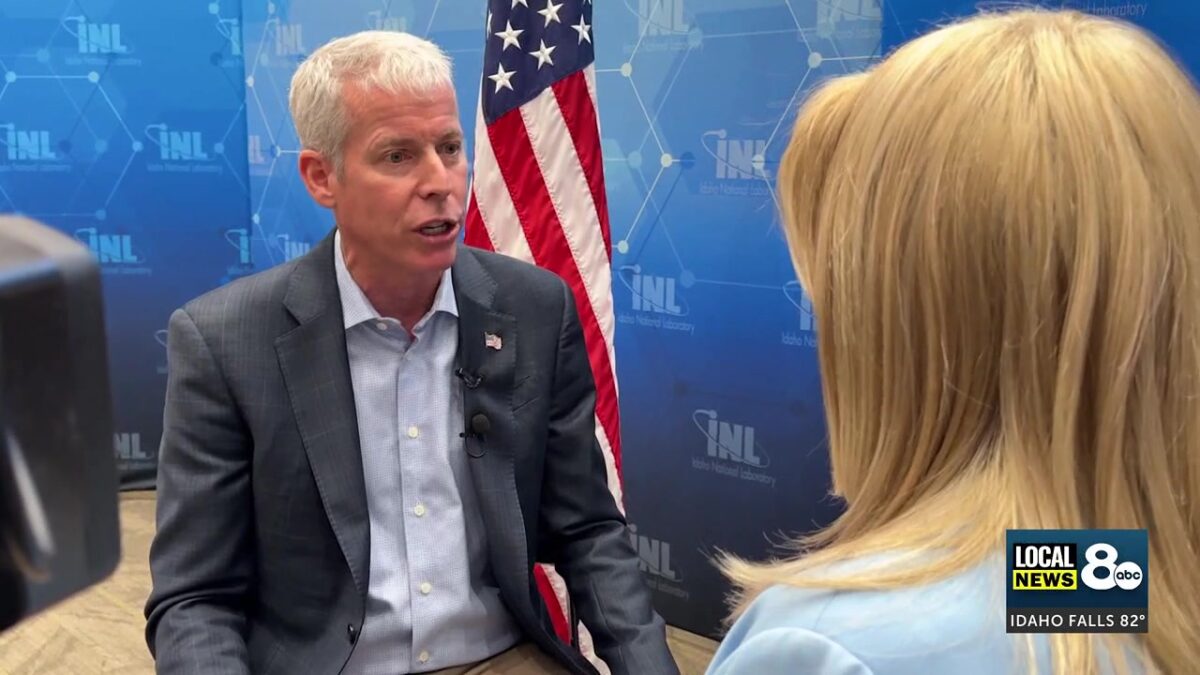
Following the event, Wright told Local News 8 that advanced nuclear technology will be essential to meeting the nation’s growing demand for electricity.
He said microreactors are designed to provide reliable, around-the-clock power for data centers, industrial facilities and communities while using relatively little land and material.
“It takes a small amount of land and a small amount of material to make a lot of energy,” Wright said. “And that energy is 24 over seven. It doesn’t matter what the wind is or the sun is shining, it’s there all the time. We can build it in scale. We can add not just a little energy, we can add a massive amount of energy.”
Wright said expanding nuclear power will strengthen the nation’s energy security while helping meet future electricity demands.
This event has now ended. You can watch the recording of the event below:
Officials say the demonstration validates the reactor’s design and establishes the foundation for future commercial reactors that could begin producing electricity as early as 2027 after additional testing and licensing.
The achievement comes about six months after Wright visited Idaho National Laboratory, where he outlined the Trump administration’s goal of quadrupling U.S. nuclear power generation and highlighted INL’s role in helping lead the nation’s nuclear expansion.
The Mark-0 reactor is the first advanced reactor expected to reach criticality under the Department of Energy’s Reactor Pilot Program, which aims to accelerate the testing and deployment of next-generation nuclear technology.
As the 53rd reactor built at Idaho National Laboratory since 1951, the Mark-0 joins a long history of research reactors that have helped shape the nation’s commercial nuclear industry.
DOE officials say the reactor demonstration will help inform future commercial reactor designs, with potential applications ranging from military installations to remote communities and even future space missions.