Garlic mustard is on the Prohibited Plant List in Massachusetts. Here’s why.

By Breana Pitts
Click here for updates on this story
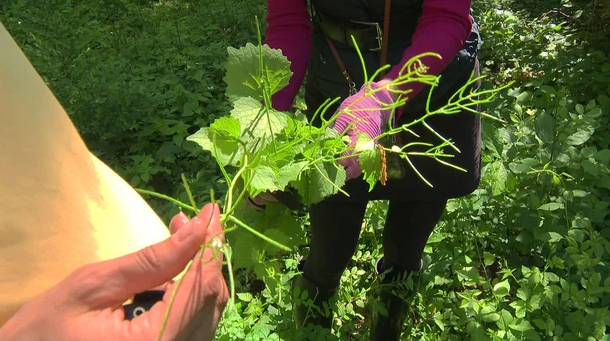
BOSTON, Massachusetts (WBZ) — Garlic mustard might look like an innocent wildflower, but conservationists say it’s one of the most invasive plants in Massachusetts.
Despite its serrated leaves, delicate white flower and unmistakable scent, garlic mustard is on the state’s Prohibited Plant List.
“It’s like wildfire,” said Lisey Good, founder of Wild Cohasset, a nonprofit dedicated to restoring native habitats and removing invasive species. “I hate garlic mustard so much.”
The biennial plant, originally brought to New England by European settlers hundreds of years ago as a food source and herbal remedy, has since become a major ecological threat. While some people still use garlic mustard in salads, soups, and pesto, the plant can quickly overwhelm forests and crowd out native species. Good said each stem has “tons of seeds in there.”
“This plant might have 7,000 seeds,” she told WBZ-TV. “Next year this plant will die, but all around it will be 7,000 new baby garlic mustards.”
That’s why Good founded Wild Cohasset in 2015. As garlic mustard spreads, it pushes out native plants that local wildlife, like ruby-throated hummingbirds and butterflies, depend on for survival.
“They’re putting out a kind of chemical warfare,” she said. “It’s a poison that’s similar to cyanide, but it’s not harmful to humans. It’s just a mild amount. But it’s enough to change the soil chemistry so that nothing else can grow around it.”
Recently, Cohasset High School seniors helped Good remove the plant from Wheelwright Park.
“I play at the baseball fields, I’ve been around here awhile, so I just want to make sure it’s going to be here, be healthy for the next generation,” said senior Ronan Carnes.
“We should stop it while it’s just one weed, rather than like 7,000,” added fellow senior Emma Lee.
Timing is critical when it comes to garlic mustard removal. Experts recommend pulling the plant as early in the spring as possible, once the ground has thawed. May is often the easiest time to identify garlic mustard because its distinctive white flowers are in bloom.
The goal is to remove the plants before they set seed. After about June 20, conservationists say the risk increases dramatically. The seeds can spill from the stems during removal and spread to new areas.
Garlic mustard often spreads when people remove it from their yards and place it in compost piles. Seeds end up at municipal compost sites, transfer stations, or in community mulch piles, where they’re unknowingly redistributed and introduced to new areas.
Instead, experts recommend bagging the plants and throwing them in the trash.
For Good, the work is about more than removing a weed. It’s about helping people understand the connection between plants, wildlife, and healthy ecosystems.
“It’s so gratifying to see that people learn what to do,” she said. “People are planting more native plants in their yards for wildlife, and I think people have really started to understand the connection between plants and the creatures that live with us.”
There may also be a natural solution on the horizon.
Good points to a native wildflower called golden ragwort, which pollinators love, and researchers have found can successfully compete with garlic mustard. She recommends planting it in areas where garlic mustard has taken hold.
“It’s something people can do that tangibly helps birds and butterflies and bees and whole forests,” she said.
More information on removing garlic mustard can be found here.
Please note: This story was provided to CNN Wire by an affiliate and does not contain original CNN reporting. This content carries a strict local market embargo. If you share the same market as the contributor of this article, you may not use it on any platform.