More than 200 Coloradans buried in Lafayette Cemetery missing from city records

By Sarah Horbacewicz

Click here for updates on this story

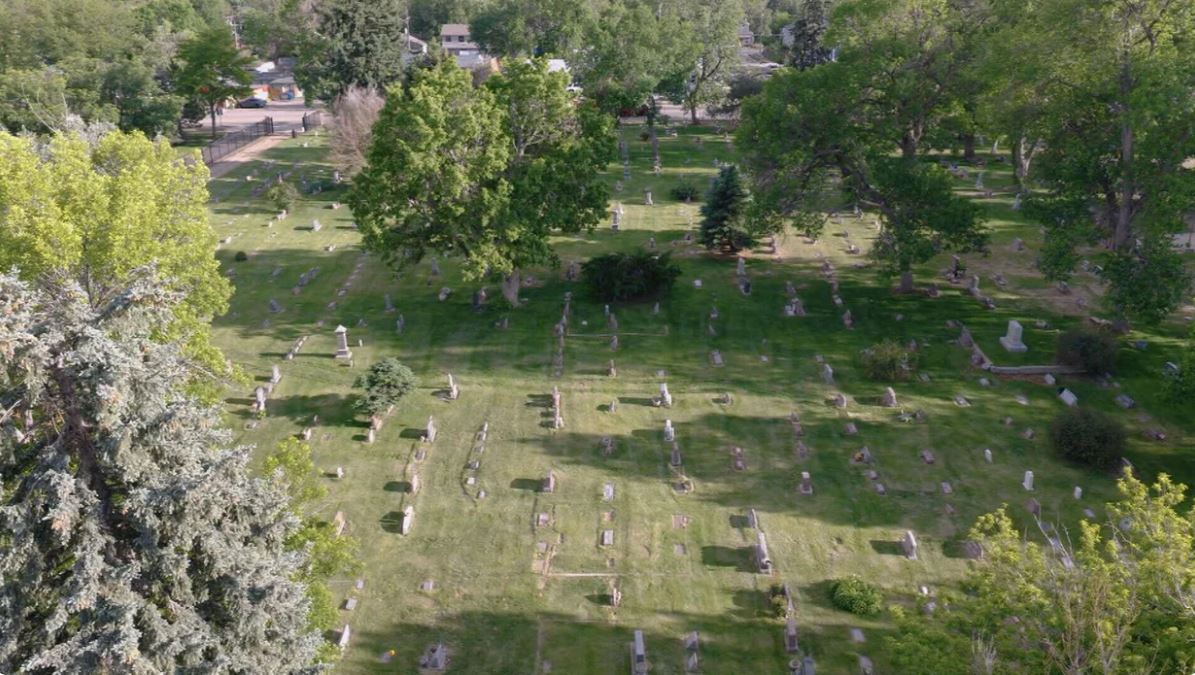
    LAFAYETTE, Colorado (KCNC) — The City of Lafayette is sending out more letters this week to the 270 people who still have plots at the city cemetery but might not be able to use them. The city established a moratorium to halt all casket burials this fall, and conducted a ground penetrating data study, which they presented this month.

The study held recommendations by the state archeologist, and the city voted to delay a decision on closing the cemetery. The study showed that the cemetery, which dates back to the 1800s, is nearly full even though there are still 270 outstanding plots.

Frank Archuleta always planned to lie next to his family plot at the city’s cemetery, but now, he may never get the chance.

“These are our families. They’re buried here. This one right here is my sister. Right here, this was my nephew,” Archuleta said, “There’s a lot of pride to be buried where your family is.”

Despite his family burying plots decades ago, he may not be able to use one. The city says there’s not enough room for everyone.

“We’ve gone to conduct burials, and we’ve encountered people who have been buried there previously, and so we don’t want to disrupt those who have been laid to rest there,” Lafayette’s Deputy City Manager Megan Davis said, “It’s a really difficult situation.”

When asked if the city made a mistake, Davis said, “I think that cemetery of this age has gone through many, you know, different iterations of record keeping.”

“The folks that we’ve been talking with at the state archeologist’s office, and others who have this type of expertise around cemeteries, are telling us that this isn’t uncommon,” explained Davis.

The city is now sending out letters to plot owners and asking anyone who did not receive a letter to contact them. Some options for those plot owners are to have a cremation ceremony, transfer to a plot in Louisville, or get a refund.

But for Archuleta, that will never be enough.

“If there are contracts that are signed and everything else, the city must honor those contracts,” he said.

He hopes that city hall will find a way to keep loved ones in Lafayette together.

“Our families are buried here, our aunts, our uncles, our cousins, they’re buried here. This is our home, Lafayette’s our home.”

People can find the city’s latest information about the cemetery on their website or by calling 303-604-3511.

As the city sends out more letters to plot owners on Wednesday, they’re hoping to meet with the community again on June 10.

Please note: This story was provided to CNN Wire by an affiliate and does not contain original CNN reporting. This content carries a strict local market embargo. If you share the same market as the contributor of this article, you may not use it on any platform.

Colorado lawmakers approve Ibogaine research bill

By Olivia Young

Click here for updates on this story

    COLORADO (KCNC) — A groundbreaking bill is now waiting for the governor’s signature to become law. It will create a first-of-its-kind Ibogaine research pilot program, paving the way for Colorado to study the psychoactive compound that claims to treat PTSD, addiction, and mental health.

There are still a lot of details to be worked out, including where the funding for this research will come from.

Ibogaine is a psychoactive compound that comes from the iboga shrub, native to Central Africa. This bill requires a “benefit sharing plan” with Indigenous communities in the sourcing of Ibogaine.

“The pain adds up over a long time, and there were some pretty traumatic events that happened where I was not able to regulate my emotions,” said Nicholas McClellan, co-founder of Colorado for Ibogaine.

McClellan says he found Ibogaine at his lowest point.

“I had tried talk therapy, EMDR, neurofeedback, diet, exercise, and I was just kind of running out of treatment options,” said McClellan. “It was really just an act of desperation that led me to go down to Transcend Clinic in Mexico.”

At an Ibogaine clinic in Mexico, McClellan says he received the treatment under the oversight of a doctor and two nurses.

“Your heart rate is monitored the whole entire time, and you’re in a room with three other people, and you have like a night shade, and you take ten pills,” said McClellan. “I kind of just had an overall sense of well-being and love, and this presence showed up and said it’s going to be okay, and I got you.”

McClellan says the effect was immediate.

“Instant nervous system reset overnight. You know, it’s still helping me to this day,” said McClellan. “It made me think this needs to be researched.”

“We know there are risks of Ibogaine, and so that’s where we have to have caution here as we roll out an Ibogaine protocol here in Colorado,” said Andrew Monte, associate director of Rocky Mountain Poison and Drug Safety at Denver Health.

Experts say that while early research suggests Ibogaine could be promising in the treatment of PTSD and addiction, they also suggest Ibogaine may cause potentially fatal cardiac complications.

“This drug must be taken in a medical facility with the appropriate training, because otherwise this can be quite dangerous and people may die,” said Monte.

Monte says more research is needed into the safety of Ibogaine.

“The initial observational studies are promising, but those are not clinical controlled trials like you would see that are necessary for pharmaceutical approval by the FDA. So we’re still very early on in this stage. In fact, there are no randomized control trials of it,” said Monte. “Ibogaine has tremendous potential, but it’s really understudied at this time.”

“Let’s let the data and science lead the way,” said McClellan.

As a co-founder of the nonprofit “Colorado for Ibogaine,” McClellan helped craft an Ibogaine research bill and testified at the Capitol. Last week, the state legislature passed the bill.

“It’s amazing, it feels great, but there’s still a lot of work to do,” said McClellan.

The bill creates an Ibogaine research program under the Behavioral Health Administration, which may approve up to five Ibogaine pilot sites.

It requires compliance with the FDA’s Investigational New Drug process and mandates medical oversight and safety protocols during research.

“They’re all required to have the utmost safety protocols and require data and do a scientific study,” said McClellan.

McClellan says the research may include three-phase clinical trials, as well as smaller studies.

The bill creates the Ibogaine research pilot program cash fund, to be funded largely by gifts, grants, and donations. The bill did not include a fiscal note, meaning no state dollars have been allocated to the program at this time.

Colorado could receive some federal grant dollars for this research, coming from the executive order on psychedelics that President Trump signed last month.

McClellan is hopeful that opiate settlement money could be used for the research. Right now, he’s working on fundraising as he awaits Governor Polis’s signature.

“My ultimate hope for Ibogaine in Colorado is to reduce suffering and trauma and addiction in Colorado,” said McClellan. “If you’re suffering an addiction or trauma, don’t give up, keep walking, there’s always hope, there’s always a way out. And we’re trying to upgrade these systems to help people.”

Once signed into law by Gov. Polis, rulemaking will take place on the specifics of how the pilot program will work. And eventually, the Department of Revenue would integrate Ibogaine into its regulatory framework.

Three state agencies will ultimately be involved: the Behavioral Health Administration, the Department of Revenue, and the Department of Regulatory Agencies.

A DOR spokesperson shared the following statement on the agency’s anticipated role:

“Once HB26-1325 is signed, the Department of Revenue will gain broader authority to integrate ibogaine into its regulatory framework; however, a definitive start date for implementation has not yet been set. The bill does not provide a specific funding allocation; therefore, implementation is dependent on the DOR obtaining resources for staffing and programming.

Ultimately, HB26-1325 signifies an incremental approach toward including ibogaine in the regulatory program; however, a definitive start date for implementation has not yet been set.

The DOR would be responsible for regulating the supply chain. This would involve issuing licenses to authorize ibogaine cultivation and product manufacturing. DOR would also license and regulate healing centers where ibogaine services would be provided. These services would be provided by DORA-licensed facilitators. The DOR’s vision for the inclusion of ibogaine would be to ensure that ibogaine is sourced ethically and sustainably, that participants are protected during ibogaine treatments, and that appropriate regulatory guardrails are in place, such as requiring healing centers to have certain equipment, like EKG machines, for all ibogaine treatments. In addition, the DOR would solicit input from stakeholders, including outreach to members of traditional and indigenous communities, to inform the regulatory framework for ibogaine. The DOR began consulting with the governor-appointed Natural Medicine Advisory Board on these subjects, and will continue to do so to inform the inclusion of ibogaine in the regulatory framework.

The pilot program assigned to BHA is separate from the regulatory program.”

Please note: This story was provided to CNN Wire by an affiliate and does not contain original CNN reporting. This content carries a strict local market embargo. If you share the same market as the contributor of this article, you may not use it on any platform.
Caltrans considering 140 mph bus that would take passengers from San Francisco to Los Angeles

By Luz Pena

Click here for updates on this story

    SAN FRANCISCO (KGO) — The California Department of Transportation is exploring the idea of a high-speed bus system that could travel between San Francisco and Los Angeles, offering an alternative form of transportation for travelers who frequently move between the two regions.

The concept, which remains in its early stages, envisions buses traveling at speeds of up to 140 miles per hour on state freeways. Caltrans officials describe the proposal as part of a broader effort to examine what it calls high-speed buses.

“I think it would be great. We need to build more infrastructure in the state of California,” said Jeff Fisher, a San Francisco resident.

In a recent presentation, Caltrans outlined potential routes and corridors that could support the system. Officials pointed to freeways such as the Harbor Freeway and the San Bernardino Freeway as possible starting points.

“Freeways with some infrastructure may be candidates to start such as the Harbor Freeway and the San Bernardino freeway. Or perhaps it would be best to start with the interregional service that can connect Los Angeles with San Diego and San Francisco Bay Area and Sacramento. That would favor I-5 and I-10 as the first freeways,” said Ryan Snyder, Caltrans feasibility studies manager.

The idea is already drawing interest from some travelers who regularly fly within the state.

“I think it would be a different form of transportation, and I think it might be more accessible,” said Katie Kim, a San Francisco resident who said she flies to Southern California three to four times a year.

“That would be a good idea maybe its faster,” said Arlette Contreras, a tourist.

However, transportation experts say the proposal would face some challenges, particularly in already congested corridors.

“Given the highly congested nature of that corridor on the interstate highways and really some of the secondary roadways, it would be critical that bus lanes would need to be additional lanes. They could not be in place of the existing lanes that people are already traveling on that are already highly congested,” said Rocky Moretti, director of policy and research with TRIP, a national transportation research nonprofit.

The proposal also comes as California spent more than $14 billion on a high-speed rail project intended to connect San Francisco and Los Angeles, according to the California High-Speed Rail Authority, something residents say remains top of mind as new transportation ideas are considered.

“Would love not to have to go through the airport. I’m just sort of skeptical that it will be able to work,” said Bradley Powles, a Hercules resident.

Caltrans has not provided cost estimates for the high-speed bus concept. A preliminary report noted that if the 140-mile-per-hour target proves infeasible due to cost, infrastructure or safety limitations, a slower speed of 80 to 100 miles per hour could serve as a practical alternative.

“Something that would be quicker and easier would be wonderful I hope it can be achieved,” Powles said.

Caltrans issued a statement writing:

“At this time, the concept remains exploratory. Caltrans is currently exploring the feasibility of operating higherspeed buses on California freeways as a potential enhancement to the state’s public transportation network. This earlystage assessment is focused on understanding how fast a bus could be safely designed to travel on our freeways, what vehicle and safety design requirements would be necessary and whether any modifications to freeway facilities would support such operations. Vigorous project analysis and feasibility studies are part of Caltrans’ process to determine viability for many concepts and designs intended to improve the transportation network. Caltrans is evaluating what would be required before determining whether future testing or implementation of high-speed busses is appropriate. The Department’s long-term strategic vision accounts for cutting-edge innovation that will transform the transportation landscape and help our goal of improving quality of life for all Californians. With measured analysis, thorough exploration and thoughtful planning, many of these bold concepts will shape the future of a thriving, connected California. As part of the state’s ongoing effort to enhance connectivity and convenience for transit users in California, the state is planning express bus facilities in San Diego and Contra Costa counties, with additional locations expected. “

Please note: This story was provided to CNN Wire by an affiliate and does not contain original CNN reporting. This content carries a strict local market embargo. If you share the same market as the contributor of this article, you may not use it on any platform.
Whale heat signatures in San Francisco Bay being tracked to prevent ship collisions

By Andrea Nakano

Click here for updates on this story

    SAN FRANCISCO (KPIX) — Marine scientists say that roughly 40% of gray whales that die in San Francisco Bay are killed in collisions with ships. Now, scientists are using AI to try to save the lives of those whales.

More and more people are spotting gray whales in San Francisco Bay. Scientists say climate change is impacting their food source, forcing the whales to venture into the bay for food. While many are thrilled to see the whales, this has also increased the number of dead whales found in the area.

“The problem has been getting worse,” Dr. Douglas McCauley, the director of the Benioff Ocean Science Laboratory, said. “Last year was an awful year for gray whales in San Francisco. We saw 21 gray whales that died in the greater Bay Area. So far, we saw seven gray whales and a large fraction of those are being killed by ships.”

And those are the whales that scientists believe they can save.

“This is a problem we can solve right now,” Dr. McCauley said. “That this new data and the community came around it can solve.”

The first major step in saving the whales from ship strikes officially launched this week. A group of marine mammal experts gathered in San Francisco to launch Whale Spotter.

“About an hour after plugging it in, we saw 180 blows,” he said. “That’s not 180 whales, but a handful of whales being active in the bay.”

These devices detect heat signatures in whales. One was placed at the U.S. Coast Guard station on Angel Island, and the other on a ferry that travels between San Francisco and Vallejo.

“First, you have a whale that comes up and takes a breath,” he said. “It blows. It’s a warm breath so the thermal sensing system sees the heat of the breath against the cold ocean.”

AI then puts the detected heat signatures on a map, and that information is sent to mariners within minutes. The hope is for ships to then avoid the area or at least slow down in enough time to stop hitting them.

“For all of us to be able to see the power of AI applied for, in our opinion, is such an important use case for looking after whales,” he said. “Keeping our oceans safe is exactly where we want the power of those tools out first so it’s really.”

Please note: This story was provided to CNN Wire by an affiliate and does not contain original CNN reporting. This content carries a strict local market embargo. If you share the same market as the contributor of this article, you may not use it on any platform.
12-year-old student to graduate Evergreen Valley College as valedictorian

By Frances Wang

Click here for updates on this story

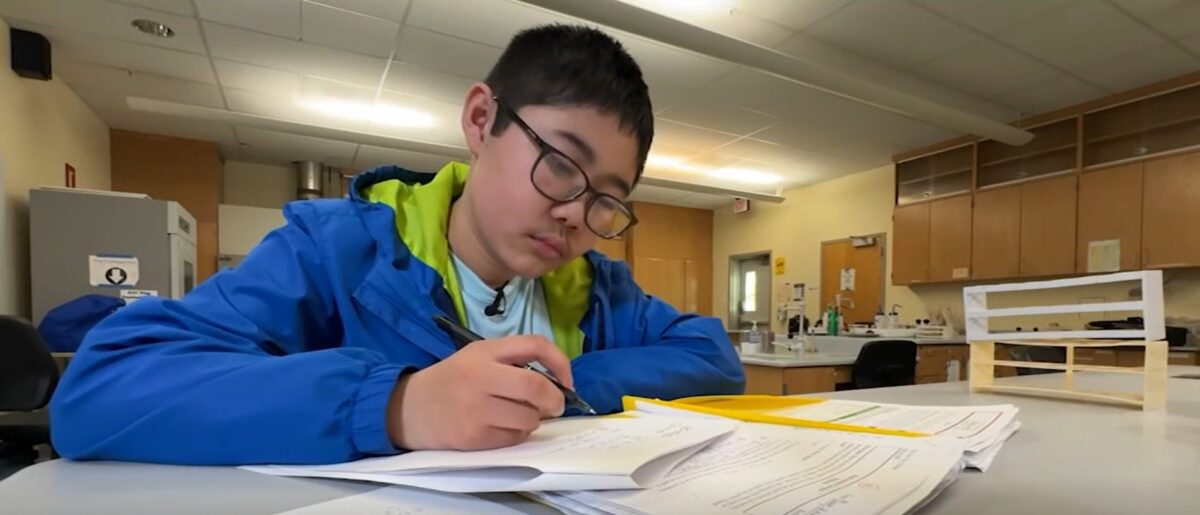
    SAN JOSE, California (KGO) — A 12-year-old student will graduate Friday from Evergreen Valley College with an associate degree in mathematics, a perfect 4.0 GPA and valedictorian honors. Phung-Hieu Diep, who goes by Hieu and whose initials spell “P-H-D,” is completing college years ahead of schedule.

When asked about his approach to learning, he said, “When I don’t understand something, I work really hard on it, ask questions and try to learn from mistakes.”

His academic journey began in third grade, when he realized he was ready for more advanced coursework.

“I realized in, like, third grade, that I was already able to do pre-algebra, instead of just multiplication tables. So that’s really where my journey started,” he said.

He soon asked his father for greater challenges.

“I asked my dad if I could enroll in harder classes,” Diep said.

What started as a single pre-calculus class at Berkeley Community College quickly accelerated.

By age 10, Diep left middle school to attend college full-time. He’s had to attend six different community colleges to put together a full-time course load due to his age.

Now graduating, he already has his next step plan.

“My current future goals are getting another degree,” he said.

He plans to continue his education, with hopes of eventually attending UC Berkeley and then medical school.

When asked which medical school: “I don’t really know much about schools right now.”

But Diep does know he wants to become an infectious disease physician.

“I chose that job to pursue because of my experience in outbreaks in catfish aquaculture from my research presentation,” he said.

His research focuses on harmful bacteria impacting catfish farms in Vietnam, work inspired by a recent visit to his parents’ home country. Diep overheard local farmers talking about a problem and wanted to help solve it. That research work is now set to be published in a scientific journal, and he will present it in Washington, D.C. next month.

Despite his academic achievements, Diep said he is still a typical 12-year-old in many ways.

“I usually call my friends on, like, Discord, Google Chat. Play ‘Minecraft’ or ‘Roblox,'” he said.

He also maintains friendships and activities outside the classroom.

“So, I still hang out with some of my friends from elementary school. Like playing online video games and going to Taekwondo classes three times a week,” he said.

At home, he does not always win arguments with his parents.

“Not always,” he said when asked if he is always right.

Diep said adjusting with his college-aged peers has sometimes been challenging, but he’s made a lot of friends while on campus.

“You know, it’s really hard, because sometimes you don’t know enough culture to understand what they’re saying,” he said.

Even with his accomplishments, he continues to set personal goals: “to get better at Vietnamese and get a black belt in Taekwondo.”

Beyond academics, Diep said one of the most important lessons he has learned was from Dr. Jose Cabrera at San Jose City College — a concept with what he calls “productive struggling.”

“The idea of productive struggling, that learning is supposed to be easy all the time. So I would tell, like other people, that it’s okay to struggle, because that’s just part of learning. But it’s also important to know when to ask for help,” he said.

As he prepares to graduate at just 12 years old, Diep said his experience has been rewarding.

“I tell people that, like, it’s been an amazing experience. College. Let me dive into math and other subjects,” he said.

For Diep, the journey is far from over, and he said he plans to keep learning.

Please note: This story was provided to CNN Wire by an affiliate and does not contain original CNN reporting. This content carries a strict local market embargo. If you share the same market as the contributor of this article, you may not use it on any platform.
Sheriff describes fatal stabbing scene and 911 call for help

By Brett Rains

Click here for updates on this story

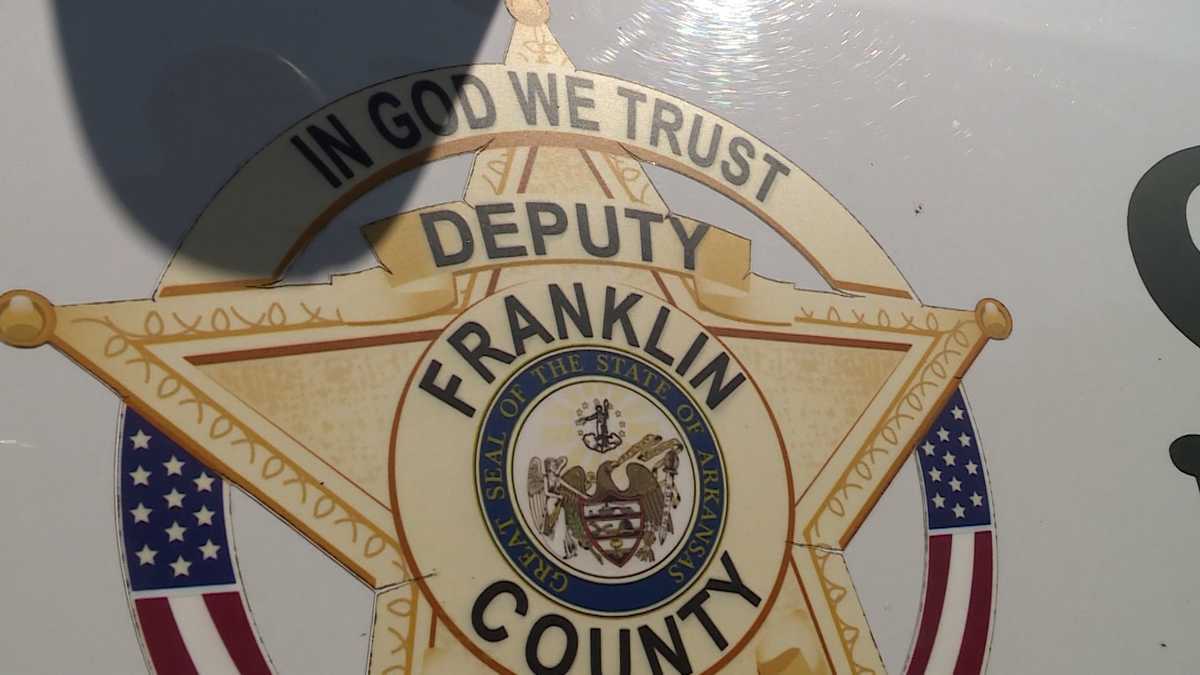
    FRANKLIN COUNTY, Arkansas (KHBS, KHOG) — The Franklin County sheriff says a double stabbing that left a man and woman dead was the most gruesome crime scene he has seen in office.

The Franklin County sheriff says a double stabbing that left a man and woman dead was the most gruesome crime scene he has seen since taking office.

Sheriff Johnny Crocker says the May 15, 2026, 911 call came from a woman reporting someone was beating and stabbing her friend inside a cabin on Cat Holler Road in rural Franklin County. He says the call ended after the caller said the suspect was coming for her and that he was killing her.

When deputies arrived, Crocker says they saw a man run inside the home. Deputies later found another man dead after being stabbed multiple times.

SWAT team members waited about an hour and a half before entering the home. Inside, Crocker says deputies found the suspect in a bathroom and struggled to take him into custody.

“They were doing everything they can to detain him, to get on a top position,” Crocker said. “Multiple deputies were getting on him and eventually heard, a deputy goes — he’s trying to get my gun, he has his hand on my gun.”

Crocker said the fight over the weapon lasted nearly a minute.

“You’re looking at a good 45 seconds to a minute of them fighting for that gun,” he said. “And he (suspect) had the opportunity to give himself up, but he chose not to. (Then) Another deputy reaches up and fires two rounds, and ends the situation.”

Deputies also found a woman inside the home, dead after being stabbed and slashed multiple times. The suspect died after being shot. Crocker says no deputies were injured.

Arkansas State Police are investigating. The deputy who fired his weapon has been placed on paid leave, which the sheriff says is standard procedure in an officer-involved shooting.

Crocker says the suspect had been staying with the couple for a few weeks before the killings. He also said investigators believe drugs may have played a role.

“I believe drugs were involved, and to act the way he did, I can’t see a normal human being doing that,” Crocker said. “160 pounds, a little-bitty-guy, but two hands on your pistol and you’re fighting for the rest of your life.”

Crocker has not yet released the names of those involved pending the state police investigation.

Please note: This story was provided to CNN Wire by an affiliate and does not contain original CNN reporting. This content carries a strict local market embargo. If you share the same market as the contributor of this article, you may not use it on any platform.
Teenage-style romance sparks healthy living in widows

By Kayla Moeller

Click here for updates on this story

    YUBA CITY, California (KOVR) — A simple walk down the street led to something neither of them expected. Two widowed neighbors in Yuba City found companionship, better health and a second chance at love. It’s the kind of connection one group is hoping to see spread across the community.

“We have to announce when we’re walking in the house. We’re coming in, everybody decent?” said Lizzie Northrup-Daddow, who lives in Yuba City.

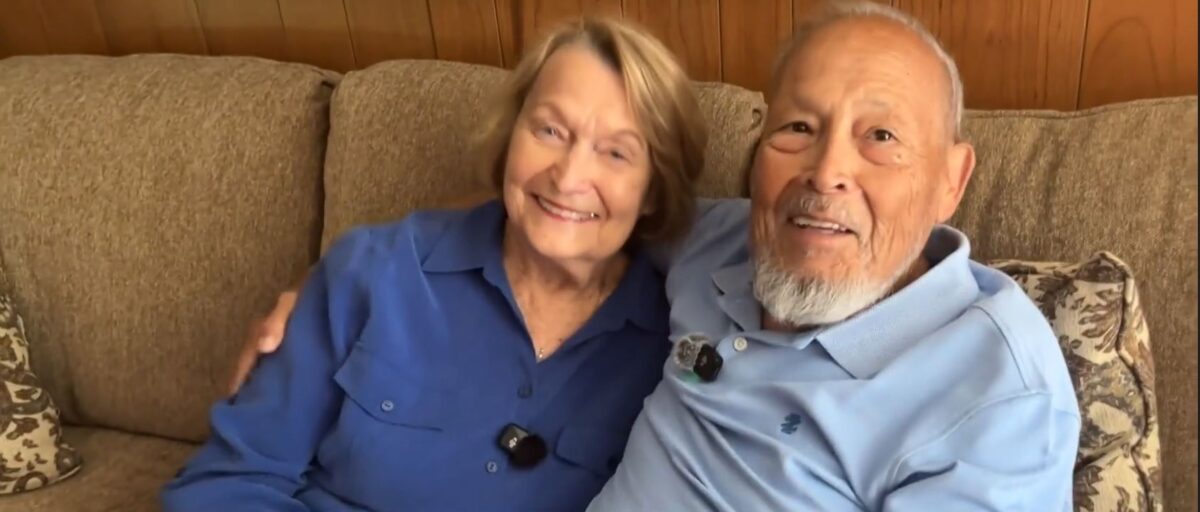
Margaret Strain, 88, and Bob Strain, 85, have lived across the street from each other for a few years now. Both lost their spouses, and neither expected to find love again.

“Well, he has a walker and he walks up and down the road,” Strain said.

Peralta started taking almost daily walks, hoping to catch a glimpse of his neighbor.

“Then one day I said, ‘Are you trying to wear out that road?’ He says, ‘I want to make it smooth,'” Strain said.

She invited him inside for coffee.

“He says, ‘I don’t drink coffee, I drink tea.’ So I said, ‘We’ll have tea.’ And so it just took off from there,” Strain said.

“I knew there was something missing, but I couldn’t find out what it was until I met her,” Peralta said.

Peralta’s health was in bad shape. He had multiple doctor’s visits a week, kidney failure and was staying in bed.

“He wasn’t a candidate for surgery because he wasn’t healthy enough. He meets Miss Margaret, all of his numbers are normal now,” said Northrup-Daddow, Peralta’s daughter.

Northrup-Daddow said it’s been amazing watching her father fall out of loneliness and into love. Their new teenage-like romance has even become the talk of the neighborhood.

“Our other neighbor drove by real slow. Can I ask you a question? Is Bob dating Miss Margaret? And I said what? Why would you say that? [They said] we caught them kissing behind our oleander bush,” said Northrup-Daddow.

“They are the proof in the pudding of how connection can quite literally bring you back to life,” said Alexandria Jones with the Blue Zones Project Yuba-Sutter.

Relationships like Peralta and Strain’s are something the Blue Zones Project in Yuba-Sutter has been working to build into the community for the past few years.

Modeled after regions of the world where people regularly live past 100, engagement lead Alexandria Jones said the key to well-being isn’t just diet and exercise.

“We know from the blue zones research that individuals who are truly lonely can have the same impact on your health as smoking 15 cigarettes a day,” said Jones.

These days, Strain and Peralta give each other a reason to get up and get moving every morning. Making trips between their houses and spending quality time with one another.

They found something neither of them expected: a second chance at love. They say it’s a reminder that it’s never too late to find someone who makes every day feel a little brighter.

“Don’t just sit around and do nothing. Have a good time. You might meet somebody, you might not, but just don’t sit in your house and wither away,” Strain said.

Their message is simple: keep showing up, keep moving and keep your heart open, because sometimes, the person who changes your life is living right across the street.

The Blue Zones Project Yuba-Sutter is working toward certification.

Please note: This story was provided to CNN Wire by an affiliate and does not contain original CNN reporting. This content carries a strict local market embargo. If you share the same market as the contributor of this article, you may not use it on any platform.

Mother of New Orleans boy killed by alligator pushing for DCFS records to stay confidential

By Aubry Killion

Click here for updates on this story

    NEW ORLEANS (WDSU) — New court records have revealed graphic abuse allegations in the case of a 12-year-old boy who was killed by an alligator in New Orleans East last year.

Hilda Vasquez, the mother of Bryan Vasquez, had a recent court hearing where her attorney pushed for the Department of Children and Family Services records tied to Bryan not to be released in court.

Her attorney stressed that the records should remain confidential, records show.

“While there are limited exceptions to the confidentiality of DCFS records, none of them apply here,” her attorney argued.

Court records claim the case is “bound by limits of confidentiality.”

The district attorney’s office pushed back, records stating that the abuse that was under investigation by DCFS is directly connected to the case.

WDSU Investigates has also been requesting these same records for months as part of its ongoing investigation into the state of DCFS.

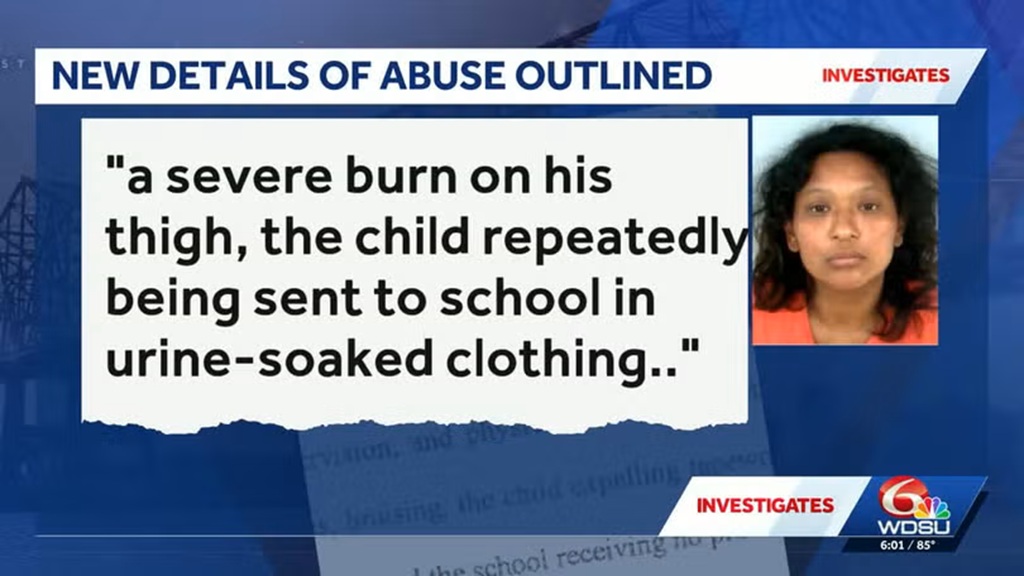
Prosecutors outlined disturbing details of abuse from 2019 to 2025, leading up to Bryan’s death.

These allegations include scratches, bruising, the child expelling tapeworms from his anus on two separate occasions at school without proof of treatment, a severe burn on his thigh, being sent to school in urine-soaked clothing, an untreated staph infection from a wound on his back, feces under his fingernails, and not being given prescribed medicine at home, which reportedly led to increased behavioral problems.

WDSU Investigates asked DCFS Secretary Rebecca Harris about changes being made since Bryan’s death.

When questioned about how the department ensures children are not falling through the cracks, Harris said, “That workers are going into the homes?” before redirecting to another meeting.

An employee with Harris said they are.

Hilda Vasquez’s attorney has not responded to requests for comment.

District Attorney Jason Williams issued the following statement:

“I am currently trying a murder case in Section D of Criminal District Court, but I needed to step away and respond to your inquiry because Bryan’s death remains especially heartbreaking. He was a very young and vulnerable child who lacked even the ability to speak up for or protect himself.

“Our Special Victims Unit is fully committed to seeking justice for Bryan and will pursue this case through to its conclusion. Cases involving the abuse and neglect of children inside their own homes must become a greater priority in this state. Meaningful early intervention and stronger systemic safeguards are critical if we are serious about preventing these tragedies and protecting children’s lives.”

Please note: This story was provided to CNN Wire by an affiliate and does not contain original CNN reporting. This content carries a strict local market embargo. If you share the same market as the contributor of this article, you may not use it on any platform.

The Manatee Whisperer: Why Tampa Bay manatees are thriving during drought

By Michael Paluska

Click here for updates on this story

    TAMPA, Florida (WFTS) — Florida is in the grip of an extreme drought. Water restrictions, burn bans, and brown lawns have become the new normal across the state — with some areas turning into dust bowls. But in Tampa Bay, scientists say the lack of rain is producing an unexpected benefit: crystal-clear water and thriving seagrass.

This change in rainfall has had a noticeable consequence: with fewer heavy rains, less pollution is washing into the bay, allowing the ecosystem to respond in surprising ways.

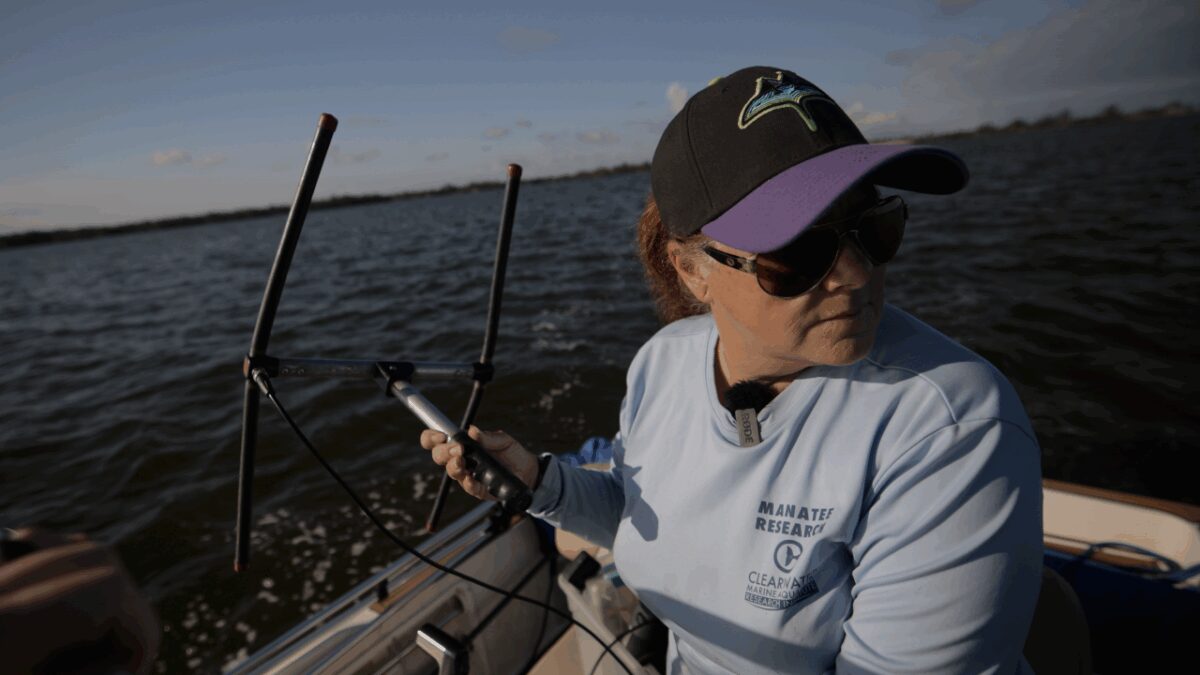
To observe these effects firsthand, Tampa Bay 28 reporter Michael Paluska joined Jennifer Galbraith, a manatee research scientist with Clearwater Marine Aquarium’s Manatee Rescue and Rehabilitation Partnership, on a boat excursion.

Paluska has covered the impacts of pollution on manatees for years.

Galbraith was tracking Julian, an orphaned calf rehabilitated at ZooTampa at Lowry Park and recently released back into the wild. With a tracker beeping and spinning, she scanned the horizon for any sign of the manatee.

In 2021, Paluska also traveled to Florida’s East Coast to document the collapse of the Indian River Lagoon.

“Let’s keep on this track for a bit, he’s close,” Galbraith said.

After some near misses on the open water, she finally spotted him.

“That’s a crab trap,” Galbraith said with a laugh.

Finally success.

“I got him, ha!!” Galbraith said.

Julian was eating seagrass and swimming alongside other manatees — all signs, Galbraith said, that were encouraging. The habitat, she said, is functioning like a buffet for wildlife large and small.

“There’s a silver lining to this, but at the same time it’s more of a message, like, look, how much better things could be with just a little bit of work,” Galbraith said.

Explaining the relationship further, the connection between drought and water clarity comes down to what is not entering the bay.

“What that tells me isn’t, oh, drought’s good, it’s telling me maybe, maybe we should do a better job of keeping that stuff from getting in the water when it does rain, and it clearly doesn’t take that long or that much effort to make that happen,” Galbraith said.

Maya Burke, assistant director of the Tampa Bay Estuary Program, echoed that connection between rainfall and bay health.

“The one thing that Jen Galbraith said is, this is a message for people is… I’m out here every day, and she’s like, it’s beautiful. It’s a message that if we don’t get in the way, nature can thrive?” Paluska asked Burke.

“Yeah! “Nature’s resilient, and so you know, to the extent that water quality in the bay struggles, it’s mostly because of things that we’re doing,” Burke said. “The amount of rainfall that we receive is one of the strongest predictors of how much seagrass we have in the bay,” Burke said.

Despite these improvements, Burke noted there’s an important caveat to nature’s resilience.

Maya Burke, assistant director of the Tampa Bay Estuary Program, echoed that connection between rainfall and bay health.

“The one thing that Jen Galbraith said is, this is a message for people is… I’m out here every day, and she’s like, it’s beautiful. It’s a message that if we don’t get in the way, nature can thrive?” Paluska asked Burke.

“Yeah! “Nature’s resilient, and so you know, to the extent that water quality in the bay struggles, it’s mostly because of things that we’re doing,” Burke said. “The amount of rainfall that we receive is one of the strongest predictors of how much seagrass we have in the bay,” Burke said.

Despite these improvements, Burke noted there’s an important caveat to nature’s resilience.

Stormwater is not the only source. Burke also pointed to what is in the air.

“The second most common source is from atmospheric deposition, … the stuff that’s coming out of your tailpipes, the stuff that’s coming out of power plants,” Burke said.

With the rainy season approaching, scientists caution that this period of clear water may soon end and advise visiting now. Asked if technology could maintain the bay’s clarity, Burke was cautiously optimistic.

“I mean, we don’t know until we try. The bay is probably never going to be completely crystal clear or look, you know, like the sparkling blue waters down in the Bahamas, but we can get pretty close,” Burke said.

Galbraith reflected on the significance of seagrass loss for manatees like Julian.

“Have you had manatees that you were tracking that you found that were dead from starvation?” Paluska asked.

“Yeah. Unfortunately,” Galbraith said. “Devastating, devastating.”

For now, the drought is giving Julian a window of time to fatten up, learn from other manatees, and prepare for winter. Watching him surface and feed, Galbraith pointed out the telltale signs.

“That is him, but that is a clear indication he is feeding because they will do the head toss and bring that head up, so that’s one of those aha moments like ok good,” Galbraith said.

“Alright, checking all the boxes today, Mr. Julian,” Galbraith said.

“That’s a good day!” Paluska said, smiling.

“That’s a good day!” Galbraith said with excitement and joy that only someone who dedicates her life to this animal can understand.

Please note: This story was provided to CNN Wire by an affiliate and does not contain original CNN reporting. This content carries a strict local market embargo. If you share the same market as the contributor of this article, you may not use it on any platform.

Teen celebrates graduation in the hospital after car accident leaves him paralyzed

By Olivia Tyler

Click here for updates on this story

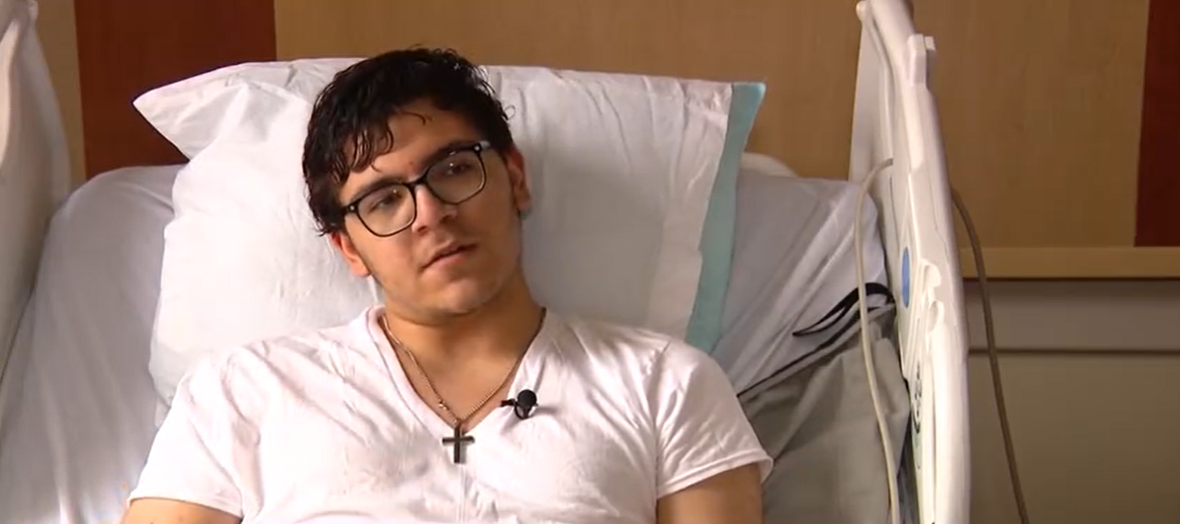
    DES MOINES, Iowa (KCCI) — At the beginning of May, Brayden Harless, a senior at South Hardin High School in Eldora, was taking finals and preparing to close a major chapter in his life, until just about a week before high school graduation.

“I dozed off at the wheel, and then I crashed, like, nose-dived first, and then my car landed on all four wheels,” Harless said.

Life changed instantly. He fractured parts of his spine. Right now, he’s paralyzed from the waist down.

“It sucks I’m not gonna be able to walk normally again,” Harless said.

But Brayden’s family and the staff at MercyOne Hospital Des Moines Medical Center knew this was a milestone he couldn’t miss. So they did what caregivers do—fix what’s broken.

“It really started from this floor and the house supervisor and some of the people kinda got together, talked about it, got my team involved, and we were able to project his graduation,” said Diogenes Ayala, the public safety leader at MercyOne.

“I didn’t realize they were giving us a whole auditorium, I thought they were just gonna give us a small conference room. I was really surprised,” Harless said.

His whole extended family got to celebrate.

“Everybody was pretty emotional, because I mean, some of them, it was the first time they saw me after the accident,” Harless said.

His teacher even came to deliver his diploma.

“MercyOne made sure I was able to get that experience…they have been phenomenal here. I love them,” Harless said.

While his classmates at South Hardin High School in Eldora are reflecting on what comes next, Harless is reflecting on his uphill battle.

“The fact that I can’t take care of myself right now, the fact that I can’t have the freedom of moving around on my own is really hard on me right now,” he said.

He’s in pain. Full recovery could take months or even years. But he’s still full of potential, just like his classmates.

“Just because you don’t have control over your whole body doesn’t mean you can’t complete your dreams,” Harless said.

And nothing is going to stop Brayden from his.

“I plan on being a social worker, and I may not be able to walk around with them, but I’ll sure as heck be able to wheel around with them,” Harless said.

Please note: This story was provided to CNN Wire by an affiliate and does not contain original CNN reporting. This content carries a strict local market embargo. If you share the same market as the contributor of this article, you may not use it on any platform.