Bend Handmade Market returns June 6th with 100+ makers and artisans

Kelsey Merison

BEND, Ore. (KTVZ) — The Bend Handmade Market will return to downtown Bend on Saturday, June 6th, 2026 from 10 a.m. to 5 p.m. More than 100 independent makers and artisans will showcase their crafts. It’s free to attend and all-ages are welcome.

Produced by Urban Craft Uprising, the market offers a curated selection of ceramics, clothing, jewelry, fine art, and home decor. This event has become a beloved community gathering, providing shoppers with unique, quality pieces while supporting independent artists and small businesses.

Lindsey Ross of Urban Craft Uprising emphasized the market’s mission. “The Bend Handmade Market celebrates the incredible talent and creativity of our regional maker community,” Ross said. “It’s a wonderful opportunity for both locals and visitors to discover unique, quality pieces while supporting independent artists and small businesses.”

The market adds to downtown Bend’s lively atmosphere. Attendees are encouraged to explore local restaurants, cafes, and businesses throughout the day. Each vendor is carefully selected to ensure a high-quality, diverse mix of handmade goods. These selections reflect the creativity and spirit of the Pacific Northwest.

The event offers attendees direct access to artists and makers. They can learn about their processes and purchase one-of-a-kind items directly from the artists. The market is known for its carefully selected vendors and community atmosphere.

The Bend Handmade Market has been a staple of Bend’s cultural calendar for the past 3 years.

Click here to follow the original article.

‘Stop the Bleed:’ Learn to manage bleeding emergencies with Crook County Fire & Rescue

Matthew Draxton

CROOK COUNTY, Ore. (KTVZ) — Crook County Fire and Rescue and St. Charles Prineville are collaborating to offer a free “Stop the Bleed” class on Monday, May 18. The course will teach participants how to manage life-threatening bleeding emergencies before professional first responders can arrive. The session is scheduled from 5:30 p.m. to 6:30 p.m.

This community initiative is being held during May, which is designated as “Stop the Bleed” Month. The class provides essential skills that could be critical in saving a life during a severe bleeding incident.

The training is designed to be hands-on, providing practical experience for attendees. Interested individuals must register in advance due to limited space in the course. Further information and the registration link are available on the Crook County Fire and Rescue website.

Those interested in attending the free class on May 18, should register promptly due to the limited availability.

Click here to follow the original article.

Learn from respected leaders at Stroke Awareness Oregon’s ‘Leading With a Purpose’ event today

Kelsey Merison

BEND, Ore. (KTVZ) — Stroke Awareness Oregon will host the “Leading With a Purpose” event on May 5th, 2026, at the Tetherow Pavilion in Bend. The evening is dedicated to exploring how leadership creates meaningful impact and supports the organization’s mission to provide stroke education and resources.

The event, centered on the theme “Impact Through Leadership,” will bring together a panel of respected leaders. They will share real-world insights on building influence, driving change, and leading with intention. Proceeds from the event will directly benefit Stroke Awareness Oregon’s mission to provide stroke education, prevention resources, and support programs for stroke warriors and their families.

The panel is made up of five leaders:

• Deborah Flagan, Vice President of Community Engagement & Giving at Hayden Homes (Moderator)

• Patrick Bailey, Area Director, Willamette Valley Fellowship of Christian Athletes; Former Oregon State University Baseball Coach

• Michelle Mitchell, Co-Founder of Humm Kombucha; COO, Design Bar Interiors

• Tia Lewis, Shareholder & Land Use Attorney, Schwabe Williamson & Wyatt

• Jo Wells, Facilities Architect & Project Manager, City of Bend

The event schedule includes a networking cocktail hour from 4 p.m. to 5 p.m. Following this, a moderated panel discussion will take place from 5 p.m. to 6:30 p.m.

Tickets must be purchased in advance. Community members interested in attending or learning more about the event can visit LWAP.eventbrite.com. Additional information is available by contacting Taylor Laidlaw at tlaidlaw@strokeawarenessoregon.org or 541-350-8117.

Click here to follow the original article.

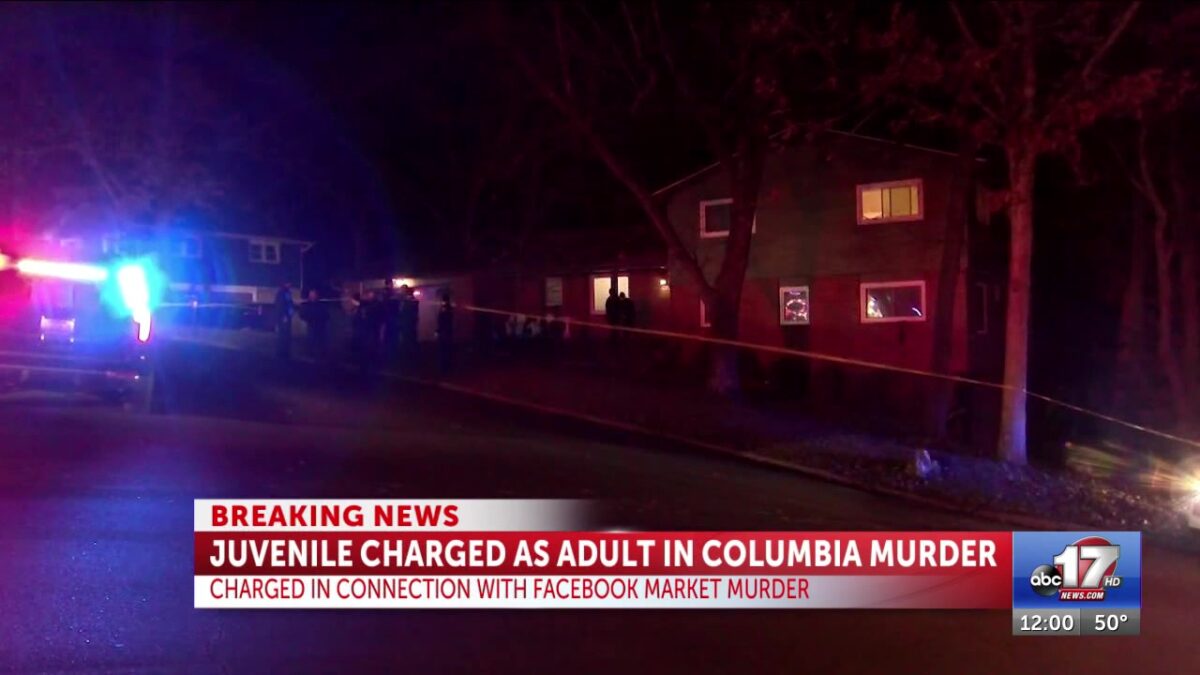
17-year-old charged with murder in fatal Facebook Marketplace meetup

Lucas Geisler

COLUMBIA, Mo. (KMIZ)

A Columbia teenager was charged as an adult with murder, robbery and armed criminal action in a deadly Facebook Marketplace meetup.

Judge Tracy Gonzalez agreed to certify Mikel Jones, 17, as an adult in an alleged deadly robbery in southwest Columbia, minutes before charges were filed.

Columbia police believe he took part in a robbery set up through Facebook Marketplace that led to the death of Michael Ryan Burke on Ridgemont Court.

Jones was charged with second-degree (felony) murder, first-degree robbery and two counts of armed criminal action.

Three 18-year-old suspects — Alexis Baumann, of Hallsville, Kobe Aust and Joseph Crane — had already been charged as adults. Surveillance video places Jones with the three suspects the night Burke was killed, court documents claim.

Court documents filed in the case say that Baumann and the group arranged to buy a phone from Burke. The group had already met with and stolen from at least two other victims in the two days before the confrontation that led to Burke’s death, documents say. Those incidents took place on Claudell Lane and on Northampton Drive.

PC Statement RedactedDownload

A Facebook account with the name Jones set up the exchange, according to a probable cause statement.

Baumann allegedly told officers that the juvenile suspect, later identified as Jones, shot Burke, took his iPhone, then sold it at an ecoATM at the Walmart on Conley Road.

Jones was in county custody on Tuesday without bond.

Click here to follow the original article.

Three 18-year-old men arrested in connection to Yuma murder

Lauren Duffel

YUMA, Ariz.(KYMA)- Three 18-year-old men have been arrested in connection to the murder of a local man.

The Yuma Police Department (YPD) says the suspects were arrested in the Phoenix area over the weekend.

Sgt. Christina Fernandez with YPD said, “On May 2nd, three 18-year-olds were placed under arrest in Avondale with the help of Tempe and Glendale police departments on multiple felony charges including first-degree murder. All were booked in the Maricopa jail.”

YPD say the suspects shot and killed Valentin Morales on April 26 at an intersection in Yuma. The suspects left the scene and were later arrested in Avondale, Arizona.

“The motive behind the shooting is still under investigation,” Sgt. Fernandez said.

The suspects will be extradited back to Yuma as soon as the Tempe and Glendale Police Departments conclude their investigations.

If you have any information about this crime, you can call YPD or 78-CRIME to remain anonymous.

Click here to follow the original article.

Rep. Christian D. Menefee Introduces Bill to Expand Pell Grants and Broaden College Access

By Lisa Valadez

Click here for updates on this story

    Houston, TX (Houston Style Magazine) — Rep. Christian D. Menefee Introduces Bill to Expand Pell Grants and Broaden College Access Lisa Valadez | 5/5/2026, 4:05 p.m. U.S. Rep. Christian D. Menefee has introduced the College Affordability and Accessibility Act to double Pell Grants, extend eligibility, and … Congressman Christian D. Menefee has introduced the College Affordability and Accessibility Act, legislation designed to make higher education more accessible by increasing federal financial aid, expanding eligibility, and giving students more time to complete their degrees.

The bill centers on strengthening the Federal Pell Grant program, which millions of students rely on to attend college. Under the proposal, the maximum Pell Grant would double to $14,800 per year, with future increases tied to inflation so aid keeps pace with the rising costs of tuition, housing, and other living expenses.

The legislation also reflects the current makeup of Pell Grant recipients. More than half—over 57%—come from families earning $40,000 or less annually. Many attend public institutions, with 43.5% enrolled at four-year universities and 24.6% at two-year community colleges. Nearly half of recipients are considered independent students, and many are first-generation college students, as well as Black and Latino students.

In addition to increasing award amounts, the bill would extend the length of time students can receive Pell Grants from 12 semesters, or about six years, to 16 semesters, or roughly eight years. The expanded timeline is intended to support students whose educational paths are not linear, including those who attend part-time, pause their studies due to work, family, or health challenges, or change majors.

The proposal also includes provisions to give students greater flexibility in how they use their aid. Some students would be allowed to apply remaining Pell Grant eligibility toward their first post-baccalaureate program, such as teacher certification, nursing programs, or other workforce training opportunities. Additionally, remedial coursework and certain noncredit classes would not count against a student’s Pell Grant time limit, ensuring those needing extra academic support are not penalized.

Menefee, who represents Texas’ 18th Congressional District, has cited his own experience relying on Pell Grants as a first-generation college student, underscoring the program’s role in expanding opportunity.

If enacted, the College Affordability and Accessibility Act would primarily benefit low-income students, working adults, parents returning to school, and others whose path to graduation extends beyond a traditional four-year timeline. The bill has been introduced in Congress and awaits further consideration.

Please note: This story was provided to CNN Wire by an affiliate and does not contain original CNN reporting. This content carries a strict local market embargo. If you share the same market as the contributor of this article, you may not use it on any platform.


Lisa Valadez
Lisa@stylemagazine.com
713-748-6300

How Supreme Court ruling could shape future of Arizona voting maps

Adrik Vargas

YUMA, Ariz. (KYMA) – A recent U.S. Supreme Court decision could have long-term effects on how voting districts are drawn, including in Arizona.

The ruling focuses on Section 2 of the Voting Rights Act, a key part of the law that has helped protect minority voters for decades.

It required mapmakers to consider whether communities of color had a fair opportunity to elect candidates of their choice.

Now, that protection has been narrowed, making it more difficult to challenge voting maps in court over claims of racial discrimination.

In Arizona, district lines aren’t drawn by lawmakers. Instead, an independent redistricting commission handles the process and only meets once every 10 years.

The next time that commission is scheduled to reconvene is at the start of the next redistricting cycle, around 2030, after new census data is released.

Because of that, experts say any immediate changes are unlikely. Still, the decision could open the door to legal challenges.

“There could be lawsuits,” said Sasha Hupka, a reporter with VoteBeat Arizona. “There are opportunities here for both Democrats and Republicans to pick up seats.”

Hupka says the impact could be especially important in areas like Congressional District 7, which stretches along Arizona’s southern border and includes parts of Yuma.

The district was designed to group together Latino communities that share similar concerns and priorities, giving those voters a stronger voice in elections.

With fewer legal protections in place, future maps could be drawn differently, potentially splitting up those communities and making some districts more competitive.

At the state level, that could also affect legislative districts like LD 23, which covers much of Yuma.

Hupka says changes there could shift the balance in closely contested races. Even so, she says the biggest changes are likely still years away.

“The more likely scenario is that this will impact Arizona later in the decade,” Hupka said, when the commission meets again to redraw district lines.

Click here to follow the original article.

Woman says small donation in parking lot turned into $5,000 ordeal

By Ben Simmoneau

Click here for updates on this story

    SOMERVILLE, Massachusetts (WCVB) — A Massachusetts woman says a quick stop at the grocery store turned into a $5,000 ordeal after she was targeted in a parking lot scam and then denied relief by her bank.

Ari Billias said the incident happened last October outside a Trader Joe’s in Somerville, where she was approached by people asking for a small donation for victims of gun violence. She agreed to contribute $20.

“It was pretty quick,” Billias said. “They were out there, they had their clipboards, gave a lot of information. Of course, you should stay vigilant and know who you’re donating to, but they caught me at the right time.”

When she pulled out her credit card to make the donation, Billias says the interaction took a troubling turn. She says the card was grabbed from her hand because of what she was told was a “processing issue.”

“I felt like something was wrong once the card was out of my own physical hands,” she said. “I was by myself, so it felt like the best thing to do was just report [it] after.”

Billias soon discovered what she says was a fraudulent $5,000 pending charge to an unfamiliar PayPal account on her Bank of America Mastercard. Billias called Bank of America right away — within 15 minutes — and opened a dispute, expecting the charge to be removed. Instead, the bank denied her claim six weeks later.

“I’ve been a customer for 12 years, never have had an issue,” she said. “Ultimately, it felt like it was my word versus the scammers in this case, and they did not side with me.”

Boston Police say similar parking lot scams were reported at other busy shopping locations around the same time, including outside a Walgreens and Whole Foods just a few weeks earlier. The incidents serve as a reminder for shoppers to be cautious when approached for donations in parking lots, especially when asked to pay with a credit or debit card.

Billias’ experience also raises questions about consumer protections for unauthorized credit card charges. Under the Fair Credit Billing Act, liability for unauthorized credit card transactions is generally limited to $50. Mastercard’s Zero Liability Policy goes even further, promising cardholders protection from unauthorized transactions if they used reasonable care to protect their card and promptly reported the issue.

Billias insists she never authorized a $5,000 charge, had never interacted with the PayPal account involved, and had no history of making purchases anywhere near that amount.

“Even just looking at my transaction history, I’ve never made a charge of that amount or close to it,” she said. “I’ve never interacted with this merchant.”

She also said she submitted multiple pieces of evidence to support her case, including the fact that the merchant name changed several times in her online account. According to Billias, the PayPal account was listed as a clothing store in Chicago, and the transaction was marked as in-person, even though other charges show she was clearly in Somerville at the time.

Billias also filed a police report.

In three separate denials, Bank of America told Billias only that it had confirmed her card was used for the charges and that “the chip was read, your PIN was entered, and/or you signed for the merchandise or service.” But when Billias asked for the records behind that conclusion, she was not provided proof that a PIN had been entered or a signature produced.

“I couldn’t find any documentation that this merchant exists as a business,” she said. “I don’t know what else I could do to resolve this after the fact.”

After NewsCenter 5 got involved, Bank of America reopened the investigation and reversed its decision, refunding Billias the $5,000. In her case, filing that police report was critical to getting her money returned.

It’s also a good reminder never to donate money — even using a credit card — without researching the organization first.

Please note: This story was provided to CNN Wire by an affiliate and does not contain original CNN reporting. This content carries a strict local market embargo. If you share the same market as the contributor of this article, you may not use it on any platform.

Education attorney discusses safety concerns amid Mason AI pornography investigation

By Rachel Whelan

Click here for updates on this story

    MASON, Ohio (WLWT) — A father is speaking out after his daughter was identified as a victim in a disturbing case involving artificial intelligence-generated explicit images at Mason High School.

The case is one of two recent investigations involving students in the Mason City Schools.

In an exclusive interview with WLWT, the father described the emotional toll the situation has taken on his daughter.

“It makes me sad as a father to watch your child lose her confidence, lose her joy,” he said.

Allegations and timeline Investigators say the case dates back to last fall and involves a 16-year-old student accused of using artificial intelligence to create and share explicit images of classmates without their consent.

Prosecutors have also said messages found on the teen’s phone referenced disturbing fantasies.

The father said his daughter was shaken after seeing the accused student back at school following his arrest.

“The student wasn’t removed from school until he was arraigned, when a judge placed him on house arrest,” he said.

Sources told WLWT that police contacted the family after the arrest, but did not immediately notify the school — a factor that may have impacted how quickly administrators could respond.

School response and legal limits WLWT reached out to Mason City Schools for answers. The district declined to confirm whether the student was in school, citing privacy laws.

In a statement, a spokesperson said the district’s ability to remove a student for off-campus conduct is limited under state law.

Full statement from Mason City Schools: “We believe each and every one of our students should feel safe at school, and we take that responsibility very seriously.

Due to federal and state student privacy laws, we are not able to confirm or deny details about any individual student, including their presence at school or specific disciplinary actions.

What we can share is how we approach situations like this. When concerns are reported (whether related to on-campus or off-campus conduct) we immediately involve law enforcement and work closely with legal counsel to guide our response. The safety and well-being of students is always our first priority, and based on the information available to us, we have taken steps to ensure that our school community remains safe for all students.

Under Ohio law (Ohio Revised Code 3313.661), a school district’s authority to remove a student from school for off-campus conduct is limited. A student may only be suspended or expelled if the behavior is connected to activities or incidents on school property or under the district’s control, or if it is directed at a district employee. School districts are not permitted to extend this authority beyond what state law allows.

Because of these legal constraints, decisions about removal, alternative placement, or other actions must be based on the specific facts of each situation and made in consultation with legal counsel and law enforcement.

Importantly, whether or not disciplinary removal is permitted, our responsibility to care for and protect students does not change. In situations like this, we prioritize the safety, dignity, and well-being of any students who may have been impacted. We work closely with families to provide individualized support, which may include counseling resources, adjusted schedules, and ongoing communication to ensure students feel safe and supported at school.”

Attorney: Law still catching up to technology WLWT also spoke with education attorney Carla Loon Leader, who said cases like this highlight how quickly technology is outpacing current laws.

“We’re looking at laws that were written before technology has gotten to this point,” she said.

Leader said schools may have the authority to discipline students in some off-campus cases — including suspension or expulsion — depending on whether the behavior disrupts the school environment or creates a safety concern.

“If a student sent a threat on SnapChat like, ‘I’m going to shoot up the school tomorrow,’ there would be consequences — and I don’t see this being any different,” she said.

However, she noted that schools must also follow due process before removing a student, which can take time.

Looking ahead Leader said clearer laws may be needed as cases involving artificial intelligence become more common.

“I think we’re going to see clearer laws in this area — hopefully soon — that address AI-generated sexual content involving minors and give schools more guidance on how to prevent it,” she said.

What’s next The teen accused in this case was later placed on house arrest following a court appearance.

Both Mason cases involving AI-generated images remain under review.

Please note: This story was provided to CNN Wire by an affiliate and does not contain original CNN reporting. This content carries a strict local market embargo. If you share the same market as the contributor of this article, you may not use it on any platform.

Man enters plea deal for murder near rural road

By Zach Rainey

Click here for updates on this story

    SALUDA, North Carolina (WYFF) — A man is headed to prison after an argument escalated into a fatal shooting near a rural Western North Carolina road.

Investigators said that in September 2022, 47-year-old Daniel Case from Hendersonville, North Carolina, was reported missing after he did not show up to his job at Meritor in Fletcher.

According to his employer, this was unusual for him not to show up to work, so they attempted to contact both his phone and his emergency contact, with no success.

Law enforcement later found a woman driving a vehicle registered to Case. She told authorities that she had last seen Case with Shane Archie Waters on Pinnacle Mountain Road, in Henderson County.

According to the woman, both Case and Waters were passengers as she drove the vehicle. During the drive, Case and Waters were allegedly arguing over her. She pulled over several times and they exited the car to fight, and when she pulled over the last time, she heard what sounded like three gunshots come from the woods.

The woman said that Waters returned to the vehicle and told her to leave the area.

In October 2022, Waters admitted to law enforcement that he shot the victim three times, supposedly in the neck and chest.

On Dec. 1, 2022, Waters led law enforcement to the place where Case had been shot on Pinnacle Mountain Road, where detectives found a human skull and several scattered long bones. A shirt with defects suggestive of bullet holes with faint red staining suggestive of blood was recovered at the scene.

A forensic anthropologist examined the remains and determined that there was extensive animal scavenging activity on the remains.

DNA analysis confirmed that the identity of the deceased was in fact Case.

In court, a plea deal was reached. The now 53-year-old was sentenced to a minimum of 16 years and a maximum of 20 years and three months for second-degree murder. He pleaded guilty on May 1, 2026.

Please note: This story was provided to CNN Wire by an affiliate and does not contain original CNN reporting. This content carries a strict local market embargo. If you share the same market as the contributor of this article, you may not use it on any platform.