Even after turning 108, this Delaware woman has no plans to slow down: “I grow old gracefully”

By Wakisha Bailey

Click here for updates on this story

    DOVER, Delaware (KYW) — At 108 years old, Susan Young Browne still works out three times a week, drives herself around town and starts every morning with an exercise routine she’s followed for decades.

“You are the spotlight,” classmates cheered as Browne walked into a group workout class at the Modern Maturity Center in Dover, Delaware, a place she’s called home since 1973. Browne is one of the center’s first members.

“I’m over a hundred,” Browne said with a smile. “A hundred and eight.” Inside the senior community center, Browne is likely the oldest person in the room, but she has no plans of slowing down. She recently renewed her driver’s license through 2033 and says staying active has always been part of her lifestyle.

“When I get up in the morning, I have an exercise routine that I’ve been doing for the last 20 years,” she said.

Born in 1918 in Houston, Delaware, Browne grew up during segregation and helped her family on a farm without running water or electricity. She later attended Delaware State College for Colored Students, today known as Delaware State University. Browne graduated in 1945 before spending 30 years teaching children across Delaware, including in a one-room schoolhouse. “When I retired and I walked around that classroom for 30 years, I am not going to sit down,” Browne said.

Browne is also known for her sharp sense of humor.

“I guess I’m not great material for men,” she said while laughing. “That was enough. I’m not taking care of another man.”

She’s a mother, grandmother and great-grandmother whose family still gathers for her famous 7UP pound cake — reserved only for special occasions.

From baking in the kitchen to receiving standing ovations at her 108th birthday celebration that was attended by more than 130 people, including Delaware Gov. Matt Meyer, Browne continues to make an impression everywhere she goes. “I grow old gracefully,” she said.

And perhaps the most fitting birthday gift for someone who still drives herself at 108 years old?

Her very own reserved parking spot for drivers over 100.

“OK, see you later,” Browne said before pulling away behind the wheel once again.

Please note: This story was provided to CNN Wire by an affiliate and does not contain original CNN reporting. This content carries a strict local market embargo. If you share the same market as the contributor of this article, you may not use it on any platform.


Community discusses installing locked gates at NYC’s Washington Square Park

By Lisa Rozner, Christina Fan

Click here for updates on this story

    NEW YORK, New York (WCBS) — Could one of New York City’s most iconic parks soon be surrounded by gates?

At a Wednesday night meeting of the local Community Board’s Parks Committee, tensions ran high over whether or not to install locked gates at Washington Square Park.

The historic Washington Square Arch welcomes visitors from near and far to the park, but when the clock strikes midnight, the police and Parks Department put up French barricades, cross-chained together, until 6 a.m.

Some residents, however, said the barricades aren’t aesthetically pleasing.

“Now it’s time to replace the unattractive police barricades with appropriate gates that really represent the history of that park,” landscape architect George Vellonakis said. Others said the barricades aren’t effective at keeping people out. One resident shared a photo of a person sleeping overnight on a mattress in the park.

“They’ve shut it down at night before, and nothing really changes. It’s a park. It should be open to the public,” said resident Madeline Friend. “It’s a gathering place. I don’t see any reason to shut this down.”

Opponents, however, argued gates aren’t the answer to that issue, and some longtime residents said they hoped the park would be open 24/7.

“I think that the barricades have to go. I think they’re really, really ugly,” one person said. “They’re really hard for the Parks Department and the police to handle, and they don’t work.”

“Particularly Millennials and Gen Z will have these changes for the rest of their lives,” another person said. “I enjoy traveling other similar parks in Europe where you can walk at all hours of the night.”

Back in 2005, the Parks Department considered installing gates but canceled the plan after fierce opposition from the community. A Community Board member said the idea to install gates resurfaced during COVID when overnight gatherings in the park got out of hand.

“We are not anti-gate. We do believe that they should find more effective ways to support the NYPD,” Washington Square Association President Erica Sumner said. The committee voted on a resolution to formally ask the Parks Department for its recommendations.

Please note: This story was provided to CNN Wire by an affiliate and does not contain original CNN reporting. This content carries a strict local market embargo. If you share the same market as the contributor of this article, you may not use it on any platform.

After outcry, NJ Transit reduces round-trip ticket price to World Cup games

By Alexa Herrera

Click here for updates on this story

    NEW YORK, New York (WCBS) — Round-trip NJ Transit tickets for World Cup matches just got cheaper.

The tickets were going to cost fans $150 but will now be $105, NJ Transit CEO Kris Kolluri said Thursday.

The controversial $150 pricing plan caused outrage from local leaders, as the same 18-mile trip typically costs $12.90. Transportation officials had also previously announced 40,000 rail passes will be available per match.

New Jersey Gov. Mikie Sherrill said FIFA should cover the cost of transporting its fans to the eight matches at MetLife Stadium.

“We know that this event will deliver real economic benefits for our communities and businesses. At the same time, hosting cannot come at the expense of New Jersey commuters and taxpayers,” Sherrill previously said.

The governor directed NJ Transit to provide discounts for riders who will be impacted by FIFA World Cup games on June 22 and June 30. She also said PATH will cross-honor tickets and provide additional service during those times.

A shuttle bus to and from FIFA games is available for $80.

Aside from the expensive train tickets, fans are encouraged not to drive to the game because there’s no parking. Only shuttle and bus companies sanctioned by NJ Transit and the host committee will be able to drop ticket holders off.

Transportation and FIFA officials warned fans against taking unsanctioned rides to the games.

“The idea that you are going to get a private bus, that is completely unsanctioned, that will pick you up in some random location and drop you off somewhere near the stadium, where there’s some of the highest security barriers, seems a bit irresponsible to me,” Kolluri previously said. “If you’re already willing to spend thousands of dollars to come to the game, use the systems that we have to get to the place and enjoy yourself.”

He also stressed fans should not walk to the matches because it is dangerous and illegal.

Penn Station will also partially close for four hours before each match, sources previously told CBS News New York.

Please note: This story was provided to CNN Wire by an affiliate and does not contain original CNN reporting. This content carries a strict local market embargo. If you share the same market as the contributor of this article, you may not use it on any platform.

South Florida man from Cuba being pressured to self-deport after release from “Alligator Alcatraz”

By Ivan Taylor

Click here for updates on this story

    SOUTH FLORIDA (WFOR) — South Florida man from Cuba who was recently released from the immigration detention center known as Alligator Alcatraz is now being told to self-deport in a case that an immigration attorney said could become more common in the months ahead.

For Maikel Rojas and his family – the clock is already ticking.

Rojas, a 45-year-old immigrant from Cuba living in South Florida, said federal immigration authorities recently handed him documents ordering him to prepare to leave the United States no later than August 4, 2026.

His wife, Roxi Torres, fears immigration agents could return to detain him at any moment.

“In case the officers come here and my husband goes to immigration or something happens,” Torres said through tears.

Rojas showed CBS News Miami documents titled “Plan of Action for Removal,” which instruct him to obtain a passport and purchase a one-way airline ticket.

“I should leave no later than August 4 of 2026,” Rojas said in Spanish.

The situation has left him confused. Just last month, he says, immigration officials at the Miramar Immigration Center instructed him to report back in May of next year.

Now, he has been told to prepare for deportation.

Rojas does not currently have a passport. Because he was born in Cuba, he would need a Cuban passport to travel there.

Immigration attorney Willie Allen, who is not representing Rojas but has practiced immigration law in South Florida for more than four decades, says the case reflects the limits facing immigrants with serious criminal convictions.

“In truth, his opportunity to live here has run out,” Allen said.

Allen explained that under federal immigration law, immigrants convicted of certain crimes after 1996 – particularly offenses carrying sentences longer than one year – can be permanently barred from remaining in the United States.

“Anybody who committed a crime after 1996, and that crime had more than a one-year sentence is barred from living in the United States,” Allen said.

Rojas arrived from Cuba in 2004. The following year, he was arrested and later convicted as an accessory to murder. He served 13 years in prison.

After his release, Rojas was required to check in annually with immigration authorities. That changed last October when he was detained by U.S. Immigration and Customs Enforcement (ICE) and sent to Alligator Alcatraz, where he remained for nearly five months.

In March, ICE released him with an ankle monitor. More recently, the Intensive Supervision Appearance Program (ISAP) – an alternative to detention program that works with ICE – provided him with the documents instructing him to self-deport.

Torres says the possibility of losing her husband again is devastating for the family, which includes a 15-month-old child.

“It’s a very bad experience because when you have a child and you have a life in the United States,” she said before breaking down in tears. “Everybody has an opportunity to change.”

Rojas says he was previously told he would likely be deported to Cuba, though Cuban authorities might not accept him.

“I was told I was going to be deported to Cuba but that government may not accept me,” Rojas said.

According to ICE, as of late March 2026, the Trump administration had returned 1,901 Cuban immigrants to Cuba since January 2025, including individuals with criminal records.

Allen says immigrants who receive removal instructions while wearing ankle monitors should take the situation seriously.

“My advice would be, the chances you stay here for a long time, short time are limited,” Allen said. “Take this opportunity to find a country you can immigrate to, see where you can make your best life and do it.”

The attorney warned that immigrants who ignore removal documents risk being detained again by ICE – and this time, authorities could determine where they are sent.

Please note: This story was provided to CNN Wire by an affiliate and does not contain original CNN reporting. This content carries a strict local market embargo. If you share the same market as the contributor of this article, you may not use it on any platform.

Video shows 2 Florida alligators “violently” fighting in front of home: “It was scary”

By Alyssa Dzikowski

Click here for updates on this story

    AVE MARIA, Florida (WFOR) — A Florida homeowner had quite a scare thinking her house was being robbed only to find that alligators violently fighting with each other.

The incident took place at a home in Ave Maria near Naples in Collier County.

The homeowner, Kayla Burress, said she looked outside and saw the two animals slamming into her screen enclosure, tearing through it and leaving behind twisted metal and shredded mesh.

Wildlife experts said this kind of behavior isn’t completely unheard of, especially during mating season which is happening right now.

“It was scary, and I just warned everybody else in the neighborhood, like, watch your kids. Watch the dogs,” Burress said. “Because it was, it was fast and they were powerful.”

Experts advise everyone to stay a safe distance away from waterways.

“There’s gators that are showing up in places they wouldn’t normally for a couple of reasons,” Naturalist and Environmentalist Educator Ranger Rob Howell. said. “One, big males are chasing out younger males in competition. Younger males are looking for new habitats. Males are looking for new habitats and territories and sometimes the females are caught in the crosshair. They get scared off and go to new areas.”

May marks the beginning of alligator mating season in Florida, and that means that the reptiles are way more active and are also more likely to wander into residential areas, wildlife officials say.

According to the Florida Fish and Wildlife Conservation Commission (FWC), courtship behaviors in alligators start in early April, and mating occurs in May or June.

During that time, wildlife officials say male alligators will become more and more territorial, and may displace smaller ones.

That then could lead to more alligator sightings in areas that aren’t common, like swimming pools.

If you encounter an alligator that poses a threat to people, pets, or property, contact the FWC’s Nuisance Alligator Hotline at 1-866-FWC-GATOR (392-4286).

Please note: This story was provided to CNN Wire by an affiliate and does not contain original CNN reporting. This content carries a strict local market embargo. If you share the same market as the contributor of this article, you may not use it on any platform.

A couple is working to protect a vital resource in a Texas village

By Bobby Poitevint

Click here for updates on this story

    SALADO, Texas (KXXV) — The potential for millions of gallons of treated wastewater heading to Salado Creek daily has many Bell County neighbors on high alert.

Richard Thomas and his wife Linda Griffith have been married for 45 years and continue to build a life together in Salado.

“We have used this water to raise our son. His bottle was right from this creek. We’ve had artists down here and poets and baptisms and weddings and people picnicking and celebrating, would that happen if this was a foot thick in algae bloom? Not a chance” said Linda Griffith.

Linda is with the local advocacy group Save Salado Creek and she reached out to us to share their efforts to protect the creek.

25News Bobby Poitevint is taking a deeper dive into the creek to explore resident concerns and how entities such as developers and state officials are responding.

While at the creek, 25News Bobby Poitevint ran into Jeff Taylor, business owner, father and husband, who said he relaxes after his morning workout in the creek.

“I come down here and usually strip down and jump in right here where the water comes out the ground, super refreshing and listen to the church bells go off about 9:00. It’s peaceful, reset with nature and listen in the water. I love it,” he said.

Bobby asked, “but I wanna ask, if this stared maybe getting a lot more algae in it or started to not look so clear would this still be part of your routine?”

He responded, “No, not at all.”

There are a dozen wastewater treatment plants residents are worried about. Of the dozen, the Texas Commission on Environmental Quality is reviewing seven new or renewal permits and five of the dozen have already been approved or renewed.

Many of those plants would or currently support new housing developments as the need for housing in Central Texas continues to grow North of the City of Austin.

The Save Salado Creek group and other neighbors worry, if all twelve permits exist as is, so close together the water could lose its beauty, fill with algae, contaminate drinking water, endanger the wildlife who call this creek home —such as the Salado Salamander — and ultimately hurt tourism and the village’s economy; as the village has many businesses, lodging options, and a variety of events are hosted each year near the creek.

The chemical left behind in treated wastewater that neighbors are worried about is phosphorus.

Phosphorus is a mineral and chemical element that can naturally be found in waterways and causes algae growth but activists worry an excess amount can overcrowd the creek, harm its aesthetic, and possibly produce harm toxic algae. Activists say they have seen this happen in our parts of the state.

The creek sits over the Edward’s Aquifer recharge zone which provides drinking water for millions of people in Central Texas. It’s also home to the federally threatened Salado Salamander.

With the dozen treatment plants combined the TCEQ would allow up to 8-million gallons of treated wastewater to potentially be discarded into the creek each day. Neighbors and activists have questioned whether a permit for irrigation would be better and should be more utilized than permits for discharge.

“If we can change legislation and lower the excepted level of chemicals that can go into this creek — Not to stop development. We don’t want that. In a perfect world, would be to work as a partner with the developer. We’re gonna fight it — Thanks for doing this, ” said Linda.

Chris Wren is President of Treat Oak Developers which currently holds one of the seven applications under review by the TCEQ. That permit is known as Salado Creek Meadows and would be allowed to discharge an amount not to exceed 975,000 gallons per day.

Wren accepted an initial interview request then later declined, but provided these answers to questions via email.

In short – he said most new housing developments have to secure water sources before a project is even “viable” and “that all sewer plants are highly regulated, monitored and managed by licensed operators.” He added, the proposed discharge amounts in permits are there for padding for potential future development. He suggests that treatment plants will never discharge the amounts listed in the applications and uses basic mathematics involving housing units to support this theory.

When noting irrigation systems as a solution, Wren mentions that no plant, to his knowledge, uses irrigation systems for sewer discharge fully and said irrigation systems can be costly thus impacting home prices.

Wren questions should neighbors raise more concern with aging treatment plants, private sewer systems and wonders if these latest concerns are residents not wanting new development in their backyard.

You can read his full statements below:

“There is obviously more demand for housing outside of Georgetown and north Austin. Affordable housing continues to expand outside city limits and into rural counties. Most of these developments first have to secure water before the developments are viable projects. Then for every gallon of water that a development discharges in treated sewer effluent, the development needs a gallon of potable water. So if a development only secures 100,000 gallons of water per day, the max they could discharge would be 100,000 gallons. Overtime developments can get more water and therefore create more sewer demand too.

Per our conversation, it’s important to point out that all sewer plants are highly regulated, monitored and managed by licensed operators. The new sewer plants are even better than the old, outdated and in some cases dilapidated plants. It’s ironic that some people focus on these permits as a problem and they are not looking at existing plants that they are personally connected to. Also it’s ironic that no one is focused on private septic systems on individual property owners. These systems are not monitored on a daily basis and there is probably too much faith put into the hands of individual land owners to manage their own septic systems.

All permits include a maximum amount of discharge. So they have to essentially have extra volume built into them because sewer plants can expand as more land is added on or more homes are added and the capacity needs to be there. A general rule of thumb is 300 gallons per home per day of discharge. So 100,000 gallons of discharge equals 333 homes. This per day usage can be less with smaller homes, less bathrooms, and more efficient appliances and low use toilets.

Irrigation is an option with using some percentage of the sewer effluent, but we would still get the maximum discharge amount we need for our discharge permit. The plant has to be permitted also and the size of the plant has to coincide with the discharge permit. I’m not aware of sewer plants using 100% of their sewer effluent for irrigation. Irrigation systems can also be very expensive, especially if you are trying to get rid of a large quantity of water. Unfortunately, these systems would also go into the price of the lots and therefore the price of the homes would also increase.

Final comment: Water capacity and sewer demand are 2 of the most critical items for new housing developments. I think some people use sewer discharge, creek impacts, salamander claims as just their crux to prevent more housing from coming to the area. In my opinion, this is another example of NIMBYism.”

The TCEQ did not respond directly to our request for comment regarding concerns about all twelve plants and their proximity to one another but instead directed us to their website in which they addressed public comments to a specific permit.

While searching, through public records, 25News did locate documents where the TCEQ Executive Director responded to public comments for Permit Number WQ0016330001 also known as 050 Salado Creek, a permit currently under TCEQ review. After addressing the concerns, the Executive Director noted they made no changes to the draft permit and said the permit is following regulations and and the TCEQ sought guidance from state and federal leaders.

25News did reach out to developers with 050 Salado Creek for comment and an interview request.

You can read TCEQ statements below:

“The Executive Director has determined that the draft permit’s effluent limitations are consistent with the Texas Surface Water Quality Standards and are therefore protective of surface water quality, human health, and the environment. This level of surface water protection would also ensure protection of groundwater quality and its known uses.”

“TCEQ does not have the authority to mandate the method of disposal of treated effluent if the applicant adheres to the rules and provisions under TWC Chapter 26 and 30 TAC Chapters 217, 305, 307 and 309.”

“The EPA reviewed the draft permit and gave permission to proceed with the issuance of the draft permit on February 3, 2025. Furthermore, the USFWS and Texas Parks and Wildlife Department (TPWD) were afforded an opportunity to review the permit application and proposed permit. Neither of these agencies provided comments or concerns about the discharge effects on the Salado salamander in the area.”

We have interviewed business owners and local leaders regarding this matter. This is a developing and investigative story that we will continue to report on in the coming weeks.

Please note: This story was provided to CNN Wire by an affiliate and does not contain original CNN reporting. This content carries a strict local market embargo. If you share the same market as the contributor of this article, you may not use it on any platform.

Student, parent speak out as board considers removing song linked to LGBTQ+ history from concert

By Meryl Hubbard , Photojournalist Emmanuel Espino

Click here for updates on this story

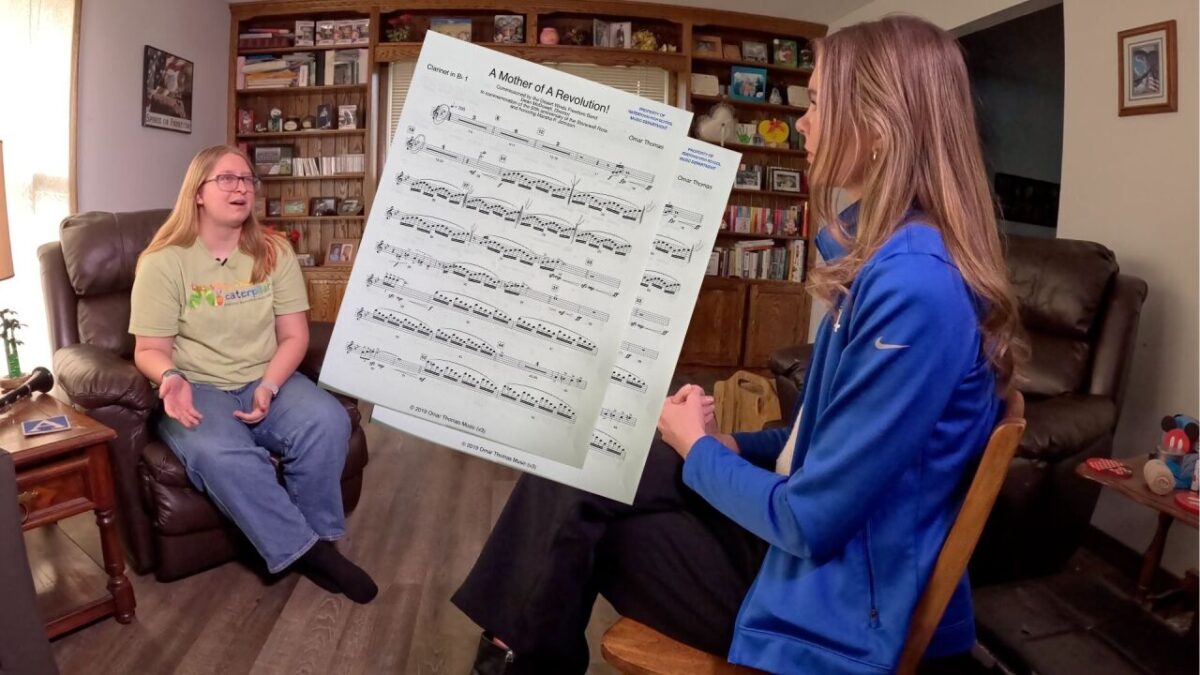
    WATERTOWN, Wisconsin (WTMJ) — A Watertown High School student is speaking out after the school board began considering whether to pull a piece of music from an upcoming spring concert over its connection to LGBTQ+ history.

Sophia Anderson is one of more than 30 students in the Watertown High School Wind Symphony who have been preparing for the concert. For the past couple of months, they’ve been practicing the piece “A Mother of A Revolution.”

“Hearing that, that we might not get to play this piece is devastating,” Anderson said.

“A Mother of A Revolution” was written by composer Omar Thomas to honor the legacy of Marsha Johnson and the 1969 Stonewall Uprising which was a series of demonstrations led by LGBTQ+ people against a police raid in New York.

Anderson said students were not given a history lesson on the piece’s background due to school board policy.

“We did not, mostly because, per school board policy, Stonewall and the like LGBT topics are not something we’re really allowed to talk about in school,” Anderson said.

Back in October, the band director followed school board policy by emailing parents to explain the piece’s connection to LGBTQ+ history and offering them the option to opt their children out of participating if they found it controversial. Anderson said she knew 3 students who had opted out.

At a committee meeting Tuesday, school board members argued the piece is not appropriate for a public school. Board Vice President Sam Ouweneel said even though the band director followed the district’s controversial issues policy, they should consider pulling the piece.

“It is a great thing that we have a controversial issues policy, I think that was a great victory for parental rights,” Ouweneel said. “I do think that having a controversial issues policy does not preclude certain material from being inappropriate for a public school. My concern is as I was reading about it, it’s described specifically as a celebration of Marsha Johnson, who was a cross-dressing prostitute who threw a brick at a police officer.”

The band director declined to be interviewed but provided a written statement, saying in part:

“My programming of the piece has nothing to do with my personal beliefs for or against their actions in 1969 or the controversial issue as a whole. Simply stated, this is a highly regarded work of art, by a world renowned American composer, inspired by an event in American History,” said Reid LaDew.

Sara Fitch, whose son is in the band, said she is concerned about the precedent the board’s actions could set.

“This is absolutely an overreach, to be assessing an individual title outside of a policy that was followed, a policy that they wrote,” Fitch said. “How are we really promoting critical thinking by telling [students] what they can and can’t play?”

The school board will hold a special meeting next week to decide whether to pull the piece from the concert.

Anderson said she hopes the board listens to students and that she’s speaking up to raise awareness.

“It’s not being talked about enough,” Anderson said. “I’m going to do something, I’m going to fix this, I’m going to change it, I’m going to be the reason it’s better.”

Please note: This story was provided to CNN Wire by an affiliate and does not contain original CNN reporting. This content carries a strict local market embargo. If you share the same market as the contributor of this article, you may not use it on any platform.
A decoy duck carver keeping a tradition alive

By James Groh

Click here for updates on this story

    NEOSHO, Wisconsin (WTMJ) — On a quiet lake in rural Wisconsin, a duck sits serenely on the water. Just living a duck’s best life. Except there is one problem.

It’s not actually a duck. I was fooled.

“I think the ducks fool people sometimes as easily as they fool other ducks,” Mark Kakatsch said.

Instead, it was a decoy made by Kakatsch. A decoy is a fake duck designed to attract ducks while hunting.

“I think that’s part of the allure for a decoy carver. It’s a game, right? It’s the skill of how good is he. Is he able to fool those other ducks,” Kakatsch said.

For about 10 years, Kakatsch, who now lives in Neosho, Dodge County, has been making decoys. There are only a handful of people across Wisconsin making decoys.


“I think, you know, for the most part, we are declining every day,” he said.

He’s helping keep the art of decoy making alive. Starting with a block of cork, he makes the body. He carves out the head from wood, glues it together, and then the all-important paint job.

“The painting is what really pops the duck,” Kakatsch said.

The art of decoy making goes back to the mid-1800s in Wisconsin. But as the manufacturing process improved, decoys became mass-produced from plastic. It was quicker and cheaper. But for hunters like Mark, the old school ways are still the best ways.

“I think when you hunt over something you make, it just has way more intrinsic value, and I think it completes the whole picture for me.”

When an artist makes a decoy, they have to pay special attention to the anatomy of a duck. How the head and body are shaped, or the typical positions that the breed would be in. The more physically accurate the duck is, the better the hunting results will be.


“So one of the poses that they have is they tuck their head in, and they start to rub oil over their feathers,” Kakatsch said.

He can make decoys for about a dozen different duck species.

While duck carving might not be as popular as it once was, there are still devoted fans of the art. The Wisconsin Waterfowl Association even hosts decoy competitions. The next one will be from Aug. 21-22 at the Waterfowl Hunters Expo at Sunnyview Expo Center in Oshkosh.

“100’s of talented and well-known carvers from all over the US, competing for Best of Show honors and cash awards. This year, the International Waterfowl Carvers Association championship for the “Style” gunning decoy will be held at our show! You can watch decoys being judged on the water and view a number of carvers demonstrating carving and painting right at the show!” Bruce Urben, the president of the Wisconsin Waterfowl Association, said in an email.

For Kakatsch, whether he wins those competitions or not isn’t so important. He’s just happy to be in his decoy den, doing what he loves.

“I like to just sit in a chair and whittle away.”

Keeping a Wisconsin tradition alive one decoy at a time.

Please note: This story was provided to CNN Wire by an affiliate and does not contain original CNN reporting. This content carries a strict local market embargo. If you share the same market as the contributor of this article, you may not use it on any platform.

Woman offers free house cleaning to support people struggling with mental health

By Marcus Aarsvold

Click here for updates on this story

    SLINGER, Wisconsin (WTMJ) — A Slinger woman is using her cleaning business to support people struggling with mental health — offering one free deep cleaning session to those who need it most.

Kristina Papenthien runs A Mothers Touch Cleaning Company in Washington County. While her paying clients keep the business running, they also help her fund free cleaning sessions for people going through a tough time.

Her uncle emailed TMJ4 News sharing her story and said during May it’s important to highlight local community members trying to make a difference during Mental Health Awareness Month.

“My motto is ‘A clean space is a clear mind,'” Papenthien said. “If my house is a disaster, then my brain is a disaster.”

Papenthien deep cleans kitchens, bathrooms, does laundry, and handles whatever else a client might need — all at no charge — to help someone get through a difficult period.

Tiffany Tetrick, a single mother in Washington County, reached out to Papenthien after her son was hospitalized recently.

“Life has just been rough recently,” Tetrick said. “Not only is she taking away from her time, for free, but she brings other stuff to you. It’s great.”

Tetrick said Papenthien goes beyond just cleaning and that the small business owner’s own story of overcoming alcohol addiction helps others feel comfortable letting her into their homes.

“She’s been through it,” Tetrick said. “So, she gets it!”

Papenthien said helping clients like Tetrick makes the physical demands of the work worthwhile.

“I feel like cleaning is kind of my coping mechanism with it,” she said. “Watching somebody else be happy helps me be happy.”

Papenthien is currently booked through the summer. She hopes to raise $5,000 to hire additional help and expand her free mental health cleaning sessions this fall. People can donate via GoFundMe or call her at 262-239-1995 to set up a session.

This story was reported on-air by a journalist and has been converted to this platform with the assistance of AI. WTMJ verifies all reporting on all platforms for fairness and accuracy.

Please note: This story was provided to CNN Wire by an affiliate and does not contain original CNN reporting. This content carries a strict local market embargo. If you share the same market as the contributor of this article, you may not use it on any platform.

Waitress studying to become nurse saves customer who collapsed outside pizza shop

By Stacey Sager

Click here for updates on this story

    LONG ISLAND, New York (WABC) — A waitress training for a future in medicine got a taste of hands-on experience when a customer suddenly collapsed outside a Long Island pizza shop while she was working.

For Saige Colleluori, a 20-year-old nursing student who also works two jobs, it was like a test, but a test she passed with flying colors.

Colleluori was waitressing at Riko’s Pizza in Levittown, when her co-worker, Aidan Connors, noticed a customer he had served had an emergency.

“All of a sudden, I see a lady collapsed on the pavement outside,” Connors said.

They called an ambulance but soon realized that every second would count.

“Everyone ran in and told me that she had no pulse,” Colleluori said. “So, then I went outside, I checked all her pulses, I didn’t feel anything.”

So, Colleluori got on the ground, cleared the woman’s airway and started chest compressions… about 30, she said.

“I saw it looking outside. I mean, honestly, it was incredible to see somebody with this much skill to do something like that,” Connors said.

“And then she started breathing again, it was like a choke and then she started breathing again,” Colleluori said.

Colleluori is in her sophomore year at Molloy University’s School of Nursing, where experiential learning is a huge component. So is CPR and heart health, which really helped prepare her. Not to mention that saving lives is in her DNA. Her dad is a lieutenant in the FDNY and her mom is a nurse.

Back at Molloy, on this National Nurses Day, it’s a reminder of just how valuable nurses are.

“And for someone who has that limited patient care experience to run towards an emergency and be willing to use the skills that she learned in that way… is quite an amazing story,” said Molloy University Nursing Dean Marcia Gardner.

“It’s just great now that I’m like, I think I can do it,” Colleluori said.

Please note: This story was provided to CNN Wire by an affiliate and does not contain original CNN reporting. This content carries a strict local market embargo. If you share the same market as the contributor of this article, you may not use it on any platform.