Judge declines to boot cameras from courtroom for Charlie Kirk murder suspect’s trial, delays upcoming hearing

CNN

Originally Published: 08 MAY 26 07:00 ET

Updated: 08 MAY 26 18:00 ET

By Andi Babineau, CNN

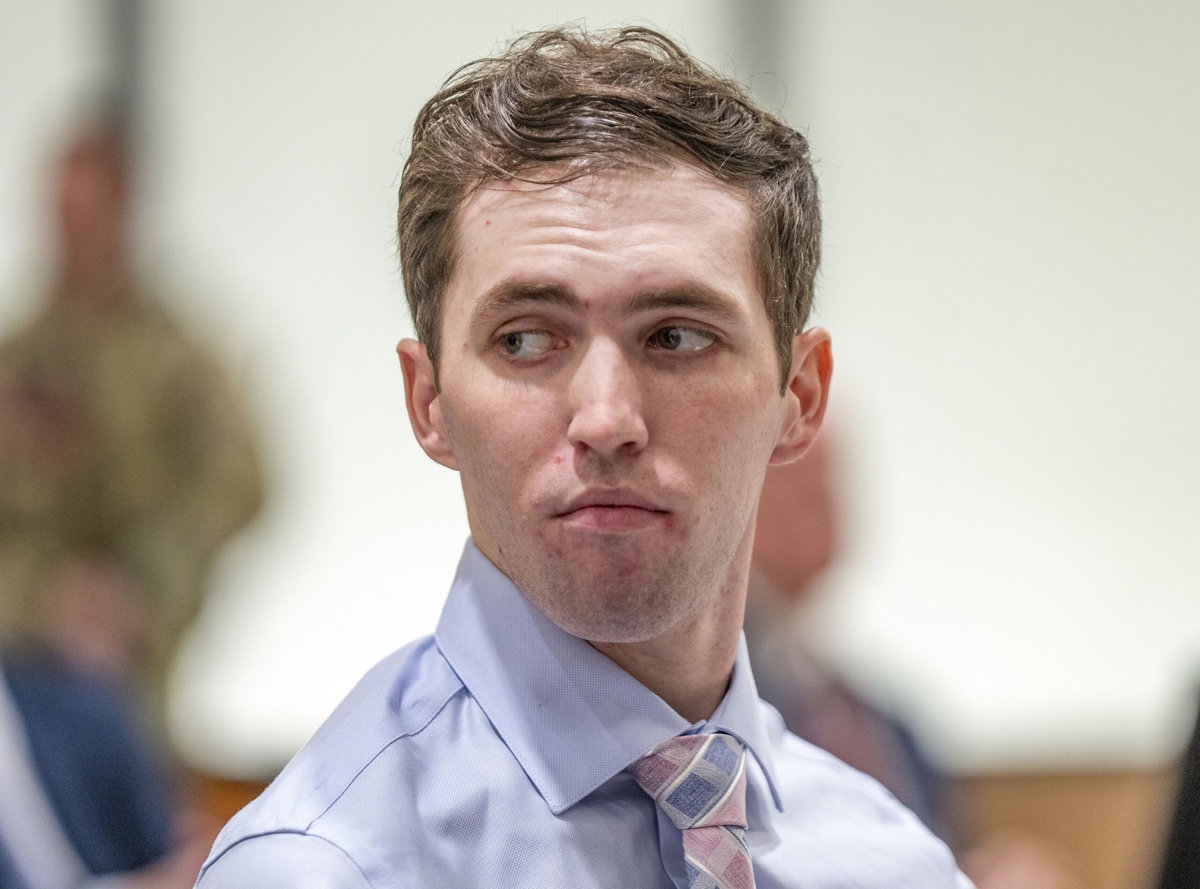
(CNN) — Cameras will continue to be allowed in the high-profile trial of Tyler Robinson, the Utah man accused of fatally shooting Charlie Kirk, a judge ruled Friday.

Utah Judge Tony Graf also granted a request to delay Robinson’s preliminary hearing, which was originally scheduled to begin later this month, after Robinson’s lawyers argued they needed more time to examine DNA analysis of some of the evidence.

Kirk was fatally shot in front of a large crowd during a Turning Point USA event at Utah Valley University last September. After a 30-plus-hour manhunt, Robinson turned himself in to authorities, accompanied by his father and a family friend.

His defense attorneys argued media coverage has been largely prejudicial to Robinson and requested that cameras be excluded from the courtroom. Prosecutors, meanwhile, said keeping them is the best way to combat misinformation about a case centered on the public assassination of the prominent conservative activist.

Robinson appeared virtually from jail with his camera off Friday – a common request from his attorneys for remote hearings.

He has not yet entered pleas for the charges he faces, including aggravated murder, felony use of a firearm, obstruction of justice and witness tampering. Prosecutors intend to seek the death penalty.

The preliminary hearing is now set to begin July 6, the judge said Friday.

Arguments for and against cameras in court

In his oral ruling, Graf determined “defendant has not shown that a categorical ban on electronic media coverage for all proceedings in this case is allowed by Utah law.”

“No evidence was presented by either party showing a media outlet using live media coverage to educate the public about the progress of the legal proceedings or the justice system as a whole,” Graf said. “This court is not so cynical as to conclude that just because the parties did not present evidence of responsible journalism, none exists.”

The defense team filed for the camera ban back in January and argued during an April hearing that Robinson’s “fair trial rights will be jeopardized” if cameras remain in court because the jury pool could be tainted.

Prosecutors took an opposing stance, with Deputy Utah County Attorney Chad Grunander saying: “Mischief lurks in the dark or in secret.”

“Conspiracy theories abound, and the antidote is the actual, real proceedings,” he said during his closing argument.

A coalition of news outlets, including CNN, and Kirk’s widow Erika Kirk were also in favor of keeping the proceedings open to cameras.

Three witnesses were called during the April hearing – two for the defense and one for the prosecution.

The defense witnesses, trial consultant Bryan Edelman and cognitive psychologist Christine Ruva, testified extensively about the reasons they believed media coverage had negatively impacted Robinson’s case so far.

“Speculation and sensationalism,” is how Edelman described the reports he saw, while Ruva said she reviewed “overwhelming anti-defendant” material.

Prosecution witness Cole Christensen, a Utah County Sheriff’s Office Investigator, introduced a report he compiled showing news coverage skewed in many directions, including coverage prejudicial toward Robinson, prosecutors and both Charlie and Erika Kirk.

The defense’s effort to ban cameras stems in part from violations of a decorum order that have occurred over the course of the case so far, including a pool videographer at a December hearing picking up audio of conversations between Robinson and his lawyers and a different videographer in January capturing close-up images of Robinson.

Defense asks to postpone preliminary hearing

Graf postponed Robinson’s preliminary hearing, previously scheduled to begin on May 18, after all four of Robinson’s attorneys told the court in April they felt unprepared to “render effective assistance of counsel” based on the discovery they had received up to that point.

Among the documents they said they haven’t been able to examine is the DNA analysis of some of the evidence, including the rifle Robinson allegedly used to shoot Kirk.

Prosecutors argued the full reports are unnecessary for the limited scope of a preliminary hearing, which is to establish enough probable cause to justify the charges Robinson is facing.

In the interest of keeping the case on schedule, prosecutors also later filed a document saying if the court intended to grant the defense’s request and postpone the preliminary hearing because of the incomplete DNA evidence, they would not introduce it at this stage.

The other evidence they plan to introduce – categorized during the hearing as surveillance footage, confessions Robinson allegedly made after the shooting and circumstantial evidence they say connects Robinson to the area – “is more than sufficient to establish probable cause,” the document says.

Prosecutor Ryan McBride also indicated postponing the hearing would delay proceedings by at least six months and violate Erika Kirk’s right to a speedy trial, as the widow of the victim.

The-CNN-Wire™ & © 2026 Cable News Network, Inc., a Warner Bros. Discovery Company. All rights reserved.

Click here to follow the original article.

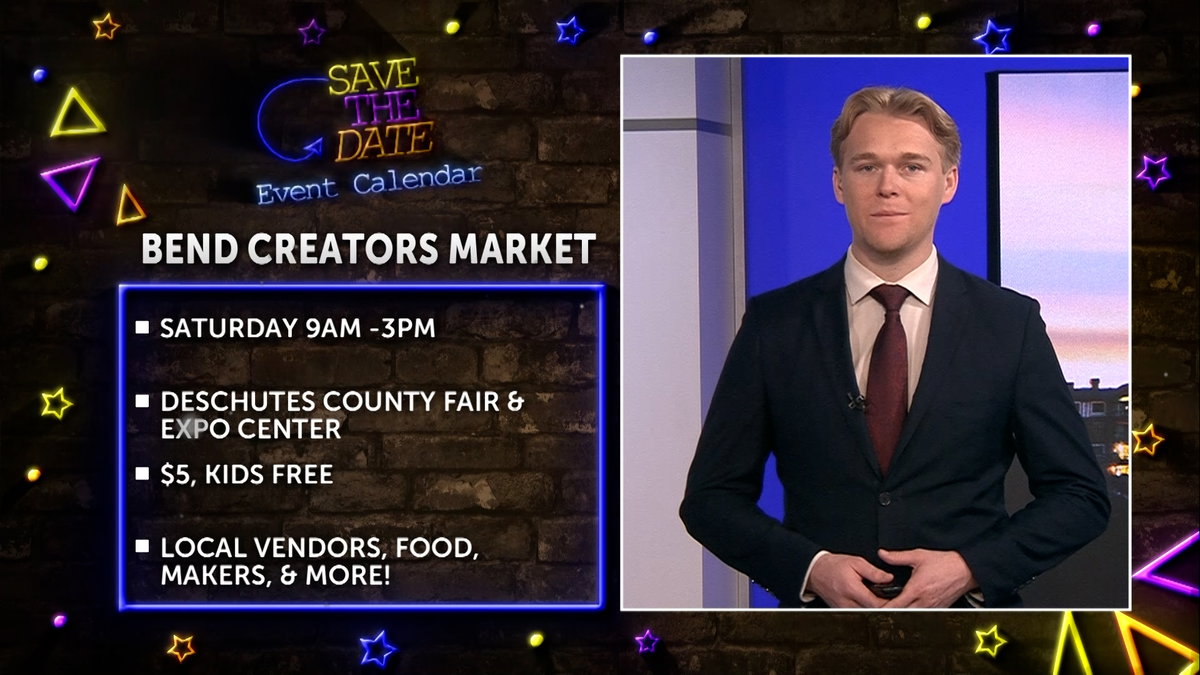
Save the Date: Bend Creators Market, Beltane Moonlight Market, Mom’s Makers Market

Matthew Draxton

Are you looking for something to do this weekend in Central Oregon? Matthew Draxton highlights three local events, from a creator’s market, to the Beltane Moonlight Market, and the 2026 Mom’s Maker’s and Mimosa’s Market.

For many more and to submit your own events, visit https://events.ktvz.com.

Click here to follow the original article.

“As Long As It Takes” – SLO Sheriff Continues the Search For Kristin Smart

Alissa Orozco

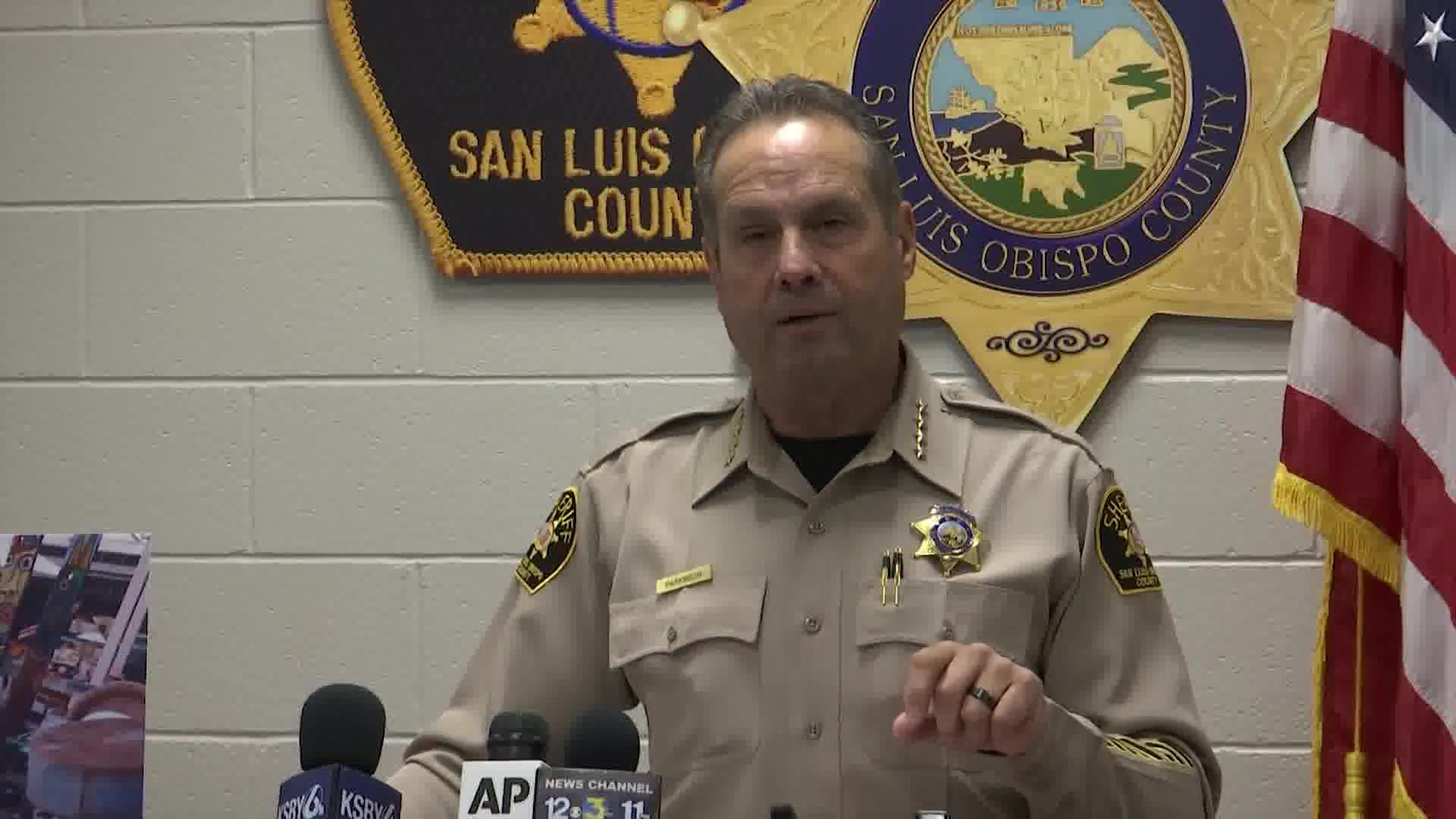
ARROYO GRANDE, Calif. (KEYT) – On Friday morning, Sheriff Ian Parkinson from the San Luis Obispo provided an update in the continued search to find Kristin Smart, the Cal Poly freshman who disappeared nearly 30 years ago.

On Wednesday, investigators began searching the home of Susan Flores, the mother of the man convicted of murdering Smart back in 1996. During Friday’s conference, Sheriff Parkinson said a search warrant was granted due to probable cause, but would not go into details about what possible leads or evidence led them to Flores’ Arroyo Grande home.

The sheriff confirmed the use of GPR, ground-penetrating radar, soil testing and measurements at Flores’ home and the neighboring property.

Sheriff Parkinson shared that soil samples collected from both properties showed signs of decomposition, but can not confirm they are the remains of Kristin Smart.

“We believe that based on what we’re looking at evidence-wise, scientific evidence that a human remains were there at one time were still there. So we can’t call it Kristen, but you know, we think there’s, there’s evidence to support human remains there at one time.”

Up until now, the sheriff’s department has not shared any details into the search, but it was the topic of discussion at today’s 9:00am conference.

Sheriff Parkinson inherited the case when he came into office in 2011, making a commitment to the public and the Smart family to continue the search for Kristin Smart. Since then, several searches have been conducted for evidence of Kristin’s remains and in 2022 Paul Flores was found guilty by a Monterey County jury of first-degree murder.

Sheriff Parkinson says Wednesday’s search warrant is what is known as a “kick-out” warrant, meaning Susan Flores has been ordered to leave the home and can not return until the search is over.

As of Friday morning, investigators have not located Kristin Smart.

“We are not leaving that house until we’ve checked everything,” said Parkinson.

When asked how long the search was expected to last, Sheriff Parkinson told the press: “as long as it takes.”

Following the press conference, the Smart family released the following statement:

“We remain hopeful that this current search will be successful and look forward to the outcome. Our family greatly appreciates the efforts, dedication, and commitment of Sheriff Ian Parkinson, Detective Clint Cole, the San Luis Obispo Sheriff’s Department, and the technical experts assisting with the execution of this search. Finally, we continue to feel the tremendous support of the local community and all the people far beyond the Central Coast who provide us with great strength to continue this journey to bring Kristin home.”

The Latest Breaking News, Weather Alerts, Sports and More Anytime On Our Mobile Apps. Keep Up With the Latest Articles by Signing Up for the News Channel 3-12 Newsletter.

Click here to follow the original article.

What we know about the Canvas hack that has impacted thousands of schools

CNN Newsource

By Hanna Park, Ramishah Maruf, Emma Tucker, CNN

New York (CNN) — A cyberattack shut down an education platform used by universities and K-12 schools across the US Thursday, depriving students and teachers of essential classroom materials — at a time when many are taking or preparing for final exams.

Canvas, a popular, cloud-based digital hub for classrooms, has more than 30 million active users globally, with more than 8,000 institutions as customers, parent company Instructure says on its website.

Large public school systems and top universities like Columbia, Princeton, Harvard and Georgetown reported a ransom note signed by a hacking group had appeared on the homepage of their schools’ Canvas sites Thursday.

The hack came after the group believed to be behind it warned Instructure in a ransom note to “pay or leak,” saying it had accessed data from millions of users, including students, teachers, and staff.

The FBI has mobilized resources in multiple states to assist victims of the hack, a source familiar with the matter told CNN.

The FBI confirmed Friday the agency was aware of the platform service disruption and advised concerned students and faculty to wait for official guidance from their school “regarding the scope of the incident and the nature of any affected data.”

The agency warned impacted individuals to be wary of potential scammers claiming to have their data.

“By receiving a message, that does not necessarily mean your personal information has been compromised,” the FBI statement said, explaining scammers often exaggerate or lie about their access to data in order to get money from victims.

Instructure said Friday morning Canvas was “fully back online and available for use.” Multiple universities and school districts throughout the country reported their Canvas pages were back up and running on Friday, though some schools had already extended deadlines and changed finals schedules because of the hack.

Here’s what we know.

How the Canvas hack unfolded

A University of Washington student who tried to log into Canvas around noon Thursday was greeted by a message from the hacking group ShinyHunters, which claimed to have “breached” the platform’s parent company, according to a screenshot obtained by CNN.

The note, reported by different student news outlets, demanded ransoms to prevent data leaks from the platform.

A student at the University of Pennsylvania said he was logged out of his Canvas account while studying for finals. Professors had to scramble to send class materials in other ways, the student said.

Universities across the country, including Columbia University, Rutgers, Princeton, Kent State, Harvard and Georgetown issued statements alerting students to the hack impacting institutions nationwide. School districts in California, Florida, Georgia, Oklahoma, Oregon, Nevada, North Carolina, Tennessee, Utah, Virginia, Texas and Wisconsin also reported being affected.

This was the second school data breach claimed by ShinyHunters this month. In Thursday’s ransom note, the group claimed it had hacked Instructure “again” and faulted the company’s response to the previous attack: “Instead of contacting us to resolve it they ignored us and did some ‘security patches.’”

On May 1, Instructure said it “experienced a cybersecurity incident perpetrated by a criminal threat actor.” The company said the breach had been “contained” the next day but usernames, email addresses, student ID numbers and communications from some institutions appeared to have been exposed.

ShinyHunters claimed in a ransom note shared on May 3 by Ransomware.live, which tracks ransomware attacks and groups, that it had breached 275 million individuals’ data and had access to “several billions of private messages,” giving a May 6 deadline for Instructure to reach out.

In a note Thursday, the hacking group gave a May 12 deadline for impacted schools “to negotiate a settlement.”

During the Canvas interruption, Instructure said on Thursday it put the platform in “maintenance mode” as it investigated the issue. Later that night, it announced Canvas was available again “for most users.”

On Friday morning, Instructure announced an “unauthorized actor” exploited an issue related to the company’s Free-For-Teacher accounts.

“As a result, we have made the difficult decision to temporarily shut down our Free-For-Teacher accounts. This gives us the confidence to restore access to Canvas, which is now fully back online and available for use,” the company said in a statement.

Cyberattacks on educational platforms are not new. Software provider Finalsite suffered a ransomware attack in July 2022. The websites of about 5,000 schools were impacted.

During the pandemic, ransomware attacks interrupted remote learning for a number of schools in the US, including an incident that forced Baltimore County Public Schools to temporarily close in November 2020.

The risk for students and faculty impacted by the attack, retired FBI special agent Richard Kolko says, is they could be victims, “not only today, but later.”

“You need to follow up…because they have this information on these students now and a couple (of) years from now, they may use some of that information to attack them,” Kolko told CNN’s Boris Sanchez.

The FBI has advised anyone who may have been affected by Thursday’s cyberattack to not engage with anyone who claims to have their data, including by responding to demands or sending payments.

“We encourage individuals to be cautious of unsolicited emails, calls, or texts claiming to be from your school, the (learning management system) provider, or law enforcement and to verify the contact through known channels before responding,” the statement added.

Who is ShinyHunters?

Little is publicly known about the hacking group that claimed responsibility for the Canvas outage, but cybersecurity researchers and federal authorities have linked the ShinyHunters name to several instances of high-profile data theft.

The group claimed responsibility for hacking Ticketmaster and attempting to sell user data on the dark web in 2024, CNN previously reported.

Earlier this year, Mandiant, a cyber-intelligence firm owned by Google, reported an increase in activity consistent with prior “ShinyHunters-branded extortion operations,” saying the attackers use sophisticated voice phishing and fake, company-branded login pages to harvest employee credentials before stealing sensitive data from cloud-based platforms for ransom.

In 2024, the US Department of Justice announced the sentencing of a member of what prosecutors described as a notorious international hacking crew tied to the ShinyHunters name. Authorities said a user operating under that moniker posted stolen data from more than 60 companies for sale on dark web forums and at times threatened to leak sensitive files if victims did not pay.

Court documents tied to the member who was sentenced show US-based victims included technology, entertainment, communications, clothing and fitness companies, as well as a video game developer.

How students and schools reacted

Melanie Topchyan, a senior at the University of California, Riverside, said she missed a quiz Thursday because of the outage and worried about staying on track. She said she has a midterm next week for a demanding course and relies on Canvas to revisit lectures and notes.

“It is a little bit of a freakout,” she told CNN.

Anish Garimidi, the University of Pennsylvania junior who was logged out of Canvas while trying to study, said he immediately felt a surge of anxiety.

“The biggest cause of fear and anxiety in me is that I was deprived of significant resources to study and do the best,” Garimidi told CNN.

For many students, the disruption landed at the worst possible moment. Georgetown sophomore Minhal Nazeer had returned home to Kentucky because all of her remaining coursework was online through Canvas.

But while some of her classmates were “freaking out,” she saw an upside in the extra time they got after professors extended deadlines.

“I was already in a good spot to finish all my papers, so I’m not too bothered by it, but I do see it is helping me a little because I have gotten some extension. I just have more time to look over my things,” she said.

A Columbia University senior, who declined to be named, said the outage came at the “most inopportune time” — just as many students were shifting from celebratory end‑of‑year events to serious exam preparation.

That was particularly difficult, he said, for those who had only just begun compiling notes and study guides after having “pushed off the thought of having to take exams in the following week.”

James Madison University moved some exams scheduled for Friday to Wednesday, the school said in an announcement.

The episode has underscored how deeply embedded Canvas has become in academic life at many institutions, not only as a submission portal but as a central communications tool.

Kent State said Friday it is “very concerned” about further disruptions as finals conclude.

The university said the disruption also affected areas like tuition billing and financial aid. “We are currently in contingency planning with all of those areas,” the statement said.

At the Massachusetts Institute of Technology, Allison Park, a junior, said professors were scrambling to locate students’ email addresses after losing access to Canvas’ announcement feature.

“The fact that this one website was the link between teaching staff and students outside of class — I didn’t realize how big of a dependency we had on it until they were scrambling to find our emails,” she said.

Liane Xu, another MIT student, said her courses rely on Canvas to collect assignments and manage grading. Although some professors host course materials on separate websites, she said critical resources, lecture videos, notes and study documents are often stored within the platform.

As the semester draws to a close, she said, access to those materials is essential.

“It’s unfortunate and we’re sort of the victims of this,” said the Columbia senior.

This story has been updated with additional information.

The-CNN-Wire™ & © 2026 Cable News Network, Inc., a Warner Bros. Discovery Company. All rights reserved.

CNN’s Ramishah Maruf, Sarah Hutter, Ray Sanchez, Maria Aguilar Prieto and Jillian Sikes contributed to this story.

Click here to follow the original article.

Severe injuries reported in crash that shut down Columbia road

Matthew Sanders

COLUMBIA, Mo. (KMIZ)

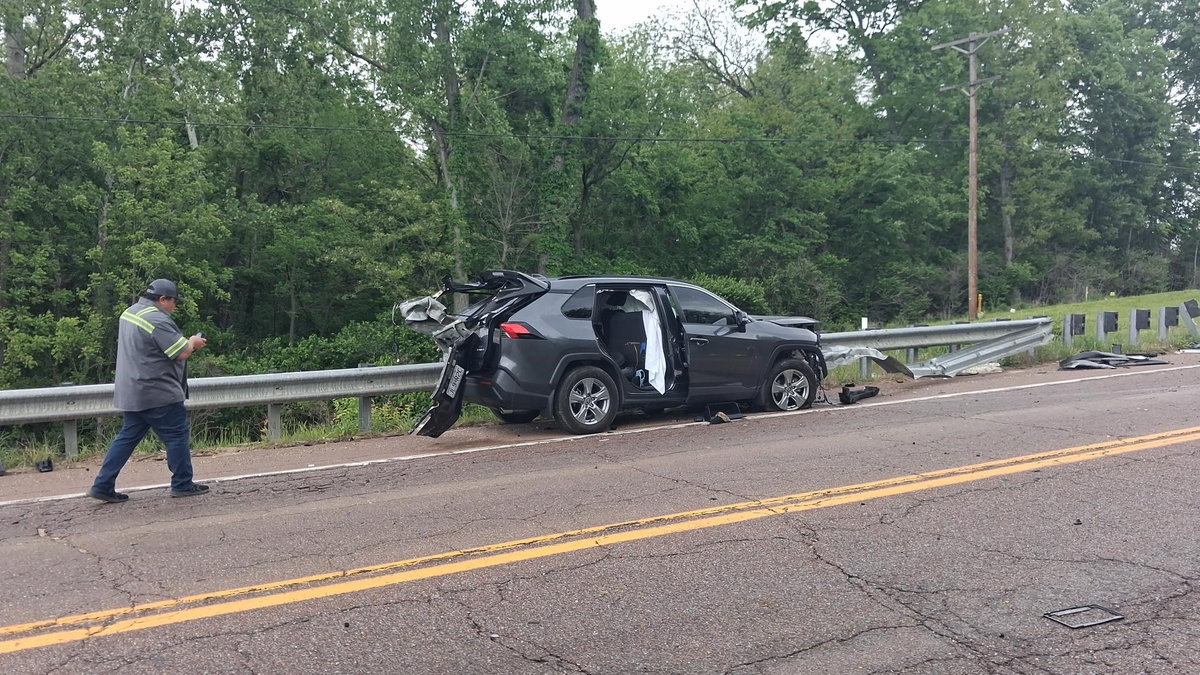
A driver suffered serious injuries in a crash that shut down part of Clark Lane in northeast Columbia on Friday.

Emergency dispatchers sent a public alert that the crash had closed Clark Lane at Hanover Boulevard at about 9 a.m. The road remained closed at 9:30 a.m.

Columbia Fire Department Battalion Chief Shawn Noordsy said the crash involved two vehicles, and one driver was severely injured. No other details were immediately available.

Click here to follow the original article.

U.S. Adds 115,000 Jobs in April; Unemployment Holds at 4.3%

By Christopher Cicchiello | Quincy News Correspondent

Click here for updates on this story

    Washington (Quincy News) — The U.S. added 115,000 jobs in April, the Bureau of Labor Statistics (BLS) reported on Friday, more than doubling economists’ predictions.

Unemployment remained static at 4.3%, showing a slight increase from April 2025, when the rate stood at 4.2%. However, the number of people that have been jobless for less than five weeks increased by 358,000, totaling 2.5 million people.

Economists were quick to point out that this latest report ends what had been a month-to-month “yo-yo effect.” Starting in June 2025, each month saw either a dramatic fall in jobs or a major upswing, causing alarm about the unsteady state of the job market. The April 2026 report marks the first back-to-back monthly job growth in that period.

Most gains were within healthcare, transportation, warehousing and retail trade. The healthcare sector added 37,000 jobs in April and while transportation added 30,000, the BLS added that jobs in this industry have been down 105,000 since reaching an overall peak in February 2025.

Notably, federal government employment continued to trend downward. Since a high in February 2024, jobs in the federal government are down 11.5%, or 348,000 jobs.

Kevin Hassett, director of the National Economic Council, highlighted the latest BLS data as proof that America is in a “golden age.”

“These are two months of absolutely blockbuster numbers,” Hassett told Fox News on Friday.

Professor David Mitchell, director of the Bureau of Economic Research at Missouri State University, told Quincy News that the groundswell of excitement around the report is “bothersome” because consecutive months of job growth should be “normal.”

“The fact that the job market is acting in a quasi-normal way is — and I don’t like to use the word ‘scary’ — but it’s hardly something to be popping champagne about. I think you need a few more months before you can say, ‘Okay maybe we actually did turn a corner here,’” Mitchell said.

The jobs report comes amid ongoing economic concern, as prices at the pump reach an average of $4.55 per gallon and the continued closure of the Strait of Hormuz adds strain on supply chains, giving birth to a new acronym among traders and analysts: Not A Chance Hormuz Opens (NACHO).

The latest jobs report buoyed markets Friday, with the S&P 500 and Nasdaq Composite closing higher and the Dow Jones Industrial Average finishing little changed

The BLS reported that February’s numbers were revised down for a second time, originally starting at minus 92,000 to minus 133,000, and now adjusted to negative 156,000. With March’s figures adjusted up by 7,000 jobs, employment for February and March is a combined 16,000 jobs lower than previously reported.

Mitchell said that it’s important to see what revisions may come next month.

“Three months does not make a trend,” Mitchell said. “Four to five (months), then I would say things are probably trending back to what they probably should be.”

The jobs report arrives days before Fed Chair Jerome Powell’s term ends on May 15. President Donald Trump has been critical of Powell for his reluctance to lower interest rates, and in an unorthodox move, Powell has said he will remain on the reserve’s Board of Governors for a brief time.

His successor is expected to be Trump’s pick, Kevin Warsh, who now awaits Senate approval as soon as next week. Mitchell told Quincy News that he does not expect Warsh will have any easy time changing the Fed’s current posture on keeping interest rates stable.

“I think they’re trying to send him (Warsh) a signal that says ‘Hey, we’re not just going to do whatever it is that your bidding is,”’ Mitchell said. “So he might have a harder time getting rates cut than he thinks.”

The rate outlook is particularly relevant as the Department of the Treasury ramps up borrowing to finance government operations. The Treasury said this week it plans to borrow $671 billion in the third quarter of 2026 and revised its second-quarter estimate up to $189 billion from $109 billion.

In its quarterly refunding announcement, Treasury said it will offer $125 billion in securities beginning May 11 through midweek auctions. The department also projected a cash balance of $900 billion at the end of June, and outlined plans for up to $38 billion in buybacks.

In its latest review, the Treasury Borrowing Advisory Committee pointed to shifting fiscal dynamics, including a surge in tariff revenue, up 272% ($128 billion), alongside continued growth in Medicare and Medicaid spending, which rose $59 billion. Those increases largely offset $84 billion in savings from cuts to agencies including the Environmental Protection Agency, Federal Emergency Management Agency, and Department of Education.

The next BLS jobs report is scheduled for Friday, June 5.

Quincy News correspondent Tom LoBianco contributed to this report.

Please note: This story was provided to CNN Wire by an affiliate and does not contain original CNN reporting. This content carries a strict local market embargo. If you share the same market as the contributor of this article, you may not use it on any platform.

LA student accepted to 65 colleges, selects Columbia University

By Anabel Munoz

Click here for updates on this story

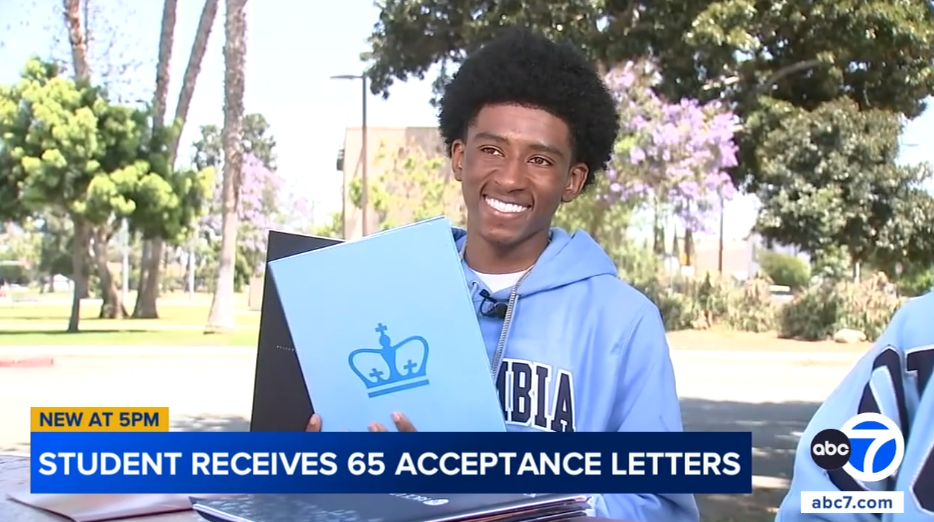
    LOS ANGELES, California (KABC) — A South Los Angeles student is celebrating the incredible accomplishment of receiving 65 college acceptance letters.

The straight-A student from Verbum Dei Jesuit High School is picking an Ivy League school, but he had to do a lot to get to this point.

At 17 years old, Lamont Newell smiles ear to ear as he holds a few of the 65 college acceptance letters he’s received so far.

Where he’s holding them is also significant. He spoke to Eyewitness News at a recreation center in South L.A.’s South Park. He learned to code there as a kid in summer camp.

He now plans to study industrial engineering at Columbia University.

“I felt proud. I never thought I’d make it that far, to be able to go into Ivy League, especially New York City,” Newell told Eyewitness News.

The valedictorian with a 4.4. GPA earned a full ride.

“One of my goals is actually to create an institution where I teach Black kids how to work in STEM,” Newell said.

South Park is also where he and his family found refuge while experiencing homelessness.

“There were times where we didn’t have a roof over our head, but we had a car. We didn’t have a place to stay so we would come and sleep in this parking lot,” Newell’s mother Antanika Barnes said.

Newell watched his mother go to college and persevere through many challenges.

“It was a hard road. I was a single mom. I had Lamont at 21,” Barnes said.

“As a parent, it is your duty to find out what your kids are good at, and I knew my son academically was a high achiever from a very young age,” Barnes said. “I probably couldn’t have done it myself, but it was my job to figure out who could help and where I could get those resources from.”

Newell was also fueled to set an example for his younger brother.

“I realized if I didn’t try hard enough, who would for him?” Newell said.

Newell is the first male in his family to graduate high school. His mother says the family has been impacted by gang violence and incarceration, making the achievement layers deep.

“This not only means something great to me but it’s very influential to my family as a whole because now the youth that comes after him are going to see that there’s another way out,” Barnes said.

Both offer encouragement for those listening.

“You may feel like during your situation there is no path out, but there is always an exit to your destination,” Newell said. “In a million years, we could have never thought we would be in this situation.”

Please note: This story was provided to CNN Wire by an affiliate and does not contain original CNN reporting. This content carries a strict local market embargo. If you share the same market as the contributor of this article, you may not use it on any platform.

LAPD projects $1.15 billion in security costs for 2028 Olympics, memo shows

By Kevin Ozebek

Click here for updates on this story

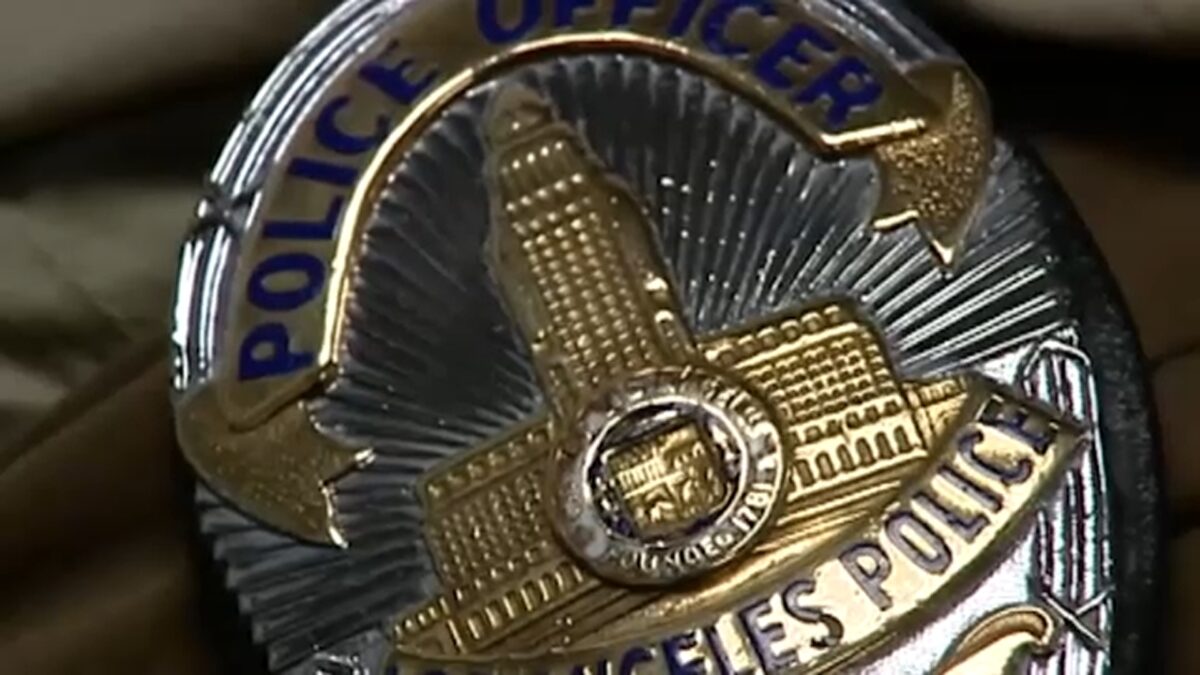
    LOS ANGELES, California (KABC) — The Los Angeles Police Department estimates it will cost $1.15 billion to staff the 2028 Olympic and Paralympic Games, according to a memo presented Thursday to the City Council’s Budget and Finance Committee.

The projection – detailed in a letter from LAPD Chief Jim McDonnell attached to the memo – is equivalent to roughly half of the department’s current annual budget of about $2 billion.

McDonnell wrote that LAPD can provide only a fraction of the staffing needed for the Games.

“The Department can self-supply only about one-third of peak Games staffing demand. The remaining two-thirds must be filled by outside law enforcement at premium rates, which is the single largest driver of the total cost,” he said.

The estimate includes personnel costs for LAPD officers as well as lodging and pay for outside agencies brought in to help secure venues and manage crowds. It also accounts for the staffing needed to maintain regular police service across Los Angeles during the Games.

The memo also notes that sworn staffing is projected to fall to about 8,400 officers – more than 200 fewer than the department has now – indicating retirements are expected to outpace hiring.

City Administrative Officer Matt Szabo wrote that state and federal funding may be available to cover the projected security costs.

He also said the state may take the lead in coordinating and managing the deployment of outside law enforcement agencies.

Please note: This story was provided to CNN Wire by an affiliate and does not contain original CNN reporting. This content carries a strict local market embargo. If you share the same market as the contributor of this article, you may not use it on any platform.

$80,000 gift changes everything for veteran-serving nonprofit Top Dogg

By Kaitlyn Ross

Click here for updates on this story

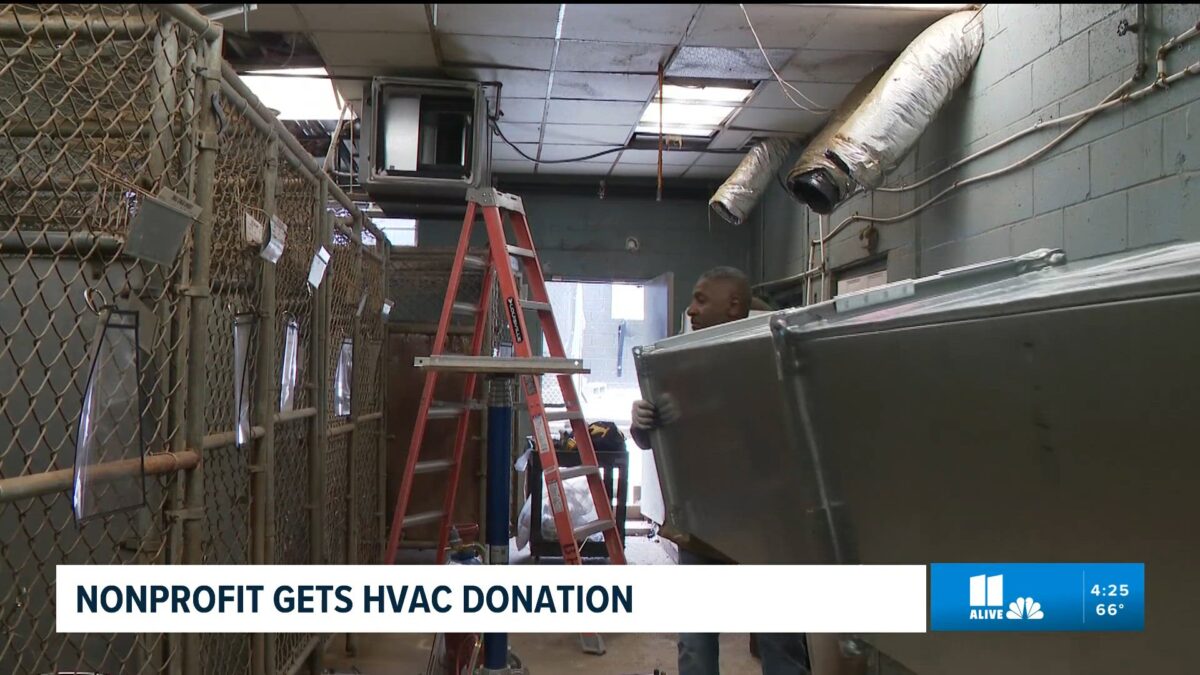
    LILBURN, Georgia (WXIA) — What started as a struggling air conditioning system at a metro Atlanta nonprofit turned into an $80,000 act of generosity that’s already making a difference for veterans and the dogs trained to serve them.

At Top Dogg K9 Foundation in Lilburn, the sound of barking fills the building. It’s where service dogs are trained before being paired with veterans living with post-traumatic stress disorder.

But for months, the nonprofit was battling the Georgia heat.

“We’ve been suffering, summer after summer, with a 30-year-old system, doing a lot of patch work,” said founder Blake Rashad.

The aging air conditioning unit was failing, creating an increasingly difficult environment for both the dogs and the people who care for them.

That’s when Jeremy Melton, owner of Impact Service Group, learned about the situation.

“It wasn’t 10 minutes into the conversation,” Rashad said. “He said, ‘I love what you’re doing. I support what you’re doing, and I’m going to help.'”

Melton followed through — in a big way.

Working alongside a network of partners, Impact Service Group replaced the entire HVAC system for both buildings at the facility, free of charge.

The project included labor, materials and supplies from Impact Service Group, ductwork from BHW Metals and electrical work from Ayers Electric.

Equipment for the new system was supplied by Mingledorff’s through the network of a Corvant company, Rogers Mechanical.

Altogether, the effort totaled an estimated $80,000.

“My passion is to help people. At the end of the day, I just want to help people,” Melton said.

For Rashad, the impact is immediate.

“I was floored. I was speechless. I didn’t know how to respond,” he said. “What he’s doing for us — it’s going to change the lives of my veterans.”

The upgraded system is now fully operational, just in time for rising temperatures across metro Atlanta.

Rashad says the improvement means more than comfort; it’s peace of mind.

For the first time in a long time, he says he can rest easy knowing the dogs are safe, and the mission can continue without interruption.

And for the veterans who will one day be paired with those dogs, the ripple effect of that generosity could be life-changing.

Please note: This story was provided to CNN Wire by an affiliate and does not contain original CNN reporting. This content carries a strict local market embargo. If you share the same market as the contributor of this article, you may not use it on any platform.

Man challenges New Mexico speed camera tickets for car he doesn’t own

By Jason McNabb, T.J. Wilham

Click here for updates on this story

    ALBUQUERQUE, New Mexico (KOAT) — An Rio Rancho man says he received multiple speeding tickets from Albuquerque’s speed cameras for a car he doesn’t own, raising concerns about the reliability of the city’s traffic camera system.

Jerry Delmore received a $100 speeding ticket in the mail, but when he opened it, he realized the car in the photo wasn’t his.

“I didn’t do it, so I asked my wife, like, hey, is this you? She says, no. So I opened it up, and it was neither of us,” Delmore said.

The ticket showed a white Ford Explorer with a license plate similar to Delmore’s, but one letter was different. His plate begins with a “D,” while the car caught on camera had a “U.”

“With human eyes, you can see it’s a U,” Delmore said. “It was similar, I’d give it that.”

Dan Mayfield, press secretary for Mayor Tim Keller, said the city’s camera system is designed to prevent such errors.

“Our cameras actually, they take a video,” Mayfield said. “It’s a little short video clip, a three-second video clip of all the cars speeding, plus three different photographs of the cars.”

Mayfield explained that the out-of-state vendor reviews the citations, and Albuquerque Police Department officers double-check the videos and photographs before signing off on each ticket.

“APD officers watch every video, double-check all of the photographs, and then an officer actually signs off on every single citation,” Mayfield said.

Delmore questioned whether the process is being followed.

“This is, it’s sworn or affirmed by this APD person, so they’re not doing their job, or this is just auto-penned,” he said.

Delmore shared a video of one of the citations he received, showing a white Ford Explorer with a plate one letter off from his, allegedly speeding at 75 mph on Coors Boulevard. His vehicle, however, is a blue Ford F-150 truck, and his registration clearly states “blue.”

“Somebody just, they’re just pencil whippin’ this,” Delmore said.

“It’s frustrating, and I think it would be frustrating for most people to get blamed for something that you didn’t do,” he added.

Mayfield said errors like Delmore’s case are rare, occurring about five times per 30,000 tickets issued each month. With 550,000 citations issued earlier this year, that means nearly 100 people could have received incorrect tickets.

“This is a teaching moment for us,” Mayfield said. “We can always tell APD, listen, sometimes these plates, especially in the DV plates, like this one, they’re smaller letters, and just give it a double check.”

After Delmore contacted Target 7, the city voided both of his tickets. However, he said the resolution could have been simpler.

“They called it up, saw it right there on the screen, saw the email that I had sent in with my license plate, saw the mistake. They could physically verify everything that I have said. But they couldn’t do anything about it,” Delmore said. “They didn’t give me an explanation.”

Mayfield said it’s easy to get a citation dismissed in similar situations. Drivers can set up an e-hearing using the link on the back of the ticket and upload a copy of their registration to prove the car cited doesn’t match their vehicle.

“We think there was a mistake, wrong license plate, something like that, wrong car. And you can upload a copy of your registration, and we can prove from that that the registration does not match the license plate of the car that was cited,” Mayfield said.

Delmore, unaware of the e-hearing option, signed up for an in-person hearing.

“I didn’t do anything wrong,” he said. “But I’m having to deal with a lot of crap because of it.”

Please note: This story was provided to CNN Wire by an affiliate and does not contain original CNN reporting. This content carries a strict local market embargo. If you share the same market as the contributor of this article, you may not use it on any platform.