Dallas implements hiring freeze, overtime restrictions to help with budget woes

By Briauna Brown

Click here for updates on this story

    DALLAS (KTVT) — The city of Dallas said Friday it is instituting a hiring freeze and overtime restrictions for the police and fire departments in order ease a budget shortfall.

The city said current data shows its expenses will exceed the budget by $16.4 million due to police and fire pay and overtime, as well as declining sales tax collections leading to reduced revenue. Officials said the city’s self-funded employee health benefit fund is also projected to exceed budget by $13.8 million due to an increase in medical and pharmacy claims.

To address these issues, the city is implementing the following actions immediately: a selective hiring freeze for non-uniformed positions, overtime restrictions, spending reductions and travel suspensions.

Non-essential spending will also be eliminated, which includes items that can be postponed without affecting the core operations of the department.

“As we navigate resource constraints, fiscal stewardship remains our top priority. We are committed to strengthening efficiency across all operations while ensuring that limited resources are focused on the City’s most critical needs,” Dallas City Manager Kimberly Bizor Tolbert said in a statement. “These measures are necessary to maintain essential services and uphold our fiscal responsibility to Dallas residents.”

The city said it will monitor how these cost-saving measures help and will discuss whether more changes need to be made in the future.

Please note: This story was provided to CNN Wire by an affiliate and does not contain original CNN reporting. This content carries a strict local market embargo. If you share the same market as the contributor of this article, you may not use it on any platform.

Dashcam shows CSP trooper end dangerous chase near Cortez with PIT maneuver

By Robert Garrison

Click here for updates on this story

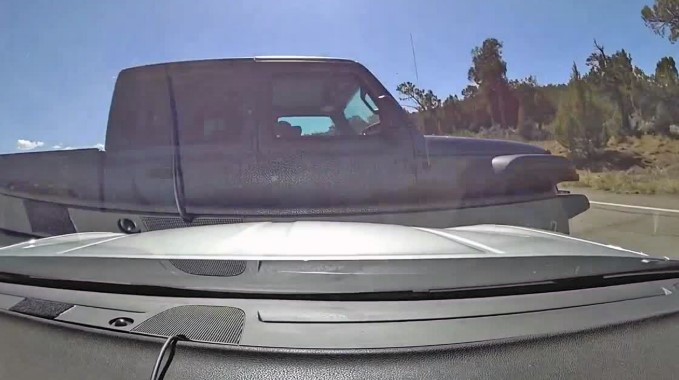
    CORTEZ, Colorado (KMGH) — The Colorado State Patrol shared dashcam video Wednesday of an 81-year-old driver who allegedly led a trooper in a high-speed chase before a PIT maneuver put an end to the dangerous pursuit.

The driver was arrested for DUI, reckless driving, and eluding following the April 8 incident on US 160 near Cortez in the Four Corners area.

The video shows Trooper Mass conducting a separate traffic stop when he notices a Jeep Gladiator driving on the shoulder in the wrong direction. Other motorists point toward the Jeep to alert the trooper.

Trooper Mass immediately abandons his current stop, returns to his patrol car, and initiates the pursuit.

As Trooper Mass follows the Jeep, the vehicle speeds on the shoulder, drifts into oncoming traffic, and nearly causes multiple head-on crashes, according to the CSP.

Trooper Mass activates his lights and sirens and continues pursuing the driver, who does not respond.

With an active work zone ahead and the Jeep failing to stop, Trooper Mass uses a tactical vehicle intervention, sometimes called a PIT maneuver, to halt the vehicle before it enters the construction area, according to the CSP.

The unidentified suspect was booked into the Montezuma County Jail.

The agency released the video during National Work Zone Safety Week to highlight how impaired and reckless drivers can threaten the lives of roadway workers and the general public.

Please note: This story was provided to CNN Wire by an affiliate and does not contain original CNN reporting. This content carries a strict local market embargo. If you share the same market as the contributor of this article, you may not use it on any platform.
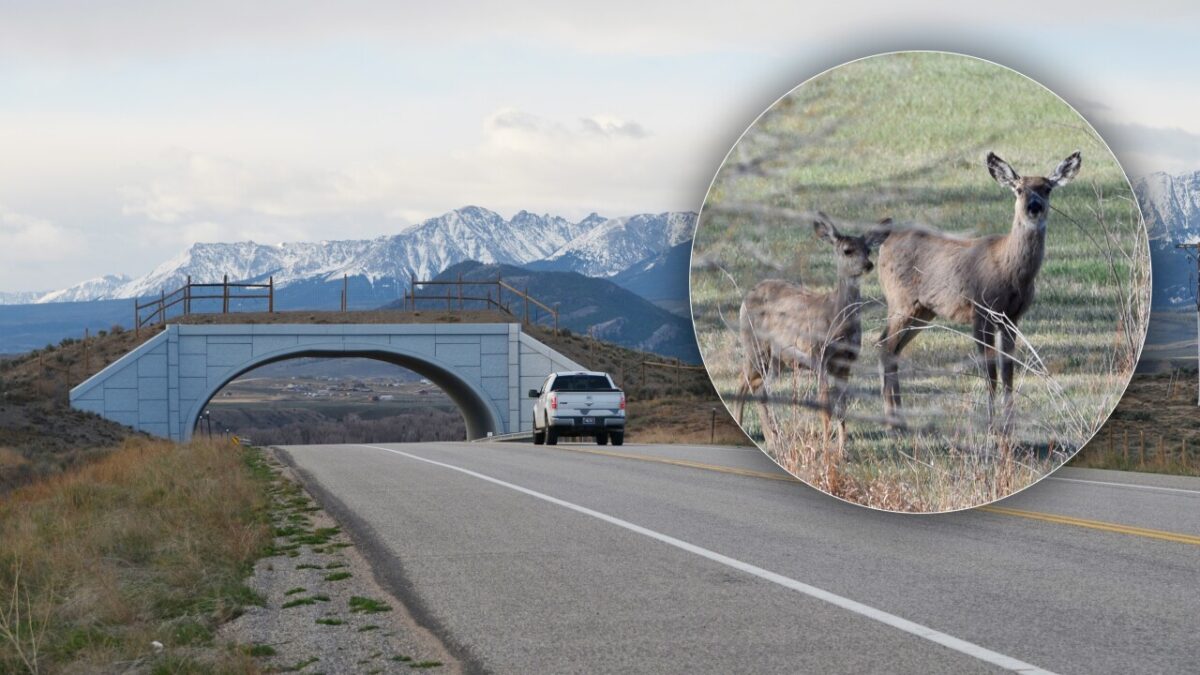
Colorado’s wildlife crossings can reduce animal-vehicle crashes by 90% — would you pay $5 to build more?

By Stephanie Butzer

Click here for updates on this story

    GRAND COUNTY, Colorado (KMGH) — In the pre-dawn darkness south of Kremmling, a lone deer followed a long fence along Highway 9 as it led her up to one of the first wildlife overpasses ever built in Colorado. She would cross safely, quietly, quickly. Drivers would never even know she was above them.

Lawmakers now have a bill before them that would help build more of these wildlife crossings by asking Coloradans if they would give an extra $5 to the cause when they register their vehicle. The state’s data shows its success: Wildlife crossings, paired with long stretches of wildlife fencing to funnel the animals to the safe passageway, work. Reductions in wildlife-involved crashes hover around 90% in most cases.

For Grand County residents like Mike Ritschard, a fourth-generation rancher who leaves his home in Kremmling to travel on Highway 9 on a near daily basis, improving safety on the stretch of road is an obvious win.

And not just for him, but for his entire Grand County community, the whole state, and all its visitors, he said.

He understands just how dangerous it can be.

Ritschard’s parents, Gene and Miriam, taught him the value of community early on, and the importance of doing what is right. Giving back was part of life. He had to rely on that after tragedy struck on a snowy, windy day on Dec. 3, 1985.

His parents were driving back home from Colorado Farm Bureau meetings in Colorado Springs on slick and snow-covered roads. Headlights appeared through the windshield, and they were hit head-on by another driver, Ritschard said. It’s not clear if, or how, wildlife was involved in that crash — nobody knows for sure, he said.

Gene and Miriam never made it home.

Ritschard, who was 23 at the time and playing basketball with friends, had gone to a local pub, where the chief of police found him and broke the news. His parents were gone. Brokenhearted, he called his three sisters to tell them what had happened.

In the days afterward, the community that the Ritschard family had supported for so long turned their attention to the four young siblings to help them navigate their new, painful reality.

Now, that’s the same community Ritschard hopes to protect with infrastructure keeping wildlife and drivers separated.

“I think that’s why you give back: You give back because they gave back,” he explained. “It was ingrained into us (by my parents) that no matter where you were, no matter what you were doing, you became involved, and that was the biggest thing. We learned to grow up and be part of it, as opposed to sticking our head in the sand and leaving.”

The Colorado Department of Transportation (CDOT) reports about 4,000 wildlife-involved crashes every year on average, but these incidents are immensely underreported. Estimates have found the actual number may be closer to 14,100.

In September 2024, Denver7 published an in-depth report on how Colorado was quickly becoming a leader in constructing wildlife crossings. As of then, the state had built more than 40 wildlife underpasses and three overpasses — the first two of which were constructed along Highway 9. Since that story, Colorado has also completed the largest wildlife overpass in North America, which spans over Interstate 25 in Douglas County. As Denver7 reported earlier this month, more crossings are planned by the end of the year across Interstate 70 at Vail Pass.

Under Senate Bill 26-141, Coloradans would pay an additional $5 when they register their vehicle to support the construction of future wildlife crossings, similar to the way Coloradans can already pay for a discounted state park pass through that registration. The $5 would go to the Collision Prevention Fund, which helps the CDOT and Colorado Parks and Wildlife build the projects. An opt-out option will be available.

“We’ve seen the places on the highway where you put in this infrastructure — it reduces collisions by over 90% almost overnight,” said Sen. Dylan Roberts, a Democrat who sponsors the bill. “So, they are incredibly successful… They prevent animal vehicle collisions, which prevents human death, human injury, as well as animal deaths, and they help save drivers money, because fewer wrecks mean fewer insurance claims, which brings down insurance costs for everybody.”

These crashes come with a cost — anything from a bill for vehicle repairs to the serious injury or loss of a loved one. CDOT and the Colorado Wildlife & Transportation Alliance report that Coloradans who crash into large wildlife pay about $80 million in property damage and $66.3 million in medical expenses each year.

The bill has received support from across the state and both political parties, Roberts said.

“People are realizing, from some of the testimony we’ve heard and some of the data that’s presented, that this is a statewide issue,” he continued. “We have animal-vehicle interactions in every part of the state — in cities, in suburbs, and, of course, in the rural areas. And this is a way to collectively solve a problem that our state has.”

That is why Ritschard jumped at the chance to learn more about the Colorado Highway 9 Wildlife Crossing Project — right in his backyard — more than a decade ago.

“In the back of your mind, you’re always like, ‘What can we do to help be part of this process, to maybe help alleviate those types of crashes and concerns?'” he said.

For that project, CDOT needed $45 million within a tight window. Towns, cities and county commissioners stepped up with large dollar figures, but Ritschard said a different kind of donation made a bigger impact on him.

“The ones that were probably the best and we were most appreciative of (were)… $5 donations from young kids,” he said. “Because they traveled the road, and they said, ‘Well, we want to protect the wildlife.'”

Completed in 2016, the project encompassed two overpasses — the first two in the state — five underpasses, more than 60 wildlife escape ramps, 29 wildlife guards and nine pedestrian walk-throughs over 10 or so miles between Green Mountain Reservoir and Kremmling. The effects were immediate: A 90% reduction in wildlife-vehicle collisions and more than 112,000 instances of mule deer using the seven structures to cross the highway, CDOT previously told Denver7.

“Deer use them. Elk use them. Pronghorns use them. They’ve got bear using them. Coyotes using them,” Ritschard said. “I mean, all species have used them… It was the best thing that could have happened. It truly was.”

Now, he hopes Senate Bill 26-141 will become law to provide funding for more crossings to be built in other wildlife-heavy areas. As of publishing time, there is no organized registered opposition to it. Ritschard, a Republican, said that is because all drivers benefit from the crossings.

“I truly believe in the projects. I believe in the wildlife fencing and the corridors for everyone’s safety,” he said.

So, would he pay the extra $5 on his vehicle registration if the bill passes?

“There’s no doubt about it, we would — we will — do that,” Ritschard said.

It’s just the price of a cup of coffee, he smiled, and he’d willingly give up one morning brew.

“Make it better for everyone as well as the wildlife that would be crossing, but truly for the people that are driving those roads,” he said. “I know that that animal is safe because it’s behind the fence. I know I’m safe because I’m on the road.”

Denver7’s Colette Bordelon contributed to this report.

Please note: This story was provided to CNN Wire by an affiliate and does not contain original CNN reporting. This content carries a strict local market embargo. If you share the same market as the contributor of this article, you may not use it on any platform.

Man dies after being hit by car on Mesa Street

Joseph Montero

UPDATE (3:08 p.m.) — A man has died after a car hit him while crossing the street without using a crosswalk, police said.

Police said Ismael Botelo was crossing Mesa Street near UTEP while a car drove southbound. The car hit Botelo, who was transported to the hospital. He died to his injuries.

El Paso police said this is the 17th traffic-related death of 2026 compared to 21 at this time last year.

EL PASO, Texas (KVIA)- The El Paso Police Department’s Special Traffic Investigation unit says they responded to a collision involving a pedestrian at the 2400 block of N. Mesa St.

Police say the call came in at around 11:01 p.m. Thursday night.

Officials have not released the condition of the pedestrian.

We will continue to bring you updates both on air and online.

Click here to follow the original article.

Grand jury indicts 4 Cleveland officers, 4 former employees for alleged PPP fraud

By Courtney Shaw

Click here for updates on this story

    CLEVELAND (WEWS) — Cleveland Police said that four current officers and four former employees have been indicted by the Cuyahoga County Grand Jury on multiple charges relating to the pandemic Paycheck Protection Program.

They’re accused of getting tens of thousands of dollars from COVID-19 loans, but prosecutors say they never had legitimate businesses.

Prosecutors say each received federal pandemic loans through the Paycheck Protection Program, ranging from $15,000 to $21,000.

But prosecutors say they never filed taxes for their businesses.

News 5 Investigators ran the names through multiple federal loan trackers, which claim the police officers and employees ran a barber shop, beauty salons, retail, child care, performing arts and security.

According to federal records, the loans were later forgiven.

According to a news release, the Cleveland Division of Police Internal Affairs received a complaint in November 2023 about possible criminal misconduct involving fraud.

During the initial investigation, two former officers were identified as potential participants. They both left the department in 2024, and their cases have already been adjudicated.

Former officer Anthony Shumpert was placed in the Cuyahoga County Diversion Program, and former officer Mackenley Weaver got 3 years’ probation.

According to Cleveland Police, another complaint was filed in June 2025 involving eight other individuals, four of whom are still employed as officers with Cleveland.

The grand jury returned indictments on charges including telecommunications fraud, grand theft and tampering with records.

Cleveland Police said the following current officers charged are:

Marcelous Fox, 35 (hired July 2021) Sierra Morris, 39 (hired July 2021) Andreaa Renshaw, 35 (hired January 2019) Tamara Smith, 41 (hired August 2019)

The current officers were all placed on unpaid leave.

Additionally, the former employees who have been charged are:

Kimmona Miller, 44 (hired January 2019) (Separated March 2019) TySean Darden, 32 (hired January 2020) (Separated August 2020) Devon Gresham, 29 (hired January 2019) (Separated March 2019) Terence Rouse, 27 (hired January 2020) (Separated March 2022)

Prosecutors say Miller, Darden and Gresham resigned before completing the police academy. Rouse resigned from Cleveland Police in 2022, and records show Rouse currently works part-time for Highland Hills police. News 5 Investigators have reached out to Highland Hills Police for comment.

“These indictments serve as a serious reminder that law enforcement officers are not exempt from the law,” said Cleveland Division of Police Chief Annie Todd. “As in all criminal matters resulting in indictments, the Division remains committed to due process and will take appropriate action following adjudication.”

Please note: This story was provided to CNN Wire by an affiliate and does not contain original CNN reporting. This content carries a strict local market embargo. If you share the same market as the contributor of this article, you may not use it on any platform.
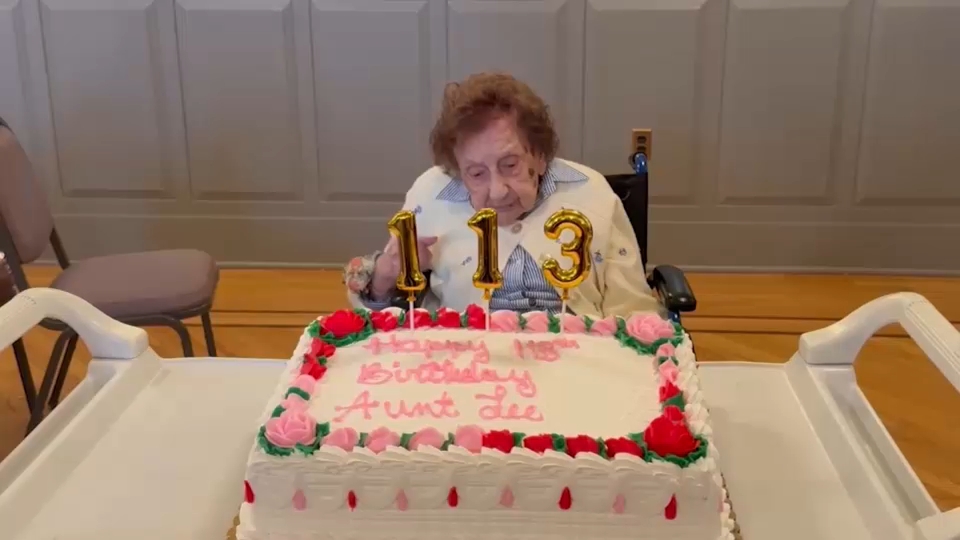
World’s oldest nun, Sister Francis Dominici Piscatella, celebrates 113th birthday on Long Island

By Krista McNally

Click here for updates on this story

    AMITYVILLE, Long Island (WABC) — Born in 1913, Sister Francis Dominici Piscatella is the world’s oldest nun, according to Guinness World Records.

On Sunday she celebrated her 113th birthday.

“I have given up counting my years,” said Piscatella.

Piscatella joined the order of the Sisters of St. Dominic in Amityville in 1931 at the age of 17.

“I was a teacher and a Dominican sister, I had to show them that the fact I had half an arm couldn’t in any way impede me in any way, there was nothing I couldn’t do that a person with two hands could do,” Piscatella said.

An accident in her childhood left part of her arm amputated, but she was determined to succeed as a nun. She would not only keep up with the sisters, she would go on to teach countless others.

The Sister has spent nine decades serving the church — she taught high school students and was a professor at Molloy College for 52 years.

“She’s very sweet, has a lot of great life advice,” said her great-great-niece Alexa Grimley.

On Sunday, her family threw her a big birthday bash, to celebrate the milestone.

“It’s very kind of everybody who came and made this a lovely day,” Piscatella said.

A proclamation was given from Pope Leo at the party — he is the tenth pope to serve in Piscatella’s lifetime.

She says faith, family, and good fortune have given her a beautiful life.

Please note: This story was provided to CNN Wire by an affiliate and does not contain original CNN reporting. This content carries a strict local market embargo. If you share the same market as the contributor of this article, you may not use it on any platform.
Thieves steal airbags, leave at least a dozen cars trashed in New Jersey

By Sonia Rincón

Click here for updates on this story

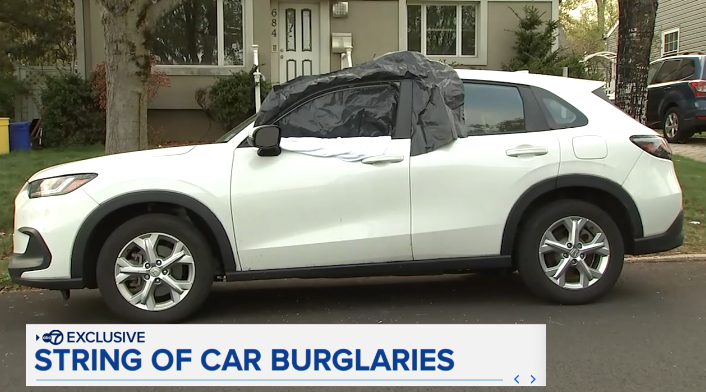
    TEANECK, New Jersey (WABC) — Dozens of car owners are facing hundreds of dollars in repairs after thieves left a trail of destruction in a town in New Jersey.

Several Honda drivers across Teaneck woke up to broken locks and torn apart steering wheels on Wednesday morning.

“Airbag was gone, completely gone. And then I went in the house and I’m almost crying,” said Teri Barnes, who found her airbag stolen. “And I told my youngest daughter. And she comes out and she looks at her sister’s car, her airbag is stolen, and then she looks at hers. Her airbag is stolen.”

Three cars in one family were left damaged despite being parked on the safe, residential street of Madison Avenue.

“I feel hurt. That somebody came, and we don’t know who, we don’t know where they’re from, came and violated, my two daughters and myself and my neighbor,” Barnes said.

A neighbor’s camera captured footage, showing how fast the culprits were able to rip the airbag out of her car.

The thieves broke the locks but sometimes smashed the windows on Lucy Avenue.

One college student said it ruined her day.

“Yeah, I cried. Because, like, I had an early morning class,” Hyojin Jeon said.

Teaneck Mayor Mark Schwartz says he’s confirmed 11 incidents between 1 and 2 a.m., but police are taking reports of dozens more.

“One car was actually stolen, and the reason why it was stolen was when they go to grab the bag, to check, to see if the car is on or could be turned on in. And the fob was in the car,” Schwartz said.

Honda airbags seem to be the new Hyundai catalytic converters.

A club across the steering wheel can serve as a deterrent, so can cameras.

“Make sure your cameras are there. Perhaps park in the driveway,” Schwartz said. “It shouldn’t be the way people live, but unfortunately, that’s a time that we’re dealing with right now where cars are expensive, repair pricing is expensive, and of course, airbags are in need after every accident.”

Barnes said she filed a claim.

“I don’t know how much it’s going to be, but I know the deductible is $500,” Barnes said.

Without insurance, properly replacing an airbag can set you back a couple thousand dollars.

Teaneck’s mayor told Eyewitness News the thieves, in most cases on Wednesday morning, picked cars on streets that were close to Route 4, where they could make a quick getaway.

Please note: This story was provided to CNN Wire by an affiliate and does not contain original CNN reporting. This content carries a strict local market embargo. If you share the same market as the contributor of this article, you may not use it on any platform.
Off-duty officer saves goalie who went into cardiac arrest before hockey game

By CeFaan Kim

Click here for updates on this story

    HACKENSACK, New Jersey (WABC) — An off-duty officer attending a hockey game in Hackensack jumped into action when one of the goalies collapsed and went into cardiac arrest.

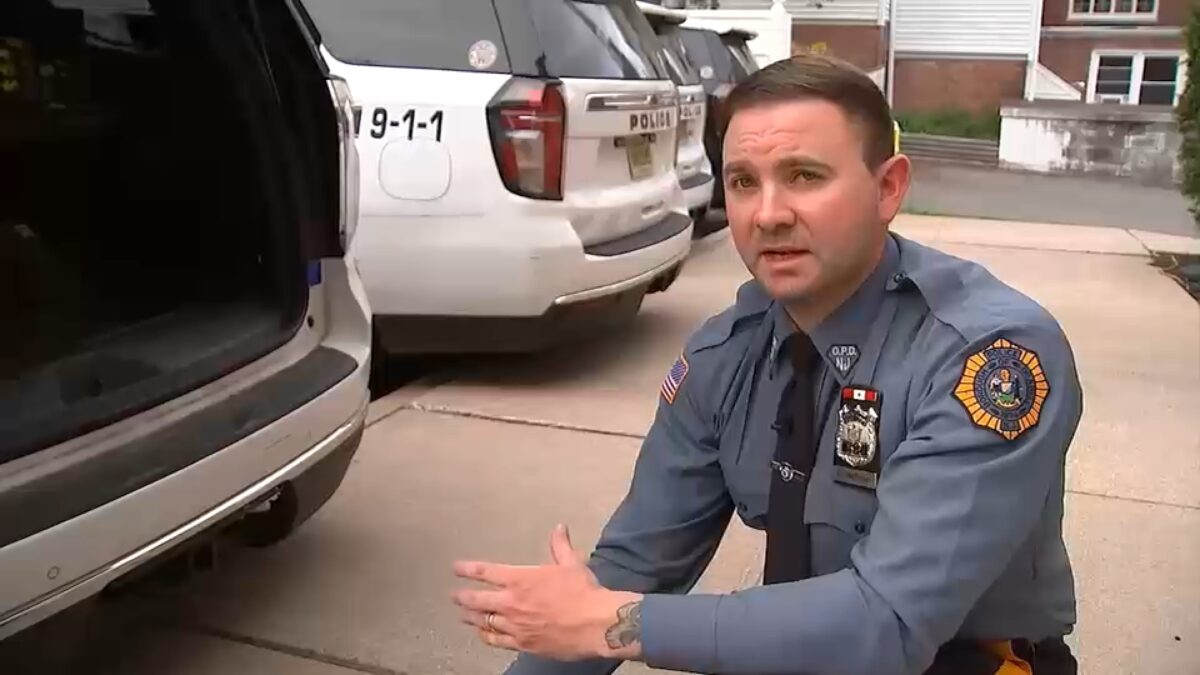
Oradell Police Officer Frank Stefano is proof that being a cop is a 24/7 job.

They regularly undergo CPR and AED training.

And after almost a decade on the job, he’s had to spring into action several times.

But never while off duty, until last night.

Stefano plays in a hockey league at the Ice House in Hackensack.

During warm-ups, the opposing team’s goalie collapsed after being dizzy and nauseous.

He was alert and conscious, but within minutes, the goalie was not breathing and went into cardiac arrest.

That’s when Stefano’s training kicked in.

“A person will turn white, almost grey, you know, their skin tone is completely flushed. He was unresponsive, not breathing. He didn’t have a pulse and then I quickly started CPR test compressions at that time,” Stefano said.

His wife called 911 and screamed for someone to grab the AED off the wall.

Stefano shocked him once.

“Gave him another shock and resumed chest compressions, and he shortly came back to us again. He started blinking his eyes and I started asking him, ‘What’s your name, what’s your name?’ He was able to with some trouble, he was able to tell me what his name was,” Stefano said.

He said seconds matter.

The goalie is recovering in the hospital and is grateful to Officer Stefano for saving his life.

Please note: This story was provided to CNN Wire by an affiliate and does not contain original CNN reporting. This content carries a strict local market embargo. If you share the same market as the contributor of this article, you may not use it on any platform.
‘Million-dollar tip’ leads former musician to olive oil glory

By Richard Gearhart

Click here for updates on this story

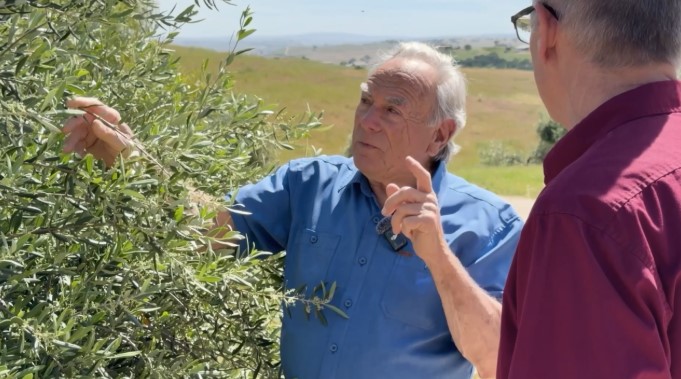
    California (KSBY) — Tucked into the West Hills of San Miguel, 1,100 Tuscan olive trees are about to bloom, and their owner is checking every branch.

“We look for the spacing on the leaves and how everything is spaced. If they stay, we’ll have a beautiful harvest,” said Richard Meisler, San Miguel Olive Farm owner.

Meisler and his wife, Myrna, have turned what were once ten vacant acres into one of the most decorated olive farms in America. This past winter, they won five more medals at the New York International Olive Oil Competition — three gold and two silver.

“With all due respect to everybody else that wins awards, we are number two in the United States,” Meisler said.

San Miguel Olive Farm is also ranked number seven in the world, according to the Olive Oil Times.

But Meisler didn’t originally come to the Central Coast to farm. How he ended up here is part timing and part luck.

He was a drummer and played in a band in Southern California, mostly at country clubs, weddings, and holiday parties. But then, at one of those parties, a home builder handed him what he still calls the tip of a lifetime.

“He says, you need to retire someday, you must buy a piece of property. He says, this tip you can put in your pocket. It’s a million-dollar tip,” Meisler explained.

That turned out to be true. The tip sent him north to San Miguel. Later, a family member suggested olive trees. Richard and Myrna planted their first tree in 2006, and they learned the rest as they went along.

“We harvest by hand. Everything is done by hand. Once they’re cleaned and iced, to the mill as fast as you can go — within three hours.”

The result of 20 years of learning is a chemistry that wins gold, low acidity and high polyphenols, the compounds linked to olive oil’s health benefits. But maybe, the most important ingredient is passion.

“The passion that people should have is missing,” Meisler said. “I dream how to get to the next level. If I don’t make a gold, I’ll make a silver.”

Lots of awards and medals later, their biggest problem now is the best problem a small farm can have.

“He says, ‘I’d like to buy your oil.’ And I said, ‘We have nothing to sell. We’re out of oil.'”

The next harvest and the next chance to buy some oil are in November. Until then, Meisler is pruning, running the tasting room with Myrna, and focusing on what’s next.

“The secret to good business is the passion. You have to be ‘steady Eddie.’ You can’t waver. If you waver, it’s over.”

Oil from San Miguel Olive Farm is sold exclusively online. And if you want some, you may want to pre-order.

Please note: This story was provided to CNN Wire by an affiliate and does not contain original CNN reporting. This content carries a strict local market embargo. If you share the same market as the contributor of this article, you may not use it on any platform.
Eastern Idaho residents invited to drop-off expired medications for National Prescription Drug Take Back Day

Danielle Mullenix

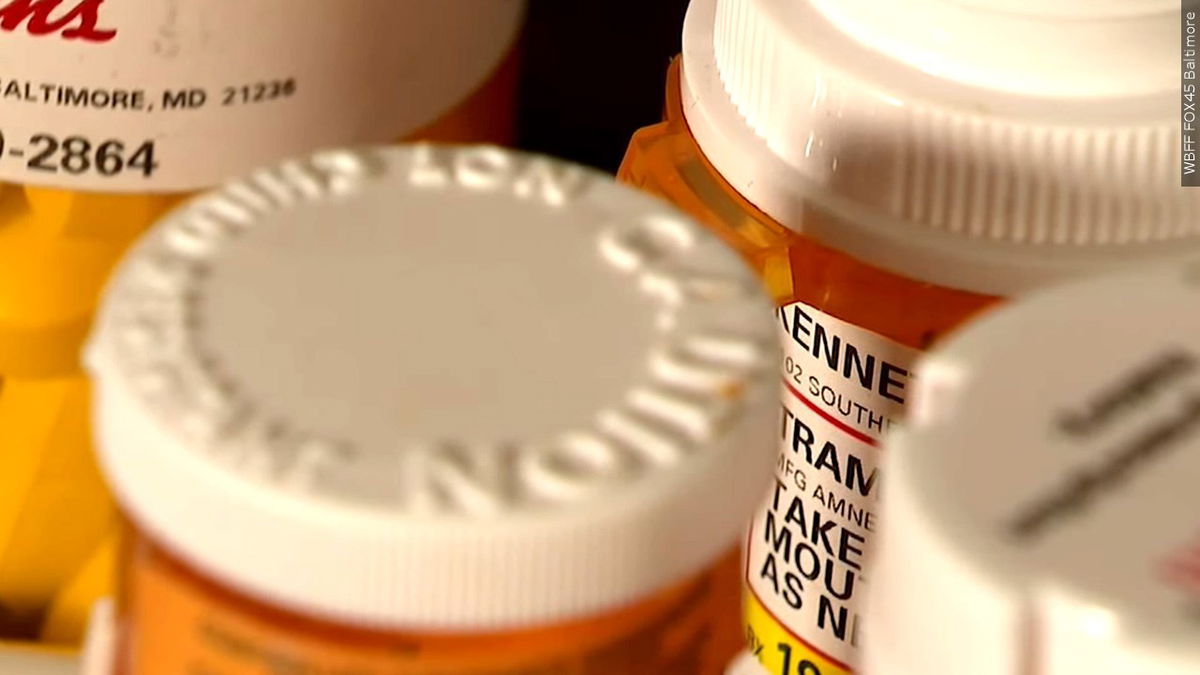
Idaho Falls, ID (KIFI) – Eastern Idaho residents are being encouraged to clean out their medicine cabinets this weekend as part of National Prescription Drug Take Back Day, happening Saturday, April 25th.

The event, organized by Eastern Idaho Public Health in partnership with the U.S. Drug Enforcement Administration (DEA) and local law enforcement agencies, aims to provide a safe, secure way for people to dispose of unused or expired medications.

In Idaho Falls, a drop-off site will be set up at the College of Eastern Idaho from 10 a.m. to 2 p.m. Additional collection sites will be available across the region at this time, including in Driggs, Rigby, Rexburg, and St. Anthony.

Eastern Idaho Drop-Off Locations, April 25th:

Driggs Location:

Teton County Sheriff’s Office: 230 N Main Street, Driggs, ID 83422

Hours 10am to 2pm

Idaho Falls Location:

College of Eastern Idaho: 1600 South 25th East Idaho Falls, ID 83404

Hours 10am to 2pm

Rigby Location

Broulim’s Fresh Foods: 150 N. State Street, Rigby, ID 83442

Hours 10am to 2pm

Rexburg Location

Rexburg Walmart: 1450 N. 2nd E, Rexburg, ID 83440

Hours 10am to 2pm

St. Anthony Location

St. Anthony City Building: 420 N Bridge St, St. Anthony, ID 83445

Hours 10am to 2pm

Health officials say the effort is about more than just cleaning out clutter—it’s about protecting families and communities. Unused medications left in homes can increase the risk of accidental poisoning, misuse, and environmental harm if they are thrown away or flushed improperly.

During the event, officials will accept prescription medications, over-the-counter drugs, and even veterinary medications. Vape pens and e-cigarette devices will also be accepted, as long as batteries are removed. Needles will not be accepted.

The impact of these events can be significant. During the last Take Back Day in October 2025, more than 480 pounds of unused and expired medications were collected in Eastern Idaho alone, with a total of 6,038 pounds collected statewide.

Community members who participate may also receive educational materials while supplies last. For those unable to attend Saturday’s event, Eastern Idaho Public Health offers year-round options, including free drug deactivation packets and information on permanent drop-off locations.

Officials say taking just a few minutes to properly dispose of medications can make a big difference in preventing drug misuse and keeping communities safe.

To learn more about the National Prescription Drug Take Back Day, visit the DEA website here.

Click here to follow the original article.