Kevin Richert
BOISE, Idaho (KIFI) —
Originally posted on IdahoEdNews.org on April 9, 2026
UPDATED, 10:30 a.m., Friday, after Gov. Brad Little vetoed cuts to medical residencies.
The 81-day legislative session wrapped up last week, eight days shorter than last year’s session.
Shorter sessions are typical in election years, but 2026 wasn’t any less hectic.
It started and ended with fiery debates over budget cuts to address a revenue deficit after last year’s tax cuts. While K-12 was largely spared, colleges and universities face the brunt of the cuts.
Then there were policy bills, from mandatory moments of silence in schools to new transgender bathroom restrictions. Many bills passed, but some — including mandates on recess, school start dates and student absences for protesting — failed. They could resurface next year.
A handful of the session’s most significant policy debates are unresolved. When the Legislature adjourned, sine die, last week it gave Gov. Brad Little an extra 10 days to take action on bills that have reached his desk. The Republican has yet to act on bills restricting teachers’ union activities and enacting reforms and budget cuts to virtual education.
Here’s where things stand, as of Thursday:
K-12 funding. Virtual education cuts aside, K-12 public school funding remained flat this legislative session.
Public schools were spared from 3% cuts proposed by Little along with deeper cuts passed by the Legislature, and they’ll get $2.75 billion in fiscal year 2027.
But even a flat budget is effectively a cut as the costs to operate schools — utilities, fuel, food, etc. — have increased amid inflation. For the second consecutive session, public schools didn’t see an increase in state discretionary money, which they typically use for operating costs.
Some schools also face a shortfall in employee insurance funding — a $9 million hit.
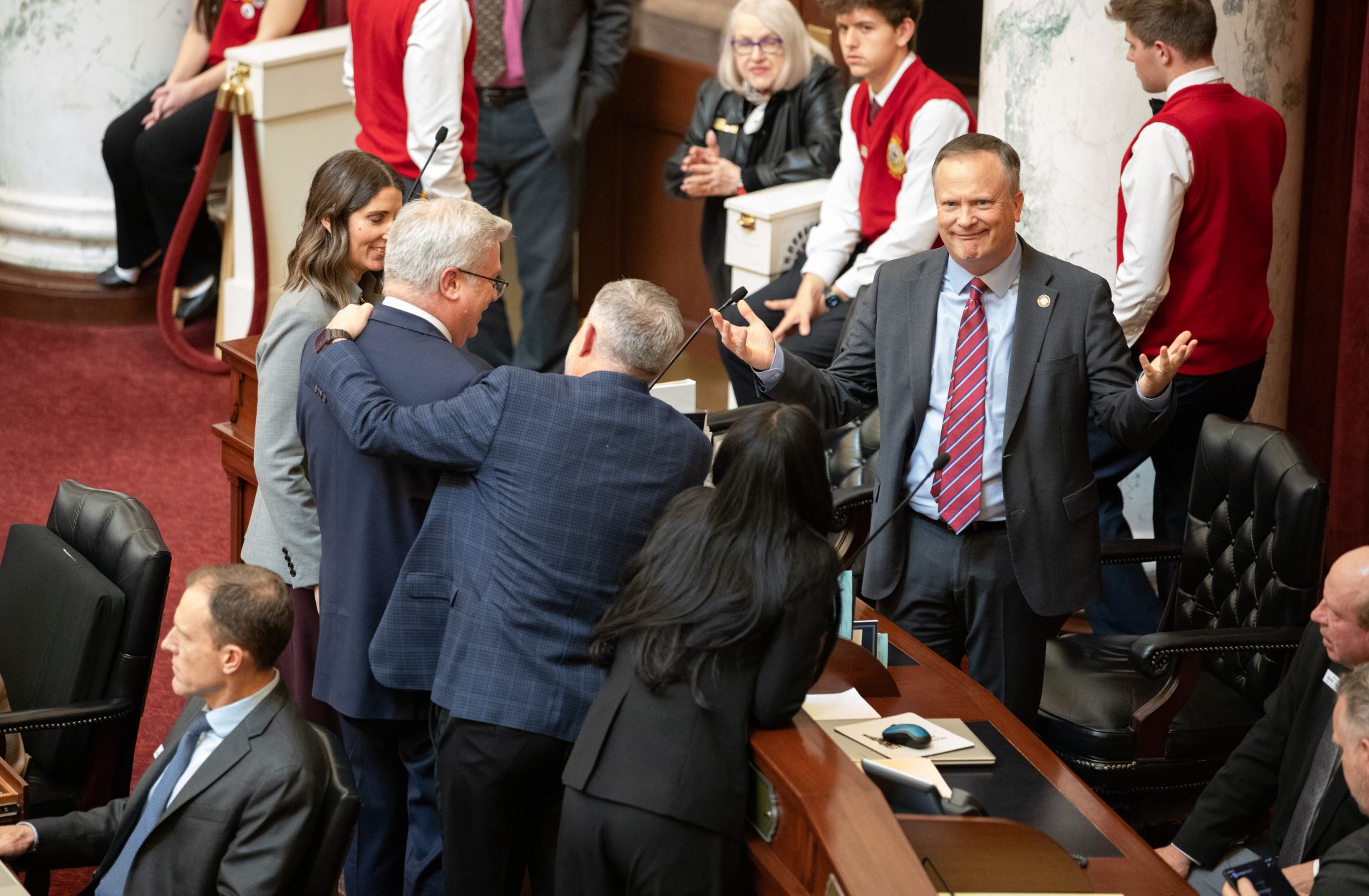 Senate President Pro Tem Kelly Anthon, R-Rupert, shrugs while the Senate is in recess on Thursday, April 2, 2026. (Sean Dolan/EdNews)
Higher education funding. Because Little and legislative leaders spared K-12 from cuts — and lawmakers also exempted Medicaid, prisons and Idaho State Police — a disproportionate share of the cuts landed on colleges and universities.
Higher education will take a 4% budget cut this year. For next budget year, beginning July 1, the four-year schools will face a 5% cut, while the two-year schools absorb a 3% cut. On top of that, Little zeroed out a $9.5 million line item designed to cover the costs attached to enrollment increases.
Career-technical education. CTE is still subject to Little’s 3% budget reductions. But $2.8 million in spending bills spared CTE from most of the Legislature’s proposed cuts.
Idaho Launch. Little’s vaunted postsecondary aid program took a pair of budget cuts — $10 million for this year and $10 million for next year. Next year’s cuts will leave the state with about $65 million to award to the Class of 2026. Little didn’t recommend next year’s cut, but since then, he has said he believes this reduced budget will be enough to cover Launch applications.
One Big Beautiful Bill. This year’s tax debate came early, pitting legislative leaders against Little. There was no question that President Donald Trump’s tax cuts would find favor in a GOP-dominated Statehouse, but timing was the issue. Lawmakers wanted to conform with the federal cuts, and make them retroactive to 2025. And they overcame Little’s resistance. The cuts will take an estimated $155 million out of this year’s budget — casting another cloud on the state’s uncertain bottom line.
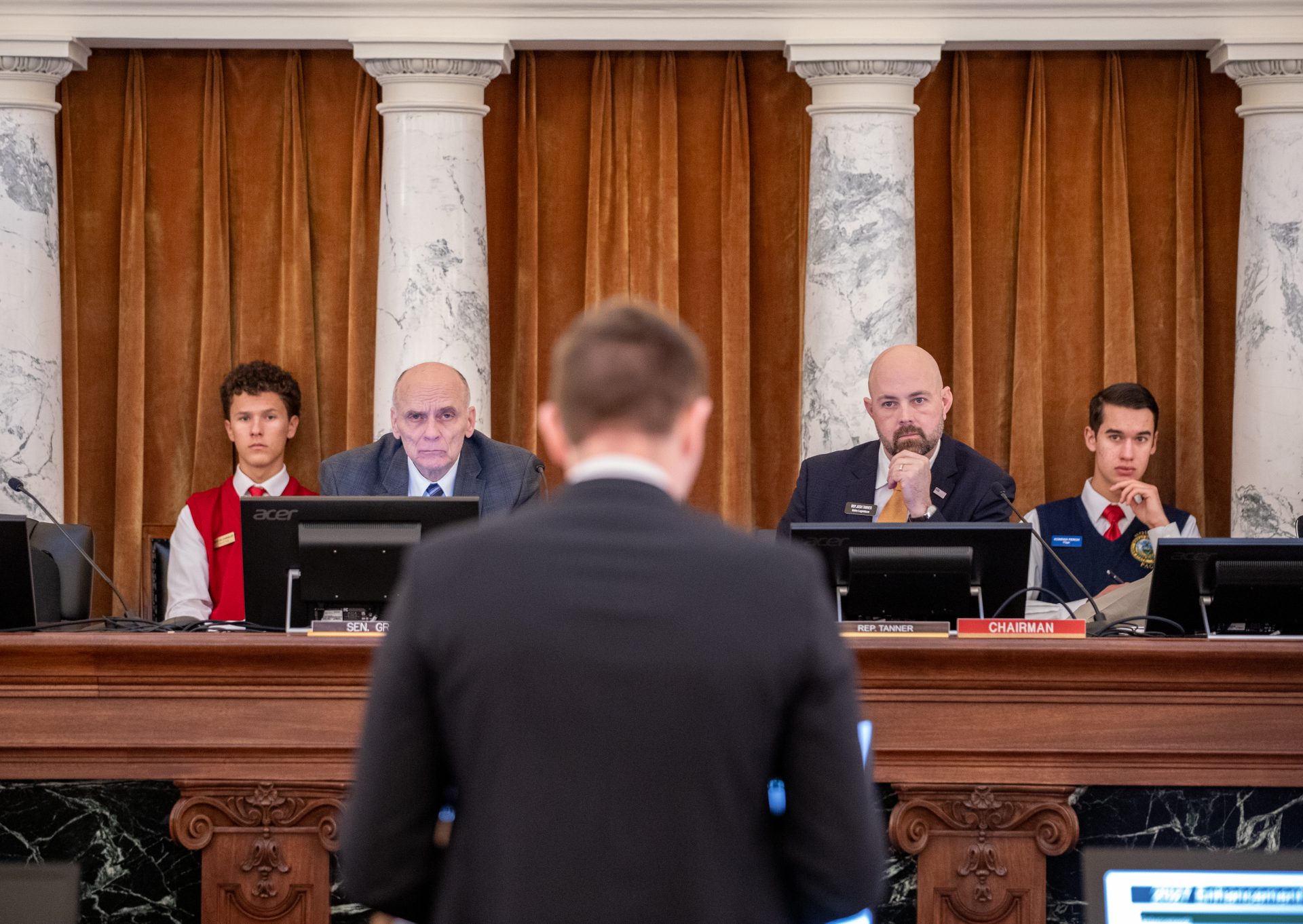 Sen. Scott Grow, left, and Rep. Josh Tanner, both R-Eagle, listen to testimony at a JFAC meeting on Wednesday, Jan. 21, 2026. (Sean Dolan/EdNews)
HB 93 followup bill. Pitched as a cleanup to the private education tax credit program, House Bill 934 did a little more than that.
The bill ensured that students between 5 and 18 years old at any time during the tax year qualify for the Parental Choice Tax Credit. And it clarified that education-related purchases can be made from more than one vendor.
But it also allowed tax credit recipients to participate in non-academic activities at public schools, including sports. It also made Idaho Digital Learning Alliance course fees an eligible expense that can be reimbursed by the tax credit.
Virtual schools. From controversy to collaboration.
In December, a scathing state report put Idaho’s largest virtual school under a harsh spotlight.
But lawmakers managed to come together on House Bill 624, a policy bill addressing many of the concerns raised in the report. The bipartisan team of legislative sponsors worked with officials from the Idaho Home Learning Academy, the focal point of the December study.
The bill passed unanimously, and Little signed it in March. Meanwhile, Little got only a fraction of the $23 million in virtual school budget cuts he sought at the beginning of the session. The Legislature signed off on a $3 million cut.
Little has until Tuesday to take action on the $3 million reduction.
IDLA legislation and budget. It took five iterations, but lawmakers ultimately passed a bill reforming state funding for the Idaho Digital Learning Alliance (IDLA) — and cutting its budget in half.
But the governor has yet to sign the bills, as of Thursday.
House Bill 940 would take about $13.4 million from IDLA and limit the scope of the state’s online learning platform after its budget surged amid the COVID-19 pandemic. The legislation would eliminate IDLA’s elementary programs along with state funding for driver’s education courses. And it would limit “custom sections” — online courses in which all students come from one school district — to instances when districts can’t find a qualified teacher.
A separate budget bill, Senate Bill 1438, would effectively cap IDLA’s enrollment next fiscal year by blocking the agency from tapping an education stabilization fund to cover enrollment increases.
Little has until Tuesday to take action on the bills.
Special education. After ignoring Idaho’s special education shortfall in 2025, a breakthrough came this year. Lawmakers created a $5 million high-needs program — geared toward students who require full-time staff support or specialized equipment. State superintendent Debbie Critchfield sold the program, in part, by paying for it with one-time money from her department budget.
Lawmakers also approved a nonbinding memorial urging the feds to increase special education spending.
Neither measure will immediately erase Idaho’s special education shortfall — the gulf between local costs and state and federal dollars.
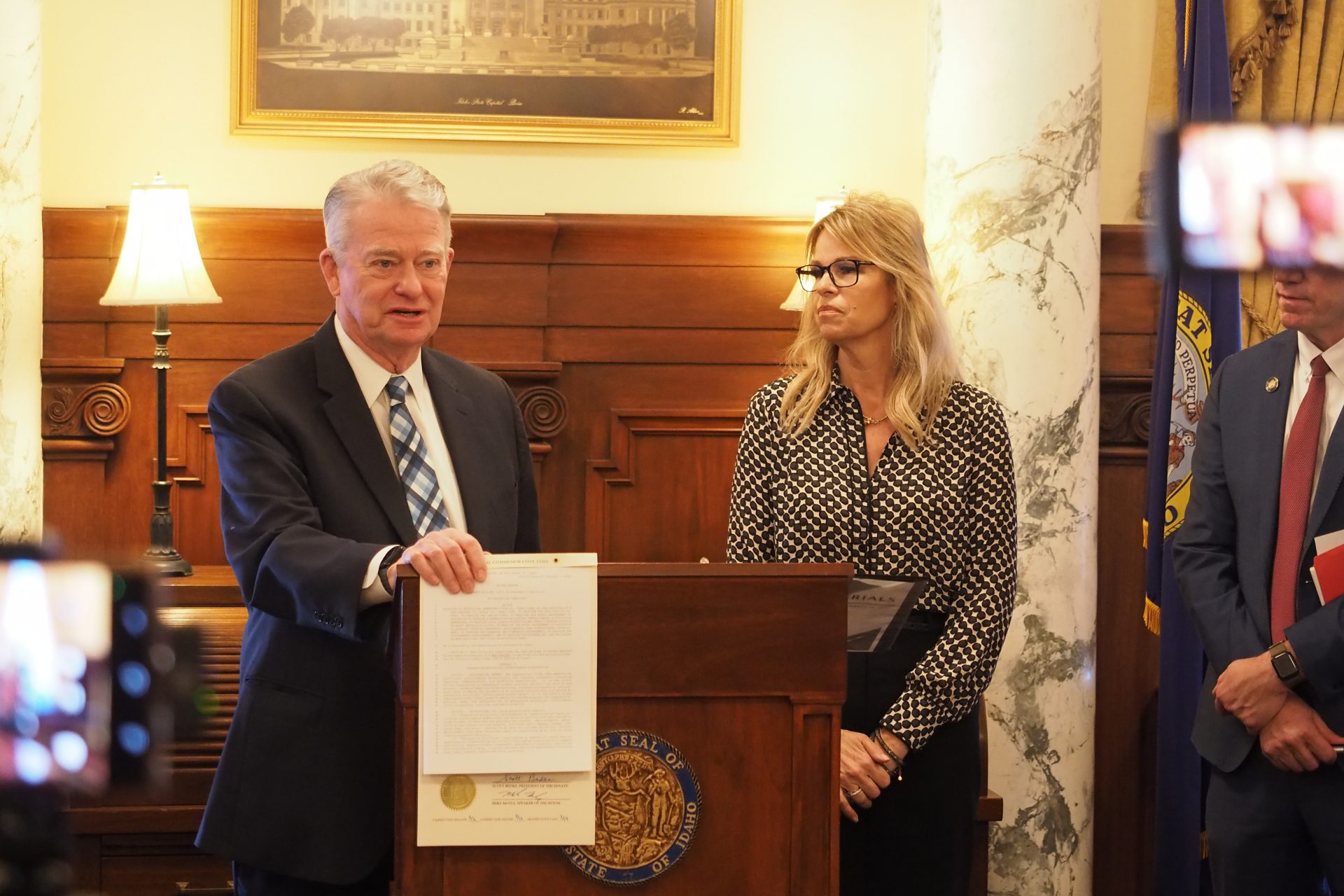 Idaho Governor Brad Little after signing an AI education bill on March 26, 2026 at the Idaho Capitol. (Kaeden Lincoln/IdahoEdNews)
University president searches. One of the first education laws of the session moves the presidential search process almost entirely behind closed doors.
The State Board of Education will now have to name only one presidential finalist, not the five that had been required previously.
Senate Bill 1225 is in effect now, as the State Board revives its stalled search for a new Boise State University president.
College athletics. The Senate Education Committee killed a bill that would have limited athletic scholarships for foreign students.
The Legislature approved a nonbinding memorial urging Congress to address college athletics — and a financial framework and conference configuration that could leave institutions like Boise State on the outside looking in.
Medical education. Lawmakers did — and didn’t — address Idaho’s physicians’ shortage.
They approved House Bill 920, a $900,000 plan to add Idaho residencies for medical school graduates, one of the few growth areas in Little’s budget.
However, they did nothing to fund additional seats at out-of-state medical schools, ignoring a 2025 law that called for doing just that.
Legislators have said a five-year, $930 million federal rural healthcare grant program could help address the physicians’ shortage. A nine-member committee, made up largely of legislators, will oversee the grants.
Medical residencies. The governor vetoed one decision by lawmakers affecting medical education — budget cuts to residencies.
In the last week of the session, the Legislature’s Joint Finance-Appropriations Committee voted to cut $478,600 from the Idaho Department of Health and Welfare’s budget for next fiscal year. The Idaho Capital Sun reported on the cuts here.
DHW Director Juliet Charron told the budget-setting committee that the cuts would force the department to defund graduate medical education (GME) programs.
On Friday, Little used his “line-item veto” authority, rejecting the $478,600 GME cut while approving the rest of the appropriations bill, House Bill 978. Little wrote in a veto letter that Idaho is facing “one of the most severe physician shortages in the nation,” and he has “consistently recommended” investments that expand the state’s physician pipeline.
The Legislature’s action would have stripped funding for eight medical residents amid their three-year residencies, Little noted.
“This disruption in funding is extremely problematic,” he wrote. “It is not only unjust to the physicians in training and the residency programs we have spent years developing, but it also undermines Idaho’s credibility, signaling that the state may not honor its commitments.”
Funding flexibility for high-performing schools. A handful of public schools will have more flexibility to spend state funds — if they meet performance benchmarks.
House Bill 883 gives districts and charters more leeway to spend state funding, including discretionary and salary dollars. Districts would have to post high marks on test scores and graduation rates while charters would be graded on academics and financials.
The bill’s sponsors estimated that about 10 districts and 15 charters would qualify.
Teachers’ union activities. Public schools could soon be barred from using taxpayer dollars to subsidize teachers’ unions.
This includes allowing unions to automatically deduct dues from paychecks or giving teachers paid leave for union activities, among other restrictions in House Bill 516. The legislation — years in the making — was based on a report from the Washington-based Freedom Foundation, an anti-union think tank, which alleged that public schools have spent more than $1 million subsidizing teachers’ unions.
After Rep. Judy Boyle’s original bill — House Bill 745 — cleared the House but stalled in a Senate committee, Senate Republicans used a controversial method known as “radiator capping” to bypass the committee process and approve the teachers’ union restrictions.
Little’s deadline to take action on the bill is Tuesday.
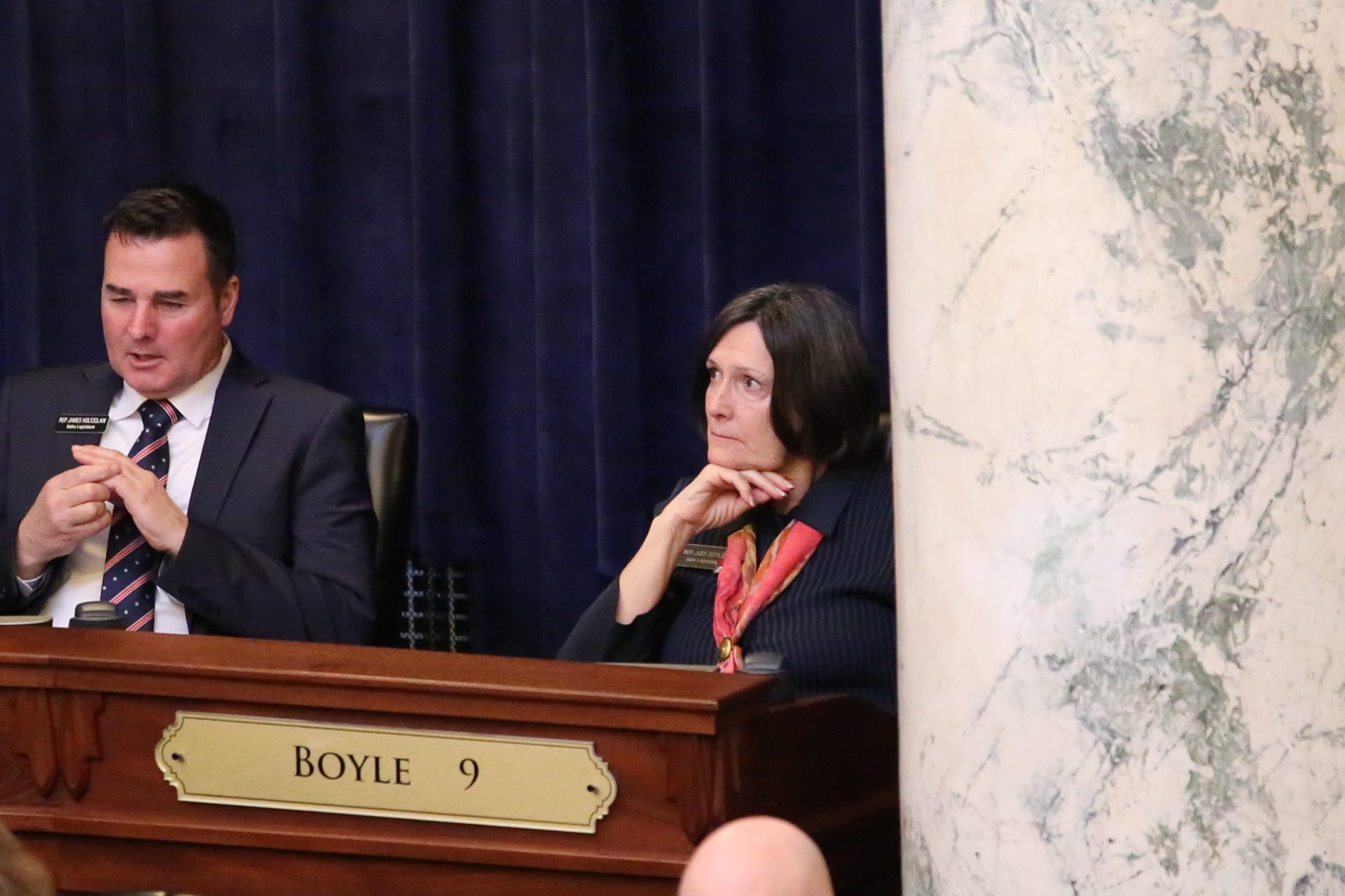 Rep. Judy Boyle, R-Midvale, sits in the House on Tuesday, March 10, 2026. (Kaeden Lincoln/IdahoEdNews)
Moment of silence. Schools will begin their day with a mandatory 60-second period of silence. Under House Bill 623, students can spend this time in prayer or quiet reflection.
‘Social transition’ reporting. Public school officials will have to notify parents within 72 hours if their child requests help with “social transitioning” if Little signs House Bill 822.
This includes when a student asks to go by a different pronoun or use a bathroom or participate on a sports team that doesn’t align with their birth sex.
HB 822, from Rep. Bruce Skaug, R-Nampa, imposed $100,000 fines on schools and health care providers that fail to comply with the reporting requirement.
Transgender bathroom crime. Transgender individuals were already prohibited, through civil penalties, from using their preferred restrooms in public schools, colleges and universities. This year, lawmakers made it a crime.
Sagle Republican Rep. Cornel Rasor’s bill made it a misdemeanor for someone to “knowingly and willfully” enter a public restroom that doesn’t align with their birth sex. A second offense within five years is a felony, punishable by up to five years in prison.
Libraries. Idaho’s “harmful” materials library law could be rewritten with language proposed by Attorney General Raúl Labrador’s office.
The changes would align the library law with recent court rulings from federal courts covering Idaho and Texas. The updates would also spare Idaho from attorney fees in a case challenging the “harmful” materials law.
Little’s deadline to take action on the bill is Tuesday.
Sexual abuse reporting and investigation. In the session’s final days, the Legislature unanimously passed a sexual abuse disclosure law. Under Senate Bill 1412, schools can no longer conduct an internal abuse investigation, in lieu of reporting a case to law enforcement. The new law also strengthens whistleblower protections.
The law is a response to sexual abuse complaints involving former special education assistant Gavin Snow, and the Boise School District’s $7 million civil settlements with affected families.
Parental rights. With no opposition, the Legislature updated a 2024 parental rights law on medical care.
The changes in House Bill 860 include a so-called Band-Aid provision, which makes it clear that schools can provide non-emergency care such as bandaging. Additional language says staff at the state’s 988 suicide hotline can make a followup call to a child “experiencing suicidal ideation,” without parental consent.
LGBTQ+ instruction in schools. Before it was “radiator capped,” House Bill 516 would have prohibited LGBTQ+ instruction in public schools.
Rep. Dale Hawkins, R-Fernwood, said his proposal was designed to update a 2025 law that includes an unintentional loophole. It allows for instruction on sexual orientation and gender identity that’s “age-appropriate.”
HB 516 cleared the House and reached the Senate floor before it was replaced with the teachers’ union bill.
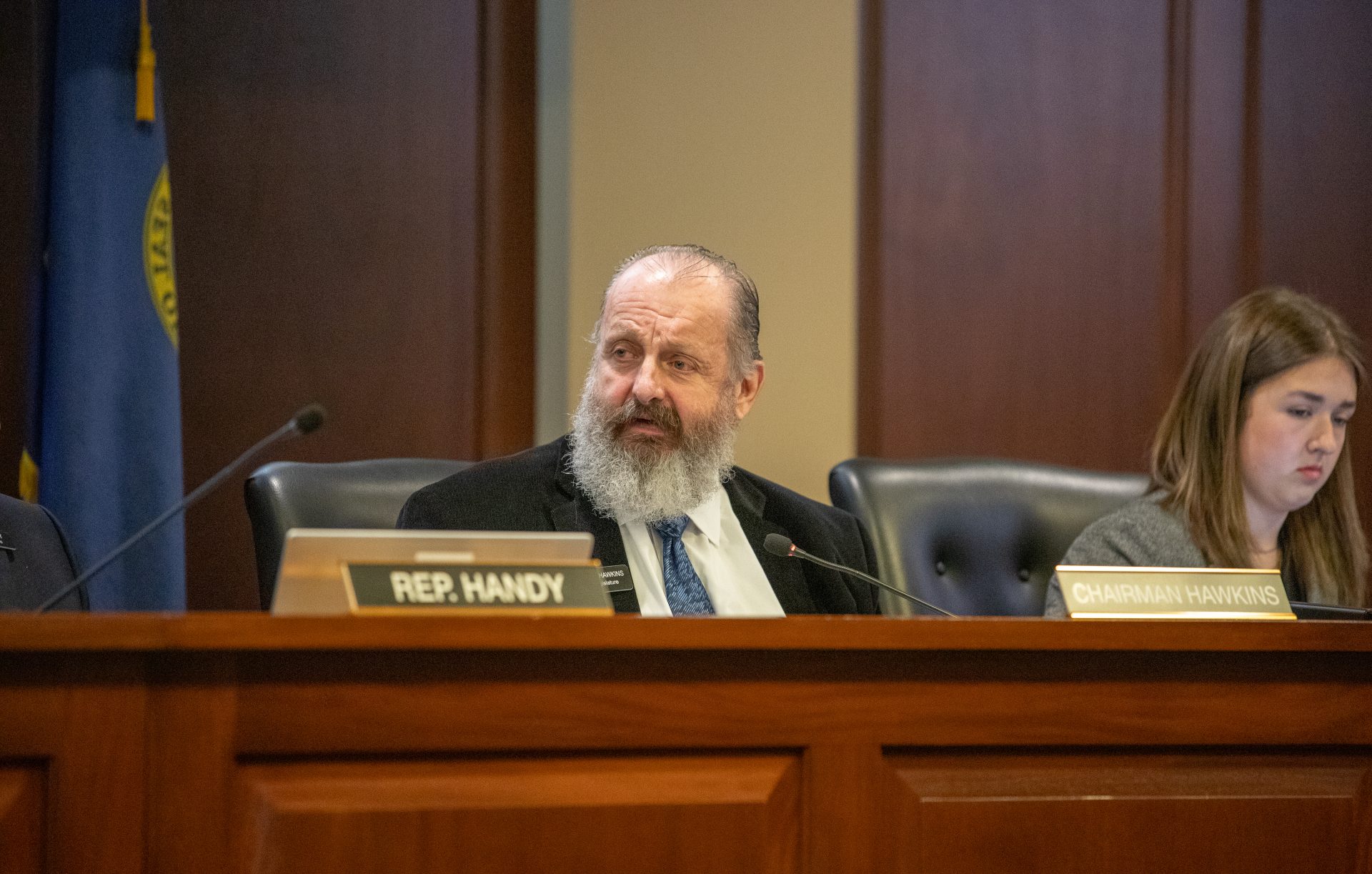 Chairman Rep. Dale Hawkins, R-Fernwood, at the House Education Committee on Thursday, March 19, 2026. (Sean Dolan/EdNews)
Civics. Idaho public school students will no longer be required to understand how the “manly spirit of the American people” is a fundamental principle of the republic. But they would be responsible for everything else in a far-reaching civics bill that garnered near-unanimous support among Statehouse Republicans after it was heavily amended late in the session.
Little has until Tuesday to take action on Senate Bill 1336.
The legislation codified a number of new requirements for public schools’ civics instruction, from key historical documents that must be understood to virtues that students must exemplify by the time they graduate. It was co-authored by state superintendent Debbie Critchfield’s office and the Idaho Freedom Foundation, with input from others.
Military preference for charter waitlists. Charter schools can now place students from active-duty military families third among categories of students given preference on waitlists. Military students could be next in line behind the children of the charter school’s founders and siblings of current students.
Military scholarships. It took a while, but the Legislature finally did approve $190,800 in scholarships for Idaho National Guard members. The Joint Finance-Appropriations Committee twice voted down the scholarships, before putting the line item into House Bill 908.
AI in schools. The Legislature has a plan for AI in schools. Senate Bill 1227 requires Critchfield’s office to come up with a statewide framework for AI, while districts and charter schools are required to come up with local plans for AI use.
State sport. Thanks to Twin Falls fourth grader Betty Grandy, Idaho now has an official state sport: hunting. The Legislature unanimously passed her House Bill 652, which puts the designation on the books.
Speeding in school zones. House Bill 570 makes it a misdemeanor to drive more than 20 mph over the speed limit in school zones or construction zones. Little signed it into law in March.
Funding formula. The session came and went without changes to Idaho’s K-12 funding formula — a topic legislators have been discussing for a decade.
Senate Education Committee Chair Dave Lent wanted to put Critchfield’s Idaho Department of Education on the clock, assigning a rewrite for the 2027 Legislature’s consideration. Lent’s Senate Concurrent Resolution 121 passed the Senate but stalled in the House.
Immigrant students. A bill requiring the state to collect data on the immigration status of public school students failed in the House Education Committee.
But the Legislature later passed a nonbinding resolution calling on Congress to cover the cost for states to educate undocumented students.
Hispanic affairs commission repeal. House Republicans and DOGE Task Force members introduced a pair of bills that would have eliminated or defunded the Idaho Commission on Hispanic Affairs. Both proposals failed to clear House committees.
Student protests. Like many bills this session, one that would have punished students for leaving school to attend political protests died on a tie vote in the House Education Committee. The proposal, from Rep. Steve Tanner, R-Nampa, would have required public schools to count protesting as an unexcused absence.
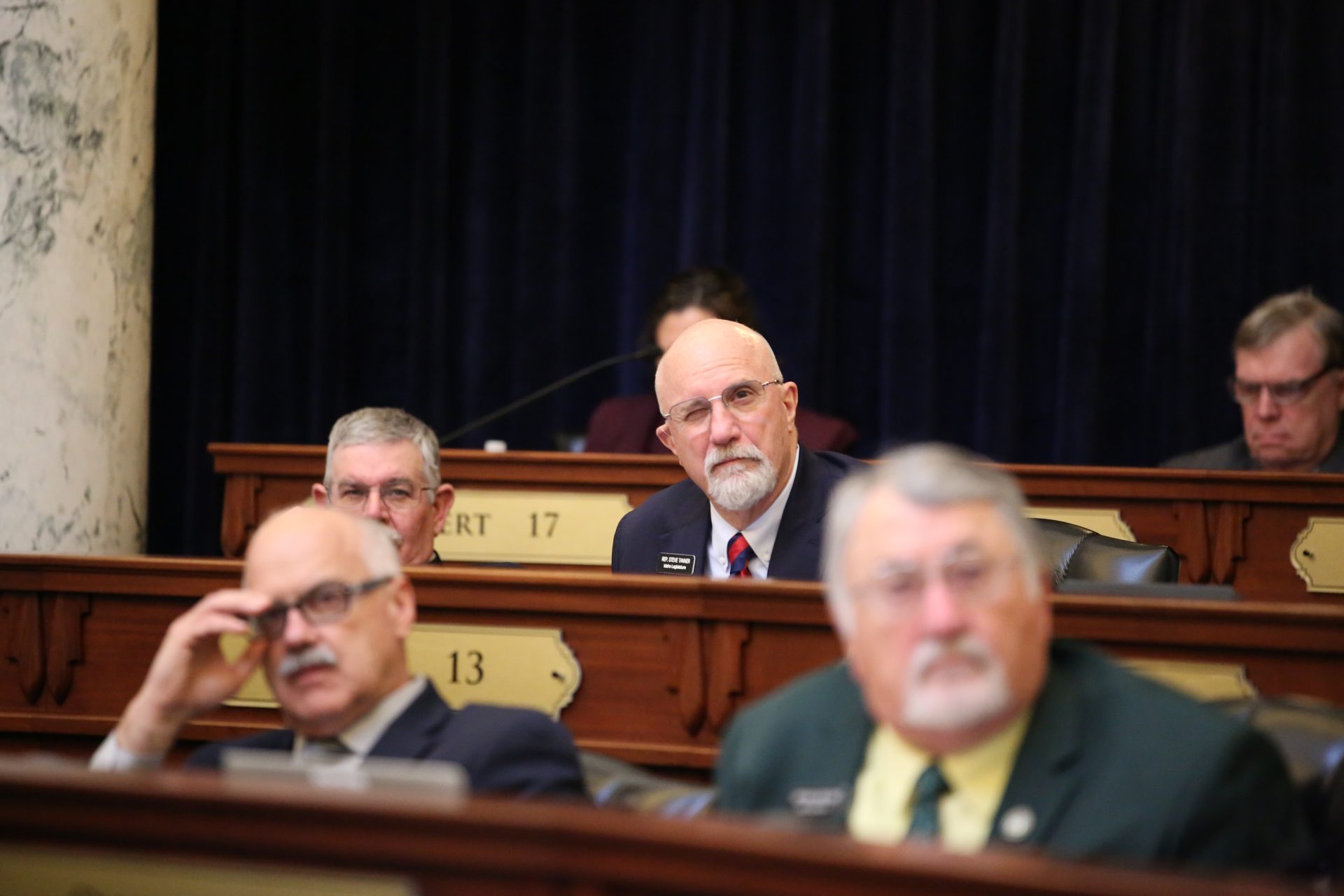 Rep. Steve Tanner, R-Nampa, sits in the House on Tuesday, March 10, 2026. (Kaeden Lincoln/IdahoEdNews)
Blaine Amendment repeal. It’s starting to become an annual tradition. A proposal to repeal the Blaine Amendment failed again this session.
The provision in the state constitution — which prohibits taxpayer resources from benefitting religious organizations — has long been an annoyance for private school choice advocates.
In February, most House members supported House Joint Resolution 7, a Blaine Amendment repeal proposal, but it fell short of the required two-thirds majority.
Homeschooling amendment. In another repeat from 2025, legislators rejected a constitutional amendment that would have deleted language on required school attendance. The failed House Joint Resolution 9 says, “The right of the people to educate their children without government regulation outside of the public schools of the state shall not be infringed.” It fell short of the two-thirds supermajority needed to pass the House.
Medical freedom. A House committee rejected this year’s version of a medical freedom bill. House Bill 808 would have made a major change to the Immunization Reminder Information System, or IRIS, a registry widely used in schools. The bill would have changed the registry from an opt-out program to an opt-in program.
LC State name change. Idaho did not add a fourth university — in name, anyway.
The Senate unanimously approved Senate Bill 1234, which would have rebranded Lewis-Clark State College as a university. The bill never got a hearing in the House.
Recess. Mandatory recess will have to wait until 2027 at the earliest. The House unanimously passed House Bill 915, requiring at least 20 minutes of recess in grade schools. The bill stalled in the Senate.
Mandated start date of school year. Retiring Rep. John Vander Woude wanted to establish a statewide school starting date: the Tuesday after Labor Day. The House Education Committee killed his House Bill 710.
PROM bill. A bill to allow homeschoolers to buy high school social passes — dubbed the “Participation in Recreation Outside of Matriculation Act,” or “PROM Act” — stalled out in the Senate Education Committee.
Click here to follow the original article.





 Cornerstone Cottage, at 820 N William Street in Post Falls, Idaho. (Erick Doxey for InvestigateWest) Erick Doxey

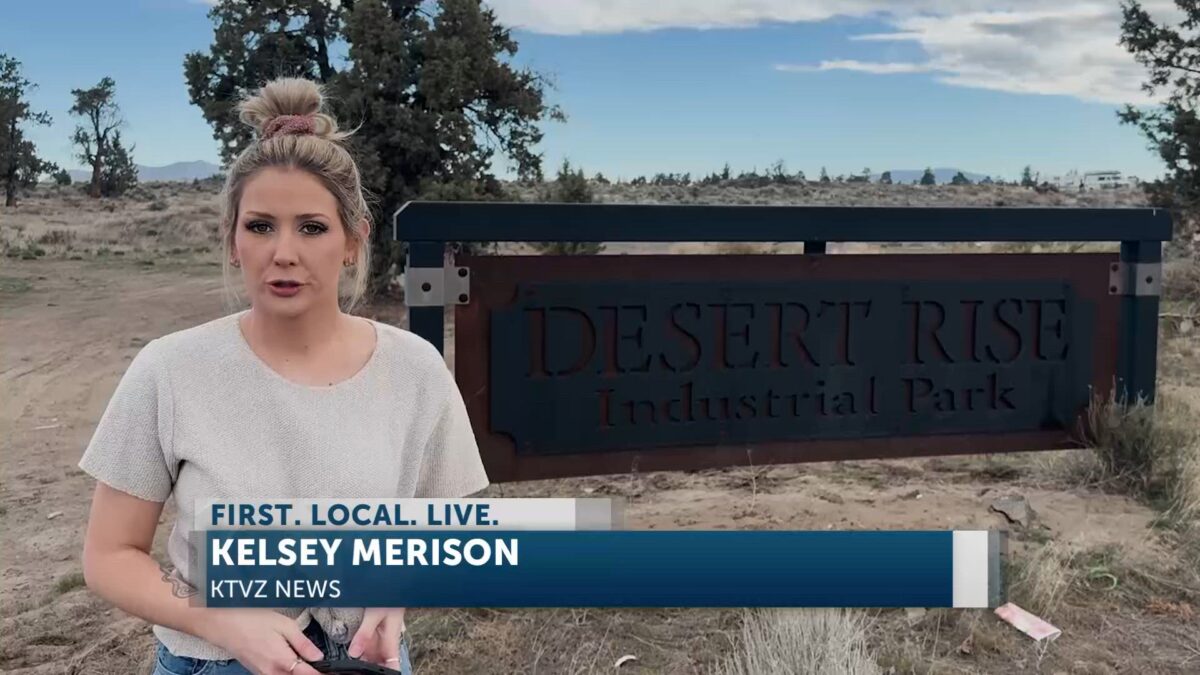
 Desert Rise Industrial Park
 Steve Dominguez
 Trash at Desert Rise Industrial Park
 Mayor Ed Fitch
 Location of new managed camp