Twin Falls children injured by falling tree while waiting for school bus

Stephanie Lucas

TWIN FALLS, Idaho (KIFI) – Two children were seriously injured when high winds knocked over a large tree this morning, according to the Twin Falls County Sheriff’s Department.

Twin Falls County deputies responded to the scene right before 7 AM.

The children, both under the age of ten, were outside waiting for the school bus when thetree landed on them. The falling tree also took out power lines. An older sibling was also present, butuninjured.

Despite the high winds, Air St. Luke’s was able to land near the scene and transport one child to St. Luke’s Magic Valley. The other child was transported to the hospital by ground ambulance.

Magic Valley Paramedics, Twin Falls Fire Department, and Idaho Power assisted deputies onscene. In a Facebook post, the Twin Falls County Sheriff’s Office said “their quick actions made a critical difference.”

The Sheriff’s Department also said in the post to “please be mindful of wind-related dangers, especially around older or weakened trees, loose debris, and outdoor structures. If possible, avoid areas with large or aging trees until conditions improve.”

Two children were injured when a tree fell on top of them while waiting for the bus.

Click here to follow the original article.

MoDOT safety coordinator has charge reduced in road rage case

Ryan Shiner

COLUMBIA, Mo. (KMIZ)

The state safety coordinator for the Missouri Department of Transportation who was accused of pulling out a gun during a road-rage incident in September had his charge reduced on Wednesday.

Harry Adrian IV, of Tuscumbia, is now charged in Cole County with misdemeanor reckless driving. He was previously charged with felony unlawful use of a weapon. Cole County Prosecutor Locke Thompson did not comment on why the charge was lowered.

The probable cause statement says Adrian was accused by two people of pulling out a gun and pointing it at them during a road-rage incident around 3 p.m. Sept. 22.

A deputy wrote that he stopped Adrian’s vehicle while he was following the alleged victim’s vehicle in the 3000 block of Highway 54 East in Cole County.

Adrian allegedly told deputies that he was involved in a road-rage incident, but claimed he held a cellphone instead of a gun, the statement says. Deputies found a handgun in Adrian’s Ford F-250, the statement says. Adrian also denied the allegations through his lawyer on Nov. 3.

A preliminary hearing is scheduled for 1:30 p.m. Thursday, Jan. 22.

Click here to follow the original article.

County Board of Supervisors officially deny permit transfers necessary to restart local oil production

Andrew Gillies

SANTA MARIA, Calif. (KEYT) – The Santa Barbara County Board of Supervisors has officially denied the transfer of permits necessary to restart oil production locally to Sable Offshore during its meeting Tuesday.

In November, a majority of the Board voted to direct staff to prepare a report supporting the denial of the permit transfers which was adopted after Tuesday’s vote.

“There is just too much evidence in the record that shows a pattern of noncompliance and either ignorance of our rules or just blatant disregard,” explained Supervisor Lavagnino on his approval of the staff report after approving of the transfers earlier this year.

In February, the Santa Barbara County Board of Supervisors was deadlocked on the permit transfer decision, previously approved by Planning Commission, on a 2-2-1 vote with one member, Supervisor Hartmann, recusing herself as one of the involved pipelines lies beneath the property line of her Buellton home.

“They still have a pending application with no action taken on it,” said Kelsey Gerckens Buttitta, public information officer for Santa Barbara County following the vote in February. “It hasn’t been approved or denied. It’s now up to Sable to decide what to do next.”

In response, Sable Offshore filed a lawsuit in Santa Barbara County Superior Court over the permit transfers alleging violations of the County’s Petroleum Code.

County Code Chapter 25B, adopted in 2001, allows for the Board of Supervisors to conduct a review of already-issued Final Development Permits (FDP) for transfers or changes in ownership that have been approved by the County Planning Commission if an appeal is filed.

That code states that after receiving an appeal or appeals of a Planning Commission decision, the Board, “shall affirm, reverse, or modify the planning commission’s decision at a public hearing.”

February’s deadlock vote resulted in no action and the permits remained in limbo.

“The Santa Barbara County Planning Commission approved the change of owner, operator andguarantor last fall, and the efforts to overturn that ruling failed at the Santa Barbara County Board of Supervisors earlier this year,” argued Sable Offshore’s Vice President on Environmental and Governmental Affairs Steve Rusch in reference to the County’s non-decision. “The law is clear. The Planning Commission approved the permit transfer and its decision stands. Because the permits have yet to be transferred, Sable has asked a court to intervene and transfer the permits without delay.”

Sable Offshore noted in its May lawsuit that in 2023, the Planning Commission approved the transfer of permits from Plains Pipeline L.P. to ExxonMobil and its subsidiaries.

That decision was also appealed under County Code Chapter 25B and on Sep. 19, 2023, the Board of Supervisors approved the Planning Commission’s decision with Supervisor Capps noting during the hearing that it was important that the, “County permit actually matches the company that owns the pipeline.”

Supervisor Capps voted in February, November, and yesterday not to approve the transfer of permits to Sable Offshore.

In September, a judge ruled that Supervisor Hartmann was eligible to vote on the permit transfers after denying damages to Sable Offshore for the delay.

“We as a County have a duty as local government to protect the public health, safety, and safeguard the county’s natural resources. That’s what local government does,” said Supervisor Joan Hartmann who recused herself again due to the potential conflict of interest.

On Dec. 16, Karen Harrison, Senior Counsel with the California Fair Political Practices Commission, wrote that because Supervisor Hartmann’s home is eight feet from one of the involved pipelines, she would not be in compliance with state law if she participated in Tuesday’s vote.

Supervisor Hartmann officially recused herself during Tuesday’s vote, but unlike the vote in February, Supervisor Capps was joined by Supervisor Lee and, for the first time, Supervisor Lavagnino in denying the permit transfers.

Fourth District Supervisor Bob Nelson was the lone vote approving of the transfers.

The permit transfer from former owner ExxonMobil to Sable Offshore is a necessary step for the Houston-based company to restart oil extraction from 114 wells on three offshore platforms, transportation through associated pipelines, and a refinement facility at Las Flores Canyon that have all been dormant since the 2015 Refugio oil spill.

Those offshore and onshore assets are collectively called the Santa Ynez Unit, detailed in the investor slide below, courtesy of the U.S. Securities and Exchange Commission.

The former owner of the Santa Ynez Unit and current permit holder, ExxonMobil, dropped its lawsuit against Santa Barbara County‘s denial of the company’s plan to truck oil from offshore platforms in February of 2024 after selling the oil production infrastructure to Sable Offshore.

According to court documents, Sable secured a $622,000,000 loan from Exxon to fund the purchase which is set to expire on a now-extended deadline where ownership would revert back to the oil giant unless oil from the Santa Ynez Unit enters the market.

Sable Offshore continued on with its plans to restart production without the permit transfer approval due to that financial deadline, but the County of Santa Barbara wasn’t the only challenge to its plan to make the deadline.

The company is still facing additional legal issues regarding its attempts to restart oil production including:

Lease Violation: Public claims in May to have restarted oil production may have violated leases issued by the California State Lands Commission

Civil Charges: The California Attorney General filed civil charges over alleged violations of state environmental laws while Sable and its subsidiaries were conducting pipeline work

Criminal Charges: The Santa Barbara County District Attorney’s Office filed criminal charges including five felony charges of knowingly discharging a pollutant into local waterways between at least October 2024 and April of 2025, 16 misdemeanor charges of obstructing a streambed, and improper actions concerning materials considered dangerous to local wildlife

“Sable has consistently ignored California law, as confirmed by the court’s decision today [May 28, 2025] to halt work on this aging oil pipeline in Santa Barbara,” said a spokesperson on behalf of the California Coastal Commission which is one of litigants who have filed in opposition to attempts to restart production at the Santa Ynez Unit. “This fly-by-night oil company has repeatedly abused the public’s trust, racking up millions of dollars in fines and causing environmental damage along the treasured Gaviota Coast.”

Regardless, in September of this year, Sable Offshore submitted official paperwork to restart oil production with the California Office of State Fire Marshal and simultaneously, the company informed investors in an 8-K filing with the U.S. Securities and Exchange Commission stating it was also pursuing a Floating Production Storage and Offloading vessel.

The proposed offshore transportation and treating vessel location would be approximately one nautical mile away from Platform Harmony and could bypass much, if not all, of the legal oversight of California regulators regarding restart plans.

“California has to make a decision soon on the pipeline before Sable signs an agreement for the OS&T and goes all in on the offshore federal-only option,” warned Sable Offshore’s Chief Executive Officer Jim Flores in an email to Your News Channel in October. “Sable’s situation in California is absolutely on Trump’s agenda given the project will pay out $2 billion in royalties over the next 10 years. That piqued the interest of the National Energy Dominance Council chaired by Interior Secretary Doug Burgum and Energy Secretary Chris Wright.”

In late November of this year, Sable Offshore officially requested that federal regulators take over their attempts to restart oil production while excluding infrastructure subject to state-based oversight.

“Sable is committed to energy affordability and reliability and to recommencing oil sales in a safe and efficient manner,” shared Steve Rusch, Vice President of Environmental and Governmental Affairs for the Sable Offshore. “Sable has met all requirements for the permit transfer as previously confirmed by Santa Barbara County staff and by the Planning Commission. Not only have we demonstrated all required operator capabilities and financial requirements, but we have gone above and beyond those requirements. Today’s [Tuesday’s] decision does not impact Sable’s ability to continue operating the SYU facilities and pipeline system or its plans to re-commence oil sales. Sable will continue to defend our vested rights to pursue domestic energy supplies that are critically needed to make California more affordable and prevent our state’s energy infrastructure from collapse.”

Last month, the Trump Administration announced a large-scale expansion of leasing opportunities for oil and natural gas development in previously protected marine environments, including in the eastern Pacific, something the San Luis Obispo County Board of Supervisors reaffirmed an opposition to during its meeting Tuesday.

“The Board of Supervisors finds that Sable reflects a record of non-compliant or unsafe operations systemic in nature for the Facilities being considered for operatorship, and therefore does not have the skills, training, and resources necessary to operate the permitted Facilities in compliance with the applicable permits and all applicable county codes,” concluded the County Board of Supervisor’s staff report regarding the permit transfer denial Tuesday. “Sable has amassed a significant track record of systemic noncompliance for the Facilities. This noncompliance demonstrates a lack of diligence, and a pattern and practice of failing to notify regulatory agencies and obtain authorization before beginning work, failing to maintain and/or provide necessary and accurate information to regulators, failing to comply with applicable laws, ignoring regulatory agency directives, and failing to competently operate and take all necessary measures to protect the environment. Further, Sable has made statements reflecting contempt for California’s regulations and regulators. The Board finds evidence that Sable is not capable of following state law, and state agency directives indicate that Sable will be likewise incapable of operating the Facilities in compliance with the county permits and all applicable county codes.”

Click here to follow the original article.

Windstorm topples trees, downs power lines and blocks major highways between Central and Western Oregon

Harley Coldiron

BEND, Ore. (KTVZ) —A powerful windstorm swept through Central Oregon Tuesday night into Wednesday morning, with winds whipping up to 60 miles per hour. The combination of strong gusts and loose soil caused by recent rain left trees toppled around the region.

Chief Meteorologist John Carroll explained, “It was kind of a perfect scenario, with the rain coming in and saturating the soil and compromising the root systems, followed by the extremely gusty winds.”

Viewer Rusty Walther reported a giant juniper branch broke off at his ranch in Tumalo. Just west of the Sisters, the winds caused a 20-mile stretch of Highway 20 to close, with over a dozen trees collapsed and fallen onto the highway. Crews and bulldozers worked around the clock to get the debris cleared.

Images from Highway 26 east of Welches showed not just trees toppled, but power lines also fell, causing the highway to close overnight; crews worked to get it open by Wednesday morning. A high wind warning was in place for much of the region until 4 p.m. Wednesday, with 30-40 mph winds and gusts to 65 mph possible. A winter weather advisory was also in place for the east slopes of the Cascades, with 2-4 more inches of snow and winds gusting to 55 mph.

ODOT’s TripCheck map showed a 16-mile stretch of Highway 22 in the Gates area closed by downed trees but reopened by late morning; an 18-mile segment of Highway 126 closed just east of Vida; and a 20-mile stretch of U.S. Highway 20 closed 10 miles east of Cascadia State Park. U.S. Highway 26 closed a mile east of Welches by downed power lines but was cleared and reopened by late morning.

ODOT Region 4 Public Information Officer Kacey Davey said, “Now that crews have daylight, they are continuing to assess conditions and work to safely clear trees and coordinate with utility partners to address downed power lines before the highways can reopen.” For several hours, the only travel options over the mountains to the Willamette Valley were Highway 58 at Willamette Pass or north to Interstate 84.

At one point, more than 200,000 people were without power in Oregon and Washington, including hundreds in Crook County and thousands in Madras. Some power outages were reported in the High Desert region, though not to the extent of Western Oregon and southwest Washington.

Pacific Power crews responded to widespread outages affecting about 50,000 customers, with the most significant impacts in Clatsop County and the mid-Willamette Valley; some customers there may be without power overnight. ODOT pointed to widespread impacts statewide, including downed trees, fallen limbs, and downed power lines, with conditions expected to continue and possibly worsen as high winds persist.

ODOT crews worked through the night clearing debris where conditions allowed and coordinating with utility companies. Power outages affected traffic signals, highway message signs, and TripCheck cameras, with delays expected throughout the day.

Mt. Bachelor Update Amid Storm

Presley Quon, marketing at Mt. Bachelor, said, “We got about two inches of snow in the base area overnight, and it was dumping snow on my drive up to the mountain this morning. So that was really exciting.” Presley Quon with Mount Bachelor says the change in the weather was welcomed for those looking to hit the slopes.

Two inches of fresh snow fell at Mount Bachelor overnight, but it’s far from the two feet they need to open. Quon added, “We still don’t have a new timeline for opening. We need a lot more snow on the ground to start grooming, to start getting ski patrol out on hill to mark our ski area boundaries.” Teams are preparing the slopes and making snow once again near the Pine Marten lift. Quon noted, “It can change daily. So right now we’re cautiously optimistic.”

Forecast and Safety Warnings

KTVZ’s team of meteorologists is tracking the forecast ahead and has enacted a Local Alert Weather Day for Thursday and Friday morning. Chief Meteorologist John Carroll said, “We’ll have some gusty winds, but it’s really about the rain that’s coming in. We’re setting up with a new atmospheric river that’s coming right into our area. But when it gets to us, we still have plenty left. So we could see up to two inches of rain.”

The National Weather Service issued a Flood Watch through Thursday night for multiple counties including Benton, Clackamas, Clatsop, Columbia, Hood River, Lane, Lincoln, Linn, Marion, Multnomah, Polk, Tillamook, Washington, and Yamhill, with heaviest rainfall Thursday and Friday.

ODOT safety tips include:

Stay away from downed power lines and assume all lines are live.

Treat intersections with dark traffic signals as four-way stops

Use extra caution while traveling as trees and limbs may still be falling

Slow down and watch for crews and equipment; do not drive around closure points as roads are unsafe

Do not rely on GPS, which may direct onto closed roads; be prepared for delays or detours.

ODOT urged delaying non-essential trips. Drivers should check TripCheck.com for real-time updates.

Click here to follow the original article.

Drug Strike Force adapts to changes in fentanyl trafficking as seizures drop from record highs

Cameron Montemayor

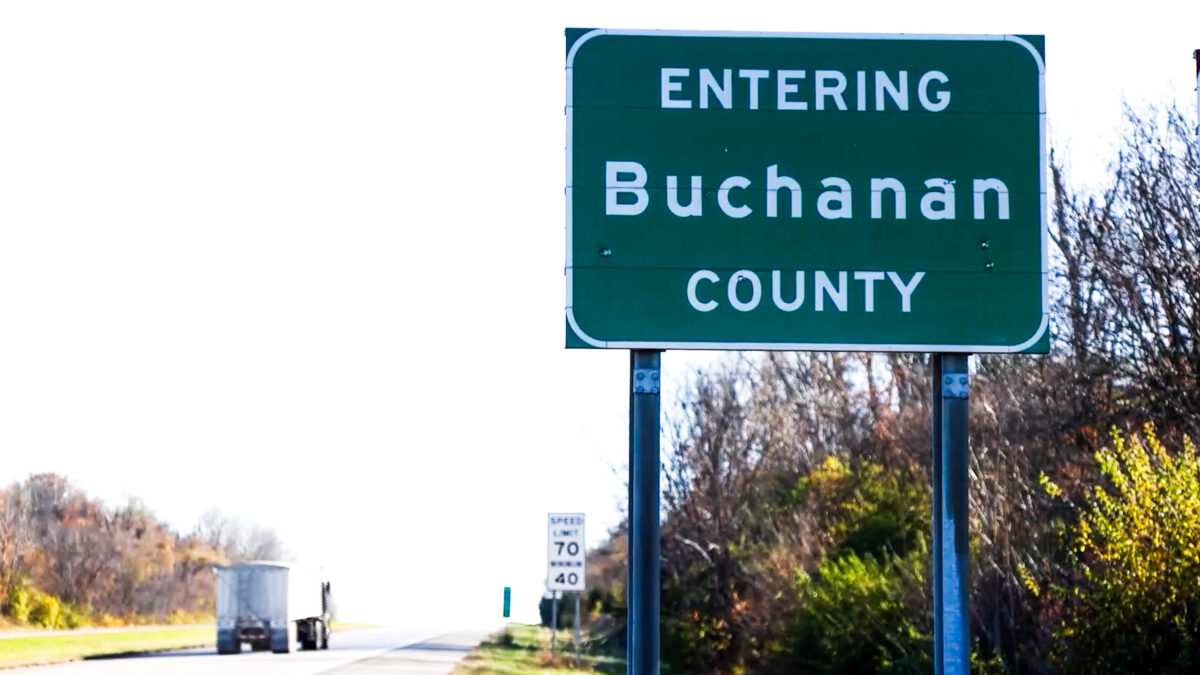
ST. JOSEPH, Mo. (News-Press NOW) — Buchanan County is on pace to see its lowest quantity of fentanyl seized since 2021, but despite notable progress, local authorities remain concerned by changing trends in trafficking of the powerful drug. 

From 2022 to 2023, Buchanan County saw a staggering 439% increase in fentanyl seizures amid a nationwide surge of the powerful synthetic opioid. Seizures by the Buchanan County Drug Strike Force jumped from 973 grams of fentanyl-laced products to more than 5,200 grams during that time.

With a vast majority of fentanyl-laced products being smuggled into the country as opposed to being manufactured here, joint operations locally combined with increased border enforcement has had a sizable impact on the area according to Capt. Shawn Collie with the Buchanan County Drug Strike Force.

“Where we may have had 25 or 30 fentanyl dealers before, what we’re finding now is it may be down to two or three, but they’re getting in big quantities because they’re being forced to. It’s kind of that supply and demand,” said Collie, a veteran of the department since 1997. “It seems like (border lockdowns) have really kind of slowed down the number of seizures.”

A large bag of fentanyl-laced pills are shown in this file photo.

In 2024, 985 grams were seized by the Drug Strike Force in Buchanan County, a marked decrease from record highs in 2023. Thus far through November 2025, 630 grams have been confiscated, putting it on pace to be the lowest amount in years.  

One gram of fentanyl is powerful enough to kill 500 people according to the DEA and CDC, making it 100 times more powerful than morphine.

Collie and others surmise that drug trafficking networks have been forced to consolidate shipments across a smaller group of traffickers to reduce how much product is being confiscated or lost. The vast majority (at least 82%) of U.S. seizures for hard drugs like fentanyl, cocaine, and methamphetamine occur at land-border ports of entry.

“99% of our cases or more, we are able to identify coming from outside areas and it’s usually going to one of the major cities before us,” Collie said. “We’ve seen hundreds of kilos of fentanyl seized in the Kansas City area or Omaha areas tied to Saint Joe.”

The recent seizure of a large quantity of fentanyl connected with one St. Joseph woman on the Belt Highway marks the latest example of what local authorities describe as more risky and larger quantities of fentanyl.

Coordinated operations between state and federal law enforcement agencies like the DEA, ATF and the U.S. Marshals Service, including local operations with St. Joseph Police, the Sheriff’s Office and Missouri State Highway Patrol, have been key in solving investigations on both a local and regional scale that overlap.

“We can take drug dealers off the street here every day of the week. There’s always somebody to replace them. What we try to do is work with other agencies to try to take off the source of the supply,” he said. “We really depend a lot on our patrol officers, whether it’s the St. Joe PD, Sheriff’s Office, Highway Patrol, They come into contact every day with this stuff.”

Collie said partnerships with federal law enforcement agencies can at times be the difference in solving costlier investigations where technology is used to cover or aid drug operations — from transportation to communication — a process that often requires additional resources to successfully crack.

A key effort within the Drug Strike Force is studying trends with technology on the east and west coasts, trends that oftentimes make their way to the middle of the country.

Synthetic fentanyl is sold illegally as a powder on blotter paperMost illicit fentanyl is produced in clandestine laboratories, primarily in Mexico, using precursor chemicals sourced largely from China.

“People are doing everything through the dark webs. And so that’s where we really depend a lot on our federal agencies, the costs that go along with that investigation,” he said. “It’s so easy now just to click on a few buttons and have something delivered right to you.”

Whether it’s speaking with nonprofit groups, schools, neighborhood watch groups or businesses, authorities have stressed the importance of staying vigilant and sparking conversations between parents, children and teachers on the dangers of experimenting with drugs. 

The department has seen a significant increase in requests for discussions or programs with local groups and children in younger age ranges to bring awareness and highlight the dangers. 

“You know, we’re making arrests every day. We’re making seizures every day. But for us, a lot of it’s going to be staying ahead of the game on education and prevention,” he said. “As well as community involvement, which is key. We’re not asking people to go out and be cops for us. But if you’re seeing something in your neighborhood, contact your local law enforcement.”

Click here to follow the original article.

Pueblo Zoo expanding ‘Electricritters’ light display

Bradley Davis

PUEBLO, Colo. (KRDO) – The Pueblo zoo has rolled out new Electricritters displays this year as it surpasses 150,000 lights across its property.

All the light sculptures, many of them interactive, are built by the Pueblo Community College welding program.

Wednesday night is “adults only” night. It’s pretty much the same, but with spiked hot chocolate and 3-D glasses for the lights.

Electricritters is open each night from 5:30-8:30 p.m. through December 28, except for Christmas Eve and Christmas. The zoo closes the gates to new admissions at 8 p.m.

For non-zoo members, it’s $9.50 for adults and $7.50 for children on standard admission days. Wednesday’s “Adults Only” night is $20 and includes a drink ticket.

Click here to follow the original article.

Arroyo Grande celebrates reopening of busy Traffic Way Bridge after months of closure

Dave Alley

ARROYO GRANDE, Calif. (KEYT) – Arroyo Grande is celebrating the reopening of an important and busy roadway that has been closed for several months.

On Wednesday just before 2 p.m., the Traffic Way Bridge reopened for traffic for the first time since an infrastructure project that was called the biggest in the history of the city started this past May.

“It’s very exciting,” said Cheryll Maddaloni, who lives in rural Arroyo Grande. “It’s going to really help the flow to all of those businesses down there and provide easy access to the freeway. It’ll be great. It’ll be wonderful. I’m so excited that they built it so fast.”

Over the course of the past seven months, crews completely replaced the old bridge that was nearly 100 years old.

“It was originally built in 1932, and after monitoring all of the wear and tear, we noticed that it really needed to be rebuilt,” said Downing. “It was no longer safe. We were concerned about that, so the City Council took a leadership position of having the entire bridge redone all at once. Not in phases. We wanted to be proactive, not reactive.”

The bridge, which is located on Traffic Way just off of West Branch Street, is traveled by 11,000 vehicles daily, and is an integral part of the city’s infrastructure that helps link the Village area to the southwest portion of city, including Arroyo Grande High School.

“This project was a much-needed improvement to ensure the safety of our community for decades tocome,” Arroyo Grande City Manager Matthew Downing said in a statement. “While we knew that the complete closure of the bridge was going to be impactful, the City Council’s leadership, the community’s resilience, and the staff’s dedication all contributed to this successful outcome.”

Due to the nature of the project in removing the old bridge and constructing a new one, several traffic modifcations in the nearby area were temporarily put into place that created an entirely new flow of traffic through the popular Village area.

Now, with the new bridge completed, the city said traffic measures, as well as detour routes will be removed, which will restore the traffic pattern back to normal.

“Everything that we put in is temporary,” said Downing. “Everything that we put in has to come down. There is a timeline associated with some of those pieces, so everything that the contractors put in, like the temporary signals, some of that is in Caltrans jurisdiction, so we have to take those down. They won’t let us keep them, which is perfectly fine. We have to go through a normal process like everybody else. Some of the other key aspects, like the temporary traffic circle in front of the high school, the city put in, so we are developing a removal plan of how and when we do that. Obviously, it being right in front of the high school is very impactful. We will be talking to the council about what we learned through this process, about some of the improvements that we made and why might want to bring back on a permanent basis.” 

The project is slated to cost nearly $14 million with funding coming mostly from federal sources.

The Latest Breaking News, Weather Alerts, Sports and More Anytime On Our Mobile Apps. Keep Up With the Latest Articles by Signing Up for the News Channel 3-12 Newsletter.

Click here to follow the original article.

Date that new Missouri congressional map takes effect leads to legal wrangling

Alison Patton

COLUMBIA, Mo. (KMIZ)

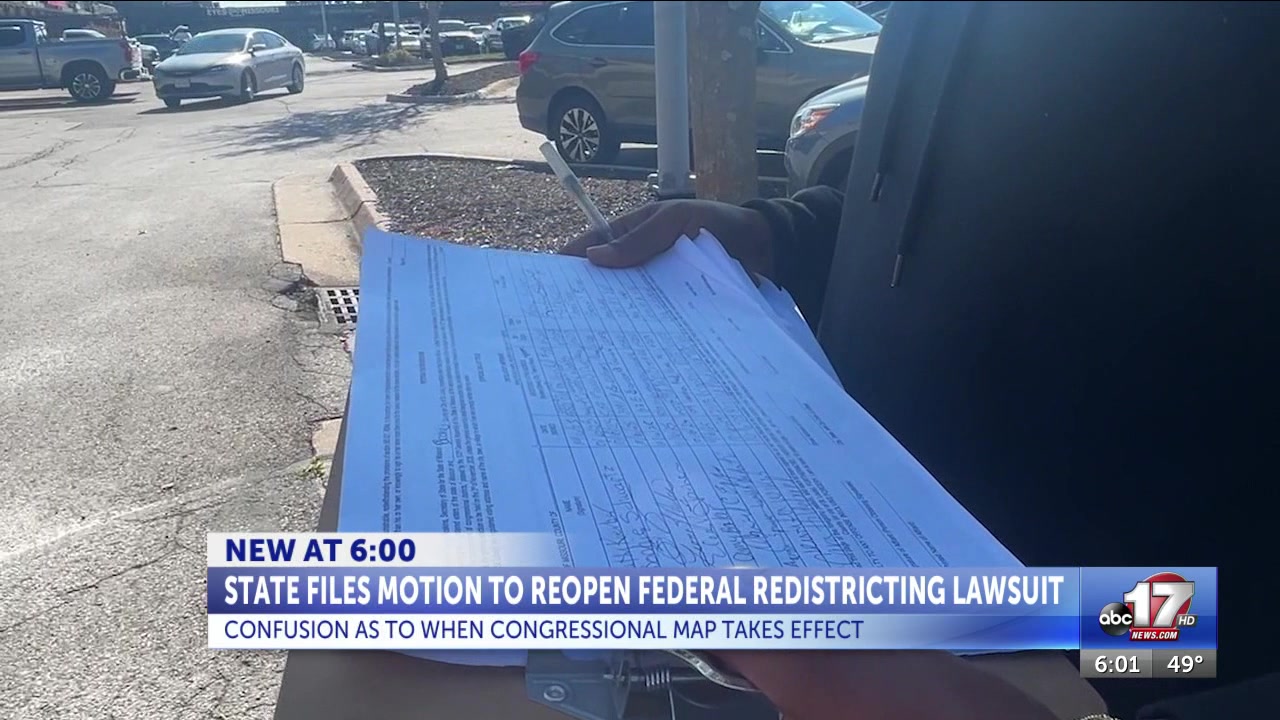
The state is asking a federal judge to reopen a dismissed redistricting lawsuit after dueling arguments made in public about when a new, legislature-approved congressional map takes effect.

The state says the map is in effect now while Secretary of State Denny Hoskins verifies the referendum to put the map on the November 2026 ballot. But People Not Politicians, the group backing the referendum, says the map was frozen when they submitted more than 300,000 signatures Dec. 9.

The state argues People Not Politicians acknowledged during the first federal court hearing that the congressional map is only frozen when Hoskins certifies the referendum.

People Not Politicians filed a reply in court Tuesday, arguing the opposite.

“What the State is actually doing is trying to police PNP’s public statements. The State’s letter preceding this motion was not subtle: It demanded, on threat of sanctions, that PNP issue a statement to the media endorsing the State’s incorrect view that PNP’s submission of signatures had no legal effect,” People Not Politicians’ response reads.

The Republican-led Missouri General Assembly approved the new congressional map last summer as part of a White House push to strengthen the narrow GOP majority in the U.S. House. Lawsuits challenging the map claim it is illegal to redraw congressional districts mid-decade, as the state constitution requires it be done after the census.

The map is likely to cut out U.S. Rep. Emanuel Cleaver (D-Kansas City) and flip his seat to Republican.

The state sent People Not Politicians a letter asking them to clarify with the media the official start date of the new congressional map.

“The State therefore demands that you immediately issue a public statement confirming your concession to the Court that HB 1 is in effect unless and until the Secretary certifies the referendum,” Louis Capozzi, an attorney with the Attorney General, wrote. “The State also demands you send a copy of that statement to all media outlets that you or your client communicated the contrary position to. If you do not do so by 12:00 P.M. on Friday, December 12, the State will ask Judge Bluestone to issue sanctions.”

People Not Politicians responded with what its attorneys argued in court.

“We never made any such “concession” and will not be issuing or circulating the public statement that you requested. Our position has always been—and remains—that People Not Politicians’ (“PNP”) submission of signatures on December 9 prevents H.B. 1 from going into effect on December 11 unless the Secretary of State issues a formal determination that the petition is insufficient,” People Not Politicians’ attorneys replied.

An attorney for People Not Politicians, Chuck Hatfield, said the federal judge doesn’t have to rule on the state’s motion since the case is dismissed. Hatfield also said the state didn’t follow the process to reopen the case.

The group held a press conference Wednesday and brought legal experts in, like Missouri Supreme Court Judge Mike Wolff.

“The matter is being referred to the people for a vote. It does not go into effect until the voters say yes. If the voters say no, then, in effect, they’ve vetoed it in a way that supersedes any veto or approval that the governor may make,” he said.

Wolff cited three previous cases that mark precedent on this specific angle.

Executive Director of the group Richard von Glahn said they haven’t filed any lawsuits.

Von Glahn also said the state has been posting on social media that the new map is in effect, but he hasn’t seen any updates to Revisor of Missouri, which is the law regarding redistricting. The last time the law was updated was in 2022 for the previous map.

Federal judge Zachary Bluestone wrote in his order dismissing the case that Hoskins can turn down the referendum, but if he verifies it, the map will be frozen until after the November 2026 election.

The Secretary of State’s Office wrote in an email to ABC 17 News that signatures will be sent out to county election officials on or before Dec. 23. County officials will until July 28 to verify signatures.

The Secretary of State will then certify the signatures and the constitutionality of the referendum.

Click here to follow the original article.

AI in the classroom: Legislation proposed to create AI Framework statewide

David Pace

IDAHO FALLS, Idaho (KIFI) – As AI integrates with learning in the classroom, one lawmaker is proposing an “AI in Education Framework” to guide students and teachers in safely adopting the technology in schools.

“Everybody’s heard about AI and how exciting it is,” said Senator Kevin Cook (R-Idaho Falls), “and sometimes it scares parents to death. And quite frankly, it should.”

But Cook said it is essential that Idaho educators embrace AI technology and prepare students for the jobs of the future.

“Your kids and you, yourself, have AI all around you,” he explained. “AI is being used in just about everything you do. It’s in your cars. It’s on your cell phones. It’s on your computers. A lot of times it’s in your lighting, in your homes. It’s everywhere. And so let’s get out in front of it and keep our kids safe.”

He hosted a roundtable earlier this year with 20 AI-experts from industries and institutions across the state – including Micron, Boise State University, banking, manufacturing and health care.

“If we’re going to be able to support the jobs in the future that have AI, then we need to start teaching our kids AI. We need to have our teachers knowledgeable of AI,” Cook said. “So what we were trying to do is build a framework.”

He clarified that the “AI in Education Framework” differs from a set curriculum of rules and standards.

Cook identifies five key aims in his draft legislation that the framework is working to protect – “safeguard student privacy, protect the role of the educator, promote human-centered learning, increase transparency and prepare Idaho students for success in an economy increasingly influenced by artificial intelligence technologies.”

Cook intends to introduce the legislation in January to the Senate Education Committee. If approved, it would require approval by both the Idaho House of Representatives and the Idaho Senate to go before Governor Little. 

Students are learning how to use AI in classrooms across Idaho. | KIVI file photoStudents are learning how to use AI in classrooms across Idaho. | KIFI file photo
Download the draft “Artificial Intelligence in Education’ bill here.Download

Click here to follow the original article.

First look inside rebuilt Papa Dan’s after long-time restaurant was destroyed in fire

Gavin Nguyen

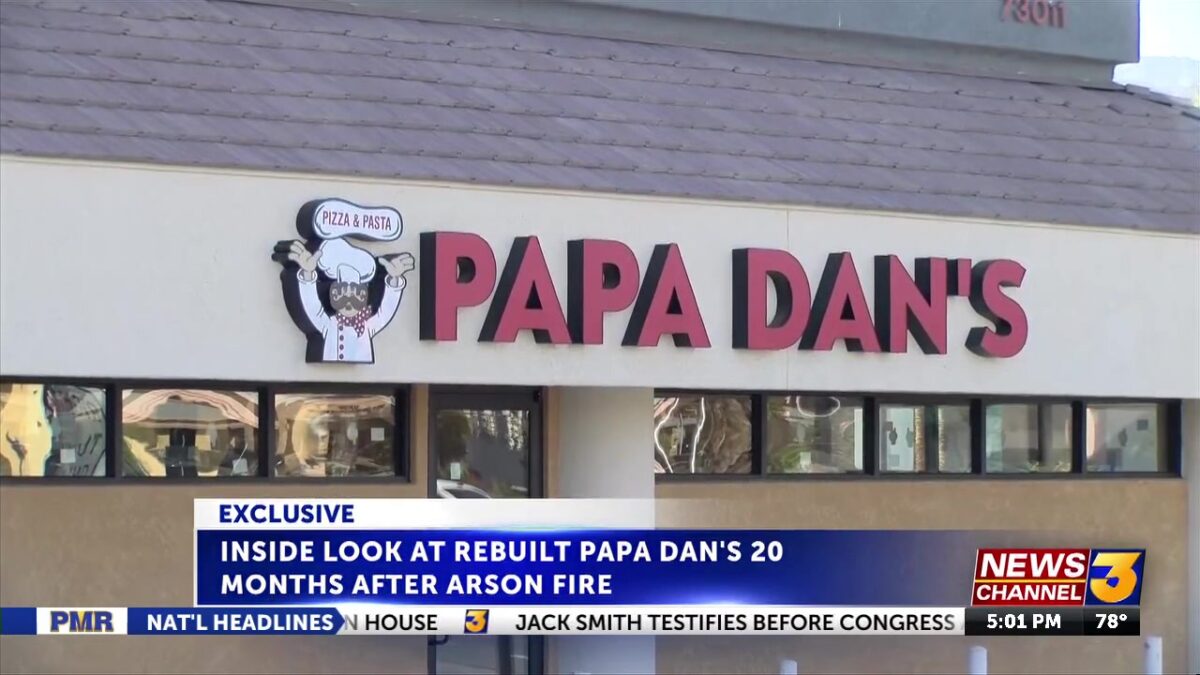
PALM DESERT, Calif. (KESQ) – Papa Dan’s will soon make its return to Palm Desert, nearly a year and a half after it was destroyed in a fire.

Papa Dan’s, along with three other businesses in Palm Desert, burned down in April of 2024, after an arson attack. The restaurant first opened its doors in 1984.

It’s been a long road to recovery. Earlier this year, Ira Mosley, the owner of the long-time restaurant, recounted the hurdles he has had to overcome.

As the restaurant nears reopening early in 2026, it will be opening its doors to city leaders Wednesday afternoon to tour the new space. Ahead of that tour, for the first time, Mosley is giving News Channel 3 a chance to look inside the restaurant that has been steadily working towards rebuilding.

We’re showing you inside and hearing from Mosley about the long journey it’s taken to reopen the Palm Desert staple. Stay with us for the latest updates.

Click here to follow the original article.