Battle for Imperial County District 5: Patricia Lizarraga sets sights on November runoff

Lynette Niebla

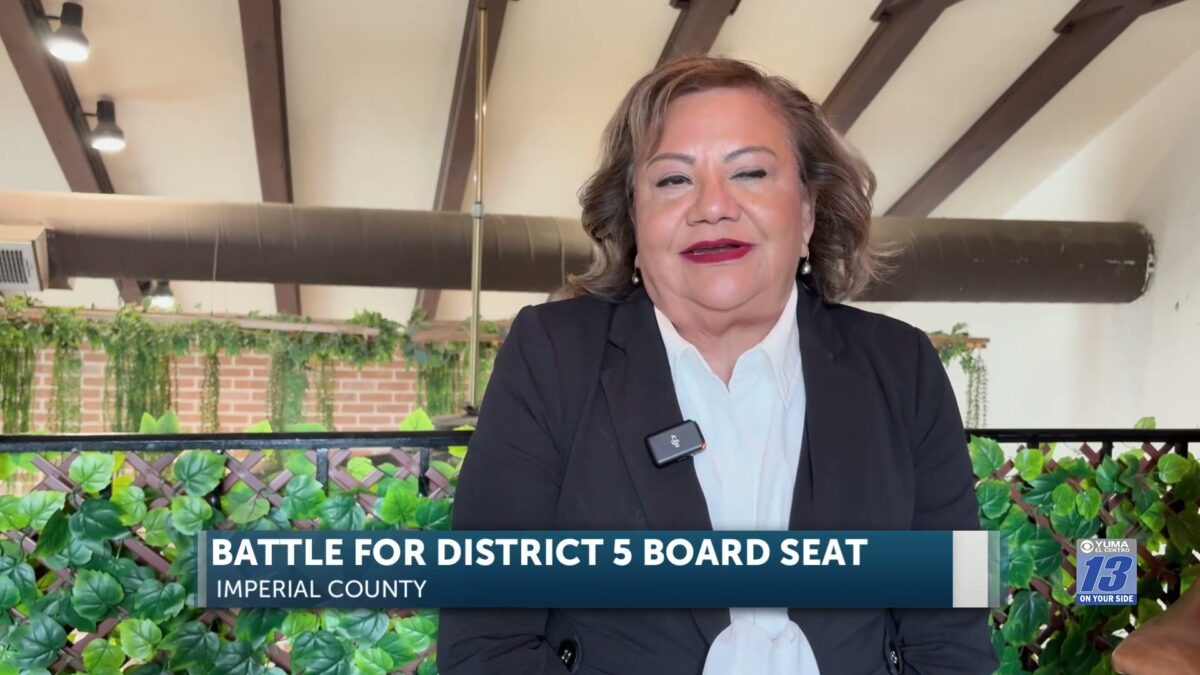
IMPERIAL COUNTY, Calif. (KYMA) – The field has officially narrowed, and the battle lines are drawn for the future of Imperial County’s largest voting district.

Following the June primary election, the race for the District 5 Board of Supervisors seat is officially down to a head-to-head showdown this November between incumbent John Hawk and challenger Patricia Lizarraga.

As the general election approaches, Lizarraga is launching the next phase of her campaign with a message of deep gratitude for the voters who advanced her past the primaries.

“I want to say thank you to District 5 for their trust, their support, and believing in my vision,” Lizarraga said.

Representing District 5 is no easy feat. It is geographically the largest district in Imperial County, stretching across a massive footprint from Calexico and Brawley all the way to Palo Verde and Winterhaven.

Despite the vast distances between these communities, Lizarraga emphasizes that understanding the unique, yet deeply connected struggles of these cities and towns is what propelled her campaign forward.

“Every single city is unique. They have their own needs and wants,” Lizarraga explained. “However, there is a common denominator among all of them, which is safety, access to healthcare, and the economy.”

Lizarraga’s platform stands on core pillars aimed at shaking up county leadership, focusing heavily on enhancing public safety, improving family services, expanding regional healthcare options, and maintaining an outright opposition to current incoming data center plans.

For Lizarraga, the driving force behind her campaign has been traditional, face-to-face community outreach, an experience she describes as life-changing.

“Many [voters] mentioned that nobody has ever walked [their neighborhoods]. Nobody has ever shown up at the doors,””Lizarraga shared, noting how rewarding it has been to connect directly with residents on their doorsteps.

To unlock the full potential of the Imperial Valley, she argues that the county board needs a heavy dose of transparency, accountability, and unified teamwork.

“Our community has suffered so many things, but they are resilient,” Lizarraga said. “There’s a lot of potential, we just need to work together, and we have to believe in each other.”

While unseating an incumbent in a massive district is a steep hill to climb, Lizarraga believes the single biggest challenge left to overcome before November is inspiring the community to show up at the polls.

“To me, the more challenging is the voters. We need to go out and vote,” she urged. “We want our voices to be heard and we have power, but we don’t use it. I really would like to encourage everyone to go out and vote, participate. Your voice matters.”

The general election will take place on Tuesday, November 3. For a complete list of other candidates running in different races, click here.

Click here to follow the original article.

Yuma firefighters carry on 25-year 9/11 remembrance tradition

Moses Femino

YUMA, Ariz. (KYMA) – A 25-year tradition honoring first responders killed on September 11, 2001, is being passed down to a new generation of Yuma firefighters.

For 25 years, retired Yuma Fire Captain Paul Evancho has placed hundreds of American flags outside Yuma Fire Station 2 each September.

Each flag represents a first responder who never made it home, including 343 firefighters and 72 law enforcement officers who died on 9/11.

This year, Evancho handed the tradition over to Yuma Fire Department (YFD) probationary firefighter and EMT Dane Bingham.

Bingham helped organize a group of firefighters to help place the flags in neat, symmetrical rows, continuing the display Evancho has maintained for decades.

“I mean, it’s an honor for me to have it passed down to me,” Bingham said. “I’m 20 years old, I wasn’t even alive when 9/11 happened. So it just honors me that he values me enough to pass it down to me. To continue the tradition and continue spreading it.”

Evancho says the display is meant to help people understand the human cost of the attacks and ensure the sacrifices of those who died are not forgotten.

With the tradition now in Bingham’s hands, the YFD hopes it will continue to honor the fallen and remind future generations of the importance of remembering September 11.

Click here to follow the original article.

Citrine Law donates $10,000 to Yuma High basketball

Moses Femino

YUMA, Ariz. (KYMA) – A local attorney is investing $10,000 into the future of Yuma High School boys basketball.

Cid Kallen, owner of Citrine Law, presented the donation to the Criminals Wednesday as the program prepares for the 2026-2027 season.

The contribution, made through Northside Hoops, will help provide Yuma High basketball players with new warm-up gear, upgraded equipment, meals during road trips and opportunities to compete in offseason tournaments and skill-development camps.

Kallen says the investment is about more than basketball, emphasizing the importance of supporting local youth.

“Investing in youth is actually investing in the community, and the highest expression of it. Ultimately, this is our future, right? These kids are working hard. These kids are representing our town,” Kallen said.

Kallen also says the donation sends a message to the players that the community is behind them as the program works to build toward the future.

“That kind of contribution tells the kids like, ‘Hey, we back you up. We support you. And we’re ready to back you up as you guys transition into turning programs around,'” Kallen said.

Yuma High Head Boys Basketball Coach Louden Young says the contribution will provide resources and opportunities that can help his players develop both on and off the court.

The program says the investment represents a vote of confidence in the student-athletes and the future of Yuma High basketball.

Click here to follow the original article.

San Luis native donates kidney to help brother battling kidney failure

Lauren Duffel

YUMA COUNTY, Ariz. (KYMA) – A San Luis native is sharing her story after donating her kidney in hopes of helping her brother, who has been fighting kidney failure since childhood.

Many people don’t realize that living kidney donation is a possibility, but for 28-year-old Betzabeth Sotelo, it became a reality.

It all started a few years ago, when Sotelo wanted to help her brother and became curious about donating.

“As we started growing and asking questions, I just wanted to know how bad it would be and how much risk I would really be putting myself in,” Sotelo said.

More than 100,000 people in the United States are waiting for a lifesaving organ transplant.

The average wait time for a kidney transplant is anywhere from one to five years.

Dr. Michelle Nguyen, an abdominal transplant surgeon with Mayo Clinic Arizona, explained the disparity between the number of patients waiting for transplants and the number of organs available.

“We only perform about 28,000 kidney transplants a year. Nearly 22,000 are from deceased donors, and 6,500 are from living donors. If you do the math, the vast majority of people on the list are waiting for years for a kidney that might never become available before they become too sick to be transplanted. So, there is a huge disparity between the number of patients and the number of organs available,” Dr. Nguyen said.

Although Sotelo went through the process of donating her kidney and discovered she wasn’t a match for her brother, everything worked out through the paired exchange program.

“That’s when they told me about the paired exchange program. That’s where they find a match to take your organ, and then they find a match for another living donor for the person you wanted to give your organ to,” Sotelo said.

Through the program, Sotelo was able to donate her kidney to another recipient, while her younger brother received a kidney from a matching donor.

Now, more than a year later, Sotelo is fully recovered and living her life as normal.

“The first question I get asked is, ‘How has your life changed? How has your health changed? Has your diet changed?’ And honestly, it’s not more than what an average person should be doing for their health,” Sotelo said.

As for her younger brother, he was matched with a donor a few months after Sotelo’s donation.

“He’s doing amazing. The first time around, there were rejections after he came out of surgery. This was through a deceased donor. This is why living donation is so important, because it tends to be more successful,” Sotelo said.

Click here to follow the original article.

Yuma County supervisors discuss Public Defender’s Office move and possible logo update

Adrik Vargas

YUMA, Ariz. (KYMA) – Yuma County supervisors approved a change to a local speed limit and discussed possible changes to county offices and the county logo.

The Public Defender’s Office is currently split between two locations. Supervisors are considering moving it into the former Administration Services building at 198 Main Street, which Supervisor Darren Simmons said could save the county money on rent.

“It just makes sense,” Supervisor Simmons said. “By moving them over into 198, it’s going to save us money, the county money, and allows them to come back together as a group.”

Supervisors also approved a 35-mile-per-hour speed limit on Avenue 38E after residents raised safety concerns.

Simmons said the area has families and children, making the lower speed limit necessary.

The board also discussed whether the county should update its logo, which was adopted in 2001 and is used on county vehicles, uniforms, buildings and signs.

Officials said they may seek community input, but no decision has been made. Any change could take several years because of the cost of updating the logo across county property.

Click here to follow the original article.

New Colorado River water cuts could impact Yuma-area irrigation districts

Manoah Tuiasosopo

YUMA, Ariz. (KYMA) – New federal guidelines for the Colorado River will bring additional water reductions beginning in 2027, with Arizona expected to take the largest share of the cuts.

The changes come as major Colorado River reservoirs remain near historic lows and the region continues to deal with prolonged drought.

The federal government has established a new 10-year framework for Colorado River operations.

Under the plan, operating guidelines will be developed in two-year periods, allowing water managers to adjust to changing conditions.

For 2027 and 2028, Lower Basin states face a combined reduction of 1.25 million acre-feet of Colorado River water each year.

Arizona’s share is expected to be about 760,000 acre-feet, the largest reduction among the three Lower Basin states.

California is expected to account for about 440,000 acre-feet, while Nevada’s share is about 50,000 acre-feet.

The new water rules could eventually affect several irrigation districts in the Yuma area.

Tom Davis with the Yuma County Water Users Association says the area’s lower-priority water users could face shortage allocations if drought conditions continue.

“The next Priority Three districts are the irrigation districts in the Yuma area…Wellton-Mohawk Irrigation District, Yuma Mesa, Yuma Irrigation District and North Gila,” Davis said. “They will eventually, if the shortage and drought continues, they’ll probably get hit for shortage allocations.”

Davis said the Yuma Valley has Priority One water rights, which provides some protection from immediate water cuts.

However, he said continued drought could eventually affect water users across Arizona.

Local water users have also taken steps to conserve Colorado River water.

Davis said Yuma-area users have reduced diversions in recent years, helping leave additional water in Lake Mead.

That conservation could help lessen the immediate impact of the ongoing shortage, but water managers continue to face difficult decisions as reservoir levels remain low.

The Colorado River supplies water to more than 40 million people across the Southwest and supports communities, agriculture and industries throughout the region.

The river also provides water for millions of acres of farmland and plays an important role in hydropower production.

The new federal guidelines are scheduled to take effect in 2027.

Water managers will continue working on longer-term agreements as they prepare for future Colorado River conditions.

Click here to follow the original article.
YPG hosts 9/11 Walk, Run or Ruck event

Madeline Murray

YUMA, Ariz. (KYMA) – Yuma Proving Ground (YPG) held a memorial event honoring the lives lost during the September 11 attacks.

Participants gathered for the 9/11 Walk, Run or Ruck to remember the nearly 3,000 people who died and the first responders who risked their lives to help others.

Specialist Nicholas Venus, a participant in the event, said the courage of first responders continues to inspire him.

“The first responder in particular that climbed, knowing that that could be it for them, and still went anyways, that’s true courage,” Venus said.

For Col. Charles Seaberry, YPG Commander, the events of 9/11 also played a role in his decision to serve in the military.

“I was commissioned in December and in September 9/11 happened, so just a short few months after that it was definitely my ability to answer the calling,” Col. Seaberry said.

Seaberry said the annual event brings people together to remember the unity seen across the country after the attacks.

“It was very shortly after that where we came together and started working as a community,” Seaberry said. “The ability to have a day where we are able to remember together is very important.”

Twenty-five years later, events like the one at YPG continue to honor those who lost their lives and remind communities of the courage and unity that followed one of the darkest days in American history.

Click here to follow the original article.
Imperial County urges Gov. Newsom to veto Air District expansion bill

Lynette Niebla

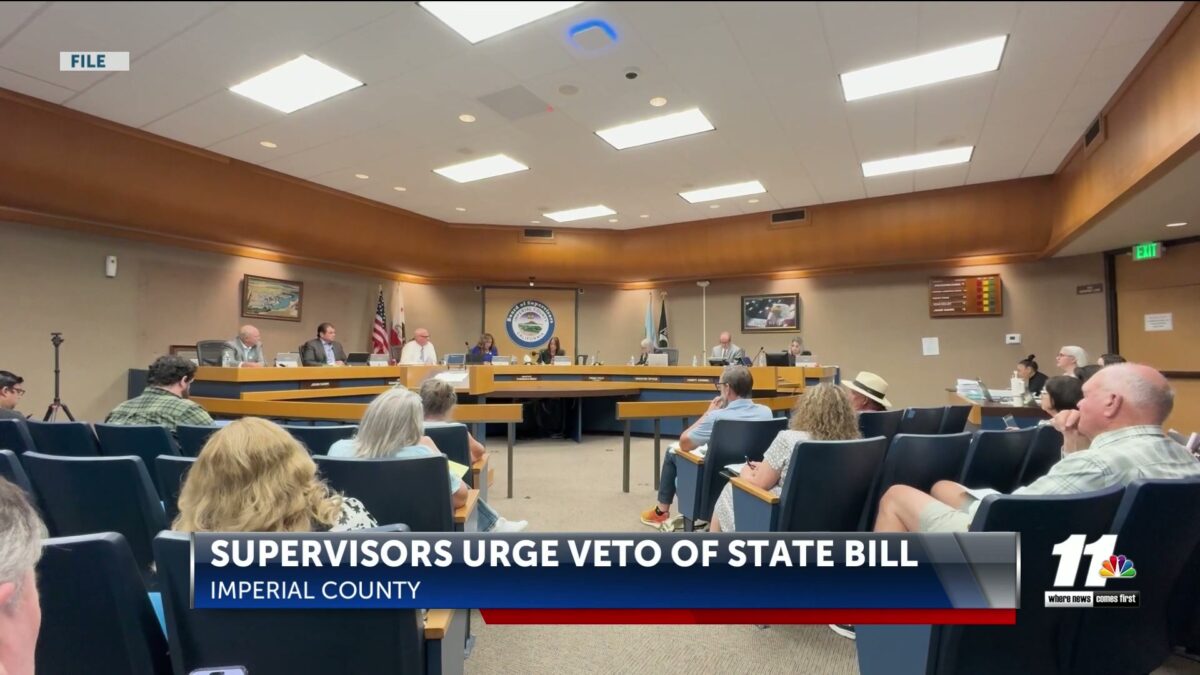
IMPERIAL COUNTY, Calif. (KYMA) – A major piece of legislation aimed at restructuring the Imperial County Air Pollution Control Board is officially on the governor’s desk, but local county leaders are ramping up a final fight to stop it. 

Senate Bill (SB) 675 has cleared the State Legislature, passing the Senate in a 30-to-10 vote and securing a 58-to-19 victory in the Assembly.

While the bill represents a major legislative milestone for its author, State Sen. Steve Padilla (D-District 18), local officials warn it carries an immense, unfunded financial burden that could hurt rural communities.

Introduced by State Sen. Padilla, SB 675 seeks to expand the current air pollution board from five county supervisors to an 11-member panel.

Proponents argue that the expansion is critical to increasing public transparency and bringing needed structural diversity to the district. 

“It makes sure that there are people sitting on the board who actually have some professional credentials and background in the science of dealing with air pollution,” Padilla said.

However, local county leaders push back on the premise, arguing that the existing five-supervisor panel is highly efficient and already inherently diverse.

“Right now, we have an office that runs smoothly,” said Imperial County District 5 Supervisor John Hawk. “Why not leave it alone? Why expand this whole thing, give us more government, and then turn around and tax the heck out of us?”

Supervisor Hawk emphasized that local representation is already built into the current county framework.

“Every supervisor is different. We’re all different. We all have different needs…We look at things very differently, but we come together. Each supervisor has a district, so we all look at the air quality within our districts,” he said.

The conflict surrounding the bill has shifted heavily from a question of governance to one of local economics.

An independent third-party audit commissioned by Imperial County concluded that the changes mandated by Sacramento would force the local air district to secure a dramatic increase in resources.

According to the analysis, implementing SB 675 would require over $1 million in one-time technology upgrades, paired with nearly $5 million annually in ongoing staffing, legal, administrative, and expanded air monitoring costs.

“There was a third-party audit that looked at this and said yes, you do have financial, administrative, and technological staffing that needs to be in that office,” Hawk said.

Padilla, however, has sharply dismissed the report’s multi-million dollar estimates.

“Some of the folks out there who have been arguing about cost have been throwing around big, wild, crazy numbers that have no basis in reality at all,” Padilla countered.

Because the state legislation provides no funding mechanism to implement these changes, county officials persist that the mandate behaves like a hidden tax on local municipalities. If permit fees cannot cover the ongoing millions, the financial obligation may fall onto city budgets.

“Cities are already struggling, our county is struggling,” Hawk warned. “These funds that we take from cities now will compete with fire, fire needs, with our public health, with our roads, and other things that we’re already paying for. Why would we add more bureaucracy to something that is functioning well?”

Imperial County has formally requested that Gov. Gavin Newsom (D-Calif.) veto the legislation, insisting that any structural air district reform must come with a realistic timeline and dedicated state funding. 

The final decision now rests entirely with the governor, who has until the end of September to act. Under the California Constitution, the state operates under a “pocket signature” rule. If Governor Newsom chooses to do nothing and leaves the bill unsigned, it automatically becomes law without his signature once the deadline passes. 

To prevent SB 675 from taking effect, Newsom must issue an explicit, formal veto.

“Let’s move forward with what we have. It’s working,” Hawk concluded. “We think Mr. Padilla should listen to our concerns and Governor Newsom should veto this legislation.”

Click here to follow the original article.

Imperial Valley Mall to celebrate Mexican Independence Day

Carolina Garcia

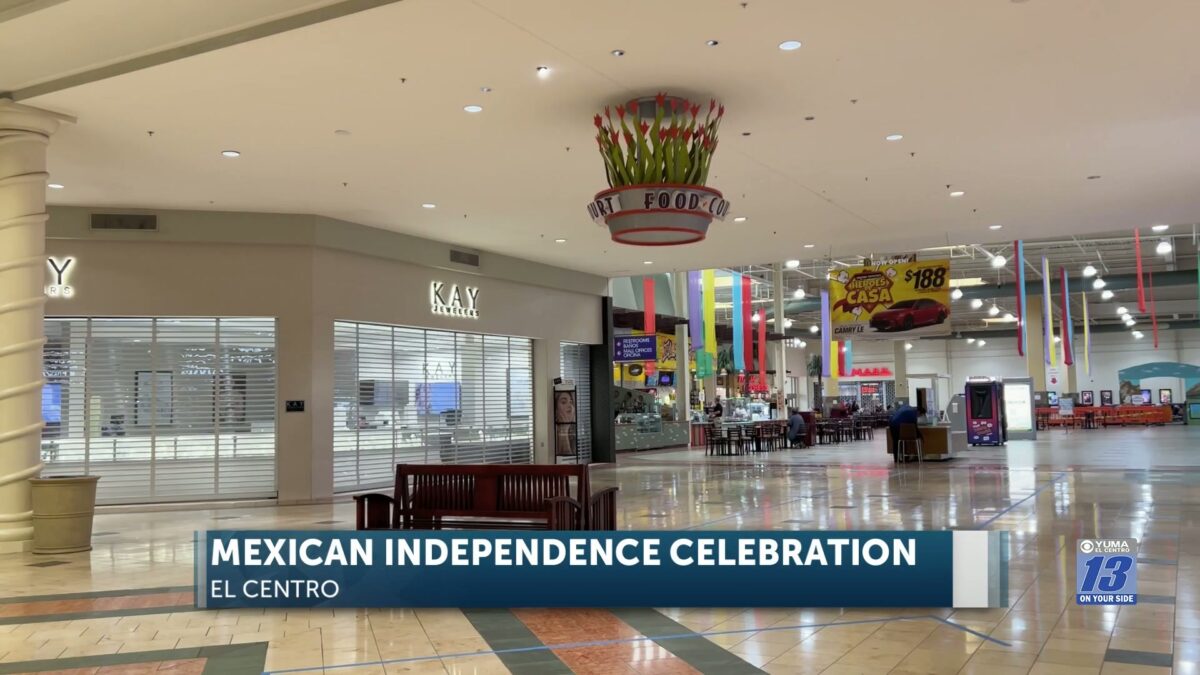
EL CENTRO, Calif. (KYMA) – The Imperial Valley Mall is celebrating Mexican Independence Day this weekend.

The traditional celebration will be hosted by the Mexican Consulate in Calexico, with more than 26 vendors offering traditional Mexican food and handcrafts brought in from Mexico.

There will also be live Mariachi music, a beer garden, and some local businesses will remain open for extended hours to welcome visitors.

“So we’re actually opening from 6 to 11 p.m. that night. It’s a special event night. Candlelight is going to be open until 11 as well. And you know, it’s a new new thing for for the mall,” said Edgar Maen with the Imperial Valley Mall. “We’re trying to make this after hours events and of course bringing the family. We’re trying to do this venue, a family oriented event, which of course, this is you know, this is just the beginning.”

The event is free and open to the public.

Click here to follow the original article.
APS surprises local Yuma teachers with gift cards

Abraham Retana

YUMA, Ariz. (KYMA) – A power company surprised local teachers with funds to improve their classrooms.

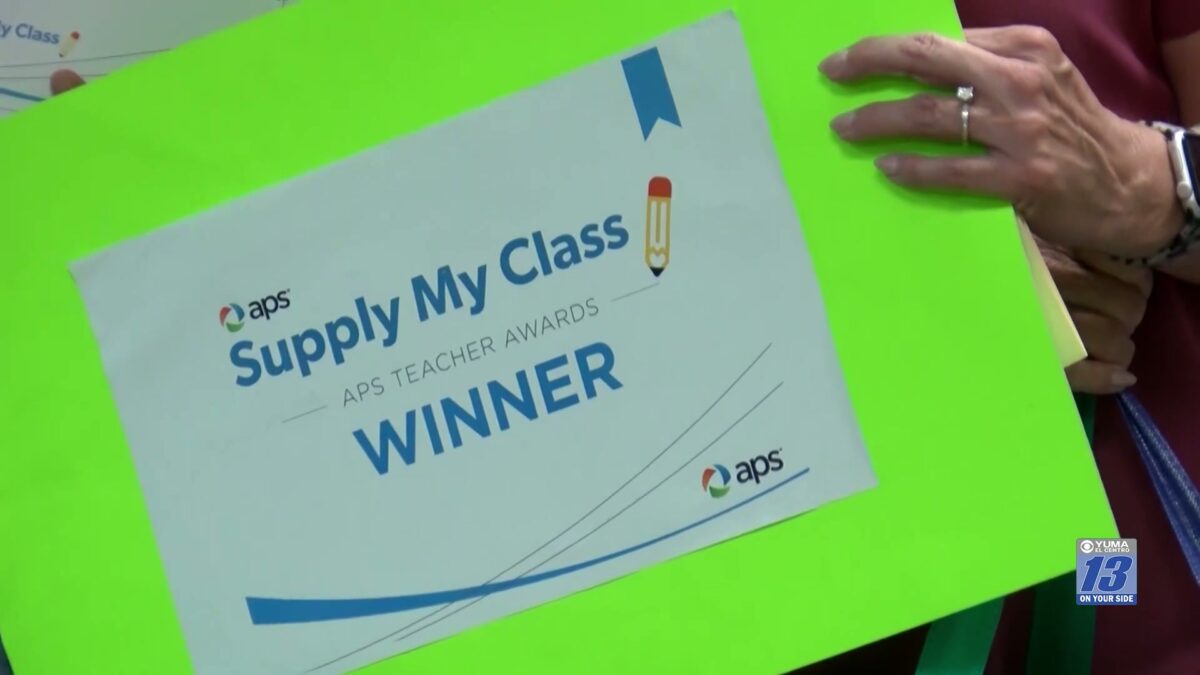
Arizona Public Service (APS) gave away $500 gift cards to 62 teachers in Yuma County, and the goal is to support schools with much needed supplies.

“We want to make sure that we are giving them the supplies they need to be successful and that our teachers don’t have out of their pockets so we are trying to make a difference in our communities,” said Nicole Culpepper, Public Affairs Manager for APS Southwest Division.

The teachers were chosen among 8,300 applications APS received statewide.

Click here to follow the original article.