El Centro seeks $10 million for new emergency hub and upgraded fire station

Lynette Niebla

EL CENTRO, Calif. (KYMA) – The City of El Centro is mapping out a massive upgrade to its local emergency response network, but city leaders say they cannot secure the funding without direct input from local residents.

The city is actively seeking a $10 million grant through the California Strategic Growth Council’s Community Resilience Centers Implementation Grant Program.

If approved, the funding will build a brand-new, multi-purpose Community Resilience Campus near the southeast corner of State and Sixth streets.

The proposed blueprints feature a state-of-the-art emergency shelter system paired with a desperately needed replacement for El Centro’s busiest, most outdated fire station.

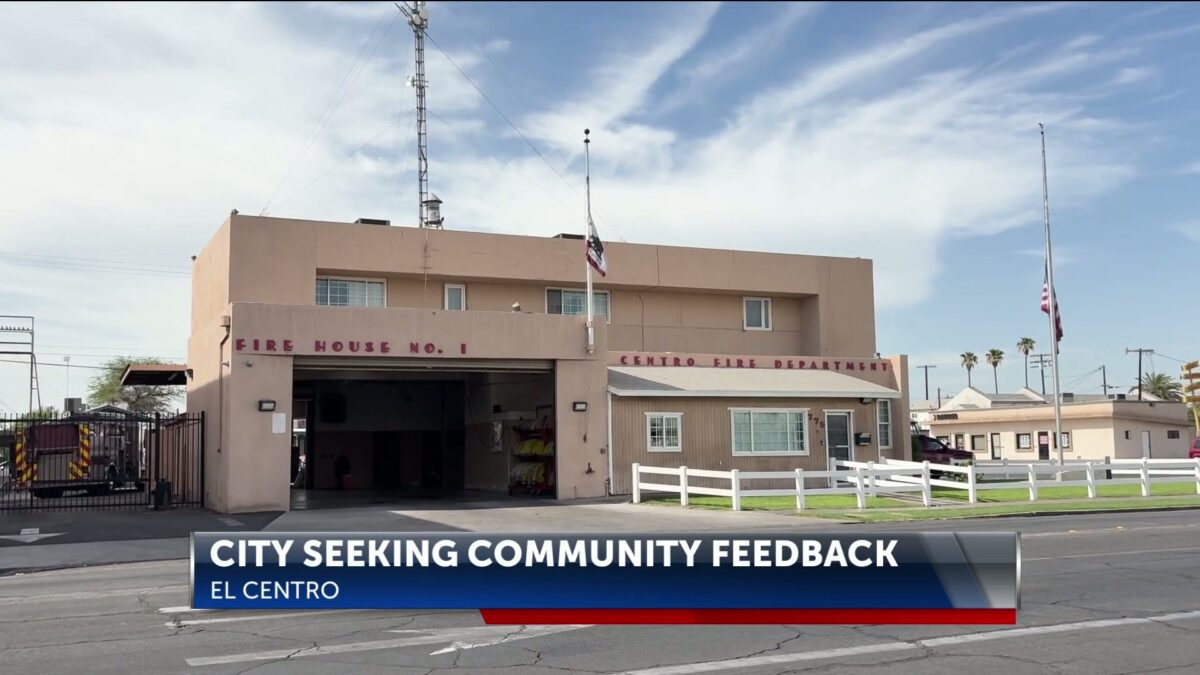
The current Fire Station One has protected the heart of El Centro for nearly eight decades. Built in the late 1940s, the facility handles 60% of the entire city’s emergency calls, managing nearly 5,500 annual responses.

Despite that massive workload, severe space limitations restrict the location to housing just a single fire engine.

“What the station does not allow for is the space, quite frankly,” said El Centro Fire Department Battalion Chief Eddie Ainza. “We don’t have the space here for the crew members, nor the apparatus or the machinery to operate with the demands for this portion of the city.”

Analytics indicate the busy district actually requires two active fire engines to maintain optimal response times. However, adding personnel or mechanics is structurally impossible in the current facility.

“Typically, we will have five persons running out of the station. Unfortunately, that quite doesn’t meet the demand,” Ainza explained. “This facility would be a huge upgrade…It allows our personnel to reside in a location and a building that is more suitable in 2026 for first responders to respond out of, but also still remain in the same response area.”

Beyond housing first responders, the proposed campus is designed as a direct community refuge hub during environmental emergencies.

The Imperial Valley has seen a steep rise in volatile weather, ranging from dangerous summer heatwaves to sudden blackout-inducing storms.

Right now, El Centro’s only designated cooling center is located entirely across town at the Imperial Valley Mall.

“This will put it central to the city, adjacent to the fire department. Quite frankly, there’s nowhere for people to escape the heat on this side of the city,” Chief Ainza said.

El Centro Community Services Director Adriana Nava noted that the state is shifting its funding models toward persistent, long-term disaster readiness due to changing climate threats.

“I think as we’ve had more wildfires and earthquakes, California is preparing itself now for natural disasters for the long run,” Nava said. “Before, it was an occurrence that would occur once or twice a year, but now we’re seeing that throughout the year we’re having multiple disasters.”

When completed, the multi-purpose resilience facility will provide a central location for several key community services:

Emergency shelter and immediate evacuation spaces.

Central cooling center operations during severe summer heatwaves.

Filtered, clean-air refuge during heavy dust storms and regional wildfire events.

Dedicated backup electricity generators and emergency communications equipment.

Distribution sites for emergency supplies, medical gear refrigeration, and clean food and water distribution.

Year-round neighborhood resources, including job training, health programs, and community meeting rooms.

“It would be a combo of assisting our most vulnerable population and incorporating workforce development aspects to it,” Nava added. “We’ve had a lot of inclement weather where it’s been really hot or we’ve had storms. So when people are displaced and have nowhere to go, this place would be able to help them.”

The state grant process relies heavily on proof of robust civic engagement. To win the competitive $10 million allocation, city officials need local residents to log on and rank their neighborhood’s highest safety priorities.

“For us, it’s important that we reach all members of the community and their voices are represented through a survey,” Nava emphasized. “That’s the only way we can get community feedback…as a community being an active participant and telling us what their needs are.”

The official community feedback survey is live now and available in both English and Spanish. Residents can choose their preferred language from the drop-down menu before submitting their rankings.

The submission portal will remain open until 5 p.m. on Wednesday, September 9. Local community members can access the official submission questionnaire online right now by visiting the secure portal.

Click here to follow the original article.


Yuma County Republican Party to host VIP dinner

Moses Femino

YUMA, Ariz. (KYMA) – The Yuma County Republican Party is hosting a VIP dinner event, bringing together local Republicans and several candidates ahead of the November election.

The event is on Monday, September 7, at the Elks Lodge in Yuma from 6 p.m. to 8 p.m. Scott Jennings, a senior political commentator for CNN, will serve as the keynote speaker.

Several Arizona Republican candidates are also expected to speak, including Rep. Andy Biggs and former State Sen. Sine Kerr, who are running for governor and lieutenant governor.

“The goal is to bring unity after the primary within the party. We usually don’t do a fall event, so this is not a fundraiser. This is just an event to bring everybody together,” said Tanya Wright with the Yuma County Republican Party.

The event will be business casual, and tickets are available through Monday, August 31. For more information and a full list of speakers, click here.

To watch the livestream of the story, see attached video.

Click here to follow the original article.
Composer Arturo Márquez to perform in El Centro

Jessamyn Dodd

EL CENTRO, Calif. (KYMA) – Composer Arturo Márquez and the Imperial Valley Symphony will perform at the Jimmy Canon theater in El Centro.

The concert, titled “An Evening with Arturo Márquez: The Imperial Valley Symphony Celebrates the Music of Márquez,” will take place at the Jimmie Cannon Theatre Saturday, October 10 at 7 p.m.

During the concert, attendees will listen to Márquez’s “vibrant, rhythmic, and deeply Mexican inspired works.”

“We have a world-famous composer here, so we’re trying to make more people in the Imperial Valley,” Mathew Busse, conductor and music director of the Imperial Valley Symphony said.

Arturo Marquez, who has deep ties to the Imperial Valley, and is the brother of Imperial County District Attorney George Marquez, is known in the classical music world, from the United States through Europe.

“You can go to an orchestra in Europe, they know who Arturo Marquez is,” Busse said.

As for the symphony and the musicians, Busse explained, “We want everybody in the community that plays an instrument. It’s also kind of affiliated with IVC, so we can offer it as a class so people can sign up for it, and that gives us some of the support from Imperial Valley College, but it’s also its own non-profit organization, 501C, and we have a board of directors and all that.So it’s kind of an odd combination.”

Filling in the gaps are musicians from San Diego.

They are currently looking for more sponsors for the event, and are also in the early stages of planning a meet and greet cocktail hour with the composer at Cheval Farms.

Tickets are available for purchase here.

Click here to follow the original article.
Kofa sophomore to attend Ballet Magnificat summer intensive program

Dillon Fuhrman

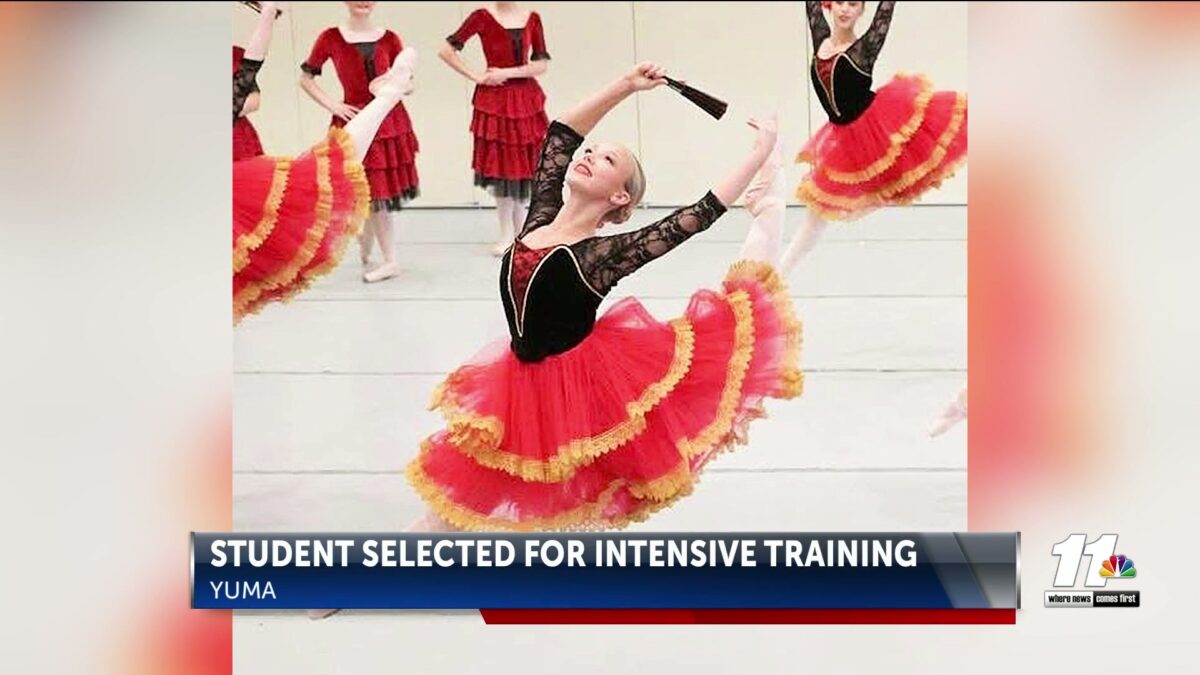
YUMA, Ariz. (KYMA) – Yuma Union High School District (YUHSD) said Alycia Swope, a sophomore at Kofa High School, has been selected to attend the month-long Ballet Magnificat summer intensive program.

In a press release, she will participate in the pre-professional level (PPL) during the program, taking place in Jackson, Mississippi.

“By attending this intensive every year, for the past three years, I have seen how much I can do with my career in dance,” Swope said. “I plan to graduate with my associate’s [degree] while in high school and then finish college while continuing my training, then eventually join the Ballet Magnificat trainee program and hopefully work my way up to the company.”

Swope, according to YUHSD, was one of 35 to 40 dancers “who were invited to audition for the PPL, and was ultimately one of 25 selected,” and said, “She learned an entire ballet, approximately 14 dances, in just one month.”

This year, YUHSD said she trained and performed “The Prodigal’s Journey,” which was a “production previously toured by Ballet Magnificat’s professional company.”

“Her accomplishment shows our community what can grow from years of passion, discipline, and consistent training,” Kofa dance teacher Ashley Atherton said. “Fine Arts students dedicate countless hours beyond the school day to classes, rehearsals, practice, and performances. Her success is an opportunity to celebrate not only this exciting achievement, but also the commitment of all our student artists and the teachers, studios, families, and programs that support their growth.”

To learn more about Swope, read the press release below.

PR – Kofa dancer selected for Ballet Magnificat summer intensive.docx (1)Download

Click here to follow the original article.

Cibola student selected to serve on Governor’s Youth Commission

Dillon Fuhrman

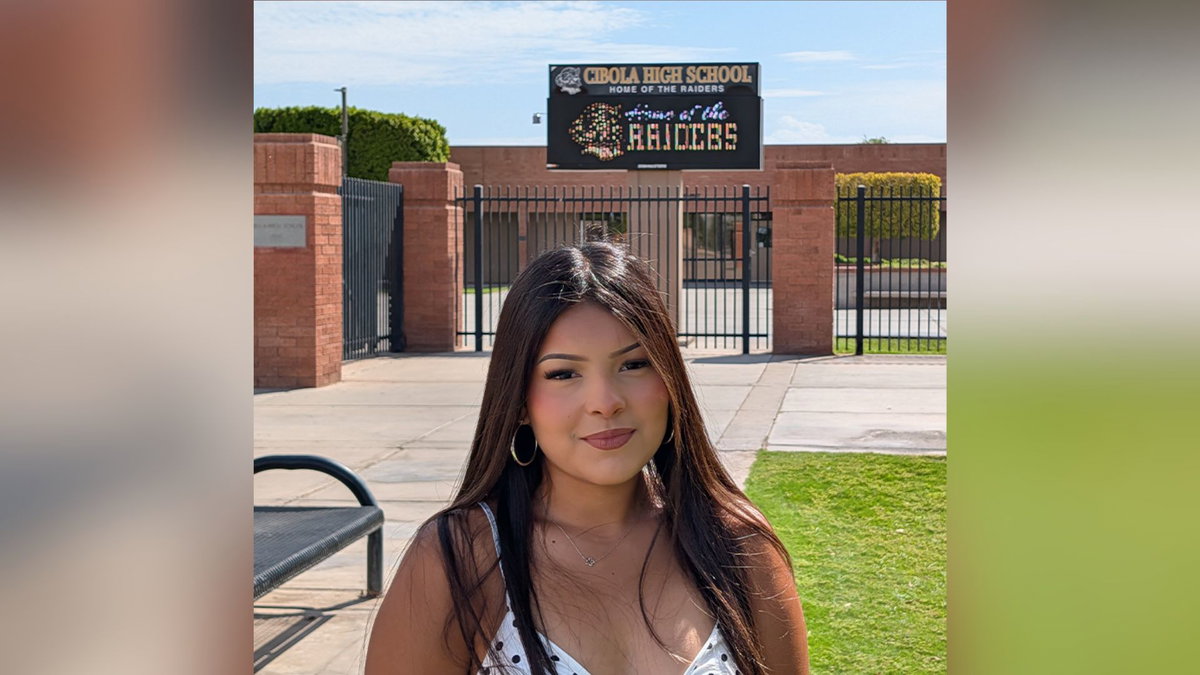
YUMA, Ariz. (KYMA) – Yuma Union High School District said Talim Arzola, a Cibola High School student, has been selected to serve on the 2026-27 Governor’s Youth Commission (GYC).

In a press release, she was chosen by Gov. Katie Hobbs’ (D-Ariz.) Office of Youth, Faith and Family, and GYC brings together 50 to 70 high school students from all 15 counties across Arizona to represent “the state’s demographic and geographic diversity.”

“I’m excited to learn more about leadership, meet new people, and hopefully make a positive impact,” Arzola said. “I want to learn more about how local government works and gain a better understanding of the opportunities available in my community. I believe this experience will help me grow personally, build confidence, and prepare me for my future.”

YUHSD said Arzola applied to be on the commission by submitting three essays, having a letter of recommendation, and being interviewed.

During her time on the commission, Arzola will participate in service hours, attend quarterly commission meetings, and attend bi-weekly workgroup meetings.

To learn more about Arzola and GYC, read the press release below.

PR – CHS student chosen for Governor’s Youth Commission .docxDownload

Click here to follow the original article.

Imperial Valley celebrates National Dog Day

Jessamyn Dodd

IMPERIAL COUNTY, Calif. (KYMA) – It’s National Dog Day and pups all over Imperial County are being treated to some fun freebies.

Several national and local chains gave out out free ID tags and emergency stickers, bandanas, pup cups, and more, while supplies last.

At Dutch Bros in Brawley, seven-month-old husky Brittney was very excited to dig into her pup cup.

“She loves pup cups,” her owner, Jasmine Martinez, said.

In addition to National Dog Day being a day to honor your four-legged friends, it’s also a chance to raise awareness for the ones waiting for their forever homes.

Imperial County Humane Society Executive Director Devon Apocada said the shelter is still at maximum capacity.

“To celebrate Dogust in conjunction with clear the shelters we have lowered our adoption fees to $50 in hopes that the dogs will get adopted. We have a lot of dogs here. Some that have been here for years, some several months,” Apocada shared.

The adoption fee also includes spay and neuter, microchipping, and vaccines.

“You get a free vet visit with Desert Vet Group in Imperial and you get 50% off your first grooming with Mendy’s Groom Room in El Centro,” Apocada said.

The Humane Society is urging people who are able, to foster a senior dog to give the dogs a break from the kennels.

The shelter has some fundraising event coming up in September and October, like Mutts and Margaritas and Woof-O-Ween.

The Humane Society is busy working ona new, bigger facility.

“It’s a huge project. And we’re going to have to do it in phases. And we’ve only really been doing some very, very serious fundraising within the last two years. So we’re still in the very beginning stages of that. And we still have quite a ways to go,” Apocada explained.

Click here to follow the original article.
Cross-border drivers compare gas prices on both sides of the San Luis Border

Adrik Vargas

SAN LUIS, Ariz. (KYMA) – For drivers who regularly cross the San Luis border, where they fill up can make a difference.

Gas prices in San Luis, Arizona are currently around $4.20 a gallon, while prices in San Luis Río Colorado, Mexico are more than $5 per gallon when converted to U.S. dollars.

Several drivers said they prefer getting gas in the U.S., saying they feel like it lasts longer.

One driver said even if prices rise in the U.S., they would still choose to fill up there because the gas “goes a longer way.”

For some drivers, it’s not just about the price at the pump, but how much mileage they get from their gas.

Click here to follow the original article.

Ernesto Juarez, ‘Mr. Dome Valley Raceway,’ passes away

Connor Emery

YUMA COUNTY, Ariz. (KYMA) – A well-beloved man in the Yuma community tragically passed away in a car crash.

Ernesto Juarez, better known as “Mr. Dome Valley Raceway,” was the former owner and founder of Dome Valley Raceway in Wellton.

Juarez built the Dome Valley Raceway in 1996. Since then, it has carried a legacy, with multiple sand drag racing events.

“To me, my father was everything. He was my everything we did everything together. He was my best friend,” Esteban Juarez, Juarez’s youngest son, said.

Juarez’s main goal was to bring the Yuma community together with an unfamiliar sport. He would go out of his way to put other racers and everyone else first.

“Even when we had this race track and started very young, he would host events for families that were struggling for churches that needed sponsorships and donate all the proceeds to those individuals and that never left him into the day. He’s always been putting everybody first before himself and that’s one of my greatest memories of my father,” Art Juarez, Juarez’s oldest son said.

Juarez was a healthy man who had big plans ahead of him. Unfortunately, he died in a Phoenix car crash.

Esteban says he was able to spend the day with his dad doing the one thing he loved.

“We were just joking, having a good time. And we went back home for this race car that we’re building,” Esteban said emotionally.

Even though Ernesto is gone, his name will be carried on in the sport of sand drag racing. 

“His story is going to always live, live on forever and his legacy is going to live on forever. And he’s left a dent in the sand drags racing and he’s one of the forefathers of this beautiful sport of sand drags,” Art said.

“All we can do now is hold our heads high and move forward and honor him the best we can our last name will always be his,” Esteban said.

Funeral services and a celebration of life will be held this weekend.

Click here to follow the original article.

University of Arizona bridges gap with new Yuma Soil Health Lab

Manoah Tuiasosopo

YUMA, Ariz. (KYMA) – A new University of Arizona soil health laboratory in Yuma is bringing agricultural research closer to the farmers and growers who rely on it, while helping address some of the region’s most pressing soil and water challenges.

The Desert Agriculture Soil Health Initiative (DASHI) launched in 2023 under the direction of University of Arizona Associate Professor Dr. Joey Blankinship.

The initiative recently established a physical soil health lab at the University of Arizona Yuma Agricultural Center.

For years, much of the university’s agricultural research infrastructure was concentrated in Tucson, about three and a half hours from Yuma.

Researchers say that distance made it more difficult to capture differences in soil conditions across the region and monitor how those conditions change over time.

Blankinship says growers in the Desert Southwest are looking for more information about their soil and practical ways to manage it in a water-limited environment.

“Growers in the Desert Southwest are craving more knowledge about soil health and how to manage soil health,” Blankinship said. “They want to know about the status of current conditions, their baseline conditions…and the most effective practices for managing under these water-limited conditions.”

Addressing soil challenges in the desert

The lab is focused on both immediate and long-term threats to soil health.

One of the biggest short-term concerns is salinity. During the summer, growers may use additional water to leach salts below the root zone.

Researchers are studying how those practices affect soil conditions and plant health.

Long-term concerns include low levels of soil organic matter. In the region’s hot, irrigated soils, organic material can break down quickly, making it difficult to build and maintain healthy soil.

Researchers are testing several strategies, including commercial chemical amendments, gypsum, rotational spring and summer crops and deep-rooting systems.

These approaches are designed to help stabilize organic matter and remove excess salts from the soil.

Blankinship compares the work to routine medical checkups.

“Just like when you go to the doctor and they measure your blood pressure or your weight,” Blankinship said. “These are routine measurements that are really standard for measuring soil health in these regions.”

Bringing research closer to growers

The Yuma Soil Health Lab operates through partnerships with growers and other regional stakeholders rather than as a traditional fee-for-service laboratory.

That model allows researchers to work directly with the agricultural community and respond to changing conditions, including tighter water allocations and fluctuating fertilizer costs.

Research technician Josett Clark is helping lead that local outreach.

Clark joined the Yuma Soil Health Lab after graduating in May with a degree in Agricultural Systems Management from the University of Arizona Yuma.

She conducts fieldwork throughout the region, including in Yuma and the Wellton-Mohawk area.

Her work includes measuring soil pH, sodium levels and plant-available nutrients.

“Dr. Joey Blankinship has a lot of partnerships with the growers and stakeholders here in Yuma,” Clark said. “So, it is my job to communicate more closely with them and then go out to their fields and sample.”

As the lab continues expanding its research capabilities and building partnerships, DASHI hopes to provide growers with faster, more localized information about the condition of their soil.

The goal is to give farmers practical tools to manage salinity, alkalinity and other soil constraints while maintaining productivity in one of the nation’s most productive, and water-limited, agricultural regions.

Click here to follow the original article.

Dangerous desert heat pushes Imperial County emergency rooms to the brink

Lynette Niebla

EL CENTRO, Calif. (KYMA) – Brutal triple-digit temperatures in Imperial County are driving a severe public health crisis, pushing local emergency rooms to their limits.

New data released by local health tracking systems reveals that since March, extreme environmental heat exposure has triggered 210 cumulative heat-related illness cases, leading to 206 emergency department visits, 28 full hospital admissions, and at least four probable fatalities.

Medical teams at El Centro Regional Medical Center (ECRMC) and Pioneers Memorial Hospital (PMH) report that the crisis is hitting one specific demographic hardest: working-age men laboring out in the elements.

According to public health surveillance, men account for a staggering 76% of all reported heat illness cases. While patients range in age from four to 97-years-old (with a median age of 48), young and middle-aged adults between the ages of 18 and 49 represent nearly half of all cases at 47.14%.

Frontline medical workers say this spike directly correlates with the region’s prominent outdoor workforces.

“The people that are out in our fields working, those people are extremely high risk because they’re doing physical labor and they’re out in the heat with the sun shining down on them, and construction workers,” said Dr. Kari Kajitani, an Emergency Room Physician in El Centro. “We see it actually quite frequently, I would say almost every day…just because it’s 115 degrees outside and people don’t really understand the severity of heat-related illnesses.”

Dr. Kajitani noted that out-of-town visitors often fail to appreciate the dramatic danger of the local climate, failing to recognize “that there’s a big difference between 80 degrees and 120 degrees.”

Beyond outdoor laborers, hospital staff are also treating vulnerable populations who lack adequate resources, including the infirm, patients with dementia who wander outdoors, and residents without functional home cooling units.

When a patient arrives at the emergency room with severe heat sickness, medical teams must act instantly to prevent permanent organ damage or death.

“The first thing we want to do is start cooling them down,” Dr. Kajitani explained. “So we’ll try fans, or sometimes we get ice and water, and basically put towels on them and then try to pour the water on them to try to get that temperature down.”

Once external cooling is underway, teams administer chilled intravenous (IV) fluids and run blood work to determine how far the illness has progressed. Internal body temperature serves as a critical indicator for survival.

“I would say anything over 101 [degrees], and then obviously if you get as high as 104 and beyond, then obviously that’s critical, and those patients tend not to do well,” Dr. Kajitani said. “But if we can get them around like 101, we can reverse those people.”

As triple-digit heat persists, healthcare professionals are issuing strict guidance to outdoor employers and workers regarding hydration chemistry. Drinking plain water is not enough during heavy physical exertion.

Medical experts recommend that anyone working under the desert sun consume one liter of fluid per hour, broken down into roughly eight ounces of fluid every 15 to 20 minutes.

Critically, this fluid must contain electrolyte replacements, which can be purchased as simple tablets or powders at local pharmacies and retailers.

Kathy Canizales, RN and Nurse Director of the Emergency Department, emphasized that heat illness sneaks up on victims rapidly.

“Sometimes we don’t realize what our bodies are doing at the time, and then it just happens really quick,” Canizales said. She urged residents to closely monitor both ambient temperatures and shifting humidity levels, which can severely blunt the body’s ability to cool itself through sweat. “Just make sure everybody knows to drink water, stay hydrated, and come see us if they need us.”

Medical professionals are calling on field supervisors and construction foremen to enforce strict safety protocols:

Mandatory Shifts: When ambient temperatures climb to 120 degrees and above, workers should transition to 20-to-30-minute work rotations followed by mandatory cooling breaks.

Symptom Recognition: If a worker complains of a headache, nausea, weakness, or muscle cramps, they must be removed from the sun immediately and placed in a cool, air-conditioned room.

Emergency Response: If a person exhibits a high body temperature, red or dry skin, confusion, or a loss of consciousness, call 911 immediately. Early intervention means the difference between life and death.

To watch the livestream of this story, see attached video.

Click here to follow the original article.