UPDATE: Most Bend, Deschutes County leaders back six-month extension of Juniper Ridge ‘safe stay area’

Barney Lerten

(UPDATE: Adding video and quote from Bend Mayor Melanie Kebler)

BEND, Ore. (KTVZ) — BEND, Ore. (KTVZ) — A majority of Bend and Deschutes County leaders agreed at a joint meeting Tuesday to extend the Juniper Ridge Temporary Safe Stay Area six more months, to mid-2027. But there was reluctance and some opposition from both elected boards amid an end to federal funding and a desire to fully close the area to homeless campsites as soon as possible. 

The staff presentation KTVZ News reported on earlier (see below) brought some questions for clarity from city councilors and county commissioners during the joint meeting, which somewhat ironically took place at the city’s new Public Works Campus – located at Juniper Ridge. 

Bend Mayor Melanie Kebler said earlier council discussions on what to do next found general support for the six-month extension, in part to not force large numbers of people to move in the middle of winter, then “starting the process all over again.” 

Mayor Kebler told KTVZ News, “I’m really grateful that we had Commissioner Chang and Commissioner Adair agree that we want to look at extending by about another six months, to avoid some of the pitfalls of maybe displacing people in the middle of winter, but also to take a look at how we can really kind of, get people moved into housing.” 

The closure of two northern sections by this June also will mean anyone who stays will be in a more concentrated area of 75 acres. Staff said that should make case management, safety and efforts to find more people new places to live will be somewhat easier. 

County Commissioner Patti Adair drew general support when she asked about putting a lid on any new residents or campsites, so they can say, “we are full.” 

Adair also noted there was another trailer fire a few days ago in the area. Staff said any such negligence is grounds for removal, as was an arson fire last year. 

But fellow Commissioner Tony DeBone pointed to the still-standing code enforcement case in the area. He repeatedly noted that with federal dollars running out, future expenses – such as the county’s half of the estimated $550,000 for a six-month extension – would have to come from the general fund, at a time when costs are rising. 

“If somebody has an idea where these dollars come from,” that would be different, DeBone said – but as it stands, “I’m not going to be supportive” of an extension. 

“If we do extend this six months, where are we going to be then? What’s the vision?” he asked. 

“The real solution,” DeBone said, is “leadership out of the governor’s office, from state legislators.” 

While city Councilor Mike Riley said an extension would “give us more time to work with the governor,” fellow Councilor Gina Franzosa said she couldn’t support the extension, going so far as to call the current situation a “dereliction of what we were elected to do.” 

Kebler agreed – to a point.  

“We’re not saying this is the best way to do it. It’s the best option we have right now,” she said, as opposed to a year’s-end closure that would raise more fire concerns, with “people going further into the forests.” 

Commissioner Phil Chang agreed that progress has to come on where those who must move can go safely. 

Adair also said that only 35 people moving to new, safer locations in recent months is too low, with close to 200 people still living there: “We need to do at least 50 (leaving) in the next six months. We need to hear that we’re making greater progress.” 

City Senior Program Manager Amy Fraley said there are some “creative ways to bring down costs” for more needed permanent supportive housing. 

City Manager Eric King said councilors will discuss the financial strategy at a February 25th work session, possibly including, ironically, some one-time proceeds from recent property sales at Juniper Ridge.  

Earlier story:

BEND, Ore. (KTVZ-Jan. 19) — Bend and Deschutes County leaders return to a familiar and tricky topic at their joint meeting on Tuesday: whether to close the Juniper Ridge “Temporary Safe Stay Area” as planned, at the end of this year – and if they do, how they could provide enough safe places for them to go next.

City and county staff will lay out the options and costs, much as they did at their last joint meeting in late September. (You can see the full new presentation below).

As of Jan. 9, officials say nearly 200 people were living in 150 camps in the safe stay area, part of the undeveloped area at Bend’s north end that some refer to as “Dirt World.”

There has been progress on options such as shelters and safe parking sites, but most are full or nearly so, the report says. And fewer than 50 new beds or spaces are in the works for this year, including a 35-space Redmond campground expected by late spring.

The TSSA, a mix of city- and county-owned land, has been divided into four sections.

Unless things change, those living in sections 1 and 2 will get notice in March that they must move by June. But they will be allowed to move to the two southern areas, for now.

People staying in sections 3 and 4 will get a similar notice in September, with a full closure of the TSSA by November, to meet the year-end deadline set earlier.

The staff update also revisits efforts to get the more troublesome people living at Juniper Ridge to follow the rules. Nearly 50 have been told since last July they might have to move for breaking those rules, and 10 have been issued notices to leave for non-compliance with the proposed remedies.

The TSSA is costing the city and county nearly $850,000 to operate, from water, toilets and dumpsters to security, trash cleanup and other costs, officials say.

Meanwhile, several organizations, from NeighborImpact to Shepherd’s House Ministries, have received a share of $1.2 million in grants for case management work at the TSSA.

The staff presentation also breaks down the millions it costs for new shelter beds, and lesser costs for Safe Parking spots or outdoor shelters, including the Central Oregon Villages site that will be moving to city-owned land this year. For example, a new campground for 70 people, if land can be secured, would cost about $1 million to set up and operate in its first year.

If the TSSA were to continue, it would cost about $1.1 million a year, based on what’s been spent so far – much less costly than new shelter beds, though the goal all along has been to transition the people at Juniper Ridge to safer, long-term housing.

Another telling breakdown is anecdotal – that 25% each might qualify for permanent supportive housing, be interested in safe parking, interested in a “non-congreate” shelter beds or would like to stay in a managed camp.

But providing all four options, at 50 beds or spaces each, is estimated to cost nearly $28 million.

City and county staff also are warning of “funding cliffs on the horizon,”” such as American Rescue Plan Act dollars that expire at the end of 2026, not to. mention a projected $1.7 million deficit in the current biennium for city-backed shelter services.

So the key up-front question, as it was last fall, is whether to hold to the end-of-2026 closure of the Temporary Safe Stay Area or extend it for six months, at an estimated cost of $550,000.

The meeting begins at 3 p.m. Tuesday at the city’s new Public Works Campus on NE Talus Place, will be livestreamed and has other agenda items to tackle. You can find more details here: https://www.bendoregon.gov/government/city-council/city-council-meeting-agendas-video.

Heres the full staff update on Juniper Ridge:

TSSA Options Joint Meeting 20260120Download

Click here to follow the original article.

Overhaul of Oregon’s school funding formula, public education goals has lawmakers at odds

Oregon Capital Chronicle

By Alex Baumhardt, Oregon Capital Chronicle

SALEM, Ore. — There’s an ambitious effort underway at the Capitol to overhaul how the state determines funding levels for schools, but lawmakers are torn over the timing and larger questions about the goals of Oregon’s public education system.

Sen. Janeen Sollman, D-Hillsboro, and Rep. Ricki Ruiz, D-Gresham, co-chairs of the six-member Joint Public Education Appropriation Committee, are spearheading the overhaul of Oregon’s school funding process, including what schools must demonstrate to receive funding.

On Thursday, the two shared with the committee a proposal that would entirely do away with Oregon’s 27-year-old Quality Education Model, the 11-member Quality Education Commission that produces recommended school funding levels every two years, and the education appropriation committee the two lawmakers lead. Lawmakers would have one month to debate and pass the bill that has generational impact during the legislative session beginning Feb. 2.

“I think the job of our committee is really to dig in and do a lot of this work and look at the issues,” Sollman explained, adding that Oregon’s system is outdated and that “no other state has a QEM-type model.”

Since 1999, the Quality Education Commission, staffed by the Oregon Department of Education, has researched best practices and determined how much money is needed for a successful public education system, with the main target of reaching a 90% statewide graduation rate. The commission gives its findings, presented as the Quality Education Model, to the education appropriation committee and governor every two years to guide budget decisions.

Notably, in the history of the model and commission, the Legislature has only fully funded schools to the recommended level once, when they passed in 2025 a record $11.4 billion for schools during the 2025-26 and 2026-27 school years.

Under Sollman’s and Ruiz’s bill, the task of researching and determining how much money schools need would instead go to the Legislative Policy and Research Office, which would contract and work with a public or private firm that undertakes school finance analysis. As part of the analysis, researchers would have to hold panels with educators across the state about school needs.

The policy and research office would then present recommendations for school funding levels to the Legislature’s budget-writing Joint Ways and Means Committee every eight years. During intervening two-year budget cycles, the Department of Administrative Services would adjust the recommended spending levels to account for inflation and other costs.

Split over standards

The bill would also modify what the state’s “quality goals for public education” are, Sollman and Ruiz explained to lawmakers. It would define a “standard school district,” able to receive state and federal funding, as one where all teachers are licensed.

Schools would be expected not just to meet a 90% graduation rate but to hit goals and standards established in a 2024 education accountability law. That law requires  school districts to set goals with the Oregon Department of Education for improving third grade reading scores, eighth grade math scores, ninth grade on-track rates, four- and five-year graduation rates, and regular attendance rates.

But lawmakers said the state education department is still working out some of the goals and standards discussed in the education accountability bill and how they’ll be reported.

Rep. Emily McIntire, R-Eagle Point, said schools have been begging lawmakers to stop passing legislative changes that cost them more time and money in reporting.

“I think that our schools are saying, ‘please stop. Please leave us alone. Please don’t do anything else. Please halt.’ And this, to me, is such a ginormous change, especially when we don’t have the overhaul of (the 2024 law) done yet,” she said. “It feels like one of these things that we’re going to do, and then we’re going to find out what actually is required.”

Rep. Susan McLain, D-Forest Grove and a 40-year teacher who has played a large role in state education policy in the Legislature, told her colleagues on the committee that “there’s a lot in this bill that shocked me.”

The group had been discussing for years doing away with the old school funding model and the commission in charge of it, she said, but she was not prepared to completely change what schools have to demonstrate in order to receive funding.

“This bill is not just about doing away with the quality education model, or doing away with the appropriation committee. It also has to do with responsibilities for other parts of our system, and it has standards for other parts of our system,” she said.

Ruiz said enforcing more nuanced targets and standards that schools need to demonstrate in receiving funding would bring greater public trust in the schools and in the Legislature’s ability to ensure schools are improving and meeting the Legislature’s expectations.

“I’m just sick and tired that we put so much money into the education system and we’re seeing little to no progress,” Ruiz said.

The committee ultimately agreed to advance the bill and debate it during the legislative session.

“I don’t think I’ve ever been in a committee where I’ve had to say: ‘OK, I’m going to give a courtesy yes,’ and think, ‘Oh my gosh, what would happen if it passed?’ And that’s where I’m at,” McLain said.

Click here to follow the original article.

Voters react as Senator Ron Wyden and Representative Janelle Bynum hold townhall in Sisters

Spencer Sacks

SISTERS, Ore. (KTVZ) — For over an hour and a half, Senator Ron Wyden and Representative Janelle Bynum took questions from members of the community on Saturday.

They were answering questions on both foreign and domestic policy.

Both Sen. Wyden and Rep. Bynum took about 12 questions together, giving insight into how they voted on recent issues and what they think about current events.

The gymnasium was packed with residents from all across Deschutes County hoping to get their questions answered.

So I asked a few of them what they are hoping to hear about.

Randy Jones, a resident of Bend, told KTVZ News, “When will we see a step by achievable step of a plan that’s going to reverse the depredation, cruelty, and destruction of our system of compassionate governance?”

“Hopefully, we get some answers about trying to get rid of this clown that’s leading us astray,” Gary Mason, a resident of Sisters, told KTVZ News.

We are now about 10 months away from the midterm elections.

While legislators in Washington focus on issues such as what is happening in Iran, I asked potential voters what they are following as we get closer to the upcoming elections.

Bend Resident Robin Werdal told KTVZ News, “The total violence that is being perpetrated on citizens and immigrants in this country by ICE.”

“I think we need to overturn the Congress in the House and hopefully the Senate,” Sisters Resident Rob Phelps told KTVZ News. “Who’s going to pay for it? Purse strings are controlled by the House of Representatives.”

You can follow our election coverage at ktvz.com/elections and the ktvz app.

Click here to follow the original article.

Bend’s Powder House is expanding by building new entertainment venue

Claire Elmer

BEND, Ore. (KTVZ) — Powder House, a long-time Bend business, is expanding – establishing a new venue called “Base Camp.”

The 8,000-square-foot space will feature outdoor seating with fire pits, 36 taps, handcrafted cocktails and live music.

The owners of Powder House, Todd McGee and his wife, have operated the establishment for nearly 25 years and have always aimed to develop their back lot.

The new venue, designed to create a relaxing atmosphere for customers, is set to enhance food options on the West Side.

The Base Camp project will include multiple amenities such as an 18-foot projection screen, allowing for various entertainment options and live music performances. Todd expressed enthusiasm about the unique offerings, stating, “So my wife and I are very, very excited about this. The customers coming in the Powderhouse can’t wait for this to happen.”

According to McGee, the development is part of their ongoing commitment to providing a distinctive experience. “They’re excited for new food options on the West Side and being able to, especially in a relaxing, fun atmosphere,” he said.

Construction for the Base Camp venue is scheduled to finish by late April or early May, indicating that the new gathering space could be ready for customers shortly after that.

Once completed, customers can expect a vibrant space that not only focuses on drinks and food but also supports live performances and social gatherings, enhancing the community space in Bend.

Click here to follow the original article.

ONE on ONE: Senator Ron Wyden stops by the KTVZ Studios

Spencer Sacks

BEND, Ore. (KTVZ) — Senator Ron Wyden is in Central Oregon this week, speaking at town halls in Madras and Sisters. While he is in town, he stopped by the KTVZ News studios.

We discussed a wide variety of topics, from ICE to wildfires.

During the conversation, I asked him about rural schools’ funding.

The question was, “One of the big things that just passed is the Secure Rural Schools Act Authorization of 2025. Can you talk a little bit about how that helps this district?”

Senator Wyden responded, “The fact is, this program is a lifeline for Oregon. You know, The Federal Government owns most of our land. So the law that I wrote was a number of years ago. It helps with roads, helps with schools, and helps with law enforcement, and it’s a huge shot in the arm. Oregon’s share of this law has been $3.6 billion over the years. It’s arguably the biggest authorization we’ve had in the state.”

If you would like to attend his town hall, he will be in Sisters on Saturday with Representative Janelle Bynum.

Click here to follow the original article.

Pet Pals: Theodore, 1 of 3 dachshunds looking for a new home

Triton Notary

Theodore the dachshund was in the KTVZ studio today for Pet Pals. Other than being incredibly adorable, he is shy, sweet and loving. Lynne, Director of community partnerships for HSCO, says he and his litter are warm and bubbly once they get to know you. Apparently, Theodore is also a talented racer! If you want to adopt Theodore and his litter, just go to the Humane Society of Central Oregon.

Click here to follow the original article.

La Pine rallies around child needing heart transplant

Tyson Beauchemin

La PINE, Ore. (KTVZ) — The community of La Pine is coming together around a child and family in need of support – and a heart.

Braxton Twyman was diaonosed with hypoplastic left heart syndrome (HLHS) shortly after he was born 14 months ago.

As a newborn, Braxton underwent a series of surgeries. Even though he survived, complications from his heart disease are preventing him from having further necessary surgeries.

Simply put: Braxton needs a new heart.

But finding an available and suitable heart for a young child can be difficult. The family has been burdened with additional expenses, like travel and lodging, while moving Braxton between various medical organizations.

Despite all of that, Braxton is growing into an energetic and happy child. When KTVZ News met with the Twyman family in La Pine, Braxton was playful and curious, despite being a little late for a nap. 

“He is the happiest baby you’ll ever meet,” Braxton’s mother, Destinee Twyman told us. “Other than when he’s grumpy, because he needs a nap, but it’s every kid. He is obsessed with his dad right now. Everything is about Dad. He loves to swing. He loves being outside. Honestly, he just loves being a kid, outside of the hospital.”

Braxton’s energy and willingness to fight has inspiried the community of La Pine. Many local businesses have banded together to have a day to raise funds for the Twyman family.

There’s four events happening around Central Oregon, and all benefit Braxton in one way ore another.

This Sunday at 11 a.m., theres going to be a car show and poker event at General Duffy’s in Redmond.

Sunriver Brewery and Rosland Coffee House are donating $1 to Braxton’s family for every item sold.

Lastly, Legend Cider Company in La Pine is holding a big event, with a items raffled off.

You can learn more about Braxton at this Facebook page: “Braxton Twyman’s HLHS Journey”.

Click here to follow the original article.

City of Bend drafts policy to bar federal immigration enforcement at any city-owned facilities

Barney Lerten

BEND, Ore. (KTVZ) — The city of Bend is preparing to enact a policy barring the use of city facilities for federal immigration enforcement, as outlined in state law, saying the goal is to foster a welcoming atmosphere for immigrants and refugees.

“City facilities may not be used for the purpose of investigating, detecting, apprehending, arresting, detaining or holding individuals for immigration enforcement,” the draft policy states (you can read it in full below).

The Bend City Council is expected to review City Manager Eric King’s proposed policy at next Wednesday’s council meeting.

The policy goes on to note some limitations on what it can do: “The public should be aware that prohibiting use of publicly accessible spaces is beyond the city’s legal authority, and the city cannot control or prohibit federal immigration activities within the city generally.”

But it adds: “The City condemns the indiscriminate and increasingly violent, and likely unlawful, civil immigration enforcement tactics which are occurring across the country and in Oregon. These tactics are causing significant impacts on the health and well-being of the community, including fear and actual harm to families, neighbors, businesses, and the community at large.”

The city says it’s committed to uphold state and federal law while ensuring a safe, inclusive environment for all community members. But the policy would prohibit the investigation, apprehension, or detention of individuals for immigration purposes on city property, aligning with the city’s resolution to be a Welcoming City.

The policy encompasses all city property and extends to all individuals on it, including employees, contractors and visitors. City workers are required to comply with the prohibition and are not to assist in any civil immigration enforcement activities.

City facilities are defined as all real property, land and public facilities owned or managed by the city, including parking lots and structures.

It defines “civil immigration enforcement activities” as investigating, detecting, apprehending, arresting, detaining or holding individuals for immigration enforcement without a judicial warrant, order, or subpoena as described in ORS 181A.823 (1)(c)(A), and includes staging, processing, or establishing or using an operations base for such activities.”

City staff are not authorized to provide access to non-public spaces for purposes ofcivil immigration enforcement, the draft policy says.

“City parking lots that are or may be accessible to the public or entities engaged in civilimmigration enforcement should have clear signage stating the following, or a substantially similar message: “This property is owned or controlled by the City of Bend. It may not be used for civil immigration enforcement, including as a Staging Area, Processing Location, or Operations Base.”

In instances where federal agents attempt to access city property, city employees would be instructed to notify the appropriate city department’s leadership, who would coordinate with legal counsel to ensure compliance with the policy.

Here’s the draft document provided Friday to KTVZ News:

City of Bend immigration use of facilities policy draftDownload

Click here to follow the original article.

Deschutes County Sheriffs Office reports results of holidays DUII crackdown

KTVZ

BEND, Ore. (KTVZ) —  The Deschutes County Sheriff’s Office reported on Friday the results of its participation in the national Drive Sober, Get Pulled Over campaign, which ran from Dec. 10 – Jan. 1 to help keep impaired drivers off our roads and ensure safer travel for everyone.

During the enforcement detail, deputies worked four six-hour shifts, DCSO said, resulting in:

56 traffic stops

11 citations issued

50 warnings given

1 warrant arrest

1 DUII arrest during the detail

12 Total DUII arrests agency-wide

Here’s the rest of that news release:

While the primary goal of Drive Sober, Get Pulled Over is to prevent impaired driving, these efforts also allow deputies to engage with the community, share safety information, and remind drivers of the importance of making safe and responsible choices.

“We want our roads to be safe for everyone—not just during the holidays, but all year long,” said Sheriff Ty Rupert. “Driving sober saves lives, and we appreciate the community’s support in making safety a priority.”

The Deschutes County Sheriff’s Office encouraged everyone to plan ahead, use designated drivers or a ride-share service, and avoid driving impaired.

“It’s never worth taking the chance of harming yourself or others by getting behind the wheel when you’re impaired,” they said. 

Click here to follow the original article.

COCC leaders ask the public to sign a petition, urge lawmakers to head off budget cuts

Barney Lerten

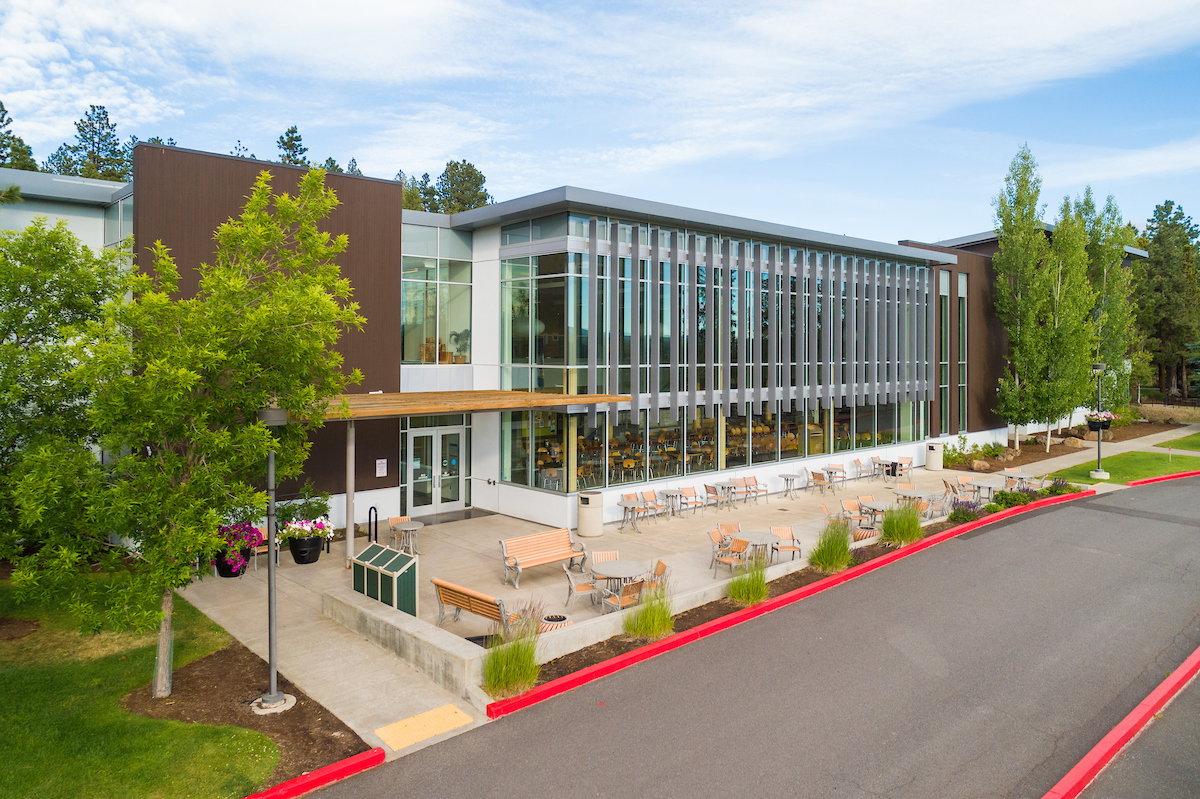
BEND, Ore. (KTVZ) — Facing pending budget cuts at the state level for the 2025-27 mid-biennium — likely 2%, but as much as 5% — Central Oregon Community College said this week it’s “welcoming community advocacy in encouraging state lawmakers, whose next session begins Feb. 2, to maintain current funding levels.”

COCC said interested citizens can visit tinyurl.com/StandWithCOCC to learn more about the forecasted budget changes and add their name to a “Stand with COCC” petition, the college said in a news release.

The college’s Wednesday call to the community came on the same day that COCC faculty and classified staff, represented by two unions seeking new contracts, joined forces in a rally to demand living wages.

Here’s the rest of COCC’s full news release:

COCC President Dr. Greg Pereira said that while the cuts, driven by anticipated revenue shortfalls, would impact all of Oregon’s school districts and state agencies, eliminated funding would have an exaggerated impact on COCC above all other 16 community colleges.

“Because of the funding formula used by the state’s Higher Education Coordinating Commission, COCC receives less state funding and more property taxes compared to other community colleges, approximately 70% property taxes versus 30% state funding of total public resources,” Pereira said. “So any cut would have a disproportionate impact on our 2026 fiscal year, and it could be as much as $1.5 million per year.”

A similar reduction could occur in fiscal 2027.

Cuts of this size, COCC estimated, would impact things like course availability, staffing levels, workforce programs in areas like early childhood education, health care and public safety, along with a reduced ability to operate rural centers and engage in community outreach. The 5% reduction scenario would include a state freeze on new Oregon Promise enrollments, a state grant that currently helps cover tuition costs for 669 COCC students.

“We’re advocating strongly for education — and we need our community’s voice with us,” added Pereira, who said COCC is actively engaging with the Oregon Community College Association and state leaders to encourage advocacy. “This isn’t just about COCC. It’s about the health, safety and economic future of Central Oregon.”

Associated Students of COCC President Talia Stockwell is putting her name on the college’s petition letter. “COCC provides life-changing opportunities for students like me,” she said. “With looming budget cuts to community colleges across the state, these opportunities are at risk.”

State investment, in turn, furthers economic growth and community stability. The most recent data available from Lightcast, a global leader in labor analytics, reported in 2023 that COCC’s operations, alumni and student spending gener­ated $289.6 million in added income for the district’s economy, equivalent to supporting 3,562 jobs.

For more information, contact Lucas Alberg, COCC’s director of marketing and public relations, at lalberg@cocc.edu or 541-383-7599.

Click here to follow the original article.