Bend’s NE Olney Avenue closure extended through January 2026

Triton Notary

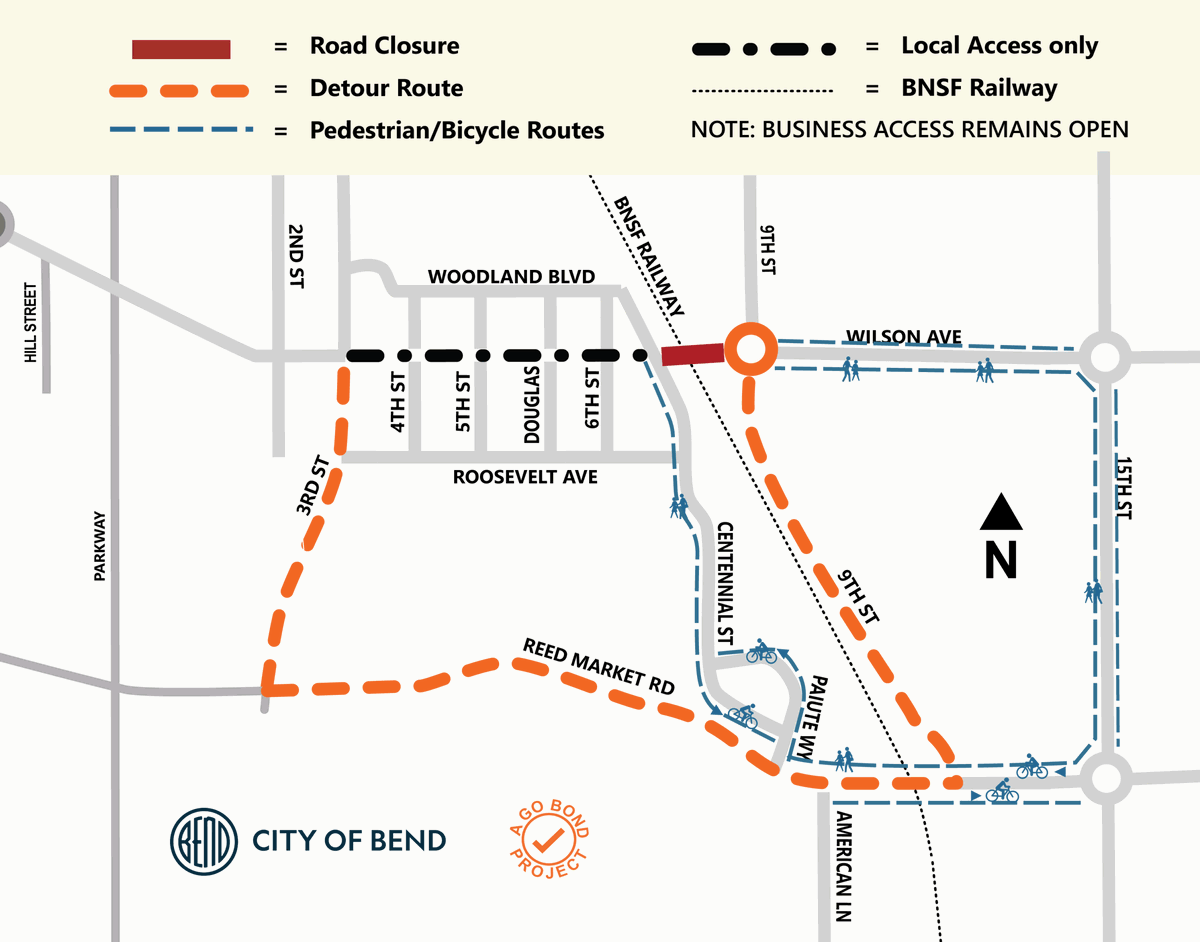
BEND, Ore. (KTVZ)– One of Bend’s key east-west routes will stay closed longer than expected as construction continues near the railroad crossing on Northeast Olney Avenue.

The stretch of Olney Avenue between NW Wall Street and NE First Street is now anticipated to remain closed through January 2026, city officials announced this week.

The extended closure comes as BNSF Railway crews complete track and signal improvements at the at-grade crossing, work that’s expected to last through December. Once the railway finishes its upgrades, the city’s project contractor will rebuild the roadway — including new subgrade, concrete, and asphalt — aiming to reopen Olney in late January, weather permitting.

Because final paving, striping, and landscaping require warmer temperatures, those finishing touches are planned for spring 2026. At that point, drivers should expect another full closure lasting up to two weeks to complete the final work.

In the meantime, the city is coordinating with BNSF to allow a temporary reopening of Olney Avenue from late January through April using temporary pavement.

There’s some good news for drivers, though: Olney between NE First Street and NE Second Street is expected to reopen the week of December 15.

Click here to follow the original article.

Problem Solvers: Trump administration pushes to remove gray wolves from Endangered Species Act protections

Harley Coldiron

Move brought outrage from conservation groups, while drawing praise from ranchers and Republicans

VALLEY FALLS, Ore. (KTVZ) — The Trump administration is moving to permanently delist the gray wolf from the Endangered Species Act, a decision spotlighting the struggles of a Southern Oregon ranch family at the heart of the nationwide debate.

A Wolf at the Fence Line

On the Flynn family farm in Southern Oregon, video shows Wolf 158 standing over one of rancher Tom Flynn’s calves, moments after killing it. Just a few feet away, the calf’s mother stands over her dead young, watching in visible distress.

Oregon Wolf 158 (left) feet away after killing a mother cow’s calf (right)

Wolf 158 after Tom Flynn confronts it after killing calf

Flynn recalls the encounter bluntly: “He just killed one. He has no fear of me. There are more babies out there, just within a couple of hundred yards of him.”

For weeks, the gray wolf stalked the Flynn family’s livestock, leaving them in constant fear.

Fish and Wildlife officers camped out on the property, using every non-lethal method allowed by law to capture and relocate the wolf, but he says nothing worked. At one point he noted, “Well, that’s nice—he’s heading right for the feed ground where there’s a bunch of baby calves, and it’s just half a mile behind the house.”

Eventually, more than a dozen of the Flynns’ calves were killed before authorities euthanized the animal. “After a three-week period,” Flynn said, “it finally came back to what I could have done in the first five minutes of encountering that wolf.”

Ranchers Back the Delisting Push

Rep. Cliff Bentz, a Republican who serves Oregon’s 2nd Congressional District, backs the change. “I think the Trump administration is exactly right,” he said.

Bentz argues that, for rural ranchers, wolves are not an abstract conservation question but a direct threat to their livelihood.

Bentz says ranchers lose more than calves to wolves—chronic stress from stalking leads to fewer pregnancies in herds. Some conservation groups, however, question those claims.

Bents also emphasized that ranchers are not compensated for lower pregnancy rates from their cattle, “We want to have these apex predators running around wreaking havoc, then those who want it that way have to pay for it, period,” Bentz emphasized in an interview with the Problem Solvers.

Farmers and ranchers, meanwhile, remain frustrated by repeated livestock losses, despite increased state investment in non-lethal deterrents and compensation. Though ranchers can be compensated for calves confirmed killed by wolves, the process can take time and does not cover livestock deaths that wildlife officials can’t directly verify.

“A wolf is a killing machine. It is truly in the business of killing,” Bentz said. “On the one hand, we’re busy trying to make sure we have food and driving down food prices. On the other hand, we’re busy encouraging wolves. Wow, what a crazy thing.”

He added that many ranchers in places like Eastern Oregon are already operating on thin margins. “What we ought to be doing is just trying to figure out how to make sure that those folks who, for the last hundred years, have eked out a living in these marginal spaces, like Eastern Oregon, for example, don’t have to bear another burden, such as wolves killing their livestock.”

Conservation Groups Fight Back

The decision is not sitting well with conservationist groups like the Center for Biological Diversity. Collette Adkins, carnivore conservation director and senior attorney for the organization, said, “Wolves made progress towards recovery across the country because of the protections of the Endangered Species Act.”

She added, “When wolves are federally protected, what we see is that the states work more closely with livestock operators, giving them more resources and tools.”

The Oregon Department of Fish and Wildlife currently encourages non-lethal deterrents, such as removing livestock carcasses, increasing human presence, using fladry or temporary fencing, and installing alarms or light-based scare devices.

In 2024, Oregon’s Department of Agriculture awarded $790,000 in grants for preventive measures and confirmed losses, up sharply from $478,000 the previous year, with all requests for compensation fully granted.

Adkins worries that removing federal protections could send wolf numbers crashing again: “When wolves lose federal protections, they’ll just turn back to the Band-Aid shortcut of just killing the wolves.”

A Democratic Response from Congress

Congresswoman Janelle Bynum declined an on-camera interview but issued a written statement responding to the debate. “Supporting farmers who feed our communities and protecting our vulnerable wildlife shouldn’t be mutually exclusive,” the 5th District Democrat said. “I’ll continue working in Congress toward conservation efforts that prioritize the livelihood of our farming families without compromising on protections for our endangered species and our environment.”

The Problem Solvers made several follow-up attempts to clarify her position and dig deeper into the issue, but never received a response.

Rep. Bentz criticized her stance and urged her to spend more time with ranchers on the ground: “She needs to get out there and actually listen, because those people who run a McDonald’s—and she does, she owns a bunch of them—should understand exactly where beef comes from. She serves it every day in her restaurants. And for her not to be aware of this additional cost being imposed upon the food chain that she relies upon is just amazing to me.”

What Delisting Would and Wouldn’t Change in Oregon

If the federal delisting goes through, it would not mean open season on wolves in Oregon. The state would still maintain strict protections for the species, and any lethal control would remain tightly regulated.

However, delisting would give farmers and ranchers somewhat more flexibility to kill a wolf that is actively threatening their livestock. Even then, officials stress that delisting would not mean widespread sport hunting of wolves across the state.

Oregon’s Wolf Population Rises, But so do Depredations

After years of stagnation, Oregon’s wolves have rebounded, fueled by westward expansion and successful breeding in both eastern and western management zones.

Wolf advocates hailed the population growth as a relief but tempered optimism with sharp concerns about illegal and legal killings.

“I’m relieved to finally see a noteworthy increase in Oregon’s overall wolf population, but we’re not in the clear by any means,” said Amaroq Weiss, a senior wolf advocate at the Center for Biological Diversity. “Far too many wolves are being killed illegally, and while state officials are concerned about wolf poaching, they continue to authorize high levels of legal wolf killing over livestock conflicts.”

Statewide, wolf depredations have averaged around 70 investigated incidents per year since 2021. However, 2025 is expected to exceed this average, with final counts to be released next spring.

ODFW authorized targeted removals of 11 wolves in the East Management Zone due to chronic depredation. Eastern Oregon is one of the few places in the country where wolves are not federally protected.

Ranchers lawfully shot another three wolves caught in the act of attacking livestock. The total of 14 wolves killed for livestock conflicts in 2024 nearly matches the 16 killed in 2023. Seven additional wolf deaths are currently under investigation, some tied to suspected poaching or poisoning in eastern and western zones.

State vs. County Control

While the Flynns and Rep. Bentz spoke highly of Oregon Fish and Wildlife, they expressed support for shifting control of wolf protections to the county level. The Flynns emphasized that each Oregon county is distinct, with its own needs and political leanings. They also don’t feel Salem and the State of Oregon represent rural interests and ways of life.

Bentz agreed, saying, “My counties are huge. Harney County is 10,000 square miles, and Malheur County is almost 10,000 square miles also. These are huge, huge, huge areas. So of course, the counties should have a lot to say about all the activities that go on within them — particularly when it comes to wolves.”

Looking Forward

For the Flynn family, the scars of losing more than a dozen calves to Wolf 158 are still fresh. For conservationists, the worry is that rolling back federal protections could erase decades of progress in bringing wolves back from the brink.

For now, a Southern Oregon ranch stands as a vivid example at the center of a countrywide debate over how to balance protecting predators with protecting the people who live and work alongside them.

Click here to follow the original article.

No snow, less dough: When fewer visitors come, Bend businesses say locals make a big difference

Tyson Beauchemin

BEND, Ore. (KTVZ) — For businesses, no snow means less dough in a town dependent on tourism and outdoor recreation.

A late start to the ski season has economic impacts. Hotels and restaurants could feel an impact this year.

KTVZ News spoke with a chef at the Hawkeye & Huckleberry Lounge in Bend, who says it’s already noticed a pinch.

“It’s absolutely true – we saw it already with Thanksgiving,” Carolos Anthony said. “Last year, we already had thea mountain open. We saw probably a 10% downshift in covers, in reservations,. And you feel that, especially small businesses, they’ll feel it.

“But again, I think our locals are so strong here, they’re really supporting our local businesses. So here’s talking to you locals! Make sure you’re going to those restaurants, shops, bars, Make sure you’re supporting because we don’t have our tourists right now.”

Wednesday night, the restaurant hosted a Mt. Bachelor pass-holder party.

While there’s no snow on the mountain, plenty of partygoers hope they’ll be skiing soon.

Click here to follow the original article.
Half of Oregonians don’t answer jury duty call or ask to be excused; new task force aims to ease barriers to serving

KTVZ

SALEM, Ore. (KTVZ) — National surveys show that most Americans think juries are important, but about one in four Oregonians didn’t respond when state courts summoned them for jury duty this year. Another 25% asked to be excused from jury service.

A new statewide task force will start meeting in January to look at why this is happening and how to remove barriers that keep people from serving.

The Task Force on Removing Barriers to Jury Service was created by Senate Bill 1175, a new law passed during the 2025 legislative session.

“The constitutional right to a trial by jury is a cornerstone of U.S. democracy and the Oregon judicial system,” Oregon Supreme Court Chief Justice Meagan A. Flynn said. “Whether jurors end up serving during a trial or not, participation in the jury process helps protect the right to a fair trial, promotes civic engagement and increases the public’s understanding of the justice system.”

“Yet the number of Oregonians answering the call to jury service is declining, often due to barriers beyond their control,” she said. “Many cannot afford to take time off work, find it too difficult to travel to a faraway courthouse, or may not have someone to take care of their children while they serve. This makes it harder to ensure that those who do serve fully represent their communities.”

Chief Justice Flynn, Gov. Tina Kotek, and legislative leaders appointed 15 task force members from all three branches of government. Together, they will:

Look at how Oregon pays people who serve on juries, see how that affects how many people show up for jury service and compare Oregon to other states.

Suggest ways to improve how jurors are paid so that more people are willing and able to serve.

Come up with ideas for how to inform the public about jury service and why it’s important.

Find and suggest solutions to other problems that make it hard for people to serve on a jury.

The task force must turn in a final report by Dec. 15, 2026.

About Jury Service in Oregon

At Oregon’s state courts in 2025:

More than 578,000 Oregonians have been called for jury duty.

About 25% of people who received a jury summons asked to be excused from jury duty. The number of people asking for excusals has gone up about 16% each year since 2017.

The courts granted excusals to about 21% of people who asked for it.

Nearly 26% of people did not respond to their jury summons.

When people do respond and are picked to serve, they might be on a jury for just one day or for several months. This depends on the type of jury and the length of the trial.

State Law for Juror Payment

Oregon pays jurors $10 per day for the first two days, and $25 per day after that.

If jurors get paid by their employer for the work time they miss, they must turn down the juror payment from the state, unless their job contract allows them to take both.

In all situations, the state pays jurors either 20 cents for every mile between their home and the courthouse, or the cost of a roundtrip public transportation ticket.

State Law for Employers

Oregon does not require employers to pay workers for the time they miss while serving on a jury.

Employers with 10 or more workers do still have to provide health, disability, life, or other insurance coverage for employees during their jury service.

Employers cannot fire, threaten or pressure someone because they are serving.

Employers cannot require people to use vacation or sick time for jury service.

Task Force Members

Tom Andersen, (D-Salem), Oregon State Legislature

Bryan Brock, Oregon District Attorneys Association

Timothy Dooley, Association of Oregon Counties

Keren Farkas, Oregon State Bar

Nansi Lopez, state Racial Justice Council

James I. Manning, Jr., (D-Eugene), Oregon State Legislature

Kimberly McCullough (chair), Oregon Judicial Department government relations

Judge Tucker Rossetto, Beaverton Municipal Court

Presiding Judge Matthew Shirtcliff, Baker County Circuit Court

Judge Chanpone Sinlapasai, Multnomah County Circuit Court

Kim Thatcher, (R-Keizer), Oregon State Legislature

Kia Tolbert, a Roseburg attorney who provides legal defense in criminal proceedings

Kim Wallan, (R-Medford), Oregon State Legislature

Royce Williams, a Portland attorney with experience with civil jury trials

Vacant – representative of an association representing businesses (person previously appointed has changed positions; new appointment coming soon)

Click here to follow the original article.

Bynum cites Flat Fire, introduces bill targeting recreational drones hampering firefighting efforts

KTVZ

WASHINGTON (KTVZ) — Rep. Janelle Bynum (OR-05) and fellow Reps. Eli Crane (AZ-02), Joe Neguse (CO-02), and Juan Ciscomani (AZ-06) introduced the bipartisan Wildfire Aerial Response Safety Act on Thursday to support wildfire response operations by addressing the impact of unauthorized drones flying in restricted airspace during a wildfire.

When an unauthorized drone enters restricted airspace during a wildfire, fire response agencies are often required to ground their aircraft, to avoid the risk of a collision.

In Oregon, and across the country, there have been several instances of this happening, including during Central Oregon’s Flat Fire this summer, which delayed response efforts on the blaze that burned more than 23,000 acres and destroyed five homes and other structures near Sisters.

The bill would require the Federal Aviation Administration to conduct a study on the impact of drone incursions on wildfire suppression and explore available techniques to address unauthorized drone activity. 

“Earlier this year, a drone delayed the aerial fire response to the Flat Fire in Central Oregon,” said Rep. Bynum. “We know all too well that wildfires are challenging enough to get controlled without any additional obstacles. The last thing we need is recreational drones getting in the way of our firefighters’ critical work to save lives and property. That’s why I’m introducing this bipartisan bill to ensure fire crews can do their work without interference.” 

“I’m proud to co-introduce this bipartisan legislation to address the growing issue of drones interfering with aerial fire suppression efforts. Arizona is prone to devastating wildfires, and it’s imperative that we minimize obstruction and delays,” said Rep. Crane. “With our bill, Congress would have the necessary information to craft policies that help our firefighters combat wildfires before they get out of control. I urge my colleagues to support our approach.”

“Fires in Colorado and across the West now rage year-round, growing both in duration and intensity, which is why our bill, the Wildfire Aerial Response Safety Act, is so necessary,” said Rep. Neguse. “This bill ensures our firefighters can protect communities and operate without unnecessary risks from unauthorized drones. It is a common-sense proposal that if enacted will bolster worker and public safety.”

“Unauthorized drones are putting lives at risk and hampering wildfire response efforts across the West — including right here in Arizona,” said Rep. Ciscomani. “I’m proud to co-lead this bipartisan effort to build on the 2020 study and examine real, on-the-ground tools that first responders can use to neutralize these incursions. As wildfire seasons grow longer and more dangerous, we must give our crews every possible advantage to protect our communities and keep response operations safe and effective.”

The Oregon Department of Forestry, which is responsible for wildland fire protection across more than 16 million acres in Oregon, submitted the following statement about the growing and urgent threat posed by unauthorized Unmanned Aircraft System (UAS) operations within active wildfire airspace:

“Unauthorized UAS flights near wildfires create an immediate and serious safety hazard. When a UAS enters the airspace, our firefighting aircraft are forced to disengage, pilots lose the ability to operate safely, and ground crews lose vital aerial support at the most critical moments of suppression. These interruptions give fires time to grow and place firefighters, pilots, and nearby communities at increased risk. This is a real and recurring operational threat we now face on active incidents,” said Sarah Prout, ODF UAS Program Lead.

You can find a one-pager on the bill here and the full text of it here.

Click here to follow the original article.

25th annual Shop with a Cop’s final tally: Nearly 100 kids teamed up with 79 officers to choose gifts for families

KTVZ

BEND, Ore. (KTVZ) – The Deschutes County Sheriff’s Office said Thursday that it’s proud to celebrate the success of the recent, 25th annual Shop with a Cop program, which provided warmth, comfort, and holiday cheer to 95 children across Deschutes County.

Thanks to the generosity of donors, volunteers, and law enforcement partners, the program invested $57,000 directly into meeting real needs for local families, the DCSO said in a news release we’re providing here in full:

This year’s program highlighted the depth of need in our community. Children asked for bedding, warm clothing, and even basic kitchen items like silverware, cups, and pots and pans — items that help families cook meals and stay warm.

Shop with a Cop continues to go beyond holiday gifts, offering dignity, comfort, and hope.

“You can’t help but be moved when you see the smile on a child’s face as they pick out their very first set of warm pajamas or a blanket to call their own,” said Sheriff Ty Rupert. “Some of these kids asked for basic household items, not just toys. It’s emotional because you see first-hand how this program is meeting real needs and making a real difference.”

Shop With a Cop was powered by 79 law enforcement officers from multiple agencies, many of whom participated on multiple days:

Deschutes County Sheriff’s Office

Deschutes County Sheriff’s Office Mounted Posse

Deschutes County Parole and Probation

Bend Police Department

Redmond Police Department

Sunriver Police Department

Black Butte Police Department

Oregon State Police 

Special thanks to:

Kay Walters (Redmond volunteer coordinator)

Amanda Surplus (Bend volunteer coordinator)

AmeriTitle

Kendall Auto Group

Washington Trust Bank

Bend Police Department

Sunriver Citizen Patrol

Re/Max

Mid Oregon Credit Union

Coldwell Banker

DCSO Spouses Group

Eastmont Church Women’s Group

The program also received generous support from:

Walmart (Bend & Redmond)

Pappy’s Pizza (Redmond)

Abby’s Pizza (Bend)

Dutch Bros

McDonald’s

Franz Bakery

Fundraising for Shop with a Cop takes place year-round, and every contribution helps the program continue meeting real needs in our community. This year, the community rallied to raise an additional $31,000, which, combined with funds carried over from last year, allowed DCSO to make a real impact for this milestone 25th anniversary. The Deschutes County Sheriff’s Office is deeply grateful for the ongoing support from across the county.

How to Donate:

Online:

https://sheriff.deschutes.org/community/programs/shop-with-a-cop/

By Check:

Payable to: Deschutes County Sheriff’s Office – Shop with a Cop

Mail to: 63333 Hwy 20, Bend, OR 97703

In Person:

Drop off your donation at the front office—please label it “Shop with a Cop.”

Click here to follow the original article.
Fences for Fido leads delivery of 20,000 pounds of donated pet food for Warm Springs families

KTVZ

(Update: Video Added)

WARM SPRINGS, Ore. (KTVZ) — As families on the Warm Springs Reservation prepare for the winter months and the holiday season, a substantial gift of support for their pets is on its way. 

Fences For Fido, a  Greater Good Ambassador, in partnership with Warm Springs Commodities, has received 20,000 pounds of donated dog and cat food from Purina to support families with pets on the Warm Springs Reservation. 

Located in Jefferson County, the Warm Springs Reservation is more than 15 miles from the nearest town with veterinary services or pet supplies, leaving families with limited access to basic animal care resources. Despite these challenges, families consistently show deep love and commitment to their pets, often stretching limited resources to ensure their animals remain healthy and at home. 

This holiday season, the donation from Purina Pet Food arrives at a moment when it can make the greatest impact. 

A Lifeline for Local Families and Their Pets 

Fences For Fido has operated a supplemental pet food bank on the Warm Springs Reservation five years, in partnership with Warm Springs Commodities, providing dog and cat food year-round to families who need it. This large-scale donation from Greater Good and Purina will significantly expand that support. 

“This is truly the greatest holiday gift we could offer families with pets,” said Kelly Peterson, Co-Founder and Board Chair of Fences For Fido. “Access to pet food and supplies is limited on the Reservation, and this donation helps ensure that pets stay healthy, fed, and together with the families who love them.” 

A pet food giveaway event will be held this Saturday, distributing dog and cat food directly to households throughout the Reservation. 

Strengthening a Trusted Partnership 

Warm Springs Commodities plays a vital role in meeting community needs by distributing essential food and supplies. Their ongoing partnership with Fences For Fido ensures that pet food reliably reaches families who otherwise have very few access points. 

“We’re grateful for this partnership and for Greater Good’s generosity,” said Theo Perez, Director of Warm Springs Commodities. “Families here care deeply about their pets, and this support helps lighten the load during a time when many budgets are stretched.” 

A Circle of Care in Action 

Fences For Fido has long served socially, financially, and geographically isolated communities across the Pacific Northwest. In addition to unchaining more than 3,700 dogs and delivering more than 2,000 dog houses, the organization has distributed over 700,000 pounds of pet food to families in need. 

On the Warm Springs Reservation, Fences For Fido provides year-round pet services—including spay/neuter, vaccines and wellness clinics, emergency veterinary care, and ongoing pet food support. 

Pet Food Giveaway Event 

Date: Saturday, December 13th, from 10 am – 3 pm (while supplies last) Location: Warm Springs Commodities, Warm Springs Reservation Details: Free dog and cat food for families on the Reservation 

About Fences For Fido 

Fences For Fido is a 501(c)(3) nonprofit dedicated to improving the lives of dogs by unchaining them and providing fences, shelter, veterinary care, and essential pet support across Oregon and Washington. The organization serves socially, financially, and geographically isolated communities—ensuring pets remain healthy, safe, and with the families who love them. www.FencesForFido.org 

About Warm Springs Commodities 

Warm Springs Commodities supports families on the Warm Springs Reservation by providing nutritious food and essential resources in partnership with tribal programs and community agencies. 

Click here to follow the original article.

House cleaner, two others arrested in burglary of NW Bend home caught on camera; pair of raids recover loot

Barney Lerten

BEND, Ore. (KTVZ) — A house cleaner and two other Bend residents have been arrested on burglary and theft charges, accused of stealing about $1,200 worth of items from a northwest Bend rental home, police said Thursday.

On Saturday, Nov. 29, Bend Police responded to a report of a burglary in the 1000 block of NW Baltimore Avenue, Bend Police Communications Manager Sheila Miller said.

The homeowners returned from a trip out of town and “discovered that a variety of their belongings were missing,” Miller said.

“The homeowners rent their house out when they leave town, and the company that manages the rentals hired a third-party cleaner to come in after the visitors departed,” she said. 

The homeowners reviewed their surveillance video footage and saw the house cleaner arrive in the early afternoon of Sunday, Nov. 16. About two hours later, two other people arrived and entered the home.

The three left about 10 minutes later “with a large number of items in garbage bags,” Miller said.

The missing items were estimated at about $1,200 in value.   

Miller said an investigation determined the cleaner was 36-year-old Bend resident Heather Cordier. The two other suspects were identified 41-year-old Stephanie Lafountaine and 47-year-old Stephen Rechner, also of Bend.  

On Tuesday of this week, between 12:40 p.m. and 3:15 p.m., Bend Police patrol officers, detectives and members of the Central Oregon Emergency Response Team raided two residences and recovered items connected to the burglary at both places, Miller said.

Search warrants were executed at an apartment in the 1700 block of SE Tempest Driver and another residence in the 600 block of NE Bellevue Drive. Officers were assisted by drone operators, negotiators and community service officers.  

Cordier, LaFountaine and Rechner were taken into custody, as was Sergei Newlin, 33, also of Bend, who had an unrelated warrant for a parole violation, Miller said. All four were booked into the Deschutes County Jail.   

Cordier, Rechner and Lafountaine each face first-degree charges of burglary, theft and criminal trespass.

Miller told KTVZ News she could not provide the surveillance video or images from it, as it is evidence in an ongoing investigation.

Asked if this type of crime would prompt any tips for the public to be aware of, Miller told us: “It’s tricky, because this was a third-party company that hired a cleaning person.”

“Of course, we would always recommend that people do their due diligence when hiring someone who will have access to their home,” she said. “In this case, that may not apply, because these people were using a company that then hired someone who committed these crimes.”

KTVZ News also asked Miller if this was believed to be an isolated incident.

“We do not have any indication that there are other victims,” she told us. “But our investigation is ongoing, and if members of the public believe something similar has happened to them, we’d like to hear about it.”

Click here to follow the original article.
Records fall, but not snow: Warm weeks stall start of Central Oregon’s ski season; feds declare ‘snow drought’

Claire Elmer

(Update: Comments by Shannon Brady, Mt. Bachelor; ‘snow drought’ declared)

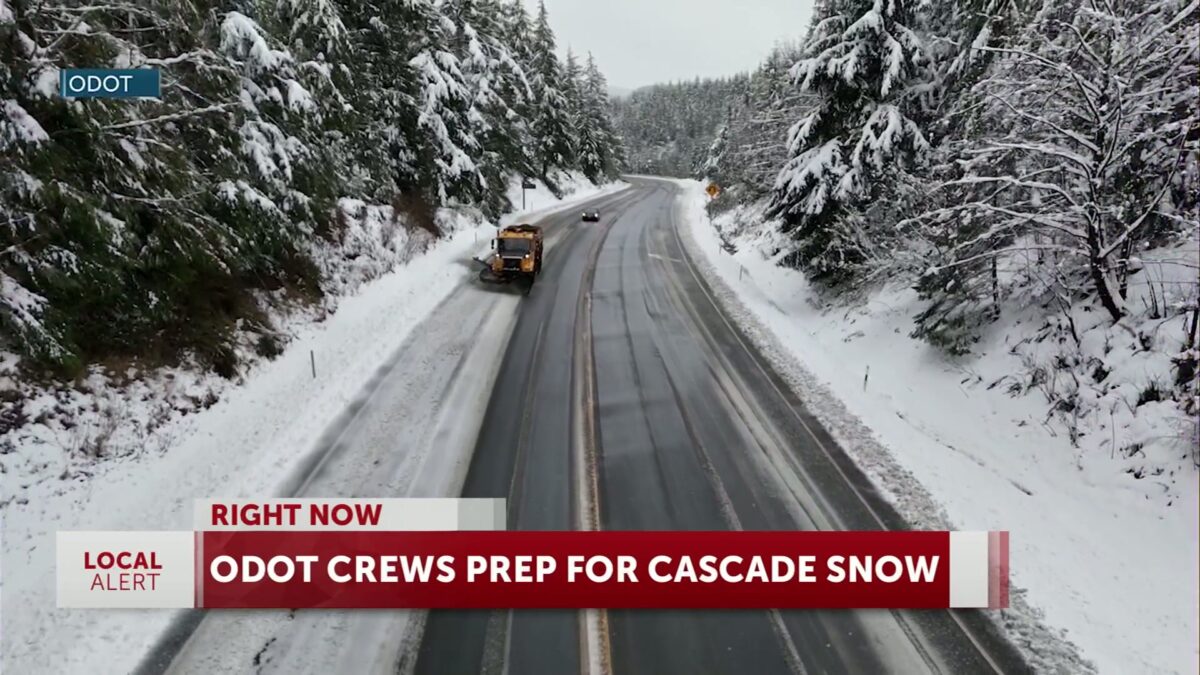
BEND, Ore. (KTVZ) — Record-high temperatures are keeping Mt. Bachelor from opening as planned, leaving the slopes bare well into December and raising questions about what the delay means for Central Oregon’s winter tourism.

In mid-December, Mt. Bachelor is typically buzzing with skiers and snowboarders from across the country. But this year, warm days and little snow in the Cascades have put the season on pause.

“We are seeing temperatures about 20 degrees above where we should be for this time of year,” said KTVZ Meteorologist Shannon Brady. “We’re seeing some records broken across the region, many of which have been held for over 100 years.”

In fact, federal meteorologists on Thursday declared a “snow drought” around much of the West, including Oregon, saying the early-season snow cover across the region is the lowest in 24 years of satellite data, and “nearly every major river basin in the West experienced a November among the top 5 warmest on record.”

Snow Water Equivalent as a percentage of the 1991-2000 median as of Dec. 7 (Drought.gov)

The warmth this week is tied to a stubborn high-pressure system sitting over the West Coast. But Brady said a change may be on the horizon.

“It is starting to look like we might see some snow by next week, which is good news, as some colder air moves in,” she said. “Pressure is going to drop a little bit, so maybe by mid to late next week we’ll get some measurable snowfall.”

For Mt. Bachelor, the later start isn’t ideal but not unprecedented. Resort officials say a slow opening doesn’t necessarily mean a low snow season.

“The ski industry is such a business that is reliant on the weather. So, it’s tough,” said Lauren Burke, Mt. Bachelor’s communications director. “We’ve seen years where we open in mid-December and get 500, 550 inches of snow, which is well above our seasonal average.”

Burke said the delay impacts early-season revenue, but their long spring keeps the ski season stretching into late May.

“We’re really committed to opening as soon as conditions allow and staying open as late as we can,” she said. “As soon as the snow comes, we know our skiers and riders are ready to go.”

Visit Bend echoed that optimism in an email to KTVZ on Thursday. Tim Neville said December is historically Bend’s most affordable month for lodging and the lowest occupancy of the year. Any dip now will likely be made up by pent-up demand, once the mountain opens.

In the meantime, Central Oregonians are still getting outdoors, taking advantage of fewer crowds on hiking and biking trails. And some are simply staying patient.

Bend skier Sam Schroeder. said, “Given the slow start, the middle and latter half of the season will be even better.”

With potential snow in the forecast next week, the ski season may not be far behind.

Click here to follow the original article.
Ask the Mayor: Bend’s Melanie Kebler speaks on a decrease in graffiti, potential roundabout changes, and more

Kelsey Merison

BEND, Ore. (KTVZ) — From a decrease in reported graffiti across town to potential changes to roundabouts, KTVZ News asked Bend Mayor Melanie Kebler your pressing questions Thursday morning.

Make sure to submit your questions for the mayor here. You can remain anonymous if you wish.

Click here to follow the original article.