Let’s Talk Weather: Ponderosa Elementary School, Kinder Class

John Carroll

Chief Meteorologist John Carroll went to visit the Kindergarten Class at Ponderosa Elementary School. The kiddos talked about the water cycle, being a weather detective and listened to Robbie The Raindrop, a children’s book John Carroll wrote.

Click here to follow the original article.

COIC welcomes Sean Keithly as new community and economic development director

KTVZ

BEND, Ore. (KTVZ) — The Central Oregon Intergovernmental Council is welcoming Sean Keithly as its new community and economic development director, beginning Friday, Jan. 12.

Keithly brings more than 20 years of experience in economic development and urban planning across the Pacific Northwest and Mountain West, with a career spanning regional planning, private-sector development, and public service, COIC said in Tuesday’s announcement, which continues in full below.

His work has consistently focused on collaborative, community-driven economic strategies that support long-term resilience and growth.

Most recently, Keithly served for more than seven years with the City of Boise Mayor’s Office, including six years as Economic Development Director, where he supported downtown revitalization, entrepreneurship, workforce development, and strategic economic initiatives.

His prior experience includes leadership roles with the Urban Land Institute in Seattle, architecture and planning firm Collins Woerman, and economic development and planning oversight for the Northern Colorado Regional Airport.

“Sean brings an exceptional blend of strategic vision, public-sector leadership, and deep respect for both urban and rural communities,” said Tammy Baney, executive director of COIC. “His experience building strong partnerships, supporting inclusive economic growth, and aligning planning with long-term community outcomes will be a tremendous asset to Central Oregon. We are excited to welcome him to the COIC team and look forward to the leadership he will bring to this important role.”

Keithly holds a bachelor’s degree in political science from Boston College and a master’s degree in urban planning from the University of Washington. In his new role, he will lead COIC’s community and economic development efforts, working closely with local governments, tribes, businesses, and community partners across Central Oregon.

About COICEstablished in 1972, the Central Oregon Intergovernmental Council is a regional council of governments serving Crook, Deschutes, Jefferson counties, and the Confederated Tribes of Warm Springs, providing planning, transportation, economic development, and community services that support regional collaboration and resilience.

Click here to follow the original article.

Construction to community corridor: Franklin Avenue in midtown Bend reopens with new safety improvements

Claire Elmer

BEND, Ore. (KTVZ) — Traffic is flowing again along Franklin Avenue in midtown Bend after months of construction — and it’s sporting a new look. The upgrades are part of the City of Bend’s Midtown Crossings project, helping improve safety for all who use the busy corridor.

The revamped section provides more accessibility for those using various modes of transportation by separating lanes of travel for cars, bicyclists, and pedestrians. City officials say the improvements are aimed at reducing safety hazards while improving connections between nearby neighborhoods, parks, and trails.

“We took the bike lane off of the roadway and put it behind the curb line, giving the bikes their own dedicated place to be, having a shared use area where bikes and pedestrians can interact, or even have different spots where they can kind of take their own lane,” said Ryan Oster, director of engineering for the City of Bend.

“It just puts the users on different levels, removes that risk of injury to anybody, and allows for a better system overall for everybody,” Oster stated.

Crews will return in the spring for final touches, including landscaping and possible pavement resurfacing. The City thanked residents for their patience during construction and said more improvements are still to come.

The next phase of the Midtown Crossings project will extend the upgrades west toward Third Street, eventually connecting across U.S. Highway 97 and nearby railroad tracks, to ultimately provide an even safer route through Bend for all.

Click here to follow the original article.

Oregon Adaptive Sports, Mt. Bachelor to celebrate remodel of OAS office with ribbon-cutting

KTVZ

(Update: Video Added)

BEND, Ore. (KTVZ) — Oregon Adaptive Sports and Mt. Bachelor will host a ribbon-cutting on Friday at 9 a.m. to celebrate the remodel of the Oregon Adaptive Sports Office, located in Sunrise Lodge at Mt. Bachelor.

“The updated space supports the long-standing partnership between the two organizations and represents a shared commitment to high-quality, accessible adaptive snowsports programming, the organizations said in a Tuesday news release that continues below:

For many years, the Mt. Bachelor office has served as the operational heart of Oregon Adaptive Sports winter programs.

Donated in-kind by Mt Bachelor, it is where athletes, instructors, and volunteers gather at the start of the day, where equipment is organized and stored, and where teams connect before heading onto the mountain.

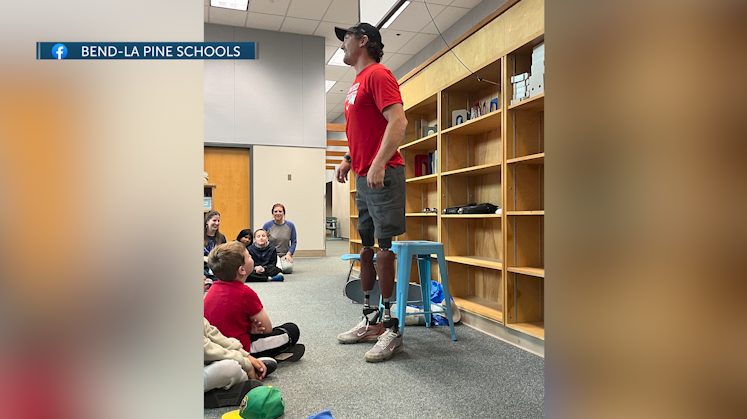
As participation and programming grew, the limitations of the previous layout became increasingly clear. The remodel reimagines the space to improve flow, accessibility, and functionality during busy program days.

In 2025, Powder Magazine ranked the Mt Bachelor and Oregon Adaptive Sports partnership as the No. 3 adaptive ski program in the country. The remodeled office reflects the caliber of programming offered on the mountain and provides the physical space needed to support continued growth.

“OAS has operated out of this space in Sunrise Lodge for many years,” said Pat Addabbo, executive director of Oregon Adaptive Sports. “This remodel reflects both the growth of our program and the strength of our partnership with Mt Bachelor. It creates a smoother, more accessible start to the day for athletes and volunteers and strengthens the overall experience we can provide for our athletes.”

“Oregon Adaptive Sports does incredible work, not only in terms of the quantity of opportunities they provide each year, but also the quality of the experiences,” said John Merriman, President and General Manager of Mt. Bachelor.

“We’re proud to work alongside them to continue improving accessibility on the mountain and extend our gratitude to everyone who chipped in time and resources to make it happen. Staff and volunteers from both teams put a lot of energy into transforming the lodge space; it’s a true reflection of our shared dedication to adaptive programming and athletes.”

The project was made possible through generous support from Mt Bachelor, private donors, and the collective efforts of Oregon Adaptive Sports staff and volunteers. OAS also extends appreciation to architect Ellen Hassett, whose thoughtful design helped transform the space into a more open and functional environment.

OAS staff, ambassadors, volunteers, athletes, Mt Bachelor employees, and community stakeholders are expected to attend the ribbon-cutting.

About Oregon Adaptive Sports: 

Founded in 1996, Oregon Adaptive Sports is a leader in providing high-quality outdoor experiences for individuals with disabilities. With programs in adaptive skiing, snowboarding, and Nordic skiing, cycling, mountain biking, hiking, paddling, and golf, OAS is committed to making outdoor sports accessible to people of all ages with a wide range of disabilities.

Click here to follow the original article.

Housing Works to open waiting list for 2026 Housing Choice Voucher Program next week

KTVZ

(Update: Video Added)

REDMOND, Ore. (KTVZ) – Housing Works, a housing organization dedicated to fostering stability and affordability in Central Oregon, has announced next week’s one-week opening of the 2026 Housing Choice Voucher Program waiting list.

This essential program, formerly known as the HUD Section 8 program, provides rental assistance to eligible low-income residents of Deschutes, Jefferson and Crook counties, the organization said in Tuesday’s announcement, which continues in full below:. 

The waitlist will open at 8:00 AM PST on Monday, January 12, and close at 5:00 PM PST on Friday, January 16, 2026. Applications will be accepted online only via Housing Works’ official website: www.housing-works.org

Housing Works Executive Director Lynne McConnell shared her thoughts on the program’s importance, saying, “The HCV program is a lifeline for our struggling community members. Housing Works is proud to offer this program and thankful to the network of partners who assist in getting the word out and connecting folks to this resource. Our vision is to increase stability and affordability for our region, and the HCV program is one of the best ways to do this.” 

Key Information for Applicants: 

The time of application submission during the open period will not affect placement on the waiting list. 

All applications submitted by the deadline will undergo a randomized computer selection process to ensure equitable opportunities for all. 

Applicants who were on the 2025 waiting list but were not selected must reapply, as applications do not carry over from year to year. 

 Technical Assistance: Housing Works staff will be available to assist applicants from 8:00 AM to 5:00 PM PST during the application window. Support will be provided in person, by phone, or via email at the following locations: 

REDMOND — Mon–Fri, 8–5: Housing Works Office (405 SW 6th St, entrance located behind building), and al Spencer Court Apartments (2445 SW Canal Blvd)  

BEND — Mon–Fri, 8–5: Phoenix Crossing Office (1475 NE Forbes Rd)  

LA PINE — Tue & Thu, 10–4:30: La Pine Library (16425 1st St)  

MADRAS — Tue & Thu, 10–4:30: Jefferson County Library (241 SE 7th St)  

PRINEVILLE — Tue & Thu, 9–4:30: Crook County Library (175 NW Meadow Lakes Dr) 

Applicants are encouraged to seek assistance early and avoid waiting until the final day.

For additional support, accommodations, or questions, please contact Housing Works at (541) 923-1018 or frontdesk@housing-works.org

About the HCV Program: The HCV Program enables participants to rent private housing that meets safety and affordability standards.

Participants typically pay 30% of their adjusted income toward rent, with the voucher covering the remaining amount, up to a set limit.

This program provides flexibility and financial relief, helping families, seniors, and individuals with disabilities achieve greater stability. 

Housing Works remains dedicated to providing equitable and impactful housing solutions for the communities we serve.   

Click here to follow the original article.

Oregon State Parks seek public input on proposed rules for drone takeoffs, landings in state parks

KTVZ

(Update: Video Added)

SALEM, Ore. (KTVZ) — The Oregon Parks and Recreation Department is seeking public feedback on proposed rules governing unmanned aircraft systems (UAS) takeoff and landing in Oregon’s state parks and along the ocean shore.

“The proposed rules establish where and how UAS may take off and land on state park property, to balance recreational opportunities with protection of natural, cultural, scenic and recreational resources,” the agency said in Tuesday’s announcement, details of which continue below..

Public comments on the proposed rule changes can be submitted:

Online:

https://www.oregon.gov/oprd/PRP/Pages/PRP-Rule-2025-Drones-Take-off-and-Landing.aspx

By email:

OPRD.PublicComment@oprd.oregon.gov

By mail:

Oregon Parks and Recreation DepartmentAttn: Robert Ellison725 Summer St. NE, Suite CSalem, OR 97301

A public hearing will be held to allow members of the public to provide testimony.

Virtual hearingTuesday, January 20 at 5:00 p.m.

Zoom: https://us06web.zoom.us/webinar/register/WN_X3ChSlJkTE-Y3FRh3WIy-Q

The draft rules focus on regulating takeoff and landing locations, which are within the department’s authority, while recognizing that UAS flight is regulated by the Federal Aviation Administration.

Under the proposal, UAS use would generally be limited to designated areas for drone operations, with additional requirements for commercial or research purposes.

The proposed rules were developed in response to Senate Bill 109 (2021), which directed OPRD to create a regulatory framework that provides recreational UAS access while protecting sensitive park resources and minimizing conflicts with other visitors.

OPRD convened a Rule Advisory Committee made up of recreation user groups, conservation organizations, natural resource specialists, commercial operators and other stakeholders. The committee reviewed draft rules and provided recommendations that helped shape the proposal now open for public comment.

Once the public comment period closes, OPRD staff will review all feedback, revise the draft rules as appropriate, and present a final proposal to the Oregon State Parks and Recreation Commission for consideration later in 2026.

If adopted, the rules would be implemented in phases, allowing the department to adapt management strategies over time, based on resource conditions, visitor use and operational experience.

Click here to follow the original article.

‘Skiers and riders are in for a treat’: Mt. Bachelor ‘elated’ by lots of long-awaited snow due this week

Barney Lerten

BEND, Ore. (KTVZ) — After a late start to winter and weeks of tantalizing and teasing storms that brought some, but not a lot of snow to the slopes of Mt. Bachelor – only to melt on warmer and rainy days – this week’s storm is going to deliver what winter sports enthusiasts have been hoping and waiting for — not just inches, but feet of fresh powder to play on.

“I don’t think I have ever used this word in a media alert, but I can honestly say we at Mt. Bachelor are elated to see FEET of snow in the forecast this week. 😊,” Mt. Bachelor Communications and Community Relations Manager Presley Quon said Tuesday in an update to the media.

“With up to 52” of snow possible by Thursday followed by a clear, partly sunny weekend, skiers and riders are in for a treat,” Quon wrote. “Snow is currently coming down hard, with an inch already accumulating on the snow stake since this morning.”

She advised everyone to “check the webcams to watch the snow stack up, and refer to the Mountain Report for operations updates throughout the storm cycle. Teams will be working around the clock on storm recovery efforts and to expand terrain, as conditions allow.”

However, that much snow in a matter of days has its share of risks that visitors need to be aware of, as Quon reminded.

“Be Advised: With heavy snow comes increased risk of snow immersion suffocation (SIS) and tree wells,” she said. “Mt. Bachelor urges guests to ski or ride with a partner and keep them in sight at all times. Sticking to open, groomed trails minimizes SIS hazards. To learn more about deep snow safety, visit: https://www.deepsnowsafety.org/.”

The National Weather Service has a winter storm warning in place for the east slopes of the Cascades and other areas of Oregon and Washington through 4 p.m. Thursday, with one to three feet of snow expected above 4,500 feet.

KTVZ’s Local Alert Weather Team has issued a Local Alert Weather Day for Wednesday, with 1-2 inches of snow possible in Bend and larger amounts at higher elevations that could mean tricky winter travel for many.

Click here to follow the original article.

Military officially demobilizing National Guard troops activated in Portland, Los Angeles and Chicago

Barney Lerten

(UPDATE: Adding Video)

SALEM, Ore. (KTVZ) — After months of court fights and legal limbo over their call-up by President Trump, hundreds of Oregon National Guard members and others called up in Portland, Los Angeles and Chicago to protect federal facilities are being demobilized, the U.S. Northern Command confirmed Tuesday.

“All Title 10 troops in Portland, Los Angeles, and Chicago are conducting demobilizing activities. They will return to their home units once their demobilization is complete,” according to a brief update on NORTHCOM’s “Federal Protection Mission” website.

Trump federalized 200 Oregon National Guard troops in late September in response to protests outside an ICE facility in Portland’s South Waterfront neighborhood, KGW reported, although he repeatedly described both the mission and the situation on the ground in Portland in far broader and more incendiary terms, such as claiming that life in the city was like “living in hell” and that he was “authorizing Full Force, if necessary” to respond to “Antifa, and other domestic terrorists.”

Local and state political leaders protested the move, arguing that Trump was grossly exaggerating the situation on the ground and that the existing federal personnel at the ICE facility were fully capable of keeping it secure. KGW’s reporting showed that the protests were largely peaceful and confined to just a few nearby blocks.

Trump announced recently that he was withdrawing the National Guard troops from Chicago, Los Angeles and Portland, but left the door open to sending federal forces “in a much different and stronger form.” He did so after the US Supreme Court rejected his request to let him deploy the Guard to Chicago to protect ICE agents as part of the administration’s ongoing immigration crackdown.

Governor Tina Kotek issued a statement Tuesday in response to the official demobilization order, received Monday by the Oregon Military Department. She said demobilization activities require Oregon National Guard members to travel to Fort Bliss, Texas before returning to Oregon.

“The citizen-soldiers of the Oregon National Guard are our neighbors, friends, and family,” Kotek said. “These courageous Oregonians deserve certainty and respect. While I am relieved that all our troops will finally return home, it does not make up for the personal sacrifices of more than 100 days, including holidays, spent in limbo. 

“During this crisis, Oregonians stood united against the unwanted, unneeded, unconstitutional military intervention in our state, with thousands peacefully voicing their opposition to the Trump Administration’s abuse of power. 

“President Trump’s disregard for the facts on the ground revealed that he is more focused on provoking a fight in cities and states that don’t share his politics than serving the American people. I remain committed to defending our values and the rule of law.”

Kotek said a U.S. District Court injunction preventing Guard deployment in Oregon remains in effect and on appeal in the Ninth U.S. Circuit Court of Appeals.

Click here to follow the original article.

As new year begins, AAA says Oregon and Washington see the largest gas price declines in the nation

KTVZ

PORTLAND, Ore. (KTVZ) – It’s another week of declines at the gas pumps as 2026 begins, AAA Oregon/Idaho reported Tuesday.

Gas prices continue to fall in Oregon and most other states this week, driven by the usual seasonal factors of low demand and cheaper winter-blend fuel. In addition, crude oil prices remain below $60 per barrel.

For the week, the national average for regular slips two cents to $2.82 a gallon. The Oregon average loses six cents to $3.39 a gallon. Oregon and Washington (-6 cents to $3.82) both have the largest weekly declines in the nation.

Bend’s average gas price drops a nickel, to $3.27 a gallon.

“After some years with wild swings in gas prices due to the pandemic, the Russian invasion of Ukraine, tensions in the Middle East, and other factors, 2025 was a relatively calm year at the pumps,” says Marie Dodds, public affairs director for AAA Oregon/Idaho.

Gas prices in Oregon and Washington were impacted by two closures of the Olympic Pipeline in September and November 2025 which temporarily caused prices to climb. But otherwise, gas prices tended to follow the seasonal trends of rising in the spring ahead of the switch to the more expensive summer-blend fuel, and declining in the fall and winter due to the annual switch to the cheaper winter-blend gas and the usual seasonal drop in demand for gasoline.

The Oregon average for regular gas began 2025 at $3.45 a gallon and ended the year at $3.43. The highest price of the year was $4.297 on September 13 and 14. The lowest price of the year was $3.43 on December 31.  

The national average began 2025 at $3.06 a gallon and ended the year at $2.84. The highest price of the year was $3.268 on April 4. The lowest price of the year was $2.825 on December 29.

Demand for gasoline in the U.S. gasoline decreased from 8.94 million b/d to 8.56 million b/d for the week ending December 26. This compares to 8.17 million b/d a year ago. Total domestic supply of gasoline increased from 228.5 million barrels to 234.3 million. Gasoline production decreased last week, averaging 9.5 million barrels per day compared to 9.8 million barrels the previous week.

Gas prices usually drop in the fall, due to the switch from summer-blend to winter-blend fuel, which costs less to produce. The switch starts in September. Many areas, including Oregon, can sell winter-blend fuel starting September 15. However, Northern and Southern California require summer-blend fuel through October 31. Prices usually decline to their lowest levels of the year in late fall and early winter before increasing again in the late winter and early spring.

Gas prices typically rise starting in mid-to-late winter and early spring as refineries undergo maintenance ahead of the switch to summer-blend fuel, which is more expensive to produce and less likely to evaporate in warmer temperatures. The switch occurs first in California, which is why pump prices on the West Coast often rise before other parts of the country. The East Coast is the last major market to switch to summer-blend fuel. Most areas have a May 1 compliance date for refiners and terminals, while most gas stations have a June 1 deadline to switch to selling summer-blend. Switch-over dates are earlier in California with some areas in the state requiring summer-blend fuel by April 1. Some refineries will begin maintenance and the switchover in February.

The U.S. price of crude oil (West Texas Intermediate) has mostly been in the upper $50s to mid-$70s since September 2024.

WTI is trading at $58 today, compared to $58 a week ago and $74 a year ago. In 2025, West Texas Intermediate ranged between $80.04 (January 15) and $57.46 (October 16) per barrel.  In 2024, WTI ranged between $66 and $87 per barrel. In 2023, WTI ranged between $63 and $95 per barrel. WTI reached recent highs of $123.70 on March 8, 2022, shortly after the Russian invasion of Ukraine, and $122.11 per barrel on June 8, 2022. The all-time high for WTI crude oil is $147.27 in July 2008.

Crude prices are impacted by economic news as well as geopolitical events around the world including the current economic uncertainty, unrest in the Middle East, the conflict between Israel and Hamas, and the war between Russia and Ukraine. Russia is a top global oil producer, behind the U.S. and Saudi Arabia.

Crude prices were volatile after the attack on Israel by Hamas in October 2023. While Israel and the Palestinian territory are not oil producers, there were concerns that the conflict could spread in the Middle East, which could potentially impact crude production in other oil-producing nations in the region.

Crude oil prices declined after October’s fragile peace agreement between Israel and Hamas. In addition, production cuts by OPEC+ in previous years tightened global crude oil supplies, which continued to impact prices. But in 2025, the cartel boosted production which put downward pressure on crude oil prices.

Crude oil is the main ingredient in gasoline and diesel, so pump prices are impacted by crude prices on the global markets. On average, about 49% of what we pay for in a gallon of gasoline is for the price of crude oil, 14% is refining, 21% distribution and marketing, and 17% are taxes, according to the U.S. Energy Information Administration.

Meanwhile, crude oil production in the U.S. remains at or near record highs. The U.S. Energy Information Administration (EIA) reports that crude production in his country remains at 13.83 million barrels per day for the week ending December 26. Production has been at 13.5 million barrels per day many times since October 2024. The U.S. has been the top producer of crude oil in the world since 2018 and has been increasing its oil production since about 2009.

Quick stats

Oregon is one of 42 states and the District of Columbia with lower prices now than a week ago. Oregon (-6 cents) and Washington (-6 cents to $3.82) have the largest week-over-week declines in the nation. Delaware (+14 cents) has the biggest week-over-week increase in the country.

Hawaii ($4.42) has the most expensive gas in the nation for the fourth week in a row. California ($4.25) is second. These are the only states with averages at or above $4 a gallon. This week seven states and the District of Columbia have averages in the $3-range. There are 40 states with an average in the $2 range this week.

The cheapest gas in the nation is in Oklahoma ($2.24) and Iowa ($2.35) and. No state has had an average below $2 a gallon since January 7, 2021, when Mississippi and Texas were below that threshold. At the time, the COVID-19 pandemic drove significant declines in crude oil and gasoline demand in the U.S. and around the world.

The difference between the most expensive and least expensive states is $2.19 this week, compared to $2.18 a week ago.

All 50 states and the District of Columbia have lower prices now than a month ago. The national average is 15 cents less and the Oregon average is 33.5 cents less than a month ago. Oregon has the second-largest month-over-month decline in the nation. Idaho (-34 cents) has the biggest month-over-month drop in the nation.

Oregon is one of 49 states and the District of Columbia with lower prices now than a year ago. The national average is 25 cents less, while the Oregon average is seven cents less. Colorado (-52 cents) has the largest year-over-year drop in the nation. Alaska (+22 cents) is the only state with a year-over-year increase.

West Coast

The West Coast region continues to have the most expensive pump prices in the nation with six of the seven states in the top 10. It’s typical for the West Coast to have six or seven states in the top 10 as this region tends to consistently have fairly tight supplies, consuming about as much gasoline as is produced. In addition, this region is located relatively far from parts of the country where oil drilling, production and refining occurs, so transportation costs are higher. And environmental programs in this region add to the cost of production, storage and distribution.

Rank
Region
Price on 1/6/2026

1
Hawaii
$4.42

2
California
$4.25

3
Washington
$3.82

4
Alaska
$3.54

5
Oregon
$3.39

6
Nevada
$3.37

7
District of Columbia
$3.16

8
Pennsylvania
$3.04

9
Vermont
$3.04

10
New York
$3.03

As mentioned above, Hawaii has the most expensive gas in the country for the fourth consecutive week. California, Washington, Alaska, Oregon, and Nevada round out the top six. Arizona is 11th. Oregon is fifth most expensive for the third week in a row.

All seven states in the West Coast region have week-over-week decreases. Oregon (-6 cents) and Washington (-6 cents) have the largest declines in the nation. Arizona (-3 cents), California (-2 cents), Alaska (-2 cents), Nevada (-2 cents), and Hawaii (-3/10ths of a cent) also have lower prices this week.

The refinery utilization rate on the West Coast decreased from 82.6% to 79.6% for the week ending December 26. This rate has ranged between about 70% to 93% in the last year. The latest national refinery utilization rate ticked up from 94.6% to 94.7%.

The refinery utilization rate measures how much crude oil refineries are processing as a percentage of their maximum capacity. A low or declining rate can put upward pressure on pump prices, while a high or rising rate can put downward pressure on pump prices.

According to EIA’s latest weekly report, total gas stocks in the region declined from 29.93 million bbl. to 29.58 million bbl. for the week ending December 26. An increase in gasoline stocks can put downward pressure on pump prices, while a decrease in gasoline stocks can put upward pressure on pump prices.

Oil market dynamics

Crude oil prices are up slightly to start this week, as investors weigh the impacts from the U.S. action in Venezuela and how it might impact that country’s large oil reserves. In addition, OPEC+ said Sunday that it would keep its oil production steady.

Meanwhile, the EIA reports that crude oil inventories decreased by 1.9 million barrels from the previous week. At 422.9 million barrels, U.S. crude oil inventories are about 3% below the five-year average for this time of year.

At the close of Friday’s formal trading session, WTI slipped 10 cents to close at $57.32. At the close of Monday’s formal trading session, WTI gained $1.00 to settle at $58.32. Today crude is trading around $58, same as a week ago. Crude prices are about $15 less than a year ago. ($73.56 on January 6, 2025)

Drivers can find current gas prices along their route with the free AAA Mobile app for iPhone, iPad and Android. The app can also be used to map a route, find discounts, book a hotel and access AAA roadside assistance. Learn more at AAA.com/mobile.

Diesel

For the week, the national average slips three cents to $3.53 a gallon. The record high is $5.816 set on June 19, 2022. The Oregon average falls four cents to $4.04. The record high is $6.47 set on July 3, 2022. A year ago the national average for diesel was $3.51 and the Oregon average was $3.76.

Find current fuel prices at GasPrices.AAA.com.

Click here to follow the original article.

Update: Bend snowmobiler killed in California avalanche remembered as active, true outdoorsman

Barney Lerten

(Update: Adding video, comments from sheriff’s sergeant, friend of Thomason)

TRUCKEE, Calif. (KTVZ) — A Bend snowmobiler was buried in snow and killed in an avalanche Monday during an outing with four friends in the Castle Peak area near Truckee, California, despite the group’s extensive experience and safety precautions, authorities said.​

Nevada County sheriff’s deputies said the incident was reported around 2:20 p.m. Monday after the group set off from the Johnson Canyon area and made their way up to Castle Peak. On their return from the backside of the mountain, an avalanche was triggered, burying 42‑year‑old Chris Scott Thomason of Bend.​

Sgt. Dustin Moe with the Nevada County Sheriff’s Office said Thomason’s friends immediately switched from recreation to rescue, using his avalanche transceiver to locate him under the snow. “The friends immediately went into action, trying to find the subject by searching for his transceiver. They found him a short while after and ended up digging him out and started some life‑saving measures doing CPR,” Moe said.​

Deputies said the group of five friends were all well‑prepared for backcountry exploration, wearing appropriate protective equipment, including avalanche beacons/transceivers. Two members of the group are locals who know the Tahoe area well, one of them CPR‑certified, while the other three — including Thomason and another CPR‑certified rider — were visiting from Bend.​

After Thomason was dug out, the group began CPR, which continued for more than an hour with the help of an off‑duty Truckee Fire medic who came upon the scene with two other Good Samaritans and took the lead on emergency efforts. Despite the sustained, high‑level CPR and the safety measures the group had in place, Thomason did not survive.​

Thomason was well-known in Central Oregon, friends told KTVZ News. He was the co‑owner of Thomason Auto Group in Bend and is seen on the left in a photo shared with the station. Originally from Portland, he had lived in Bend for many years and loved to snowmobile, boat and mountain bike — a true outdoorsman who friends described as very active.​

Chris Thomason (left) with one of his many friends (right).

Thomason leaves behind his wife and their three young daughters.

Search efforts in the area concluded Monday night, and deputies said all remaining individuals known to be in the Castle Peak backcountry are accounted for and safe, with no other victims or missing persons. The Nevada County Sheriff’s Office offered its condolences “to the family and loved ones impacted by this tragic incident” and thanked the nearly 50 people who joined the rescue mission.

Central Oregon, unfortunately, has a recent history of residents killed in the backcountry.

Viewers may remember that Terry and Susan Renee Skjersaa, a highly experienced Bend couple deeply rooted in the local skiing community, were killed in a large D2 avalanche while backcountry skiing near Broken Top in the Happy Valley area of the Cascades last February.

Just a few weeks later, Brian Thomas Roberts, a beloved Mt. Bachelor Sports Education Foundation instructor, champion ski racer, and father from Bend, was killed in another avalanche while cat skiing on the north/northwest side of Mt. Bailey near Diamond Lake Resort.

Click here to follow the original article.