Central Oregon agencies issue warning over e-bike and motorcycle safety risks


Adrielle Hasara

Bend, Ore. (KTVZ) — Eight Central Oregon public service and health agencies issued a joint statement today urging parents, riders and drivers to take proactive safety measures amid the rising popularity of e-bikes and electric rideables.

The organizations emphasized that preventing serious injuries requires a collective effort across the community, citing safety risks associated with young or inexperienced riders traveling at high speeds alongside traffic.

Electric rideables—including e-bikes, e-motorcycles and electric dirt bikes—have become a common form of transportation for young people seeking local independence. However, officials noted that these vehicles carry significant risks, especially when riders travel at high speeds on electric motorcycles that are not legally permitted on public streets.

The joint statement was issued by Bend Fire & Rescue, Bend Park & Recreation District, Bend Police Department, Bend-La Pine Schools, Commute Options, Deschutes County Health Services, Deschutes County Sheriff’s Office and St. Charles Health System. “Keeping kids safe on our roads takes all of us,” the agencies said in the statement.

Parents and caregivers are urged to verify what equipment their children are using, as some higher-speed electric rideables are classified as motorcycles rather than e-bikes. In the joint statement, the eight agencies emphasized the importance of understanding the vehicle’s capabilities. “Know what your child is riding. Not everything marketed as an e-bike is legally an e-bike, and some electric motorcycles can reach speeds of more than 50 mph,” the agencies said. They added, “Make sure your child is legally allowed to ride, understands the rules of the road and wears a helmet every time.”

Oregon law sets specific restrictions for e-bike usage on public property. Under state law, riders must be at least 16 years old to operate an e-bike, and riding e-bikes on sidewalks is prohibited. Furthermore, many high-speed electric vehicles are classified legally as electric motorcycles or dirt bikes rather than e-bikes, meaning they cannot legally be operated on public roads or trails. “Under current Oregon law, riders must be at least 16 years old to operate an e-bike. E-bikes cannot be ridden on sidewalks and riders must follow traffic laws,” the statement noted.

The joint release also outlined rules for riders to follow while navigating streets. Riders are instructed to slow down, stay alert, ride predictably, follow traffic laws, stop at stop signs and red lights and travel on the correct side of the road. Advice includes keeping phones away, avoiding riding while impaired and wearing proper bike lights and reflective clothing when riding at night to remain visible to motorists. “Wear a helmet. Slow down. Stay alert and ride predictably. Follow traffic laws, stop at stop signs and red lights and ride on the correct side of the road,” the organizations stated. They also advised riders to “put phones away and never ride while impaired.”

Drivers are advised to exercise heightened caution around bicycles and e-bikes. The agencies urged motorists to slow down, put away distractions, grant space to riders and look carefully before turning or entering intersections. “Watch for bikes and e-bikes. Slow down, put distractions away, give riders space and take an extra look before turning or entering an intersection,” the statement cautioned drivers.

The agencies stressed that public awareness and community cooperation are essential to preventing serious injuries on local roads. “By slowing down, paying attention, talking to our kids and looking out for one another, we can help keep our roads and neighborhoods safe for everyone,” the organizations said.

Click here to follow the original article.

Redmond High School named finalist in T-Mobile contest for $1 million upgrade

Adrielle Hasara

Bend, Ore. (KTVZ) — Redmond High School has been named one of 40 division finalists nationwide in T-Mobile’s Friday Night 5G Lights competition, earning $25,000 and a chance to win a $1 million home field upgrade.

Selected from nearly 2,500 applicant schools across the country, Redmond High is now competing against nine other schools in the West Division to advance to the national final round.

The contest funding is slated to help upgrade the school’s athletic facilities, addressing overcrowded locker rooms, limited storage space and an undersized weight room. Built nearly a century ago as the city’s original high school, Redmond High’s infrastructure has struggled to keep pace with larger regional schools.

Redmond previously earned $5,000 awards through T-Mobile’s sweepstakes program in 2024 and 2026. Across the country, 1,000 schools received $5,000 awards through the program, including 11 schools in Oregon that received a collective $55,000 in funding.

T-Mobile will host a Home Game Celebration at Redmond High School on Friday, Oct. 23, when the Redmond Panthers take on the Bend Lava Bears. The event will feature a formal presentation of the $25,000 check.

Kyle Lavender serves as the head football coach at Redmond High School. Lavender noted that advancing in the competition will allow the football program to purchase essential new equipment and help encourage student participation in the sport.

“Winning this next round for the T-Mobile Friday Night 5G Lights contest means the world to our program,” Lavender said. “We are finally able to have the funds to update the majority of our football equipment going into the upcoming seasons. We hope with that extra money going back into our kids and their experiences, more and more kids will start coming back to football and Redmond High School. We cannot thank T-Mobile enough for their support!”

Voting for the division round opens Thursday, Oct. 8 and continues through Oct. 25. Supporters can vote once per day online at FridayNight5GLights.com or through the T-Life app.

T-Mobile will announce four division champions representing the West, Midwest, South and East divisions on Oct. 29. Each division champion will receive $250,000, a $90,000 Gronk Fitness gym upgrade and a $5,000 student leadership award. Final round voting will run from Oct. 29 through Nov. 8, with the $1 million grand prize winner announced Nov. 12.

Click here to follow the original article.
OSU-Cascades enrolls 1,258 students for fall 2026 term

Adrielle Hasara

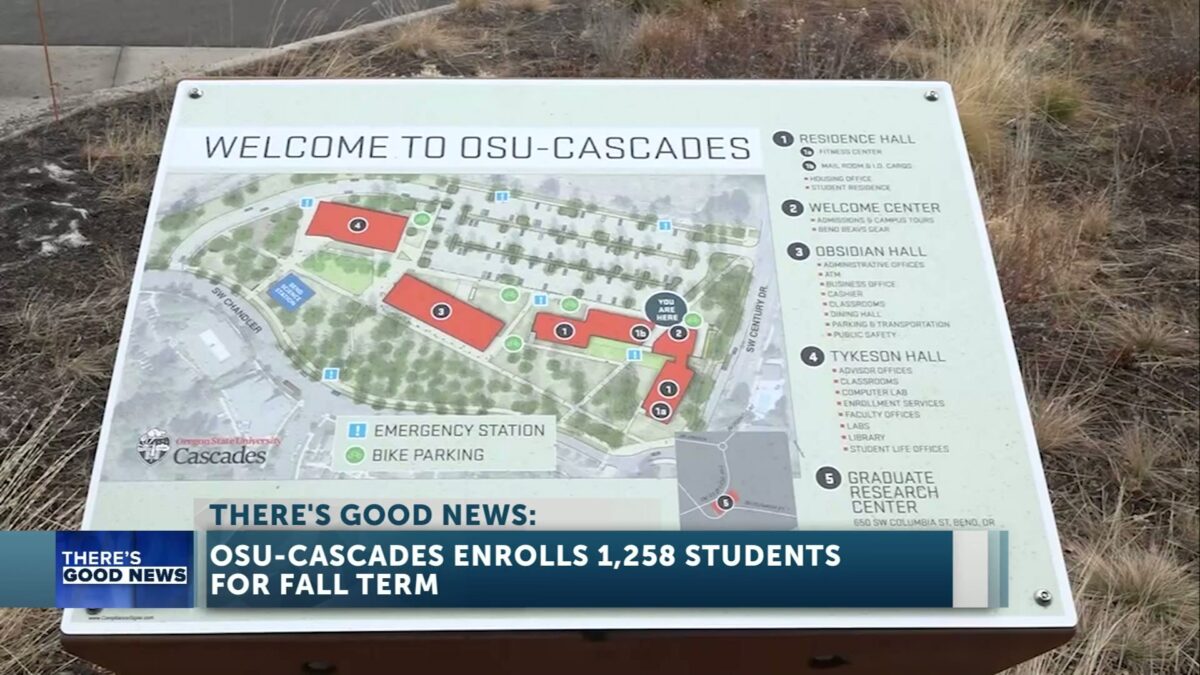
Bend, Ore. (KTVZ) — Oregon State University–Cascades enrolled 1,258 total students for the fall 2026 term, according to preliminary data released Thursday.

The fall entry includes 296 new undergraduate students, driven by growth in mechanical engineering and several other recent degree programs.

The preliminary report shows significant gains in degree programs established to meet regional and national workforce demands. The mechanical engineering major, launched in 2024, added 20 students this fall, representing an increase of nearly 38%. Growth was also recorded in accountancy, elementary education, biology and social science majors.

The enrollment report coincides with the campus marking its 25th anniversary in Bend. Christine Pollard serves as the interim chancellor and dean of OSU-Cascades.

“Students continue to be drawn to OSU-Cascades and the unique opportunities that come with learning in Bend,” Pollard said. “As we celebrate our 25th anniversary, students consistently point to our personalized learning environment, innovative degree programs, hands-on experiences and connections to employers, alongside the outdoor opportunities that make Bend and Central Oregon a special place to live and learn.”

The incoming first-year class includes 160 students, with 29% originating from Central Oregon. First-year students entered the university with an average high school GPA of 3.51, and two-thirds of the cohort arrived with prior college credit.

Transfer students represent another major segment of enrollment. Out of 108 new transfer students this term, 44% moved from Central Oregon Community College through the Degree Partnership Program. Across all class levels, 416 transfer students are currently enrolled at the Bend campus, with 61% having participated in the community college partnership program.

Oregon residents make up 77% of the total student body, with 45% coming from Central Oregon. Nonresident students represent 35 other U.S. states. California accounts for the largest out-of-state group with 105 students, followed by Washington with 52, Colorado with 17, Texas with 16 and Hawaii with 12.

According to the demographic report, 25% of enrolled students are the first in their families to attend college and 39% of undergraduate students demonstrate high financial need. Additionally, 6% of students complete their coursework entirely online through Oregon State University’s Ecampus while receiving advising support at the Bend campus.

Graduate programs account for 230 students pursuing master’s degrees or a Doctor of Physical Therapy. Student ages on campus span from 17 to 73.

Official enrollment figures for OSU-Cascades will be finalized in late October during the fourth week of the fall term.

Click here to follow the original article.

Federal grant secures $1.05 million for Eastern Oregon addiction and recovery

Adrielle Hasara

Bend, Ore. (KTVZ) — U.S. Sens. Ron Wyden and Jeff Merkley announced today more than $1 million in federal grant funding to strengthen addiction and recovery services in Eastern Oregon.

The $1.05 million award is intended to expand local treatment options and combat the ongoing opioid epidemic in rural areas.

The grant comes from the Health Resources and Services Administration’s Rural Communities Opioid Response Program.

The federal funding is awarded to the Oregon Washington Health Network, a Pendleton-based non-profit organization dedicated to improving health care access in the region.

The funding will support service delivery across four Pacific Northwest counties: Umatilla, Union and Morrow counties in Oregon, as well as Walla Walla County in Washington. The non-profit organization focuses on health equity and plans to use the funds to expand treatment options and recovery pathways for both substance use disorder and opioid use disorder.

U.S. Sen. Wyden noted that rural communities face unique hurdles when addressing substance abuse. “The opioid epidemic continues to harm communities across the state, especially in rural areas that often have limited addiction treatment resources,” Wyden said. “I applaud this federal award to the Oregon Washington Health Network that will strengthen addiction and recovery services for Eastern Oregonians and I will continue to fight for every possible resource to support mental health services and combat the opioid epidemic across Oregon.”

U.S. Sen. Merkley emphasized the impact of prescription painkillers on local residents. “I have heard heart-wrenching stories from Oregonians who have lost loved ones after a prescription for an injury or treatment turned into an addiction,” Merkley said. “Communities need access to addiction and treatment services and this critical support will help Pendleton improve access to critical services for opioid use disorder.”

Jenna Stenrud, executive director of the Oregon Washington Health Network, explained that rural health care access depends heavily on timing and location. “In rural communities, access isn’t just about whether a service exists, but whether it’s available when and where people actually need it,” Stenrud said. “These awards give us the opportunity to strengthen the services already working in our communities, expand peer and recovery supports and create new pathways for people to stay connected to recovery close to home.”

Click here to follow the original article.

Decision 2026: Oregon’s vote-by-mail deadlines approach for midterm elections

Spencer Sacks

BEND, Ore. (KTVZ) — With 27 days remaining until the midterm election, Oregon voters are preparing for upcoming deadlines under the state’s vote-by-mail system. New voters must register by Oct. 13 to receive a ballot.

Vote-by-mail has been the standard voting method in Oregon for nearly 30 years. State voters approved Ballot Measure 60 in 1998, which established exclusive voting by mail and eliminated traditional community polling places. Oregon is one of eight states that automatically sends a ballot to every registered voter.

Registration for new voters can be completed online or in person until Oct. 13. Deschutes County Clerk Steve Dennison emphasized the deadline for residents who are not yet registered. “last day to register to vote is is October 13th,” Dennison said. “You may update your registration all the way through Election Day, but the last day, if you’re new to the state or you had recently became eligible or turned 18 and were not otherwise already registered or pre-registered registered, then the 13th is your deadline. You must register by that date” Voters have three methods to return their ballots. The first method is using an official county drop box. Deschutes County features 13 ballot drop-off locations, Jefferson County offers seven and Crook County has four sites.

A second option is to mail ballots through a local post office. Oregon Secretary of State Tobias Read addressed mail delivery processing, noting that mail processing centralizations affect postmark timing. “what we’re talking about is, is the uncertainty around delivery times, particularly because as as one of our colleagues was just mentioning, there is No. 1 place in Oregon where that mail is processed and postmarked, less of a big deal if you’re in the Portland area, but here and everywhere else, it’s got to go there to be postmarked before it comes back,” Read said.

The third option available for voters is casting a vote in person at their local county clerk’s office.

Ballots must be returned or postmarked no later than 8 p.m. on Nov. 3.

Election Hub Here

Voters Resources Here

Debate Questions Here

Click here to follow the original article.
Bend man sentenced to more than 10 years for armed robbery at cannabis dispensary

Campbell Porter

BEND, Ore. (KTVZ) — Russell Ian Boggess, a 43-year-old resident of Bend, Ore., was sentenced to 125 months in federal prison and five years of supervised release for robbery and using a firearm during a crime of violence.

The sentence follows an armed robbery at Top Shelf Medicine cannabis dispensary on Greenwood Avenue in Bend on July 23, 2024, during which Boggess held an employee at gunpoint with a 9mm handgun, attempted to shoot the victim twice and struck the employee before stealing marijuana.

According to court documents, Boggess entered the dispensary wearing a bandana over his face and carrying a bag. He pointed the handgun at an employee and demanded marijuana stored behind the counter. Boggess attempted to fire the weapon twice near the employee, but the gun jammed both times. He then walked behind the counter, grabbed the marijuana himself and pistol-whipped the employee when the worker tried to call 911.

Other employees put the suspect into a headlock and held him until officers arrived less than a minute later. Two employees were injured while they restrained Boggess.

Officers from the Bend Police Department arrested Boggess. Law enforcement recovered the handgun, which was equipped with a 34-round magazine. Subsequent test-firing by investigators confirmed that the firearm was fully operational.

On Sept. 19, 2024, a federal grand jury in Eugene returned a three-count indictment charging Boggess with interference with commerce by threats or violence, being a felon in possession of ammunition and use and carry of a firearm during and in relation to a crime of violence. The FBI and the Bend Police Department conducted the investigation and Special Assistant U.S. Attorney Matthew Nelson and Assistant U.S. Attorney William McLaren prosecuted the case.

The prosecution was carried out under Project Safe Neighborhoods, a Department of Justice initiative designed to curb violent crime through inter-agency coordination. The Department of Justice outlined the scope of the nationwide program. “Project Safe Neighborhoods (PSN) is the Department of Justice’s nationwide initiative that brings federal, state, local and tribal law enforcement, prosecutors and other public safety partners together to coordinate efforts to combat violent crime and make communities safe,” the Department of Justice said in a statement.

Federal officials noted that the program adapts its enforcement strategy based on local district needs. “Coordinated by U.S. Attorneys’ offices in each of the 94 federal districts, PSN is tailored to particular communities to strategically address specific violent crime and public safety challenges,” the Department of Justice stated. The department added that “as a key component of Operation Take Back America, PSN serves a central role in the Department’s commitment to make our country safe” through rapid response, strategic partnerships and targeted prosecutions.

Click here to follow the original article.
New report finds supportive housing programs helped thousands of Oregonians remain housed

Felicity Desuasido

BEND, Ore. (KTVZ) — A five-year report released by Oregon Housing and Community Services shows the state’s Permanent Supportive Housing program funded 1,136 units across 41 projects between 2020 and 2025. The review found that 87% of participating households remained in their supportive housing or moved into other permanent housing.

The program pairs long-term affordable rental housing with support services tailored to help people who have experienced chronic homelessness maintain their homes. Depending on individual needs, these services include case management, physical and behavioral health connections, peer support and employment assistance.

By the end of 2025, 27 of the funded developments representing 763 homes were open and operating, with remaining projects under construction or in development. Among projects operating for at least 13 months, 71% of households remained housed for at least one year, with an average stay of 609 days. Additionally, partners reported improved health outcomes across 100% of operating projects.

Oregon Housing and Community Services Executive Director Andrea Bell highlighted the broader vision behind the supportive housing model.

“Communities across Oregon are delivering local solutions to make everyday life better and more affordable,” Bell said. “Collectively, we are committed to realizing an Oregon where every person, regardless of income or background, can have an affordable and dignified place to call home.”

In Eugene, a resident living in a supportive housing community developed by Homes for Good described receiving assistance with budgeting and resource navigation.

“My kids and I were homeless and needed support,” the resident said. “We have been supported with quality items and with a system that helps us learn more about budgeting and we have consistent support to help us meet obtainable goals with staff who never give up and always follow through with finding resources and even helping access them. I finally feel like my family has a support system that is consistent and that I can count on and learn from.”

Projects in Bend and across the state illustrate the implementation of the program in different regions.

In Bend, Cleveland Commons opened in 2025 as Central Oregon’s first multifamily supportive housing community, providing 33 homes specifically for individuals who experienced chronic homelessness.

Colleen Sinsky, executive director of Fuse Housing Collaborative, noted that roughly half of the residents transitioned directly from living outdoors to having health care and support services on-site.

“Cleveland Commons in Bend has ended homelessness for some of our most medically-vulnerable neighbors,” Sinsky said. “Cleveland Commons exists because of dedicated local partners and long-term investment from OHCS and the Oregon Legislature and it is part of how Central Oregon reduced homelessness by 19% this year.”

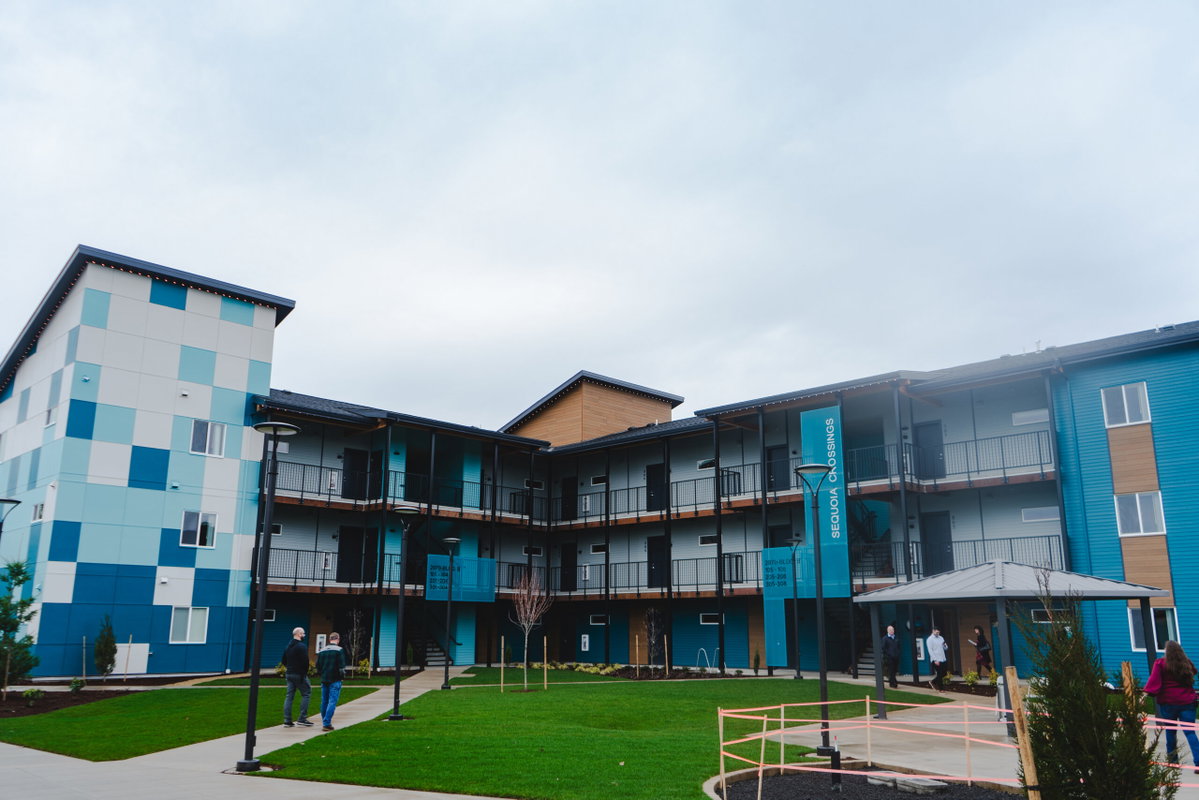
In Salem, Sequoia Crossings opened in January 2024 as an affordable rental housing development featuring supportive housing units. Lucy Briseno of the Mid-Willamette Valley Community Action Agency noted the impact of stable housing on resident health and personal development.

“At Sequoia Crossings in Salem, we see every day that PSH is about much more than providing a place to live,” Briseno said. “A stable home creates the foundation for people to focus on their health, connect with their community and pursue their own goals.”

In Eastern Oregon, River Bend Place in Ontario includes six supportive housing units sponsored by Northwest Housing Alternatives. Clayton Crowhurst, a housing developer at Northwest Housing Alternatives, pointed to the development as an example of community collaboration in frontier areas.

“River Bend Place is proof that supportive housing is only the beginning,” Crowhurst said. “When a community aligns around a shared vision, it can create an entire ecosystem of services to strengthen a city and a region.”

Click here to follow the original article.

Oregon meets tobacco reduction goals, but vaping and disparities persist

Kelsey Merison

PORTLAND, Ore. (KTVZ) — Oregon has made significant progress in reducing tobacco use, meeting or exceeding all three tobacco-reduction goals established for 2017–2025, according to a new report from the Oregon Health Authority.

The report, Evaluating the Impact of Statewide Policies on Tobacco Use and Sales, examines tobacco-use and sales trends before and after Oregon implemented three major statewide policies: Tobacco 21, which raised the legal age to purchase tobacco and nicotine products; increased tobacco taxes through Ballot Measure 108; and Tobacco Retail Licensing, which requires retailers to obtain a license to sell tobacco and nicotine products.

Youth and adult smoking declines

The report found substantial declines in cigarette use among Oregon youth and adults.

In 2024, about 1% of Oregon eighth graders and 2.8% of 11th graders reported currently smoking cigarettes. That’s down from 4.3% and 8.8%, respectively, in 2015.

Adult cigarette smoking also declined. The percentage of Oregon adults who smoked fell from 17.1% in 2016 to 11% in 2024, exceeding the state’s goal of 13.3%.

Cigarette sales dropped as well. Annual per-capita cigarette sales fell from 38.3 packs per person in 2016 to 21 packs in 2024, surpassing the state’s goal of 34 or fewer packs per person.

Youth e-cigarette use also declined. Among eighth graders, current e-cigarette use fell from 9.3% in 2015 to 4.1% in 2024. Among 11th graders, it declined from 17.1% to 9%.

However, adult e-cigarette use increased through 2023 before declining in 2024. OHA said the trend highlights the changing tobacco and nicotine marketplace.

“Tobacco use remains one of the leading preventable causes of death and disease in Oregon, so these declines represent meaningful progress,” said Dean Sidelinger, M.D., M.S.Ed., health officer and state epidemiologist.

“At the same time, we know that not everyone in Oregon has benefited equally from that progress. Continuing to reduce tobacco-related disease will require sustained attention to the communities most affected and to the rapidly changing nicotine marketplace.”

Disparities remain

Despite the overall declines, OHA said tobacco use remains higher among some groups.

Among youth, higher tobacco use was reported among some gender-nonconforming youth, as well as American Indian/Alaska Native and North African/Middle Eastern youth.

Among adults, tobacco use remained higher among Black/African American and American Indian/Alaska Native adults, bisexual adults, people with less than a college education, people with lower incomes, and people who were unemployed or unable to work.

The report recommends continued investment in tobacco prevention and cessation programs, particularly in communities experiencing higher rates of tobacco use.

Tobacco retail licensing

Oregon’s Tobacco Retail Licensing policy took effect Jan. 1, 2022. It requires businesses that sell tobacco and inhalant-delivery systems to obtain a license through the Oregon Department of Revenue.

OHA’s Tobacco Retail Licensing Program works with the Department of Revenue to monitor tobacco retailers and enforce tobacco sales laws.

The evaluation found changes in tobacco use and sales during the period when the statewide policies were implemented. However, OHA cautioned that the findings do not establish that the policies directly caused the observed changes.

The full evaluation, Evaluating the Impact of Statewide Policies on Tobacco Use and Sales, is available through the Oregon Health Authority.

Click here to follow the original article.
OSP seeks public’s help identifying suspects in Eagle Cap elk killing

Kelsey Merison

UNION COUNTY, Ore. (KTVZ) — The Oregon State Police Fish and Wildlife Division is asking for the public’s help identifying the person or people responsible for killing and wasting a bull elk in the Eagle Cap Wilderness.

OSP says the bull elk was likely killed the evening of Thursday, Sept. 10, or the morning of Friday, Sept. 11, 2026.

The elk was found along the Elk Creek Trail, Trail No. 1944, east of Burger Pass. The closest trailhead is the Buck Creek Trailhead, east of Union. Investigators say the elk was killed approximately six miles from the nearest trailhead.

The bull had been gutted, and its head and antlers were removed, but all of the meat was left behind.

OSP believes the elk was likely killed by someone participating in the Eagle Cap Zone archery elk hunt.

Anyone who was hunting, horse packing or hiking in the area from the Buck Creek Trailhead or along the Elk Creek Trail near Burger Pass on Sept. 10 or 11 is asked to contact the OSP Fish and Wildlife Division.

Tips can be submitted through the Turn In Poachers (TIP) hotline at 1-800-452-7888 or by calling *OSP (*677) from a mobile phone. Callers should reference case number SP26-308328.

Tipsters can remain anonymous.

TIP program offers rewards

The Turn In Poachers program is a partnership between Oregon State Police, the Oregon Hunters Association, Oregon Department of Fish and Wildlife, Oregon Wildlife Coalition, Oregon Outfitters and Guides Association and Oregon State Marine Board.

The program offers preference-point rewards for information that leads to an arrest or citation for the unlawful take, possession or waste of big game mammals.

A conviction involving elk can result in a four-point preference-point reward.

Cash rewards are also available for information leading to an arrest or citation for certain wildlife violations and habitat destruction.

The Oregon Hunters Association offers a $1,000 reward for information involving elk, deer or antelope.

Tips can also result in rewards for violations involving other wildlife, illegal hunting or angling licenses or tags, unlawful lending or borrowing of big game tags, spotlighting and habitat destruction.

The Oregon Wildlife Coalition and Oregon Outfitters & Guides Association also offer additional rewards for certain violations.

How to report TIP Hotline: 1-800-452-7888 Mobile: *OSP (*677) Email: TIP@osp.oregon.gov Case number: SP26-308328

The TIP email is monitored Monday through Friday from 8 a.m. to 5 p.m.

For more information, visit the Oregon State Police Turn In Poachers (TIP) webpage.

Click here to follow the original article.

Crook County School District seeks volunteers to drive buses for athletes

Kelsey Merison

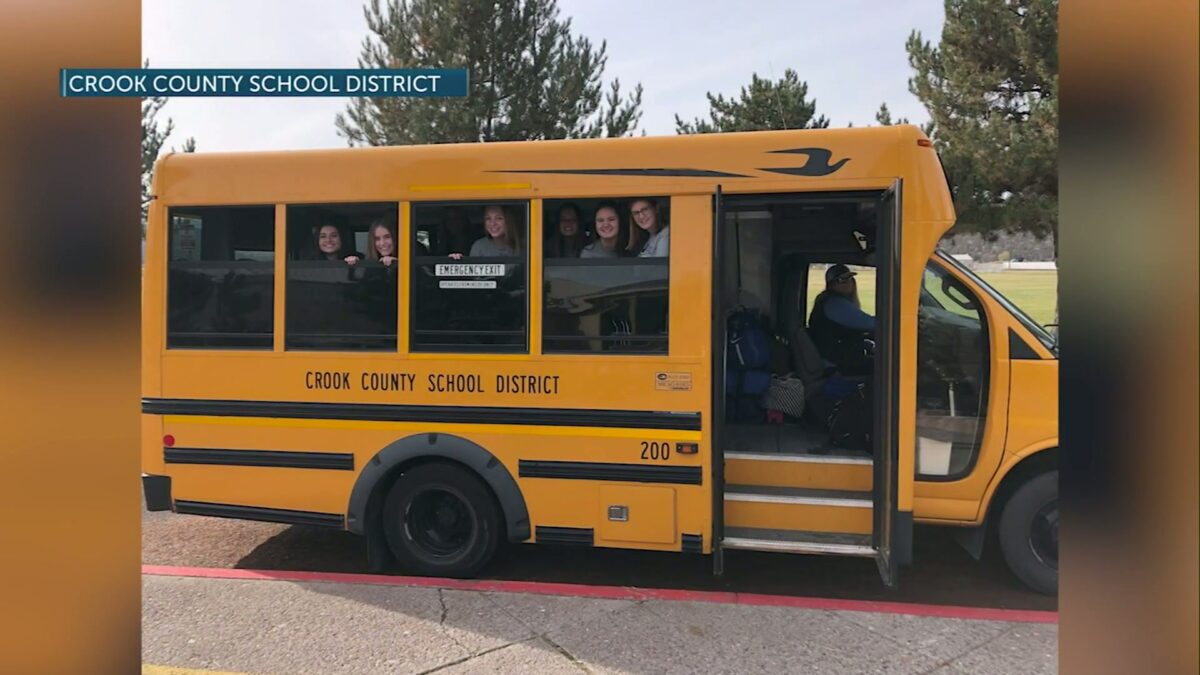
CROOK COUNTY, Ore. (KTVZ) — A local school district is looking for community members to help get its student-athletes to and from games and events.

Parents, grandparents, and other community members are encouraged to sign up to drive a type-20 bus for the Crook County School District’s Cowboys and Cowgirls.

The district will provide training and pay drivers, while working around their availability.

Click here to learn more.

Click here to follow the original article.