Five years later, a fuels reduction project in Crooked River Ranch passed the test posed by the Alder Springs Fire

Barney Lerten

CROOKED RIVER RANCH, Ore. (KTVZ) — One of the key reasons firefighters were able to stop the spread of the fast-moving Alder Springs Fire this week was a fuels reduction project done in the area five years ago, officials said Thursday.

Here’s what they had to share on the fire’s Facebook page:

The Prineville BLM started a hazardous fuel reduction treatment in 2020 in Crooked River Ranch under the Dingell Act of 2019. With this project, over 360 acres of juniper were thinned, piled and burned with the intent of reducing the potential for wildfire to spread from BLM-administered lands onto private property in the ranch.

The project was designed to create gaps in the juniper canopy, while retaining the natural beauty of the public lands leading to the Middle Deschutes Wild and Scenic River.

The effectiveness of this project was tested this week as the Alder Springs Fire quickly moved across the Crooked River National Grassland, jumped the Middle Deschutes River and ran toward the north end of Crooked River Ranch.

Firefighters on the ground working to protect the homes and property of ranch residents reported that fire behavior reduced significantly when the fire reached one of the treated units.

Instead of burning through as a canopy fire in the juniper, the fire dropped to the grass and flame lengths reduced to a much safer and more manageable height. In other areas, the open canopy created by the fuels treatments allowed the retardant to reach the ground, helping cool and slow the growth of the fire.

In total, the Steelhead Falls hazardous fuel reduction project thinned vegetation in 12 areas along the western edge of Crooked River Ranch in order to reduce fire behavior and create opportunities for firefighters to catch wildfires coming across or out of the river canyon.

This week, the Alder Fire demonstrated the value of these treatments.

Click here to follow the original article.

Three Sisters Irrigation District finishes final piping project, a major milestone in Whychus Creek restoration

Barney Lerten

SISTERS, Ore. (KTVZ) — The final section of canal piping in the Three Sisters Irrigation District has been completed, marking a major milestone in streamflow restoration, on-farm efficiency, and renewable energy generation.

Approved by the Oregon Water Resources Department on April 22, 2024, this latest conserved water project adds permanent flow protection to Whychus Creek, a tributary of the Deschutes River. 

The Cloverdale piping project installed over 23,000 feet of pipe north of Highway 126 and resulted in 0.33 cubic feet per second (cfs) and 140.1 acre-feet of water permanently protected in Whychus Creek just below the TSID diversion, about four miles upstream from the city of Sisters. 

Here’s the rest of Wednesday’s joint announcement from the Deschutes River Conservancy and the Three Sisters Irrigation District:

Two Decades of Conservation and Collaboration 

With this final phase complete, TSID has now piped 64 miles of its canals over the last 20 years, permanently restoring 30.3 cfs and 11,938 acre-feet of water to Whychus Creek. Historically, the creek ran dry two out of every three years due to the over appropriation of water rights and leaky, unlined canals and outdated delivery systems. Now, thanks to this sustained conservation effort, and complementary flow restoration programs, Whychus Creek flows year-round, providing vital cold-water habitat for redband trout, steelhead, and Chinook salmon. 

“This has been a long-term commitment by TSID and our partners,” said Marc Thalacker, newly retired Manager of TSID. “We’re proud to have reached this point where we can support both our farms and the health of Whychus Creek.” 

Benefits for Farms, Fish, and Energy 

The completed piping system enables pressurized water delivery to TSID farms, reducing the need for on-farm pumping and resulting in significant energy savings—an estimated 9 million kilowatt-hours of reduced power usage annually. Alongside these improvements, TSID has supported farm conversions to more efficient irrigation practices and installed modern metering at delivery points to ensure precise, reliable water use. 

This project also includes an in-pipe hydropower facility, which can produce up to 700,000 kilowatt-hours of renewable electricity—enough to power approximately 58 homes. TSID now operates 3 in-pipe hydro projects, contributing to clean energy goals while reducing strain on the power grid. 

A Healthy River Takes a Village 

TSID’s work is part of a larger, collaborative restoration effort on Whychus Creek. The Upper Deschutes Watershed Council, U.S. Forest Service, Deschutes Land Trust and other partners have worked to restore over 7 miles of stream habitat in Whychus Creek and removed all 6 fish passage barriers, while the Deschutes Land Trust has protected 9 miles of the creek through conservation agreements, land acquisition, and land stewardship. 

Together, these projects have reestablished streamflow, improved water quality, and reconnected critical habitat—but challenges remain. Summer water temperatures in lower reaches of the creek can still be high, stressing cold-water fish species. Restoration partners, including DRC, continue working to address these issues through habitat improvement, streamflow leasing, and new conservation partnerships. 

A Model for the Region 

“This is a true success story for farms, fish, and the community,” said Kate Fitzpatrick, Executive Director of the Deschutes River Conservancy. “TSID and its partners have shown what’s possible through sustained collaboration, forward-thinking investment, and a shared vision for a healthier creek.” 

Project Partners and Funders 

This project was made possible through support from Oregon Watershed Enhancement Board (OWEB) and National Resources Conservation Service (NRCS). Over two decades of restoration on Whychus Creek have been funded by a wide array of partners including: Bonneville Environmental Foundation, Bonneville Power Administration, Confederated Tribes of Warm Springs, DEQ/EPA Clean Water State Revolving Fund, Deschutes Soil and Water Conservation, Deschutes Water Alliance, Energy Trust of Oregon, National Fish and Wildlife Foundation, National Resources Conservation Service, (Regional Conservation Partnership Program), Oregon Conservation Strategy, Oregon Department of Energy, Oregon Governor’s Fund, Oregon Water Resources Congress, Oregon Water Resources Department, Oregon Watershed Enhancement Board, Portland General Electric Pelton Fund, Southern Oregon State University, The Nature Conservancy/PGE, TSID through in-kind contributions, U.S. Forest Service, Upper Deschutes Watershed Council, the U.S. Bureau of Reclamation. 

About the Deschutes River Conservancy: The Deschutes River Conservancy (DRC) was formed in 1996 with a mission to restore streamflow and improve water quality in the Deschutes River Basin. The DRC has a multi-stakeholder board and, through collaborative efforts, has restored up to 350 CFS (equivalent to over 14 Olympic-sized swimming pools per hour) of flow in the basin with non-litigious, voluntary, and market-based programs. For more information about the DRC, visit www.deschutesriver.org

About Three Sisters Irrigation District: Established in 1891, Three Sisters Irrigation District (TSID) delivers Deschutes River water to approximately 7,600 acres of irrigated land near Sisters, Oregon. The district serves over 267 patrons and manages 64 miles of canals and lateral ditches. TSID is nationally recognized for its leadership in irrigation modernization and has implemented extensive conservation efforts, including piping and pressurized delivery systems, which improve on-farm efficiency, reduce energy use, and restore streamflow to Whychus Creek. TSID continues to work collaboratively with partners to support agricultural resilience, water sustainability, and ecosystem health in Central Oregon. Learn more at www.tsidweb.org

Click here to follow the original article.

Public land in Oregon at risk, part of proposal for ‘Big Beautiful Bill’

KPTV

PORTLAND Ore. (KPTV) – If passed, a budget reconciliation proposal, introduced by Utah Republican Senator Mike Lee, would put 3.2 million acres of public land up for sale across 11 states, including Oregon.

Lee’s proposal would help offset tax cuts and other expenses in the Trump Administration’s “Big Beautiful Bill.”

The states included in Lee’s proposal include Alaska, Arizona, California, Colorado, Idaho, Nevada, New Mexico, Oregon, Utah, Washington, and Wyoming.

“Public lands belong to all of us,” said Quinn Read, Executive Director of the environmental advocacy group, Oregon Wild.

3.2 million acres of Bureau of Land Management and US Forest Service-managed land across those 11 states would go up for sale to the highest bidder if Lee’s proposal is passed. That could include publicly owned hiking trails and campgrounds in Oregon.

“We’re looking at the steady erosion of land and natural resources that benefit all of us and provide critical services to all of us from clean water, clean air, habitat for wildlife, recreational opportunities for families,” Read said. “There’s so much at stake here.”

While Lee’s proposal does list the states that would be impacted, it doesn’t list exactly where or how much land from each state would be for sale.

“…That’s what’s kind of problematic,” Read said. “We don’t know. [Oregon] could have 100,000 acres, or it could be 3.1 million acres. It could be anything in that range.”

According to the Senate Committee on Energy and Natural Resources, Lee’s proposal has a long list of goals, including:

“Repealing billions in unspent Green New Deal Handouts”

“Generating over $15 billion in federal revenue” through leading oil, gas, coal, and geothermal production

Unlocking federal land for affordable housing

Read said she’s aware that this proposal is framed as a housing initiative. However, she said that by building homes in Oregon forests, communities may be at risk of wildfires.

“We’re also talking about lands that are at high risk for wildfires,” she said. “If we put communities, if we build housing developments there, we’re putting people in the direct path of wildfire.”

Read also said when it comes to public lands, they should stay as they are: Public.

“These lands belong to all of you,” she said. “They belong to all of us, and it’s important for us to stand up to them if we want to keep public lands in public hands.”

FOX 12 reached out to Lee’s offices in Salt Lake City and Washington, DC, for a comment on this story. We have not yet received a response.

Click here to follow the original article.

Problem Solvers: How Redmond Airport’s team is handling expansion, safety and security

Jillian Fortner

(Update: Adding video)

REDMOND, Ore. (KTVZ) – Zachary Bass has served as the director of Redmond Airport for nine years, a job that feels like running a small city.

“We have kind of our own security force. Our fire department is really focused just on the airport. We have a lot of ability to kind of do what a public works would normally do,” said Zachary Bass.

Their top priority is ensuring the safety and security of passengers, aircraft, and the surrounding airspace.

“There’s a lot that goes on at the airport that most people don’t probably realize,” Bass said.

When most people think of airport security, TSA is usually the first thing that comes to mind. But behind the scenes, there’s a whole separate team works around the clock monitoring all parts of the airport.

Jayde Hawkins oversees security at Redmond Airport, keeping watch over more than 250 camera feeds across the property.

“We have our TSA that’s here in the airport. They conduct the passenger and luggage screening for the traveling public. My department is what it takes care of. The federal compliance side,” Hawkins said.

She says the terminal currently covers around 130,000 square feet, and it’s still expanding. Engineers are already hard at work on the next big project: expanding the terminal.

Fred LeLacheur, Manager of Engineering and Construction, is bringing those plans to life. He oversees the planning and execution of development projects at the airport.

“We just need more space. We need more facilities to to really make it work well and be an enjoyable experience throughout the airport,” said LeLacheur.

He says the expansion will bring over 80,000 square feet of new space to the terminal.

As the airport continues to grow, the team is working to maintain the friendly, small-town feel travelers enjoy.

“That sense of community that we have here at this airport is really special to me,” said Hawkins. “I’m hoping with even having the expansion and having a much larger facility, we can continue to keep that same hometown airport feel.”

Operating a smaller airport like Redmond presents unique challenges compared to larger hubs like Portland or Seattle.

“We have less staff, so we’re not maybe as specialized as you would see in those larger airports,” Bass said. “So a lot of my managers and my team have to kind of wear separate hats, and become really knowledgeable on things, maybe just outside of their specialty.”

Financial constraints are another major hurdle the airport faces.

“Everything’s expensive in the airport world,” said Fred LeLacheur. “We’ve got a lot of things that we need, and it’s it’s hard to to get the money to do it. It’s just that simple.”

From security to construction to balancing budgets, it takes a dedicated team working behind the scenes to keep everything running smoothly.

Click here to follow the original article.

Drones have become an increasingly useful tool to help fight blazes like the Alder Springs Fire

Barney Lerten

CROOKED RIVER RANCH, Ore. (KTVZ) — Firefighters have a relatively new and increasingly useful tool – drones – to use in various ways to help fight wildfires like the Alder Springs Fire.

On Thursday, Alder Springs crews were using drones to search for hot spots in the fire perimeter, officials said in a Facebook posting.

Here’s what they had to say about this high-tech tool:

Firefighting agencies increasingly use drones, also known as Unmanned Aircraft Systems (UAS), as a critical tool in wildland firefighting.

Drones are able to provide real-time aerial imagery and infrared data to help crews identify hot spots, monitor fire behavior and map fire perimeters.

By delivering accurate and timely intelligence, drones enhance situational awareness and support safer, more effective firefighting strategies.

With the use of drones, unnecessary exposure and rugged terrain can be avoided in certain situations for firefighters.

As technology advances, drones continue to play a growing role in protecting lives, property, and natural resources.

Click here to follow the original article.

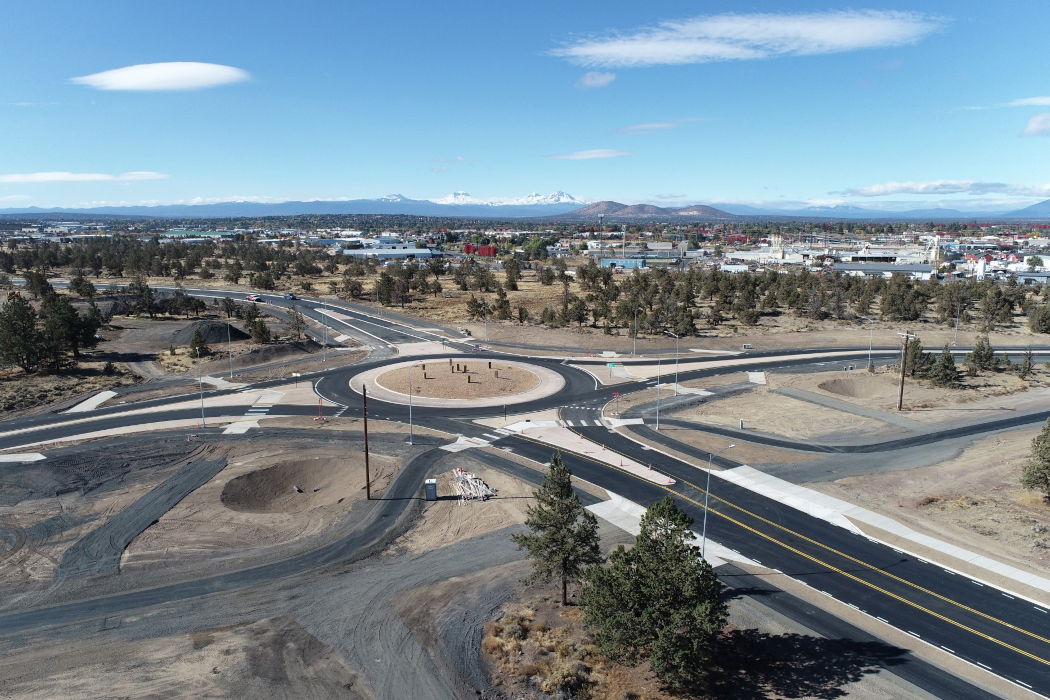
Butler Market & Wells Acres Roundabout and Key Route Project Update

KTVZ News Partners

This project will deliver a long-desired improvement to the Butler Market and Wells Acres intersection safety and efficiency, and provide safer, easier connections for pedestrians and bicyclists traveling between neighborhoods, schools, parks and businesses in the area. 

The project team has made significant progress, reaching several key milestones. The design phase is now complete, and franchise utility relocation is actively underway.

Construction is Anticipated to Begin Mid-late August*

Construction will occur in two phases (see map below). Phase 1 is anticipated to begin in mid to late summer 2025.

* Dates are estimates and subject to change.

Phase 1 8th Street to Brinson portion of the key route and also includes the Butler Wells roundabout. Phase 2 includes 8th Street to Boyd Acres.

For details about anticipated detours and construction phasing, visit the project website to view the informational video.

Pre-construction Open House 

To support community awareness and preparedness, an Open House will be scheduled before construction begins. This event will provide residents and businesses with key information, timelines, and opportunities to ask questions. Additional details will be shared as plans are finalized.

Click here to follow the original article.

Five Bend-La Pine School Board members take oath of office

Barney Lerten

BEND, Ore. (KTVZ) — Five community members elected in May to serve on the Board of Directors for Bend-La Pine Schools took the oath of office Tuesday evening at the board’s monthly business meeting.

They include Jenn Lynch, newly elected to represent Zone 1, and Ross Tomlin, who was appointed to the Zone 6 at-large seat last November. Also taking the oath were re-elected Directors Marcus LeGrand (Zone 2), Shirley Olson (Zone 4) and Kina Chadwick (Zone 7).

Lynch succeeds Carrie McPherson Douglass, who served two terms on the school board and decided not to seek re-election this year. Superintendent Steven Cook and board members paid tribute to McPherson Douglass at Tuesday’s meeting and thanked her for her service, including serving as board chair during the Covid pandemic.

Reflecting on her eight years on the board, McPherson Douglass said, “Student voice is the most important voice in the room, always. … I really hope students will keep showing up. There’s a few here tonight to speak. And I really hope that the board continues to find really meaningful ways to listen to them.”

The board voted Tuesday to approve the district’s 2025-26 operating budget as well as updated bargaining agreements with unions representing certified and classified employees. The agreements include compensation adjustments for the next two fiscal years. Details are available at https://bls.fyi/meetings through the BoardBook agenda for June 17, 2025.

At its July 8 business meeting, the board will elect its chair and vice chair for the 2025-26 term. Business meetings are held on the second Tuesday of the month.

Click here to follow the original article.

New Deschutes County 2025-26 budget preps for five-member board, building youth mental health care facility

Barney Lerten

BEND, Ore. (KTVZ) — The Deschutes County Board of Commissioners has unanimously adopted the budget for Fiscal Year 2026 (FY 26), following a series of budget committee hearings held in May.

The total revised FY 26 budget, excluding Service Districts, is $658.7 million, which represents a modest 0.3% increase from the FY 25 revised budget. It was developed under a collaborative budget strategy that limited the growth of County expenditures and prioritized savings. The strategy allowed the County to identify $2.5 million in savings within the General Fund.

“I am incredibly proud of the hard work of our staff and elected and appointed officials who made difficult decisions to help us realign County expenditures with incoming revenues,” said Deschutes County Administrator Nick Lelack in a news release. “Through this budget, we have built a strong foundation for structurally balanced budgets for years to come.”

The FY 26 budget underscores the County’s commitment to providing essential services and public safety while navigating economic challenges, such as a widening gap between General Fund expenditures and revenues, rising personnel costs, inflation and federal funding changes.

Notwithstanding the fiscal pressures, the FY 26 budget allocates funding for an additional Deputy District Attorney, which is crucially needed to help manage a substantial and growing caseload.

The budget also includes funding a variety of important projects and initiatives, including:

Preparing for a five-member Board of Commissioners, with two new members taking office in January of 2027

Facilitating a citizen committee to propose Board of Commissioner districts and a ballot initiative for voters to decide during the 2026 election cycle

Reconvening the Solid Waste Advisory Committee to identify a location for a future county landfill or solid waste solution

Initiating the process of building a mental healthcare facility specifically for youth in Central Oregon

Continuing to develop the County Deflection Program with initiatives that promote drug education, addiction treatment and recovery

Working in partnership with the City of Bend to support the houseless population in a Temporary Stay Safe Area at Juniper Ridge

Completing and making significant progress on transportation projects in Terrebonne and Sunriver

To find more County budget information, visit deschutes.org/budget.

Click here to follow the original article.

Over 100 carcasses of snakes, lizards, tortoises and tarantulas found in abandoned La Pine-area home; owner arrested

Barney Lerten

(Update: Adding map, indictment)

BEND, Ore. (KTVZ) — A 65-year-old Bend-area man was arrested Thursday on 25 felony counts of first-degree animal neglect, more than eight months after a welfare check at an abandoned La Pine-area home led to a raid that turned up over 100 dead and rotting animal carcasses inside.

Here’s the full news release from Deschutes County Sheriff’s Sgt. Chris Barringer:

On 6/19/25 at 12:00 p.m., Detectives with the Deschutes County Sheriff’s Office arrested William Griffiths in Bend.  Griffiths had an active warrant for his arrest after a Deschutes County grand jury returned an indictment on 6/13/25 charging him with 25 counts of Animal Neglect in the First Degree. 

The indictment stemmed from an investigation that began last October south of La Pine.  On 10/6/24, a Patrol Deputy with Deschutes County was dispatched to a welfare check in the 50000 block of Deer St. south of La Pine.  The caller reported to the Deputy that she had arrived at the house in question to retrieve property that originally came from a private business in Bend where Griffiths used to work, and she believed the property was most likely still at the house.  She said when she went to the house, she discovered what she believed to be several dead reptiles in and around the house, and the house appeared to be abandoned.

The Patrol Deputy and an Animal Control Officer responded to the address and conducted a welfare check inside the residence to determine if there were any people or animals that were in need of medical care.  No humans were discovered, but they discovered over 100 dead and rotting animal carcasses inside the house, including the carcasses of snakes, lizards, and turtles.  There were also carcasses of rodents and tarantulas within the house.  No live animals were located.

Oregon Revised Statutes specifically include reptiles in its definitions of animals as applied to animal neglect statutes.

Detectives with the Deschutes County Sheriff’s Office responded to the residence.  They applied for and were granted a search warrant, which was executed the same day to search the residence for evidence of criminal activity. 

A Detective later located and interviewed the owner of the house and animals, William Griffiths.  During the interview, the Detective developed probable cause for the crimes of Animal Neglect in the First Degree listed in the indictment. 

Griffiths was located in a trailer in the 63000 block of Dickey Road east of Bend.  He was taken into custody without incident and booked into the Deschutes County Adult Jail on the warrant for his arrest.  

William Griffiths Animal Neglect IndictmentDownload

Click here to follow the original article.

Bend Chamber names Sara Odendahl as interim CEO

Barney Lerten

BEND, Ore. (KTVZ) —The Bend Chamber of Commerce is pleased to announce Sara Odendahl as the Interim CEO. Sara is the Chamber’s Director of Government Relations and Strategic Initiatives and will shift her role to take the helm of the Chamber after Katy Brooks leaves for a new position with the City of Bend on June 30. 

A seasoned government affairs professional, Sara has led the Chamber’s policy and advocacy work since coming on staff in 2023. Sara has been an instrumental member of the Chamber’s leadership team and co-led the organization’s Workforce Housing Initiative and newly launched Regional Business Alliance.

“Sara has gained incredible trust in Bend and Central Oregon for her effectiveness and collaboration in advocating for business at the local and state levels,” said Tia Lewis, Bend Chamber Board Chair. “She is highly respected and will be a steady hand at the helm as the search for a new CEO is underway.”

Prior to joining the Chamber, Sara served as an independent consultant advising the Chamber’s Advocacy Council and leadership team on local and state policy issues. Sara brings over a decade of experience in political consulting and public policy, having spent much of her career at the Colorado State Capitol. Her policy expertise spans general business issues, nonprofit and local government issues, health care and early childhood education, with a strong focus on children’s health, public health, and regional economic development. 

“It has been a pleasure working with the Chamber team to advocate for businesses, develop an effective workforce housing initiative, and serve as an innovative leader and partner in our community,” said Odendahl. “I am particularly grateful to work with a supportive board and talented Chamber team as we continue to serve the business community in Bend.”

Before her work in government affairs, Sara built a foundation in strategic communications through roles at advertising and branding agencies, specializing in employer communications and social impact campaigns. Since relocating from Denver to Bend in 2019, she and her husband, Kent, have launched Work-Collective, a thriving community coworking space in NorthWest Crossing with a new Midtown location opening later this summer.

Sara holds a Bachelor’s degree in Journalism and Mass Communications from the University of Colorado Boulder and a Master’s in Public Administration and Public Policy from the University of Colorado Denver. A natural collaborator and problem solver, her leadership strengths include strategic planning, coalition building, community engagement, and nonprofit leadership. 

The Chamber looks forward to Sara’s thoughtful and dynamic leadership as she helps guide the organization through this transitional period. The Chamber will begin its search for a new CEO and will soon share recruitment information for those interested in applying.

Click here to follow the original article.