Community effort brings heat relief to vulnerable Mid-Missourians


Sutton Parker

COLUMBIA MO. (KMIZ)

The Salvation Army hosted its annual fan drive on Thursday, giving away 190 free fans to the public.

The group said the donation was a community effort, with partners at the Westlake ACE Hardware donating the fans to the Salvation Army for distribution. The drive comes as temperatures have started to rise across Mid-Missouri, with air temperatures remaining in the low-90s throughout the rest of this week and the heat index eclipsing 100 degrees.

Nancy Powers, a core officer with the Salvation Army, said the goal of Tuesday’s event was to be able to help people stay cool in the summer heat.

“What we are folks that maybe don’t have air conditioning or maybe can’t afford to turn on their air conditioning, really need in these hot, hot days some air moving around,” Powers said.

Powers noted for many residents, the fear of a high utility bill outweighs the discomfort of the heat.

“A lot of folks don’t dare turn air conditioning on because they just can’t cover that expense, or they may just have air conditioning in that one room,” Power said.

Powers added that Tuesday’s drive was critical, as utility and rent assistance are in high demand.

“Utility and rent assistants are iis in high demand, and most agencies are either out or running very low on these kinds of assistance,” she said.

Earlier this year, the City of Columbia ran out of its $800,000 assistance fund that goes to help people pay for their utility bills. While the city ran out, other organizations like the Central Missouri Community Action Group have other resources to help bridge the gap.

Specifically, the initiative provides struggling families with up to $300 per season to help with seasonal energy costs. Even with the extra money, Brooke Eskridge, the Director of Family & Community Services, said that it may not be enough to fully cover all expenses.

Eskridge added a growing number of people maxing out assistance funds, adding the group can only pay for people’s utility bills after all other expenses are paid off.

“We can’t pay any non-electrical charges, so people have to pay their trash and sewer, and then we can pledge on the electric portion of it. If that’s $310, then they have to pay the $10 before we can pay the $300,” she said.

When it comes to what other resources are available, Eskridge said that the CMCA also has a team of people who are ready to help.

“We have what are called public family success coaches here at CMCA, and those are individuals who can work closely with a family that is willing to sit down and go through their situation. Oftentimes when we call on their behalf, we can get a bit further,” she said.

Officials at the Salvation Army said if you are struggling to pay utility bills, the best way is to get ahead and reach out to the utility companies.

They add that companies are willing to put people on budgets or payment plans, adding that you should seek assistance early rather than wait for the bills to pile up.

Additionally, the Salvation Army says that all of their facilities operate as cooling centers for individuals who might not have air conditioning to come and cool down in their buildings.

Click here to follow the original article.

State sees increase in nursing turnover, vacancy rates

Ryan Shiner

COLUMBIA, Mo. (KMIZ)

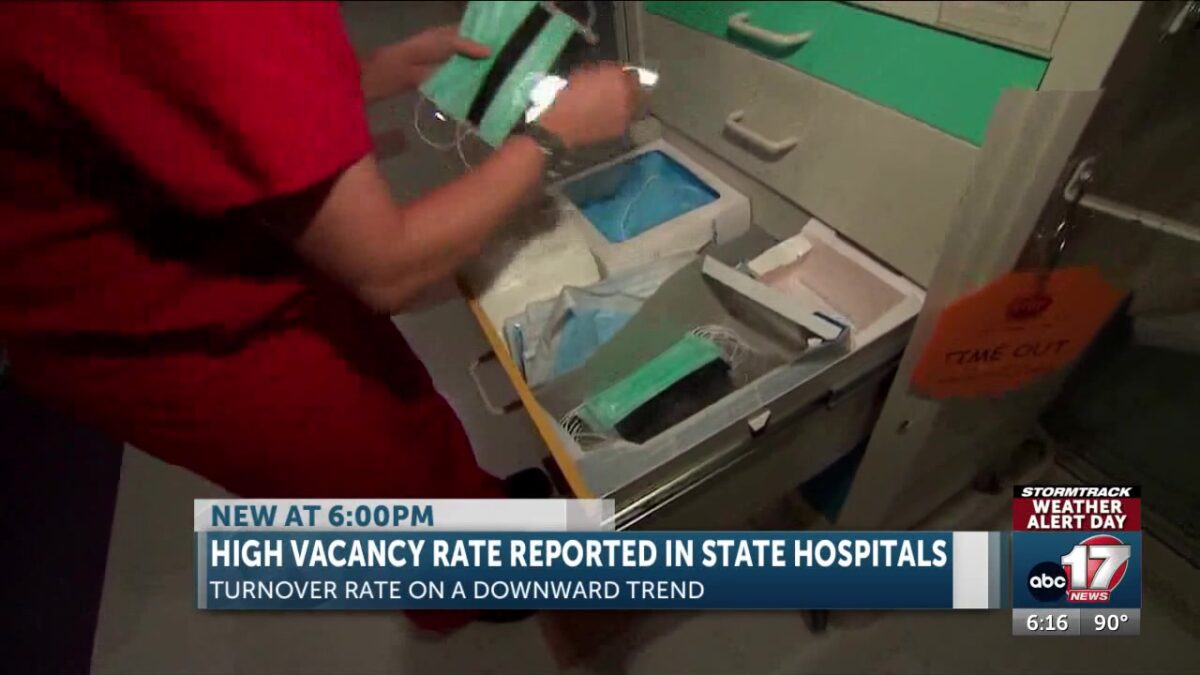
Missouri saw an increase in the turnover and vacancy rates for nurses in 2025, according to data provided by the Missouri Hospital Association.

A report shows the nursing turnover rate was at 18.9% in 2025, compared to 16.1% in 2024, bucking a four-year downward trend. The vacancy rate also increased 10.9% in 2025 compared to 10.1% in 2024. The vacancy rate also was seeing a downward trend the same four years.

Central Missouri has the highest turnover rate in the state for the registered nurse workforce at 28.8%. West Central Missouri is second with 22.1%, while the Northeast region is 21.1%. Mid-Missouri’s vacancy rate sits at 9.7%

Overall for the healthcare workforce, the state saw a 23.7% turnover rate, which is 1.5% higher than 2024. The vacancy rate sits at 10.1%, which increased from 9.7%.

26_Workforce_Report_FINALDownload

Click here to follow the original article.

Osage Beach postpones Fourth of July celebration to July 11

Ryan Shiner

COLUMBIA, Mo. (KMIZ)

Osage Beach’s Independence Day celebration has been postponed to July 11, the city announced in a Tuesday afternoon press release.

The city wrote that it has to reschedule its Heart of the Lake FreedomFest because “the City’s contracted pyrotechnics company was unable to fulfill its contractual obligation to provide the fireworks display on July 4th.”

Assistant City Administrator April White told ABC 17 News in an email that the company providing the fireworks – AM Pyrotechnics LLC from Buffalo, Missouri – “stopped communicating despite multiple efforts to reach them by phone, email, and text.”

The company allegedly confirmed on Tuesday they were not able to “execute the display.”

“We understand how much our residents and visitors have looked forward to this event and we sincerely apologize for the rescheduling inconvenience,” Parks and Recreation Manager Eric Gregory was quoted in the release. “Rather than canceling the celebration altogether, we felt it was important to reschedule so families can still enjoy an evening of community, entertainment, and a spectacular fireworks display celebrating our nation’s 250th year!”

The festival will take place from 3-9 p.m. July 11 at Osage Beach City Park, with a fireworks display starting at 9 p.m., the release says.

Two weeks ago, the city had announced that it was canceling the parade it had scheduled because of “feedback from the affected businesses and careful consideration of potential impact during this busy weekend in our community,” previous reporting shows.

Click here to follow the original article.

Kehoe signs $50 billion budget with about $490 million in vetoes, restricted funds

Matthew Sanders

JEFFERSON CITY, Mo. (KMIZ)

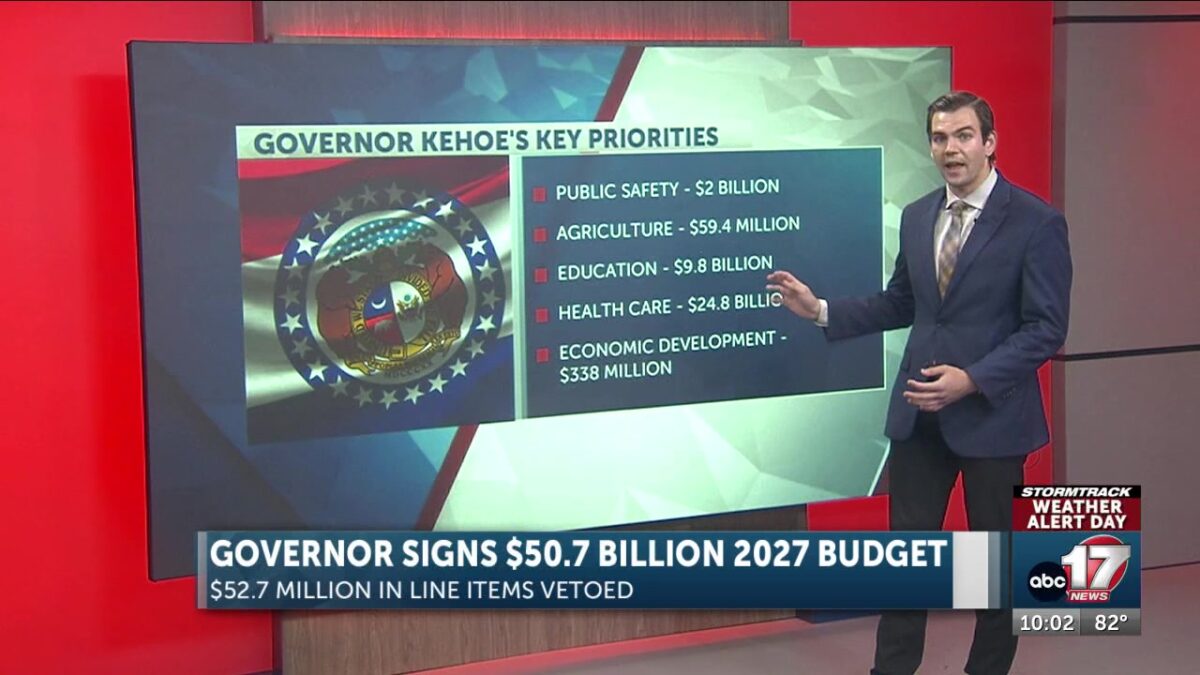
With the new fiscal year set to start on Wednesday, Gov. Mike Kehoe on Tuesday signed a fiscal 2027 state budget of about $50 billion, while vetoing or restricting about half a billion dollars in funding, including money for major local projects.

Among those projects are the University of Missouri’s Energy Innovation Center and a new campus agriculture center. Kehoe decided to restrict $2 million meant for the innovation center and $5 million meant for the ag center. That money could be spent later if state finances improve.

Overall restrictions totaled about $441 million.

FY 27 VetoesDownload

Kehoe’s actions align with priorities he first outlined in January, when he called for significant spending restraint as Missouri faces what his administration described as a long-term structural budget imbalance.

His proposed fiscal year 2027 budget cuts roughly $600 million from the state’s core operating budget compared with the prior year. It aimed to reduce overall spending from $55.1 billion to $54.5 billion while returning state finances closer to pre-pandemic spending levels.

State officials have pointed to shrinking reserves, the expiration of federal COVID-19 relief dollars and years of spending growth as reasons for tighter budget controls.

At the same time, Kehoe preserved funding in areas his administration identified as top priorities. The budget includes about $2 billion for public safety initiatives, including Missouri Blue Shield grants, Operation Relentless Pursuit and law enforcement scholarships; $338 million for economic development and workforce programs; $59.4 million for agriculture investments; $9.8 billion for education, and $24.8 billion for healthcare and Medicaid-related services.

Kehoe has repeatedly warned about too much spending by the General Assembly, and echoed that sentiment in a statement released Tuesday.

“State government doesn’t have a revenue problem, we have a spending problem, and continuing to spend faster than we grow our economy is not a sustainable path forward,” Kehoe said in a news release. “Our work doesn’t end with balancing this year’s budget. By maintaining fiscal discipline and continuing to grow Missouri’s economy, we are building the foundation for an even more strong and resilient Missouri.”

The budget included using $179 million in one-time funding to pay for ongoing costs, Kehoe’s office stated in the release.

Kehoe vetoed 65 line items worth more than $52 million in revenue. That money included $250,000 for Mid-Missouri-based Coyote Hill Foster Ministries and $500,000 for Powerhouse Columbia, both budgeted through the Department of Social Services.

Another $250,000 was voted for substance abuse and mental health treatment courts.

The governor vetoed $500,000 for a security grant program for nonprofit organizations. Joran Kadosh, regional director of the Anti-Defamation League Heartland, said in a prepared statement that such funding was critical right now.

“At a time when hate-fueled threats and violence continue to target Jewish institutions and many other faith-based and community organizations, investments in nonprofit security are not optional—they are essential,” Kadosh wrote. “We are disappointed that funding for Missouri’s nonprofit security grant program was vetoed. These grants would have provided houses of worship, schools, and community organizations with critical resources to strengthen their security and help protect the people they serve.”

Restrictions total about $441 million.

FY 27 July 1 RestrictionsDownload

Kehoe preserved $15 million for Jefferson City’s downtown conference center project. City leaders praised the action, and Mayor Ron Fitzwater emphasized in a prepared statement that the conference center will leverage the city’s status as the state capital to attract visitors and business.

Check back for updates to this developing story.

Click here to follow the original article.

Two men from Columbia run over in Jefferson City hit-and-run; charges pending

Ryan Shiner

JEFFERSON CITY, Mo. (KMIZ)

Two men from Columbia were run over by a vehicle on Monday at the intersection of Idlewood Drive and Route C in Jefferson City, according to a crash report from the Jefferson City Police Department that was sent to media on Tuesday.

Police later on Tuesday said the driver, a 43-year-old woman, was in custody on suspicion of two counts of leaving the scene of a crash, failure to register a vehicle and driving without insurance..

Jesus Contreras, 32, and Roberto Gutierrez, 26, were injured in the crash, the report says. JCPD Lt. Curtis Finke clarified the men had moderate injuries.

The report says JCPD was called at 10:49 a.m. Monday for a hit-and-run crash that involved a Lincoln MKC. Both men were brought to an area hospital.

Police then posted a video to its social media showing the crash. The video shows two people walking in the intersection and seemingly stop as a vehicle turns and hits them.

Both men were flown off the hood of the vehicle and the vehicle appears to stop as the men are outside of both sides of the vehicle, the video shows. The vehicle is then seen driving away.

Finke told ABC 17 News that the driver of the vehicle is in custody.

Check back for updates.  

Click here to follow the original article.

Head-on crash in Camden County leaves three seriously injured

Jazsmin Halliburton

COLUMBIA, Mo. (KMIZ)

Three people suffered serious injuries in a head-on crash in Camden County on Monday night.

According to the online crash report, a 39-year-old Springfield woman was driving a 2024 Jeep Wrangler eastbound on Highway 54 west of Route W at 10:15 p.m. Monday. The report states that the vehicle crossed the center line and struck a 2019 Nissan Sentra going westbound, driven by a 44-year-old Harrison, Arkansas, woman, along with a 14-year-old boy, also from Harrison.

The 14-year-old passenger was flown to Cox Health, and the 44-year-old driver was flown to University Hospital, both suffering serious injuries. The 39-year-old Springfield woman also suffered serious injuries and was transported to Lake Regional Hospital by Mid-Mo Ambulance.

All three were wearing seatbelts at the time of the crash, according to the report.

Click here to follow the original article.

Sen. Schmitt wants constitutional amendment after SCOTUS ruling on birthright citizenship

Marie Moyer

COLUMBIA, Mo. (KMIZ)

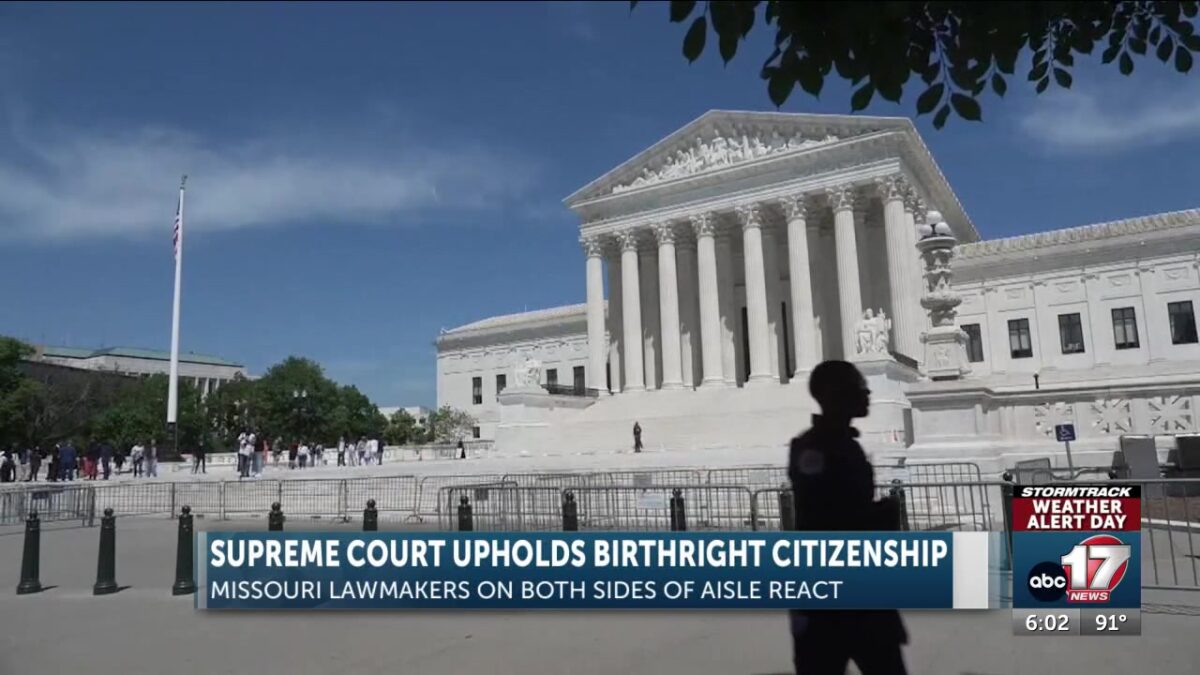
U.S. Sen. Eric Schmitt (R-Mo.) said Tuesday that he is filing legislation to amend the U.S. Constitution to “rein in” birthright citizenship.

The decision comes after the Supreme Court rejected Donald Trump’s initiative to end birthright citizenship on Tuesday.

“Under the Supreme Court’s erroneous interpretation, American citizenship is extended to anyone who happens to be on U.S. soil when they’re born — even if they were here in violation of our laws,” Schmitt said in a news release. “This is a dramatic departure from the understanding of citizenship of our Founders and the framers of the Fourteenth Amendment.”

Schmitt later posted a draft of the proposed amendment on X.

The majority tried to constitutionalize unlimited birthright citizenship. But Justice Kavanaugh MAY have left Congress a door.

I’m filing legislation to walk through it.

And I’ll keep working on a constitutional amendment to restore American citizenship. https://t.co/WV8gu1OYhy pic.twitter.com/r8oB9Ks5gc

— Senator Eric Schmitt (@SenEricSchmitt) June 30, 2026

“Justice Kavanaugh MAY have left Congress a door. I’m filing legislation to walk through it,” Schmitt said on X.

The Citizenship Clause in the 14th Amendment states: “All persons born or naturalized in the United States, and subject to the jurisdiction thereof, are citizens of the United States and of the State wherein they reside.”

Schmitt’s amendment would make it so that a person born in the U.S. would only be a citizen if at least one parent has lawful residence.

“A person born in the United States and not subject to any foreign power: Provided, That a person born in the United States shall be deemed subject to a foreign power if neither parent of such person is a United States citizen or has been lawfully admitted for permanent residence at the time of such person’s birth,” according to Schmitt’s draft documents.

According to the American Immigration Council, around 4% of Missouri’s population, or around 223,000 residents, are native-born citizens with at least one immigrant parent.

In a Truth Social post, Trump pushed for legislative moves to be made to end birthright citizenship after Tuesday’s Supreme Court ruling.

“Congress should start TODAY to work on ending expensive and unfair to our Country, Birthright Citizenship. They will have my Complete and Total Support!” Trump said.

Dave Roland, the Senior Legal Advisor of the Freedom Center of Missouri, suggests that Schmitt’s plan may run into difficulties.

If Schmitt’s opts to use Congress to amend the act, the Supreme Court would most likely push back.

“Even if they dissented from the decision today, Congress does not get to tell the Supreme Court how to interpret the Constitution,” Roland said.

If Schmitt is looking to change the Constitution, he must jump several high hurdles, including getting two-thirds of both the House and Senate to propose the amendment. If passed by the legislature, the amendment must be approved by three-quarters of the states’ legislatures.

The Supreme Court may also have an opportunity to change its mind if another birthright citizenship case is brought before it. However, Roland thinks this is unlikely, especially if the court’s political composition remains the same.

“In the wake of today’s opinion, it is now well-established that birthright citizenship is a floor that no further federal action short of a constitutional amendment can get beneath,” Roland said.

Charles Zug, Assistant Professor of Political Science at the University of Missouri, adds that Schmitt’s plan is more symbolic and part of politics.

The senator, Senator Schmidt and others are maybe personally very upset by this, they definitely have to act like they’re upset by this because a lot of their voters wanted to overturn birthright citizenship,” Zug said. “When the court comes in and shuts them down, as it’s done in this case publicly, they’ll pretend to be very upset about it, but in private, they’ll be like the court kind of got this item off of our agenda and now we don’t really care about it anymore.”

Democrat U.S. Rep. Wesley Bell (D-Mo.) praised the ruling and said the decision was best for the American people.

“This is a WIN for our immigrant communities and for people just chasing the American Dream. Let’s keep working to protect the rights of ALL Americans.” Bell said in a post on X.

Today, #SCOTUS ruled in favor of what is truly best for the American people. Not for the President’s targeted agenda.

This is a WIN for our immigrant communities and for people just chasing the American Dream.

Let’s keep working to protect the rights of ALL Americans. https://t.co/KlS4XI3I6r

— Congressman Wesley Bell (@RepWesleyBellMO) June 30, 2026

U.S. Rep Emanuel Cleaver (D-Mo.) also supported the decision.

“I’m pleased the Supreme Court upheld birthright citizenship and rejected efforts to chip away at one of our Constitution’s most fundamental guarantees. Our laws, and our democracy, are strongest when we honor the Constitution, not attempt to rewrite it.” Cleaver said in a post on X.

The 14th Amendment settled this question long ago. I’m pleased the Supreme Court upheld birthright citizenship and rejected efforts to chip away at one of our Constitution’s most fundamental guarantees. Our laws, and our democracy, are strongest when we honor the Constitution,… https://t.co/c70Uq0vDqX

— Rep. Emanuel Cleaver (@repcleaver) June 30, 2026

U.S. Rep. Mark Alford (R-Mo.) also voiced a need for Congress to act, adding that the ruling fails the U.S.

“True sovereignty means a nation has the absolute right to determine who belongs to its political community. When we allow citizenship to be granted based purely on geographic location—regardless of the parents’ legal status or allegiance—we lose control over our own borders and our national identity.” Alford said in a post on X.

🚨 THE EROSION OF AMERICAN SOVEREIGNTY 🚨

Today’s Supreme Court ruling on birthright citizenship is a devastating blow to the very concept of American sovereignty. By striking down the executive order, the Court has locked in a flawed framework that rewards law-breaking,…

— Rep. Mark Alford (@RepMarkAlford) June 30, 2026

Schmitt’s bill has not yet been filed on the U.S. Congress website.

Click here to follow the original article.

Bellwether turned red: Missouri’s shifting 200-year political history

Alison Patton

COLUMBIA, Mo. (KMIZ) 

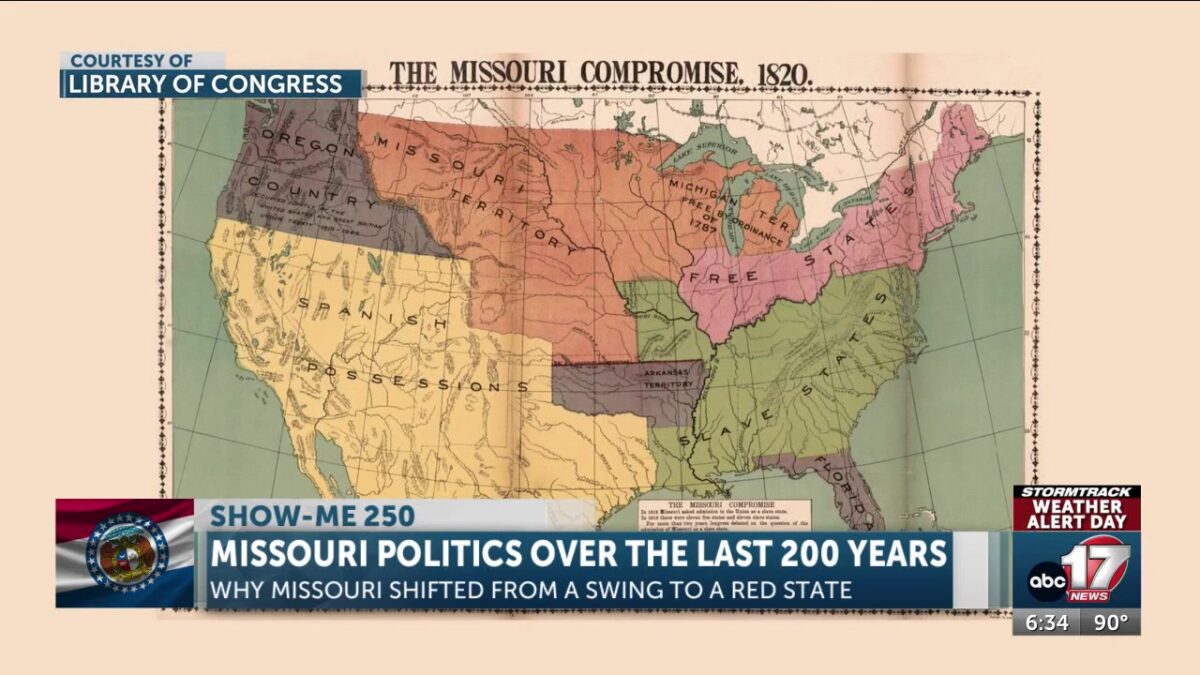
While Americans celebrate 250 years of freedom in July, Missouri will reach 205 years of being a state in August. When Missouri became a state in 1821, it was at the center of a war between America and itself: the Civil War. 

“Missouri played an important role very early on in the country’s history,” said Charles Zug, a political science professor at the University of Missouri. 

That’s because the nation was trying to decide which states could have slaves, and one solution, known as the Missouri Compromise, was to make Missouri a slave state and Maine a free state. Lawmakers also decided to make any new state added from the Louisiana Purchase that was above the 36-30 line a free state, and states below a slave state. 

That was overturned over 30 years later with the Kansas-Nebraska Act, which left the decision up to the states whether they wanted slaves.

Although there were slave owners in Missouri, the state remained in the Union. 

“Missouri was sort of right at the heart of this slavery issue, which provoked and catalyzed and sort of crystallized broader problems of the Civil War and was very much at the center of that story,” Zug said. 

The Kansas-Nebraska Act kicked off the border war between Missouri and Kansas, where pro-Southern guerrillas from Missouri tried to prevent Kansas from becoming a free state. The conflict, known as Bleeding Kansas, started in the 1850s and lasted until the Civil War, and included the ransacking of Lawrence, Kansas.

Following the Civil War, the U.S. entered Reconstruction, which used federal resources to protect formerly enslaved people from aggression.

“[Reconstruction was] a series of national measures, congressional acts, coupled with aggressive presidential execution of those acts, basically protecting former enslaved people from re-enslavement, white violence [and] the [Ku Klux] Klan,” Zug said. 

Reconstruction ended in the late 1870s when federal troops were pulled out of Southern states, allowing state governments to implement Jim Crow laws that worked around the 13th, 14th and 15th amendments. Those amendments were added to protect African-Americans from discrimination and slavery. 

20th century changes

The civil rights movement started as a response to Jim Crow, and it gained the nation’s attention in the 1960s. But President Harry Truman, who was from Missouri, made some advancements toward equality in the 1940s when he desegregated the military. 

“He was seen as being someone who would essentially toe the line when it came to issues over holding or preventing civil rights from being enacted,” said Sean Rost, assistant director of research for the State Historical Society of Missouri. 

Truman was working with a Republican-controlled Congress and a fractured Democratic Party that didn’t fully back civil rights, Rost said. 

Zug said this move was a way to get more Black votes. 

Understanding Missouri politics is key to understanding the state’s history. 

For about 100 years, Missouri voted for nearly every presidential candidate who won, from 1904 to 2004 – the only exception being in 1956 when Missouri voted for Democrat Adlai Stevenson over Republican Dwight D. Eisenhower, a top World War II general from Kansas. 

For a long time, Missouri was a bellwether or swing state. 

“[The] Missouri popular vote went for the person that would go on to become president of the United States,” Zug explained. 

Rost said it’s hard to pinpoint why there is a shift in Missouri voters, but it boils down to tracking conservative values between the Democratic and Republican parties.

“The issues that are concerns for rural Democrat conservative voters become more and more aligned with the Republican Party,” Rost said. “The story is not so much the Democratic Party losing those voters, but how did the Republican Party gain those voters is just as important.”

Former U.S. Sen. Kit Bond aided in the shift after taking over as Missouri’s governor in 1973 and ending a three-decade-long Democratic streak for that office.

Rost said he also influenced many young Republicans to get involved in government as well.

“Once you become a person in office, you can kind of make sure that other people behind you are kind of slowly getting involved in politics as well,” Rost said.

In recent years, Missouri has held strong as a red state, with Republicans holding a supermajority in the state legislature since 2012. The GOP has held all statewide elected offices since 2023.

“Democrats have a harder and harder time holding on to their share of political influence in the state,” Zug said.

While Democrats might have trouble getting into office and keeping it, Zug said Missourians have passed some liberal policies through ballot measures, like access to abortion, the legalization of recreational marijuana and right-to-work laws.

A measure on the August ballot will ask Missouri voters whether it should be harder to enact policy through referenda.

Click here to follow the original article.

Gasconade County man accused of killing man living in his garage, dumping body in river

Matthew Sanders

COLUMBIA, Mo. (KMIZ)

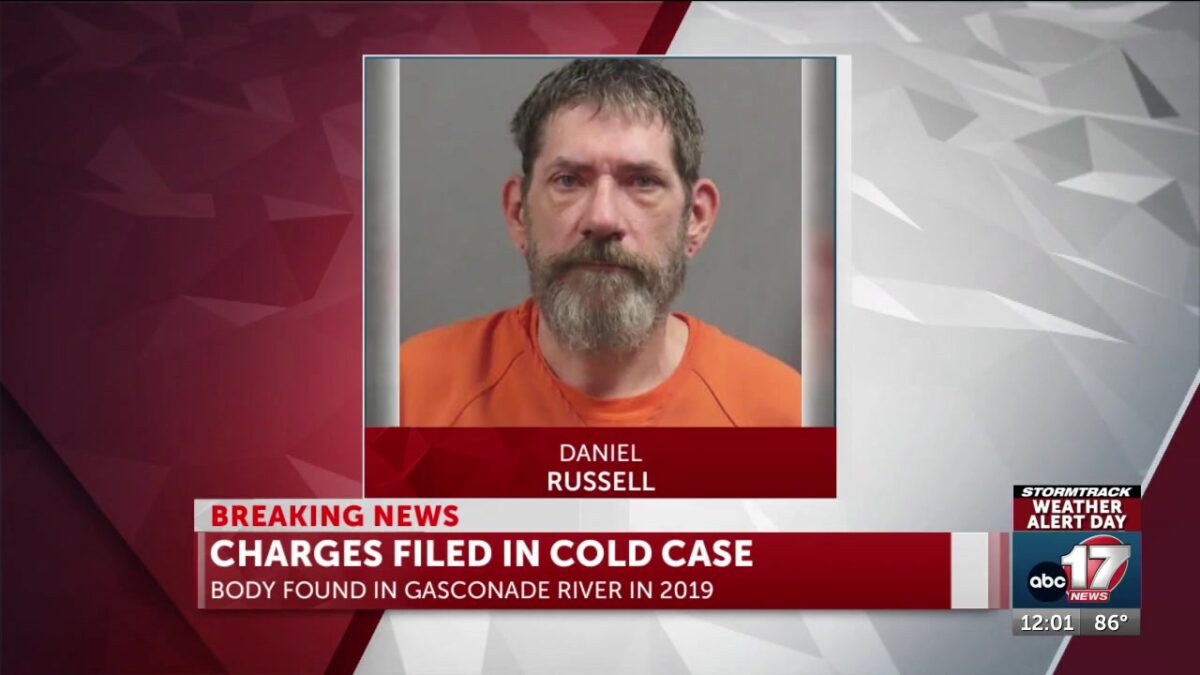
A Gasconade County man was charged last week after investigators accused him of killing a man who had been living in his garage in 2018.

Daniel W. Russell was charged Thursday with first-degree murder, abandonment of a corpse and evidence tampering. The case had been sealed until this week.

The Gasconade County Sheriff’s Office said on Monday that Russell has been arrested in eastern Missouri in the death of Michael A. Graham of Georgia. Graham’s remains were found in a plastic barrel lodged next to a boat ramp at the river access in Gasconade in early 2019, a few months after he was reported missing. Investigators later confirmed the remains were those of Graham.

A probable cause statement says a witness told investigators that Russell enlisted their help to move a foul-smelling barrel from his garage in September 2018. Russell allegedly told the witness that he killed Graham and put him in the barrel with concrete.

Missouri State Highway Patrol divers found the barrel in April 2019, and a chunk of the concrete in the barrel matched concrete found in Russell’s garage, according to the statement.

The witness also allegedly told investigators that Russell’s wife said she had seen Graham dead, apparently struck in the head with an object.

Activity on Graham’s social media account stopped in May 2018, and changes emerged in spending patterns associated with his Social Security checks, the statement says. Investigators allegedly traced the spending back to Russell and his family.

The victim’s personal belongings were found during a search of Russell’s residence, according to the statement.

Russell denied having a part in Graham’s death when questioned, saying Graham had driven away and had not returned, according to the statement.

Russell’s arraignment is set for Wednesday morning.

Click here to follow the original article.

Alert called off after Marshall woman found safe

Matthew Sanders

COLUMBIA, Mo. (KMIZ)

A Marshall woman with dementia who walked away from a nursing home amid extreme heat on Tuesday was found safe.

Shirley L. Swift, 89, was last seen at Hartland Residential Care Center at about 9 a.m. Tuesday, according to an alert issued by the Missouri State Highway Patrol. She suffers from dementia.

Marshall was under an extreme heat warning on Tuesday, and the heat index had climbed above 90 degrees by 11:15 a.m., according to official readings taken at Marshall Memorial Municipal Airport.

The Patrol did not give details about how Swift was found.

Click here to follow the original article.