Company at center of canceled fireworks displays says refunds can be ‘handled through proper legal process’

Euphenie Andre

OSAGE BEACH, Mo. (KMIZ)

Several Mid-Missouri communities will be without their traditional Fourth of July fireworks displays this year after their fireworks vendor filed for Chapter 11 bankruptcy.

The City of Osage Beach, the Mexico Noon Lions Club and Lake Valley Golf Club in Camdenton were all affected. The Lions Club and Lake Valley Golf Club had to cancel its displays, while Osage Beach moved its whole July 4 celebration to July 11.

All three parties had contracts with fireworks supplier AM Pyrotechnics. Arkansas communities were also affected.

The Mexico Noon Lions Club announced its cancellation on Thursday, saying it had worked with AM Pyrotechnics for many years before learning the company would be unable to fulfill its contract. The Lions Club treasurer told ABC 17 News on Thursday that she did not know if or when the club would be refunded.

AM Pyrotechnics said in a statement that it is operating under Chapter 11 bankruptcy protection after a November accident at one of its facilities severely disrupted its operations.

CEO and owner Aaron Mayfield wrote in a Friday statement that the accident affected manufacturing, inventory, staffing and its ability to complete every scheduled fireworks display. Mayfield claimed in his statement that the company worked to save as many Fourth of July shows as possible, but ultimately canceled some events when it determined they could not be completed safely.

In a statement, the company apologized for the late notice, saying organizers were notified as soon as final decisions were made. It added that payment, refund and other financial matters related to canceled shows are now being handled through the bankruptcy process.

“The reason for the timing is that we continued working in good faith to save as many displays as possible until it became clear that certain shows could not be completed safely and professionally,” Mayfield wrote. “Once those final determinations were made, affected clients were notified and my Chapter 11 counsel was copied so payment, refund, claim, and bankruptcy-related issues could be handled through the proper legal process.”

Visitors in Osage Beach on Friday shared their dismay with ABC 17 News.

“It’s really a bummer because I was really looking forward to that, and who doesn’t love fireworks in America?” visitor Messiah Williams said. “I love that loud boom.”

Though Osage Beach is having a later celebration, some visitors on Fridau said celebrating after the holiday won’t feel the same.

“You schedule it for next week, it’s not going to hit the same,” visitor Derick Maldonado said. “People aren’t going to have days off. It’s not going to be appreciated as much as it would be for July 4.”

AM Pyrotechnics claims it has completed other fireworks displays this season and continues to operate regional shows.

Click here to follow the original article.

Troop F traffic fatalities nearly double, and water drowning incidents see an increase

Melissa Houston

COLUMBIA, Mo. (KMIZ)

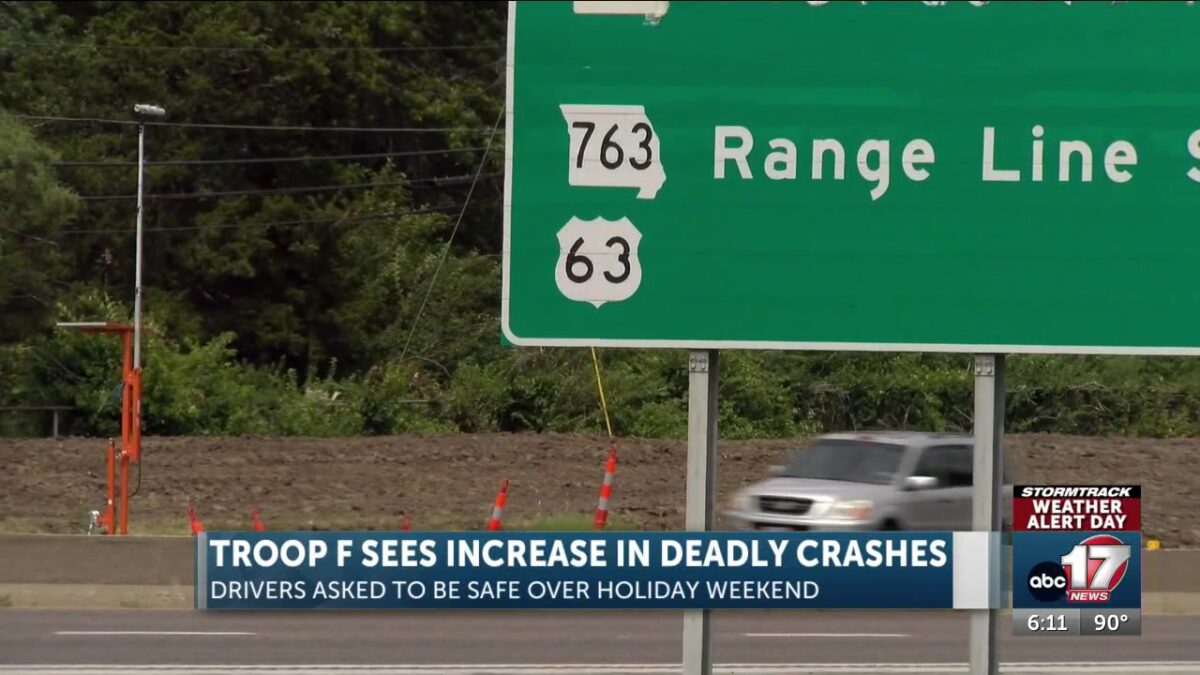
Online traffic crash reports from the Missouri State Highway Patrol show that traffic fatalities in Troop F have nearly doubled so far this year compared to the same time period in 2025.

MSHP Troop F — which covers much of Mid-Missouri, including Boone and Cole counties –has reported 35 deadly crashes in 2026, marking an 84% increase from the 19 fatalities reported by this time last year.

This year initially began with fewer traffic deaths until February, when numbers started to level out before gradually surpassing last year’s numbers. MSHP Sgt. Kyle Green said traffic fatalities usually run in waves.

“If you look at the overall fatalities in Troop F, we were up for this time last year,” Green said. “But if you were to look at it just a couple of months ago, you would have saw that we were down 40-something percent.”

Green said there are no specific driving patterns contributing to the spike, but just like most fatalities it can be caused by preventable driving behaviors.

“It’s inattention. It’s speeding, it’s people, you know, operating their vehicle while impaired,” Green said.

State traffic crash maps show that Highway 54 has been the deadliest stretch of road in Troop F’s coverage area this year, with eight fatalities. Interstate 70 followed with four deaths, and Highway 63 had two deaths. In comparison, at this time in 2025, four deaths occurred on Highway 63, two on Highway 54, and none on I-70.

The majority of the crashes from this year have occurred during the daytime with clear road visibility, according to the state traffic crash map. However, Green said the installation of construction zones is a contributing factor.

“We’ve got an increase in construction zones along I-70, and so that has led to some additional crashes and other incidents,” Green said.

He also recommends that people leave early for their destinations, slow down in construction zones and remain attentive to prevent further deadly crashes.

Despite the rise in traffic deaths, Green said in comparison to statewide statistics, Troop F is lower than the state average by 3%.

In addition to traffic fatalities, the MSHP online boat/drowning incident report shows that drowning deaths within Troop F have also seen an increase compared to last year’s numbers.

So far in 2026, five drownings have been reported, compared to the two during the same time in 2025. Three of this year’s drownings occurred at Lake of the Ozarks.

The Lake of the Ozarks is expected to see an increase in boat traffic over the weekend due to Independence Day celebrations, and Green said he is hoping that everyone is making safety their priority anytime they are near the water.

“You can be the greatest swimmer out there, but if you enter that water where you’re injured or some type of medical emergency and you’re not conscious, obviously you’re not gonna be able to swim,” Green said. “Or it’s gonna be extremely difficult to.”

Green is recommends adults and children wear life jackets any time they are near the water.

Click here to follow the original article.

World Cup fans weigh in on Kansas City’s heat, FIFA hydration breaks

Mitchell Kaminski

KANSAS CITY, Mo. (KMIZ) 

Triple-digit heat indexes and temperatures in the 90s have become one of the defining storylines of the 2026 FIFA World Cup, but fans gathering in Kansas City for Friday night’s knockout-round match between Colombia and Ghana said the sweltering conditions in the afternoon have done little to dampen the experience.

With extreme heat expected to last until 8 p.m., just before kickoff of Colombia and Ghana, thousands of supporters flocked to the FIFA Fan Fest, where organizers installed hydration stations, cooling fans and misting areas to help visitors stay cool throughout the day.

For many Colombian supporters, the weather was nothing out of the ordinary.

“We live in Florida; we are pretty much used to this. There is a nice breeze right now, which feels nice. Anyone coming from anywhere else, probably not used to this,” said Nico, of Naples, Florida.

Hector Lozardo, a Colombian native who traveled from Orlando, said summer tournaments have always brought hot conditions.

“These are always played on in summer and it is always hot pretty much everywhere. So I’m really kind of accustomed to that. So I don’t mind, plus, the water, the hydration stations and the fans and the shade, I think that helps,” Lozardo said.

The heat hasn’t just been felt by fans it has also changed what they see on the pitch.

For the first time in World Cup history, FIFA has implemented mandatory three-minute hydration stoppages around the 22nd minute of each half to help players cope with the extreme temperatures.

While FIFA officials have said it is for player safety, many have been skeptical of the true intentions behind the change. Many fans online argue that FIFA is just trying to fit in more commercial breaks. 

Coaches have also argued the stoppages give teams an unearned opportunity to make tactical adjustments mid-match, potentially shifting momentum. U.S Men’s Natioanl Team coach Mauricio Pochettino, was one of several coaches who have spoken out against the change, saying that “it is unnecessary.”

While some fans ABC 17 News spoke with generally understood the reasoning behind the change, several said they were not sold on its affect on the game.

“As a long-standing soccer fan, it does interrupt the flow. So we don’t like it, but I guess we accept it,” Lozardo said.

Despite the heat and the debate surrounding the new hydration breaks, fans said the atmosphere in Kansas City has exceeded expectations. Lozardo, who has attended multiple World Cup events, called this year’s tournament experience in Kansas City a step forward.

“This is definetly an upgrade like America!” Lozardo said. “This is wonderful. The Fan Fest, it’s much bigger. There are a lot more attractions and the atmosphere is amazing.”

Click here to follow the original article.

Road closures scheduled in Columbia begin next week

Ryan Shiner

COLUMBIA, Mo. (KMIZ)

The City of Columbia on Wednesday announced a number of road closures that will occur next week.

Beginning on Monday, West Sexton Road will be closed at the intersections of Jefferson Street and McBaine Avenue for a storm water improvement project, according to a release sfrom the city.

The closure is expected to last 90 days. The Jefferson Street intersection will be completed first, the release says. The Go COMO Gold Route will detour around the Sexton Road closure.

Affected bus stops include:

West Sexton Road and Oak Street

West Worley Street and Oak Street (westbound)

Chip seal pavement maintenance

Beginning on Tuesday, Public Works crews will start chip seal pavement maintenance on several Columbia roads, according to a second press release from the city.

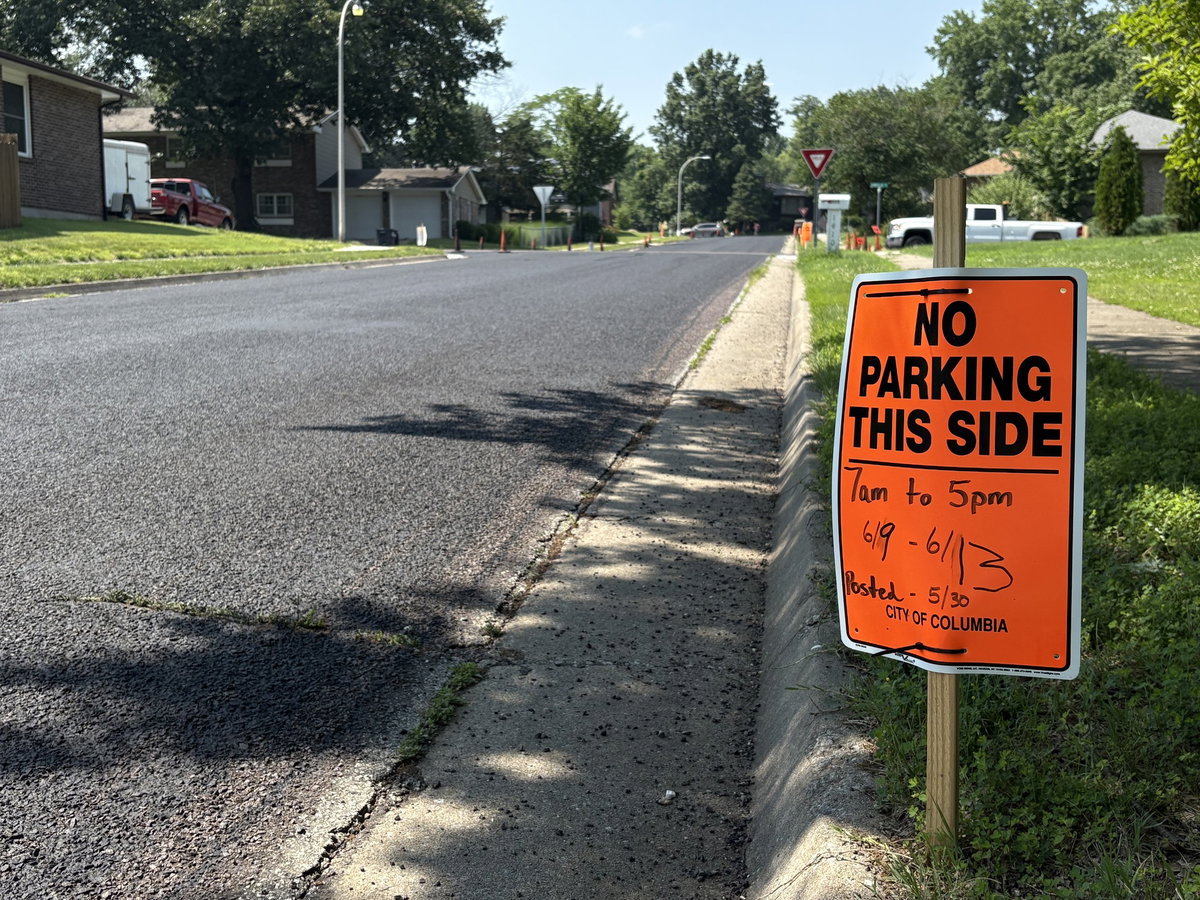
Crews will work 7 a.m.-7 p.m. Monday through Thursday until the project is complete. Orange “No Parking” signs will be placed on streets 24 hours in advance.

List of streets

Burrwood Drive from Oakhaven Drive to the cul-de-sac

Crestwood Lane from Larail Drive to Forum Boulevard

Larail Drive from Burrwood Drive to Crestwood Lane

Lakepoint Drive from Larail Drive to the cul-de-sac

Green Meadows Road from Forum Boulevard to Bethel Street

Juniper Drive from South Rock Quarry Road to the cul-de-sac

Juniper Place from Juniper Drive to the concrete section

Telluride Lane from Rock Quarry Road to the cul-de-sac

Access Road from Old 63 to the cul-de-sac

East Point Drive from Stadium Boulevard to the cul-de-sac

Ray Young Drive from East Point Drive to the cul-de-sac

Old Mill Creek Road from County Line Road to Vawter School Road

Jake Lane from Bray Avenue to Cunningham Road

Longwell Drive from Bray Avenue to the cul-de-sac

English Street from Cunningham Road to Jake Lane

Alsup Drive from Talent Drive to Bradshaw Avenue

Wallace Street from Chapel Hill Road to Alsup Drive

Barkley Drive from Alsup Drive to Kohler Circle

Talent Drive from Chapel Hill Road to Kohler Circle

Kohler Circle from Talent Drive to the bulb

Rollins Road from Fairview Road to Scott Boulevard

Rollins Road from Fairview Road to Stadium Boulevard

Manor Drive from Rollins Road to Broadway

Westridge Drive from Rollins Road to Broadway

North Circle Drive from Maplewood Drive to Westridge Drive

Panorama Lane from North Providence Road to Aspen Ridge Lane

Aspen Ridge Lane from Snow Mass Drive to Snow Peak Court

Bear Creek Drive from Texas Avenue to the dead end

Hickman Avenue from North Eighth Street to North Fifth Street

Derby Ridge Drive from Brown School Road to the dead end

Hatteras Drive from Tidewater Drive to Derby Ridge Drive

Sandering Drive from Tidewater Drive to Hatteras Drive

Carolina Drive from Tidewater Drive to Hatteras Drive

Tidewater Drive from Carolina Drive to Derby Ridge Drive

Buxton Drive from Carolina Drive to Tidewater Drive

Chesapeake Drive from Carolina Drive to Tidewater Drive

Piedmont Place from the cul-de-sac to Carolina Drive

Thornberry Drive from North Oakland Gravel Road to Savannah Court

Thornberry Drive from Culpeper Drive to Savannah Court

Northland Drive from Parker Street to Blue Ridge Road

Isherwood Drive from Pioneer Drive to Mexico Gravel Road

Isherwood Circle from the cul-de-sac to Isherwood Drive

Martha Drive from Pioneer Drive to Fairhaven Road

East and West Henley Street from Mexico Gravel Road to Mexico Gravel Road

Burbank Loop from Bullhead Lane to Bullhead Lane

Bullhead Lane from Burbank Loop to Black Hills Drive

Black Hills Drive from Woodshire Drive to Mexico Gravel Road

Woodshire Drive from Wood Lake Court to the cul-de-sac

Opal Drive from Amethyst Drive to North Wyatt Lane

Coral Drive from the cul-de-sac to Opal Drive

Granite Drive from Coral Drive to the end of the street

Click here to follow the original article.

Two counties sue state over ‘unconstitutional’ law on deputy pay

Matthew Sanders

JEFFERSON CITY, Mo. (KMIZ)

Two Mid-Missouri counties have sued the Missouri Attorney General, alleging that a state law that allows judges to set salaries for deputies and jailers in some counties is unconstitutional.

Audrain County and Montgomery County filed the lawsuit Thursday in Cole County. The county commissioners in each county are asking a judge to strike down the law, which lets panels of judges in Third and Fourth Class counties decide staffing levels for the sheriff’s department and pay rates for its employees.

Instead, that power should be vested in county commissions, per the Missouri Constitution, according to the lawsuit.

“No provision in the Missouri Constitution expressly directs or permits the judiciary to manage the business and fiscal affairs of counties,” the lawsuit states.

The suit claims that the Audrain County sheriff requested $1.37 million for deputy salaries in fiscal 2026, but the circuit court fixed salaries for deputies at $1.795 million. The sheriff requested $1.185 million for jailers, and the court decided to appropriate $982,000.

In Montgomery County, the sheriff requested about $1.2 million for jail salaries and $1.18 million for non-jail salaries, but judges ordered appropriations of about $1.322 million for jail salaries and $1.26 milion for non-jail salaries.

No hearings have been set.

Click here to follow the original article.

Jefferson City man charged after high-speed chase in Callaway County

Ryan Shiner

COLUMBIA, Mo. (KMIZ)

A Jefferson City man was charged with three felonies and a misdemeanor after he was involved in a high-speed chase with law enforcement Wednesday in Callaway County.  

Carl Anderson Jr., 34, was charged with second-degree drug trafficking, aggravated fleeing, misdemeanor reckless driving and tampering with evidence. He is being held at the Callaway County Jail without bond. A court date has not been scheduled.

The probable cause statement says a deputy pulled over Anderson near the intersection of Highway 54 and Route HH. Anderson sped off when the deputy asked him to get out of the vehicle, the statement says.

The chase went south on Highway 54 and Anderson topped 120 miles per hour, the statement says. Deputies unsuccessfully used spike strips. Anderson eventually crashed his vehicle in a ditch near Highway 54 and South Summit Drive, the statement says.

Police allegedly found a pound of methamphetamine next to the passenger side of the vehicle.

Click here to follow the original article.

Elderly pair accused of having sexual relations at Flat Branch Park

Ryan Shiner

COLUMBIA, Mo. (KMIZ)

Two elderly people were charged with misdemeanors after authorities say a 73-year-old man performed oral sex on a 63-year-old woman on Wednesday afternoon at Flat Branch Park in Columbia.

R D Jones, 73, of Columbia, was charged with first-degree sexual misconduct and illegal drug possession, while Diana Kay Jackson, 63, of Columbia, was charged with first-degree sexual misconduct. Both are being held at the Boone County Jail on $5,000 bonds. Court dates have not been scheduled.

Police in the probable cause statement described “society” as being the victim in the case.  

Dispatch received multiple calls about a man performing oral sex on a woman at Flat Branch Park and that “families” saw it occur, the statement says. The act was apparently in view from the splash pad at the park, police wrote

Someone described as an employee of a redacted employer walked up to the couple, the statement says. Jones allegedly raised his head up to look at the employee before going back to what he was doing, court documents allege.

Officers reported seeing Jackson without pants or underwear when they arrived, the statement says. Jackson allegedly said Jones was “only” performing oral sex, the statement says.

Jones was allegedly found with a pipe and small baggie with white residue that tested positive for methamphetamine, court documents say.

Jackson was told by police that she had been trespassed from all city property and she allegedly responded by saying that she would return to Douglass Park, court documents say.

Click here to follow the original article.

Audrain County hospital demolition underway; new city hall planned

Alison Patton

MEXICO, Mo. (KMIZ)

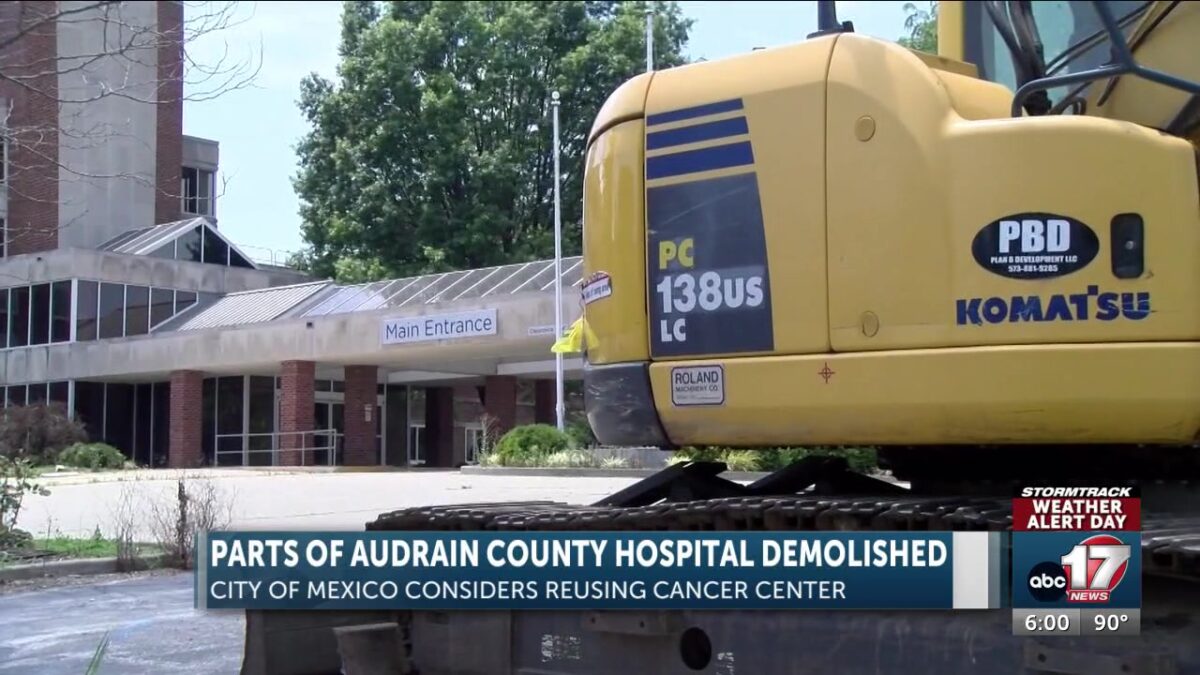
Parts of the Audrain County hospital are being torn down as the City of Mexico prepares to build a new city hall and public safety facility.

The county is taking charge of the demolition of the Stribling House and the former county health department building at the site, city manager Bruce Slagle told ABC 17 News.

Flowmaster Construction is working on the demolition and has notified the Missouri Department of Natural Resources of the asbestos at the site. The information online notes that demolition will be completed by the end of September.

The main hospital is also slated for demolition, but a timeline, cost and contractor haven’t been worked out yet. Slagle said the hospital needs to be rebuilt, and the city is negotiating with Boone Health.

“There continues to be good progress made, but we’re not at a point where we can release any information publicly,” Boone Health spokesperson Christian Basi said.

The city is also working on design plans for a new city hall and public safety facility in the former hospital’s cancer wing. Mexico Mayor Steve Haag said the city was considering building from scratch, but renovating the cancer center would save millions.

“That option allows us to save upwards of seven to $8 million of tax payer money,” Haag said.

He said city offices, along with the fire and police departments, would be housed there. It would take a couple of years before the building is move-in ready.

Mexico resident Benjamin Jeffery said a new city hall is necessary, since the old one often floods, but some people are caught up between public health and public safety.

“Yes, we need a new city hall, we need a new fire department and stuff like that. But then they’re also torn between we have no emergency care here,” Jeffery said.

He also said the nearest hospital is in Columbia, which is 45 minutes away, and it could take up to twice as long in an ambulance because there’s only so many of them.

“Any possibility of anything that could happen, am I going to need a hospital or not? And not having one–It scares a lot of us because we know we need to go to a hospital should an emergency like that arrive, but are we going to make it? Is the biggest fear most of this town has,” Jeffery said.

Mexico lost its hospital in 2022 after the Noble Health Group announced it was suspending operations in Callaway and Audrain County. ZivaMed later took over but also laid off workers and closed Audrain Community Hospital in early 2024. Noble Health owned a hospital in Fulton that also shuttered. 

Click here to follow the original article.

History speaks from the walls of the Missouri Capitol

Gabrielle Teiner

JEFFERSON CITY, Mo. (KMIZ)

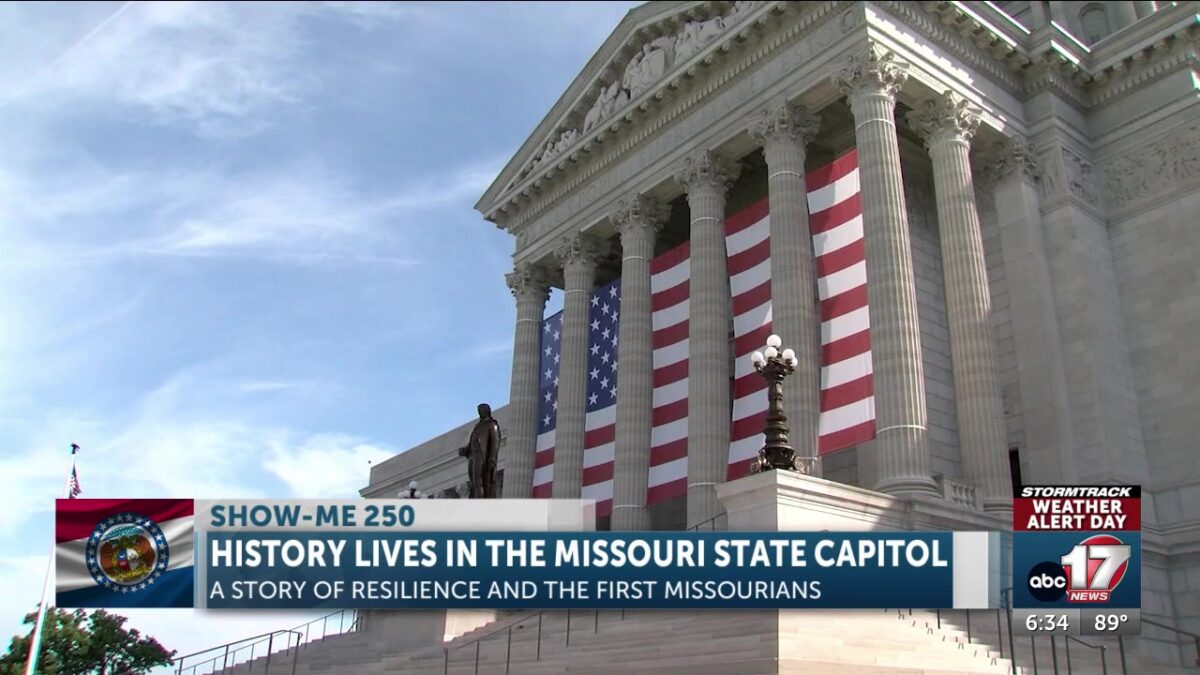
As America approaches its 250th birthday, few places capture the nation’s story quite like the Missouri Capitol, serving as more than just a space for governance.

Stepping inside the Capitol is like stepping into a time machine of Missouri ingenuity. Visitors are greeted by walls and floors made of limestone from southwest Missouri, red granite pillars from the St. Francois Mountains, an opulent chandelier made by a Guth Lighting Company out of St. Louis, and the great seal of the State of Missouri proudly sits in the center of the Rotunda floor, surrounded by stunning paintings.

And that’s only what you see just stepping inside. As visitors explore the wings and levels of the Capitol, more history silently reveals itself, spanning around 200 years and sharing the stories of how Missouri played a foundational role in American history and the founding ideals it upholds today.

Long before the Capitol became a landmark, it reflected a larger story: America’s westward expansion.

The Capitol standing in Jefferson City today wasn’t the first. In fact, without the Capitol, Jefferson City might never have existed at all.

From St. Charles to Jefferson City (and the smoky setbacks that followed)

Missouri officially became the 24th state in 1821 through the Missouri Compromise.

“When we applied, there were 22 states in the union, 11 of them were free states, and 11 of them were slave states,” said Sarah Jones, art historian with the Missouri State Capitol Museum. “Through the Missouri Compromise, Maine became its own state, it broke off from Massachusetts as a free state, and Missouri came in as a slave state.”

The first legislature met in St. Charles, where they wrote the state’s first Constitution, making that city the first Capitol of Missouri, as depicted in a lunette painting found on the second floor of the Capitol.

“Assembling of the First Legislature” by Rick Miller. St. Charles, Mo. 1821.

Jones says when the legislature was trying to decide where to put the state capitol, they wanted to be fair about where it was located.

“They wanted a brand new city,” said Jones. “They didn’t want to give it to a city that already existed because they thought that was playing favorites.”

At this time, like today, Springfield, St. Louis and Kansas City were the three big cities in the state. They’re spread out and hard to access, especially without trains and cars. Lawmakers wanted the Capitol to be easy to get to for everyone, so they decided it must be in the middle of the state.

Missouri has the benefit of rivers for steamboats to travel across, making travel easier and faster. This played such a significant factor in the legislature’s decision that they even wrote in the Missouri Constitution on page 15 that the State Capitol had to be along the Missouri River and within 40 miles of the mouth of the Osage River.

Missouri Constitution 1820Download

Lawmakers scouted a few places as potential sites, such as Sedalia and Boonville, but they found a small spot along the Missouri River, about 11 miles from the Osage River, that seemed like the perfect fit.

Jefferson City did not exist before lawmakers decided the land would house the state’s governing operations. All that was there was a steamboat landing along the Missouri River.

They didn’t have to start from scratch, but they didn’t have a town.

“It takes a while to build a town, so for the first five years, from 1821 to 1826, the legislature met in St. Charles,” Jones said.

Fast-forward to 1826, a town has been established, named the City of Jefferson after Thomas Jefferson’s pivotal role in purchasing the Louisiana Territory. It was decided that the Capitol would sit high on the bluffs of the Missouri River, dominating the skyline and acting as a beacon of hope and refuge for weary steamboat and land travelers.

“You could see the Capitol building from 8 miles in any direction, so if you weren’t coming by steamboat, if you were coming by land, it would be pretty easy to get to,” said Jones.

To this day, the Capitol Dome is one of the first things people notice when traveling by land or river.

View of the Capitol in the distance from the river and highway.

Jefferson City has hosted three Capitol buildings since its founding.

The legislature and governor moved into the first Capitol Building in 1826, which stood where the Governor’s Mansion is today. This didn’t last much longer than a decade.

In November 1837, the building burnt down, leading to the loss of all secretary of state records.

However, timing was on the legislature’s side. A few months before the fire, a new, bigger Capitol was already being built because the legislature had expanded significantly. Construction on this new building started on the same site as the current Capitol.

The second Capitol was still under construction in 1840, but the legislature moved in. It looked similar to our current Capitol, which has two wings and a big dome in the center, paying homage to the United States Capitol, which architects were trying to mimic to a degree.

It was remodeled in the 1880s, expanding the building and adding a bigger dome on top with a copper cap. But like its predecessor, the building had a fiery fate.

In February 1911, lightning struck the dome, starting a fire and burning the building to the ground. This time around, many state records were saved by hundreds of volunteers, prisoners, legislators and public officials.

A special election was held a few months after the fire. Architects told the legislature that it would cost about $3.5 million to build the Capitol. The legislature didn’t have those funds, so they raised money to build the building through a bond issue. They ended up raising $4.5 million for the project, while still staying on their original budget.

The attorney general at the time ruled that the extra million raised must be used towards the Capitol and not put into general revenue. That extra money went towards commissioning artists from around the world to decorate the building.

Two Capitol buildings lost to flames had lawmakers and architects needing to pivot. The third Capitol was built on the same site, but was built entirely of stone (Carthage Marble, also known as limestone) so it wouldn’t catch on fire. Construction lasted from 1913 to 1917.

“When they built this one, you could get to Jefferson City two ways — you could come by the river, but you could also come by the highway, which they built on the other side,” said Jones. “So they rotated the building 90 degrees. So technically, from an architectural standpoint, we have two fronts, two entrances.”

Today’s Capitol is 437 feet long and 300 feet wide at its center. Atop the dome sits Ceres, the Roman goddess of agriculture, who represents the importance of farming to Missouri’s people and economy.

She also protects the building from its fateful past.

“For our state’s bicentennial, they did a big restoration project of the outside, and they took Ceres down, and they took her to a restoration company in Chicago,” said Jones. “They estimate that she probably got struck by lightning about twice a year; she’s been up there for over 100 years, so that’s about 200 lightning strikes.”

While the current Capitol is only 109 years old, one room inside holds nearly 200 years of history.

Thomas Hart Benton mural

The House Lounge serves as the home of the famous mural titled “A Social History of the State of Missouri,” painted by Missouri native Thomas Hart Benton in 1936.

“It is a timeline, generally speaking,” Jones said. “It starts with the pioneers and Native Americans over here, and then we kind of go over here to this corner, and we get some statehood era, and then over this direction, the little smoke over here is the Civil War.”

The mural also transitions into the 19th century, showing farmers doing tasks by hand, then jumping to modern farming with tractors and silos. But Benton still nods to old farming technology, too, like using mule teams. Smoke painted in the distance is representative of the Industrial Revolution, lawyers in court, lawmakers debating, outlaws, slavery, the expulsion of Mormons, riverboats, the Great Depression and more are all featured on the mural, which covers every inch of the Lounge’s walls.

When the mural was finally unveiled to lawmakers, they were not too happy with it.

“It wasn’t what they were expecting,” said Jones. “They kind of thought Benton would paint like a big city, five-star generals, things like that.”

Benton argued that while those things were all well and true to Missouri’s history, the social history of the state is more about the people of Missouri who were foundational to making it the state it is today.

“The history of the people of the State of Missouri, so it’s a social history, people make up society and so that’s what they got,” said Jones. “And he wanted to be truthful, he thought history should be authentic and truthful, so he gave us the good, the bad and the ugly.”

Lawmakers wanted Benton to repaint the mural, but Benton’s work was protected by his contract. Originally, lawmakers wanted an oversight committee to review what he planned to paint beforehand, but Benton knew they needed him more than he needed them. He was able to get the oversight committee taken out of the deal.

“What we see in here is 100% Thomas Hart Benton telling us the story of Missouri, no other input,” said Jones. “He didn’t want anybody else to tell him how to tell the story, and he knew that they wouldn’t let him include things like the slave auction or the expulsion of the Mormons or ‘The Ballad of Frankie and Johnny’ or things that wouldn’t necessarily put Missouri in the best of light.”

There were even a few bills in the first few sessions at the new Capitol in the ’40s and ’50s to get rid of it, but nothing ever made it out of committee.

The people loved it, and lawmakers just had to get used to it because it wasn’t like Benton was going to budge.

Lawmakers today, like Rep. Rudy Veit (R-Wardsville), have a different attitude toward the mural than lawmakers back then.

“The more you learn about it and what it stands for, it is amazing that one man can think that all those things and the depth of it,” said Veit. “The baby is actually a live human being who came from here, Jeff City, and how the art reflects the different times and different levels and different values we put on society at the time.”

Veit says the mural and the many other art pieces found within the Capitol serve as a reminder that history must be preserved.

“When you know your history, you know what’s been happening in the past, you know what’s important,” said Veit. “You put value in and understanding that freedom just didn’t come overnight, and all the opportunities we have in the state have not just come overnight.

“We have a historical value in the Capitol, it shows the changes in time from the days of slavery and how important it is to know history so we don’t repeat the same mistakes.”

Along the second floor of the Capitol are 41 lunette (half-moon-shaped) paintings that illustrate Missouri’s natural and cultural resources and the state’s military history. A popular painting is of the Eads Bridge in St. Louis by Frank Nuderscher, which includes an optical illusion to make the painting appear three-dimensional. Sixteen lunettes include optical illusions.

In the House of Representatives, a large canvas in the east Visitors Gallery represents the glory of Missouri at war, created shortly after World War I. Lining the other walls are glass mosaics which represent the glory of Missouri and peace. Some notable items that can be found within the mosaic include Jesse Hall, steamboats and the Capitol Dome itself.

On the first floor of the building lives the Missouri State Museum, which includes Missouri’s natural resources, flora and fauna while also serving as a memorial for Missouri’s soldiers and sailors.

This year, in light of America’s 250th birthday, the Missouri State Museum has the “Stars, Stripes and Celebrations” exhibit, commemorating America’s major birthdays and how Missouri contributes to patriotism.

Visitors can spend an entire day and may still not have enough time to see all the historical art and artifacts that make up the Missouri State Capitol.

“The Artery of Trade/The Great Crossing” By Frank Nuderscher, 1922

Great Seal of the State of Missouri

The Great Seal of the State of Missouri was created by Judge Robert Wells and was formally adopted as the state seal in January 1822.

State seals are used to authenticate important documents, proclamations and laws, but also symbolically represent the history, origins and ideals of the state.

The Great Seal can be found in various places across the Capitol.

Hover over the black circles to see the meaning of different parts of the seal.

Veit says the state motto, “Salus Populi Suprema Lex Esto,” is an important reminder to him that lawmakers should consider all of the state’s residents in each decision they make.

“It’s important because otherwise people in positions of power can take over the law and not necessarily represent the people, the mass population, but their own self-interests,” said Veit.

Something like that did happen back in the day. The Great Seal of the State of Missouri was stolen.

“Gov.Claiborne Fox Jackson, who was the Missouri governor and a southern sympathizer at the beginning of the Civil War, stole the state seals and ran off to Texas and thought he could set up a provisionary government in Texas for Missouri,” said Jones. “It didn’t work; we had enough people back here to just continue business.”

New seal plates were made, and the official seal resides in the Secretary of State’s Office to stamp official bills and documents as they come through.

Preserving history while looking towards the future

Keeping the art and artifacts in good shape is no easy task, as something as small as leaving a window open can ruin an entire painting.

“Leaving windows open overnight can bring moisture, which can deteriorate pictures and photographs and structures, leading to mold,” said Veit. “Those are things we constantly have to stay on top of because once the harm is done, a lot of it’s irreparable.”

Veit serves as chairman of the Missouri State Capitol Commission, established in 1911, which is tasked with preserving, restoring and renovating the Capitol and the recording of its history. The Commission is also in charge of taking care of over 120 art pieces inside the Capitol.

Five years ago, the Capitol underwent extensive exterior restorations to help preserve and extend the life of the building and improve its overall appearance and stability.

“I think the fact that our Capitol Commission chooses to restore and respect the history that we have within these walls is so crucial to who we are as a people,” said Vice Chair of the America 250 Missouri Commission Pat Thomas. “And I think it says a lot about who Missourians are. We respect history, we respect where we come from, we learn from it, and we try to do better in the future.”

Speaking of the future, the Capitol Commission has been granted $104 million in the fiscal 2027 budget to renovate and improve the Capitol’s interior through the Missouri State Capitol Commission Capitol Preservation Fund.

“The Commission is planning on hopefully redoing the whole interior to bring it back to its original historic interior with the high ceilings, better heating and air conditioning, more access, get rid of the mezzanines, ADA accessible,” said Veit.

Veit said none of the artwork would be changed inside the Capitol; if anything, he says, they will be improved.

Click here to follow the original article.

Jefferson City woman accused of stealing more than $52k from nursing home resident

Ryan Shiner

COLUMBIA, Mo. (KMIZ)

A Jefferson City woman was charged with a pair of felonies on Thursday in Cole County after she allegedly stole $52,494.91 from a nursing home resident for nearly two years.

Amy Shoup was charged with financially exploiting an elderly person and misappropriating funds of an elderly nursing home resident. A warrant was issued and a $50,000 bond was set on Thursday. She was not listed on the Cole County Jail roster on Thursday evening.

The probable cause statement says Shoup had power of attorney over the victim and took $52,494.91 from the victim’s bank account between Aug. 26, 2024-June 1, 2026.

Shoup neglected to pay the victim’s nursing home bill and resulted in the victim owing the home $67,000 before it was sold and has a current outstanding balance of $16,000 to the new home, the statement says.

The victim did not give Shoup permission to use the money for anything else aside from care for the victim, the statement says. Bank records allegedly showed $82,594.91 was taken from the victim’s account, with only $30,000 going to the nursing home, court documents say.

“During a face-to-face interview, Amy L. Shoup admitted to having durable power of attorney over the victim and using the victim’s funds to help pay her own bills,” the Department of Social Services wrote in a probable cause statement. “Amy L. Shoup admitted to not paying the nursing home bill where the victim was living despite her fiduciary responsibility as durable power of attorney.”

Click here to follow the original article.