Sportsbooks see ‘pent-up demand’ in Missouri’s betting debut


Mitchell Kaminski

COLUMBIA, Mo. (KMIZ)

Legal sports betting went live in Missouri on Monday, with more than 2 million people attempting to access sportsbook apps on launch day.

Circa Sports, one of the first two companies in Missouri to receive an online betting license, now operates in six states. The first bet placed on Circa was a $15 wager on the St. Louis Blues to beat the Anaheim Ducks in regulation. While the Ducks took down the Blues 4-1, Derek Stevens, Circa’s owner and chief operating officer, described the moment as a relief.

“We had dinner Sunday night at a great place in suburban Saint Louis, and when the dinner was over, we all got back to the hotel, we all immediately were on the phones with our I.T. department and customer service department,” Stevens said. “Our customer service department had been fielding a lot of phone calls and emails throughout the day, and we just kind of waited for the clock to strike 12. And then, that moment when the first bet came in, we all had like a little sigh of relief. Everything worked out perfectly.”

Ryan Butler, Senior News Analyst at Covers.com, was in St. Louis for the launch and said he observed strong interest from bettors.

“I talked to multiple sportsbook operators who were impressed. They use terms like ‘they saw a lot of pent-up demand; for bettors who have been wanting to for a long time,” Butler said. “I think part of it might show that they were familiar with it. They would go across state lines. I talked to people who do that every Sunday for NFL games, things like that, and now that they have an opportunity to do it from home, I think we’re seeing those numbers already show results.”

According to Butler, geolocation data showed 2.6 million people logged into a sportsbook or attempted to log in on launch day. About 250,000 accounts were active on Dec. 1, with 188,000 accounts created prior to the launch.

Stevens declined to give an exact number of wagers placed, but said Circa was pleased with the activity. 

“We were positively enthused with the number of bets. I was happy with the average size of the bets we took. We took a lot of four-figure bets. So I was real happy with that. Lots of bets over $1,000,” Stevens said. “We had a pretty diversified set of bets. It wasn’t just the Blues game because that was the opening event, effectively. But it kind of covered the gamut from NBA to pro football futures, college basketball,  a good amount of English Premier League soccer. So it was really diverse, I really liked that as well.” 

Circa is one of just two companies in the state to receive an untethered license,  which allows operators to take bets without sharing revenue with a casino or sports team.

Circa, DraftKings, and FanDuel had pitched the Missouri Gaming Commission in August for an untethered license. The commission ultimately chose Circa and DraftKings, citing Circa’s business model as a way to attract different types of high-dollar bettors. 

Missouri was an attractive state for Circa’s low-hold model. Stevens said that they won’t invest in states with a high tax rate because a low-hold model would not be able to make a return. 

“As an example, we really don’t want to get into the state of New York, I know the volume is huge, but we want to be able to overcome those taxes,” Stevens said. “When we saw the regulatory framework that was going to come out in the state of Missouri, we felt that Missouri set themselves up to be really a leader in the sports betting industry for a long time. We thought they did a real good job from a tax perspective as well as the regulatory perspective, so we determined we wanted to get into Missouri.”

Because Circa received an untethered license, it did not have to negotiate a revenue-sharing deal with a sports franchise to operate, unlike other sportsbooks such as FanDuel, which partnered with St. Louis City SC. 

“We just went directly to the state initially, and then we never subsequently had to negotiate a skin deal with one of the sports franchises. Of course, we’re going to work with all the sports teams, but more on a marketing relationship type of thing,” Stevens said.

Butler also highlighted the advantage of Missouri’s low tax rates, which make the state attractive to sportsbooks.

“This absolutely helps the business aspect of it. The sportsbooks are very excited. That’s why you saw eight sportsbooks jump in and invest a lot of money in here,” Bulter said. “Illinois has some of the highest tax rates. Now it’s only $0.25 or $0.50, depending on the book, but it’s just annoying that it’s there. So you see that it would definitely encourage me to maybe go over to Missouri or the Missouri side with it. So that absolutely helps with it.”

While the state’s low tax rate is beneficial for operators, it could impact how much revenue Missouri brings in. 

“Your downside is the state might be missing out on some tax revenue,” Butler said. “Ten percent of gross gaming revenue is one of the lower rates in the country.”

The Missouri Gaming Commission called Monday’s launch “successful and largely uneventful,” crediting staff for implementing a fair, secure, and responsible sports wagering framework on time.

“Monday marked the successful and largely uneventful first day of legal sports wagering in Missouri—an important milestone made possible by the constitutional amendment narrowly approved by voters in the last general election,” the commission said in a statement. “This smooth launch reflects the tremendous effort and professionalism of our rules-writing staff, who worked tirelessly to meet the constitutional deadline of December 1, 2025. Their dedication ensured that Missouri could implement a fair, secure, and responsible sports wagering framework on time and with confidence.”

The commission said financials and overall wagering statistics will not be released until mid- to late January, but monthly reports will be available on the Gaming Commission’s website, similar to how casino financials are published.
Click here to follow the original article.

Columbia seeks to create task force to explore campaign finance regulations

Nia Hinson

COLUMBIA, Mo. (KMIZ)

The City of Columbia is considering to form a task force to look into campaign finance reform.

The council on Monday night unanimously approved creating the task force, though specifics of the task force– including who would be on it and how many people would make it up — still need to be hammered out.

The idea of creating a task force was pioneered by Ward 3 Councilwoman Jacque Sample, who requested the motion. Sample told ABC 17 News on Tuesday she envisions the task force to be made up of a diverse group of people, including people from various political leanings, as well as representation from labor unions. She also would like for the community to be able to weigh-in on the idea.

Sample said she heard several concerns from her constituents about large amounts of money being donated in local elections, which she believes began after the April municipal election.

“I think when individuals see the thousands and thousands of dollars that some people raise for elections first is hard to understand where all of that money comes from sometimes, but it also makes it seem like your ‘average person’ wouldn’t be able to run for office,” Sample said. “There’s a perception that they’re required to raise that amount of money.”

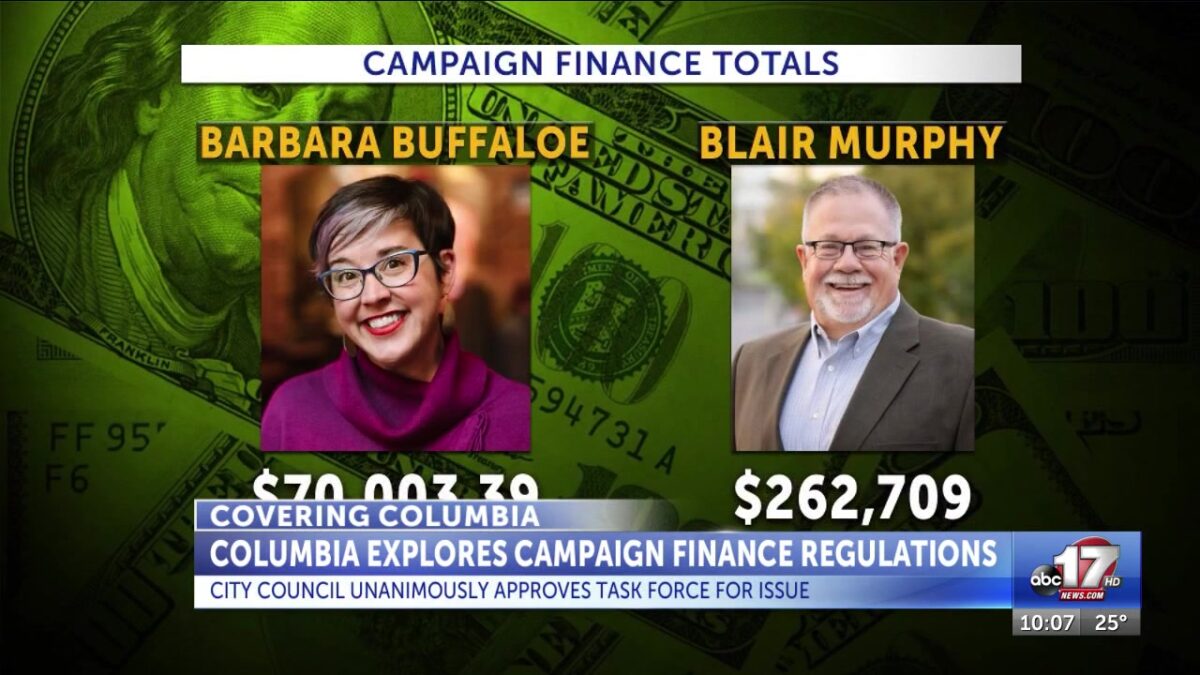
Mayoral candidate Blair Murphy made headlines in the April election with several high-dollar and high-profile donors. He raised $262,709 for the race, more than triple what Mayor Barbara Buffaloe raised. Buffaloe beat Murphy by more than 3,000 votes for mayor. More than $324,000 in total was spent in the election, previous reporting shows.

In the fourth ward race, candidate Ron Graves raised more than $30,000, while Councilman Nick Foster raised more than $8,000. Foster won that race. Sample ran unopposed in her race.

Ward 5 Councilman Don Waterman said while he voted to approve the task force, he doesn’t see donations playing much of a role on elections. He said the city discussed the idea of creating an ordinance regarding this, which he said he would ultimately like to receive clarification on.

“I still don’t think it’s necessary if you look at the results,” Waterman said. “But I do think if it goes forward, I do want to have some specific language as far as you know what defines ‘contributions.’

Sample said she still sees value in getting more feedback.

“Not everybody can understand, or has the ability to understand to support a candidate in that way and so it just feels out of reach,” Sample said. “I think by having some limitations in place it kind of eases that worry about raising enough money to be a ‘viable candidate.'”

While the council approved the creation of the task force, several had questions that they raised. Foster inquired about the makeup of the group, as well as how they will be appointed. Buffaloe also said she recommends the task force look into how the potential rules will be regulated in the city.

After it was suggested that a councilmember could each pick a member of the taskforce, Ward 2 Councilwoman Vera Elwood suggested it would better for the council to collectively vote on members.

City Attorney Nancy Thompson suggested that she and her staff put together a draft report for the council to review. She said she expects to have that finalized for the City Council by its second meeting in January.

Sample said she is hopeful that the task force will be able to work to review what other cities are doing regarding elections, such as St. Louis and Kansas City. Springfield, Missouri, is also in the process of creating an ordinance, according to Sample.

Sample said intends for the task force to work with Columbia’s legal office to see how it could translate here.

According to Kansas City’s ordinance, donations to elect a mayor into office has been capped at $3,000, while people looking to donate to council members will be allowed to shell out a maximum of $2,500. In St. Louis, both mayoral and board of alderman donations are capped at $2,600.

The logistics of how much money Columbia would cap donations at still need to be figured out.

Click here to follow the original article.

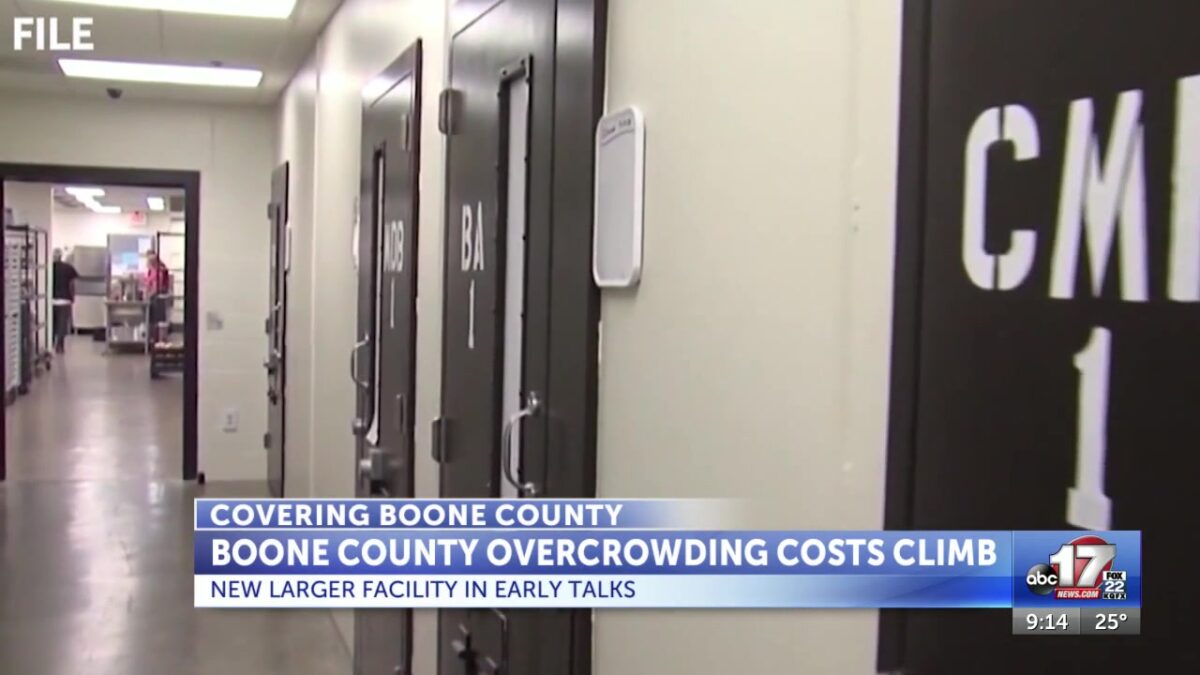
Boone County has spent $1.8 million this year to house inmates outside of county, plans for new facility in early talks

Erika McGuire

COLUMBIA, Mo. (KMIZ)

Overcrowding at the Boone County Jail is costing the county, with officials now housing more inmates in out-of-county facilities than in the jail itself.

According to Cpt. Brian Leer with the Boone County Sheriff’s Office, the county has spent more than $1.8 million so far this year on housing inmates in other counties and is on track to hit $2 million by the end of the year.

Previous reporting says from Jan 10-May 23 of this year, the county had spent $461,235 to house detainees in other counties, meaning the cost has tripled in the second half of the year.

As of Nov. 21, Leer said there were 403 inmates in the Boone County Jail system, with 177 housed in the local jail and 226 housed in other Mid-Missouri counties. On May 22, the county was paying to house 113 detainees in other county jails.

The cost to house a single inmate in another county jail is $50-$60 a day, according to Leer.

The overcrowding can be problematic as it puts added pressure on partner agencies and Boone County staff who help manage the movement of inmates between facilities, Leer said.

“Agencies like Montgomery County, part of our agreement is they come and get them and transport them back and forth for us. It’s been a really good partnership,” Leer said. “It does present problems though because we’ve got to find staff to do these transports and some of our folks will work overtime just to do the transport,”

U.S. Marshals currently have three inmates from Boone County. Two juveniles have been remanded to the county but are being held at the Juvenile Justice Center and six inmates are being housed at a St. Louis hospital for mental-health-related issues.

There has been a steady increase in overcrowding since the COVID-19 pandemic, Leer said, with many factors playing a role, especially mental-health backlogs.

“Court proceedings, a lot of cases get continued, then we see a longer delay a lot of times in cases being adjudicated as well as mental health,” Leer said. ” We’ve got several folks back there waiting on mental health beds that we just can’t send them anywhere because they don’t have a bed for them. Somebody may be in here for six months and they’re deemed incompetent by the court.”

Leer claims the higher intake of detainees can be linked to a number of factors, including Boone County’s population increasing. The Boone County Jail aims to keep 10-15 beds available for intake everyday, limiting the number of inmates it can house at a given time. Keeping certain inmates separated is also a driving factor.

County officials have started discussions about a new, larger facility that meets demand.

While the project is still in the early stages, Leer said he expects the project to cost between $200-$300 million, with hopes of the facility having extra resources compared to the current facility that was built back in 1990.

“We would maybe have like a mental health wing or floor within the facility as well as have a lot more space,” Leer said. “It’s going to take years to even think about and get a plan. Let alone the years of production as far as getting things produced to then be shipped here then to be built,”

A new facility would likely have between 1,000-1,200 beds, roughly four times the capacity of the current jail, which can hold 246 inmates.

“You have to plan for the future so there’s just a lot of logistics to go through and plan, long-term housing, how is the county going to fund it?… If you start that funding process now, at what point would you be able to break ground and actually build a facility? There’s so much in discussion going on right now,” Leer said.

Click here to follow the original article.

Columbia moves forward with construction on recycling site

ABC 17 News Team

COLUMBIA, Mo. (KMIZ)

The Columbia City Council on Monday night unanimously approved the construction of a new building over its recycling site.

The bill allows staff to move forward with the design and construction after the building was damaged by an April 20 tornado.

The proposed building will cost about $3.5 million, which includes foundation design, a building with an office, breakroom and locker rooms.

The funds will come from an insurance reimbursement and capital funds.

Construction is expected to last 12-18 months.

Click here to follow the original article.

No injuries reported in Jefferson City apartment fire

Ryan Shiner

COLUMBIA, Mo. (KMIZ)

No one was injured, but some residents were displaced, after an apartment caught fire Tuesday morning in the 500 block of East Elm Street, according to a Tuesday press release from the Jefferson City Fire Department.

The release says firefighters were called at 6:21 a.m. for a fire coming from the wall near an electrical outlet in an apartment.  

“Upon arrival, firefighters found light smoke conditions and confirmed a fire contained to a bedroom within the apartment. The building’s fire sprinkler system activated as designed and successfully controlled the fire before it could spread beyond the room of origin. Smoke alarms also activated, alerting occupants to the emergency,” the release says.

The cause of the fire is under investigation, the release says.  

Click here to follow the original article.

Jefferson City loses appeal in phone tax lawsuit

Matthew Sanders

JEFFERSON CITY, Mo. (KMIZ)

The Jefferson City government lost its appeal Tuesday in a lawsuit that sought taxes the city says telecommunications companies failed to pay.

The city brought the lawsuit in St. Louis County in 2022 against several companies, including AT&T, Sprint, T-Mobile, Verizon and U.S. Cellular, alleging that they failed to pay all of the city’s 7% tax on gross receipts. The lawsuit sought delinquent taxes plus interest and penalties.

The Missouri Eastern District Court of Appeals on Tuesday upheld a lower court’s ruling, with Judge Virginia Lay writing in part that the city did not take the proper steps to notify the telecommunications companies about tax underpayments before taking the matter to court.

State law, the court ruled, requires assessment of the back tax due and that a notification be sent to the delinquent taxpayer.

The appeals court also found the city lacked standing to bring the lawsuit.

Click here to follow the original article.

Elderly man seriously injured in Benton County crash  

Ryan Shiner

COLUMBIA, Mo. (KMIZ)

An 80-year-old man from Lincoln, Missouri, was seriously injured Tuesday in a crash on Route H in Benton County, according to a crash report from the Missouri State Highway Patrol.

The report says the driver in a 2018 Ford F-150 – a 55-year-old man from Lincoln, Missouri – failed to negotiate a curve while heading westbound and the truck ski on the roadway. The truck went off the left side of the road and hit a parked 2005 Ford Ranger, which was on its side from another crash, the report says.

The driver of the Ford Ranger was an 80-year-old man from Lincoln and he was flown to University Hospital with serious injuries, the report says. He was not wearing a seatbelt, the report says. The driver of the truck wore a seatbelt and had no reported injuries, the report says.

MSHP reports do not name those involved in crashes.

Click here to follow the original article.

WATCH: Mizzou women’s basketball team takes questions ahead of game against California

Ryan Shiner

COLUMBIA, Mo. (KMIZ)

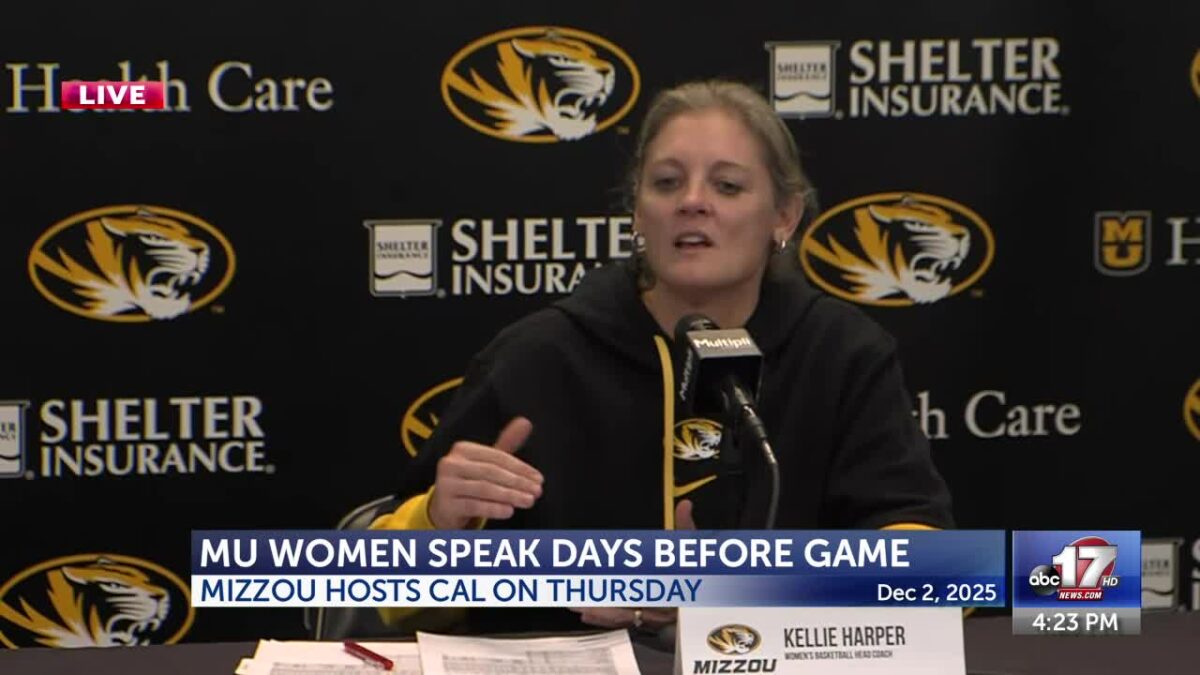
The Mizzou women’s basketball team fielded questions from media on Tuesday ahead of their home game against California on Thursday.

The Tigers (7-2) are on a three-game win streak, featuring wins over Northwestern, Bradley and Washington State.

The Golden Bears are 6-2 on the season and saw its six-game winning streak snapped last week in a 58-50 loss to Auburn.

Watch Tuesday’s press conference in the webplayer at the top of this page.

Click here to follow the original article.

Missouri State Highway Patrol uses stopwatch to enforce work zone speed limits from the air

Gabrielle Teiner

COLUMBIA, Mo. (KMIZ)

If you’re speeding, especially in a work zone, you may be on the lookout for troopers on the side of the roads to avoid getting a ticket.

But it’s much harder to spot a trooper when they are ticketing you from 2,000 feet in the air.

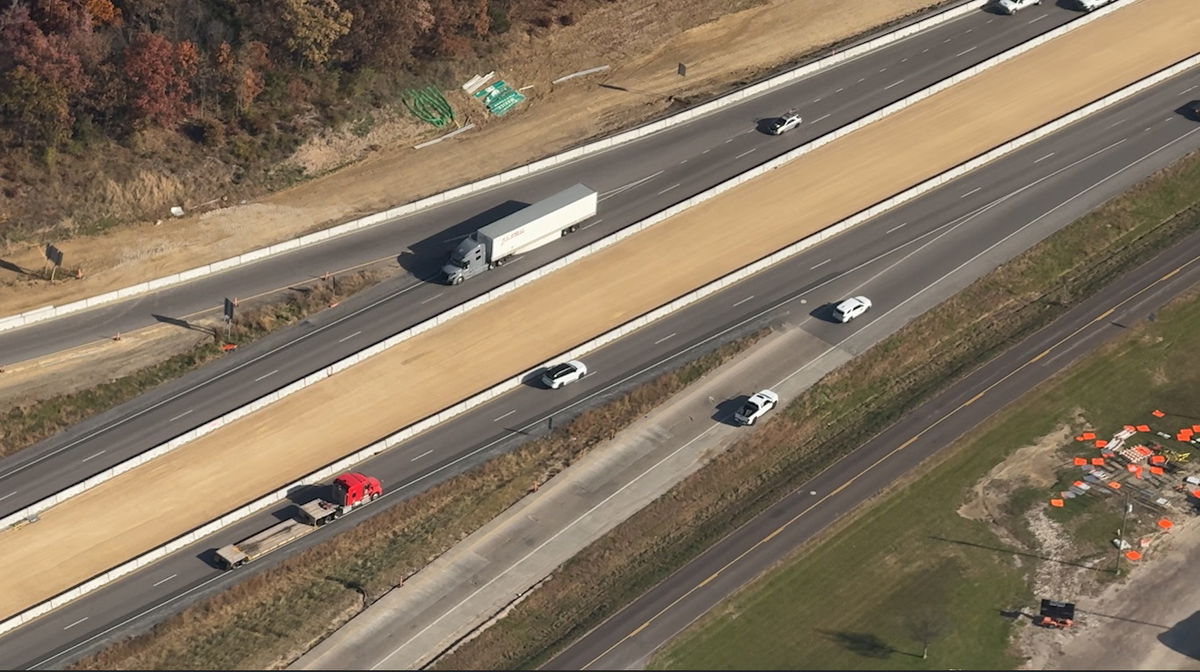
The Missouri State Highway Patrol’s Aircraft Division has been using planes for speed enforcement since the late 1950s. So far this year, the patrol has conducted at least 40 speed enforcement flights in Mid-Missouri. The counties include Boone, Callaway, Cole, Cooper, Phelps, Pulaski and Saline, where MSHP planes fly over road construction zones.

“These guys that are out here doing 80, 90 miles per hour plus, and they will continue going that speed, do not know that they’ve already been caught,” said Cpl. Geoffrey Beaulieu with Troop F. “It really just lets us hammer down on those big speeders that really need to be slowing down.”

To properly conduct a speed enforcement flight, troopers and Missouri Department of Transportation workers have to go to the site and paint white blocks on the road beforehand. Those blocks are placed 1/8 of a mile apart using a certified tape measure.

The process isn’t as complicated as it may seem, as troopers in the air use only their eyes, a radio and a stopwatch to catch speeders.

The stopwatch also gets set to 1/8 of a mile, and will calculate a vehicle’s speed by using the formula of time over distance.

“We start the stopwatch before they get to that block, and when they get to the second block, we stop the watch. The stopwatch gives us the speed,” said Master Sgt. Dustin Metzner, a trooper and pilot for the Highway Patrol’s Aircraft Division.

Metzner says it’s crucial that troopers start and stop the watch at the right time, or else they could get a bad speed reading.

“It’s really important for us to make sure that we’re not cheating the violator out of distance,” said Metzner. “Because if we measure their distance less than 1/8 of a mile on the watch, it’s going to erroneously give us a faster speed than what they’re actually going.”

The pilot and ground troopers are on the same radio channel to communicate back and forth. The plane follows the speeding car, giving detailed descriptions as they go, until the trooper catches up with the violator. The trooper on the ground gives the driver a ticket or citation, and the process repeats.

“If we’re not 100% certain that we started the watch after the blocks, then we’re not going to stop them and put them on the shoulder,” said Metzner.

According to flight reports from the Highway Patrol, the average speed enforcement flight led to around seven speeding tickets and two warnings for speed per flight. Most of those ticketed or warned were going 11-20 mph over the speed limit in a construction zone, which is typically 55 mph.

Watch ABC 17 News at 10 on Wednesday to find out how many resources go into running these flights, and what to do if you’re ticketed.

Click here to follow the original article.

Eldon woman seriously injured in Cole County crash

Ryan Shiner

COLUMBIA, Mo. (KMIZ)

A 66-year-old woman from Eldon was seriously injured in a crash Monday afternoon on Highway 54 in Cole County at the Moreau River Bridge, according to a crash report from the Missouri State Highway Patrol.

The report says the driver lost control of her 1999 Ford F-150 on the ice-covered roadway and hit the bridge. The truck was heading eastbound at the time of the crash.

Snow caused hazardous driving conditions on Monday and a slew of crashes were reported around the Mid-Missouri area.

The woman was not wearing a seatbelt at the time of the crash, the report says. She was brought to Capital Region Medical Center by ambulance.

MSHP reports do not name those involved in crashes.

Click here to follow the original article.