Moberly man charged with murder in deadly shooting

Demetra Alarcon

COLUMBIA, Mo. (KMIZ)

A Moberly man has been charged with first-degree murder after allegedly shooting a woman Sunday night.

Christopher Viley, 51, was arrested Thursday on suspicion of first-degree murder in connection with a shooting Sunday night.

The victim was identified as Cheryl Gravitt, 57, of Moberly.

According to the probable cause statement, at about 7:10 p.m. Sunday, officers with the Moberly Police Department responded to a shots-fired call and found Gravitt lying in the driveway of the residence with an apparent gunshot wound to the back of the head. She was taken to the hospital, where she was later pronounced dead.

According to the statement, one witness heard the sound of a gunshot and saw Viley running away from the body.

In the report, another witness said they heard a loud pop and saw a black man wearing a blue shirt standing in the driveway where the body was lying.

The report states that Viley was also observed on video surveillance in the area immediately after the shooting, wearing a blue shirt.

Viley has past criminal convictions. The probable cause statement says Viley was arrested for fourth-degree domestic assault in February, which is pending a court appearance.

Other past convictions include felony resisting/interfering with an arrest, first-degree assault and third-degree assault.

Viley’s initial hearing is set for Monday afternoon. He remained in the Randolph County Jail on Friday with no bond.

Click here to follow the original article.

State petitions to take away license of former Randolph County sheriff under prosecution for theft

Matthew Sanders

JEFFERSON CITY, Mo. (KMIZ)

The director of the Missouri Department of Public Safety has petitioned to have a former Mid-Missouri sheriff lose his license, writing in court documents that Aaron Wilson broke the law and committed an act of “moral turpitude” by claiming a $5,000 check that wasn’t his.

Wilson, sheriff of Randolph County for one term from 2021 to 2025, was arrested last month on a charge of felony theft. He turned himself in July 31 and posted a $5,000 bond.

Current Sheriff Andy Boggs wrote in a statement that he asked the Audrain County Sheriff’s Office to investigate the missing check, which a business gave to Wilson in 2024. The check was never deposited into county accounts, according to Boggs.

Wilson claimed the check was a “thank you” for help the sheriff’s office provided with a calendar fundraiser.

The petition by Public Safety Director Mark James states that Wilson has held a peace officer’s license with the Randolph County Sheriff’s Office since 2004.

“The check provided to [Wilson] was for proceeds from Randolph County’s business with the calendar,” James’ petition states.

A hearing before the Administrative Hearing Commission has not been set.

Petition against Aaron WilsonDownload

Click here to follow the original article.

QUESTION OF THE DAY: What is the better name for the lake between New York and Canada?

Matthew Sanders

President Donald Trump signed an executive order to rename another body of water on Thursday.

This time, it’s Lake Ontario.

Amid a trade dispute with Canada, Trump decided that Lake Ontario should instead be known as Lake America. It remains to be seen whether mapmakers and other countries will follow suit.

Trump has previously renamed an international body of water, proclaiming the Gulf of Mexico would become the Gulf of America.

Do you think Lake America is a better name for the body of water between New York and Canada? Let us know by voting in the poll.

Click here to follow the original article.

Pedestrian safety, housing costs, distrust of first responders among obstacles for Columbia’s homeless community, residents say at meeting

Olivia Hayes

COLUMBIA, Mo. (KMIZ)

The City of Columbia is continuing its conversations around a homelessness and how to better support the unhoused community.

On Thursday, a round table discussion by the Columbia/Boone County Public Health and Human Services brought together about 70 community members, homeless advocates and city officials.

Sara Humm, the health department’s public health planner, called Thursday’s meeting one of many discussions that are apart of a bigger picture for the city’s Steering Committee established back in May.

“The end goal being submitting a strategic plan with action steps to City Council to hopefully make some improvements,” Humm said. “What things are working, what things are not working, what can be improved in terms of homelessness in the community?”

Attendees were split into groups with a facilitator at each table where they discussed three questions for 20 minutes each. The questions were:

From your perspective, what is working well in our community’s response to homelessness?

From your perspective, what do you see as the biggest challenges related to homelessness in our community?

If you could recommend one or two actions that would make the greatest positive impact on homelessness in our community over the next few years, what would it be?

In response to what’s working well, one group listed the city’s free bus system, the new Opportunity Campus and passionate community organizations that provide resources to the unhoused.

As far as some of the challenges related to homelessness, the same group listed high housing costs, pedestrian safety and distrust in first responding agencies.

Recommendations made by the group included suggestions around more mental health resources, more housing options and easier access to public transit.

Shannon Frey, a community member and local volunteer, said she was encouraged by the turnout on Thursday.

“Everyone at my table was really someone who I think understands that it’s a very complex problem and so there’s not going to be a simple solution. I think it’s good to again have conversations,” Frey said.

Focus groups have also been held with young adults in the community and more than 41 interviews have been completed with people who are currently experiencing homelessness.

Humm described the approach as comprehensive and said the next focus groups will include conversations with direct service providers, as well as health professionals, business owners, and leaders in the faith community. The city has a public survey accessible until mid September that anyone who cannot attend a meeting can participate in to make sure their voice is heard.

After all the data is collected, Humm said staff at the health department will analyze it and present it to the Steering Committee. From there, the Steering Committee will create action items to present to the city council by the end of December.

Frey said she thinks the December deadline is reasonable.

“It’s a really difficult issue, so I don’t think that you can rush through trying to solve it,” Frey said.

Humm said a public data presentation will also take place after it is analyzed but a date has not been finalized yet.

Click here to follow the original article.

Choi takes aim at downtown bars days after telling MU students to avoid part of Walnut Street

Ryan Shiner

COLUMBIA, Mo. (KMIZ)

University of Missouri System President Mun Choi on Thursday doubled down on sentiments he shared with city leaders over the summer.

While Choi was speaking with ABC 17 News, he claimed bar owners in downtown Columbia can do more to curb crime. This comes after he told students in a school-wide email earlier this week to avoid East Walnut Street between Eighth and Tenth streets at night.

“I heard from the police department that there are many things that bar owners can do,” Choi said during an interview. “They can’t just say that once they are– once customers are outside of the bar, there’s nothing they can do. Well, what about overserving? What about letting patrons in that are underage that are being served? Those are all issues that bar owners have to be responsible for.”

Choi had emailed city leaders over the summer multiple times while also calling out one Columbia bar after  a shots-fired incident and a large street brawl occurred near Eighth and Walnut over the summer, when most students were away.

Choi took aim at Reign Bar in his emails with city leaders, though a city spokesman noted the area has been the site of early morning gatherings before Reign Bar opened. Police Chief Jill Schlude had stated in August 2025 a “hot spot” for gun violence shifted from the 900 block of East Broadway in 2024 to the 800 block of Walnut Street. Reign Bar opened two months after that statement.

One of Choi’s emails had criticized the sentences in recent Boone County cases, which Prosecutor Roger Johnson replied to with a lengthy message of his own.

The university reported a total student enrollment of 31,650 and over 9,000 new students on the first day earlier this week.

Click here to follow the original article.

Missouri Department of Conservation to remove invasive carp from lower Grand River next week

Ryan Shiner

COLUMBIA, Mo. (KMIZ)

The Missouri Department of Conservation will conduct an invasive carp removal next week on the Grand River, the department announced in a Thursday press release.

Crews will remove invasive carp from the river from Monday through Thursday, which will require the closure of the Brunswick Access. After being caught, the fish will be brought to a commercial fishing business to be processed into various products, the release says.

The release says officials will target silver, bighead, grass and black carp, which have previously been known as Asian carp. Any other fish species captured will be measured and released as part of research and monitoring of the river’s fishery, according to the release.

Boaters can still access the river at the Bosworth Access.

“Efforts like this project have potential to increase available food and habitat for native fish in the Grand and Missouri rivers. Invasive carp tend to spawn in the slower-moving feeder streams, while young and mature carp congregate in the nutrient-rich waters of deep pools. Continued efforts in these areas could help remove large numbers of invasive carp,” the release says.

Nonnative invasive carp can reproduce and grow quickly to sizes too large for native predator fish to consume.

The Minnesota Department of Natural Resources says those types of carp were brought to the country in the ‘70s “as a biological control for plants, algae and snails in aquaculture, wastewater and retention ponds.” The Minnesota DNR wrote that a few fish escaped during high-water events “and became established in the lower and middle Mississippi River.”

Click here to follow the original article.

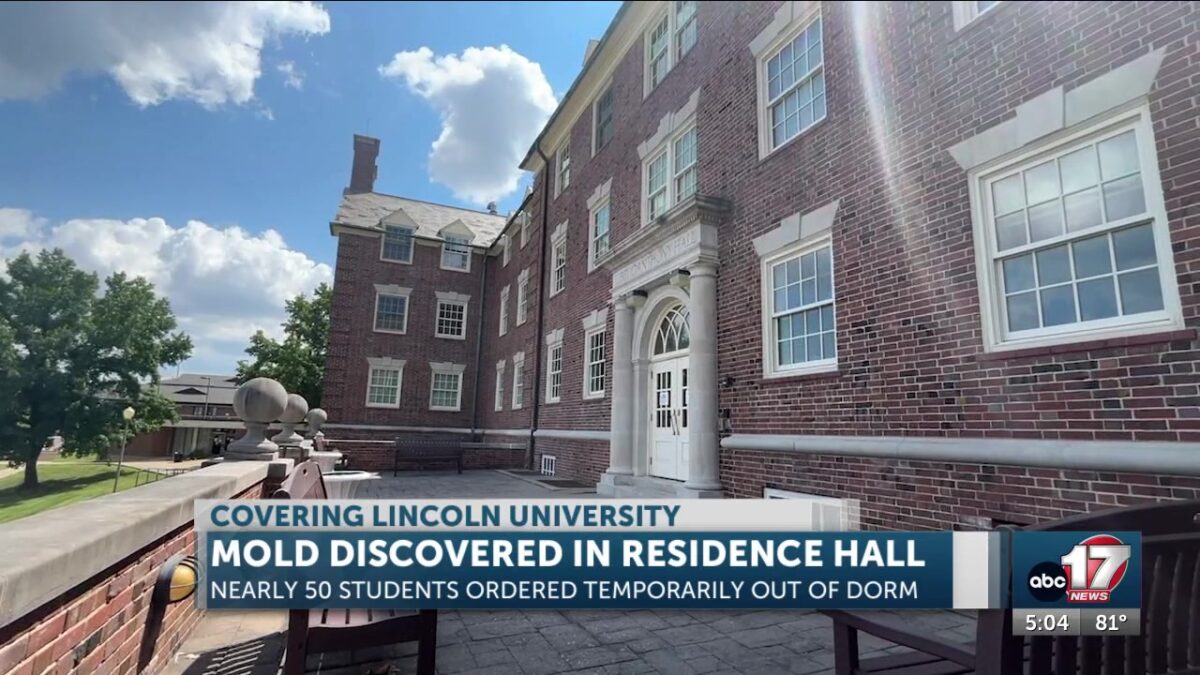
Lincoln University students claim mold at Anthony Hall was reported last year

Marie Moyer

JEFFERSON CITY, Mo. (KMIZ)

Forty-nine Lincoln University students are temporarily moved out of Anthony Hall until at least the end of the fall semester after mold was discovered growing in an empty dorm room.

Students were initially notified on Wednesday and moved out that evening and throughout Thursday.

“We got an email saying that we’re going to be having a meeting, relocating to Dawson Hall yesterday and today,” first-year LU student John Marker said. “It was kind of a pretty big surprise, really unexpected.”

Marker was one of the 49 students living in Anthony Hall who were moved.

“It was more just annoying, I don’t really have that much stuff, all my stuff fit into a duffel bag and a suitcase,” Marker said. “I do know that there was some people that had like really decorated the room and had a ton of stuff, it was going to take them quite a while and a lot of effort to get moved out.”

ABC 17 News was on campus Thursday and saw LU employees moving furniture out of Anthony Hall into moving trucks from the school’s Facilities and Planning Department.

According to students ABC 17 News spoke with, residents were moved to Dawson, Tull and Perry halls. Residents who were moved to a more expensive dorm hall kept their original room and board fees, while residents in dorm halls with cheaper fees were refunded the difference.

“Whenever the beginning of the school year started, there was a few people that had seen mold in their rooms, and I made sure to thoroughly check my room and I didn’t really see anything,” Marker said. “I think that my room was, for the most part, pretty safe.”

Marker added during the meeting where the relocation was announced, some students raised concerns about previous residents reporting mold.

“Some people were arguing about the fact that they [Lincoln University] could have done deeper inspections in between last year and this year,” Marker said. “There was a lot of issues with students last year that had seen mold in their rooms, and they had sent in a ticket for it, and that ticket apparently didn’t go anywhere.”

“When a specific concern is reported, the University’s protocol is to conduct an initial assessment and, when warranted, bring in specialized outside professionals,” LU wrote in an email to ABC 17 News.

LU did not address whether maintenance received or addressed the complaints of mold from the previous school year.

Even with short notice, students are staying positive, with several who spoke with ABC 17 News reporting that mold is inevitable with historic campuses.

“There wasn’t really much that they could do besides relocate us until they have it fully cleaned out, it is for our safety and for their safety,” Marker said. “It is guaranteed pretty much for an old building to at some point in its life have some kind of form of fungal infestation, which sucks, but it happens.”

First-year student Jamier Wilson does not live in Anthony Hall, but was similarly not suprised about the reports of mold.

“I was expecting complications, I knew what I was coming into, going to HBCU at that, especially like how the how the United States is right now, I wasn’t expecting high funding or anything, so I was understanding about it,” Wilson said. “And they’re [Lincoln University] trying to figure it out, it’s not like they’re just keeping them [students] in there, they’re trying to fix it.”

Students also told ABC 17 News the school is hoping to clear the mold by the end of the fall semester. However, students were warned the new placements could last until the rest of the year. LU has not yet publicly announced a date for when maintenance for Anthony Hall will be completed.

“The University’s goal is to complete the necessary work and reopen Anthony Hall for the spring semester, providing students with a residence hall that meets the University’s standards for health, safety and comfort. Lincoln will continue to support the temporarily relocated students to ensure they are successfully settled in their new residence halls for the remainder of the fall semester,” LU said in the email.

Click here to follow the original article.

Trump’s plan to import cheaper foreign beef draws pushback from experts, Missouri cattle producers

Mitchell Kaminski

COLUMBIA, Mo. (KMIZ) 

President Donald Trump’s plan to bring more foreign beef into the U.S. market is intended to help lower prices for consumers, but Missouri cattle producers and agricultural economists question how much shoppers will actually save,  and whether the move could hurt the domestic cattle industry in the long run.

Trump said the United States will allow up to 300,000 metric tons of ground beef to be imported over the next three months without being subject to out-of-quota tariffs.

He also said the beef would be sold at 25% below current market prices, although the administration has not specified which companies made that commitment or which foreign exporters are involved.

The move comes as Americans continue to face historically high beef prices. The nation’s cattle herd has fallen to its lowest level since the 1950s following years of drought, high feed and input costs, and herd liquidation.

A May report from the American Farm Bureau Federation noted imports entering under quota generally face a tariff of 4.4 cents per kilogram, while imports above quota face a 26.4% tariff. According to the report, for beef valued at about $7 per kilogram, the difference can amount to more than $1.80 per kilogram in tariff costs.

The Trump administration’s decision would temporarily eliminate those higher out-of-quota tariffs for the additional imports.

But Wesley Tucker, a University of Missouri field specialist in agricultural business, said the high price of beef is largely the result of a supply-and-demand imbalance. Years of drought and low profitability discouraged cattle producers from expanding their herds at the same time consumers continued to demand beef.

“As a nation, we are still suffering from drought and that is still holding back cattle numbers. That is having a major impact across the country, although not as big an impact in Missouri lately this year.” Tucker said. “It really is a perfect storm of low supply and an increased high demand at the same time. So the reality is, yes, the drought and low profitability for a number of years created a situation where there was no incentive for cattle producers to expand and to grow their herds, and because of the drought they were having to reduce their numbers.”

That demand has remained strong despite higher prices, Tucker said, with consumers often choosing ground beef over other meat options such as pork and chicken.

“One of the big reasons beef is too high is because the consumer has chosen to demand it. The question I like to ask is ‘Is beef too high if that’s what the consumer says they want?’ Just look at how much cheap pork and cheap chicken is available at the grocery store shelf whenever you go to buy food for the weekend,” Tucker said. “The reality is the consumer is saying, I may not be able to afford that steak, but I can instead of choosing an alternative meat source that’s just pork or chicken, I’m going to choose hamburger instead of steak.”

The National Cattlemen’s Beef Association, Missouri Cattlemen’s Association and Missouri Farm Bureau have all voiced frustration with the Trump administration’s decision, with Missouri Farm Bureau president Garrett Hawkins writing in a statement:

“This proposal does not solve the underlying causes of high food prices and unfairly places the blame on American farmers and ranchers. We strongly urge the Administration to reverse this decision and support American cattle producers.”

What does it mean for shoppers?

Gbenga Ajilore, chief economist for the Center on Budget and Policy Priorities and a former senior adviser in the Office of the Undersecretary for Rural Development at the USDA, said the administration’s strategy is essentially a short-term attempt to increase supply and bring down grocery costs.

But he said it does not address the underlying shortage of cattle.

“One of the things about these quick fixes in short term to try to lower prices, it never solves the fundamental problem,” Ajilore said. “We already know that with cattle farmers, they’re already struggling with drought. They’re struggling with higher costs. We’ve have increased costs of fertilizer because of the war in Iran. We’ve had tariffs that’s impacted their input costs. And generally, this is going to have a harsh impact on them without solving the problem of lower supply. So it’s just going to make it even a bigger struggle for these cattle farmers.”

For consumers hoping the additional imports will translate into significantly cheaper steaks and roasts, Tucker said there is an important distinction.

Most of the imported beef is expected to be lean, grinding beef used for hamburgers and food service rather than the higher-quality cuts shoppers typically purchase as steaks and roasts.

“Realize this beef that we’re talking about importing from these countries is grinding beef. It’s the lean, grinding beef that ends up in your food service long term. It’s not like it’s coming in as a packaged product ready to go in the grocery store. So we’re talking about huge chunks of processed beef that’s going to come in, go to the packer to be cut up and worked on, and then eventually make it to your fast food stations and a little bit of it into your grocery stores,” Tucker said.

Even if importers pay less for the beef, Tucker questioned whether those savings will necessarily make their way to consumers.

“That beef may have been going to come into the country at a higher tariff anyway and so it comes in at a cheaper price,” Tucker said. “What is the middleman’s incentive to pass that price through to the consumer? Do you really think just because that supplier of McDonald’s gets a little bit of cheaper product, that they’re going to lower the price of a Big Mac suddenly?”

Ajilore added the additional imports would represent only a small portion of the overall beef market.

“It will have an impact, but it’s just going to be so small,” Ajilore said. “So, for example, they’re importing 300,000 metric tons of ground beef, and that’s about 2% of the total market. And so if it does have an impact, we’re looking at maybe a quarter, maybe $0.35 lower.”

Ajilore believes consumers should be skeptical of expectations for a dramatic drop in grocery prices.

“When it comes to lowering prices, it’s a really complicated process and there are no quick fixes. And if any politician is promising a quick fix, then you have to be wary of that.”

Missouri cattle producers push back

Missouri ranks among the nation’s leading beef-producing states, and the cattle industry has been one of the brighter spots in the state’s agricultural economy in recent years.

Mike Deering, executive vice president of the Missouri Cattlemen’s Association, said producers have benefited from strong cattle prices, but those profits come after years of rising costs.

“The last couple of years, in terms of the cattle market has really been the bright spot of the ag industry as a whole in Missouri. Our crop friends and others are not doing as hot, but we’ve been doing pretty well in the cattle industry,” Deering told ABC 17 News.  “As far as the input cost, those are still through the roof and high and so it’s not it’s profitable, better than it has been, but it’s still not as glamorous as some people try to make it.”

Deering also pushed back on the idea that consumers are demanding relief from beef prices, pointing to continued strong demand.

“We have a historic consumer demand right now. So as these prices that you watch tick up, you’ve seen the demand follow that, which is unusual. But the consumer demand is going up, up, up. Consumers are sending a signal to cattle producers that the product isn’t too high and when it does get too high, they let us know,” Deering said. “I don’t really buy into beef prices are too high. We’re not hearing an outrage on that from consumers at all. And when you look at beef and you look at agriculture, we’re not crude oil. So when people go to the grocery store, they have choices.”

The Missouri Cattlemen’s Association has argued that bringing in more foreign beef at a discounted price could discourage producers from rebuilding the nation’s cattle herd.

Deering said he believes the problem is not necessarily the imports themselves, but the government’s decision to manipulate the market by offering them at a lower price.

“It really overshadows a lot of the great things that this administration has done for the cattle industry in terms of tax relief and other tax exemptions. And the list goes on and on. They’ve done a lot of good things and so this kind of overshadows some of that to some degree because it’s totally unnecessary,” Deering said. “It’s not necessary the imports that cause us all the heartburn it’s the market manipulation. When you are buying this product at 25% under market price and you’re undercutting the American producer, that’s where we have a problem.”

Deering believes the solution is to allow cattle prices to respond to supply and demand without government intervention.

“Let the markets work and stop the government interference. I don’t care if it’s Kleenex or beef, get the government out of it,” Deering said. 

Tucker echoed that argument, saying lower prices now could actually make it less attractive for cattle producers to make the long-term investment needed to rebuild the herd.

“It’s actually creating the opposite effect, and it’s dis-incentivizing producers to make the long term investment investment and expanding the herd,” Tucker said. “So the likelihood that they’re going to grow the herd now is less than it was before this happened. It’s probably not going to lower the price that consumers are paying all that much, but it’s actually possibly going to make the situation worse.”

Tucker said allowing the market to work could eventually lead to lower prices as producers respond to higher cattle prices by expanding their herds.

“The cure for high prices is high prices. The best way to keep the best way to lower beef prices is to let the market work,” Tucker said. “When the prices were high, it was creating an incentive for them [cattle farmers] to grow and expand. If you let the market work, in a few years they will expand and increase the herd and prices will come down. But when the government gets involved and tries to manipulate it, rarely does it have the effect that they want.”

According to Deering, Missouri cattle producers are now left to adjust to a decision they had no control over.

“What is done is done but if our government officials, if our elected leaders would stop doing that and manipulating with the market, interfering with the marketplace, that would be very helpful. I’ve been grateful for our congressional delegation, for the most part, speaking up and saying, hey, this isn’t right. So standing against this decision has hopefully will get will get the attention it deserves,” Deering said. 

The debate also comes as farmers face pressure from other directions, including higher input costs and trade tensions with Canada. Ajilore said Missouri producers could face additional pressure if retaliatory tariffs reduce demand for American agricultural exports.

“Missouri, one of the biggest export markets is Canada. For Kansas, it’s the second-biggest one. And now your going to have lower export demand,” Ajilore said. “You already have higher-rising costs because of tariffs, because of the war in Iran. And so, farmers just continue to struggle. And we’ve seen this in the data to the number of bankruptcies.”

In 2025 alone, Chapter 12 farm bankruptcies surged 46%, with Ajilore predicting those numbers could get even worse this year. 

For consumers, Tucker said the administration’s promise of a 25% reduction is unlikely to materialize at the grocery store.

“I think the likelihood of that 25% price reduction is very, very minimal. But I think the other thing the other story that I think keeps getting overlooked, is President Trump has chosen to have to focus on the price of beef because he says the price of beef is too high,” Tucker said. “Well, there’s lots of other products that you can look at. Look at the price of a bag of potato chips or the price of a bag and get a gallon of gasoline. There are lots of things that are too high today. Why he has chosen beef to be the target? I do not know.”

Click here to follow the original article.

Nonprofit speaks on creating ‘culture change’ inside maximum security prisons

Demetra Alarcon

JEFFERSON CITY, Mo. (KMIZ)

Second Mountain held a two-day leadership conference highlighting culture change inside maximum security prisons at Jefferson City Correctional Center.

Second Mountain is a nonprofit based out of Kansas City that focuses on creating culture change inside of prisons.

The prison leadership conference on Aug. 26 and Aug. 27 was an invitation-only event that brought together approximately 100 leaders from outside the faculty alongside 100 residents and staff members of JCCC to show firsthand the culture change happening inside the prison.

Bo Cornelius, executive director of Second Mountain, started the program with his wife after his release from prison three years ago. Cornelius said that programs don’t help people, but that people help people.

“Programs don’t help people. People help people. There are a lot of people in prison with real lived experiences. And through sharing their real lived experiences, I can get better,” Cornelius said.

Justin Davidson, chief of custody at the prison, said events like these can help change the culture inside of prison for the better.

“It involves where staff and residents come together and understand that there doesn’t have to be a negative always. That allows them both to realize that they’re humans, ” Davidson said.

James Dunn, a resident at the correctional center, said during the past few years, with more programs, the prison has become more of a community.

“Staff and offenders, more human, human contact. They still do their job. We still live our lives. You know, they work here. We live here. But it doesn’t have to be, animosity about the situation, ” Dunn said.

Inside the correctional center, residents can work towards change. The honors dorms bring together residents who have chosen to pursue growth and success.

Click here to follow the original article.

‘Gathering of the Juggalos’ weed supplier remains jailed; state files for asset forfeiture

Ryan Shiner

COLUMBIA, Mo. (KMIZ)

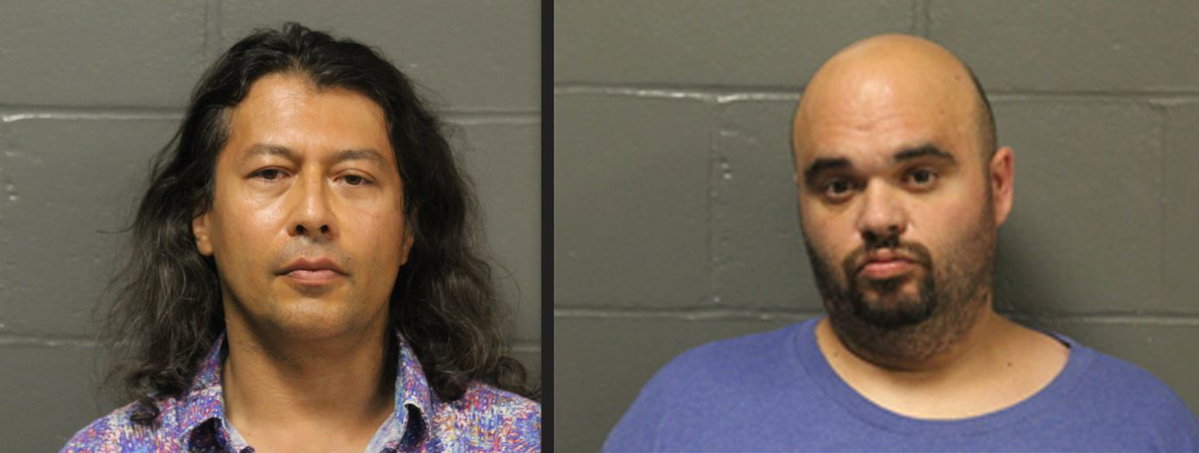
The man described as a marijuana supplier for the Gathering of the Juggalos remained behind bars on Thursday after a bond hearing earlier this week.

Kevin “Bluntman” Jones, 45, of Eastonm Pennsylvania, is charged in Camden County with first-degree drug trafficking. A bond hearing was held on Tuesday and he was denied bond again. A preliminary hearing is scheduled for 9 a.m. Tuesday, Sept. 22.

The festival was held last week.

Dennis A. Pradhan, 49, of Silver Springs, Maryland, was charged with three counts of first-degree drug trafficking and two counts of delivery of a controlled substance. He is also being held at the Camden County Jail without bond.

 Jones allegedly advertised his business on the festival’s website and found with 128 pounds of weed and 2.5 pounds of mushrooms on Monday in Osage Beach, court documents in previous reporting say.

Pradhan also had a business that advertised having drugs on the festival’s website. He was arrested while driving to the festival during a traffic stop and was allegedly found with 90 pounds of marijuana, 124.5 pounds of psilocybin mushroom products, about a third-of-a-pound of ketamine, 27 vials of ecstasy and 40 vials containing ketamine and fentanyl, among other products, court documents indicate.

The state filed separate cases on Thursday for asset forfeiture of the two men, which would result in them losing nearly a combined $6,000, their vehicles and trailers. Court filings on Thursday say a summons was issued to both men at the Camden County Jail.

Pradhan has a bond hearing in his criminal case at 8:30 a.m. Friday.

Click here to follow the original article.