Morgan County included in Kehoe’s request for disaster declaration for July storms

Ryan Shiner

COLUMBIA, Mo. (KMIZ)

Morgan County was included in Gov. Mike Kehoe’s request for a federal disaster declaration on Wednesday.

Kehoe asked the federal government to approve a major disaster declaration to help nine counties that experienced flash flooding from July 9-11. Preliminary damage assessments indicate there could be an estimated $26.5 million in emergency response costs, the release says.

Bollinger, Crawford, Iron, Madison, Morgan, Reynolds, Ripley, Washington, and Wayne counties were included in the request.

Click here to follow the original article.

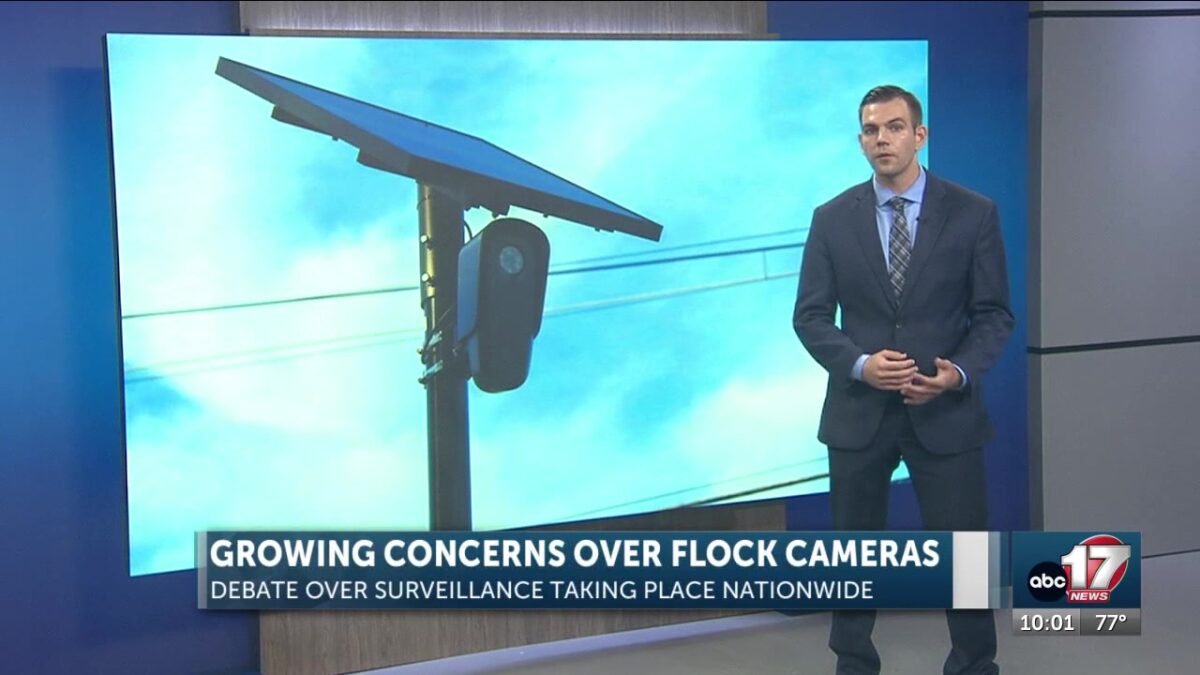
Growing concerns over Flock cameras in Columbia mirror national debate over surveillance technology

Mitchell Kaminski

COLUMBIA, Mo. (KMIZ)

Growing concerns over the use of Flock Safety cameras in Columbia are part of a larger national debate over privacy, data sharing and the expanding use of artificial intelligence in law enforcement.

Two University of Missouri students brought those concerns to the Columbia City Council on July 20, questioning what information the cameras can collect, who can access it and how long that information remains available.

The students cited Flock’s alleged ability to scan faces and pointed to the company’s own website, which says its technology can search for visual characteristics such as clothing. Flock currently advertises its FreeForm technology as allowing authorized users to search video using descriptions such as a “man in blue shirt and cowboy hat.” The company claims the feature does not use facial recognition or biometric identification.

The students also raised concerns about the security and anonymity of information stored by the system, arguing that the technology could move the country toward a surveillance state that could be used to target people. They called on the city to cancel its contract with Flock.

Similar concerns have also fueled a local grassroots effort. Krista Murray-Salisbury, founder of Get The Flock Out Of Columbia, said she first became interested in the technology after noticing a series of new cameras while driving through Columbia. After she began researching how the Columbia Police Department was using Flock, she came across the department’s transparency portal.

Murray-Salisbury claims information was removed from the portal faster than it was updated during the six weeks she was researching the system, though she was unable to provide specific examples when asked.

“The more I looked into Flock’s terms of service, the more I looked into the history of how this technology has come about and the more I read of the interviews with the founder of the company, the more concerned I became,” Murray-Salisbury said.

Murray-Salisbury said she would prefer the city invest in community policing and deescalation specialists rather than Flock technology.

“I’m a concerned citizen who does not want an unregulated information empire running an AI to have access to my children’s whereabouts as they walk to and from school every day,” Murray-Salisbury said. “But I would be perfectly happy knowing the name and the badge number of the beat cop assigned to my beat.”

She said she believes the biggest difference is accountability, arguing residents have more ability to identify and hold individual police officers accountable than they do a private company operating an artificial intelligence system. That is one of several concerns Murray-Salisbury has about how Flock data is handled outside Columbia and Missouri.

“We have very little transparency about where that [Flock data] goes outside of the state of Missouri. But that cop I know who signs their checks, there are contingencies in place for misbehavior.”

The Columbia City Council had voted 5-2 in favor of implementing Flock cameras on Oct. 7, 2024. At the time, Flock Safety cameras were advertised as being able to capture images of license plates under various conditions.

A separate camera system called Fusus was denied by the City Council 4-3 in November 2022 following community pushback.

CPD defends Flock system

The Columbia Police Department said it has no plans to end its relationship with Flock.

Assistant Chief Lance Bolinger, of the CPD Investigative Bureau, told ABC 17 News the department’s 2025 Annual Surveillance Report, presented to the City Council in June, documented successful uses of the system.

Bolinger pointed specifically to the arrest of Andrew Acton in a Boone County homicide investigation. Bolinger said that case would have been difficult to solve without Flock because the system provided crucial evidence to investigators.

Murray-Salisbury also questioned whether the benefits of Flock justify the cost. She said she believes the city could instead put that money toward traditional policing strategies and community-based programs.

“Community policing initiatives work to decrease crime rates, and they do so with backing. We don’t have the data to know how much these AI-driven systems actually help and how much they hurt,” Murray-Salisbury said. “But we do know how much they cost and right now that’s the tune of like $3 million in five years for the City of Columbia that my tax dollars are paying more than a half-a-million-dollars for the police department to watch people walk across an intersection and then have that data scraped by an AI.”

Columbia currently has 114 Flock cameras, according to the department’s transparency portal. In the past 30 days, the system detected 988,338 vehicles and recorded 505 searches.

Murray-Salisbury said her concerns are not about reducing police accountability or public safety. She said she supports keeping crime rates low and providing police officers with good wages, but opposes giving a private, artificial-intelligence system access to data collected from vehicles and people.

“I’m 100% here for keeping crime rates low or having accountability in policing for being able to pay officers living wages so that they can have a meaningful vocation and take care of their families. One hundred percent,” she said. “I am completely against having an AI we have no control over, scrape the data of every vehicle and every face of every interaction within the scope of that camera.”

She also pointed to the growing use of home security cameras such as Ring, arguing that criminals can adapt to surveillance technology by disabling or avoiding cameras. She siad she has also seen a growing number of Flock cameras vandalized.

“If a company comes in and goes, we can offer you citywide surveillance that will address the deficits in the police department and help you. Then they can do that by complying with ordinances that have been written and become law in the city around the safety of their citizens and their data,” Murray-Salisbury said.

CPD said its use of Flock is subject to safeguards. The department’s 2025 surveillance report says searches of the system require a documented justification or case number and that user activity is logged. The department says Flock data is automatically deleted after 30 days unless retention is extended under agency policy or legal requirements. CPD also says it only shares data with other law enforcement agencies within Missouri.

Bolinger said the department understands there are concerns about the technology, but believes its documented investigative successes demonstrate its value.

“I understand there are critics in the media and in the public regarding the Flock System,” he said. “However, at the end of the day, we can provide numerous documented successful outcomes resulting from the use of the system, while we have not identified any serious misconduct involving its use.”

CPD also disputes the idea that Flock is operating without meaningful oversight. Bolinger claims the department has identified some procedural issues with the system, but said none have involved malicious intent or misconduct.

“This technology has received as much oversight as any system I have seen during my 20 years in policing,” he said. “The few issues that have been identified have been procedural in nature, and none have been found to involve malicious intent or misconduct.”

CPD says it will continue to allow oversight while emphasizing the role Flock has played in investigations and public safety.

“We will continue to welcome appropriate oversight and accountability, but the discussion should also recognize the significant number of successful outcomes the Flock System has helped facilitate and the value it provides to our officers in helping make our community a safer place to live,” Bolinger said.

Murray-Salisbury, however, said her concerns go beyond how CPD currently uses the system. Asked whether she believes the public was misled when CPD said the cameras could only read license plates, she said she does not believe department officials understood the full capabilities of the technology when the system was introduced.

“I don’t believe that CPD was aware of the ulterior motives that have become very clear in the statements coming out from Flock. Flock came to a lot of municipalities and other entities, like private businesses with a security program that would decrease the need to employ physical people. I’m a union girl. I always want you to employ more people every time,” Murray-Sailsbury said. “Flock has continued to ship out technology that is increasing faster than we can write legislation in order to keep our people safe. The cameras that are installed today that were produced in a factory in 2026 have the capability of reading all of the Internet-connected devices within a vehicle all the way down to the tire pressure sensor and the wearables on the person.”

Flock’s current public materials describe its license plate reader technology as capturing vehicle evidence, including time, location and visible vehicle characteristics. Its newer video tools can search for people based on observable characteristics such as clothing, but the company says those people searches are separate from its license plate reader cameras and do not use facial recognition.

Murray-Salisbury said that distinction does not resolve her concerns, arguing the technology could lead officers to rely too heavily on information generated by an artificial intelligence system.

“We’re doing it with a camera that is seeing way more than just the license plate,” she said. “Then we’re ending up in a situation where ethically the police officer is assuming that Flock is right. They are removing the innocent until proven guilty.”

She said more than 70 people contacted her during the first two months of organizing Get The Flock Out Of Columbia who wanted to get involved.

Debate spreads across Missouri

The debate is not limited to Columbia. Pettis County Sheriff Brad Anders addressed concerns about automated license plate readers, or ALPRs, in a social media post Thursday, saying there are “numerous misconceptions” about the technology and its use.

Anders shared a community guide written by another sheriff that explains how ALPR technology works and the safeguards law enforcement agencies use.

The guide says ALPR systems capture license plates and visible vehicle characteristics, including a vehicle’s make, model and color, as well as the date, time and location of the camera. It also says ALPR systems do not photograph drivers or passengers for identification, record conversations, access cellphones or monitor internet activity.

Anders wrote that he understands why residents have questions about the technology but supports its continued use when it is properly regulated.

“There is a lot of discussion concerning ALPRs, Flock cameras specifically, both locally and nationwide. Unfortunately, there are also numerous misconceptions about what they are, their use, and their value. I understand the concerns as presented, but many of those concerns may be misguided,” the post says.

The guide says law enforcement can use ALPR systems to investigate stolen vehicles, missing people, hit-and-run crashes, burglaries, robberies, violent crimes and homicides. It also says searches should be limited to legitimate law enforcement purposes, logged and auditable, with information generally deleted after about 30 days unless it is retained as evidence.

Anders’ statement also emphasized the technology is not intended to replace traditional police work.

“ALPR technology is not a replacement for traditional police work, nor do they establish probable cause or determine guilt,” the post says. “They are simply one investigative tool among many that helps investigators develop leads more quickly and allocate resources more effectively.”

Other Missouri communities continue to use the technology, as well. St. Charles, Missouri, approved nearly $50,000 in 2026 for fixed long-range license plate reader cameras, while other municipalities have renewed or expanded their Flock agreements. Fulton had approved the use of Flock in 2024.

Calls to stop Flock camera spreads nationally

Across the country, however, some communities are moving in the opposite direction.

Reporting NPR and other national outlets show a growing number of cities have canceled their contracts with Flock, and CNN reported earlier this year that Ring had backed out of its partnership with Flock. A national tracker of Flock contract cancellations lists dozens of communities that have ended agreements amid concerns over privacy, data sharing and law enforcement access.

The issue has also been complicated by security concerns. According to a report from Fox affiliate WFLX, researchers found more than 60 Flock Condor camera feeds publicly accessible online without password protection. The exposed systems reportedly allowed people to view live video and, in some cases, access archived footage and camera controls.

The national conversation has also focused on how Flock’s interconnected network can allow law enforcement agencies to share information across jurisdictions. Flock says its system is built around permission-based sharing and that customers control their data. The company says searches are logged and reviewable and that shared access is governed by permissions.

Critics argue that the network creates the possibility of information collected locally being accessed beyond the community where it was captured.

That debate reached Capitol Hill this week. U.S. Rep. Thomas Massie (R-Kentucky) posted on social media on July 25 that he plans to introduce legislation that would withhold federal money from municipalities and police departments that use Flock and similar cameras.

I’ll soon be sponsoring a bill to withhold federal money from municipalities and police departments that deploy Flock (and other style) cameras to surveil law abiding citizens. pic.twitter.com/FGzE69psxS

— Thomas Massie (@RepThomasMassie) July 25, 2026

“I’ll soon be sponsoring a bill to withhold federal money from municipalities and police departments that deploy Flock (and other style) cameras to surveil law-abiding citizens,” Massie wrote.

The national debate comes as Flock continues to expand. The company says its technology is now used by thousands of communities nationwide and that its systems have supported more than 1 million cases.

Click here to follow the original article.

Missouri bar exam finishes Wednesday after internet issues caused delays on Tuesday

Melissa Houston

COLUMBIA, Mo (KMIZ)

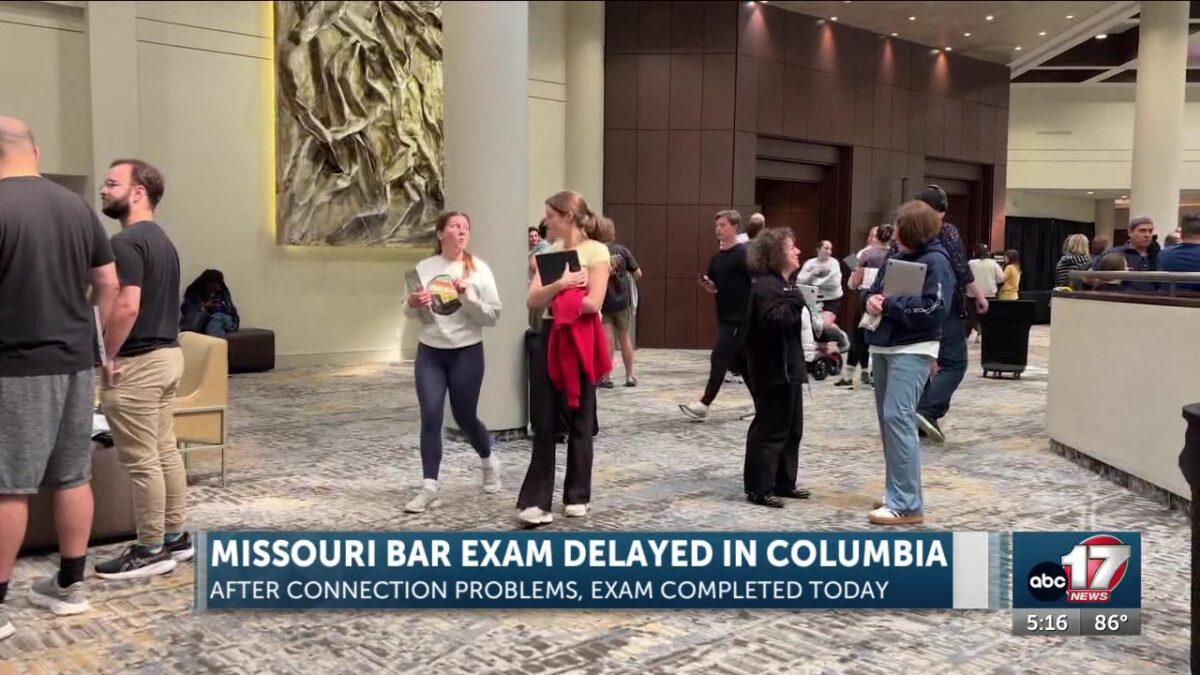
Missouri Bar exam was completed on Wednesday, after long delays from internet connection affected the start time to Tuesday’s portion of the exam.

Missouri is one of the first states in the country to test out new exam software called NextGen and hosted the exam at the Wyndham Executive Center on Tuesday and Wednesday.

A statement from the hotel said the Board of Law came into the hotel prior to the exam and tested the internet to ensure it was stable for test-taking.

“Our internet was confirmed by their hired technicians to meet the requirements for this event,” Zachary Nelson, assistant General Manager at the Wyndham, wrote in the statement. “The NextGen software reportedly has a higher requirement than stated / what was tested for, and that is what caused the delay yesterday.”

Test takers ABC 17 spoke with said some students had a six-hour delay to their start time because not everyone was able to connect to Wi-Fi.

Jack Wolthuis, a tester at the facility, said he arrived at 7:30 a.m. but wasn’t able to start the exam until the afternoon on Tuesday.

“So we were in there until lunch and didn’t start. They did let us out for lunch, which was nice,” Wolthuis. “I think when they were about to give up, some miracle happened and the tests started working.

Another tester, Andrea Miller, said each room had a different experience when it came to the delays. Some testers in her room weren’t able to start their exams until after 3 p.m.

Miller said the Board addressed the issue on Tuesday night when connectivity problems started to arise and allowed them to continue for lost time today.

“The Missouri Board of Law Examiners did a phenomenal job of addressing the issue last night where we can continue to take the exam today,” Miller said. “We started 30 minutes early, and immediately after starting, they asked if anyone had issues, and not a single person in like a 400-person room raised their hand.”

Wolthuis had a similar experience and said announcements were made frequently to update the testers about their exams.

“I think the people in the room weren’t the decision makers, so it was a bit of telephone, and they’d have to leave the room, and so they’d get up on there was a podium up front with a mic, and they’d just make announcements every hour,” Wolthuis said.

Although delays did leave some testers frustrated, both Miller and Wolthuis said they were excited to be taking and finish the exam. Test taker Daniel Slaybaugh wrote that things went smoothly on Wednesday.

“I think some people were upset when we sat inside for 7 hours and now had two tests all of a sudden. But I think a lot of us were just happy to actually be taking the test,” Wolthuis said.

Click here to follow the original article.

Truck driver from Illinois accused of crashing into Jefferson City light pole

Ryan Shiner

COLUMBIA, Mo. (KMIZ)

A truck driver from Illinois is accused of causing $50,000 in damage after he allegedly crashed a semi-truck into an Ameren light pole on July 15 in Jefferson City.

Philip Kahn, of Pekin, Illinois, is charged with leaving the scene of an accident. An initial court appearance is scheduled for 10:30 a.m. Wednesday, Aug. 26. A summons was issued for Kahn on Tuesday.

The probable cause statement says a semi-truck hit an Ameren pole at the corner of West High Street and Bolivar Street. Police were called at 7:09 a.m. and the intersection was still closed at 3:30 p.m. that day. Ameren indicated there was $50,000 in damage caused, court documents say.

Video footage helped police determine the truck was owned by a company from Cedar Rapids, Iowa, the statement says. The safety manager gave police the GPS location of Kahn, the statement says.

Kahn allegedly admitted to hitting the curb, but claimed he did not know he hit a light pole, court documents say.

“In my training and experience, it is unlikely the defendant did not know the damage to the pole had occurred,” the officer wrote in the statement. “In addition, the crash was seen and heard by Jefferson City Fire personnel from across the street. Fire personnel stated the defendant continued driving without stopping.”

Click here to follow the original article.
Columbia files response to airport revenue guarantee lawsuit, says it does not violate Missouri Constitution

Ryan Shiner

COLUMBIA, Mo. (KMIZ)

The City of Columbia filed a response on Monday in a lawsuit over its revenue guarantee with American Airlines.

Two Columbia residents — Mark Winter and Richard Shanker – filed a lawsuit against the city in June alleging the city’s revenue guarantee with American Airlines violates the gift clause of the Missouri Constitution.

Previous reporting says funds for the revenue guarantee would come from $750,000 of private contributions and $750,000 from the Transportation Sales Tax. The Goldwater Institute – which is a right-wing think tank – had published a letter in May questioning the legality of the agreement under the Missouri Constitution weeks before the lawsuit was filed.

The city in its response says its agreement does not violate the state’s constitution.

“The challenged Agreement does not constitute a “grant” of public money within the meaning of Article VI, § 23 because any payments are made pursuant to a bargained-for contractual exchange for public air-service benefits,” the response says. “The Agreement does not constitute an unconstitutional lending of public credit because the City does not become liable for American Airlines’ debts, the City does not guarantee third-party creditors; no municipal debt is issued on behalf of American Airlines, and no municipal credit is pledged within the meaning of Article VI, §23.”

View the city’s full legal response below.  

airport lawsuit responseDownload

Click here to follow the original article.
Man charged after ‘accidental’ shooting injures victim in Mexico

Ryan Shiner

COLUMBIA, Mo. (KMIZ)

A man was charged in Audrain County on Monday after he allegedly shot someone on Saturday while he was drunk.

Christopher Smith Jr., of Mexico, Missouri, was charged with first-degree endangering the welfare of a child, unlawful use of a weapon, armed criminal action and three misdemeanors, including two counts of second-degree endangering the welfare of a child and one count of a minor being intoxicated.

He is being held at the Audrain County Jail without bond. A hearing was held on Wednesday, where Smith pleaded not guilty. A bond review is scheduled for 10 a.m. Tuesday, Aug. 4.

The probable cause statement says law enforcement was called around 6 a.m. Saturday to an apartment building for an alleged accidental shooting.

Smith allegedly told police that his handgun went off while he was cleaning it and that the victim was sitting on the flood in front of him, the statement says. Police determined that was not true and Smith eventually admitted to the gun going off while he was handling it, the statement says.

Police wrote that multiple people were in the residence at the time the gun went off. The officer also wrote that Smith appeared to be drunk and high and that his blood alcohol concentration was .223.

Click here to follow the original article.

Columbia man, 33, jailed after being brought down from power plant tower

Gabrielle Teiner

COLUMBIA, Mo. (KMIZ)

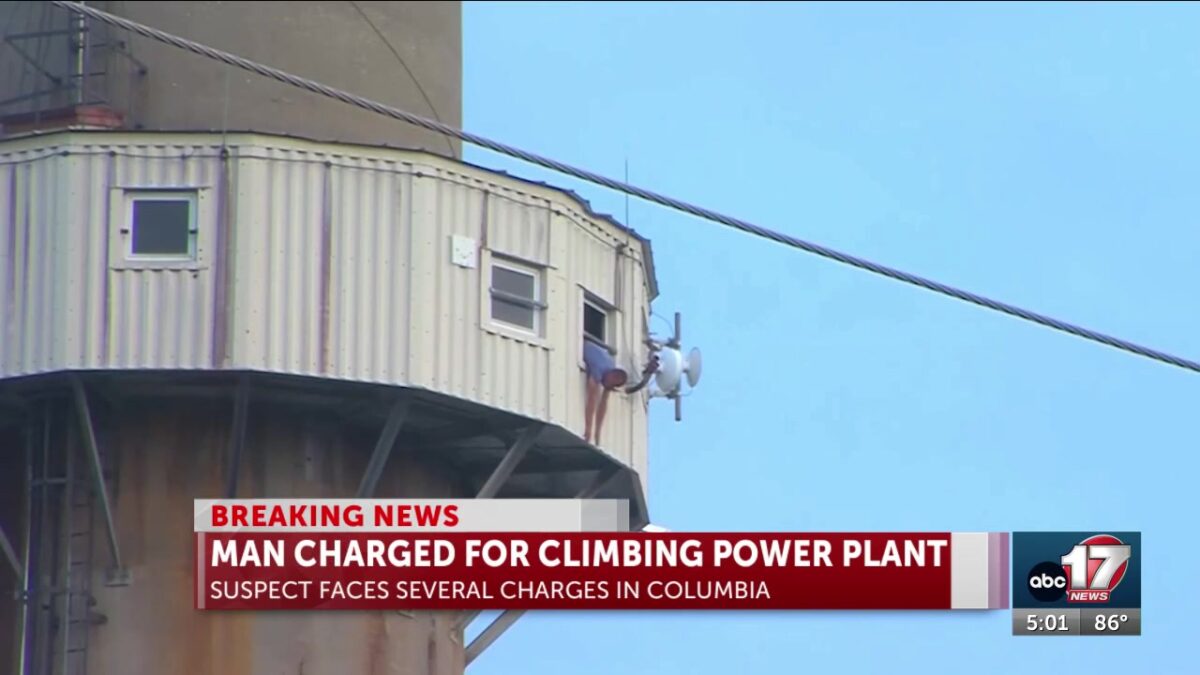
Police say a 33-year-old Columbia man had to be rescued after he was seen throwing items from the window of a Municipal Power Plant tower Wednesday morning.

Richard D. Nichols was charged with second-degree burglary, obstructing government operations and second-degree property damage. A probable cause statement was not immediately available on Wednesday afternoon, according to Boone County Prosecutor Roger Johnson.

First responders brought Nichols down from the power plant tower on Wednesday morning.

Multiple first responders were seen in the 1500 block of East Business Loop 70 on Wednesday morning after a man allegedly climbed one of the boilers of the Municipal Power Plant. The city also said the facility has surveillance footage of Nichols climbing a fence to get onto the property.

“It’s clearly marked, it is fenced and there are video cameras that are reporting all angles of the perimeter of the facility,” City spokesman Christopher Ave said.

Ave told ABC 17 News that officers were dispatched just after 6:30 a.m. about someone in a secure area of the power plant. Ave said the person was in a telecommunications facility in the power plant, about 150 feet in the air.

ABC 17 News arrived at the Municipal Power Plant just after 7 a.m. and saw a man sticking his head out of a window of a small enclosed area on an office located on the facility’s smoke stack. An ABC 17 News videographer on scene also saw Nichols remove his shoes and throw them out of the window. The smoke stack was previously used when the facility processed coal and became non-operational in 2015.

The Columbia Police Department could be heard over a megaphone instructing the man to climb down. Ave said the man eventually left the area with police voluntarily just before 9 a.m.

“They had identified him, they were able to call him by name and encourage him to come down, and eventually they persuaded him to do so,” Ave said.

Ave said the city is still investigating how the person, later identified publicly as Nichols, got into the plant and climbed the tower.

Columbia Utilities spokesman Jason West told ABC 17 News that the plant has staff working inside 24 hours a day. The plant used to burn coal for the city, but stopped doing so in 2015.

Nichols was on probation after pleading guilty to misusing 911, according to court records. He also has a history of trespassing, according to court records.

Nichols was in the Boone County Jail on Wednesday afternoon on a $4,500 bond, according to jail records.

The city also reports that there have been approximately five incidents of people trespassing onto the power plant in the past 20 years. However, no one has gone up the side of the smoke stack.

Click here to follow the original article.

Missouri Fifth Congressional candidates focus on immigration ahead of August primary

Erika McGuire

COLUMBIA, Mo. (KMIZ)

Missouri’s newly drawn Fifth Congressional District will be a close watch as it could decide control of the U.S. House in November.

The so-called “Missouri First Map” was signed into law by Gov. Mike Kehoe in September 2025 after passing during a special legislative session. Since then, the map has survived court challenges and, currently, is the map in effect for the August and November elections.

The map was drawn to give Republicans an advantage in seven of Missouri’s eight seats in Congress and would unseat Democrat Emanuel Cleaver, who has held the Fifth District seat since 2005.

Cleaver is running unopposed in his party’s primary. But he’ll have to win a very red district in November to retain his seat.

The district that once covered Kansas City now includes roughly the north half of Boone County, excluding Columbia, along with Cooper, Howard, Saline, Pettis, Morgan, Miller, Moniteau, Cole, Maries and Osage counties. It stretches to the Kansas border.

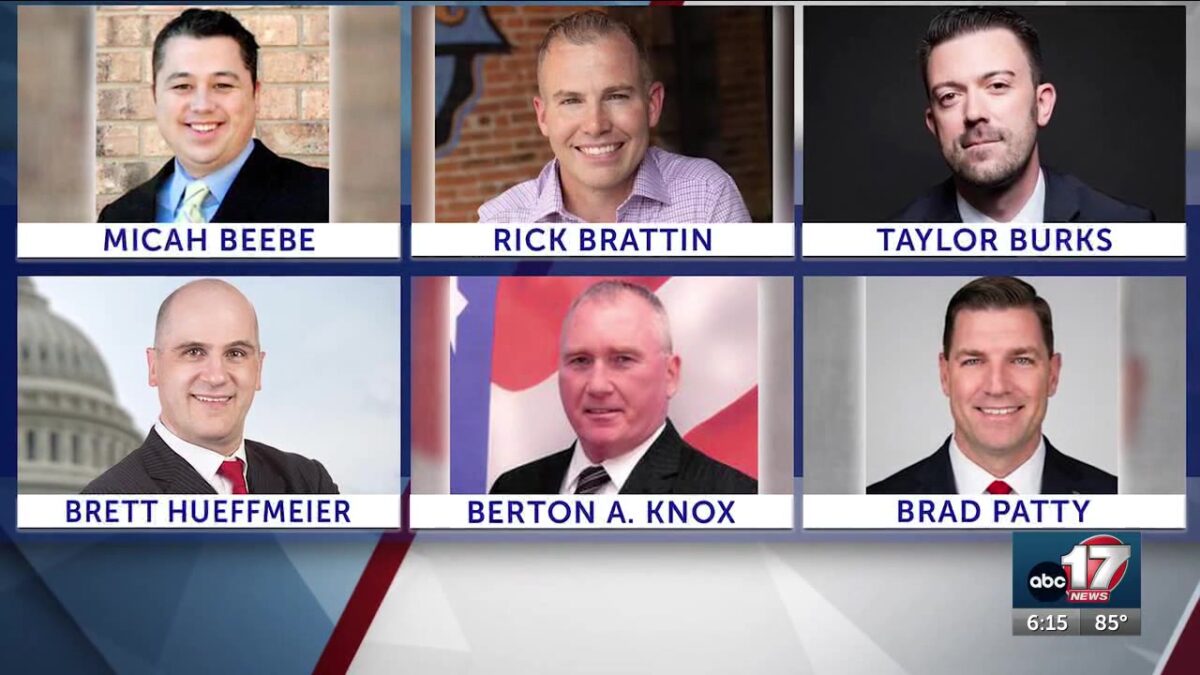
The chance to flip the Fifth has brought seven Republicans to the race:

Taylor Burks of Columbia;

Brad Patty of Fayette;

Brett Hueffmeier of Kansas City;

Rick Brattin of Harrisonville;

Berton Knox of North Kansas City;

and Micah Beebe of Lee’s Summit

ABC 17 News sat down with five of the six candidates ahead of the August election to learn their priorities and how they would handle issues facing everyday Missourians.

Berton Knox did not respond to ABC 17 News request for an interview.

FULL INTERVIEW LINKS: Taylor Burks, Brad Patty, Brett Hueffmeier, Rick Brattin, Micah Beebe

Immigration continues to be a pressing topic as Immigration Customs Enforcement has been in cities across the U.S. looking to deport violent criminals in the country illegally.

ICE reports that 74,082 non-citizens have been arrested, including 12,025 individuals convicted of an aggravated felony.

ICE was reported in Pettis County in June and made multiple arrests at several businesses in the area.

State Sen. Rick Brattin spent six years as a United States Marine and says he is ready to fight in Congress to help President Donald Trump secure the border. He says the immigration system as a whole needs to be updated.

“Make sure there is systems and processes in place where people aren’t hiring illegally, and in the housing aspect, verifying who these people are, not turning a blind eye, and holding people accountable who is bringing the influx here. But it’s really the enforcement, funding and doing everything we can for things that are already on the books,” Brattin said.

Taylor Burks served in the U.S. Navy and was Boone County’s first Republican county clerk. Immigration, he says, comes down to enforcement but also a clearer path for legal workers.

“Securing the border is the first step we have to take and deporting people who come here illegally who break our rules, that process needs to be predictable, vetted and secure, so I think that future reforms to legal seasonal guest works in a great way to provide that stability in labor markets as well,” Burks said.

Brad Patty is the only Republican candidate who lives in the Fifth Congressional District and is a 25-year U.S. Army veteran. For Patty, immigration is personal, as his wife is from El Salvador. He says a more efficient legal process for immigration in necessary.

“I cannot let any other immigration go ahead and get in front of the line ahead of my wife,” Patty said. “I’m more than willing to have a conversation to decrease that 10-year process of separation and make this an efficient process, but as a whole, the standard is what the legal immigrants have done; no one gets to do it a different way.”

Brett Hueffmeier says he has deep roots in the Fifth Congressional District as he was born in Linneus in Linn County. He worked for both former U.S. Sens. Kit Bond and John Ashcroft.

Hueffmeier says a long-term approach to Immigration is key if he is elected.

“We would deport anyone that has entered this country illegally, that’s sort of respecting the rule of law, we have to be realistic about that I think it’s going to take a long time to do that, and I think we have to look at some alternative approaches as well as deal with the problem right now,” Hueffmeier said. “As far as tracking them, detaining them and going through the process of deportation”

Micah Beebe is a lifelong Missourian and businessman who grew up in Kansas City.

The immigration system, Beebe says, needs to work in a way that serves the country’s interests.

“We need to have an immigration system that is for America, that is beneficial for our country. We need to make sure we aren’t having an immigration system that we are so overrun that there’s more people coming in from around the world than there are people in the United States because when that happens, we start to lose our identity,” Beebe said.


Click here to follow the original article.

QUESTION OF THE DAY: Are you a fan of county fairs?

Matthew Sanders

It’s fair season in Mid-Missouri.

The Boone County Fair wrapped up last weekend, and this week, the Jefferson City Jaycees are putting on their Cole County Fair.

Fairs have their advantage — food, animals, carnival rides, entertainment. But they happen at the hottest time of the year.

Are you a fan of the American tradition that is the county fair? Let us know by voting in the poll.

Click here to follow the original article.
Lohman man seriously injured in motorcycle crash

Ryan Shiner

COLUMBIA, Mo. (KMIZ)

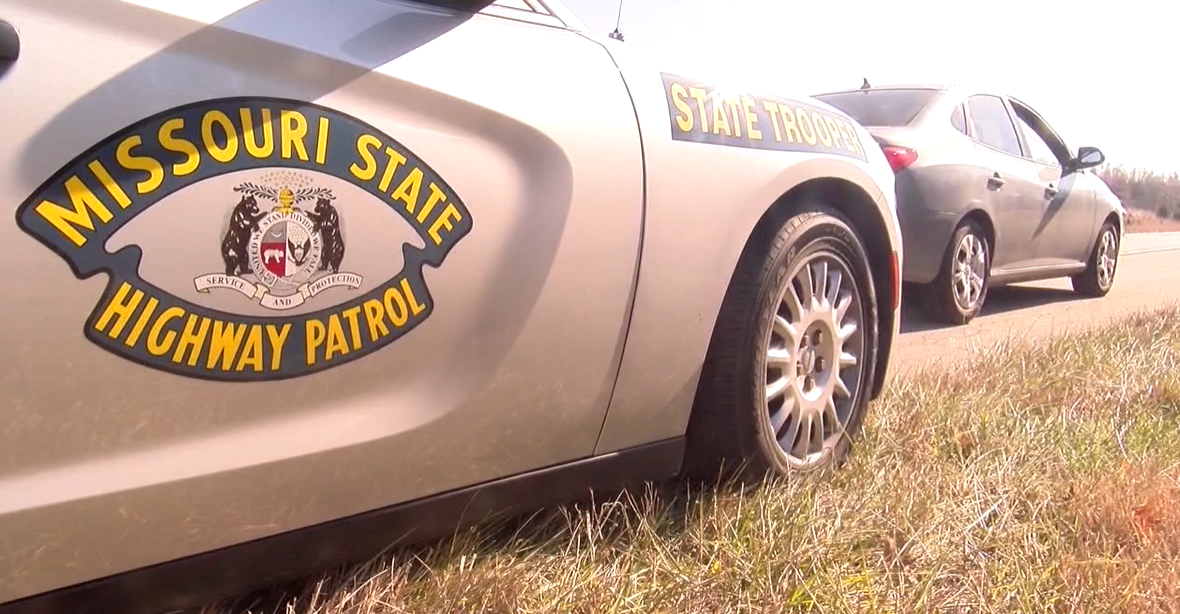
A 22-year-old man from Lohman was seriously injured in a crash on Tuesday evening on Springtown Station Road in Cole County, according to a crash report from the Missouri State Highway Patrol.

The report says the man rode his 2023 Harley Davidson too fast for conditions while he was heading eastbound. The man lost control of the bike and was ejected from the vehicle, the report says.

The Harley continued eastbound, crossed the center line and went off the left side of the road, the report says.

The man was wearing a helmet at the time of the crash. He was brought to University Hospital in Columbia with serious injuries, the report says.

MSHP reports do not name those involved in crashes. The bike was totaled.

Click here to follow the original article.