Pinkel’s driver’s license case dismissed by judge

Ryan Shiner

COLUMBIA, Mo. (KMIZ)

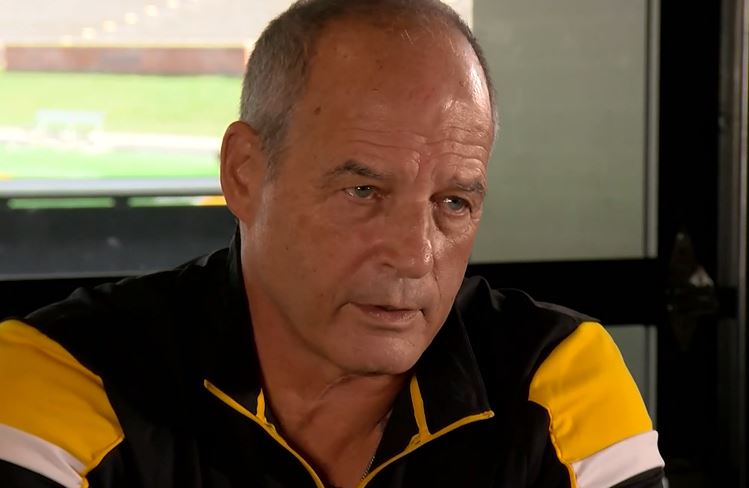
Former Mizzou head football coach Gary Pinkel saw his case against the Department of Revenue dismissed by a judge this week.

Judge Michael Gilley dismissed the case without prejudice on Monday, writing that Pinkel was lawfully arrested for driving while intoxicated on July 9, 2025. The filing also states the arresting officer had reasonable grounds to believe Pinkel was intoxicated.

Pinkel filed the lawsuit last year in an attempt to keep his driver’s license. Pinkel eventually pleaded guilty to misdemeanor DWI in the criminal case on June 29.

Court documents from the criminal case say Pinkel flagged down a Missouri State Highway Patrol trooper due to car troubles. Pinkel allegedly failed some sobriety tests on the scene, and a breathalyzer test registered his blood alcohol content at .128.

In his case against the Department of Revenue, Pinkel argued he was “not legally arrested or stopped” and that the trooper did “not have reasonable grounds to believe that Petitioner was driving a motor vehicle while in an intoxicated” and that Pinkel refused the test under Missouri’s Implied Consent law, previous reporting shows.

Pinkel was MU’s head coach from 2001-15 and has a prior DWI plea from 2011.

Order of DismissalDownload

Click here to follow the original article.

Residents celebrate Boonville library’s new location with bookworm relay

ABC 17 News Team

BOONVILLE, Mo. (KMIZ)

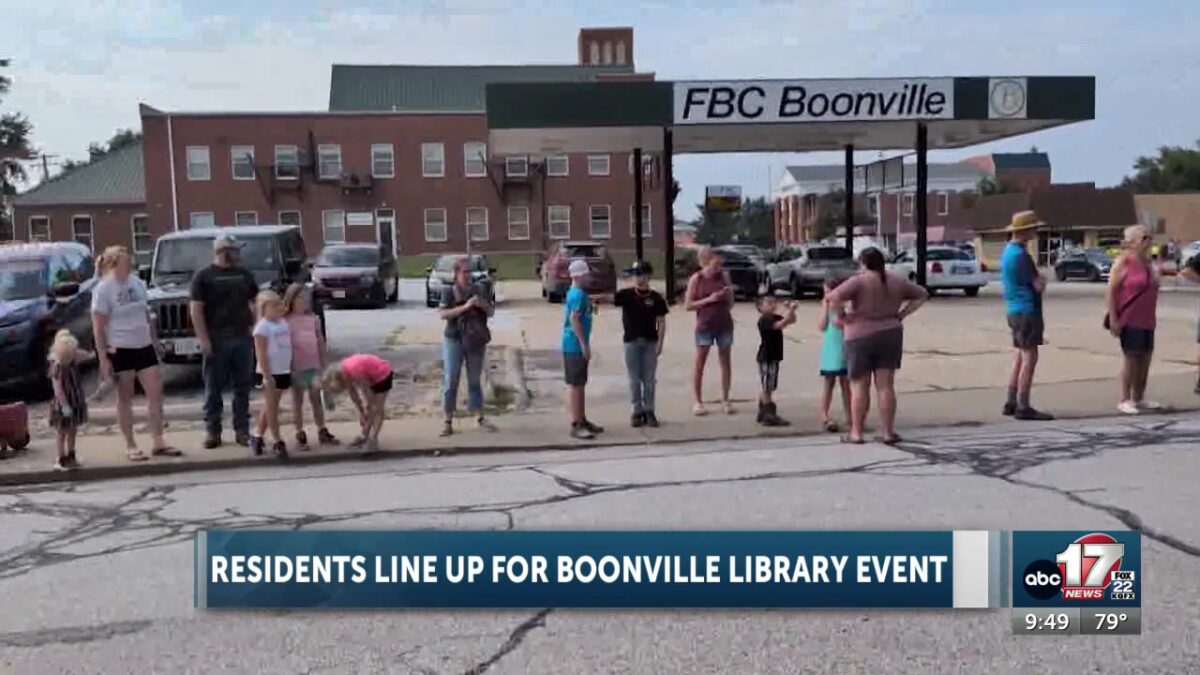
The final books were taken from Boonville’s 65-year-old library on Thursday in what was called a bookworm relay. 

Residents lined up along a three-block stretch between the old location on main street to the new location in a building on the former Kemper Military School CAMPUS.

The group moved the libraries final few books to the new location. The library’s new location was built in 1906 and was recently underwent a $1.1 million renovation.

The library will formally reopen at 9 a.m. Monday.

Click here to follow the original article.

Fulton selected for rural innovation initiative, receives $30,000 grant to guide downtown growth

Mitchell Kaminski

FULTON, Mo. (KMIZ) 

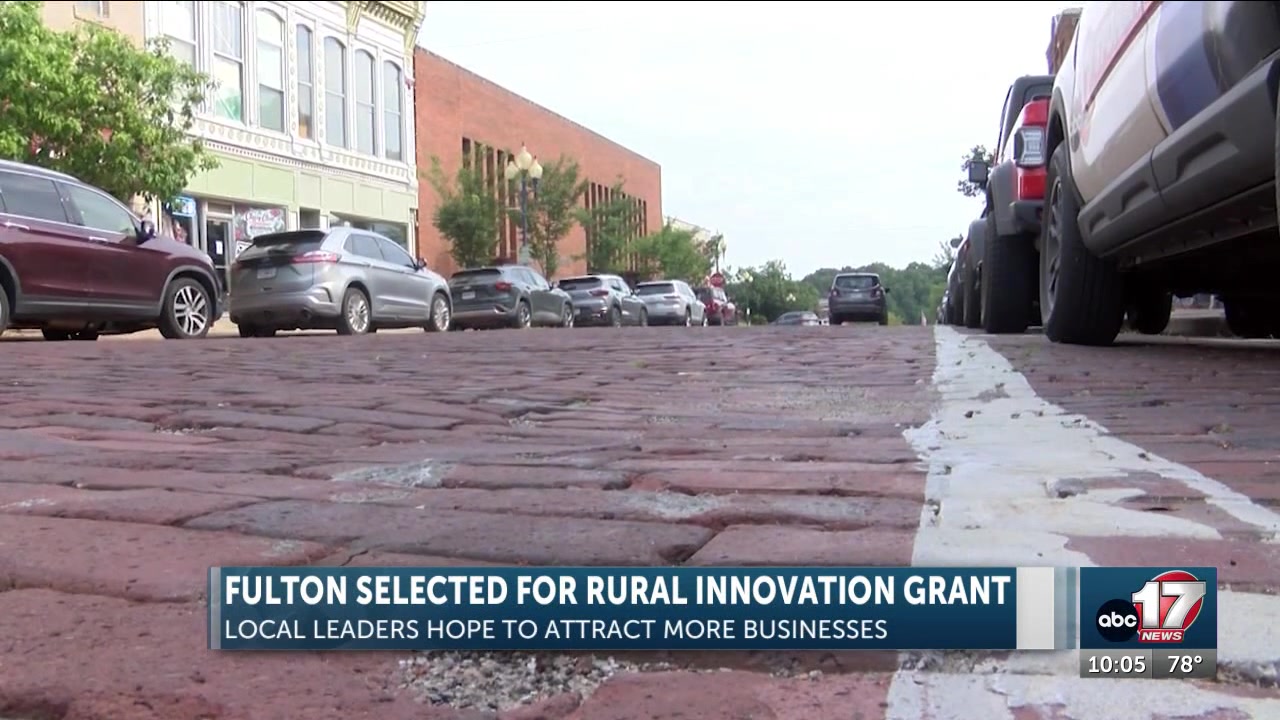
Fulton is one of just three Missouri communities selected to receive a $30,000 grant through the Center on Rural Innovation’s Heartland Rural Innovators Initiative, a program local leaders say could help lay the groundwork for long-term economic development and downtown revitalization.

The Center on Rural Innovation works with small communities to develop technology-based economic development strategies through consulting, workforce development programs, broadband advocacy and entrepreneurship initiatives.

For Fulton leaders, the hope is the initiative will help create a roadmap that attracts new investment while preserving the community’s historic downtown and small-town identity.

The grant is funded by Upward Momentum, a Missouri-based philanthropic collaborative focused on increasing economic mobility through community-led investments. The 12-month initiative provides participating communities with an economic assessment, support for implementing a strategic plan and funding assistance to build innovation-driven economies.

In addition to Fulton, Maryville and Rolla were selected following what the Center on Rural Innovation described as a highly competitive application process.

Since launching its Rural Innovation Network in 2017, the Center on Rural Innovation has expanded to 43 communities across 26 states. The nonprofit says its partner communities have leveraged millions of dollars in outside investment, including nearly $30 million through the federal Build to Scale program, while supporting the growth of rural technology startups and local innovation ecosystems.

The seven-person Callaway County leadership team overseeing the initiative includes William Woods University President Sarah Wisdom, Brick District Association President and Beks Restaurant owner Garry Vaught, and University of Missouri Small Business Development Center Director Mark Christian. 

Local business owner and Porter Consulting LLC partner Seth Weinger, who manages Untethered Fulton and serves on the local leadership team, said the group is about a month into the planning process.

“The strategic plan is probably way more valuable, way more expensive if our city were to have gone and done this,” Weinger said. “And it’s about bringing city leaders and decision makers, not only city, county, community influencers, people that have the history of where of our hurdles have been and have knowledge of where our strengths are and have the connections on how to make this grow.”

However, two weeks after an announcement that Fulton had received the grant, Weinger said some residents have misunderstood what the initiative is intended to accomplish.

“There’s a lot of people who are confusing a strategic plan with us being the big-tech company. We have no affiliation with any large data centers, tech people at all,” Weinger said. “We are small business people who live in a small community who want to help that become a successful, walkable, fun location to live that has the services that we can keep our tax dollars here in our county.”

The grant was available for rural Missouri communities with fewer than 50,000 residents that demonstrate strong broadband infrastructure, workforce development assets, leadership collaboration and a commitment to innovation-based economic development.

As part of the program, Fulton will receive a custom technology economy assessment, implementation and funding-readiness support, peer learning opportunities with other Heartland communities and participation in a regional summit, along with $30,000 to begin implementing recommendations from the strategic plan.

Weinger said while the funding is welcome, the planning process could have the greatest long-term impact.

“The $30,000 is a great kickstart. Don’t get me wrong. That’s going to go a long way. It’s money that’s going to be infused into the community,” Weinger said. “But that plan can then be utilized for a plethora of other opportunities, whether that be through state and federal funding, whether it be through small business development, whether it be through private grant, or whether it just be investors saying, you know, that’s going to be a growth area. Let me let me go in while I still can.”

The Center on Rural Innovation highlighted several factors that made Callaway County a strong candidate, including its mix of higher education, manufacturing, agriculture, energy and government employers, along with recent investments in entrepreneurship and downtown redevelopment.

The organization also cited ongoing efforts by Untethered Fulton, the Fulton Area Chamber of Commerce, the Missouri Small Business Development Center, the Brick District Association, local investors and higher-education partners to strengthen workforce development and revitalize downtown.

Weinger believes Fulton is well positioned to benefit from regional growth as nearby Columbia and Jefferson City continue to expand.

“As Columbia grows towards our direction, as Jefferson City comes our direction, I have heard that as much as 30% of our rental population doesn’t work here. They work in those two communities but can afford to live here or would prefer to live here rather than being in the big city,” Weinger said.

His own business, Untethered Fulton, offers work space, conference rooms, rental offices and living accommodations for remote workers. Weinger said he has spent the past 25 years investing in rural communities and hopes this new initiative continues to drive people to want to work and live in Fulton.

“My whole goal is to bring more people into the community on a regular basis, to bring people to support the shops, to support the restaurants,” Weinger said. “We have businesses that are expanding from Columbia, Jeff City, that see the growth here in Fulton that can affordably get an office in here and expand without having the overhead of full manpower or paying the utility bills and so forth.”

The announcement comes weeks after the partial collapse of a downtown Fulton building that disrupted plans for a new coffee shop and displaced residents and businesses.

“The grant had just been submitted the week earlier. We had a very confident feeling that based on the leadership team that we had put together something that would be very hard for anybody to turn down,” Weinger said. “We had not been announced yet, but I didn’t want the sky-is-falling to have an influence on that decision.”

Weinger said the incident also underscored the importance of continuing downtown revitalization.

“We need a coffee shop downtown desperately; we hear that all the time and that’s what was going in the unfortunate circumstance,” Weinger said. “That building was being worked on, being revitalized, getting a new life. And the unfortunate thing is, is the person that did it didn’t do it the right way, and it’s unfortunate, caused a ripple effect that hurt other businesses, hurt the community. It hurt residents that live here. They’re still scrambling because we don’t have a lot of vacancy in our town.”

While infrastructure projects are not the initiative’s primary focus, Weinger said conversations have included adding more downtown parking.

“The only thing structure anybody’s talked about is a parking lot downtown,” Weinger said. “But I think that it will, give us a fresh look. It will bring people to fill some of the empty buildings.”

Click here to follow the original article.

GoCOMO secures additional funding for new bus, future operations facility

Euphenie Andre

COLUMBIA, Mo. (KMIZ)

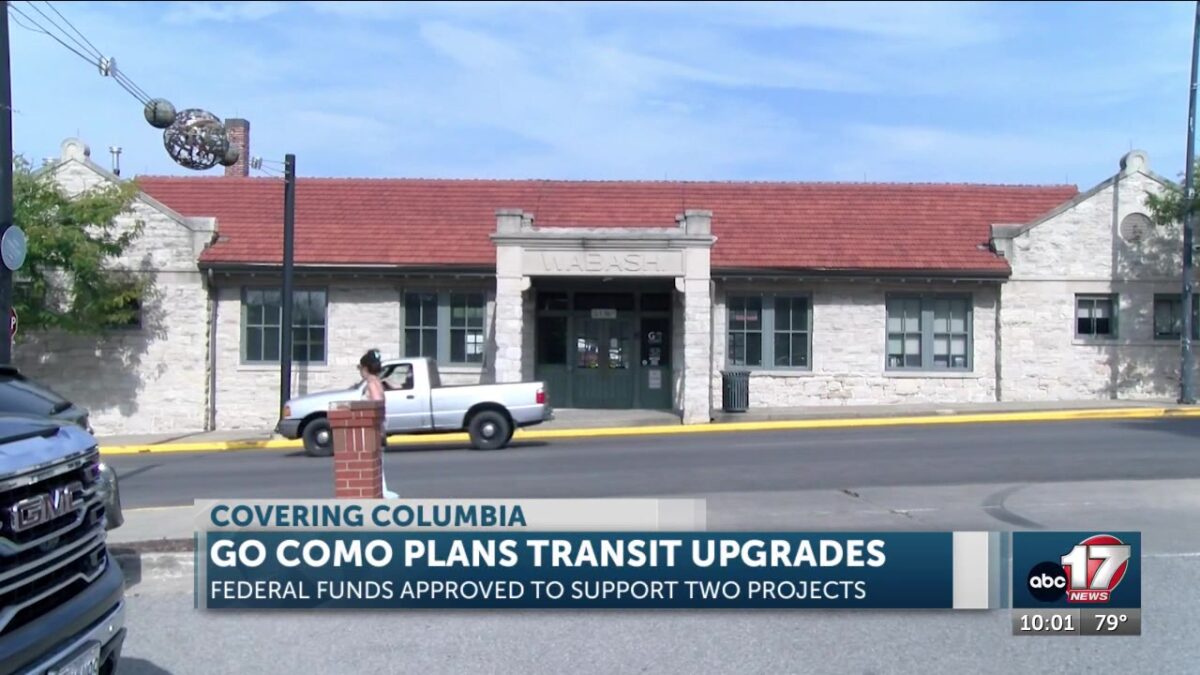
Improvements to Columbia’s public transit system could soon move forward after city leaders approved an amendment that allows for additional federal funding for two major GoCOMO projects.

The Columbia Area Transportation Study Organization approved an amendment to its Transportation Improvement Program, allowing GoCOMO to access additional Federal Transit Administration funding for projects planned between fiscal years 2026-29.

The amendment includes funding for two new initiatives: Planning a future operations and maintenance facility and purchasing a new compressed natural gas bus.

CATSO Senior Planner Mitch Skov said the amendment was necessary so the federal government can move forward with funding.

“In order for them to be obligated by the feds, this needs to be done now so the feds can move on this and get the money obligated so Columbia can actually program those two projects,” Skov said.

The first project allocates $400,000 for architectural and engineering consulting work to design a future GoCOMO operations and maintenance building. Federal funds will cover 80% of the cost, while the city will contribute the remaining $80,000.

The second project will fund the purchase of a new 35-foot compressed natural gas bus, expanding GoCOMO’s fleet. According to GoCOMO, CNG buses help reduce fuel costs compared to traditional petroleum-powered buses.

The city’s bus sytem current fleet includes 10 compressed natural gas buses, three 40-foot Gillig buses, two 35-foot buses and five paratransit vans.

Skov said the projects will extend beyond the current Transportation Improvement Program and are already being incorporated into the next planning cycle.

Skov said the next TIP will include a federally funded electric vehicle charging project.

“There’s one parking project which is specifically for the electric vehicle charger project,” Skov said. “That’s something which has been ongoing, but that will be in the TIP because it is federal transportation money.”

Skov said the city plans to install an electric vehicle charging station in one of downtown parking garages, with another location potentially planned at the library.

The funding approval comes as GoCOMO has experienced a major decline in ridership. According to GoCOMO data, ridership in June was down about 43% compared to the same month during the previous fiscal year.

ABC 17 News reached out to City of Columbia officials to ask what contributed to the drop in ridership but had not received a response.

City leaders are expected to continue discussing the projects during their next steps on Aug. 27.

Click here to follow the original article.
Lane closures scheduled for North Providence Road next week

Ryan Shiner

COLUMBIA, Mo. (KMIZ)

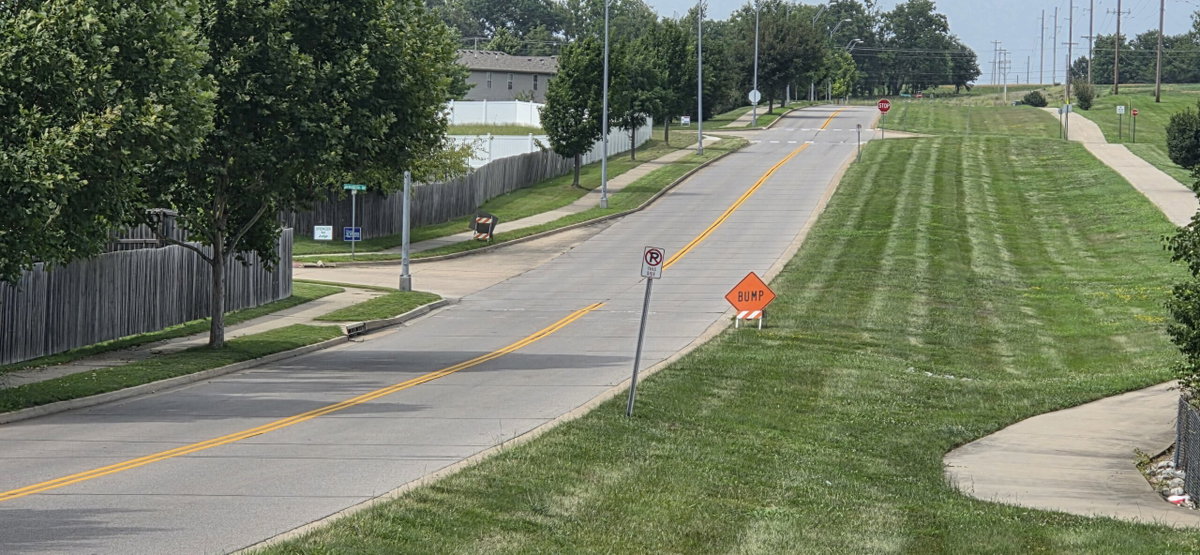
Lane closures are scheduled to occur next week on North Providence Road as city brews work to repair damaged concrete, a Thursday press release from the city says.

Work will occur near the intersection with Armadillo Drive. It is scheduled to begin 7 a.m. Monday and wrap up by 4 p.m. Thursday.

The work area is marked with “bump” signs and the road will stay open as crews work, the release says.

Click here to follow the original article.
Bothwell staff train with pediatric specialists in midst of peak summer trauma season

Ellyse Edwards

COLUMBIA, Mo. (KMIZ)—

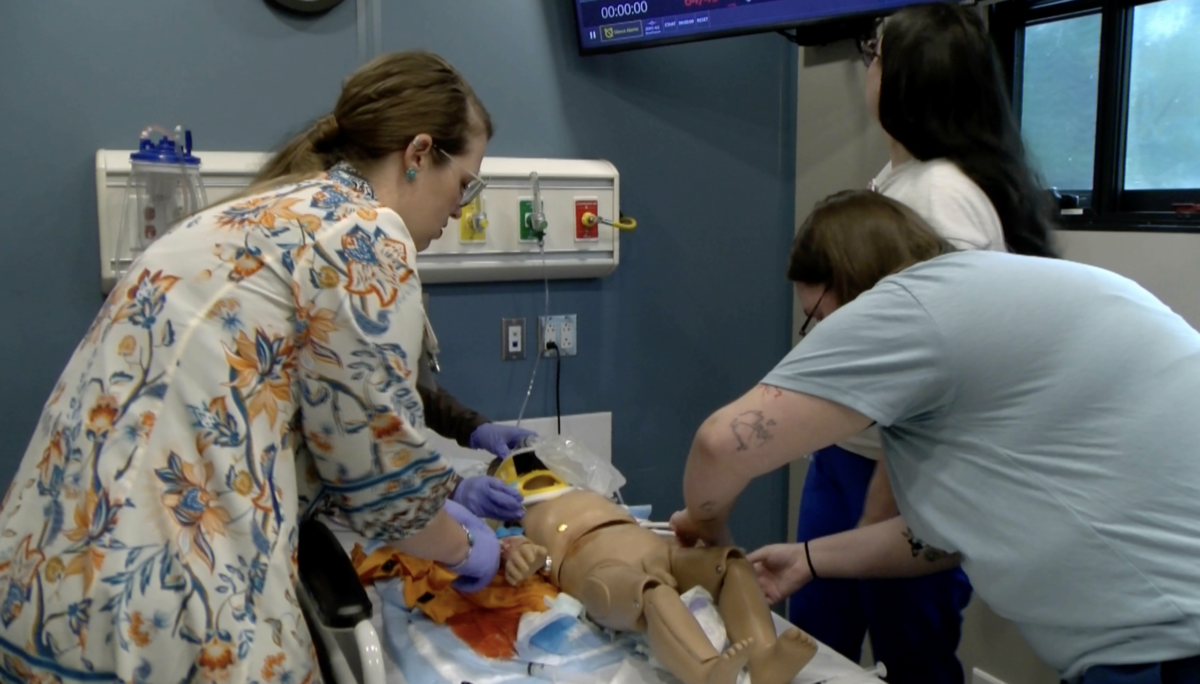
Doctors and nurses at Bothwell Regional Health Center spent Wednesday preparing for pediatric emergencies through hands-on simulations led by specialists from Children’s Mercy and University of Missouri Health Care.

The eight-hour training focused on helping emergency department staff recognize and respond to pediatric trauma through realistic scenarios and procedures.

Emergency Department Director Mike Shipp said the timing is intentional because pediatric trauma cases typically increase during the summer months.

“In the summertime people are outside, they’re doing sports activities, recreational activities. And unfortunately, that’s when a lot of these traumas happen,” Shipp said. “Kids are involved in a lot of these activities. So that’s why this is an opportune time to have this training.”

Hospital emergency room visits have been trending upward since the COVID-19 pandemic, according to the Kaiser Family Foundation. Missouri saw a slight dip in visits per 1,000 population in 2024 after peaking in 2023.

Children’s Mercy partnered with MU Health Care to bring pediatric emergency specialists to Sedalia. Jill Nusbaum with Children’s Mercy said the training helps equip providers in rural communities that may not have immediate access to pediatric specialists.

“Rural communities frequently don’t have pediatric specialists,” Nusbaum said. “So being able to equip people out in rural communities with the knowledge and resources and the connections through collaborations like this, that they can get answers that they need in a timely fashion is really important.”

Throughout the day, providers worked through mock pediatric trauma cases using lifelike simulation mannequins, giving them an opportunity to practice procedures and communication before facing a real emergency.

Registered nurse Keirsten Lorenc said the realistic simulations helped build her confidence.

“I’m definitely more confident now that I know what the doctors are more looking for,” Lorenc said. “You can actually see it on a mannequin and know what to kind of practice on and what to do.”

Bothwell officials said they hope to continue offering similar training opportunities to help emergency providers stay prepared to care for children in critical situations.

Click here to follow the original article.
JCPD closes investigation into car found in Binder Lake

Erika McGuire

JEFFERSON CITY, Mo. (KMIZ)

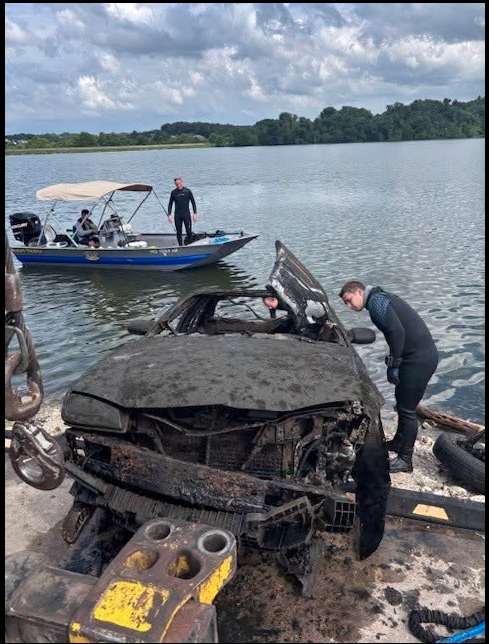
The Jefferson City Police Department says the investigation into a vehicle found in Binder Lake earlier this month has been closed.

Lt. Curtis Finke with JCPD said the vehicle was a 1993 Pontiac Grand Am with license plates that expired in 1997.

“It was submerged in the water for quite some time, at least over 10 years,” Finke said. “We did our follow-up investigation, and it did not turn up any active criminal investigations. We have followed up with the owner of the vehicle, and we have since closed our case of additional information.”

Finke said no charges will be filed.

“It’s really just treated as a property crime that we investigated,” Finke said. “It all kind of dead-ended with no active criminal investigation, nothing that’s going to require any further follow-up or assistance, even by the owner that requested, any further from us.”

ABC 17 News has requested documents related to the investigation.

Click here to follow the original article.
Convicted murderer files notice of appeal in Holts Summit case

Ryan Shiner

COLUMBIA, Mo. (KMIZ)

A woman who was convicted of murder and other charges in a 2025 Holts Summit shooting has filed a notice of appeal.

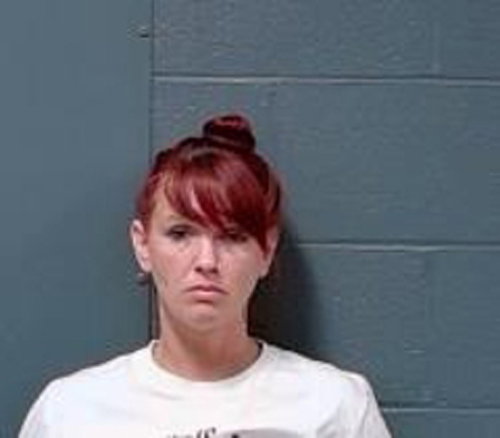
Heather Smith filed a notice of appeal on Monday to the Western District Court of Missouri. She was found guilty on April 23 of felony murder, three counts of unlawful use of a weapon and a count of armed criminal action. She was sentenced on July 23 to 32 years in prison.

Smith was found guilty of killing 37-year-old Kara Dills at Hunter Lane Apartments in April 2025.

In April 2025, police were called to the Hunter Lane Apartments, where Smith shot Dills after their children got into an altercation while riding bikes in the apartment complex, according to court documents.

Allegedly, Smith confronted Dills twice before the shooting, with Dills’ sister allegedly confronting Smith in between. Several witnesses alleged that Smith flashed a gun tucked into her waistband at Dills’ mother during one of the confrontations.

On the day of the shooting, Dills allegedly pistol-whipped Smith and walked away. When the gun struck Smith, it went off and grazed a bystander’s head. Smith then fired a shot into Dills’ stomach.

Click here to follow the original article.
Growth shapes Columbia city budget, leaders say at town hall

Demetra Alarcon

COLUMBIA, Mo. (KMIZ)

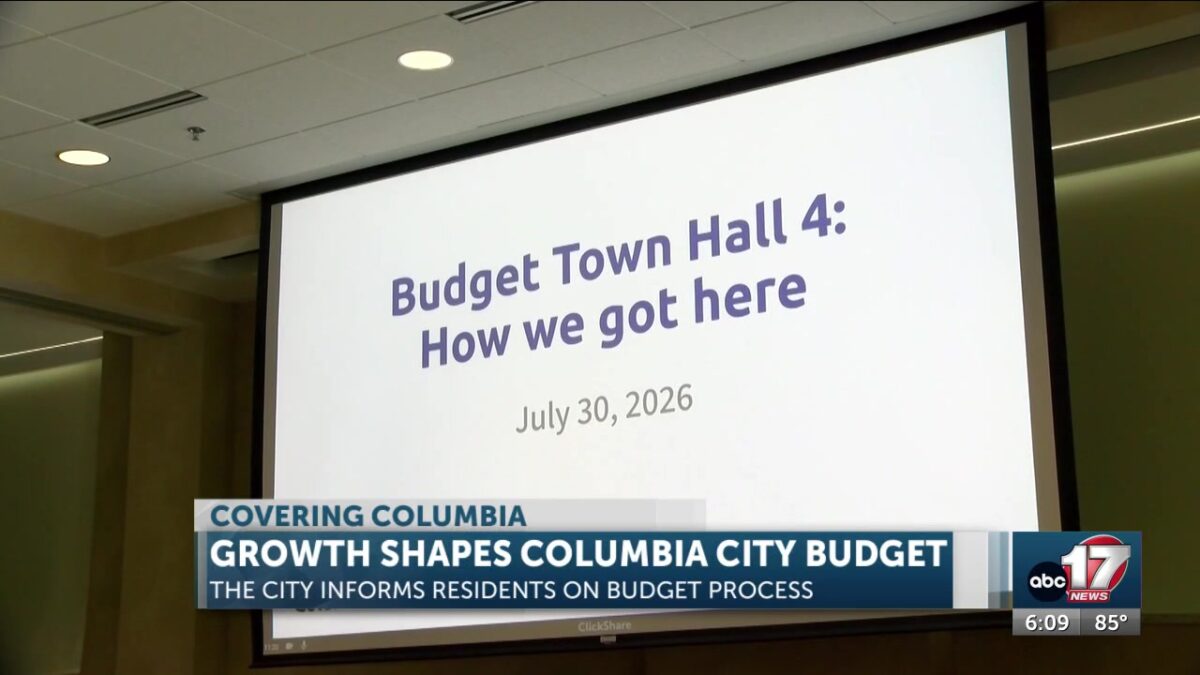
Columbia’s geographic and demographic growth are helping to push city government expenditures higher, creating larger budgets, the city manager said at a budget town hall on Thursday.

The City of Columbia has been hosting a series of town hall meetings. The meeting Thursday was designed to engage residents in the budget process.

Columbia City Manager De’Carlon Seewood and Finance Director Matthew Lue gave a presentation breaking down the “how we got here” phase of the fiscal year 2027 budget.

According to Seewood and Lue, since 2000, Columbia’s geographic area has increased by 15.8 square miles, which is 28%.

The presentation also included how costs have been outpacing the revenue due to things like:

High inflation

Supply chain issues

Slow economy

Unpredictable federal grant funding

Officials said these issues led to a decade of city pay issues that has drained knowledge and experience from city government.

A breakdown of City of Columbia spending presented at the meeting.

Seewood said after the meeting that the budget sessions were a way to gauge public priorities.

“This what this was is really an opportunity to engage with residents, to find out exactly what our priorities are, and we build that budget around those priorities. And so what I will say is our budget is built upon what our residents are asking for,” said Seewood.

Seewood and Lue said during the presentation that funds are restricted. The City of Columbia budget is made up of six different fund types, and each is unique.

The fund types are:

General Fund: supports the administrative operations and essential services of local government

Enterprise Fund: used to provide services to the public on a user-charged basis

Internal Services Fund: used to account for goods and services provided by one department to another, on a cost reimbursement basis

Special Revenue Fund: account for specific revenues that are legally restricted to particular purposes

Capital Project Fund: account for the acquisition and construction of major capital facilities or improvements within the general government funds

Debt Service Fund: accounts for the resources, financing, and expenditures related to long-term debt

Some attendees brought up Proposition 1, the public safety sales tax on the ballot Tuesday. Seewood and Lue made it clear that this budget does not include take into account funds the tax could bring in if approved.

If Prop 1 does pass, its estimated $38 million annually would add to the budget of the Columbia Police Department and Columbia Fire Department.

Click here to follow the original article.
DBRL responds to Brattin’s Sunshine request; senator upset with length of time to complete

Ryan Shiner

COLUMBIA, Mo. (KMIZ)

Daniel Boone Regional Library has responded to state Sen. Rick Brattin’s Sunshine Law request.

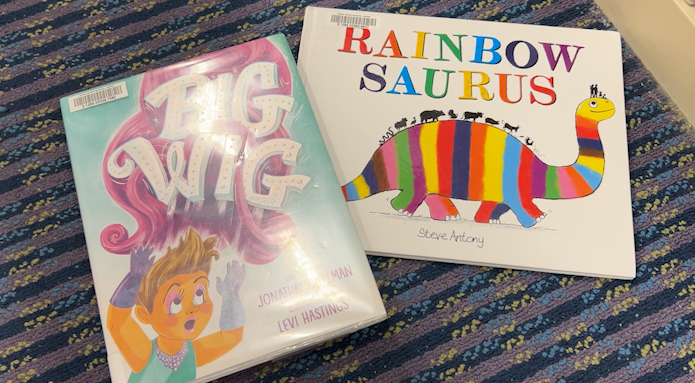
Brattin (R-Harrisonville) had filed a request earlier this week surrounding an LGBTQ+-themed event that was held on Saturday. The Columbia Public Library held a “Rainbow Storytime” event on Saturday that included readings of “Rainbowsaurus” and “Big Wig.”

Secretary of State Denny Hoskins had threatened funding for the library after Attorney General Catherine Hanaway issued a letter about the event.

Brattin and Hoskins held a joint news conference on Tuesday, where the pair compared the books to sexual grooming. Hoskins at the news conference said he did not read the books, while Brattin did not indicate if he read them.

DBRL responded to Brattin’s Sunshine Law request, saying it received his request on July 24. Brattin had requested records dating back to Jan. 1, 2025 in regards to the planning of the Rainbow Storytime event.

DBRL indicated his request should be fulfilled by Sept. 21

Brattin responded to DBRL with a letter of his own that took issue with the length of time the request would be fulfilled.

“I am concerned that your anticipated production date of September 21 is 59 days after my request was submitted. That is an exceptionally long time for a Sunshine Law request, and I see no reason why these records cannot be produced well before then,” Brattin wrote.

Both letters can be viewed in full below.

SUNSHINE LETTER- From DBRLDownload

Senator Brattin Letter in Response to DBRLs Sunshine Request ResponseDownload

Click here to follow the original article.