Boone County Commission housing plans as study projects 37,000 new homes by 2050

Euphenie Andre

COLUMBIA, Mo. (KMIZ)

The Boone County Commission voted to move forward with the updated affordable housing plan Thursday following changes made earlier this month.

Bill Florea with Boone County spoke with ABC 17 after the meeting.

“It went great and I expected that it would.” Florea said. “We had worked closely with the Planning and Zoning Commission on this and at or last work session of Mar. 5, when we discussed it more closely, they made some recommendations for some changes.”

The plan now heads to the County Commission at the end of the month for a final decision.

The Government Affairs Committee said it supports the proposed changes as a first step toward addressing the housing shortage in Mid-Missouri. The group’s Board of Directors may take an official position once final drafts are presented to the Columbia City Council and Boone County Commission.

According to a 2024 housing study conducted by Boone County and the City of Columbia, the area could see up to 37,000 new homes built by 2050.

Florea said the study is serving as a guiding policy document as the county moves forward with its affordable housing plan, according to Florea.

The county is currently behind on its housing goals.

“There are targets in the housing study that we’re supposed to meet every year. We just finished our first full year since that housing study was done, and I think we fell short of the targets.” Florea said.

To prepare for that growth, county leaders are considering three different development scenarios.

Scenario No. 1: Maintains current growth trendsThis approach continues the county’s existing development pattern, focusing on new construction in vacant, greenfield and edge-of-city areas. It also reflects the ongoing demand for rural living, particularly among residents seeking homes on five or more acres.

The plan emphasizes preserving agricultural land while maximizing the use of existing infrastructure and avoiding development in areas without access to essential services. A key priority is ensuring sewer and water systems can support growth, especially along the edges of the city.

Scenario No. 2: Prioritizing infill and redevelopmentThis scenario shifts the focus to development within existing city limits, emphasizing redevelopment and the reuse of underutilized properties.

It also encourages higher-density housing and would require changes to both city and county land-use policies. In unincorporated areas, policies would be adjusted to direct more growth into cities. The commission may also consider strategies used in other counties, such as transferring development rights.

Within city limits, policy changes would aim to support infill development and expand higher-density housing options.

Scenario No. 3: Expanding rural growthThis option focuses on increasing development in rural areas around the county. It would allow for smaller residential lot sizes in unincorporated areas and support expanded commercial opportunities, bringing more businesses and services to rural communities.

The study also outlines several key needs that must be addressed to support this housing growth, particularly for working families and long-term residents.

Affordability remains one of the biggest concerns. Officials said rising housing costs and a limited housing supply are pushing middle-income families out of the area, while low-income residents, young adults and first-time homebuyers are struggling to find affordable options.

The report also highlights the impact of student housing. While development continues to meet demand from University of Missouri students, there is a growing gap in housing options for full-time residents. County leaders claim there is a need for the university to take a more active role in addressing student housing.

A shortage of skilled labor is another issue slowing progress. Growth in industries like manufacturing and construction is being limited by a lack of workers, which in turn affects housing development and the local economy.

The study also points to a need for more diverse housing options. There is a gap between single-family homes and large apartment complexes, with limited availability of “middle-ground” housing such as townhomes, duplexes, and condos.

Some developers have attempted to introduce these types of housing in Columbia, but proposals have faced pushback from residents concerned about infrastructure and increased traffic.

Rising costs and infrastructure concerns

According to CNN, The cost of land, labor, and borrowing continues to rise, making housing less affordable. The average 30-year fixed mortgage rate recently climbed to 6.22%, the highest level since early December, after briefly dipping below 6% earlier this year.

Funding for affordable housing projects is also limited, according to the study.

Infrastructure remains another major barrier. Expanding housing options often requires costly upgrades to water and sewer systems.

Community members also raised concerns about sewer capacity, outdated regulations, and ongoing tensions between the city and county. While no specific regulatory barriers were identified, experts said long-term planning and investment in sewer infrastructure will be critical.

Limited sewer capacity is already impacting the ability to build accessory dwelling units, add duplexes and triplexes, and move forward with infill projects.

Transportation limitations impact access

Public transportation is also affecting housing access. Residents who rely on transit often struggle to reach jobs and essential services.

The study found that bus routes do not always align with job locations, and long wait times sometimes up to 90 minutes make public transportation an impractical option for many.

Click here to follow the original article.

Third victim identified in January fire at Fayette assisted care home

Ryan Shiner

COLUMBIA, Mo. (KMIZ)

All three victims in a Jan. 27 fire at an assisted care home in Fayette have now been identified after the release of a state fire marshal report.

Roy Holloway, 67, of Fayette, was the third person killed in the fire along with Marcia Lyon, 63, of Armstrong, and Donald Bittle, 62, of Fayette. Six people in total were in the building during the fire in the 200 block of Villers Drive.

The cause of the fire is still listed as “undetermined” in the fire marshal’s report. The report says the cause was not determined because of the extent of the damage. It was a total loss at $400,000.

The report says Holloway’s body was found near a doorway of the building and the other victims were found in the “upper portion of the southeast side.” Autopsy results determined all three victims died from smoke inhalation.

Multiple space heaters were found, though it was noted in the report that the heaters were not used.  

26-00064_Report_RedactedDownload

Click here to follow the original article.

Lincoln University Police investigating disturbance that led to campus-wide active shooter alert

Olivia Hayes

JEFFERSON CITY, Mo. (KMIZ)

The Lincoln University Police Department said its looking for one person after a disturbance led to a campus-wide active shooter alert being sent out Wednesday night.

Police determined shortly after the alert was sent out around 8:30 p.m. that there was no weapons offense or active shooter at the Dawson residence hall. LU Police CHief Gary Hill told ABC 17 News that investigators discovered someone involved in the disturbance was shattering car windows in the parking lot and people mistook it for gunfire.

The original alert read: “LU Alert: Active shooter at Dawson Hall. Take cover or remain off campus! Weapons offense in the parking lot of Dawson.” The all clear was sent out 20 minutes later, according to LUPD.

Some Lincoln students told ABC 17 News on Thursday that they feel the text alert caused an unnecessary scare.

“This whole situation was dramatic because there was never an active shooter,” said student Alaisha Williams. “Just an altercation between two individuals that did not go right, escalated more than it should have.”

Hill said the department was trying to be better safe than sorry. He said the person they are looking for is not a student.

Another student, Kooper Houvouras, said he and his friend were leaving Dawson Hall when the altercation was happening outside.

“I heard a bunch of yelling and a bunch of screaming about fighting,” Houvouras said. “So we had to basically go through all the middle of it and then a bunch of cops were pulling up, and people are talking about shooting it, lighting it up.”

Houvouras described seeing people running moments after he and his friend got away from the commotion.

“We saw people running, people were screaming, people were running into the back of doors and people were running upstairs into Sherman,” Houvouras said.

Students described Dawson Hall as a popular spot on campus.

“Dawson, that’s like our student center. We have a caf [cafeteria] in there and everything,” said student Emaree Griffin. “Like if you can’t go to Dawson, where can you go?”

Griffin said she’s noticed a lack of alerts about other crimes on campus.

“There’s a lot that goes on that should be sent out, and it’s not being sent out, it’s kept a secret,” Griffin said.

Students said campus security inside of Dawson Hall were also unaware of the outside altercation when it was happening.

“They didn’t even know until we came inside; they didn’t even know that that was going on,” said student Alyssa Williams. “And I think that’s crazy because all the windows, it’s like, see-through. Like, how do you not see?”

Alyssa Williams said residence hall staff told her to stay in her room and lock her door, but students were were not given an escape route. Mose Jones, another LU student, said his residential adviser checked on him and the others in the hall during the situation to make sure they were ok.

Jones said the university should have confirmed what the situation really was before sending out the alert.

“We live here, these are our homes. Where are we going to go if there’s an active shooter?” said Jones. “They need to make sure of things before stuff gets sent out like that, like an active shooter.”

No one was hurt in the disturbance or during the active shoot scare following the fight.

Click here to follow the original article.

Tuscumbia firefighter charged with child sex crimes

Ryan Shiner

COLUMBIA, Mo. (KMIZ)

A volunteer firefighter for the Tuscumbia Fire Department has been charged with two child sex crimes.

Izak Lachance, 25, of Eldon, was charged on Wednesday in Morgan County with second-degree child sex trafficking and child enticement. He is being held at the Morgan County Jail on a $250,000 bond. A court date has not been scheduled.

The probable cause statement says the Morgan County Sheriff’s Office on Feb. 23 received a call about Lachance giving a sex toy and pornographic images to a minor.

The youth spoke with law enforcement the next day and described instances where Lachance had sent them pornographic content through the social media application SnapChat. The minor also described an instance where Lachance forcefully gave them a sex toy, the statement says.

They also described being touched by Lachance and claimed he was known to “have inappropriate relationships with other juvenile females in the past,” court documents say. Lachance also allegedly offered to pay the youth $100 a week for sexual images and at one point gave the youth $20 to coax them to send him an image, the statement says.

Police used Lachance’s Snapchat data to determine he went to a Walmart to buy a sex toy that he gave the youth, the statement says. Law enforcement found video of him at the Walmart picking out the sex toy, the statement says.

Lachance allegedly admitted giving the youth a sex toy but could not confirm if he paid them money or demanded sexual photographs, court documents say.

Click here to follow the original article.

Moberly School District: ‘Swatting’ call leads to lockdown

Matthew Sanders

COLUMBIA, Mo. (KMIZ)

A “swatting” call Thursday afternoon led to a lockdown at buildings across the Moberly School District, according to a social media post from the district.

The district posted Thursday afternoon that Moberly Police received a threat report, which led to an immediate lockdown at all school sites.

“Law enforcement has since determined the threat to be a swatting call, all buildings were checked and cleared, and all students and staff remained safe throughout the incident,” the post states.

Police said there was never any real danger.

“At no time was there an indication of an active threat to students or staff,” the Moberly Police Department said in a news release. Police continue to investigate, the release says.

Swatting is a term used to describe calls meant to bring a large police response to an address where no crime is taking place. It’s been on the rise in recent years, with the Educator’s School Safety Network saying nearly 64% of all violent incidents in the 2022-2023 school year were false reports of an active shooter.

Check back for updates.

Click here to follow the original article.
Cole County dedicates baby box at EMS headquarters

Haley Swaino

JEFFERSON CITY, Mo. (KMIZ)

Cole County officially introduced its Safe Haven Baby Box to the community in a dedication ceremony on Thursday.

County leaders, EMS staff and Gov. Mike Kehoe were in attendance.

“We’ve always known this community has a huge heart and really wants to look out for not only the first responder community but also for innocent life,” Kehoe said. “And so we’re grateful to have one [baby box] here in Cole County.”

The device, which allows for safe and anonymous surrender of infants, was installed on the east side of the EMS Headquarters in downtown Jefferson City. People can access it from East McCarty Street.

It is the 424th Safe Haven Baby Box in the U.S. and 13th in Missouri, according to Mariah Betz, who is the assistant project coordinator and training administrator for Safe Haven. Three babies have been surrendered to boxes in Missouri.

The dedication of Cole County’s box comes more than two years after the Jefferson City Public Safety Committee began talks to install a box after a baby was left in a Walmart bag behind a shed in Maries County.

“This project is not addressing an identified need in our community. Instead, it’s a safety net. An option we don’t expect or hope to use frequently,” Cole County EMS Chief Eric Hoy said.

GBH Builders Inc. in Jefferson City was the contractor that installed the baby box. After installation, Safe Haven required testing and a state inspection.

“Our crews have received specific information on how to respond if the box were to be utilized,” Hoy said. “And obviously our agency has pediatric readiness, where we’re trained specially to take care of pediatric patients.”

There were a few roadblocks to get to this day, Hoy said.

The community raised nearly $28,000 for the baby box, but construction costs left a $4,900 deficit after the state did not approve the original location the county proposed for the box because it was up a set of stairs.

Few exterior walls on the EMS headquarters met all the state’s requirements for baby box installation. The location that was approved is a three-story, weight-bearing brick wall. And that made installation more expensive, Hoy said.

The Cole County Commission agreed to a plan in September to spend EMS funds upfront to cover the $4,900 construction cost gap and then seek reimbursement from the state.

The baby box is now available for use. Hoy said if an infant is dropped off, they’ll get immediate medical care. They will then be taken to the hospital where the state will work to find them appropriate shelter.

People experiencing a crisis can also safely surrender a newborn by dialing 911 or at any staffed EMS, police or fire station.

Click here to follow the original article.
Columbia residents invited to open house for Business Loop improvement plan

Jazsmin Halliburton

COLUMBIA, Mo. (KMIZ)

Columbia residents are invited to attend an open house Thursday to hear more about the Business Loop improvement plan and provide feedback.

Residents, business owners, property owners and anyone who travels along Business Loop 70 are invited to attend the first public open house for the project from 4 p.m. to 6 p.m. at Boone Boone Electric Cooperative on Rangeline Street. People can stop by the open house at any time during the event to look at the potential plans and share feedback.

The project for the Business Loop will look at ways to improve transportation, overall appearance and functionality.

According to a press release from the city, the project looks at potential upgrades to sidewalks, better pedestrian and bicycle connections, improved stormwater management, beautification features and redesigned intersections. Great River Engineering, consultants on the project, is reviewing current conditions and developing potential design concepts to help guide future capital improvements.

The City of Columbia, The Loop Community Improvement District and the Missouri Department of Transportation are working together on the project. The effort is funded through a $2 million Reconnecting Communities Planning Grant and is evaluating how the corridor functions while identifying opportunities for long-term improvements.

If you are not able to attend the open house, you can review the plans and share feedback by going to BeHeard.CoMo.gov/Business-Loop-improvement-plan.

Click here to follow the original article.
‘No weapons offense’ on Lincoln University’s campus after active shooter alert sent to students

Ryan Shiner

JEFFERSON CITY, Mo. (KMIZ)

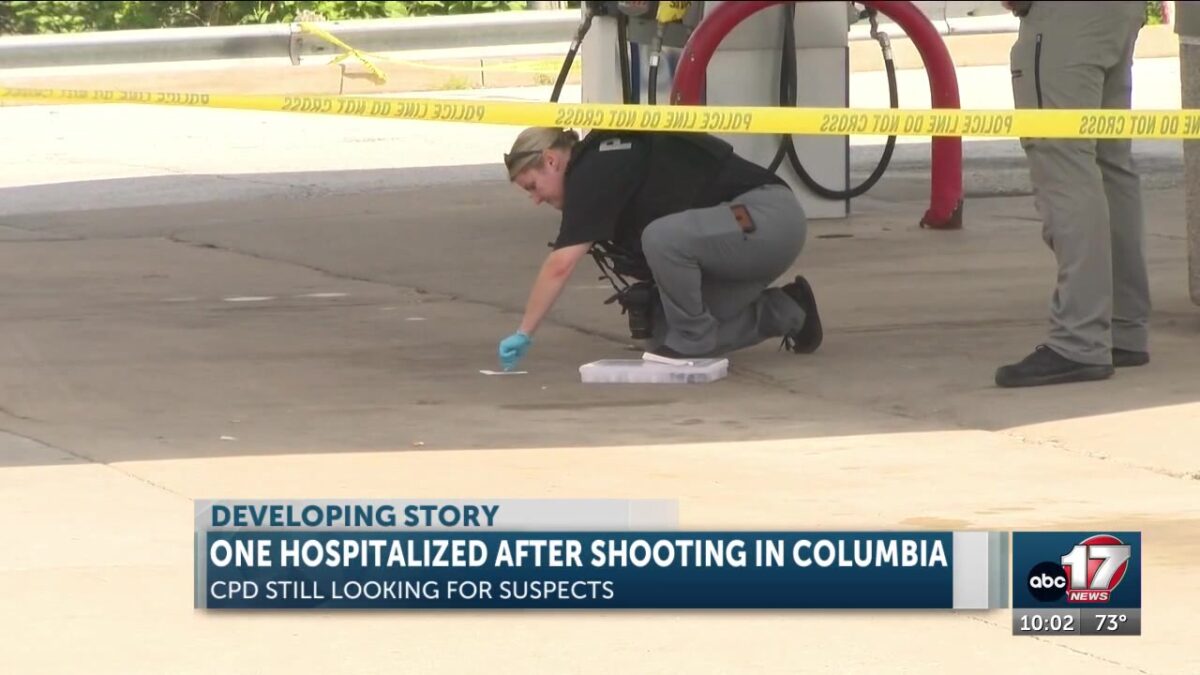
After law enforcement investigated, it was determined there was no weapons offense that occurred on Lincoln University’s campus on Wednesday night.

The school had sent out a text message alert to students at 8:32 p.m. stating: “LU Alert: Active shooter at Dawn Hall. Take cover or remain off campus! Weapons offence in the Parking lot of Dawson.

A follow up alert was sent at 8:56 p.m. giving an “all clear” message, but still told students to stay clear of the area as police were still investigating.

Jefferson City Police Department Lt. Curtis Finke told ABC 17 News in an email that there was “no weapons offense or indication of such.” JCPD had assisted LU police in the response.

“It was quickly determined a disturbance occurred on campus and the scene was made safe,” the email from Finke says.

An officer on the scene told an ABC 17 News reporter there was a “disturbance” between a group of local residents and students who came from the downtown area. The officer said no weapons were involved and no injuries were reported.

Check back for updates.  

Click here to follow the original article.

MU Faculty Council to vote on AI use scale policy

Marie Moyer

COLUMBIA, Mo. (KMIZ)

The University of Missouri Faculty Council is set to vote on an artificial intelligence policy that will categorize students’ assignments by allowed AI use.

According to Council documents, if approved, all graded course assessments of student work will also include a number label from a zero through three scale.

Assignments where an instructor allows no AI use are considered “Level 0″ while “Level 3” would be assignments where professors are OK with AI helping on bigger tasks.

Courtesy: MU Faculty Council

The label is meant to communicate the expectation of AI use for projects and promote responsible AI use.

“The goal is to increase transparency, allow better communication about expectations, and to protect academic integrity,” AI Committee Chair Kevin Brown said in a statement. “We’re hoping that this policy will help to proactively address student concerns about AI.”

Resolution AI Use Scale PolicyDownload

ABC 17 News spoke with around a dozen students on MU’s campus who all said that AI use is typically on a case-by-case basis across classes and instructors. Brown added the university does not have a list of approved or preferred AI programs that instructors recommend.

“Instructors at Mizzou have the freedom to decide how AI can be used and not used in their individual classroom,” Brown said.

Students generally reported that instructors are evenly split between banning AI, occasionally using it, and integrating it into their classwork.

“I feel like on campus, the dependency isn’t necessarily there,” said Sarah Tarpley, who is a student at MU’s digital storytelling program. “I feel like a lot of people gravitate towards it, like they want to use it for ideas and stuff like that.”

Students also say if AI is allowed, a majority of instructors only allow it for brainstorming and expanding on ideas.

“The only really allowed use of it was for brainstorming, researching or trying to figure out what you would write about, but not for writing itself,” MU psychology student Zach Zellmer said.

“While the majority of instructors still do not allow AI use, there are more and more instructors who are incorporating AI into assignments to help prepare our students for the workforce, in which AI knowledge will be increasingly valuable,” Brown said.

Geography student Michael Murphy said one of his geography classes allows AI in research when finding sources. However, students must report what program they used and review the source’s page to make sure it’s a valid source.

“They allow us to use AI to generate prompts for like project ideas or to generate sources for our assignments, but they also want us to include how we used the AI or which AI we used,” Murphy said.

Council documents add that even if passed, AI use levels will ultimately remain up to each instructor.

“While the majority of instructors still do not allow AI use, there are more and more instructors who are incorporating AI into assignments to help prepare our students for the workforce, in which AI knowledge will be increasingly valuable,” Brown said.

The Faculty Council meeting is at 3:30 p.m. Thursday in 205 Cornell Hall.

Click here to follow the original article.

New data shows eastern Callaway County experiences longer EMS response times than rest of county

Nia Hinson

CALLAWAY COUNTY, Mo. (KMIZ)

People who live in the eastern and southeastern portions of Callaway County typically have to wait longer to receive an ambulance, according to new data.

According to a social media post from Callaway County Emergency Medical Services, a consulting company created map showing projected response times. The map depicts response times based off of road network routing and assumed travel speeds. Actual response times can vary, depending on factors such as dispatch processing and weather.

The map shows areas in green typically have an ambulance reach them the quickest, which is within rough 5-10 minutes– while areas in the yellow and orange will wait slightly longer. Areas in the red portion of the map could see the longest wait time, with waits up to 35 minutes. That includes areas such as Portland, Steedman, Reform and Readsville.

Callaway County Ambulance District EMS Chief Charles Anderson said they aren’t currently having discussions about expanding in the areas that face slower times, but he believes a use tax on the April ballot could help. Voters will vote on use tax on April 7.

Callaway County ballot 3-18-2026Download

Anderson said the ambulance district’s primary funding mechanism is a half-cent sales tax. However, he said as they start to see more online shopping, the district doesn’t receive any sales tax from the sales. If approved, the use tax would apply the half cent sales tax to online purchases, which could potentially generate $500,000-$700,000 per year for Callaway County EMS.

Curtis Hall, who serves on the Callaway County EMS Board of Directors. also said he believes the use tax could help. Hall said he believes the current placement of ambulances in Callaway County has served the community well, but said population growth in Holts Summit is putting a strain on that. That can sometimes also mean mutual aid from Fulton or Cole County is requested.

“As with any public safety services there are significant cost considerations to consider such as facilities, salaries, benefits and ambulances. Personally, I feel the use tax would be beneficial so that serious conversations can be discussed about repair/ replacement of existing ambulances and support the long term goal of additional resources to the Holts Summit area,” Hall wrote via email.

According to Anderson, the company conducted the data unsolicited. Anderson said although EMS did not specifically request the data, he stills finds it helpful and said that it brings up talking points about possibly contracting with a company in the future to provide call volume data.

Anderson said that the eastern and southeastern areas usually face longer wait times due to the positioning of resources. The locations sit further from stations and include road networks with fewer direct routes, the post says.

Anderson said while they’re aware of the longer response times, there are other factors they have to consider.

“It also probably has the fewest number of calls and so you know the question then becomes for us, does it make sense to spend the money to build a station and staff an ambulance crew down in that area for a handful of calls?” Anderson said.

While certain people could wait longer to receive an ambulance, it doesn’t mean that they don’t wait the full wait time to receive care. Anderson said fire districts that cover those areas are able to start basic levels of care before an ambulance can arrive.

“They respond to medical emergencies and they have trained emergency medical responders and trained EMTs,” Anderson said. “Working with the fire districts you know, we try to cut that time down because they are gonna get there quicker than we are.”

Click here to follow the original article.