CDC reports rise in unintentional fall deaths in elderly

Erika McGuire

COLUMBIA, Mo. (KMIZ)

The Centers for Disease Control and Prevention this week released a study showing a sharp rise in unintentional fall deaths among older adults.

The report found that from 2003 to 2023, death rates from falls increased by more than 79% for adults aged 65 to 74. For those ages 75 to 84, the rate jumped more than 75%, and it more than doubled for adults 85 and older.

In Missouri, the CDC found a fall death rate of 64.3 per 100,000 people ages 65 and older in 2023, slightly below the national average of 69.9. The CDC found more than 41,000 retirement-age Americans died of falls in 2023.

The report does not include why there is an increase in falls.

The Columbia Fire Department says it has responded to 677 fall-related calls so far this year. That’s compared to 1,290 calls in 2024 and 1,319 in 2023.

However those numbers show all falls not just falls among the elderly. But the department says most calls are amongst seniors.

Columbia Fire Department spokesperson Katherine Rodgriuez says fall related calls are at the top of medical calls the department responds to.

“The Columbia Fire Department regularly responds  to fall related calls especially involving older adults and they are the most common medical calls we receive,” Rodgriuez said.

Falls can happen anytime, anywhere but Rodgruiez says many happen in bathrooms and staircases where medications are needed.

“Poor lighting, cluttered spaces or like grab bars or hand rails not being installed in places where you’re like to fall or trip,” She added.

Health conditions also contribute to falls.

“Mobility and balance issues, side effects from medications can cause folks to be off kilter with their balance,’ Rodgriuez said.

However, the Mayo Clinic recommends several ways to prevent falls.

Review medications with a doctor to check for side effects or interactions that may cause dizziness.

Stay active to maintain strength, balance, and coordination.

Wear sensible shoes with nonslip soles and good support.

Remove home hazards like boxes, loose rugs and electrical cords.

Light up your living space with brighter bulbs and night lights in hallways and bathrooms.

Use assistive devices such as handrails on stairways, grab bars in bathrooms and a sturdy plastic seat for showering.

“Double check there is no clutter in the homes, we encourage residents to have proper lighting in the homes, install grab bars in the bathrooms and check on the adults in your lives make sure they have regular vision and balance checks.” Rodgriuez said.

Smart911 is also a helpful tool. It’s a free app that allows users to create a safety profile, including health history, medications, mobility limitations, home address, and more. The app helps first responders act more quickly and effectively in an emergency.

“It’s for any type of call, not just medical,” Rodriguez said. “We utilize it as a way to get a brief background and context on what’s happening with the resident or patient,”

Click here to follow the original article.

Boone County Fire Protection District reminds people of heat-borne illness as temperatures rise

Marie Moyer

COLUMBIA, Mo. (KMIZ)

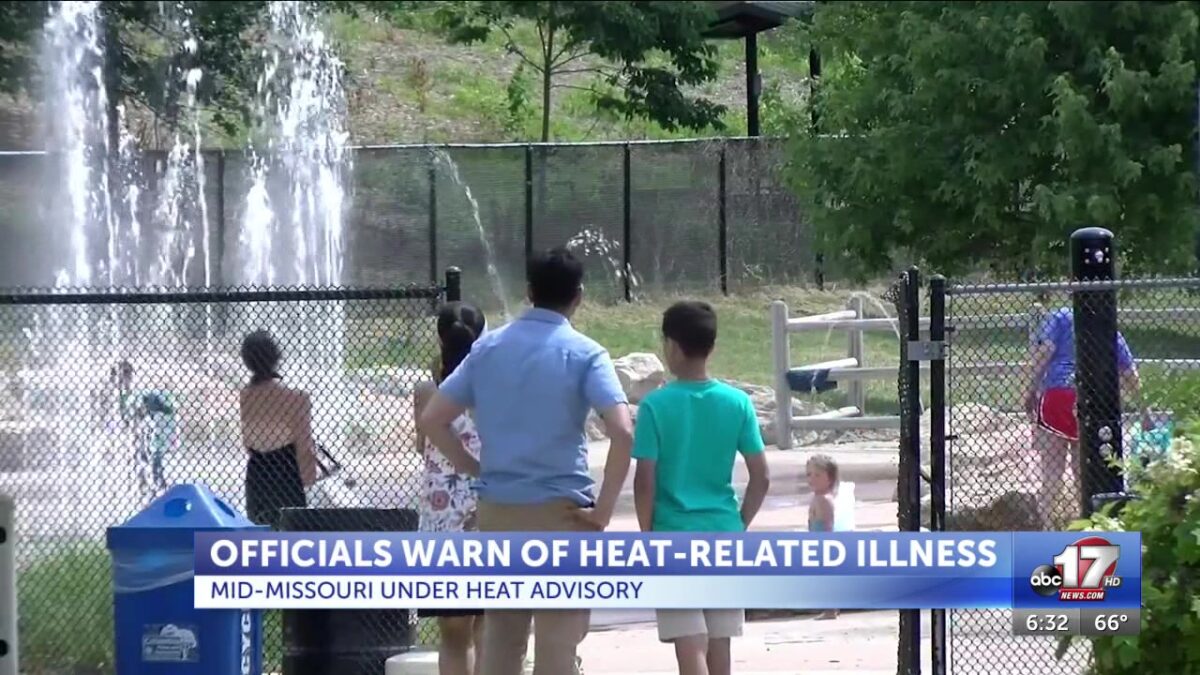
The Boone County Fire Protection District, along with many other first-responder agencies and health officials, are reminding the public to be aware of the risks of heat exhaustion and heat stroke, as a heat advisory has been issued for Boone County through Tuesday evening.

According to Mayo Clinic, Heat-borne illness can take effect within 15 minutes, with common symptoms including nausea, a high heart rate and feeling faint or dizzy. Individuals experiencing these symptoms should drink water and seek shelter indoors.

Heat stroke, which can be fatal, also includes symptoms of a high body temperature over 100 degrees, no sweating and a headache. 911 should be called immediately, and the person should be moved to a cooler area until help arrives.

Ways to avoid heat-borne illnesses include wearing light clothing, drinking plenty of water and avoiding strenuous activities outside during peak temperatures. It’s also recommended to wear a hat and sunscreen to avoid sunburn.

Click here to follow the original article.

QUESTION OF THE DAY: Will the United States attack Iran?

Matthew Sanders

The possibility of American military action in Iran has become very real.

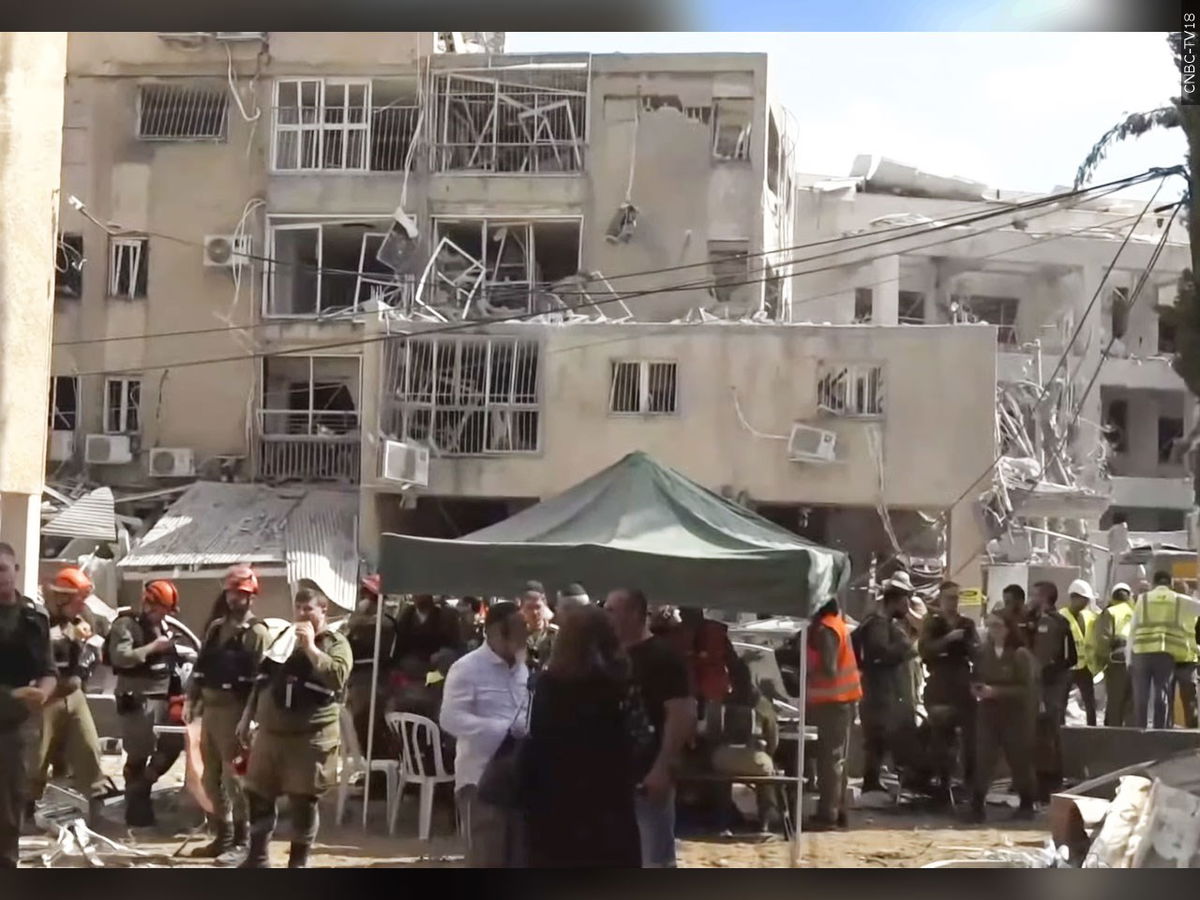
President Donald Trump has said he will make a decision on whether to strike the Islamic dictatorship sometime in the next two weeks. Meanwhile, Iran and Israel continue to trade missile attacks.

Israel opened up the exchange last week with strikes targeting Iran’s military and its uranium enrichment program. Prime Minister Benjamin Netanyahu claims the regime in Iran is close to building a nuclear bomb.

Do you think the U.S. will attack Iran? Let us know by voting in the poll.

Click here to follow the original article.

Columbia Board of Realtors to host Ward 2 candidate forum next month

Ryan Shiner

COLUMBIA, Mo. (KMIZ)

The Columbia Board of Realtors will hold a candidate forum next month with the two people running for the open Ward 2 seat on the Columbia City Council.

A press release from the board says that the forum will be held at 4 p.m. Wednesday, July 16 at the Board of Realtors on 311 Bernadette Drive.

A livestream of the event will be available on YouTube and Facebook.

Vera Elwood and Ken Rice are vying for the seat. The election will be held on Aug. 5.

Click here to follow the original article.

Four vehicles involved in I-70 crash near Millersburg

Ryan Shiner

COLUMBIA, Mo. (KMIZ)

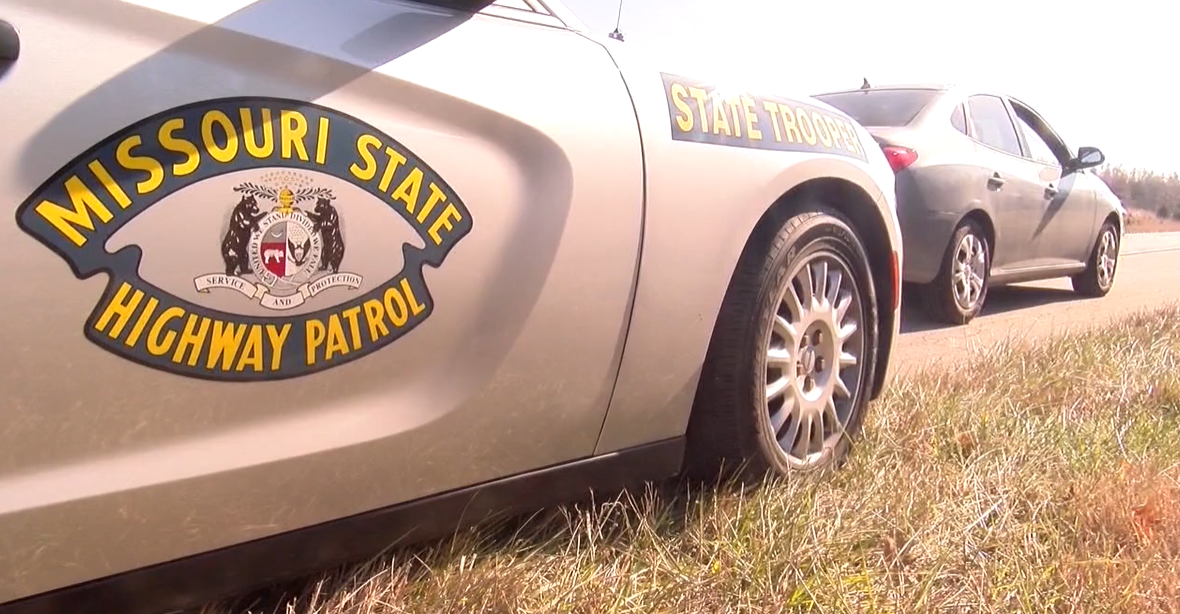
Four vehicles were involved in a crash Thursday morning on Interstate 70 near Millersburg, according to a crash report from the Missouri State Highway Patrol.

The report says the crash occurred as a 2015 Mazda CX5, 2021 Ford Explorer and 2024 Chevrolet Silverado were slowing down in the eastbound lane for congested traffic when a 2016 Peterbilt 389 rear-ended the Chevrolet.

The Chevrolet then hit the Ford, which hit the Mazda, the report says. The semi-truck was driven by a 53-year-old man from St. Joseph, Missouri. He had no reported injuries. Everyone involved in the crash wore seatbelts, the report says.

The driver of the Chevrolet – a 46-year-old man from Hallsville – had minor injuries and was brought to Boone Hospital by a private vehicle, the report says.

The driver of the Ford – a 55-year-old Columbia woman – had moderate injuries and was brought to University Hospital by ambulance, the report says. Her passengers – a 64-year-old Columbia man, 32-year-old St. Louis man and a 4-year-old boy from St. Louis – all had minor injuries and were brought to University Hospital by ambulance, the report says.

The report says the Ford and Chevy had extensive damage, while the Mazda and Peterbilt had moderate damage.

MSHP reports do not name those involved in crashes.

Click here to follow the original article.

North Callaway firefighters describe struggles with I-70 road construction

Olivia Hayes

CALLAWAY COUNTY, Mo. (KMIZ)

North Callaway Fire Protection District tells ABC 17 News that accessibility and clean up continue to be an issue for them when responding to accidents near construction zones on Interstate 70.

“What we usually end up having to do is kind of park and walk. We’re doing a lot of climbing over the barricades,” North Callaway Fire Protection District Chief Matt Walton said.

Work is being done for a portion of the Improve I-70 Project, which aims to make the interstate a three-lane highway across the entire state.

According to information from the Missouri State Highway Patrol, at least three crashes have occurred in a stretch of I-70 under construction since concrete barriers were placed along the roadway west of Kingdom City in early May. The most recent crash occurred near Millersburg on Thursday morning.

Walton explained that sometimes access can get so challenging they need to bring in outside help.

“We also have an automatic mutual aid with Millersburg Fire to come up. So that way they can approach from one direction, we can approach from the other, to try to cover the incident from two different sides to gain best access,” Walton said.

Other responding agencies told ABC 17 News they haven’t had much trouble working around the construction.

“The workaround that we have seems to be working just fine sometimes the traffic is completely blocked,” MSHP spokesman Kyle Green said. “We may have to come down a, you know, an on ramp the wrong direction or an exit ramp down the wrong direction and work our way backwards, but ultimately, using the outer roads, is a preferred method.”

Charles Anderson, Chief of Callaway County Emergency Medical Services, said his crews also utilize the outer roads. However, he said they were already doing that consistently before the construction started, so they haven’t had many issues.

Walton said his team doesn’t have easy access to outer roads.

“We did not have outer a road access this morning,” he said. “Our construction side is actually not where we have a lot of out of outer road access.”

Total completion of the Missouri Department of Transportations I-70 Improvement Project is expected by the end of 2030. Construction of the portion between Columbia and Kingdom City is expected to be completed by late 2027.

Click here to follow the original article.

Suspect in Columbia infant death apparently released from custody

Mitchell Kaminski

COLUMBIA, Mo. (KMIZ) 

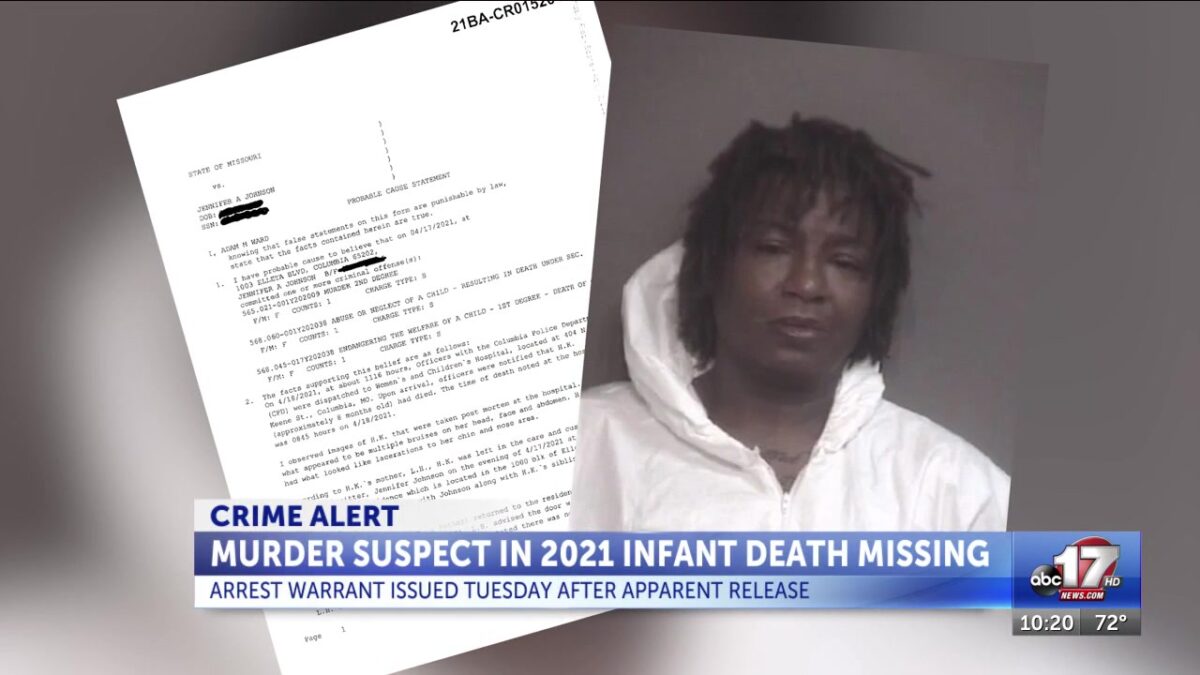
A Fayette woman charged with second-degree murder in the 2021 death of an 8-month-old girl is the subject of an active arrest warrant.

But two days after the warrant was issued, court and prison records indicate she still isn’t in custody. 

Jennifer Johnson was scheduled to appear in court at 9 a.m. Monday, July 14 for charges including second-degree felony murder and first-degree endangering the welfare of a child. She is accused in the death of Hannah Kent.

A Tuesday court filing shows that she was sent to the Arkansas Department of Corrections.

However, Arkansas DOC spokesperson Rand Champion told ABC 17 News in an email that a Jennifer Johnson was put on parole on June 16 and no one with that name is in custody. The spokesperson said a middle name was not available in their system.

According to the Missouri Department of Corrections, Johnson was released Monday. She had previously been incarcerated in Missouri from April 27-May 19, 2022, and again from May 23, 2022-June 16, 2025, despite the Boone County Jail having her listed on a no-bond hold.

Boone County courts issued a warrant for her arrest on Tuesday. Prosecutor Roger Johnson declined to comment on Thursday.

Court records list Johnson’s address in the 2001 block of Holly Avenue. But when ABC 17 News visited the property, the home appeared abandoned, and the lot surrounding it was under construction.

Columbia police arrested Johnson in April 2021, after being called to a home in the 1000 block of Elleta Boulevard in north Columbia. 

According to court documents, police were dispatched to the Women’s and Children’s Hospital in Columbia on the morning of April 18, 2021, where they were informed that an 8-month-old, Hannah Kent, who was under Johnson’s care, had died. 

Court documents indicate the parents left Kent and other children in Johnson’s care beginning around 5 p.m. the previous day. 

The mother found the child around 8:30 a.m. unresponsive and cool to the touch after returning home and immediately noticed bruising, court documents indicate. The parents then took the child to Women’s and Children’s Hospital, where the infant was pronounced dead at 8:45 am. 

Johnson allegedly told police that she last saw the infant alive at 2:15 a.m. after giving a bottle to the child, the probable cause statement says.

According to court documents, Johnson took a call from the parents saying the baby had died and the parents wanted to see Johnson.

Two people who knew Johnson brought items that Johnson had at the home to the Columbia police, court documents say. Investigators allegedly found baby formula on Johnson’s clothes, and a swab of the same shirt tested positive for blood.

Johnson was previously charged with two counts of assault in Howard County in 2019. The complaint in the case states she strangled and bit another woman.

Kent’s family declined to comment.

DOC041921_04192021170840Download

Click here to follow the original article.

‘Eyes in the sky’: Task Force 1’s drones prove effectiveness for agencies across the state

Nia Hinson

COLUMBIA, Mo. (KMIZ)

St. Louis Fire Chief Dennis Jenkerson will never forget May 16, 2025.

It was a Friday around 3:15 p.m., meaning major roads in the city were already packed with traffic as rush hour approached. That would lead to even more issues down the road.

It was the day an EF-3 tornado struck the city of St. Louis and parts of St. Louis County, killing five and leaving behind miles of destruction.

Jenkerson said the tornado tore through the central and north-central sections of the city and was on the ground for roughly 8 miles. The storm was anywhere from a mile to three-quarters of a mile wide and took out electrical substations, affecting between 8,500 and 10,000 homes before it crossed the river into Illinois.

As if the thought of rescue efforts wasn’t enough for first responders to ponder, they now had to deal with the issue of getting equipment into the affected areas because of congestion on major roads.

“It was established fairly early on that this was a major event, that we had multiple homes involved. It kind of clipped the corner of where one of our major hospitals was located,” Jenkerson said.

That hospital was the Barnes-Jewish Hospital, along with the children’s hospital.

The St. Louis-area responders needed help. Missouri Task Force 1 — an urban search and rescue team based at the Boone County Fire Protection District headquarters in Columbia — was among the five agencies that answered the call during the 72-hour search.

Fearing mass casualties

Jenkerson said a little more than half of Kingshighway in the city limits, up to about Delmar Boulevard, was impassable at the time. That, along with major destruction to buildings that they could see from the ground, led emergency responders to think they were looking at a mass casualty event.

“So, the call was made out to Region C, which I’m the co-director in the state of Missouri, that we were going to need the task forces as soon as possible and to notify Missouri Task Force 1,” Jenkerson said. “Based on the radio reports we were getting from our dispatch center for calls for assistance, we had a very wide section of the city that was in need of immediate emergency response.”

Missouri Task Force 1 arrived in St. Louis around midnight and immediately got to work.

Jenkerson said they had already searched about 2,500-3,000 buildings within the first 24 hours of their response, thanks in part to Missouri Task Force 1’s manpower and equipment. But it was one small piece of equipment that proved vital during while saving people who were trapped: the drone.

“Immediately, we were probably looking at 12 or 15 to 20 areas that concerned us,” Jenkerson said. “A couple big churches, a couple commercial buildings, quite a few residential structures. And the drones gave us the ability to get a quick overhead look at what we were searching, how big the area was.”

Jenkerson said the drones helped emergency responders with their operational plan as they entered buildings. He said responders not only had to be worried about entering collapsed buildings, but also about the structural soundness of surrounding buildings.

The drones also allowed them to see what areas were stable and which areas were not, as they continued the process of delayering and digging down to people who were trapped.

Jenkerson said he flew over the area in a helicopter early on after the storm. However, being able to physically move the drones around near possible areas of entrapment and having an extra pair of eyes in the sky made all the difference.

“It just gives you a little more speed to get at buildings, but it gives you another set of eyes from a position that you normally can’t get eyes on,” Jenkerson said.

Jason Warzinik is Missouri Task Force 1’s technical information specialist and is the manager of the group’s Disaster Situation Awareness and Reconnaissance Team. He comes up with all of the training and leads the teams out in the field.

Warzinik said he believes the drones were highly effective during their deployment to St. Louis.
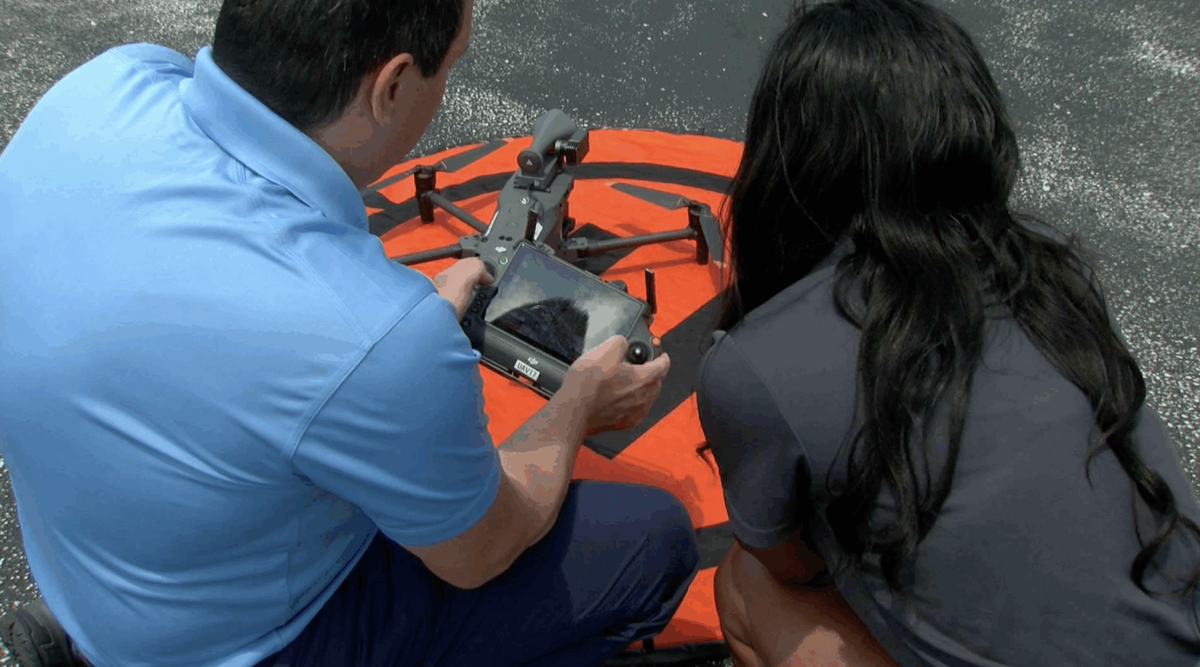
Jason Warzinik demonstrates one of the many capabilities of Missouri Task Force 1’s drones. (KMIZ)

Part of that was the ability to stream live drone video that night to the incident command. The next morning, crews were able to go out into the hardest-hit areas.

“Then, throughout those next two days, we had our areas that we were assigned,” Warzinik said. “But then of course when you get to the edge of your area, you’re doing a 360 kind of pan and based on those, it was pretty quick where incident command was going, ‘Hey, we need to go across that area, make a new assignment up to that path of that tornado.”

Task Force 1’s drones have helped other agencies, too.

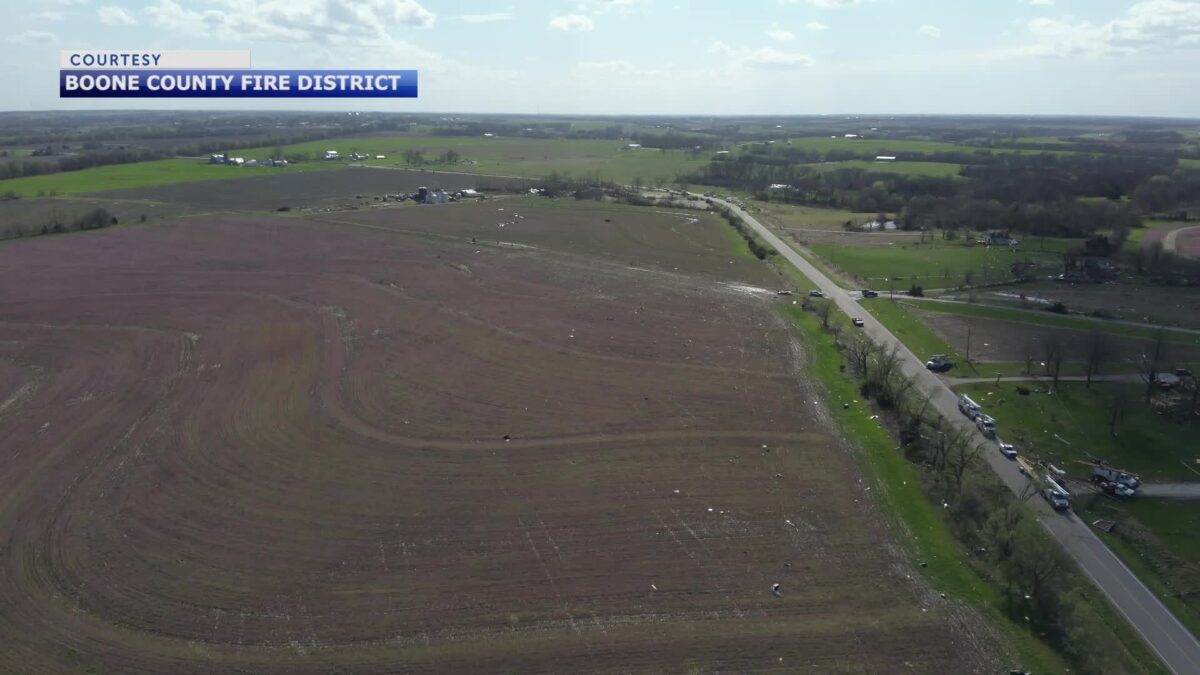
In Mid-Missouri, Cooper County Emergency Management director Larry Oerly remains grateful for Missouri Task Force 1 more than two months after an EF-2 tornado struck Pilot Grove. The tornado was on the ground for about 5 miles and packed winds up to 135 mph.

Oerly said the county immediately started receiving reports from police and ambulance crews about damage and power lines down. During that time, Oerly said a determination was made that it was going to be an extended event.

He then made calls to the State Emergency Management Agency and eventually reached out to Missouri Task Force 1 for help. The Cooper County Sheriff’s Office had deployed its drones in the response, but they didn’t prove to be enough.

That’s where Missouri Task Force 1 came into play.

“Their drones are much more advanced than the ones we have,” Oerly said. “The drone can see things from the air that we can’t see from the ground. If there would have been maybe a body or something laying in a field or something, they could pick that up. Foot search would take forever to do that.”

How drones help local law enforcement and firefighters

It was about 7 p.m. on May 2, a Friday. Several law enforcement agencies gathered around a monitor and a vehicle on East Prathersville Road for hours. They were searching for two youths who had escaped from the Juvenile Justice Center. One of the two was being detained for murder, the other on a first-degree assault charge.

Law enforcement had searched the heavily wooded area and field after the two escaped on foot.

After hours of searches by the Boone County Sheriff’s Office, Columbia Police Department and the Missouri State Highway Patrol, the last youth was found just before 10:30 p.m. That was thanks to a drone provided by Missouri Task Force 1.

The drone was able to pick up a “heat signature” from the juvenile, which led law enforcement to locate him about 30 feet high in a tree.

Brian Leer with the Boone County Sheriff’s Office said he thinks more fugitives would get away if it weren’t for the help of the drones.

“I’d just be guessing the percentage, but I’ve seen these drones help us find people that, in my mind, I go home and I think, ‘I don’t know that we would have found them had it not been for their drone,'” Leer said.

The vehicle belonged to Missouri Task Force 1, as well as the monitor. The screen allowed law enforcement to see what the drone saw in the woods. Leer said the technology was “instrumental” in the search.
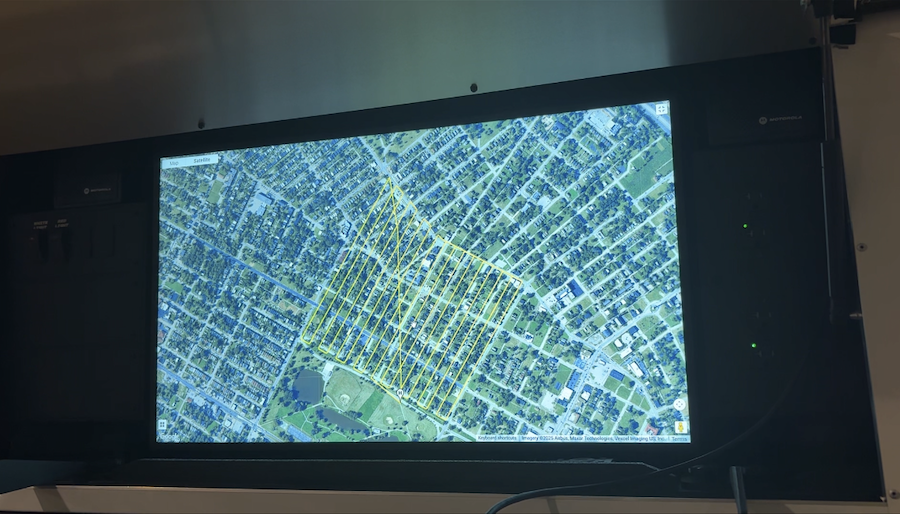
A photograph of one of the large screens on one of Missouri Task Force 1’s vehicles. (KMIZ)

The drones are also useful during searches for missing people or in vehicle crashes when it’s believed someone has been ejected. Drones can see locations that are inaccessible to humans. GPS capabilities and the ability to see in the dark make them key.

The drones are also used in responses to wildfires and structure fires to determine where there’s potentially still fire or excessive heat, Boone County Fire Protection District Chief Scott Olsen said. They can also assist local law enforcement by flying into homes to locate potential suspects.

Olsen said he believes all drones are effective, but Task Force 1’s many pilots and variety of drones are what make them different.

“We’ve done a lot of training together with the existing drone pilots and other agencies, so a lot of times we get called because they need just additional resources, and we wouldn’t hesitate to call them if we need additional resources on something that we’re doing,” Olsen said.

Missouri Task Force 1 began flying drones in 2017. The district has roughly 30 drones, along with 30 pilots.

Since Jan. 1, the task force has hosted four training events and responded to five local fire and mutual aid callouts, as well as five severe weather deployments. All of that together adds up to a total of 240 flights, with an air time of 43 hours, 11 minutes and 16 seconds for a total distance flown of 348 miles.

In 2017, the task force received $10,000 in state funding to launch a course on safe drone operations. Initial funding that year also included $65,000 to build a GIS-equipped vehicle from an existing fire district command vehicle.

The task force received additional funding from the state over the years since then to create additional vehicles and expand training efforts. Another $302,000 was allocated to the team from the state this year to purchase equipment, software and to further team development, according to Warzinik.

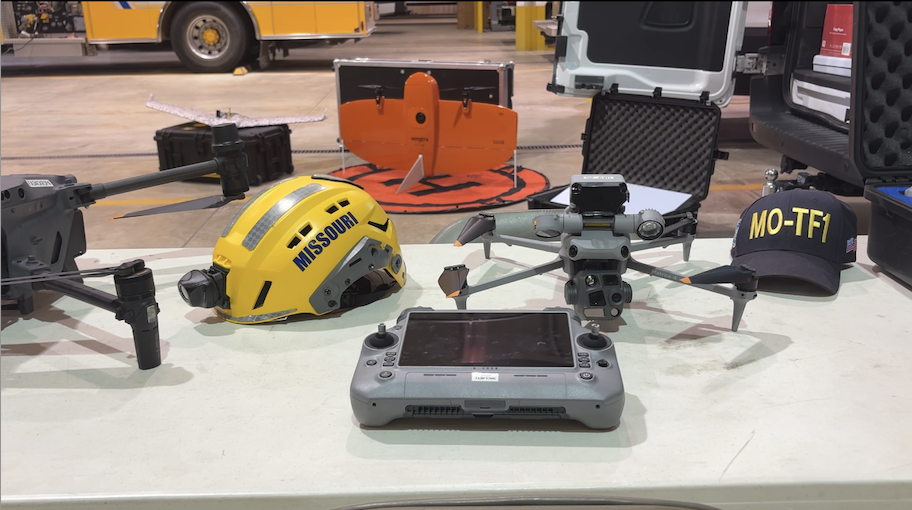
The drones come in varying sizes and are quadcopters. They have a flight time of roughly 40 minutes. The largest drone is used for overwatch and has live streaming capabilities. The drone has a speaker, spotlight, superzoom and thermal capabilities that allow it to operate at night.
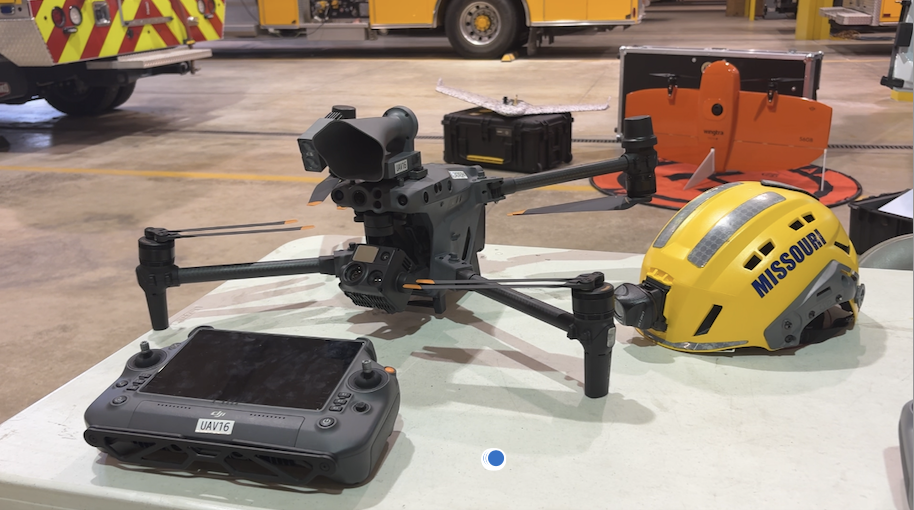
Missouri Task Force 1’s largest drone

Missouri Task Force 1’s medium sized drone

Missouri task force 1’s interior drone

A rangefinder allows pilots to zoom in on something and drop a pin on a map without having to fly the entire drone to the area.

The medium-sized drone is geared towards mapping and was used in the St. Louis storm response, after being purchased just two weeks earlier.

The task force’s smaller interior drones come in handy during structural collapses. They have lighting that allows pilots to see inside dark buildings. Pilots have to use first-person goggles when flying this type of drone, and can then view what the drone sees from a screen.

“For example, if its a hazmat situation, we’ll have the hazmat tech from the task force watch that screen, get the lay of the land … figure out the floor plan … look for hazards and then they know, ‘Hey, when we suit up we need to take A, B and C inside so they’re not walking in blind,'” Warzinik said.

Warzinik said the interior drones cost roughly $600, while some of the fixed wings can cost up $40,000 because of pricey thermal and mapping sensors.

The task force also has technology that allows pilots to see when other drones or aircraft are flying in an area.
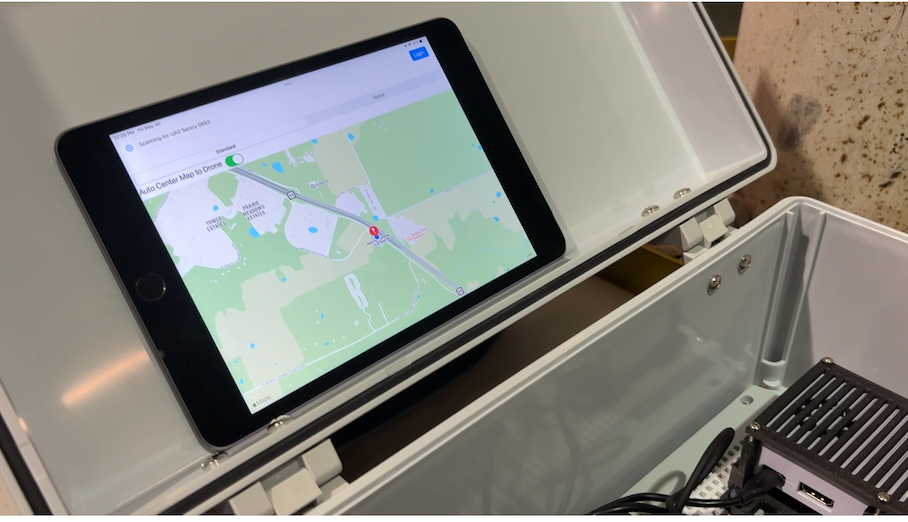
This tablet demonstrates how the task force can view other aircraft in the area during a deployment. (KMIZ)

Missouri Task Force 1 also has two different types of fixed-wing drones. These sorts of drones have a flight time of 60 to 90 minutes. They can be useful when they need to map larger areas, like the path of a tornado or hurricane, and can map in two dimensions or three.
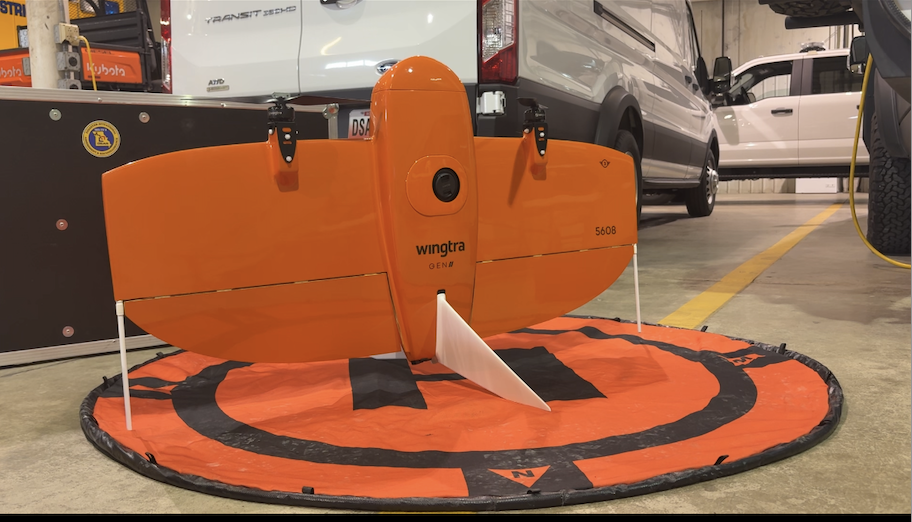
One of the task force’s “Fixed Wing” drones
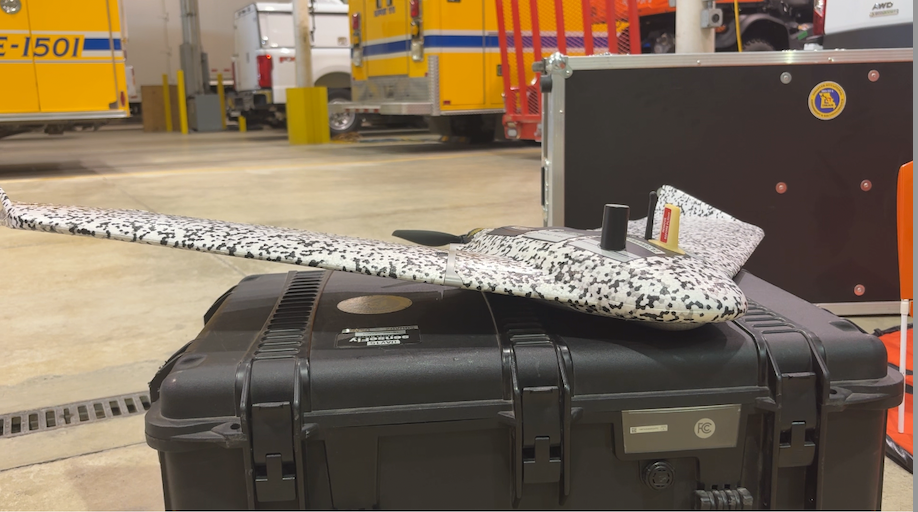
A second “Fixed Wing” drone

One can be programmed to fly over an area and take photos that the task force can stitch together.

The task force also has two vehicles designed specifically for drone and geographic information system work. The vehicles allow them to take data from the drones and upload the data online through a system called Starlink.

That data is then uploaded online to a central system called SARCOP. This allows photos and mapping layers to be uploaded online, where incident command, SEMA and the White House can view them.

The vehicles are equipped with a camera that can be used during the day or at night, two large-format printers for printing maps and radios for communicating with local and federal agencies.

“It was not too many years ago where our map that we would get is literally stopping by Sam’s Club and getting the map book out of Sam’s Club and taping it together,” Warzinik said. “Now, you look at what we can produce inside of that truck, almost live images of the impacted area.”
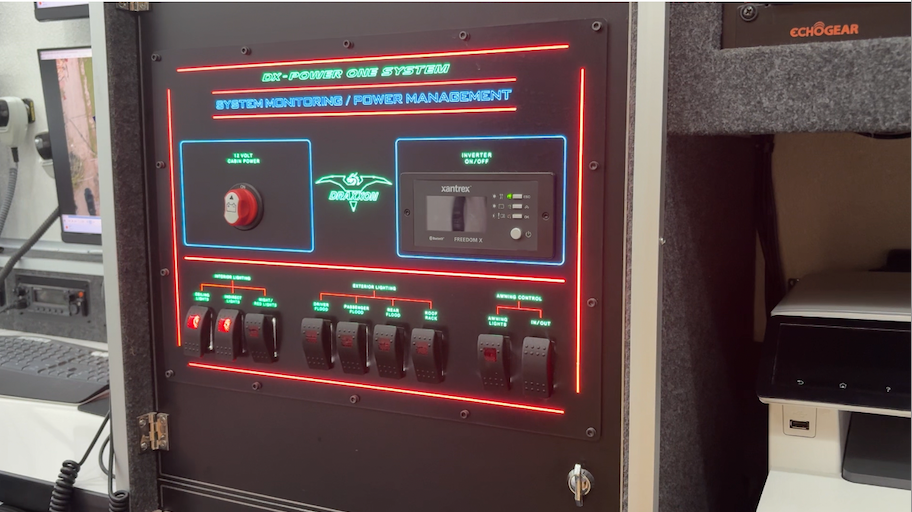
A look inside one of Missouri Task Force 1’s vehicles that allows them to upload data from the field. (KMIZ)

The task force also has pickup trucks designed specifically for drone squads. The trucks also allow pilots to upload data quickly from the field.

That is also where live streaming platforms are used. Operators will hook up the drone’s controller to the truck’s monitor, allowing law enforcement and other agencies to see what the drone sees.

“The live feed was used throughout the event. It gave the incident commanders, who most of them were back at the command post, an idea of what was going on in the neighborhood,” Jenkerson said. “It’s like I said, any information you can add to the overall plan while it’s in operation gives you a better handle on what you’re doing of your search pattern.”

The future of drones and public safety

Missouri Task Force 1 is hoping to expand its use of drones.

Olsen said the task force isn’t able to fly its own drones when deployed on federal disasters. That included a recent trip to North Carolina, where the task force was sent for several days after Hurricane Helene.

Olsen said while there, the task force had to use other agencies’ drones. They’re working with FEMA to fly their own drones during federal deployments. A decision could come this month.

Olsen said his passion for wanting to expand how the drones are used stems from Hurricane Katrina in 2005. He said he was one of five people who had to go into New Orleans and set up for urban search and rescue teams.

Olsen said at the time, they made maps by hand and received Excel spreadsheets from police listing people who were trapped. He then started learning how to use some of the task force’s GIS capabilities to download data and make a map to show teams where trapped people were.

Olsen said searchers immediately found about 25 people within areas they had already searched.

“So, I saw the utility of this sort of system to be able to No. 1, get drones out and find out where people are and get aerial imagery to see what’s actually going on in the area. And then secondly, to take that information and marry it with data that we were getting to be able to find people more quickly,” Olsen said.

The Boone County Sheriff’s Office has about seven drones, Leer said. He said the sheriff’s office drones are also used in vehicle crashes and in outdoor homicide investigations.

The Columbia Police Department has five drones. Digital forensic specialist Chad Craig said the drones are typically used to monitor large events, like parades in the city, or for finding missing children.

“The use of drones at CPD is still growing,” Craig said. “I mean, we’re still in our infancy stage of trying to see how best to use, both for documentation, for real-time information and for assisting patrol operations and that kind of thing.”

Jenkerson said his fire department would love to expand its drone fleet.

“Any department in the state of Missouri is not going to handle this [tornado] by themselves, so having a regional asset, if you will, to come in and be on the ground within 24 hours, which they did, kind of allows you a little bit of room not to have every toy that you want,” Jenkerson said. “Drones that are made for hazardous material response, drones that are made for large-scale incidents like this, there’s always room for it and it’s something we’re looking at.”

Click here to follow the original article.

Stover mayor steps down, becomes city’s police chief

Ryan Shiner

COLUMBIA, Mo. (KMIZ)

A shakeup has occurred in Stover.

The Stover Police Department wrote in a Wednesday night social media post that now-former Mayor Clayton Judd will step down from his position in order to become the city’s new police chief.

Judd had won a narrow race in April against Michael Lowe. Alderman Gregg Sidebottom was named the mayor pro tem during the meeting. Sidebottom previously served as the pro tem prior to Judd’s election.

“In a small town like Stover, it is not uncommon for family and friends to end up working together. It is never something that was planned, just the nature of close knit communities. With that said, Sergeant Cassidy Judd’s continued service in her role does not fall under Missouri’s nepotism laws. The City follows all legal and ethical guidelines, and these matters are addressed appropriately and lawfully when they arise,” the post says. “Clayton Judd ran for mayor with every intention of serving his full term. However, when he was asked to take on a larger role for the good of the community, he humbly resigned as mayor and accepted the responsibility of leading our police department.”

Former Chief Chuck Black’s retirement was announced during a June 9 special City Council meeting. Judd also stepped down during the same meeting.

Click here to follow the original article.
Columbia to reduce downtown meter time limit option 

Erika McGuire

COLUMBIA, Mo. (KMIZ)

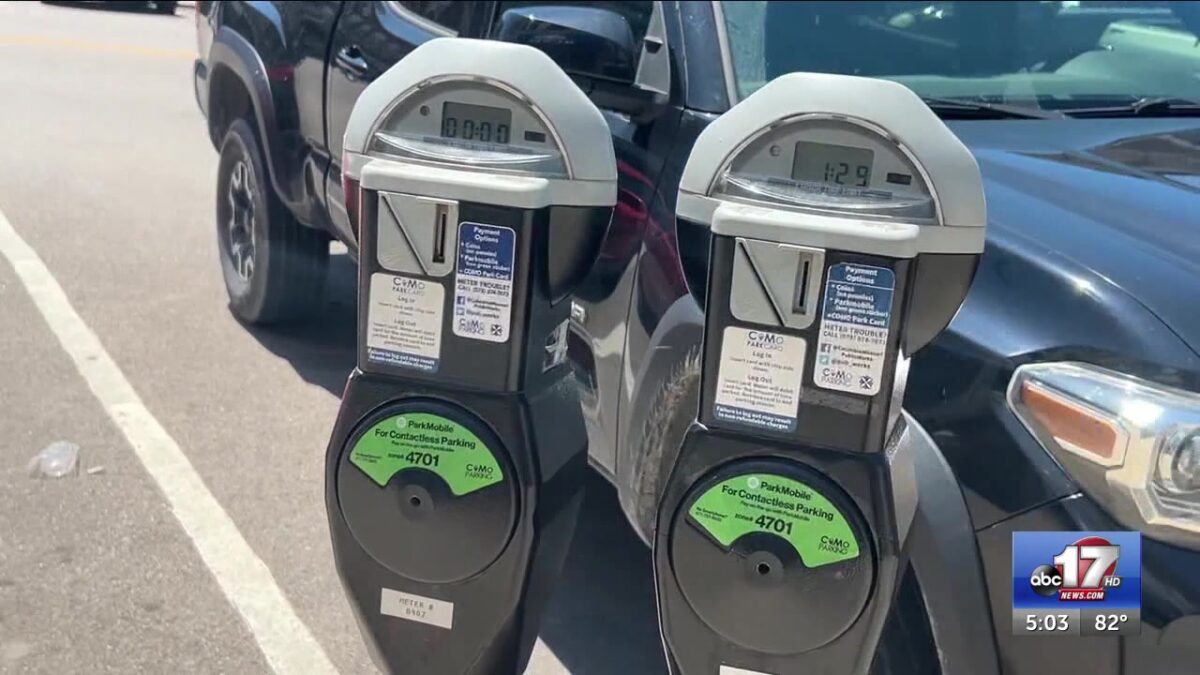
The City of Columbia is simplifying the time limits on on-street parking meters downtown by making operational changes.

Starting the week after July 4, the city will reduce the number of time-limit options from six to four. The goal is to simplify payment, reduce confusion and increase parking turnover.

Currently, drivers choose from six time limits:

24 minutes

1 hour

2 hours

4 hours

5 hours

10 hours

Under the new plan, according to a council memo, drivers will choose from:

15-minute curbside pickup

1 hour

3 hours

10 hours

“Two hours often isn’t enough for someone to comfortably dine, shop, or attend a meeting,” Columbia Public Works spokesman John Ogan wrote in an email Thursday. “Switching to 3-hour meters in core areas gives visitors a better experience while still promoting turnover,”

There are 1,795 on-street metered spaces in downtown Columbia, according to the city, and 1,666 will be affected by the changes.

Proposed parking limitsDownload

The 1-hour meters will be near government buildings, the police station and the post office. Three-hour meters will be concentrated in the heart of downtown, including areas south of Elm Street. Long-term 10-hour meters will be found west of Fifth Street, east of Tenth Street and north of Ash Street.

Ethan Jones, owner of Mindnright Wellness on Broadway, said changing the hours from two to three in the heart of downtown won’t make a difference,

“People take the ticket anyway because there is nowhere else to even park at and so I don’t [think] expanding it an extra hour even matters,” Jones said.

Jones claims many drivers don’t care enough to look at the time-limits and the color-coordinated meters.

“I don’t think people pay attention to any of that they are just trying to find a spot to park at, but I think the 15-minute parking [spaces] are nice for my customers. But outside of that I don’t think people pay attention to the color coordinated of times, three hours might help people stay a little longer,” Jones said.

Student Finn Boland sees the change as adding flexibility for quick visits downtown.

“It doesn’t restrict anyone because it goes above the minimum expectations unless you are trying to do the five hour one in which case you would have to default to the 10,” Boland said.

Lauryn Carolton has lived in Columbia for about five years and said parking downtown has always been an issue. But the extra hour gives her piece of mind.

“I kind of put a couple quarters in and hoped by car was still there i think that extra hour will be beneficial if you go see a movie and get something to eat that’s about three hours so it makes a lot more sense,” she said.

The changes do not affect meter rates or enforcement hours. Parking costs per hour won’t change, and meters will still be enforced Monday through Friday from 8 a.m.-6 p.m. On Saturdays, enforcement runs from 8 a.m.-noon. Sundays are free.

A Walker Consultants analysis showed that Columbia has more time limit variations than most comparable cities, with three or four time limit systems being standard.

Ogan said equipment delivery could affect the schedule of the changes.

Click here to follow the original article.