Two men from Columbia run over in Jefferson City hit-and-run; charges pending

Ryan Shiner

JEFFERSON CITY, Mo. (KMIZ)

Two men from Columbia were run over by a vehicle on Monday at the intersection of Idlewood Drive and Route C in Jefferson City, according to a crash report from the Jefferson City Police Department that was sent to media on Tuesday.

Police later on Tuesday said the driver, a 43-year-old woman, was in custody on suspicion of two counts of leaving the scene of a crash, failure to register a vehicle and driving without insurance..

Jesus Contreras, 32, and Roberto Gutierrez, 26, were injured in the crash, the report says. JCPD Lt. Curtis Finke clarified the men had moderate injuries.

The report says JCPD was called at 10:49 a.m. Monday for a hit-and-run crash that involved a Lincoln MKC. Both men were brought to an area hospital.

Police then posted a video to its social media showing the crash. The video shows two people walking in the intersection and seemingly stop as a vehicle turns and hits them.

Both men were flown off the hood of the vehicle and the vehicle appears to stop as the men are outside of both sides of the vehicle, the video shows. The vehicle is then seen driving away.

Finke told ABC 17 News that the driver of the vehicle is in custody.

Check back for updates.  

Click here to follow the original article.

Head-on crash in Camden County leaves three seriously injured

Jazsmin Halliburton

COLUMBIA, Mo. (KMIZ)

Three people suffered serious injuries in a head-on crash in Camden County on Monday night.

According to the online crash report, a 39-year-old Springfield woman was driving a 2024 Jeep Wrangler eastbound on Highway 54 west of Route W at 10:15 p.m. Monday. The report states that the vehicle crossed the center line and struck a 2019 Nissan Sentra going westbound, driven by a 44-year-old Harrison, Arkansas, woman, along with a 14-year-old boy, also from Harrison.

The 14-year-old passenger was flown to Cox Health, and the 44-year-old driver was flown to University Hospital, both suffering serious injuries. The 39-year-old Springfield woman also suffered serious injuries and was transported to Lake Regional Hospital by Mid-Mo Ambulance.

All three were wearing seatbelts at the time of the crash, according to the report.

Click here to follow the original article.

Sen. Schmitt wants constitutional amendment after SCOTUS ruling on birthright citizenship

Marie Moyer

COLUMBIA, Mo. (KMIZ)

U.S. Sen. Eric Schmitt (R-Mo.) said Tuesday that he is filing legislation to amend the U.S. Constitution to “rein in” birthright citizenship.

The decision comes after the Supreme Court rejected Donald Trump’s initiative to end birthright citizenship on Tuesday.

“Under the Supreme Court’s erroneous interpretation, American citizenship is extended to anyone who happens to be on U.S. soil when they’re born — even if they were here in violation of our laws,” Schmitt said in a news release. “This is a dramatic departure from the understanding of citizenship of our Founders and the framers of the Fourteenth Amendment.”

Schmitt later posted a draft of the proposed amendment on X.

The majority tried to constitutionalize unlimited birthright citizenship. But Justice Kavanaugh MAY have left Congress a door.

I’m filing legislation to walk through it.

And I’ll keep working on a constitutional amendment to restore American citizenship. https://t.co/WV8gu1OYhy pic.twitter.com/r8oB9Ks5gc

— Senator Eric Schmitt (@SenEricSchmitt) June 30, 2026

“Justice Kavanaugh MAY have left Congress a door. I’m filing legislation to walk through it,” Schmitt said on X.

The Citizenship Clause in the 14th Amendment states: “All persons born or naturalized in the United States, and subject to the jurisdiction thereof, are citizens of the United States and of the State wherein they reside.”

Schmitt’s amendment would make it so that a person born in the U.S. would only be a citizen if at least one parent has lawful residence.

“A person born in the United States and not subject to any foreign power: Provided, That a person born in the United States shall be deemed subject to a foreign power if neither parent of such person is a United States citizen or has been lawfully admitted for permanent residence at the time of such person’s birth,” according to Schmitt’s draft documents.

According to the American Immigration Council, around 4% of Missouri’s population, or around 223,000 residents, are native-born citizens with at least one immigrant parent.

In a Truth Social post, Trump pushed for legislative moves to be made to end birthright citizenship after Tuesday’s Supreme Court ruling.

“Congress should start TODAY to work on ending expensive and unfair to our Country, Birthright Citizenship. They will have my Complete and Total Support!” Trump said.

Dave Roland, the Senior Legal Advisor of the Freedom Center of Missouri, suggests that Schmitt’s plan may run into difficulties.

If Schmitt’s opts to use Congress to amend the act, the Supreme Court would most likely push back.

“Even if they dissented from the decision today, Congress does not get to tell the Supreme Court how to interpret the Constitution,” Roland said.

If Schmitt is looking to change the Constitution, he must jump several high hurdles, including getting two-thirds of both the House and Senate to propose the amendment. If passed by the legislature, the amendment must be approved by three-quarters of the states’ legislatures.

The Supreme Court may also have an opportunity to change its mind if another birthright citizenship case is brought before it. However, Roland thinks this is unlikely, especially if the court’s political composition remains the same.

“In the wake of today’s opinion, it is now well-established that birthright citizenship is a floor that no further federal action short of a constitutional amendment can get beneath,” Roland said.

Charles Zug, Assistant Professor of Political Science at the University of Missouri, adds that Schmitt’s plan is more symbolic and part of politics.

The senator, Senator Schmidt and others are maybe personally very upset by this, they definitely have to act like they’re upset by this because a lot of their voters wanted to overturn birthright citizenship,” Zug said. “When the court comes in and shuts them down, as it’s done in this case publicly, they’ll pretend to be very upset about it, but in private, they’ll be like the court kind of got this item off of our agenda and now we don’t really care about it anymore.”

Democrat U.S. Rep. Wesley Bell (D-Mo.) praised the ruling and said the decision was best for the American people.

“This is a WIN for our immigrant communities and for people just chasing the American Dream. Let’s keep working to protect the rights of ALL Americans.” Bell said in a post on X.

Today, #SCOTUS ruled in favor of what is truly best for the American people. Not for the President’s targeted agenda.

This is a WIN for our immigrant communities and for people just chasing the American Dream.

Let’s keep working to protect the rights of ALL Americans. https://t.co/KlS4XI3I6r

— Congressman Wesley Bell (@RepWesleyBellMO) June 30, 2026

U.S. Rep Emanuel Cleaver (D-Mo.) also supported the decision.

“I’m pleased the Supreme Court upheld birthright citizenship and rejected efforts to chip away at one of our Constitution’s most fundamental guarantees. Our laws, and our democracy, are strongest when we honor the Constitution, not attempt to rewrite it.” Cleaver said in a post on X.

The 14th Amendment settled this question long ago. I’m pleased the Supreme Court upheld birthright citizenship and rejected efforts to chip away at one of our Constitution’s most fundamental guarantees. Our laws, and our democracy, are strongest when we honor the Constitution,… https://t.co/c70Uq0vDqX

— Rep. Emanuel Cleaver (@repcleaver) June 30, 2026

U.S. Rep. Mark Alford (R-Mo.) also voiced a need for Congress to act, adding that the ruling fails the U.S.

“True sovereignty means a nation has the absolute right to determine who belongs to its political community. When we allow citizenship to be granted based purely on geographic location—regardless of the parents’ legal status or allegiance—we lose control over our own borders and our national identity.” Alford said in a post on X.

🚨 THE EROSION OF AMERICAN SOVEREIGNTY 🚨

Today’s Supreme Court ruling on birthright citizenship is a devastating blow to the very concept of American sovereignty. By striking down the executive order, the Court has locked in a flawed framework that rewards law-breaking,…

— Rep. Mark Alford (@RepMarkAlford) June 30, 2026

Schmitt’s bill has not yet been filed on the U.S. Congress website.

Click here to follow the original article.
Bellwether turned red: Missouri’s shifting 200-year political history

Alison Patton

COLUMBIA, Mo. (KMIZ) 

While Americans celebrate 250 years of freedom in July, Missouri will reach 205 years of being a state in August. When Missouri became a state in 1821, it was at the center of a war between America and itself: the Civil War. 

“Missouri played an important role very early on in the country’s history,” said Charles Zug, a political science professor at the University of Missouri. 

That’s because the nation was trying to decide which states could have slaves, and one solution, known as the Missouri Compromise, was to make Missouri a slave state and Maine a free state. Lawmakers also decided to make any new state added from the Louisiana Purchase that was above the 36-30 line a free state, and states below a slave state. 

That was overturned over 30 years later with the Kansas-Nebraska Act, which left the decision up to the states whether they wanted slaves.

Although there were slave owners in Missouri, the state remained in the Union. 

“Missouri was sort of right at the heart of this slavery issue, which provoked and catalyzed and sort of crystallized broader problems of the Civil War and was very much at the center of that story,” Zug said. 

The Kansas-Nebraska Act kicked off the border war between Missouri and Kansas, where pro-Southern guerrillas from Missouri tried to prevent Kansas from becoming a free state. The conflict, known as Bleeding Kansas, started in the 1850s and lasted until the Civil War, and included the ransacking of Lawrence, Kansas.

Following the Civil War, the U.S. entered Reconstruction, which used federal resources to protect formerly enslaved people from aggression.

“[Reconstruction was] a series of national measures, congressional acts, coupled with aggressive presidential execution of those acts, basically protecting former enslaved people from re-enslavement, white violence [and] the [Ku Klux] Klan,” Zug said. 

Reconstruction ended in the late 1870s when federal troops were pulled out of Southern states, allowing state governments to implement Jim Crow laws that worked around the 13th, 14th and 15th amendments. Those amendments were added to protect African-Americans from discrimination and slavery. 

20th century changes

The civil rights movement started as a response to Jim Crow, and it gained the nation’s attention in the 1960s. But President Harry Truman, who was from Missouri, made some advancements toward equality in the 1940s when he desegregated the military. 

“He was seen as being someone who would essentially toe the line when it came to issues over holding or preventing civil rights from being enacted,” said Sean Rost, assistant director of research for the State Historical Society of Missouri. 

Truman was working with a Republican-controlled Congress and a fractured Democratic Party that didn’t fully back civil rights, Rost said. 

Zug said this move was a way to get more Black votes. 

Understanding Missouri politics is key to understanding the state’s history. 

For about 100 years, Missouri voted for nearly every presidential candidate who won, from 1904 to 2004 – the only exception being in 1956 when Missouri voted for Democrat Adlai Stevenson over Republican Dwight D. Eisenhower, a top World War II general from Kansas. 

For a long time, Missouri was a bellwether or swing state. 

“[The] Missouri popular vote went for the person that would go on to become president of the United States,” Zug explained. 

Rost said it’s hard to pinpoint why there is a shift in Missouri voters, but it boils down to tracking conservative values between the Democratic and Republican parties.

“The issues that are concerns for rural Democrat conservative voters become more and more aligned with the Republican Party,” Rost said. “The story is not so much the Democratic Party losing those voters, but how did the Republican Party gain those voters is just as important.”

Former U.S. Sen. Kit Bond aided in the shift after taking over as Missouri’s governor in 1973 and ending a three-decade-long Democratic streak for that office.

Rost said he also influenced many young Republicans to get involved in government as well.

“Once you become a person in office, you can kind of make sure that other people behind you are kind of slowly getting involved in politics as well,” Rost said.

In recent years, Missouri has held strong as a red state, with Republicans holding a supermajority in the state legislature since 2012. The GOP has held all statewide elected offices since 2023.

“Democrats have a harder and harder time holding on to their share of political influence in the state,” Zug said.

While Democrats might have trouble getting into office and keeping it, Zug said Missourians have passed some liberal policies through ballot measures, like access to abortion, the legalization of recreational marijuana and right-to-work laws.

A measure on the August ballot will ask Missouri voters whether it should be harder to enact policy through referenda.

Click here to follow the original article.
Gasconade County man accused of killing man living in his garage, dumping body in river

Matthew Sanders

COLUMBIA, Mo. (KMIZ)

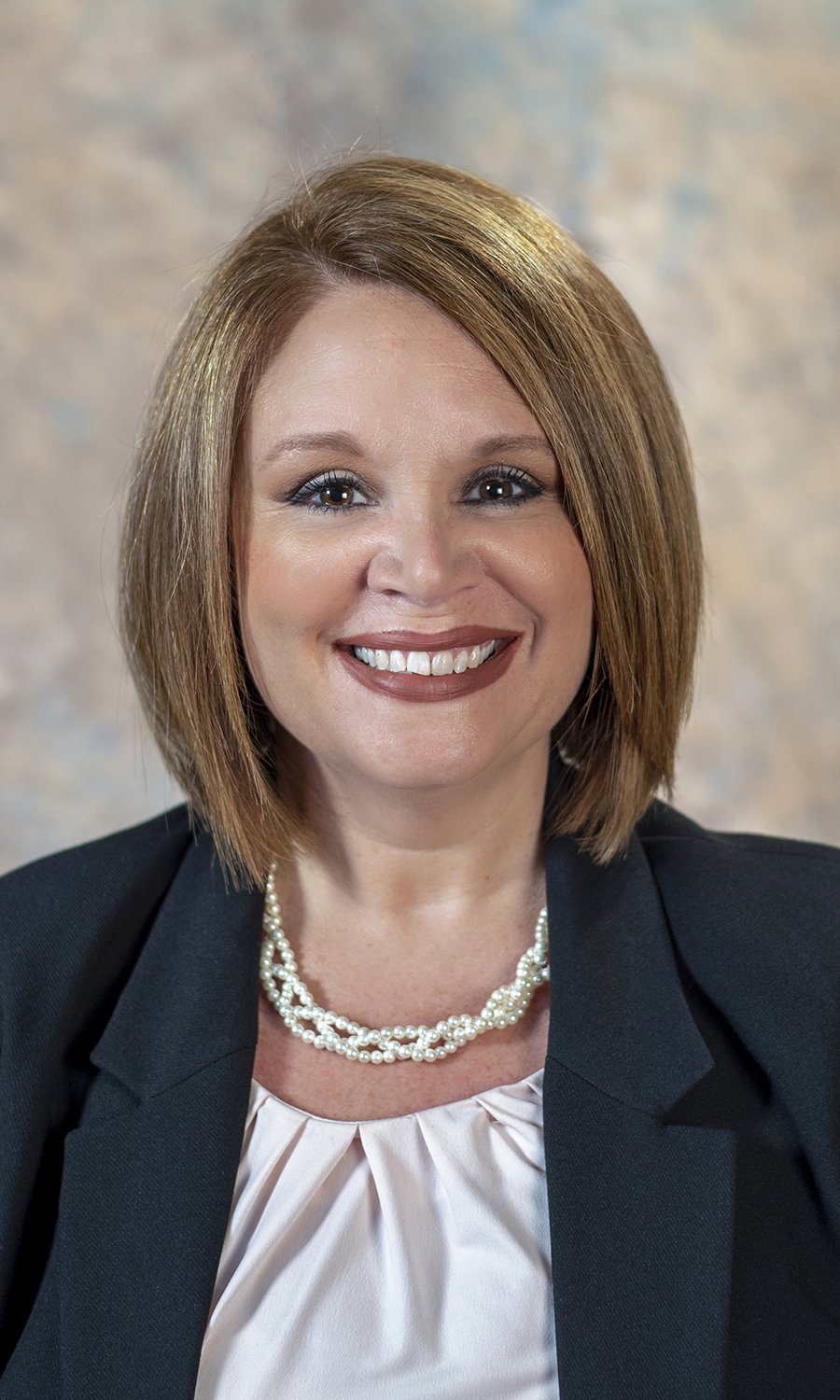
A Gasconade County man was charged last week after investigators accused him of killing a man who had been living in his garage in 2018.

Daniel W. Russell was charged Thursday with first-degree murder, abandonment of a corpse and evidence tampering. The case had been sealed until this week.

The Gasconade County Sheriff’s Office said on Monday that Russell has been arrested in eastern Missouri in the death of Michael A. Graham of Georgia. Graham’s remains were found in a plastic barrel lodged next to a boat ramp at the river access in Gasconade in early 2019, a few months after he was reported missing. Investigators later confirmed the remains were those of Graham.

A probable cause statement says a witness told investigators that Russell enlisted their help to move a foul-smelling barrel from his garage in September 2018. Russell allegedly told the witness that he killed Graham and put him in the barrel with concrete.

Missouri State Highway Patrol divers found the barrel in April 2019, and a chunk of the concrete in the barrel matched concrete found in Russell’s garage, according to the statement.

The witness also allegedly told investigators that Russell’s wife said she had seen Graham dead, apparently struck in the head with an object.

Activity on Graham’s social media account stopped in May 2018, and changes emerged in spending patterns associated with his Social Security checks, the statement says. Investigators allegedly traced the spending back to Russell and his family.

The victim’s personal belongings were found during a search of Russell’s residence, according to the statement.

Russell denied having a part in Graham’s death when questioned, saying Graham had driven away and had not returned, according to the statement.

Russell’s arraignment is set for Wednesday morning.

Click here to follow the original article.

Alert called off after Marshall woman found safe

Matthew Sanders

COLUMBIA, Mo. (KMIZ)

A Marshall woman with dementia who walked away from a nursing home amid extreme heat on Tuesday was found safe.

Shirley L. Swift, 89, was last seen at Hartland Residential Care Center at about 9 a.m. Tuesday, according to an alert issued by the Missouri State Highway Patrol. She suffers from dementia.

Marshall was under an extreme heat warning on Tuesday, and the heat index had climbed above 90 degrees by 11:15 a.m., according to official readings taken at Marshall Memorial Municipal Airport.

The Patrol did not give details about how Swift was found.

Click here to follow the original article.
Salvation Army in Columbia to give away box fans to beat summer heat

Jazsmin Halliburton

COLUMBIA, Mo. (KMIZ)

The Salvation Army in Columbia will give away box fans Tuesday to help people beat the heat this summer.

The fan giveaway will be from 10 a.m. to 2 p.m. at Douglass Park in Columbia, with fans provided by the Westlake Ace Hardware Store. To get a fan, you must bring an ID and be prepared to complete an information sheet.

The ABC 17 Stormtrack Weather Team issued a Weather Alert Day for the potential of dangerous heat through Friday. The hottest days with the best chance of heat indexes in the most dangerous 105-110 degree range will fall within this window. According to the National Weather Service, you should wear loose-fitting and light-colored clothing. People should also drink plenty of water, use a portable fan, minimize time in the sun and spend time in air-conditioned locations.

If you or someone you know needs a place to stay cool, multiple cooling centers are available in Mid-Missouri this summer.

Cooling centers available in Columbia include:

The Daniel Boone Library

The ARC

Salvation Army

Columbia-Boone County Public Health and Senior Services

In Jefferson City:

The Missouri River Regional Library

Clark Senior Center

West Point Senior Center

Salvation Army

Cooling centers are available statewide. Missourians can find cooling centers in their area here.

Click here to follow the original article.

QUESTION OF THE DAY: Does the 14th Amendment guarantee birthright citizenship to all?

Matthew Sanders

The U.S. Supreme Court is expected to release its decision in a case over whether the 14th Amendment guarantees birthright citizenship any day.

The constitutional amendment was ratified in the years after the Civil War to guarantee citizenship for freed slaves and their children. The section on birthright citizenship has long been interpreted to mean that anyone born in the United States, regardless of their parents’ legal status, is a citizen.

However, the Trump administration has argued that the provisions only apply to the children of legal citizens.

What do you think? Let us know by voting in the poll.

Click here to follow the original article.

Columbia’s Fire in the Sky set for Saturday night

Ryan Shiner

COLUMBIA, Mo. (KMIZ)

The 74th annual Fire in the Sky Celebration for Independence Day will be held at Stephens Lake Park on Saturday.

The event begins at 6:30 p.m. with a performance by the Missouri Symphony on the trailer stage near the beach, according to a Monday press release from the city. Authority Cheer will perform at the amphitheater at 7 p.m. followed by Violet and the Undercurrents at 7:55 p.m.

Fireworks are scheduled for 9:15 p.m., the release says.

“The City is working with Boone Hospital to provide parking access for Fire in the Sky visitors. Many of the hospital’s parking lots will be available for public use for the event,” the release says.

The Columbia Police Department will provide traffic assistance. Go COMO will provide a free shuttle service from the city’s six parking garages to a drop-off point on East Walnut Street near the park. The release says the shuttle will continuously run from 5-11 p.m.

“Once passengers arrive at the Fire in the Sky shuttle stop, they will cross Old Highway 63 on foot to reach the park,” according to the release. “Please note that Old Highway 63 will be closed to traffic by the Columbia Police Department.”

East Walnut Street will be closed to non-residential traffic that evening. Residents of East Walnut Street do not need a pass to access the road, the release says.

Parking enforcement downtown will be suspended for the holiday.

Attendees are prohibited from bringing personal fireworks and grills; alcohol is “strongly discouraged,” the release states. Attendees are encouraged to bring blankets and lawn chairs. 

Click here to follow the original article.
Community input shapes possible future for Columbia’s Shops at Sharp End

Mitchell Kaminski

COLUMBIA, Mo. (KMIZ) 

The future of the Shops at Sharp End remains uncertain as Columbia leaders and community members work to determine what comes next for the retail incubator after earlier public feedback exposed concerns about funding, sustainability and whether the project has fulfilled its mission.

During a follow-up community discussion Monday, organizers shifted focus from identifying problems to exploring possible solutions and gathering input on what a future version of the initiative could look like.

The Shops at Sharp End opened in 2024 through a partnership between Regional Economic Development Inc., The District and Central Missouri Community Action. The project was designed to support entrepreneurs while honoring the legacy of Columbia’s historic Sharp End business district, once the economic and cultural center of Columbia’s Black community.

But with federal American Rescue Plan Act funding nearing its end and no long-term funding source secured, organizers said the future of the space remains undecided.

An initial community conversation held June 4 revealed two major concerns surrounding the future of the Shops at Sharp End: Funding is expected to run out in September, and many community members questioned whether the project has been successful in achieving its mission.

Residents voiced concerns the storefront lacks visibility and fails to clearly indicate that multiple businesses operate within the space, limiting customer traffic and awareness.

Anthony Johnson, one of the program’s earliest participants who said he operated in the space for about two years, said the incubator struggled to create conditions for businesses to succeed.

“I think structurally, the marketing and advertising and how the foot traffic was going to come and all that stuff, I just don’t think it was planned out very well,” Johnson told ABC 17 News.

But concerns about business performance were only part of Monday’s discussion. Others questioned whether the project had fulfilled its broader goal of honoring the Sharp End’s history.

From the early 1900s through the 1960s, the Sharp End business district stretched along Walnut Street between Fifth and Sixth streets, was the home to Black-owned businesses, gathering spaces and entrepreneurship before much of the area was displaced through urban renewal efforts.

“It really seemed kind of disrespectful, honestly. I think if it was something led by the community and we’re trying to kind of rebuild what the Sharp End was and what it meant to the community, and put a 2026, 2027 twist on it that would make more sense,” Johnson said. “But managing a space that none of us own, and it’s just a program of an organization and slapping the name Sharp End on it, I didn’t like that at all.”

Those concerns extended beyond Monday’s meeting.

In a June 25 Facebook post, Columbia School Board member Erica Dickson — who was in attendance on Monday — questioned why the investment was not placed in one of the district’s remaining Black-owned commercial properties, whether the effort should have been Black-led and whether a different funding model could better address generations of economic displacement tied to the dismantling of the historic district.

District Executive Director Nickie Davis said hearing those criticisms publicly was a good stepping stone for moving forward. 

“Honestly, I was kind of glad it went the way it was. Those are a lot of thoughts and voices that have been expressed to me over the last couple of years, and I’m glad that they were now public and everyone can start processing them,” Davis said.

Davis said organizers are now trying to determine whether the concept should continue in its current form or evolve into something different.

“I think there was some great intentions, but we need to hear from the public to be able to figure out, if this is the same thing we should be doing, but better, or if we need something entirely different,” she said.

Monday’s discussion centered on next steps, including whether the effort should remain a storefront, become a broader business support program or expand into a larger Sharp End initiative.

The Rev. James Gray suggested connecting the Shops at Sharp End, African American Heritage Trail and Blind Boone House under a broader umbrella designed to better showcase Black history and business in Columbia.

“One of the big things that I’ve always said is when people come into our community, they don’t hear about what we got. They don’t. African-Americans, we do not hear about what we got to offer. Let’s put that out there, put it under one umbrella, and let’s let them know,” he said during Monday’s meeting.

Johnson also added that future investment should focus more on strengthening businesses already operating in the community.

“I think that we just find a better way to invest in the businesses that are already there. I think that if we do that better, maybe even look at some of the businesses that were there currently,” Johnson said. “I left the program just because; it ended up being a money pit for most of us.”

Another idea raised during the discussion was forming a community-led committee to help guide recommendations and oversee the next phase of planning. Johnson said he felt like both meetings were productive and hopes those conversations continue.

“I think this is a good opportunity for people in the community to come and be heard. There’s not a limit on what we’re talking about,” he said. S”o if people have ideas of what we can do to expand majority black businesses in Columbia and help them continue to grow, I would like to see all those people at the table.”

No formal decisions were made Monday, but organizers outlined a short-term timeline for determining what happens next.

Discussions with current participants will begin in July to determine whether existing businesses want to remain in the space. That feedback will help shape immediate priorities for the storefront while a broader long-term plan is developed.

“Everything we’re doing here is to hear those voices, those thoughts and concerns, so that we can take them into whatever this next version looks like,” Davis said. “I expect there to be probably at least one more of these public input meetings, but outside that, I’m not entirely sure what public outreach there might be.”

Click here to follow the original article.