Columbia man charged after Friday night police chase

Madison Stuerman

COLUMBIA, Mo. (KMIZ)

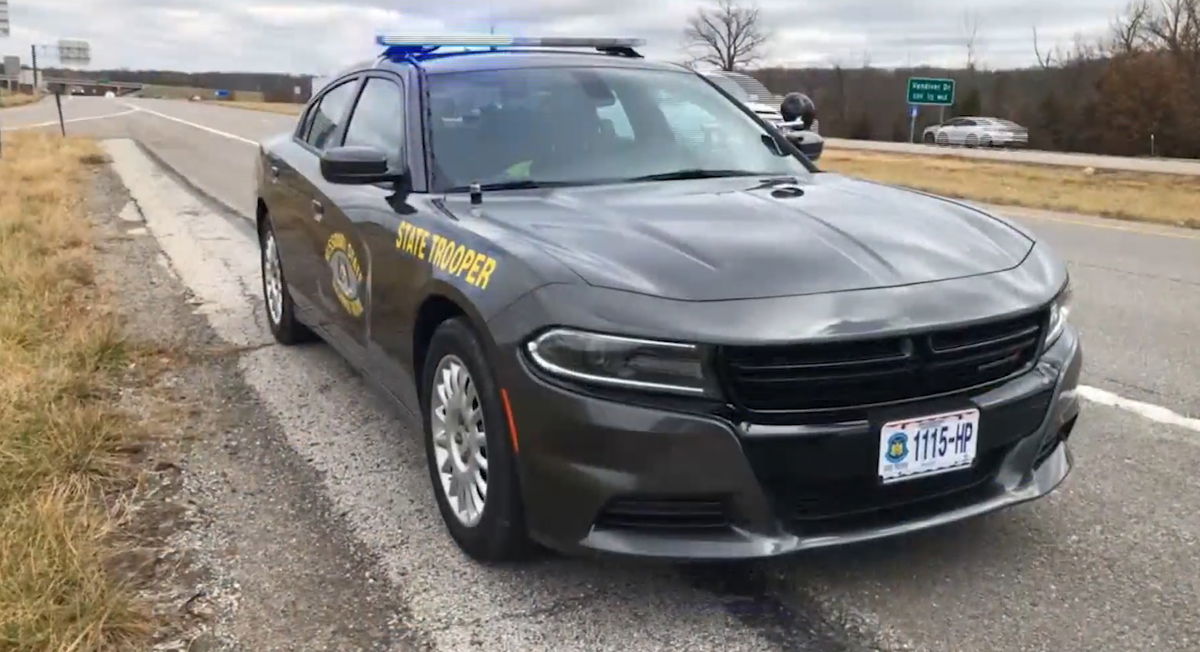
A Columbia man has been charged after he was accused of leading police on a chase Friday night.

Jarvis Chevis, 34, of Columbia, was charged with five felonies, including possession of controlled substance, third-degree assault with a special victim, resisting arrest, first-degree property damage and tampering with physical evidence.

Court documents state police saw a dark colored 2008 Dodge Charger make a left turn from College Avenue onto East Broadway when the light was red.

The officer tried to make a traffic stop, but the car, which is registered to Chevis, did not stop.

Documents state this led to a pursuit that lasted 35 minutes and was stopped due to the danger to the public multiple times and restarted when it was safe.

Officers said the car was reported to be going 50 miles per hour in residential neighborhoods. Chevis was also allegedly to have been driving on the wrong side of the road, making illegal U-turns, and running multiple stop signs and stoplights.

Chevis allegedly ran over a fire hydrant near the intersection of Ash Street and McBaine Avenue. Police said the hydrant was broken, causing $1,000 worth of damage.

Police said Chevis did not listen to the officer’s command to get out of the vehicle after hitting the hydrant. Documents state that they broke the window and tased him to remove him from the vehicle.

During his arrest, officers reported finding a small bag of a white substance, which later tested positive for cocaine, in his mouth that he was trying to swallow. Another bag with white powder was found in the car, according to documents.

Court documents state that while taking Chevis into custody, three Columbia police officers sustained physical injuries, causing them to bleed. One officer had glass removed from his hand by medics.

According to police, Chevis has a revoked driving status and has three convictions for it in the last ten years. He was also reported to be on probation for possession of a controlled substance and forgery.

He was booked into the Boone County jail on Friday and is being held without bond.

Click here to follow the original article.

Two killed, two seriously hurt in Owensville crash

Madison Stuerman

COLUMBIA, Mo. (KMIZ)

Two people have died after a crash on Sunday night in Gasconade County.

Missouri State Highway Patrol crash report states the crash happened on 4th Street near Pam Lane in Owensville at 9:15 p.m. Sunday.

Troopers said a 26-year-old from Bland was driving a 2007 Jeep Liberty with three passengers on 4th Street on Sunday when it went off the side of the road.

The report states that after going off the side of the road, the car hit multiple mailboxes, a utility pole and a driveway embankment. After hitting the embankment, the car went into the air and flipped when it hit the ground, throwing all four people from the Jeep.

Troopers reported a 17-year-old boy from Bland died at the scene.

A 22-year-old man from Belle was taken by helicopter to Mercy Hospital in Saint Louis, where he was pronounced dead at 9:54 a.m. on Monday.

The driver and a 37-year-old man from Bland were both taken to Mercy Hospital Washington with serious injuries.

None of the people in the Jeep were wearing a seatbelt, according to the report.

The Jeep was reported to be totaled.

Click here to follow the original article.

Pulaski County man hurt in early morning crash

Madison Stuerman

COLUMBIA, Mo. (KMIZ)

A Waynesville man was hurt on Monday after an early morning crash.

The Missouri State Highway Patrol said the crash happened at 12:44 a.m. on Highway NN near Springer Lane in Pulaski County.

Troopers said a 54-year-old man was driving a 2025 Dodge Durango when he went off the right side of the road, hit a ditch and flipped.

The driver was taken by helicopter to Mercy Hospital in Springfield with serious injuries.

The crash report states he was not wearing a seat belt.

Click here to follow the original article.

Woman crushed by boat at Lake of the Ozarks

Matthew Sanders

COLUMBIA, Mo. (KMIZ)

A 58-year-old woman was crushed by a boat that she was attempting to tie to the dock on the Lake of the Ozarks.

The woman is from Junction City, Kansas, according to the Missouri State Highway Patrol’s online report. The report states that she was tying up the boat at about 7:14 p.m. Sunday at the 8-mile marker of the main channel when the 40-foot Sea Ray drifted, pinning her between the boat and the dock.

The woman was taken by ambulance to Lake Regional Hospital with serious injuries.

Click here to follow the original article.

Sedalia woman seriously injured in Pettis County crash

Ryan Shiner

COLUMBIA, Mo. (KMIZ)

Three people were injured – one seriously – in a two-vehicle crash Thursday on Route E at Dove Road in Pettis County, according to a Missouri State Highway Patrol crash report.  

The report says a 2003 Subaru Impreza – driven by a 27-year-old Sedalia woman – was heading east, failed to stop at a stop sign and hit a 2012 Chevrolet Captiva that was heading south.

The Chevrolet was driven by a 19-year-old Windsor, Missouri, woman, who suffered moderate injuries and was brought to Bothwell Hospital by ambulance, the report says.

The Sedalia woman had serious injuries and was brought to Western Missouri Medical Center by ambulance, the report says. A 31-year-old Green Ridge, Missouri, man was a passenger in the Subaru and suffered minor injuries, the report says. He refused treatment at the scene, according to the report.

Everyone involved in the crash wore seatbelts and both vehicles were totaled, the report says.

MSHP reports do not name those involved in crashes.

Click here to follow the original article.

City of Columbia’s Office of Violence Prevention considers liaison for public transit

Olivia Hayes

COLUMBIA, Mo. (KMIZ)

The City of Columbia’s Office of Violence Prevention is considering adding two “community navigation liaisons” to help defuse problems on the city’s public transit.

“What this program does is it puts individuals on the transit lines with the driver to de-escalate and to actually navigate folks to services so that they’re not, so the drivers can actually drive,” D’Markus Thomas-Brown, head of the Office of Violence Prevention, said during the office’s advisory committee meeting on Thursday.

The office plans to issue a request for qualifications, allowing companies to submit their bids for the contract. The office requires the liaisons to come in having already completed the required training. Those trainings include a peer support certification through the state and/or HEAT Training, which stands for Habilitation, Empowerment, Accountability and Therapy.

“We want agencies that actually have, they have peers in those HEAT-certified trainings and are willing to allow their peers to work directly with us in transit,” Thomas-Brown said.

Violence prevention officials also ask that the candidates have valid de-escalation training if they don’t have HEAT training and be well-versed in adult mental health first aid.

The Office of Violence Prevention wants these liaisons to work with management from Go COMO — the city’s public transit arm — and the task force to decide which bus lines need the most intervention. The City of Columbia runs six bus routes.

Matt Stephens, deputy chief of the Columbia Police Department, said in an interview after the meeting that the incidents officers respond to vary.

“We have occasionally … you have people that are fighting on the bus. You’ll have somebody that’s disruptive. I mean, some of it’s assaults, some of it’s just nuisance activity,” Stephens said.

He said responding officers treat all of the incidents with their standard department protocol.

Following the city’s request for qualification, the Columbia City Council will have to give the final approval at its Sept. 15 meeting. Thomas-Brown tells ABC 17 News the soonest that would be is at their Sept. 15th meeting. They are hoping to implement the liaisons on the bus lines starting in October.

The program’s cost is $99,360.

An ABC 17 News Investigates report in August 2024 detailed some of the issues reported on city buses, fights, threats and drunk passengers.

Click here to follow the original article.

Trump praises Missouri Republicans for considering redistricting

Alison Patton

COLUMBIA, Mo. (KMIZ)

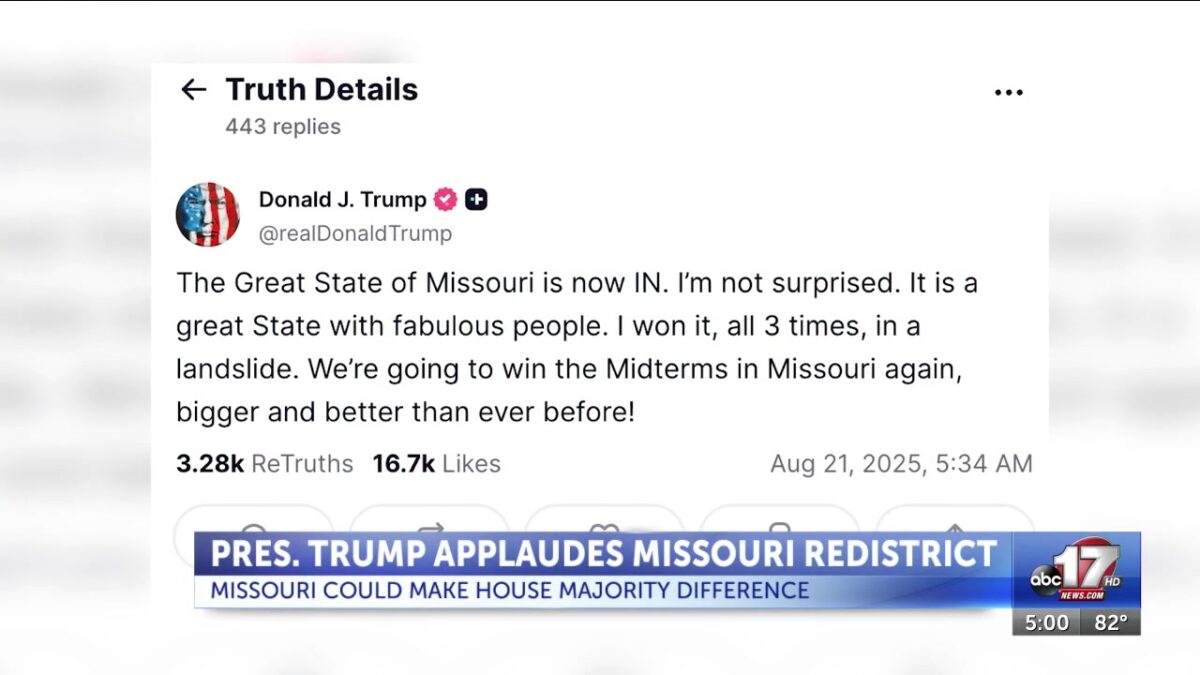
President Donald Trump on Thursday morning on Truth Social praised Missouri Republicans for talking about redistricting.

No official plans have made yet, but a spokesperson from Gov. Mike Kehoe’s office said the governor and lawmakers are considering options for a special session. Kehoe had publicly backed the idea earlier this month.

“As these discussions continue, I am confident the Senate will be prepared to act when the time comes,” Missouri Senate President Pro Tem Cindy O’Laughlin (R-Shelbina) said.

Missouri has six Republicans and two Democratic representatives in the U.S. House.

Missouri Republicans, with the backing of the Trump Administration, want to redistrict the current congressional map, and split the Democratic pocket of Kansas City. Doing that would take a seat from the Democrats, leaving Missouri with a potential for up to seven Republicans representing the state in the house.

This one seat out of the 435 seats in the House might seem insignificant, but it could improve the Republican’s odds, said Charles Zug, who is a political science professor at the University of Missouri.

Republicans hold a slim majority in the House. Based on history, the incumbent party typically loses some seats during the next election, Zug said. The other element that gets added to this mix is other states redistricting.

Majority-Republican Texas and majority-Democratic California have advanced ideas of redrawing their districts. Zug indicated both states could see as many as five additional seats added to their majority party’s total.

If both states are successful, then the opposing parties are back at equilibrium, Zug said. Zug said he thinks Missouri will wait to see what happens between those two states before doing anything.

State Rep. Adrian Plank (D-Columbia) said he thinks Kehoe will wait until at least after the veto session on Sept. 10. Plank, and most Democrats, are opposed to redistricting.

“What happens with redistricting, especially in a way they’re trying to do it now, is they’re trying to pick their voters instead of the voters pick their representation,” Plank said.

A number of protesters voiced their opinions against redistricting at an event this past Saturday outside the Missouri Capitol. An ABC 17 News poll from Aug. 5 found 81% of respondents were against the idea.

Click here to follow the original article.

Student group alleges MU is erasing Black voices after event was canceled over name

Euphenie Andre

COLUMBIA, Mo. (KMIZ)

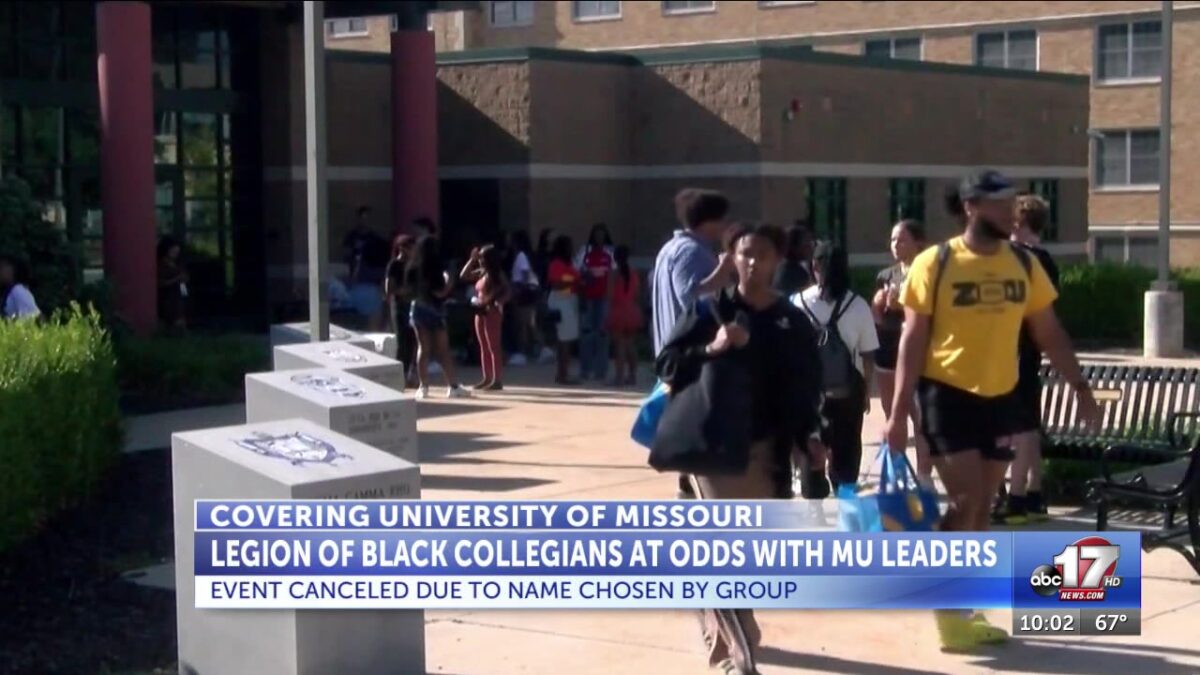
The Legion of Black Collegians claims the University of Missouri is trying to erase its presence, while administrators cite inclusivity concerns over a canceled event.

The Legion of Black Collegians stated in an Instagram post on Wednesday that its “Black 2 Class Block Party” was canceled after administrators took issue with the name.

University of Missouri President Mun Choi responded with a statement Wednesday, claiming the name was not inclusive.

“The University of Missouri fosters a non-discriminatory campus environment. When holding events using University facilities, student organizations must avoid excluding individuals based on race. The name of the ‘Black 2 Class Block Party’ proposed by LBC suggested such exclusivity. For that reason, the decision was made that the event as described would not be held on campus.”

The situation has sparked widespread debate on social media, with many students and alumni weighing in on the ongoing conflict.

Students say they are not surprised by the decision, pointing to similar conflict last year when the group’s “Welcome Black BBQ” was challenged by the university. In response, LBC created the new block party as an alternative. The “Welcome Black and Gold BBQ” will still be held on Aug. 29 at the Black Culture Center, but the LBC has withdrawn from participating, the group wrote.

MU junior Dorion Bailey, who was a part of the LBC executive board last year, said the organization had to carefully navigate wording in its events.

“We ran into the same kind of discrepancies last year with name changes and know that our organization is being looked at in terms of what kind of events we’re trying to put on and the language that we’re using within our programming,” Bailey said.

Despite the challenges, Bailey said last year’s event was a success.

“We had a very positive turnout, and I even noticed fleets of administrative leaders coming to the event and relishing in the festivities,” he recalled.

LBC accused the university of canceling the event without offering alternatives.

“These actions are a deliberate act of erasure. At every turn, we are shut down. Things as simple as putting “Black” in a name, results in consequences,” the statement read.

Incoming freshmen Delali Thompson and Lauryn Jackson said the decision left them discouraged.

“Being a Black student in a PWI [predominantly white institution], it’s natural for us to want to find each other, find connections, resources, and I don’t thin it’s fair fort he school to cancel an event just because we want to find out community,” Jackson said.

Thompson shared similar sentiments.

“I was really disappointed about that, especially being like a new black freshman, It just ruined my first impression of the school because I was ready toto meet some other people because this is a PWI.”

Students argue the university’s stance is inconsistent. Based on Mizzou Events Calender there is several events hosted for specific marginalized groups.

“I find that interesting in the way that the University chooses what kind of language to deem as acceptable and non-acceptable, because there’s nothing wrong with any culture, any kind of organization wanting to put on anything or the student body,” Bailey said. “So my thing is, when we do put an emphasis on black, do you want us to say African American?”

Following the cancellation, LBC is demanding that the university:

Release a campus-wide message addressing the decision

Hold a town hall within 60 days

Publicly condemn racial harassment

Choi also said in his statement that the school will not respond to demands, but university leaders will meet with the LBC “to continue this discussion.”

Click here to follow the original article.

Jefferson City unveils proposed $86.9M budget, focuses on salaries, safety, infrastructure

Mitchell Kaminski

JEFFERSON CITY, Mo. (KMIZ)

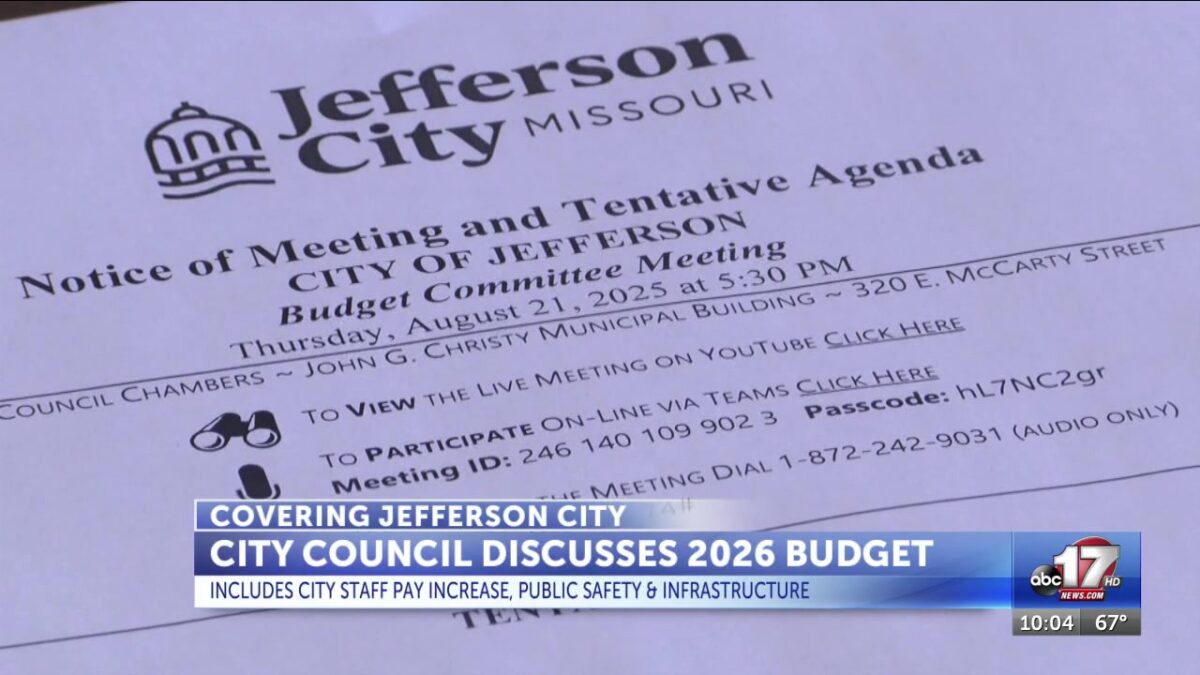
 Jefferson City officials introduced an $86.9 million spending plan Thursday that Mayor Ron Fitzwater described as a “bare bones budget to meet the needs of this city.”

The proposed fiscal year 2026 budget, presented to the City Council’s first Budget Committee meeting, comes in close to last year’s approved total of $86.5 million. The city’s general fund, which covers basic operations, makes up $42.8 million of the plan, with public safety again being the largest expense.

Police spending accounts for $13.9 million, roughly 31% of the general fund, while fire services are budgeted at $10.7 million, or 25%. Public works is the next-largest department at $7.8 million. Personnel services overall make up nearly half the city’s general fund budget, totaling $43.4 million.

Fitzwater said budget priorities include “taking care of their people” through salaries and benefits, supporting public safety, and investing in infrastructure, particularly road improvements. 

His budget includes a 2.5% pay increase for city employees, as well as a 10% increase for health insurance and 5% for dental insurance. The mayor noted that departments submitted $49 million in requests, but only $42 million could be funded, leaving the original proposal $7 million over budget before adjustments.

The budget also proposes $14.3 million for wastewater services and $11.5 million for parks and recreation.

Revenue challenges and adjustments

In a letter to the council, Fitzwater said the city anticipates a slight dip in sales tax revenue, projecting $14.3 million, about 1% lower than last year’s receipts and the fiscal year 2025 budget.

A new revenue source has been added to the general fund: Gross receipts utility tax payments from the city’s wastewater system. The so-called PILOTS-GRUT revenue stream will transfer 6% of gross receipts from wastewater to the general fund, allocated for street improvements. City officials emphasized it will not affect consumer rates.

Key modifications

The budget sets aside money for several upcoming elections, including a November 2025 lodging tax vote, the April 2026 general election and an August 2026 capital improvement measure. Lodging tax revenue is expected to offset the cost of the special election.

Other notable changes include:

Funding for six new leased police vehicles.

Increased legal and human resources spending for union negotiations and an updated compensation study.

A buy-down of $1.05 million from the Capital Improvement Sales Tax to address HVAC issues at City Hall and the police facility.

Support for the Chamber Childcare Initiative Program and additional yard waste pickups.

The final budget, incorporating any amendments adopted during Budget Committee meetings, will be presented at a regular City Council meeting held at the end of the annual budget season.

Throughout the process, the City Council has the authority to propose and adopt further amendments until it is passed.  

The new fiscal year begins Nov. 1 for Jefferson City.

Click here to follow the original article.

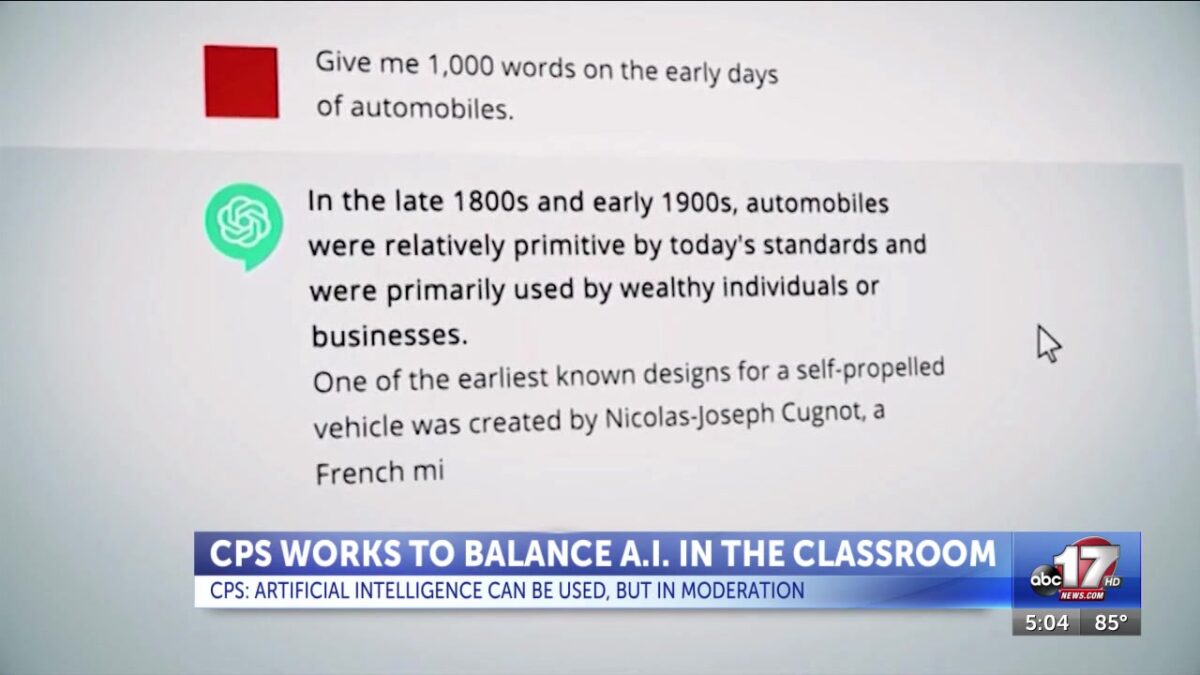
Columbia Public Schools working to balance AI’s potential while keeping cheating down

Olivia Hayes

COLUMBIA, Mo. (KMIZ)

Columbia Public Schools is adapting to the evolution of artificial intelligence and its use throughout the district.

CPS spokesperson Michelle Baumstark said the district has a group working to learn more about various aspects of AI. This effort is being led by Beth Winton under the direction of Adam Taylor, the district’s chief academic officer.

“AI is used in lots of ways for instructional purposes, realizing efficiencies and innovation. There are also different types of AI,” Baumstark wrote in a statement to ABC 17 News.

Baumstark said the district is not taking a stance that AI can never be used, but AI should not replace a student learning a needed skill. She said that AI can be used by students to “personalize learning and problem solving, but should not replace the student’s own original thinking.”

When people think of AI use in education, it tends to fall under the use of generative AI, the product of programs such as ChatGPT.

Baumstark said acceptable uses of AI for students include:     

Assisting students in better understanding of the curriculum or skill development. 

Aiding in classroom research tasks.

Individualizing tutoring, reviewing content and as a study aid.  

Baumstark said students are expected to provide transparency about external sources in their work, including generative AI. Teachers also may have syllabus instructions that include acceptable AI use specific to their classroom. Students must cite and explain the role the tool played in the creation of their work. 

The Columbia Board of Education approved the 2025 school year’s artificial intelligence use plan at its Jan. 27 meeting. The plan says students and employees may be disciplined, and employees may be terminated, for AI use that violates the policy or any related procedures.

Baumstark said students must comply with all district technology use, all statements in the CPS Student Handbook and school board policies on academic integrity.  

The district’s student handbook states that any form of academic dishonesty, including plagiarism, will not be tolerated.

“It shall be a violation of policy for students to take credit for work that is not their own. This would include, but not be limited to, the use of technologically generated writing, purchased papers, books, periodicals, interviews, and research abstracts without attribution,” the policy reads.

Students who cheat or plagiarize may face punishments including: no credit for the work, grade reduction, course failure or removal from extracurricular activities.

At least once per school year, the district’s policies on AI use for safety, data privacy, appropriateness and effectiveness will be reviewed and changed if needed. Employees and students may also submit requests or suggestions for new AI uses to the district.

Click here to follow the original article.