Jefferson City officials tout public safety sales tax election as police, fire ask for slight increase in spending from last year

JEFFERSON CITY, Mo. (KMIZ)
With Jefferson City facing a budget shortfall, city officials have told departments to prepare to make changes to their proposals if a proposed public safety sales tax fails at the ballot box in November.
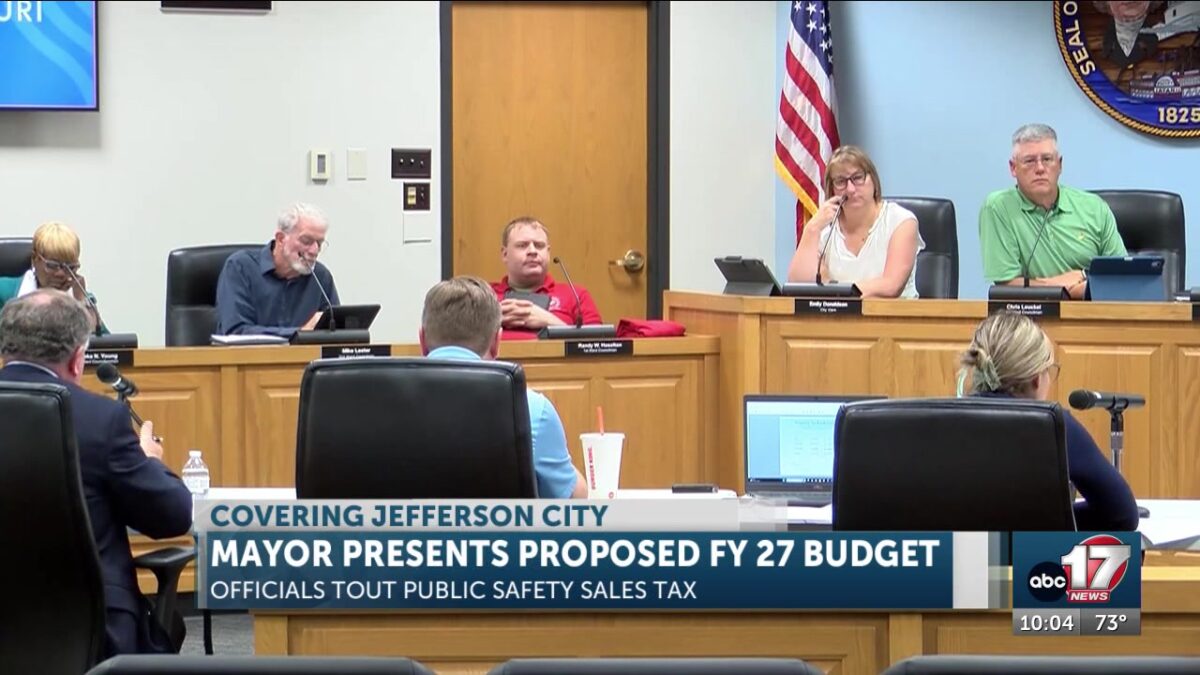
Mayor Ron Fitzwater presented his proposed fiscal year 2027 budget to the City Council on Wednesday, outlining a balanced $88.4 million spending plan that includes a $45.4 million General Fund and a 2.5% pay increase for city employees. That’s a roughly $2 million increase from last year’s budget.
The city is required to present a balanced budget, with total proposed revenues matching total expenditures at $88.4 million.
The proposed budget comes as the city prepares for a potential $400,000 shortfall tied to the public safety sales tax. City Administrator Steve Crane said the city would either have to find another source of revenue or make cuts if voters reject the tax in November.
If the tax passes, the city would be able to maintain its current level of funding. If it fails, police and fire officials have been notified they will need to make changes to their proposed budgets.
Ward 4 Councilman Chris Leuckel said the outcome of the November vote could have implications beyond public safety.
“It’s impactful, hugely impactful. Really, not only does it have an impact from a public safety standpoint, but if it doesn’t pass, then it affects general revenue, and general revenue then affects the rest of the city budget. So it’s significant for sure,” Leuckel said.
Personnel costs make up the largest portion of the proposed General Fund budget, accounting for $33.2 million, or about 73% of the $45.4 million total.
The budget also includes a 6% increase in health and dental insurance costs for employees, along with the proposed 2.5% pay increase.
Leuckel said continuing to invest in city employees is a major priority despite the financial constraints.
“It’s extremely important to take care of our staff and put our best foot forward with them,” Leuckel told ABC 17 News. “Two and a half [percent raise] doesn’t quite keep up with inflation, but it’s certainly better than zero and we continue to try to figure out ways to meet all demands, and personnel is a big part of that demand and it’s a big part of the budget of 73%, in fact. It’s a rising cost, we all deal with it. But mainly we will continue to invest in our most prized resource, and that’s our people.”
Police and fire account for the largest portions of General Fund departmental spending. The police department is budgeted for $14.1 million, or about 31%, while the fire department is budgeted for $10.8 million, or 23%. Public Works accounts for $8.4 million, or about 18.6%.
Last year, police spending made up $13.9 million and fire services were budgeted at $10.7 million, previous reporting shows.
Sales tax is the largest source of General Fund revenue at $15 million, accounting for about 33% of the fund. Other major sources include franchise and utility taxes at $7.8 million, property taxes at $6.3 million, fees and charges at $4.9 million and transfers at $4.4 million.
Across all city funds, sales tax is projected to generate $29.7 million, or about 33.6% of total revenue. Fees and charges account for $27.1 million, or about 30.6%.
The city has changed how it develops its annual budget in recent years, moving away from the previous “pink sheet” process and using new budgeting software.
Under the new system, departments initially enter the expenses and funding requests they believe they need before city officials review and reduce the requests over the following several weeks.
Leuckel said the new process has made it easier for the council to understand the city’s finances and track decisions made by previous councils.
“I’ve been witness to both, and this is much, much easier to work through. All the historical data that we’re building with our new software will allow councils from now on to be able to go back and look at a given year as to what happened financially or some reasons why or some inputs why and allow them to see historically why councils made the moves and transitions the way that they did,” Leuckel explained.
The budget committee unanimously moved forward with the revenue projections Wednesday. However, Leuckel said the city still faces significant financial needs despite the balanced proposal.
“We’ve all got shortfalls, we know that. There’s a lot of unfunded things out there, $12 million worth, and there are some things that are needed, frankly. But you got to balance the budget and we had to make some tough decisions,” Leuckel said.
Compared with last year’s budget, the city’s overall financial outlook remains relatively flat.
“Obviously, there’s not much difference based on forecasts from last year to this year, but pretty similar,” Leuckel told ABC 17 News. “That part’s really basically flat. It’s not much different.”
The City Council will continue reviewing the proposed budget in the coming weeks, with council members serving as the Budget Committee during the annual budget process.
Public hearings will also be held to allow residents to comment on the annual budget, property tax levy and Gross Receipts Utility Tax rate.
The City Council must approve the annual property tax levy by Aug. 31, with the ordinance then submitted to Cole and Callaway counties as required by state law.
The full council is expected to vote on the final budget ordinance at the end of the budget process. The council can amend the budget throughout the process before final passage.
Jefferson City’s new fiscal year begins Nov. 1.
Click here to follow the original article.