QUESTION OF THE DAY: Do you support law enforcement dropping Flock contracts?

Matthew Sanders

A Mid-Missouri sheriff’s office ended its contract with a controversial camera system operator this week.

The Pulaski County sheriff said Thursday that his department has canceled its contract with Flock to operate license plate reader cameras. The move came as public concern continues to grow about the cameras’ potential for abuse — a feeling the sheriff acknowledged in his statement.

Do you support the decision? Let us know by voting in the poll.

Click here to follow the original article.

Mizzou football home opener to affect parking on MU’s campus

Ryan Shiner

COLUMBIA, Mo. (KMIZ)

The University of Missouri warned on its social media on Thursday that people who regularly park on campus may need to find a different spot the day of Mizzou football’s season opener.

“Students, faculty and staff who remain on campus may need to park somewhere other than their usual designated lot or garage for the day,” the university wrote on its social media.

A press release on the university’s website says alternative parking location are in effect for home football games and weekday men’s basketball games.

Several parking areas are affected for Mizzou’s home opener on Thursday, Sept. 3.

Image courtesy of the University of Missouri.

Employees who park in CG1/X, CG3X, PS7, TAPS, TAPSE, TAPSR must move their vehicles to either Parking Structure No. 7, Virginia Avenue Surface Lot, Turner Avenue Garage or Hitt Street Parking Structure between 5-10 p.m. Wednesday, Sept. 2.

RP10 MURR employees must move to the western section of RP10 by 5 p.m. Wednesday, Sept. 2.

RP10 (non-MURR) employees and students must move their vehicles to the Conley Avenue, Hitt Street, Turner Avenue or University Avenue parking garages or Contractor Lot south of AV14B off Ashland Road by 5 p.m. Wednesday, Sept. 2.  

Students and employees who park in RP2, RP3, RP4, RP5, SG4/M, SG4/N, SG4/O, SG5/I, SG5/P, SG7, TAPSD, WG1 or WG6 must move their vehicles to the Conley Avenue, Hitt Street, Turner Avenue or University Avenue parking garages between 5-10 p.m. Wednesday, Sept. 2.

TAPSD students who normally park in SG4/O must move their vehicles to the Tiger Avenue parking structure after 10 p.m. Wednesday, Sept. 2.

Vehicles can be returned after the game “and no later than 7 a.m. Friday,” the release says. The release says vehicles not moved to alternative parking can be ticketed or towed.

The Tigers kick off their season against Arkansas-Pine Bluff at 7 p.m. Thursday, Sept. 3 at Faurot Field.

Click here to follow the original article.

Deputies arrest man who allegedly fired gun at victim in Boone County home

Ryan Shiner

COLUMBIA, Mo. (KMIZ)

Boone County deputies arrested a man who allegedly fired a shot at a victim on Thursday morning at a Boone County home.

Clinton McLain, 47, was arrested on suspicion of first-degree domestic assault, armed criminal action, unlawful use of a weapon and two counts of endangering the welfare of a child. Charges were not available on Casenet on Thursday evening.

McLain is being held at the Boone County Jail without bond, according to online jail records. A mugshot was not available on Thursday evening.

A social media post from the Boone County Sheriff’s Office says deputies were called to the 10800 block of East Bozarth Lane after McLain allegedly fired a gun inside the home. The victim had left the residence, but allegedly told deputies McLain pointed a gin at them during an argument and threatened them, the post says.

The department wrote that McLain fired the gun “in the direction of the victim, and a bullet struck a wall near where the victim was seated.” Two children allegedly saw the incident occur, the post says.

No injuries were reported.

Click here to follow the original article.

Boone County deputies arrest ‘homicidal man’ from hatchet attack that injured another man

Ryan Shiner

COLUMBIA, Mo. (KMIZ)

Boone County sheriff’s deputies arrested a man accused of using a hatchet to attack another man on Thursday morning, the department announced in a Thursday evening social media post.

Martin Paddie Jr., 56, of Rockford, Illinois, was arrested on suspicion of first-degree assault, armed criminal action and first-degree robbery. Charges were not available on Casenet on Thursday evening and Paddie’s information did not appear on the Boone County Jail’s online roster.

The post says deputies were called at 2:15 a.m. Thursday to the 1500 block of West Route K. Paddie allegedly told dispatches that he was homicidal and had attacked someone while he was armed with a hatchet, hammer and knife.

Paddie allegedly told deputies at the scene that he “had killed someone, and advised he wanted to turn himself in,” the post says.

The department wrote that Paddie told deputies that he “randomly picked up a subject” on Business Loop 70, drove them to an unincorporated part of Boone County and assaulted the victim with a hatchet.

“Paddie advised he wanted help because he didn’t want to hurt anyone else. Deputies were unable to locate the victim nearby, but deputies continued to investigate while Paddie was detained,” the post says.

Deputies were then called at 4:26 a.m. to the 8800 block of South Barry Road for a trespassing call. The caller allegedly told dispatchers that they saw a man on their property “who appeared to be covered in blood,” the department wrote.

The man allegedly told deputies on scene that someone he did not know drove up to him while he was walking and was eventually attacked by the man with a hatchet, the post says.

The sheriff’s office wrote that the victim had “significant visible injuries” and was brought to an area hospital. The victim is stable, the post says.

Click here to follow the original article.

New commanding officer named for MSHP’s Troop F

Ryan Shiner

COLUMBIA, Mo. (KMIZ)

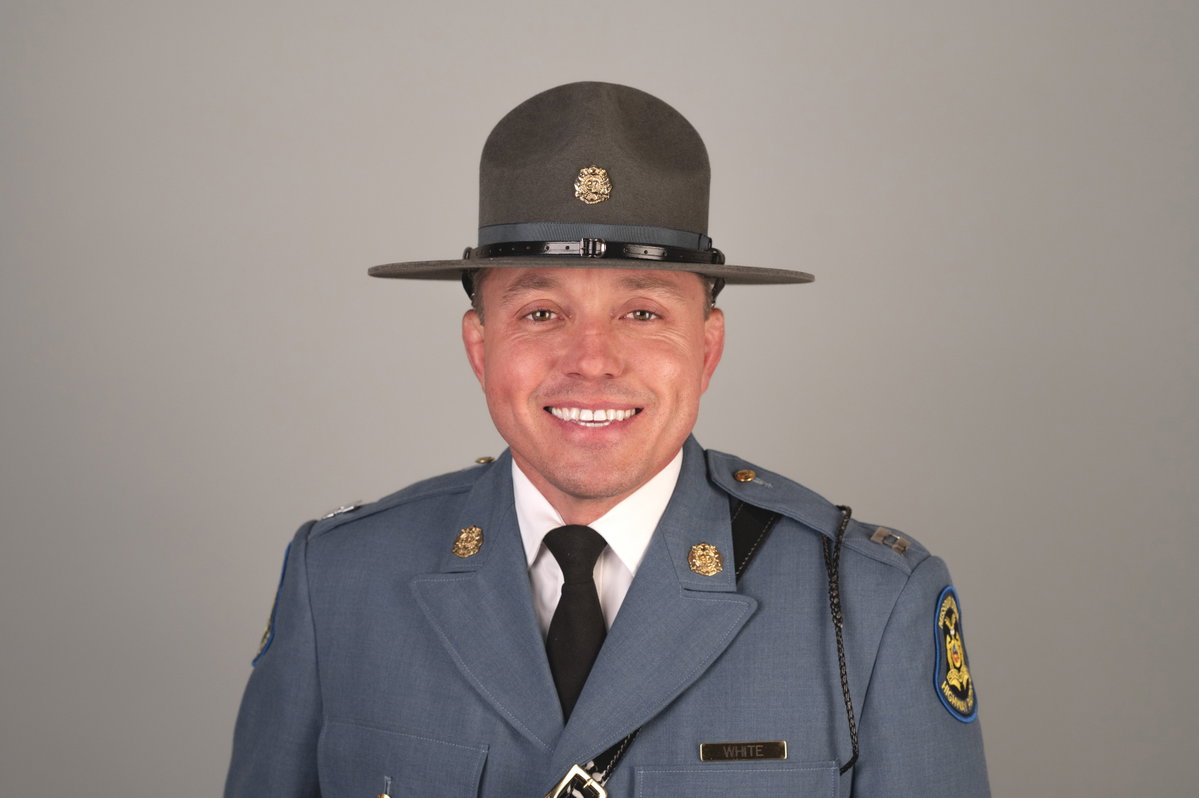
Capt. Brandon White will become the commanding officer of the Missouri State Highway Patrol’s Troop F, MSHP announced in a Thursday press release.

White is replacing Capt. Jason Crites, who was promoted to the rank of major and will serve as the bureau commander of the Executive Services Bureau beginning on Sept. 1. Crites’ promotion was announced on Monday.

Thursday’s release says White grew up in Houston, Missouri, and graduated from Houston High School in 1995. He earned an associate of science degree in criminal justice from Mineral Area College in Park Hills, the release says. He also completed the police leadership: WestPoint Model course in 2018 and completed the Northwestern School of Police Staff and Command in 2021, the release says.

White was appointed to the patrol on Jan. 16, 2001 and was assigned to Callaway County in Troop F. He transferred to Camden and Miller counties in 2005 and eventually became an assistant supervisor of the Callaway County zone for Troop F in 2007, the release says.

He became the sergeant and designate supervisor of the zone in Montgomery County in 2009 before becoming an academy instructor in 2011, per the release. He transferred back to Troop F in 2019 before going to the Field Operations Bureau in 2022. He was eventually promoted to captain and served as the assistant director of the Field Operations Bureau in 2025.

Click here to follow the original article.

Missouri law allowing divorces during pregnancy goes into effect Aug. 28

Marie Moyer

COLUMBIA, Mo. (KMIZ)

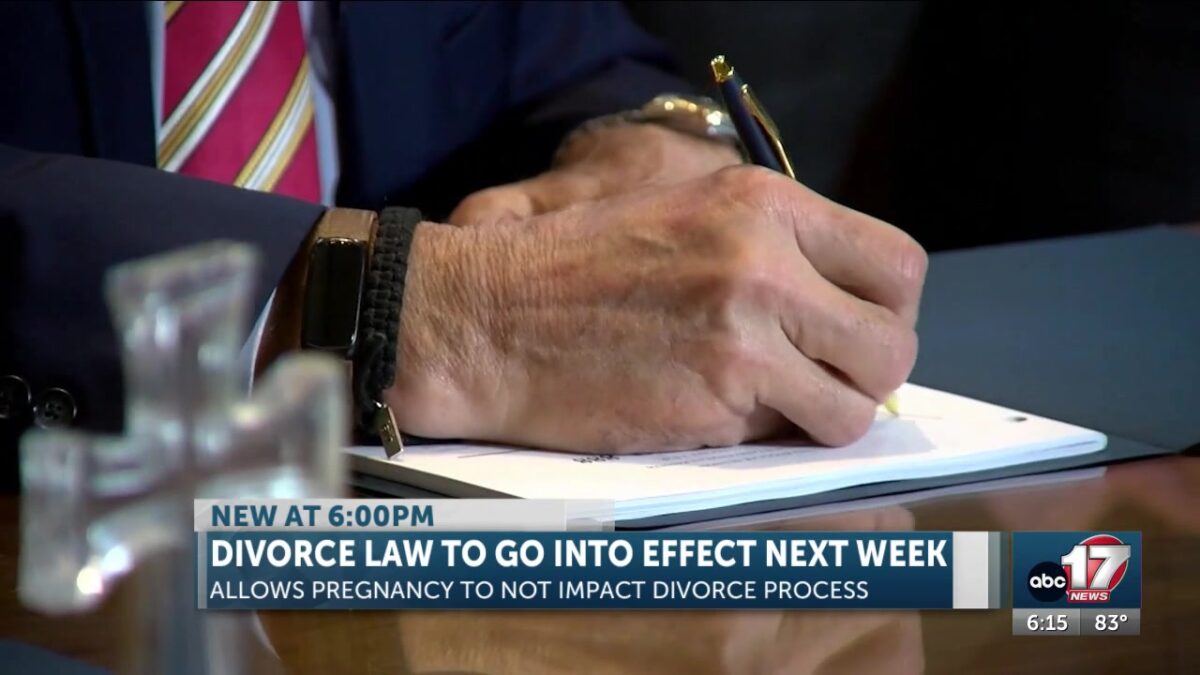
On Aug. 28, pregnancy will no longer be a determining factor for delaying a divorce, updating an over 50-year-old state rule.

House Bill 1908 was signed by Gov. Mike Kehoe in April and adds the text, “Pregnancy status shall not prevent the court from entering a judgment of dissolution of marriage or legal separation,” to the Missouri constitution.

5478H.02TDownload

“I didn’t want the decision left with the judge, I wanted the decision left with the person seeking the divorce, for whatever reason that might be,” bill sponsor Rep. Cecelie Williams (R-Dittmer) said.

Dittmer herself was involved in a marriage with relationship violence and later tried to file for divorce in April 2005 but was unable to since she was pregnant.

“In the state of Missouri, you can file for divorce, you just don’t commonly finalize it. However, my situation, I couldn’t even, I wasn’t even allowed to file for divorce,” Williams said.

According to the CDC, around 6% of new moms have experienced relationship violence with their partner. More than 45% of homicides of new moms or pregnant women are connected to relationship violence.

“A pregnant survivor who has made the decision to end a marriage should not have the legal system require them to remain married until after the birth of their child,” Michele Snodderley, executive director of domestic and sexual violence shelter True North, said in a statement.

Snodderley added the bill helps remove barriers.

“When you file for divorce, you’re more likely to get an apartment lease because currently, if you have a mortgage, you already have an obligation over here. But if they see that you’re going through a divorce, then you could qualify,” Williams said. “If you need assistance for food stamps, they’re going off of your income now instead of adding your spouse’s into that, there’s a lot of things that help a woman gain her independence.”

The bill will also affect men looking to file for divorce.

 “It also allows men to leave as well, especially if their wife is pregnant with a baby that’s not theirs, and just because they’re legally married,” Williams said.

Other states, including Arkansas, California and Texas, frequently do not allow divorce during pregnancy.

“This barrier has been used for control,” Williams said. “We don’t do it if the husband or wife have cancer and are going through cancer treatments, we don’t make that a contingency of a divorce, we shouldn’t make pregnancy a contingency of a divorce either.”

Click here to follow the original article.

Taxes from Missouri sports gambling not bringing in money that was hoped for, lawmaker says

Mitchell Kaminski

COLUMBIA, Mo. (KMIZ) 

A Columbia lawmaker is warning that Missouri’s schools could face an increasingly difficult financial future, arguing that new revenue from legalized sports betting is not providing the boost to education voters were promised.

The state’s Department of Elementary and Secondary Education says the sports wagering money is being used to fund existing appropriations.

Under House Bill 2, $6.805 million from the Sports Wagering for Education Fund was appropriated for the foundation formula, which distributes money to school districts. Another $1.2 million was designated for career-readiness assessments and $400,000 for an online parent portal.

DESE spokesman Lucas Bond told ABC 17 News in an email that the sports wagering money going toward the foundation formula is part of the regular distribution to schools. Because the foundation formula appropriation is the same for fiscal years 2026 and 2027, the sports betting money does not represent a net increase in foundation formula funding.

In other words, sports betting revenue can replace other state revenue that would otherwise fund education without increasing the total amount of money schools receive.

“I knew that we were not going to have this windfall of money going to education,” state Rep. Kathy Steinhoff (D-Boone County) told ABC 17 News. “But I was disappointed that I maybe was not fully aware of how little would come to the Missouri revenue stream in general. It was just poorly written in a way that really favored the gambling companies.”

When Missouri voters approved the sports betting amendment in November 2024, supporters — including the Winning for Missouri Education campaign backed by millions of dollars from DraftKings and FanDuel — promoted education as a major beneficiary of legalized sports betting.

The Missouri Gaming Commission initially projected the state would collect more than $6 million for education during the first year, with annual revenue expected to reach about $20 million in the following four years.

But sports wagering generated less revenue than projected during its first year. 

Steinhoff, who serves on the Missouri House Budget Committee, said the shortfall had consequences for schools because lawmakers had already built anticipated sports betting revenue into the state budget.

“The last budget year, schools did not get their full appropriation because of that sports betting. So even though we had put in the budget for schools to get X amount, they got less than that because the sports betting money did not come in,” Steinhoff said.

So far in fiscal year 2027, $3.213 million has been transferred into the Missouri Education Fund. The Missouri Gaming Commission says while there is not another transfer expected in August, they are expecting monthly transfers moving forward. 

According to Steinhoff, the issue stems in part from how the amendment was written.

The amendment requires sports betting operators to send 10% of their monthly gross gaming revenue to the state for education. However, sportsbooks can deduct certain expenses before that tax is calculated, including player winnings, promotional wagers and federal taxes.

In June alone, sportsbooks deducted $244.5 million for those expenses.

Steinhoff said lawmakers had tried for years to pass sports betting legislation but were unsuccessful before the industry-backed amendment went before voters.

“If you were to talk to people that are in those circles, what they would say is that the lobbyists for those companies were very strongly engaged in Missouri. They were investing in campaigns. They were trying to educate legislators. They had legislators sponsoring bills. But every year their legislation failed,” Steinhoff said. “It kind of makes sense. I think what they said was, ‘Well, we’re going to quit paying these legislators. How about we hold on to this money and write our own our own bill, so to speak, and make it an initiative, petition and use our money in advertising.’”

State Rep. John Martin (R-Boone County) who also serves on the House Budget Committee, told ABC 17 News he opposed the amendment when it appeared on the ballot, not because of the revenue it could generate, but because of concerns about the potential impact of gambling addiction on Missourians.

“We’ve seen it’s been destructive to young people. We’ve got young people in Columbia that have been banned by the NBA because of sports betting and things like that,” Martin said in reference to Jontay Porter, after a league investigation found that he was passing along information to sports bettors, limitng his participation in games for prop bets and betting on NBA games.  “I’m not supportive of it. I think there’s better ways for the state to raise money. But at the same time the voters put it in so here we are with it.” 

Martin’s concerns come as research has shown that the boom of sports betting has carried consequences. According to a researcher at UCLA, legalized online sports betting saw a 28% increase in consumer bankruptcies and an 8% increase in debt collections compared to states that did not legalize it. The study also found average credit scores fell by 0.3%, and the drop was higher in states permitting mobile betting. 

Young men appear to be disproportionately affected. A 2024 study from Fairleigh Dickinson found about 10% of young men in the United States exhibit behaviors associated with problem gambling, compared with roughly 3% of the general population.

The language of Amendment 2 has also left lawmakers with limited control over how the revenue is used. Steinhoff said that because the measure was passed through an initiative petition, lawmakers have less flexibility to change how the system works.

“If the legislators had been able to pass that and they tried, I mean, for several years prior to the people voting on it, there was a lot of movement at the Capitol for legislators to come together and pass that We would have had a little bit more control over how the money came in,” Steinhoff said.

School districts also cannot see how much of the state funding they receive comes specifically from sports betting revenue.

According to Columbia Public Schools Chief Financial Officer Heather McArthur, districts do not receive a breakdown showing whether a particular dollar came from sports betting, the lottery or general revenue.

“Gaming revenue earmarked for education is generally included in the Classroom Trust Fund line on district payment statements,” McArthur told ABC 17 News in a statement. 

McArthur added the state is currently distributing that money according to its original budget appropriation, though DESE could make additional distributions or withholdings later in the fiscal year as revenue projections become clearer.

Steinhoff said the structure creates a risk for schools if sports betting revenue again falls short.

“It’s an easy thing to advertise, lottery and sports betting and then the money goes to the schools and yeah, that’s true. The money goes to schools, but it’s not additional money to the schools,” Steinhoff said. “So now we’re spending money that wouldn’t have gone to the schools from our general taxes on other things. When that money now doesn’t come in, we’re actually shortchanging the schools and in some twisted way, sports betting and the lottery can actually hurt the schools if they don’t perform at the level that we anticipate.”

The uncertainty comes as Missouri faces broader questions about how much money will be available for education in the coming years.

Federal COVID-19 relief funding that helped schools during the pandemic has expired, while Gov. Mike Kehoe has called for changes to the state’s foundation formula. A task force is working on proposed changes to the foundation formula, with recommendations expected in December. 

“We’re in a tight budgetary time,” Martin said. “That will be one of the big challenges there, predicting what we’re going to need to cut, maybe $1.3-or-so-billion from the budget to get us back on track over the next couple of years. So potentially looking at about 700 million budget reduction.”

Steinhoff believes the financial pressure to become increasingly visible in school districts.

“It’s going to be a really dark period I think for Missouri all around. The places where we will see it probably hit the most is where our budgets the largest, and that’s in health care and education. The last two years, the governor’s recommendation was to keep the foundation formula money flat,” Steinhoff said. “This year, we underfunded the foundation formula by about $200 million. So I don’t foresee him thinking he wants to spend any more money. He also put together a task force to rewrite the foundation formula. One of the ultimatums was to keep spending flat. I don’t know how many businesses are out there that they can expect to keep spending flat and have good outcomes. That’s certainly not true in education.”

According to Martin, Missouri’s revenue has increased by about 40%, while state spending has grown by roughly 50%.

“We definitely got to rein back in spending,” Martin said. “Between us and the Senate we got a lot of work to do to figure out where those trimings are going to happen.”

Martin added school districts in his statehouse district are already preparing for the possibility of tighter budgets as they wait to see how the foundation formula is changed.

“They realize their budgets, they’re having to really tighten their belts. So obviously there’s concerns,” Martin said. “I’ve gotten concerns from our school districts about, what the future holds, obviously, knowing that the foundation [formula] the new ones coming out, just kind of see where that lands and then how that affects each individual school.”

Steinhoff said she has also heard concerns from school districts, with the effects of flat foundation formula funding already being felt, particularly in rural Missouri.

“Toward the end of the session is when it started to hit the school districts. I know a lot of lawmakers were hearing from their school districts, especially our ones in our rural areas that are barely hanging on and then could not even receive the money that they were counting on,” Steinhoff said. “We are going to probably see some school closures in the coming years.”

For Steinhoff, the debate over sports betting revenue is ultimately part of a much larger question about how Missouri will fund public education as other sources of temporary funding disappear.

“I don’t see how this ends. I mean, it’s increasing class sizes. It’s reducing the number of teachers. It’s limiting the resources that are available to students,” Steinhoff said. “I think almost every school that I know of is struggling financially. They’re not really delivering on the level that they’re capable of doing, and funds are restricting them. So it’s a really scary place for us to be.”

Click here to follow the original article.

Clark Lane at Hanover Boulevard to close Monday for roundabout construction

Ryan Shiner

COLUMBIA, Mo. (KMIZ)

The Missouri Department of Transportation sent a follow-up press release on Thursday to remind residents that a portion of Clark Lane in Columbia will close next week for roundabout construction.

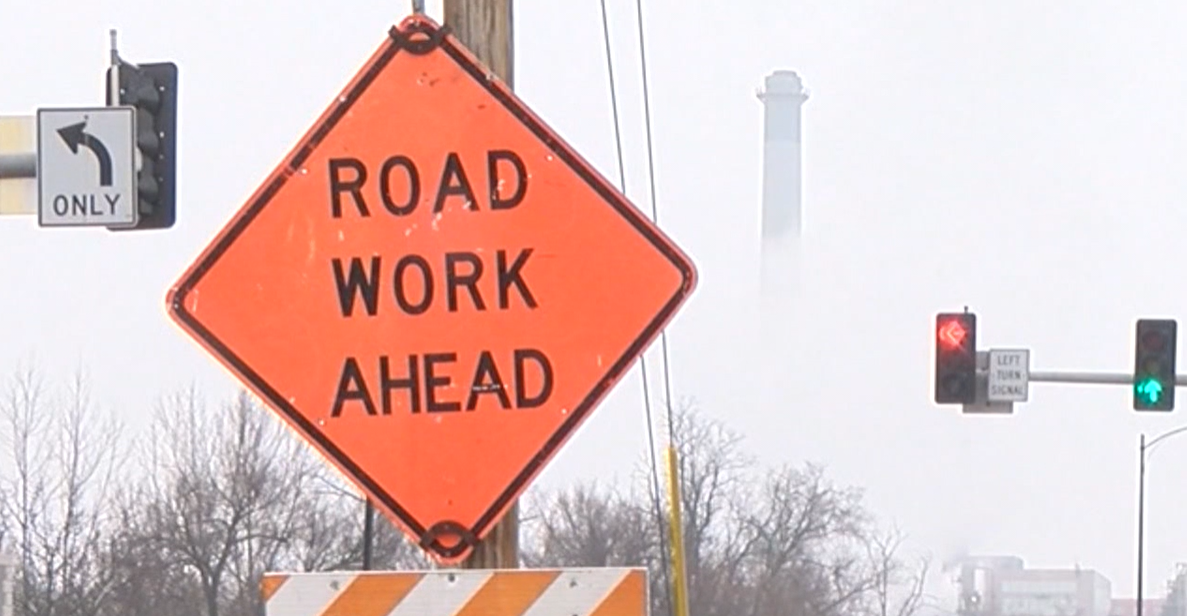
Clark Lane will close at Hanover Boulevard on Monday morning, with construction lasting around 60 days, the release says.  

During the closure, the business entrance west of the intersection will be closed, but the entrance on Hanover Boulevard will be open, the release says.

The closure comes after the St. Charles Road bridge reopened to traffic.

Click here to follow the original article.

Residents push back on Columbia transmission line project at meeting

Melissa Houston

COLUMBIA, Mo. (KMIZ)

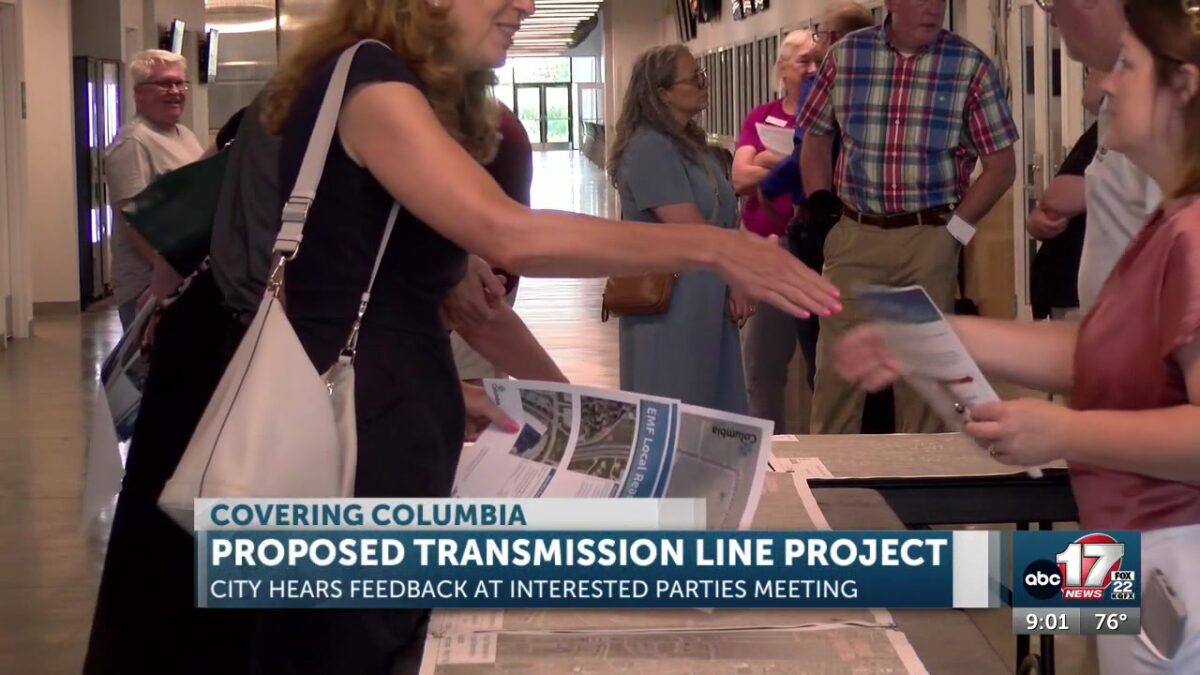
City of Columbia had its monthly ‘Let’s Talk Local’ this Thursday, and it was an interested parties meeting where residents pushed back against the idea of the proposed transmission lines project.

Roughly 25 people were at the meeting, City Councilwomen Betsy Peters (Ward 6) and Christina Hartmann (Ward 5) attended the meeting at the Columbia Sports Fieldhouse at 4251 Philips Farm Road.

“There is certainly a lot of citizen questions and things we need to take into consideration as we move this project forward,” Peters said.

During the meeting, one resident was commenting on a previous study done by the Integrated Electric Resource and Master Plan Task Force Resources, where a statistic of the study said the transmission plans were not necessary.

This resident declined an interview but did say during the meeting that “Columbia does not need the installation of a new transmission line.”

The city’s engineering staff told ABC 17 News that due to the delay of the project from 2015, when it was originally proposed, many studies have been conducted and more information has been gathered about these transmission lines as the delay continues.

“This is not a one-time, done-and-done study; it’s people monitoring the grid 24/7, 365 days a year. These things are ongoing,” said Gwen Corches, who is the city’s assistant director of electric utilities. “Even the information we have today in this fast-paced industry, it will change in a few years again, and we’ll continue to communicate that.”

Public comments focused on safety and contingency plans for the project. Corches said that his team works through many contingency plans to find the best possible outcome, and said experts believes the proposed transmission lines are that.

“We are looking at all possible options to guarantee and anticipate any future events and try to prevent any potential negative situations from happening,” Corches said. “We want to make sure that we are providing the best possible grid for our residents here in the city of Columbia.”

Comments for Boone Electric users was brought up because although they would not pay for the transmission lines electric but the lines would be placed in their backyard, according to one Boone Electric user.

This resdient expressed concerns of the citys lack of outreach to Boone electric users. Corches said after hearing about these concerns his team plans to reach out to those residents and invite them to participate in meetings.

“This is a city-wide project, and anyone is welcome to come to any of our meetings,” Corches said. “[Staff] will look at ways to contact them in the best manner so they feel included and can join the meetings like anybody else.”

The lines will run through Scott Boulevard south to Vawter School Road, then east along the Vawter School-Nifong-Grindstone corridor.

If the project follows through, it is estimated to cost $35 million and take roughly eight-to-10 years to complete, the city stated in previous reporting.

This meeting is one of many that the city plans to host to get public input on the transmission lines. The second interested parties meeting will be held in early October according to the city.

Click here to follow the original article.

Water main break in Jefferson City leads to street closure

Ryan Shiner

COLUMBIA, Mo. (KMIZ)

A water main break on Thursday afternoon led to Jefferson City Public Works to close a road between East Capitol Avenue and East High Street.

The break was reported in the 200 block of Ash Street in Jefferson City, Public Works announced in press release.

The road will be closed and the water main is expected to be repaired the same day.

Signage will be posted in the area and drivers are asked to use alternate routes, the release says.

Click here to follow the original article.