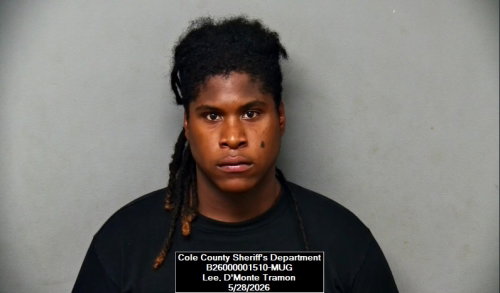
Grain Belt energy project sues to seize land in Callaway County

Matthew Sanders

COLUMBIA, Mo. (KMIZ)

A company that wants to build high-voltage electric lines to carry wind energy through Missouri has sued a Callaway County landowner for the right to use his land.

Grain Belt Express, LLC., filed the lawsuit against Dustin Hudson of Auxvasse on Friday in county court. In its eminent domain petition, the company alleges it offered Hudson fair market value and tried to negotiate after he rejected those terms.

Hudson continued to say no to Grain Belt, the petition states.

Grain Belt says it needs an easement on Hudson’s land to build and maintain its electric lines. The controversial project has drawn opposition from any local landowners, who say they don’t want high-voltage lines crossing their property.

The federal government canceled a $5 billion for the project last year, but Grain Belt said the work will proceed with private funding. Missouri’s attorney general also demanded documents from the company as part of an investigation.

The project will cross Missouri to deliver power from western wind fields to Illinois. The route will run through Mid-Missouri and a connection is planned from north of Centralia to near Kingdom City. That route includes land in Monroe, Audrain and Callaway counties, according to the Grain Belt website.

Click here to follow the original article.

Audrain County man pleads guilty in several child sex crime cases

Ryan Shiner

COLUMBIA, Mo. (KMIZ)

An Audrain County man who previously sentenced to 50 years in prison in federal court and five years in Missouri for statutory rape and child–porn-related charges took several more plea deals on Monday.

In four separate cases involving five victims, William Dahl, 41, pleaded guilty on Monday to promoting child porn, two counts of child enticement and two counts of sexual assault. A fifth case in Audrain County was dropped. He will be sentenced at 1:15 p.m. Monday, March 9.

“William Dahl’s community now knows what these victims have known for years,” Audrain County Prosecutor Jacob Shellabarger said in a press release. “That he had a long history of sexual assault, enticement, production of child pornography, and sexual assault, and that continued for years. Many in the community chose to protect Dahl, pushing these victims’ truth aside with comments like ‘no one will believe you,’ and ‘nothing will happen to him.’

“The truth, a finding of guilt, has happened – and the truth of what these victims went through is now made plain: William Dahl’s practice of seeking out young women and assaulting and objectifying them, hiding behind his family’s name and reputation in the community has reached its end: in a prison cell.”

Dahl was previously charged with: Forcible sodomy, forcible rape, attempted forcible rape, first-degree child sex trafficking, sexually exploiting a minor, first-degree promoting child pornography, two counts of possessing child porn, a count of first-degree statutory rape, first-degree statutory sodomy, first-degree child molestation, promoting a sexual performance of a child, using a child in a sexual performance, two counts of second-degree statutory sodomy, one count of fourth-degree child molestation, child kidnapping, third-degree child molestation, three counts of child enticement and two counts of misdemeanor giving porn to a minor.

He was sentenced to five years last year after he entered an Alford plea for first-degree statutory rape in Randolph County.  He was previously sentenced 50 years in federal court in December 2023 for producing and two counts of receiving child pornography.

Click here to follow the original article.
Former Mexico cheerleading coach sentenced to probation in sex abuse case

Ryan Shiner

COLUMBIA, Mo. (KMIZ)

A former cheerleading coach at Mexico High School was sentenced to five years of probation on Monday in Audrain County court.

Janae Nunnelly, 26, of Mexico, Missouri, pleaded guilty on Oct. 14 to having sexual contact with a student. She faces four years in the Department of Corrections, if she violates her parole.

According to the probable cause statement in previous repporting, Nunnelly was “engaged in a sexual relationship with a currently enrolled student” and previous engaged in intercourse with another student while they were enrolled.

One of the victims stated that Nunnelly added them on a social media platform in May 2024 and began meeting with them the next month. Nunnelly picked up the victim and brought them to her residence in Mexico, the statement says.

Previous court documents stated Nunnelly had “a history of preying on high school students.” 

Click here to follow the original article.
AMBER Alert canceled after children found safe, suspect tied to homicide

Madison Stuerman

COLUMBIA, Mo. (KMIZ)

An AMBER alert was canceled Monday afternoon after two children were found safe.

Law enforcement took Malang Jan Akbari in custody around 1:40 p.m. after he was accused of taking two children after killing their mother.

MSHP Troop A spokesperson Justin Ewing told ABC 17 News the suspect was taken into custody in Pettis County after being stopped near Highway 50 west of Route TT. The vehicle was found using FLOCK cameras.

Akbari is accused of taking two children, a one-year-old boy and a 12-year-old girl, from 1115 E. McCarty St.

The MSHP alert said Akbari left with the children from Southwood Hills in Cole County.

The alert was issued at 1:16 p.m. on Monday, but the abduction happened at noon.

Jefferson City Police are investigating the homicide.

AMBER ALERT 2026-1 WEA: JEFFERSON CITY BLUE 2015 HONDA ODYSSEY MO PLATE JJ6M8C Updates will be posted as they are known. Refresh this page or click the following link to ensure that you are viewing the latest alert information: https://t.co/UoXX3KdhG2

— Missouri State Highway Patrol Alerts (@MSHPAlerts) January 12, 2026

This is a developing story.

Click here to follow the original article.
Jackson County judge hears opening arguments and testimony in Trial on Missouri abortion access

Marie Moyer

KANSAS CITY, Mo. (KMIZ)

Planned Parenthood Great Plains and Great Rivers returned to the courthouse against the state on Monday to reinstate abortion in Missouri.

Planned Parenthood started opening statements and argued that the current state regulations were unreasonable and difficult to achieve, and unique to Missouri abortion clinics only. They also claimed that the moment clinics adjusted and met compliance, the Missouri General Assembly would pass another regulation, leaving abortion treatments inaccessible.

“They were designed to be complicated,” Ella Spottswood said, representing Planned Parenthood Great Plains and Great Rivers. “They are not seeking unregulated abortions, they are seeking abortion that is treated like health care.”

Planned Parenthood also announced their list of witnesses, including several doctors who work with Planned Parenthood or in obstetrics and gynecology.

The state argued that state laws are in place for the physical and mental health and safety of patients. This includes requirements for in-person meetings with physicians, an informed consent packet that’s given to patients and licensing requirements for clinics.

“Plaintiffs [Planned Parenthood] seek to eliminate these common-sense requirements,” Alexandria Overcash said, representing the state, “plaintiffs will tear down all the laws.”

Testimonies were given by Margaret Baum, the Chief Medical Officer of Planned Parenthood Great Rivers and Emily Wales, the President and CEO of Planned Parenthood Great Plains.

Baum detailed around a dozen state rules that she claimed “affected both myself and my patients.”

These rules included:

Patients to meet with the same clinic physician in two in-person visits at least 72 hours apart

Patients be given a pelvic exam and ultrasound 72 hours before a medical or procedural abortion

Patients to be provided a primary physician and a backup physician who is available 24 hours a day.

Ultrasounds to be given by a physician or ultrasound technologist

Clinics to have hallways and doorways six feet wide in the event of an emergency patient transport

Abortion providers to have admitting privileges with a hospital within 15 minutes of the clinic or a transfer agreement with another hospital if over 30 minutes away

Baum claimed that several rules on licensing and requiring a physician to give care are difficult with most clinics being staffed by advanced practice clinicians instead of physicians. APCs were described as mid-level healthcare workers, including physician assistants, nurse practitioners and midwives. She added that APs are allowed to deliver babies, read ultrasounds and provide care following an abortion.

Baum also argued that getting a physician with admitting privileges is difficult, as they require proof of a residency program and proof of a certain number of surgeries. She added not all OBGYNs work in a clinical setting with patients to meet the surgery quota and that some hospitals require board certification for admitting privileges.

Baum also argued the additional rules for expanded hallways and doors were unreasonable, claiming staff have no difficulties transporting a patient in an emergency scenario with EMTs in pre-regulation buildings. She also pushed that EMTs routinely work in spaces like offices or homes that are not up to state regulations.

Baum added that several rules, including having multiple physicians, pelvic exams, clinic building requirements and clearance from the Department of Health and Human Services are not required for services like vasectomies, IUD insertions and miscarriage treatment.

Wales walked the court through the timeline of legislative moves by the general assembly since 2007. She claimed yearly legislative rule updates have caused clinics to repeatedly open and close, sometimes even over the span of 24 hours and cause confusion in patients.

“We had to thread a needle that was changing and had a great deal of components,” Wales said

Voters approved access to abortion in November 2024 through Amendment 3. In December 2024, Jackson County Judge Jerri Zhang temporarily blocked enforcement of Missouri’s existing abortion restrictions, saying that state regulations on abortion centers were unfair and conflicted with what voters just passed. Abortions were set to resume in February 2025.

The Missouri General Assembly drew up joint resolutions to repeal Amendment 3 and add exceptions to the procedure, approving House Joint Resolution 73 in May 2025. HJR 73 would also add exceptions back to the bill text, only allowing abortions up to 12 weeks in cases of rape, incest and medical emergencies, and when there is a fetal anomaly.

After additional legal battles between the state and abortion rights groups on ballot wording, the resolution was put on the ballot for voters in 2026.

Also in May, the Missouri Supreme Court overruled Zhang, claiming she used the wrong legal standard in her injunction to block abortion restrictions. The ruling again closed access to abortions in the state.

Missouri’s ban was blocked again by Zhang in July, with Zhang ruling that the state’s regulation can cause irreparable harm and “is directly at odds with Amendment 3.”

The move reopened abortion access that same month.

According to Abortion Action Missouri, three clinics are currently providing procedural abortions in Kansas City, Columbia and St. Louis. Abortions are allowed up to 18 weeks.

Zhang will oversee Monday’s trial. The trial is set to last two weeks in the Jackson County Courthouse.

Click here to follow the original article.
Trial on Missouri abortion regulations to begin in Kansas City

Jazsmin Halliburton

COLUMBIA, Mo. (KMIZ)

Day one of the trial on abortion regulations in Missouri is set to begin in Kansas City Monday morning.

Planned Parenthood is suing to permanently end the state’s abortion laws. The trial will take place in the Jackson County Circuit Court, starting at 9 a.m. and is expected to run for two weeks. Abortion care will remain available to Missourians throughout the trial court process.

After voters approved the passage of Amendment 3 in November 2024, a Jackson County Judge put a pause on Missouri’s enforcement of abortion restrictions a month later.

The judge’s 22-page ruling temporarily blocks several state laws regulating the procedure. That includes Missouri’s law banning abortions except for a medical emergency.

Planned Parenthood sued the state shortly after voters approved Amendment 3 in November, enshrining reproductive rights in the state’s constitution. It called for the judge to block multiple laws and rules around abortion.

In May, the Missouri Supreme Court overruled the Jackson County judge, bringing restrictions back.

The ruling says that the judge applied the wrong legal standard when she approved a preliminary injunction in December 2024 to block the enforcement of state laws while the case is litigated.

The state’s ban was then blocked again by the Jackson County judge, ruling that the “threat of irreparable harm is especially apparent in the context of abortion care” and that language from Missouri’s previous total abortion ban “is directly at odds with Amendment 3.”

The court issued the preliminary injunction against several medically unnecessary bans and restrictions that allowed Planned Parenthood providers to resume procedural abortion care in Columbia, Kansas City, and St. Louis.

Monday’s trial will feature testimony from both anti-abortion and abortion-rights groups.

Click here to follow the original article.
Missouri sees spike in human trafficking cases

Euphenie Andre

EDITOR’S NOTE: A photo has been removed from this story because it was not directly related to the subject matter.

COLUMBIA, Mo. (KMIZ)

Sunday marked National Human Trafficking Awareness Day, and the Missouri Department of Transportation is using not only Sunday, but the entire month of January to help educate the public about how traffickers operate and how to recognize the warning signs.

Missouri saw a rise in human trafficking cases in 2024, according to data from the National Human Trafficking Hotline.

“With the numbers continuing to increase in Missouri, it’s important that we equip our employees with the knowledge of what to look for and what to do if they suspect human trafficking is occurring,” MoDOT Director Ed Hassinger said in a press release.

According to the National Human Trafficking Hotline, Missouri has averaged more than 240 human trafficking cases per year from 2020 through 2024. In 2024 alone, the state recorded 272 cases, the highest total since 2020, when 270 cases were reported.

The state sits at the center of the country, with major interstates, rail lines and thousands of trucks moving through every day, making it a key transportation hub and a prime target for traffickers.

Isaac McIntosh, a military veteran and current truck driver, stopped at Midway Travel Plaza Sunday afternoon while traveling from North Carolina to Colorado. McIntosh has been trucking for the past eight years and said he has never witnessed anything suspicious at truck stops.

“I haven’t. I hear about it online,” McIntosh said. “I don’t wish to see it, and I hope it doesn’t happen at all.”

He added that his training to drive trucks did not include specific instruction on human trafficking.

“I do see it [human trafficking awareness] at the pilots. When you go to certain truck stops they’ll have signs up there in the bathrooms that state if you see human trafficking, or some signs of human trafficking, to report it to somebody inside,” Mcintosh said.

David Byler, a truck driver with two years of experience, said he has seen an incident firsthand.

“There have been a few instances. Nothing that I could definitely pinpoint, but there also was–police showed up shortly afterwards, so someone had called it in.” Byler said.

Byler noted that truck stops are much safer now.

” In the past, there was a lot more illicit activity at truck stops. Now, there are so many cameras around there’s so much more awareness on the subject and there’s always someone watching you,” Byler said.

Byler said his training included extensive instructions on human trafficking.

“We were given multiple hours of video that we had to watch on human trafficking awareness. We were given pamphlets on it,” Byler said.

MoDOT said human trafficking often happens in places people see every day, including rest stops, gas stations, hotels and restaurants. Over a four-year period, hotline data shows the most common locations connected to sex trafficking cases were homes, hotels, pornography-related operations and massage businesses.

Truck stops were involved in only 9 cases over a four-year period in Missouri.

In 2024, the National Human Trafficking Hotline recorded:

191 cases of sex trafficking

42 cases of labor trafficking

15 cases involving both sex and labor trafficking

2023:

188 cases of sex trafficking

19 cases of labor trafficking

19 cases involving both sex and labor trafficking

2022:

179 cases of sex trafficking

29 cases of labor trafficking

14 cases involving both sex and labor trafficking

2021:

210 cases of sex trafficking

15 cases of labor trafficking

6 cases involving both sex and labor trafficking

2020:

231 cases of sex trafficking

10 cases of labor trafficking

10 cases involving both sex and labor trafficking

From 2020 through 2023, adults made up the majority of trafficking victims, with children not far behind. However, the number of cases involving children dropped in 2024 compared to previous years.

Since the National Human Trafficking Hotline began collecting data in 2007, women have been the most commonly trafficked gender in Missouri.

According to MoDOT, potential warning signs of trafficking include:

Physical abuse or injuries

Branding or tattooing

Not having control of money or identification

Avoiding eye contact or appearing fearful

Not being allowed to speak for themselves

Missouri has seen 2,281 human trafficking cases reported to the National Human Trafficking Hotline since 2007, affecting 4,453 victims. Nationally, there were more than 12,000 human trafficking cases in 2024 involving nearly 22,000 victims.

Click here to follow the original article.
Proposed Missouri bill would require ICE agents to identify themselves if passed

Alison Patton

COLUMBIA, Mo. (KMIZ)

A Missouri bill could force Immigration and Customs Enforcement agents in the state to identify themselves, if passed. The bill’s introduction follows a deadly shooting in Minneapolis involving an ICE agent and a civilian.

Rep. Ray Reed (D-St. Louis) introduced the bill Wednesday where it received a first reading on the opening day of the 2026 legislative session. If passed, it would require ICE agents to refrain from wearing masks or helmets that could obstruct the person’s identity, according to the bill language.

The bill excludes medical masks, like the ones used during the COVID-19 pandemic or masks that are used to avoid breathing in toxic chemicals.

If an agent violates these rules, that person could be subject to a class A misdemeanor, which is punishable with up to a year in jail and could come with up to $2,000 in fines.

“Across our country, people are now fearful when federal agents operate in plain clothes, without clear identification, and without accountability,” Reed said in a press release.

He also posted on Facebook after the deadly Minnesota shooting.

“In moments like this, we can’t give in to fear or let ourselves be divided. We should demand transparency and accountability while staying peaceful, looking out for one another, and keeping our neighbors safe. That is why I filed legislation to unmask ICE agents working in our state,” Reed wrote.

Protests and vigils were held across the nation Saturday and Sunday for Renee Nicole Reed, the Minneapolis woman killed by an ICE agent, with some in mid-Missouri.

Protesters in Jefferson City called out ICE brutality Saturday, with many people expressing their dislike of the Trump Administration’s crackdown on immigration.

Click here to follow the original article.

Elderly man seriously injured in Gasconade County crash

Haley Swaino

COLUMBIA, Mo. (KMIZ)

A 72-year-old man from Cuba, Missouri, was seriously injured Saturday in a crash in Gasconade County, according to a crash report from the Missouri State Highway Patrol.

The report says the crash happened on Route T, south of Third Street, at 9 p.m.

The man was driving a 2008 Ford Ranger southbound and went off the right side of the road, hitting a fence and several trees, the report says. The truck then overturned, and the man was thrown from it.

He was flown to Mercy St. Louis Hospital with serious injuries. He was not wearing a seatbelt, according to the report.

Click here to follow the original article.
Protest held in Jefferson City after woman killed by ICE in Minneapolis

Alison Patton

JEFFERSON CITY, Mo. (KMIZ)

Jefferson City residents silently marched through the city on Saturday after an Immigration and Customs Enforcement agent killed a Minneapolis woman Wednesday.

Protesters marched past government offices and the Governor’s Mansion wearing all black and holding signs with phrases such as “Stop ICE terror” and “ICE keep your [hands] off our citizens.” Other signs were more specific to the Minneapolis death of Renee Good, like “We brought whistles. They brought guns.”

That sign references a tactic Minneapolis residents used to alert other residents of ICE’s presence, according to an article from CNN. Good was shot while in her vehicle when the agent fired at least three shots and killed her.

There are differing opinions on what Good was doing that made the ICE agent shoot her, according to CNN. The Department of Homeland Security says Good was trying to run over the agent, but local officials say she was driving away.

“You can’t kill someone because they’re fleeing a scene,” protester Susan Paige told ABC 17 News. “Whether it’s legal or not, it doesn’t matter. You don’t just shoot them.”

Paige said the protest was like a funeral march for Good. Approximately 250 to 300 people attended.

We Stand United Missouri protest organizer Tina Langland said people in her community have been feeling unsafe because of what she called ICE brutality.

“A lot of people are not sure what to do. They see these things happening, and they know it’s wrong, and they know it will eventually come to their doorstep,” Langland said. “No one’s safe. If everyone isn’t safe, then no one’s safe.”

Langland said she wants lawmakers to know people don’t support ICE brutality.

“I just need our legislators and leaders in charge to know that the people are not behind these actions by and large, and you have the power to stop it,” Langland said.

Susan Thomas said she came out to protest because her neighbors are afraid to leave their house.

“They haven’t left their house in, gosh, months. They have their groceries delivered, everything. And they’re citizens, but they’re still afraid,” Thomas said.

The Jefferson City protest follows a candelight vigil in Columbia for Good on Friday. The protest is also a part of the national movement “ICE out for good.”

Click here to follow the original article.