QUESTION OF THE DAY: Should cyclists be allowed to yield at stop signs?

Matthew Sanders

Jefferson City’s ruling body is in a battle over bicycle traffic laws.

Cyclists there successfully lobbied the city council to approve a version of the “Idaho Law,” which allows people on bicycles to treat stop signs as yield signs — if no other traffic is approaching, there’s no need to stop. Supporters say it makes more sense than requiring a cyclist to stop, killing momentum on a machine that doesn’t take off as quickly as an automobile.

The bill is back before a committee after a mayoral veto.

Do you think cyclists should legally be allowed to yield at stop signs? Let us know by voting in the poll.

Click here to follow the original article.

Woman accused of stealing truck, crashing tractor in Gasconade County

Ryan Shiner

COLUMBIA, Mo. (KMIZ)

A Rolla woman was charged with two felonies and three misdemeanors after she allegedly crashed a stolen tractor into a fence and on Thursday and ran off with camouflage boots in Gasconade County.

Ashley Walser was charged with second-degree burglary, first-degree tampering with a motor vehicle, second-degree tampering with a motor vehicle and two counts of stealing fewer than $150. A warrant with a $50,000 bond was issued. An arraignment is scheduled for 9 a.m. Wednesday.

The probable cause statement and a social media post from the Gasconade County Sheriff’s Office says deputies were called to a home at 8:17 a.m. in the 4400 block of Glaser Hollow Road for an alleged theft in progress.

Walser allegedly stole the victim’s Ford F-250, but then returned it before stealing a tractor with a brush hog attached, the statement says. She then allegedly crashed the tractor into a fence before running off, the sheriff’s office wrote.

Deputies went to a nearby property that had “items strewn about a rear bedroom, indicating unauthorized entry and disturbance of the residence. No occupants were located,” the statement says.

Deputies then found a white Lincoln MKT at the property that had a purse with Walser’s ID and witnesses told law enforcement that she identified herself to them as “Ashley” before stealing camouflage boots, the statement indicates. Other clothes were found at the residence that did not belong to the occupant, court documents say.

Walser was found at another property in the area and the deputy noted in the probable cause statement that she was barefoot at the time of her arrest.

“Ashley admitted she had been wearing camouflage muck boots and stated she owned gray Hey Dude shoes. When shown the gray Hey Dude shoes recovered from [a victim’s] residence, Ashley initially stated they might be hers,” the statement says.

She also allegedly admitted to driving the Lincoln MKT.

Click here to follow the original article.

Convicted murderer accused of killing inmate at Jefferson City prison

Ryan Shiner

COLUMBIA, Mo. (KMIZ)

A convicted murderer has been accused of killing an inmate at Jefferson City Correctional Center.

Zachariah Peterson, 38, was charged with second-degree murder and causing violence to an inmate after a grand jury indictment was filed on Tuesday. A no-bond warrant was issued.

Details were scant because of the lack of a probable cause statement, but Cole County Prosecutor Locke Thompson confirmed the victim was Joshua McNair, 44.

A May 6 press release from the Department of Corrections says McNair was pronounced dead at 2:19 p.m. Saturday, May 2. McNair was serving a seven-year sentence for first-degree assault from Lawrence County, the release says. McNair was received by the DOC on Oct. 31, 2025.

The complaint in the murder case says “defendant knowingly caused the death of Confidential Victim by striking him” on May 2.

Peterson is currently serving a 30-year sentence after a Boone County jury found him guilty of second-degree murder on March 6, 2012. He is still being held at Jefferson City Correctional Center.

Click here to follow the original article.

Cyclists push for change, but Jefferson City’s Idaho Stop ordinance hits a roadblock

Mitchell Kaminski

JEFFERSON CITY, Mo. (KMIZ) 

A proposed Idaho Stop ordinance for cyclists was sent back to committee for further review on Monday after Jefferson City Mayor Ron Fitzwater vetoed the idea. 

The Jefferson City Council passed the ordinance, also known as the “Idaho Law,” in May by a 6-2 vote, allowing cyclists to treat intersections with a stop sign or flashing red lights as a yield sign. The proposal would have made Jefferson City the first municipality in Missouri to adopt an Idaho Stop law. 

The council needed seven of 10 votes to override the veto on Monday, but the attempt failed, receiving support from only three council members. However, instead of scrapping the idea entirely, the council opted to send it back to the Public Safety Committee for additional discussion and possible revisions.

Fitzwater said Monday his decision to veto the ordinance stemmed from concerns raised during the council’s original discussion of the proposal.

“My concern was there were a lot of questions asked where we got multiple answers that were sometimes 180 degrees apart, and it was confusion in the room,” Fitzwater said. “This is a city doing it in a state that has not adopted this language. I have full confidence that bikers understand traffic, and they will not intentionally pull in front of a car. But I’ve got three teenage grandkids that drive and there’s a lot of factors out there that I just did not feel like were addressed in multiple ways at the meeting.”

Fitzwater added he does not believe the ordinance should be abandoned permanently, but would like to see the language clarified before it returns to the full council.

Ward 5 Councilwoman MacKenzie Job said she was pleased the council chose to continue discussing the ordinance, rather than allowing it to die with the mayor’s veto.

“I am glad the bill ended up being sent back to committee rather than simply being vetoed,” Job said in a statement to ABC 17 News. “As is evident by the whole process, there is some education around active transportation that needs to happen.”

The ordinance was a hot topic of discussion, with six residents appearing before the council on Monday to speak in favor of the idea. Supporters of the proposal argued the ordinance would improve cyclist safety by reducing the amount of time riders spend in intersections.

Sasha Vosko — who said she has rode a bicycle in Cole County for the past eight years — told council members that stopping at intersections can present unique challenges for cyclists.

“Stopping on the bike is not as easy as in a car. When I’m stopping on a bicycle, I have to downshift, while squeezing the levers, breaking, and at the same time twisting my foot out of the pedals. So it kind of creates a dangerous situation,” Vosko said.

Michael Cardinal, who commutes by bicycle in Jefferson City, argued the ordinance would benefit both cyclists and motorists.

“When a cyclist can roll through an intersection without stopping, you can get out of the way faster, which benefits motorists behind them as much as the cyclist,” Cardinal said.

Jackson Hotaling, director of policy and programs for Missourians for Responsible Transportation, also spoke in support of the ordinance during the meeting and told ABC 17 News he believes the measure would make roadways safer for cyclists.

“There have been quite a number of studies that have demonstrate, specifically for reducing the amount of time that a cyclist has in an intersection, is valuable because that increases your exposure rate to other vehicles,” said Jackson Hotaling, director of policy and programs for Missourians for Responsible Transportation.

Hotaling argued allowing cyclists to move through intersections more efficiently can reduce the risk of crashes.

“If you did have the Idaho Stop law in effect, that would allow cyclists to be able to travel through the intersections where they are most at risk of certain kinds of crashes,” Hotaling said. “Additionally, if you have a large group of people it is helpful to stay together, but if you’re asking people to stop individually, that will of course increase risk just due to the amount of time that a whole group are going to go through.”

Hotaling also noted that several states have already adopted similar laws.

“Our neighboring states like Oklahoma and Arkansas and Idaho, that’s had this on the books for 20 years or so, it’s been proven and documented to be effective for safety,” he said.

According to the National Conference of State Legislatures, 13 states and Washington, D.C., have adopted some version of an Idaho Stop law. Missouri currently allows bicyclists and motorcyclists to proceed through malfunctioning traffic signals under its “Dead Red” law after stopping and waiting a reasonable period of time.

Job said she believes confusion during the original presentation of the ordinance contributed to the mayor’s concerns.

“While I feel the ordinance itself is straightforward and clear, the way it was described during the meeting when it was presented was a bit confusing and led to the veto,” Job said.

However, Job told ABC 17 News she remains optimistic that the proposal can move forward after additional review, adding that she plans to compare Jefferson City’s language with Idaho’s existing law before the ordinance returns to the council.  

“We will come prepared to the public safety committee meeting with the verbiage from Idaho regarding their ‘stop as yield’ ordinance to compare and make sure ours is crystal clear before sending it back to the full council, where I hope it will pass without further incident,” Job told ABC 17 News. “As one resident stated during last night’s meeting, cyclists don’t want to be hit by cars, so I’m hopeful we can move this forward to improve safety for everyone on the road.”

Click here to follow the original article.

Missouri Board of Education president steps down

Ryan Shiner

COLUMBIA, Mo. (KMIZ)

Missouri Board of Education President Mary Schrag resigned from her position on Tuesday, according to a press release from the Missouri Department of Elementary and Secondary Education.

Schrag was appointed to the state board in 2019 by then-Gov. Mike Parson. Her term officially expired in 2024, but state law allows that person to serve in the role until the governor made a reappointment or replacement, according to a spokesperson from the governor’s office.

The release says Gov. Mike Kehoe will appoint a replacement, who will then have to be confirmed by the Missouri Senate. State Board Vice President Brooks Miller “will assume the role as State Board President until the State Board holds elections at its June 23 meeting,” the release says.  

“Claudia and I want to thank Mary Schrag for her years of dedicated service to students, families, and educators on the Missouri State Board of Education,” Kehoe said in a statement that was sent to ABC 17 News. “Even after her term expired, Mary continued to serve as president of the board — providing steady leadership, stability, and guidance for new members. Her commitment to education has made a lasting impact, and we wish her the very best in this next chapter.”

Click here to follow the original article.

Black drivers in Columbia, Jefferson City stopped at higher rates than white drivers, 2025 report shows

Ryan Shiner

COLUMBIA, Mo. (KMIZ)

Black drivers in Missouri were once again stopped at higher rates last year than white drivers, according to the annual Vehicle Stops Report.

The Attorney General’s Vehicle Stops Report is due on June 1 each year. It provides data related to vehicle stops statewide, including an index that measures the rate at which drivers of each race are pulled over in relation to their driving-age population.

Data shows the stop rate of Black drivers — based on the 2024 population – was 47.8%, while white drivers were 28.04%. The total stop rate was 28.93%.

It also shows the arrest rate of Black drivers (5.61%) was higher than white drivers (3.37%). The citation rate was also noticeable with Black drivers having a rate of 51.01% compared to 35.22% for whites. Data also shows white drivers had a higher “contraband hit rate” at 23.79% compared to 20.08% for Black drivers.

Hispanic drivers had a stop rate of 24.41%, while having a 47.83% citation rate and 7.21% arrest rate.

Law enforcement made more stops in 2025 (1,439,086) compared to 2024 (1,282,528).

COLUMBIA

In Columbia, the stop rate for Black drivers (51.72%) was nearly three times the rate of white drivers (14.69%). Both rates increased from 2024, where it was 35.97% for Black drivers and 8.91% for white drivers.

Black drivers (8.01%) were also more likely to be searched than white drivers (3.04%) in 2025 and also saw a higher citation rate of 17.49% compared to 14.82% for white drivers. White drivers (32.02%) had a higher contraband hit rate than Black drivers (24.95%).

The arrest rate for Black drivers (8.26%) in Columbia was more than double the rate of white drivers (3.01%).

Hispanic drivers saw a stop rate of 10.71%, while their arrest rate was 9.13% and a 21.58% citation rate.

JEFFERSON CITY

In Jefferson City, Black drivers had a stop rate of 58.19% compared to 25.93% for white drivers, the data shows. Both figures are lower than it was in the 2024 report, where Black drivers had a 67.08% stop rate and white drivers were at 32.24%.

The arrest rate for Black drivers (1.94%) was slightly higher than white drivers (1.52%). Black drivers had a higher citation rate of 23.72% compared to 20.51% for white drivers, though the contraband rate for white drivers was still higher at 23.39% compared to 20.75% for Black drivers.

Hispanic people had a 22.31% stop rate, a 13.16% contraband hit rate, a 31.69% citation rate and an arrest rate of 0.35%.

Click here to follow the original article.

Cosmo Park softball field renovations expected to cost $750,000

Sam Roe

COLUMBIA, Mo. (KMIZ)

Columbia Parks and Recreation discussed plans for renovations to the Rainbow Softball Complex at Cosmo Park during an interested parties meeting Tuesday night.

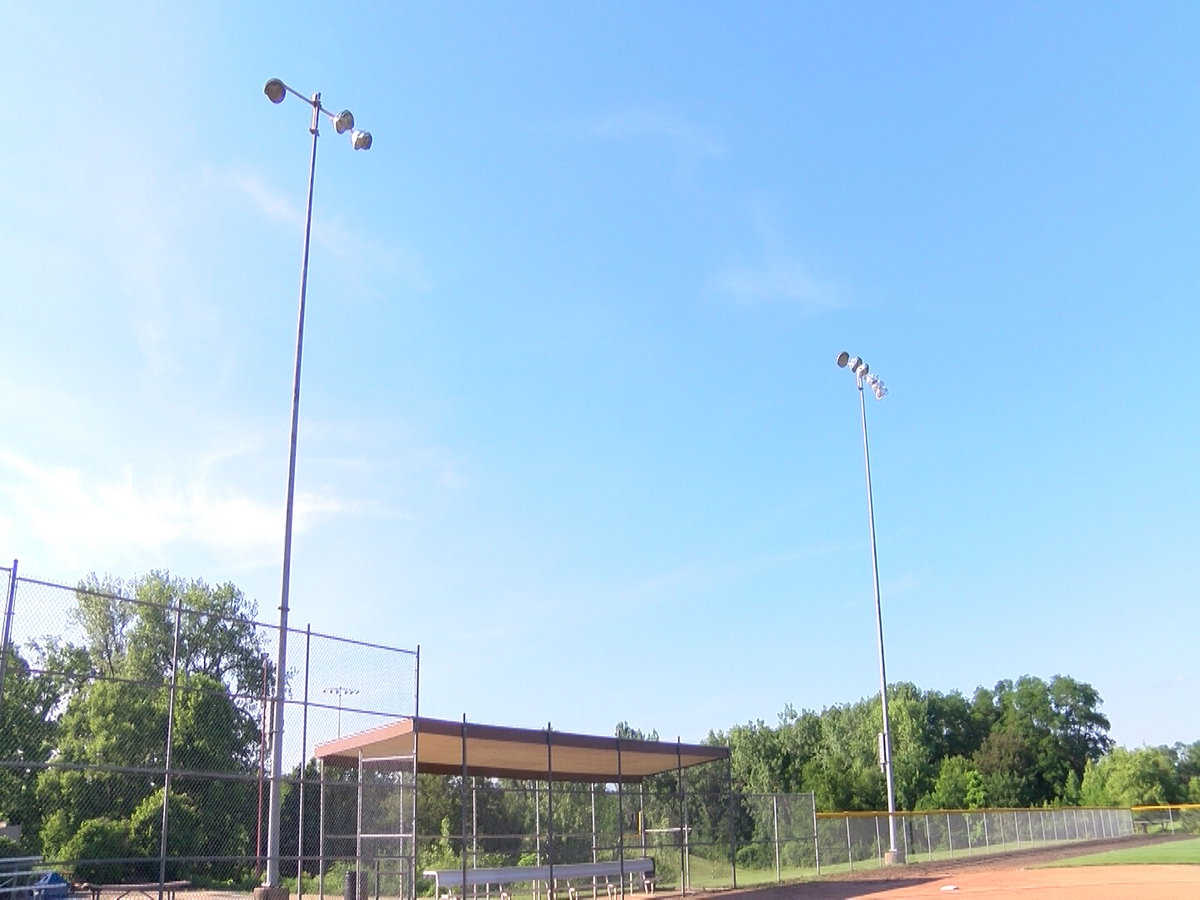
The city plans to install LED lighting and concrete backstops to all six fields at the complex. The upgrades are expected to cost $750,000 and are funded by the Parks Sales Tax.

The project is expected to start in October 2026 and is planned to be finished by April 2027.

The Rainbow Softball Complex has not seen significant work since 2012. The city also plans to renovate the concession area, playground, and batting cages in the future.

The project will go to the Columbia City Council for final approval.

Click here to follow the original article.

3 people file for Columbia’s open Fourth Ward seat

Ryan Shiner

COLUMBIA, Mo. (KMIZ)

Three people have filed to run for the open Fourth Ward seat on the Columbia City Council in the Aug. 4 election.

Tuesday was the deadline to file for the August election.

The city clerk’s office confirmed the field includes former Columbia Utilities Director David Sorrell, Ryan King and attorney Sharon Jones, who is also on the Planning and Zoning Commission.

The position is open after Councilman Nick Foster announced that he intends to resign from his position on June 12. Foster announced his family is moving to Atlanta, Georgia, after his wife was hired as a dean at Georgia State University, previous reporting shows.

The winner of the August election will serve the remainder of Foster’s term, which ends in April 2028.

Click here to follow the original article.
Guardian of disabled student makes claims of discrimination, assault in lawsuit against Russellville School District

Ryan Shiner

COLUMBIA, Mo. (KMIZ)

The legal guardian of a child with cerebral palsy filed a discrimination lawsuit on Monday against the Russellville School District and a number of its employees.

Daryl Matheis sued the Cole County R-1 School District, along with teachers and paraprofessionals, after claiming disability discrimination, sex discrimination, retaliation, battery, assault and false imprisonment. The Missouri Commission on Human Rights issued Matheis a notice of right to sue on March 3.

The petition makes several claims of abuse, including that employees had restrained the now 9-year-old boy multiple times, one of which resulted in damaging his communication device. The lawsuit claims after the first incident, the district did not follow its own policy of sending a written notification to the boy’s guardian “within a set number of days.”

In September 2024, the lawsuit claims the school nurse and paraprofessionals at the school declined to help the boy use a chair — that allows the youth to use the restroom – because he was a male.

The petition also claims the boy was once punished by being made to stand outside during frigid temperatures while wearing “only socks on his feet.”

The lawsuit also makes an allegation that the boy was verbally berated by staff “to such a severe degree that other students told their parents about the yelling who then then forwarded that information to” the boy’s guardians. The plaintiff claims the district retaliated by “changing the procedure for pickup” for the student.

ABC 17 News reached out to the school district.

Click here to follow the original article.

New Florence AWS data center to tap local aquifer for water

Nate Splater

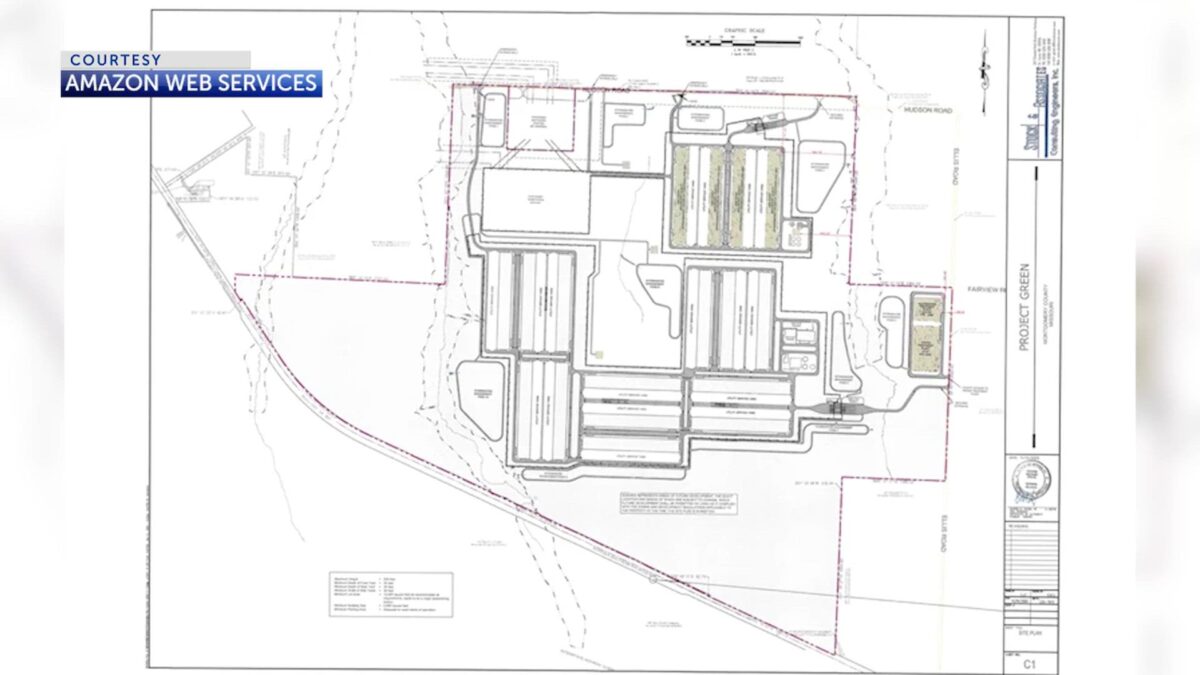
Amazon Web Services (AWS) is developing Project Green, a new data center in New Florence, Montgomery County, that will draw water from an aquifer deep beneath the city.

And Amazon hopes to tap the source with a high-yield well.

Project Green Site Plan. Courtesy of Amazon Web Services.

The data center complex will be located south of Hudson Road and west of Ellis Road on the eastern side of town. Water will be sourced from deep within the Cambrian-Ordovician aquifer, with wells drilled to depths of 1,500 feet to avoid interfering with local private wells.

According to a report by CDM Smith, a global engineering and construction firm, the Project Green campus will draw 2.9 million gallons of water annually. The full 17-building campus is projected to use approximately 50 million gallons of water each year, which is comparable to the annual water usage of a golf course. Each individual building’s water usage is roughly equivalent to that of a restaurant.

Scott Kaden, the Groundwater Section chief at the Missouri Department of Natural Resources, said this amount of usage is common with several wells across the state. “There are a lot of high-yield wells throughout the country and throughout the state that produce a similar amount of water, whether it’s for a public water supply or irrigation,” he says.

The Cambrian-Ordovician Aquifer. Courtesy of USGS.

The Cambrian-Ordovician aquifer, made of limestone and dolomite sedimentary rock, is extensive and holds more than 23 trillion gallons of groundwater in the region of the data center. This volume is equivalent to more than 1.5 million Olympic-sized swimming pools. About 8% of the Cambrian-Ordovician aquifer is in use, and the data center will contribute an additional 0.03% to this total.

Heavy water users like the Project Green facilities are required to report their water usage to MoDNR. Still, there are no regulations on water use because Missouri is a riparian state, where landowners have the right to use water that flows within or along their property. “But you cannot affect your neighbor’s ability to do the same thing,” Scott cautions. “And if that does happen, if you affect your neighbor’s ability to use the water, then that becomes a civil matter.”

According to CDM Smith’s report, long-term water-level monitoring of the Cambrian-Ordovician aquifer within the data center region shows stable overall water levels, with some monitoring locations experiencing increases. The report cites water levels in a bedrock well in Vandalia, in nearby Audrian County, located about 30 miles north of New Florence, which increased by approximately 5 feet between 2007 and 2017.

However, there is an older well in New Florence that doesn’t reflect the same trends. Records at this well date back to 1981 and show a steady, though slightly decreasing depth in water level. “But when you look at the thickness of the aquifer, the aquifer goes down 1,400 feet,” Scott explains, “so there’s still over 1,000 feet of water in the aquifer in this area of New Florence.”

Scott says that while the aquifer is vast, water levels can still vary from well to well. “You can’t just pick one spot and say that the whole aquifer is behaving like it is at this one spot. You have to look at all of them.” Another well in Graham Cave State Park, a few miles west of New Florence, shows a steadier trend in water levels since at least 2009.

CDM Smith, citing MoDNR projections for 2060, indicates that the aquifer will naturally refill at a rate of 406 million gallons per day. Total water withdrawals from all other wells using this aquifer, excluding the data center, are estimated to be only 71 million gallons per day.

MoDNR predicts that only about 17% of the water naturally flowing into the aquifer each year will be used in the region where the data center is located by 2060. The aquifer will essentially gain more than 600 Olympic-sized swimming pools of water daily, while about 100 pools will be pumped out for all other combined uses, aside from the data center use.

Amazon water studyDownload

Click here to follow the original article.