Nationwide Verizon outage leaves hundreds of thousands without service

News Team

IDAHO FALLS, Idaho (KIFI) — A massive network outage at Verizon Communications, the nation’s largest wireless provider, has disrupted phone and internet services for hundreds of thousands of people across the United States on Wednesday.

According to the tracking site Downdetector.com, more than 177,000 people reported service failures nationwide, including dozens of reports across southeast Idaho.

In a statement posted to X (formerly Twitter), Verizon confirmed the technical difficulties and apologized for the lapse in service.

“We are aware of an issue impacting wireless voice and data services for some customers. Our engineers are engaged and are working to identify and solve the issue quickly,” the company stated. “We understand how important reliable connectivity is and apologize for the inconvenience.”

Click here to follow the original article.

One arrested in connection to deadly Salt Lake City church shooting

Fox13

ORIGINALLY PUBLISHED: 9:07 a.m. MST

By: Michael Martin

Click here for updates on this story

SALT LAKE CITY (KSTU) — Salt Lake City police have arrested one man in connection with last week’s shooting outside a Salt Lake City church in which two people were killed and six injured.

Ryan Daniel Toutai, 32, was arrested on Tuesday and faces a charge of obstruction of justice.

According to court documents, following the shooting, detectives discovered multiple people with gunshot wounds in the church’s parking lot, and additional victims arrived at area hospitals with gunshot wounds.

Police had said they found multiple used cartridge casings and a handgun at the scene, along with a blue Los Angeles Dodgers baseball hat. Video obtained by police allegedly show Toutai wearing a Dodgers at the church.

During a police interview, Toutai claimed he had taken an Uber to the church and that he was inside when he heard gunshots from the parking lot. Toutai denied any involvement with the altercation and denied having any knowledge of what happened. He also denied having a firearm or seeing anyone with a gun that night.

When asked what happened to his Dodgers hat, Toutai told police he didn’t know.

Multiple witnesses allegedly gave a description of one of the suspects involved that matched Toutai, and officers also received numerous tips that Toutai was involved in the shooting and had a confrontation with another man in the parking lot.

After seizing Toutai’s phone, police said a search revealed video that showed him with a gun similar to the one found at the shooting scene. Additional videos allegedly showed Toutai driving a car with one of the other men involved in the altercation.

The man seen with Toutai in the video allegedly later showed up at a hospital with a gunshot wound.

Police added that videos taken by witnesses also show Toutai walking toward the church with the other man and a third man, who was also shot during the altercation.

When interviewed by police again on Tuesday, Toutai gave the same statement claiming to be inside the church, and only walking out when gunshots were heard. After telling Toutai that his hat was found at the scene and videos showed him in the lot leading up to the shooting, detectives informed him that further false statements could result in obstruction of justice charges. Toutai continued to deny any knowledge of the gun or how his hat ended up at the church.

Court documents also state that when Toutai was arrested Tuesday, they found a loaded handgun underneath the seat of the vehicle.

Investigators say they are asking the court to hold Toutai without bail due to his reported involvement in the Tongan Crip Gang and his frequent travels between Utah and California.

Click here to follow the original article.

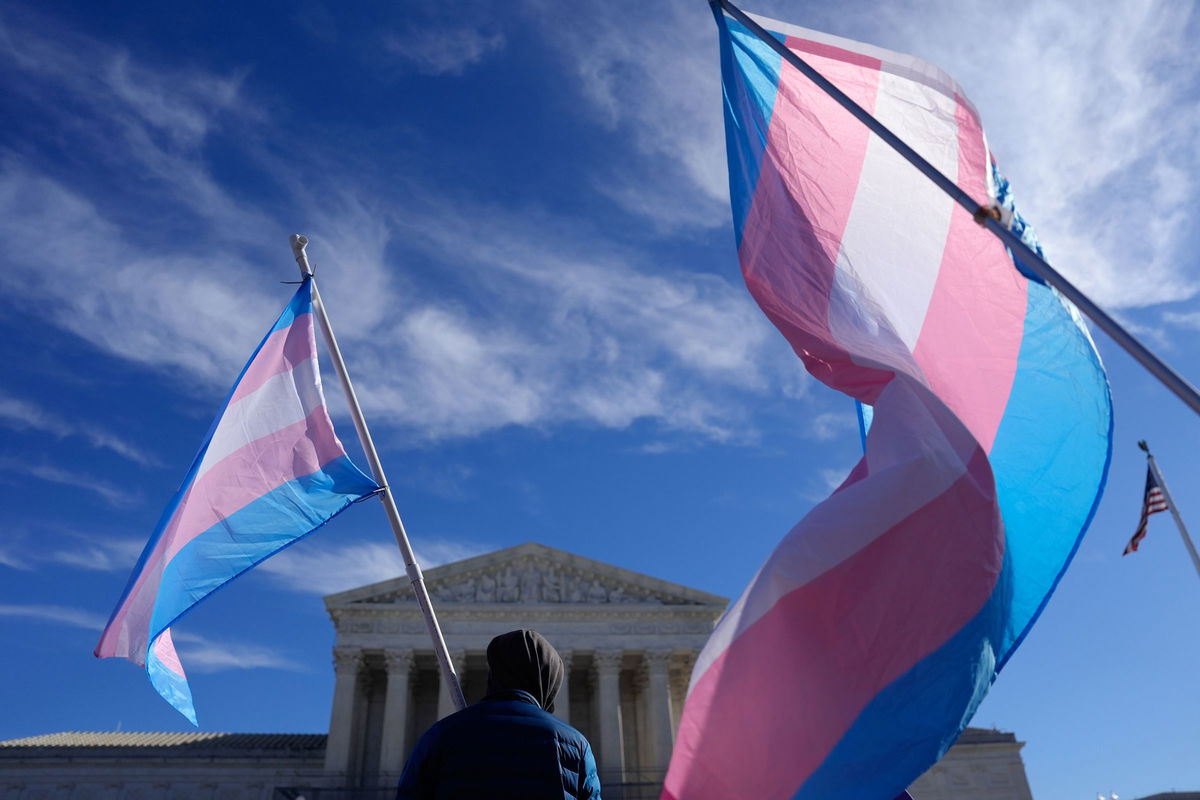
Idaho’s ‘Fairness in Women’s Sports’ case heard by U.S. Supreme Court

David Pace

IDAHO FALLS, Idaho (KIFI) – Idaho had a strong presence at U.S. Supreme Court proceedings for the case Little v. Hecox on Tuesday.

State Representative Barbara Ehardt, of Idaho Falls, received one of four Idaho tickets to view oral arguments in person before the U.S. Supreme Court.

As the sponsor of the ‘Fairness in Women’s Sports Act’ that was challenged by the American Civil Liberties Union (ACLU) of Idaho, she had a near-front row seat as the case unfolded in Washington, D.C.

“Just – even not referencing my own legislation – just sitting in the Supreme Court of the United States was almost overpowering to me,” Ehardt told Local News 8 in an exclusive interview. “It has such significance. Then to add the fact that we were sitting there to hear the legislation that I authored and started in 2018, not done until 2020 when I brought it, it was just phenomenal.”

In 2020, transgender athlete Lindsey Hecox sued the state of Idaho in order to be able to participate on Boise State women’s track and cross-country teams.

Coed teams are allowed, but the 2020 law barred transgender individuals from participating in girl’s sports.

The American Civil Liberties Union of Idaho Foundation provided a statement about Lindsey Hecox’s position on the case.

“In 2025, Lindsay ended her participation in any women’s athletic programs covered by H.B. 500 to prioritize finishing her degree and her personal safety and wellness,” said Rebecca De León, American Civil Liberties Union of Idaho communications director, in an emailed statement to Local News 8.

“As a result of this, her attorneys are arguing that the Court should rule her case legally moot,” she continued. “In West Virginia v. B.P.J., the U.S. Supreme Court will address a challenge to a nearly identical law. No matter what the Supreme Court decides in these cases, we are committed to defending the rights of all women and girls, including transgender women and girls.”

During the Tuesday’s arguments, Ehardt said she was ”a little bit upset” with how three female justices – Associate Justices Sonia Sotomayor, Elaine Kagan and Ketanji Brown Jackson – characterized her legislation.

“I never once put the word transgender in there,” Ehardt said. “… Their side really, they were arguing against having a definition of sex. They did not want to have sex defined, and instead they basically wanted guidelines – ‘What are some of the characteristics of, you know, being a female?’

“I’m thinking to myself, oh my goodness,” she continued, “and Justice Roberts then basically said that if we don’t define sex, then how shall we know if we’re discriminating?”

Ehardt said she sat next to U.S. Senator Jim Risch (R-Idaho) during the proceedings.

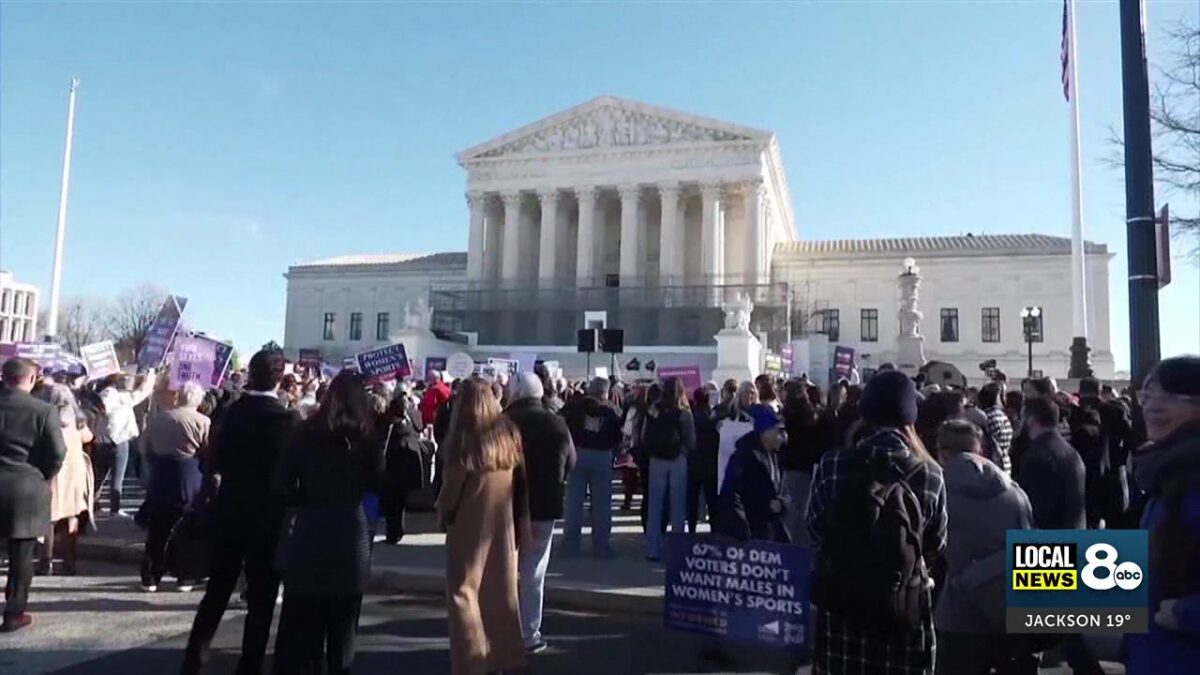
Outside at a rally supporting the “Fairness in Women’s Sports Act,” Idaho Attorney General Raúl Labrador and U.S. Congressman Mike Simpson also addressed crowds.

“The simple reality of this case is that we’re talking about simple biology,” Labrador said. “There are men and women, and Title IX and equal protection should allow boys to participate in boys sports, and girls to participate in girls sports, and should allow girls to have the safety and security of knowing that they’re going to be safe in their spaces, they’re going to be safe in their sports, and that they’re going to be protected by the law and by the Constitution.”

Simpson stated that his work desk prominently displays a mug that emblazoned with the motto, “Watch women’s sports.”

“I shouldn’t be here. You shouldn’t be here. This is nonsense,” Simpson said. “We’re before the highest court in the land, the Supreme Court, arguing for common sense. That’s all we want is common sense. Men should not be playing in women’s sports. That’s the truth. That’s what the signs out there are saying. …Women have the right to compete against other women without men in the competitive process.”

The U.S. Supreme Court is expected to issue a ruling in the controversial case by late June.

Rep. Barbara Ehardt attended the U.S. Supreme Court hearing over her law on Tuesday for Little v. Hecox in Washington, D.C.

Click here to follow the original article.

TCSAR volunteers rescue two backcountry skiers in separate incidents this week

News Team

TETON COUNTY, Wyoming (KIFI) — Two injured backcountry skiers are recovering this evening after crews from Teton County Search and Rescue rushed to their aid in separate incidents this week.

Both calls involved skiers who had injured their lower legs while in the backcountry, leaving them stranded.

The first incident took place on Monday, January 11, around 3:40 PM. TCSAR crews received an alert from a woman who’d been injured while skiing in the Do-It Chutes area. Crews found her stranded in a timbered chute several hundred feet above Hwy 22.

Using both a short-haul helicopter team and skiers on the ground as backup, TCSAR volunteers were able to package and haul the patient to an awaiting ambulance with Jackson Hole Fire/EMS within around 3 hours of the initial alert.

The second incident happend on the following day, Tuesday, January 12, around 10:28 AM. A man had injured his lower leg while skiing in the Black Canyon area of Mount Elly.

Once again, TCSAR crews responded using both a helicopter team and skiers on the ground as backup on the top of the Teton Pass. The man was stranded about 400 feet below the summit of Mount Elly, which required the volunteers to land in an open field of snow uphill from the scene. Rescuers worked alongside the man’s skiing partners to carry him up the slope to the aircraft, which then transported the patient and the rescue team directly to the TCSAR hangar in Jackson.

Click here to follow the original article.

ISU breaks ground on major renovation for Roy F. Christensen Complex

News Team

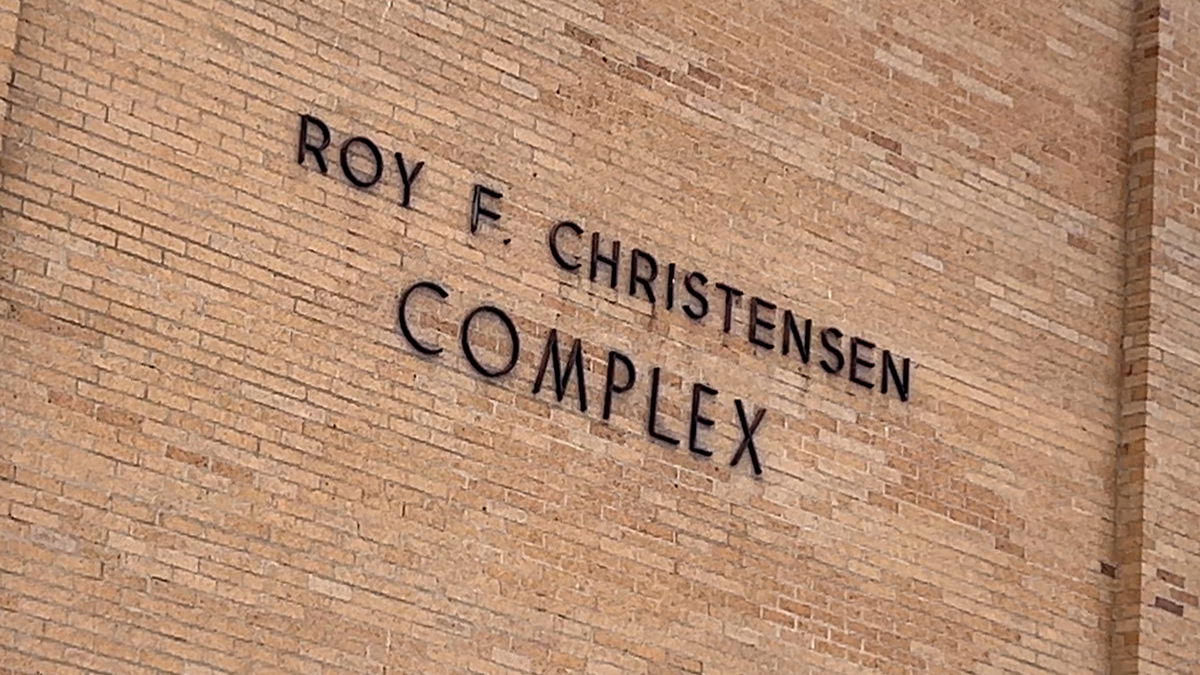
POCATELLO, Idaho (KIFI) — A big day for Idaho State University as work begins on a major renovation! Tuesday, school leaders broke ground on major renovations to the Roy F. Christensen Complex, the future home for ISU’s nationally recognized physician assistant program and its Medical Laboratory Science program.

ISU says the PA program is the only one of its kind in Idaho, and the move will provide more space and modern labs for students. The medical laboratory science program will also relocate from Leonard Hall, which has been under construction for the past three years. 

University leaders say this project is all about preparing future healthcare professionals with the best possible training environment. 

Click here to follow the original article.

Zoo Boise welcomes rare Wolverine as latest addition

CNN Newsource

Originally Published: 13 JAN 26 17:42 ET

By Barclay Idsal

Click here for updates on this story

    BOISE, Idaho (KIVI) — Ferocious, elusive, and tenacious— in many ways, the wolverine is synonymous with the western persona.

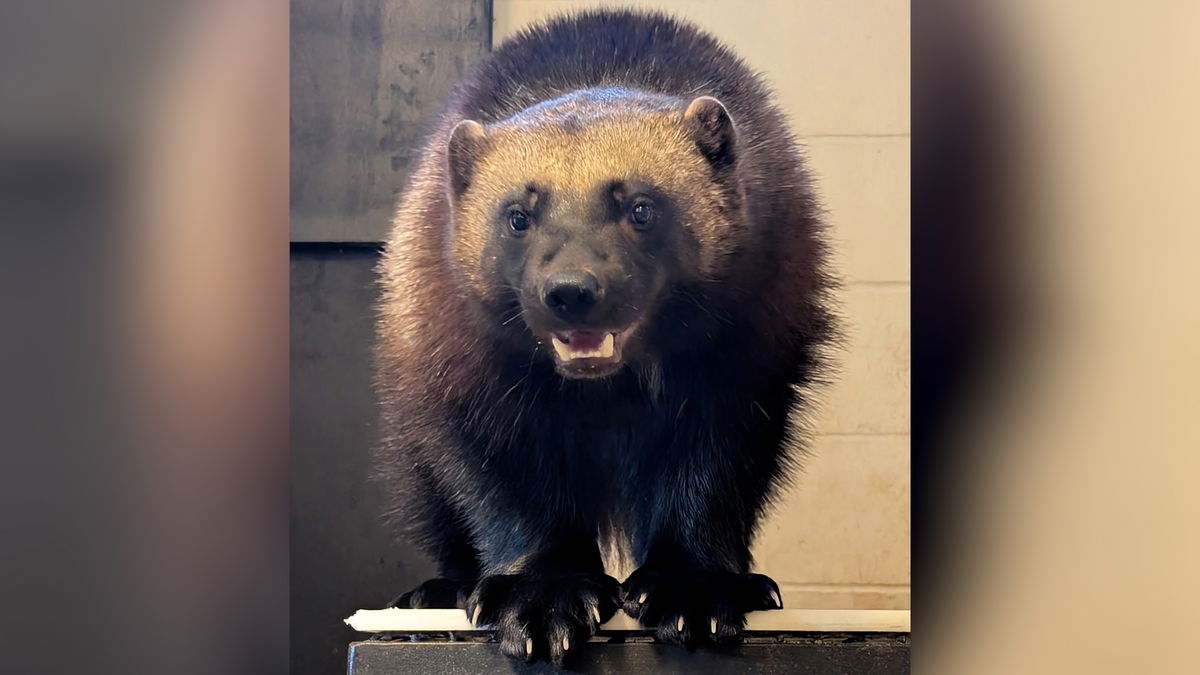
Now, Zoo Boise visitors will be able to interact with this new personality in the form of 11-year-old Laura, who is named after the daughter of the iconic Marvel superhero.

Laura came to Zoo Boise from Zoo Montana and has moved into her newly renovated wolverine habitat located next to the carousel. Inside, Laura will be able to play on climbing structures and cool off in “cold-weather features.”

“Wolverines are iconic Idaho predators that few people have the chance to see up close,” said Boise Parks and Recreation Director Sara Arkle. “We’re thrilled to welcome Laura and introduce our community to a species that is powerful, elusive, and incredibly important to Idaho’s wild places.”

Wolverines are one of the rarest mammals housed in Zoos across the nation.

“Laura’s arrival is a milestone for Zoo Boise and a testament to our care and conservation focus,” said Zoo Director Gene Peacock. “She represents an opportunity for our community to learn about a unique and engaging species while giving back globally. As with all our animals, her presence also supports our mission: every guest who visits helps protect wildlife worldwide.”

The natural range for wolverines includes all the states in the Northern Rockies and Pacific Northwest (Idaho, Oregon, Washington, Montana, Wyoming, and Colorado), in addition to areas of Canada and Alaska.

An especially interesting aspect about Wolverines is that, unlike many of their mammal counterparts in similar regions, Wolverines give birth to “kits” during the coldest and darkest parts of winter. Wolverines typically dig deep caves within snowbanks to house their offspring, which are colored white to blend in with the snow.

Please note: This story was provided to CNN Wire by an affiliate and does not contain original CNN reporting. This content carries a strict local market embargo. If you share the same market as the contributor of this article, you may not use it on any platform.

The-CNN-Wire™ & © 2026 Cable News Network, Inc., a Warner Bros. Discovery Company. All rights reserved.

Click here to follow the original article.

Illegally stocked Perch triggers alarm at Island Park Reservoir

News Team

ISLAND PARK, Idaho (KIFI) — An unusual catch on the Island Park reservoir has Idaho Fish and Game sounding the alarm. 

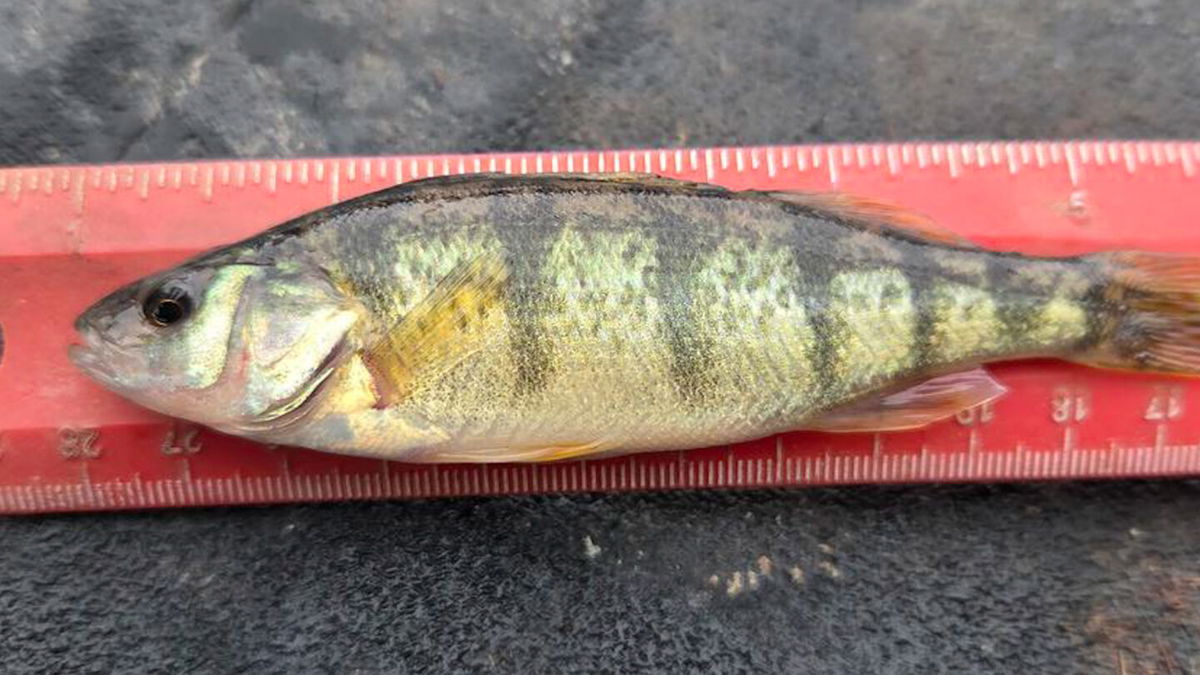
Earlier this month, an angler ice fishing reeled in a 5-inch-long yellow perch — a species that does not belong in the reservoir. Conservation officers confirm this is the first-ever perch reported in the reservoir, and they believe it was illegally stocked.

 Fish and Game says transporting live fish in Idaho without the required permits is illegal, and illegally stocking fish into a lake or reservoir can lead to serious ecological damage — and even felony charges in addition to hefty fines.

“We will continue to monitor fish populations in Island Park Reservoir and the impact perch may have on the fishery,” said Fisheries Manager Brett High. “Trout are Idaho’s most popular species and feed on small crustaceans often referred to as zooplankton in Idaho’s reservoirs. Perch are a popular sportfish as well and eat the same food. Sometimes they can co-exist but often perch out-compete trout leading to poor survival and growth. How this illegal introduction may affect ongoing collaborative efforts to improve water quality and the fishery in Island Park Reservoir is unknown and concerning.”

Conservation officers are asking anglers to keep any perch they catch and report wildlife violations to the Citizens Against Poaching hotline at 1-800-632-5999.

Click here to follow the original article.

Takeaways from Supreme Court arguments on transgender athletes

CNN

CNN

By John Fritze, Devan Cole, CNN

(CNN) — The Supreme Court’s conservative majority indicated Tuesday it is likely to side with two states that have enacted bans on transgender athletes playing on girls’ sports teams, delving into a divisive culture war dispute that could have implications far beyond sports.

For over three hours, the justices waded through exceedingly technical debates and hypotheticals as they tried to assess whether the bans enacted by Idaho and West Virginia are consistent with the 14th Amendment or a landmark 1972 law that bars discrimination in schools. The court’s decision could affect similar laws in more than half the country.

“I hate – hate – that a kid who wants to play sports might not be able to play sports,” said Justice Brett Kavanaugh, who then quickly added that if a transgender girl makes a competitive team, that might bump a cisgender girl from the roster. “It’s kind of zero-sum game for a lot of teams.”

Even as the court’s conservatives seemed sympathetic to the states’ bans, several expressed concerns about potential spillover effects of a decision in their favor beyond athletics. Some seemed to be searching for a way to side with the states that would limit that potential impact.

Here are five takeaways from the arguments:

Conservatives raise fairness questions

Several conservative justices seized on language and themes that have punctuated the national debate around whether trans athletes had an unfair advantage, another sign of their readiness to back the state bans.

Kavanaugh, who for years coached his daughter’s basketball team and emphasized that during his contentious confirmation hearings, was especially sympathetic to arguments from the states that the restrictions are needed to ensure cisgender women and girls don’t face a “harm” resulting from having to compete against trans athletes.

“One of the great successes in America over the last 50 years has been the growth of women and girls’ sports. And it’s inspiring,” said Kavanaugh, who was appointed to the high court by President Donald Trump in 2018.

The conservative justice and occasional swing vote went on to note that states, the NCAA and the US Olympic Committee have all concluded that allowing trans athletes to compete “will create unfairness.” (Some of those decisions were made in response to an executive order signed by Trump.)

“For the individual girl who does not make the team or doesn’t get on the stand for the medal, or doesn’t make all-league, there’s a harm there, and I think we can’t sweep that aside,” Kavanaugh said.

But such claims have long been disputed by opponents of the bans, who point to the fact that some trans athletes, like the one at the center of the West Virginia case, have never undergone male puberty and thus don’t possess the type of physical attributes that would allegedly put them at an unfair advantage.

Zeroing in on the political atmospherics around the issue, Justice Samuel Alito pointedly asked an attorney representing the athlete who sued Idaho over its ban whether “female athletes who are strongly opposed to participation by trans athletes in competitions with them” are “bigots.”

“Are they deluded in thinking that they are subjected to unfair competition?” Alito asked attorney Kathleen Hartnett.

Responding to the thorny question, Hartnett told Alito that her client’s underlying claims did not have to do with “animus.”

Bostock begone

In one of the more remarkable moments from the arguments, Chief Justice John Roberts quickly sought to distinguish the sports cases from a 2020 precedent that protects gay and transgender employees from workplace discrimination. By doing so, he eviscerated a central argument that had been raised by the American Civil Liberties Union and other lawyers challenging the bans.

Even before the Supreme Court agreed to hear the cases – one from Becky Pepper-Jackson, a West Virginia high school student, and the other from Lindsay Hecox, a senior at Boise State University – there was a fundamental question about how the justices would address the 2020 decision in Bostock v. Clayton County, the last major win for transgender advocates at the court.

In Bostock, the court ruled that the prohibition on discrimination in the workplace on the “basis of sex” required by Title VII necessarily protected transgender Americans. Why, civil rights attorneys asked, wouldn’t the same logic apply to Title IX, a federal law that bars discrimination “on the basis of sex” in schools?

In a few words, Roberts suggested there wasn’t a connection at all.

“In terms of Bostock, I understand that to say that discrimination on the basis of transgender status is discrimination on the basis of sex,” said the chief justice, who was in the majority in the landmark 2020 opinion. “But the question here is whether or not a sex-based classification is necessarily a transgender classification.”

Justice Neil Gorsuch, a conservative who wrote the Bostock opinion for the court, also at times seemed prepared to draw a distinction between the cases. He based that line of questioning partly on a 1974 law, known as the Javits Amendment, that spelled out how Title IX would apply in sports. The states argue the amendment effectively authorized the creation of separate sports teams based on sex.

“Why,” Gorsuch asked, doesn’t that amendment “make this case very different than Title VII?”

Uncertain science and Skrmetti

Just like in the last major transgender appeal the Supreme Court decided, a substantial portion of the argument was focused on uncertain science.

In that case, US v. Skrmetti, a 6-3 majority in June left it to the states to decide how to hash out the complicated scientific issues of puberty blockers and hormone therapy for minors. That reasoning had the effect of upholding bans on that care enacted by Tennessee and other conservative states.

Throughout the arguments Tuesday, the justices similarly wrestled with the question of whether transgender girls like Pepper-Jackson, who have taken hormone therapy, really have some inherent advantage in sports just because they were born male. If they do not, then the states’ justification for their laws falls apart.

But in the absence of certainty, or something close to it, at least a few justices suggested support for allowing states to make their own rules for the moment.

“Given that half the states are allowing it – allowing transgender girls and women to participate – why would we at this point, just the role of this court, jump in and try to constitutionalize a rule for the whole country while there’s still, as you say, uncertainty,” Kavanaugh said at one point.

Liberals search for a limited way out

At times, the court’s three-justice liberal wing appeared to be trying to limit the potential impact of a loss for the transgender students.

With the court appearing ready to side with the states, the three voiced concerns about the possibility of a broad ruling that would not only uphold the bans but also prevent athletes looking to challenge them from getting courts to block the laws on a case-by-case basis.

Those types of lawsuits, as-applied challenges brought under the equal protection clause, are what the two athletes at the center of Tuesday’s cases filed against officials in their respective states. They typically are easier to win than broad attacks on a law, known as facial challenges.

“Justice Barrett is worried, I think she said, about the implications of allowing as-applied challenges. I guess I am worried about the implications of not,” said Justice Ketanji Brown Jackson as she questioned a Trump administration attorney who was arguing in favor of limits on a litigator’s ability to bring such a challenge.

Lawyers for trans students suggest building out factual record

Appearing to recognize how devastating a broad ruling from the court could be to efforts to block sports bans on an individual basis, both Hartnett and Joshua Block, an attorney for Pepper-Jackson, urged the justices to send the cases back down to lower courts for a more thorough factual record to be developed – particularly on the question of whether transgender girls have some inherent advantages on girls teams.

That record, they argued, may in the end result in favorable rulings for their clients.

The outcome would be a win for the states, but it would allow civil rights groups to continue to fight the case.

Pepper-Jackson, Block noted, never went through male puberty. The 4th US Circuit Court of Appeals decided for her on other grounds and said that point was immaterial.

“So your argument depends on her not having a competitive advantage,” pressed Justice Elena Kagan, a member of the court’s liberal wing.

Block agreed.

“If they’re right about the facts, then we should lose,” Block said of the states and the importance of giving more review to the factual questions in the case. “This is an important issue. It may affect the whole country. And the court wants to get it right.”

The justices are expected to hand down a decision by the end of June.

The-CNN-Wire™ & © 2026 Cable News Network, Inc., a Warner Bros. Discovery Company. All rights reserved.

Click here to follow the original article.

DHW ramps up work to prevent fraud, waste, and abuse in Idaho Child Care Program

Maile Sipraseuth

BOISE, Idaho (KIFI) — The Idaho Department of Health and Welfare is launching a major crackdown on child care subsidy mismanagement, aiming to eliminate fraud, waste, and abuse within the Idaho Childcare Program.

In coordination with Governor Brad Little, the DHW is reallocating internal staff to conduct aggressive reviews of past payments and taking corrective actions, including terminating providers found violating state standards.

How Minnesota Fraud Allegations are Affecting Idaho Child Care Programs

The heightened oversight comes after accusations of widespread fraud in Minnesota child care centers in order to obtain federal funds. Those allegations gained national attention following a viral video by YouTuber and citizen journalist Nick Shirley, boosted by Vice President JD Vance and billionaire Elon Musk, which claimed several Minnesota-based Somali-run childcare centers were receiving state and federal funds while no children attended the facilities.

In response, two Idaho Republican lawmakers requested that the federal government withhold $14 million in child care funding until the state, citing “systemic vulnerabilities” similar to those in Minnesota.

RELATED: Idaho lawmakers call for freeze on $14M in childcare funds cmid national fraud concerns

Following this pressure from state lawmakers, the DHW has already taken 45 enforcement actions, ranging from the suspension of daycare licenses to permanent termination from the subsidy program.

DHW Director Juliet Charron emphasized that the department is prioritizing ‘proactive prevention and detection efforts’ to save on future recovery costs and maintain public trust.

“Safeguarding taxpayer dollars that support working families and vulnerable children is critical,” Charron stated. “Any bad actors will be prosecuted to the fullest extent of the law.”

DHW Staff made 93 referrals for training to business practices. The most common issues that were encountered during these evaluations were:

Failure to maintain records/insufficient records of use of grant funds

Missing or incomplete attendance records

Receiving taxpayer funds for staff who did not meet eligibility requirements

Of the 45 recent enforcement actions, 29 stemmed from serious health and safety violations. The remaining 16 cases involved a mix of safety failures and suspicious business practices that may constitute fraud, according to the release.

Click here to follow the original article.
Idaho Judicial Branch issues urgent alert over jury duty scam targeting Idahoans

News Team

BOISE, Idaho (KIFI) — The Idaho Judicial Branch is warning Gem State residents of a dangerous court scam targeting people statewide with fraudulent claims regarding missed jury duty. Officials emphasized that state courts will never request payments, social security numbers, or sensitive personal data through electronic messages or phone calls.

“If you receive an email, text message, or phone call from someone purporting to be a court employee or officer of the law who asks you to provide your identifying information, transfer money… or open a link, do not engage,” said Nate Poppino of the Idaho Judicial Branch in a news release.

Poppino urged the public to follow three strict rules if they receive a message from someone claiming to be a court employee or office:

Do not send any form of payment or provide personal information.

Do not open any links or attachments.

Do not reply to the sender or call the number provided in the message.

The Judicial Branch reminds all Idahoans that government officials will never ask for cryptocurrency or retail gift cards for official court costs.

If you receive a message and are unsure of its legitimacy, do not use the contact information provided in the message. Instead, court officials say you can verify the claim by contacting your local court directly through the official Idaho state courthouse directory.

Click here to follow the original article.