Program cuts, staff cuts, furloughs: Education leaders say budget cuts would cause fallout

Ryan Suppe

Originally posted on IdahoEdNews.org on January 30, 2026

BOISE, Idaho — Another round of budget cuts would force immediate staff cuts and furloughs across Idaho campuses, college and university officials said Friday.

The cuts would lead to larger classes and reduced student support.

And cuts could affect some of higher education’s highest-profile programs. The University of Idaho would have to cut back its longstanding medical school partnership with the University of Washington, a training ground for Idaho doctors since the early 1970s. Boise State University said cuts could affect even its athletics programs — which is bankrolled largely by boosters and ticket and TV revenues.

Colleges and universities — and most state agencies — submitted budget-cutting scenarios to legislative staff Friday. The submissions capped a tumultuous third week of the 2026 legislative session, as key lawmakers cranked up the pressure to cut budgets in 2026 and 2027.

How we got here: a wild week in review

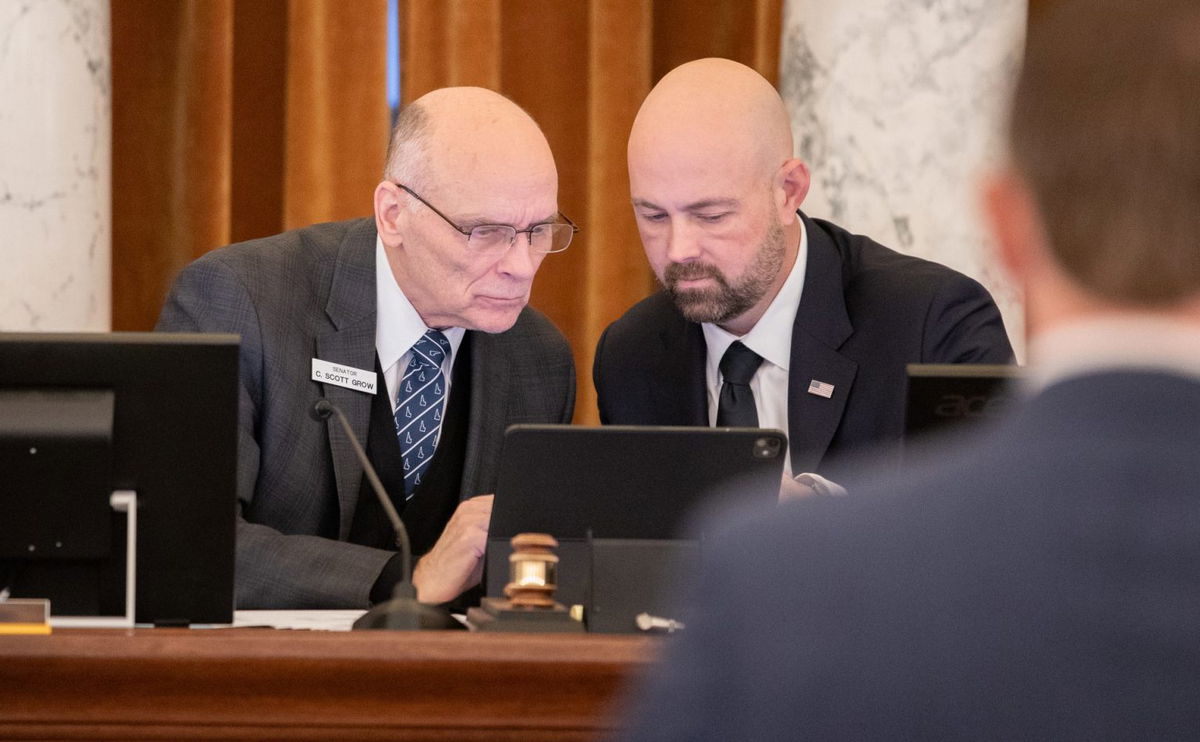
On Monday, legislative staff directed most state agencies to submit budget-cutting plans for 2026 and 2027 — setting a noon Friday deadline. The memos came at the behest of the co-chairs of the powerful Joint Finance-Appropriations Committee: Sen. C. Scott Grow and Rep. Josh Tanner, both R-Eagle.

The Monday memo exempted public schools. But on Wednesday, Grow and Tanner directed the Idaho Department of Education and the state’s Medicaid program to submit similar budget memos, also by noon Friday.

Tanner has said budget cuts are not a done deal. “We want to make sure all the options are on the table as we’re continually working through this,” he told EdNews earlier this week.
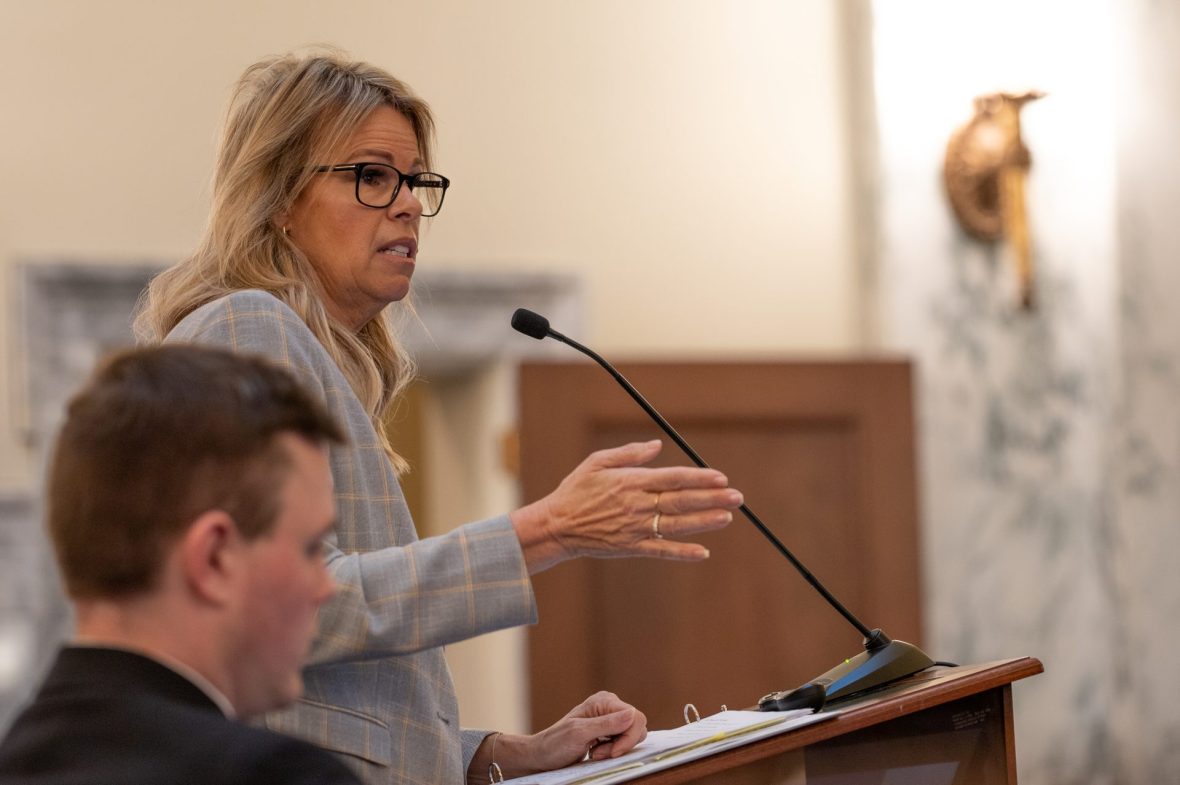
Superintendent of Public Instruction Debbie Critchfield speaks to legislative budget-writers on Jan. 21. (Sean Dolan/EdNews)

But the memos have caused consternation around the Statehouse — and drew a sharp response from state superintendent Debbie Critchfield. On Thursday, she said she would refuse to turn in a plan for budget cuts to public schools.

Friday’s submissions

Many of the agency submissions painted a grim short- and long-term budget picture.

State Board of Education Executive Director Jennifer White noted that colleges and universities have already absorbed budget cuts — starting in August, when Gov. Brad Little ordered most state agencies to reduce spending by 3%. For example, Lewis-Clark State College has already cut $400,000 for adjunct faculty positions, which means students “will face larger classes, fewer class options and sections, and reduced or delayed academic support.” Another round of cuts, across the board, and in the final months of the current budget year, ending June 30 — could lead to unintended damages and “are not a substitute for thoughtful reform,” White wrote in a memo Friday.
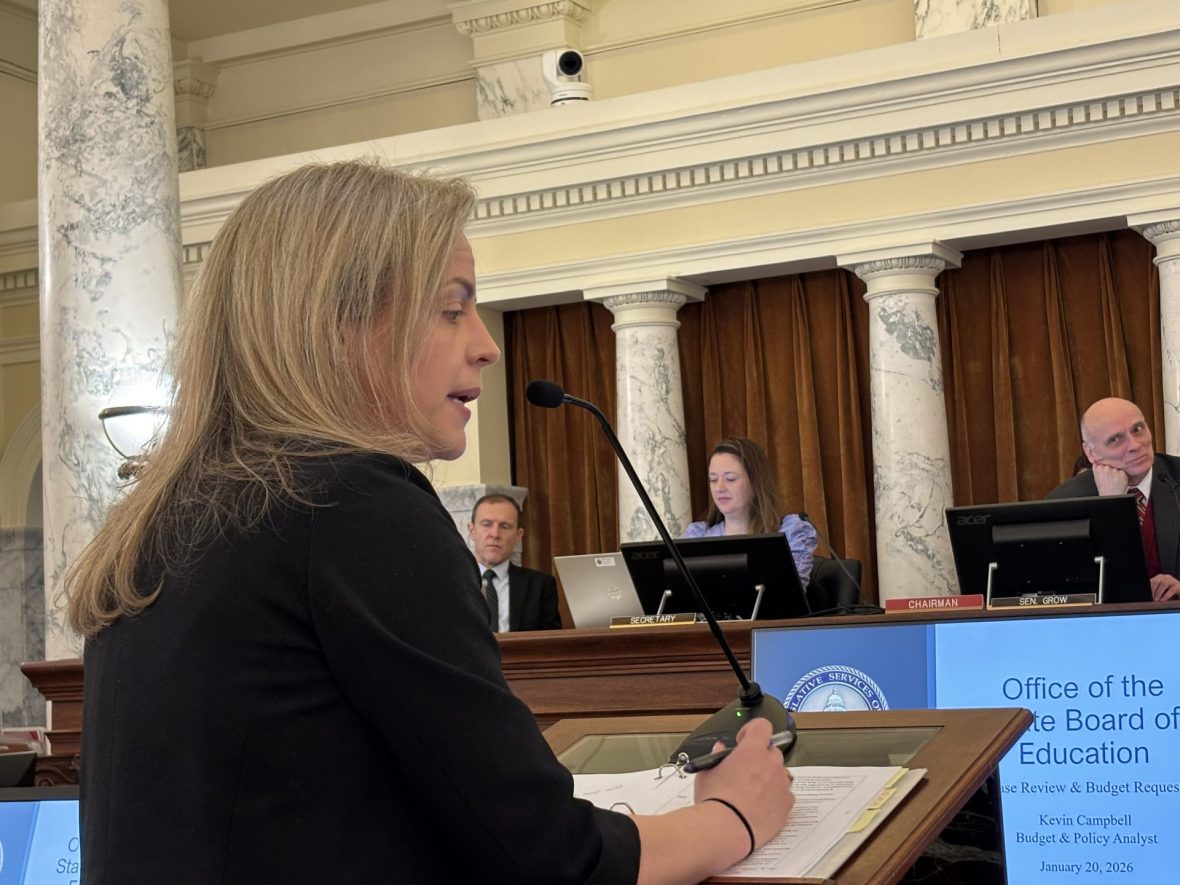
State Board of Education Executive Director Jennifer White fields a question during a Jan. 20 Joint Finance-Appropriations Committee hearing. (Kevin Richert/Idaho EdNews)

“We have prepared good faith submissions, but do not recommend or support further reductions,” she said.

Little’s budget chief said agencies made a good-faith effort to paint an honest picture. The scenarios track with what Little’s office saw last summer, when it explored cuts of 2%, 4% and 6%.

“There’s a reason we landed at (a) 3% (cut),” Division of Financial Management Administrator Lori Wolff told reporters Friday afternoon.

Beyond the education realm, other agencies said cuts could have even more dire impacts. The Idaho Department of Correction said it would have to furlough staff, with “far-reaching consequences across prison operations.” Idaho State Police furloughs would leave the agency with “fewer personnel for patrol and active threat response.”

Not every agency was required to turn in a cost-cutting plan, however. The directives applied only to agencies that receive state general funds — such as proceeds from sales and income taxes. For example, the Workforce Development Council was exempt. Its $75 million Idaho Launch postsecondary aid program and its staff costs all come from dedicated funds. 

What’s in the memos — and education thumbnails

The state agencies were asked to address a series of budget-cutting scenarios: 1% and 2% cuts in the current budget year, ending June 30, and 1% and 2% cuts in the following budget year, which begins July 1 and runs through June 30, 2027.

Here’s a thumbnail look at key education-related agencies:

Public school support

1% cut, $27.5 million per year

2% cut, $55.1 million per year

EdNews first reported Thursday on Critchfield’s pointed response to JFAC. “The public schools budget is more than numbers on a spreadsheet,” she said in her letter to Grow and Tanner. “It represents every one of our students, classrooms, teachers and communities.”

In an EdNews interview, the Republican Critchfield said she “already fulfilled the assignment” by cutting her $2.7 billion public school support budget before the legislative session. This included pulling back a $50 million special education block grant proposal that would have addressed about half of the state’s special education funding gap.

“I will not be recommending further cuts to the public schools budget,” she wrote Thursday.

Critchfield’s letter does not preclude lawmakers from cutting K-12 funding, the largest of all state budgets.

As a statewide elected official — as opposed to a hired or appointed agency head — Critchfield has more power to push back against legislative orders. And two other statewide officials, Secretary of State Phil McGrane and Attorney General Raúl Labrador, did not cut their office budgets after Gov. Brad Little imposed a 3% budget holdback across most of state government.

Colleges and universities

1% cut, $3.8 million per year

2% cut, $7.7 million per year

Boise State University said it could need to delay up to nine faculty hires “for in-demand career programs” such as engineering, health sciences and education. The university might also need to cut staff salaries in university research support and admissions and student support programs. The university also said the cuts could have an impact on charitable giving. “Donors have expressed frustration about being asked to fund basic university operations.” 

Boise State’s memo also addressed its most public-facing program: athletics. Cutting the athletics budget “undermines our ability to compete nationally,” and could translate into a $100,000 hit on maintaining aging facilities used by 600,000 spectators per year.  

University of Idaho officials say they would need to cut staff this year and next, leading to higher student-t0-teacher ratios and curtailed student support and advising programs. Undergraduate research programs would be cut. Faculty searches in research and ag extension programs would be put on hold. The U of I’s longstanding but controversial partnership with the University of Washington medical school — known as WWAMI, for the member states of Washington, Wyoming. Alaska, Montana and Idaho — could face $300,000 in cuts over two years. “A 2% budget reduction … would necessitate downsizing and reallocation of the (WWAMI) faculty workforce.”

Idaho State University would impose mandatory furloughs this budget year, affecting all employees making more than $60,000 per year. In 2026-27, Idaho State would make most of its cuts through staff reductions and restructuring. “(This) will impact student services and support and planned expansion of high-demand workforce programs,” Idaho State wrote. In 2026-27, Idaho State also would launch a $500,000 early retirement program “for eligible contracted employees.”

Cuts also could “jeopardize” a dental education partnership with Creighton University in Omaha, Neb.

Lewis-Clark State College says it could absorb a 2% this year through one-time savings, from midyear staff retirements. But that option would go away next year, and the college would have to cut five positions permanently. Three of the cuts would directly affect the classroom: a full professor’s position in physical life sciences, an associate professor’s post in English and an instructor’s job in social sciences.

Career-technical education

1% cut, $958,000 per year

2% cut, $1.9 million per year

A 2% budget reduction would force the Division of Career Technical Education to cut two full-time state positions. It would also defund CTE programs and faculty support for both K-12 and higher education, and it would defer training, including for rural and volunteer firefighters.

“Reductions affect students today and weaken Idaho’s long-term economic competitiveness by disrupting Idaho grown talent pipelines, reducing employer readiness, and limiting community stability, particularly in rural areas,” Director Pete Risse and other CTE staffers wrote in a memo to JFAC.

Community colleges

1% cut, $684,000 per year

2% cut, $1.4 million per year

College of Eastern Idaho said it would freeze most vacant positions and eliminate seven “crucial” roles in instruction, student support and student life. CEI also would have to reduce cohorts of students entering “high-demand” programs in medical and technology fields.

College of Southern Idaho said it would eliminate one-full time instructor position. Under a 2% cut, it would also lose about $320,000 in operational funds that cover outreach efforts and pay for supplies in science and medical classes. “Students may be asked to absorb some of those costs in order to successfully complete their programs of study.”

College of Western Idaho said every 1% the state cuts would eliminate funding for 2.25 full-time positions. CWI said it would also delay exemptions in “high-demand” and “high-cost” fields.

North Idaho College said it would enact a partial hiring freeze this year, and would limit travel, including for athletes. Next fiscal year, NIC would implement an “early retirement” program that leaves some positions unfilled while others are filled at a lower salary. “While this reduces personnel costs, it removes experienced and knowledgeable employees whose institutional expertise and knowledge cannot be readily replaced.”  

Health education programs

1% cut, $296,000 per year

2% cut, $590,000 per year

This program, which covers residencies for medical school graduates, is a rare growth area in Little’s budget proposal. He has recommended spending an additional $900,000 this year to add 15 residencies. Cuts this year and next year would undermine existing contracts and threaten the effort to grow the program. Cuts are unsustainable, said Ted Epperly, Moe Hagman and Lisa Nelson of the State Board’s Graduate Medical Education Committee in a memo to board leaders.

“The Legislature has made it clear that developing the health care workforce … (is) key in solving Idaho’s physician workforce problem,” they wrote Thursday. “Cutting funding for this priority simply doesn’t make sense.” 

Idaho Department of Education

1% cut, $120,000 per year

2% cut, $241,000 per year

While Critchfield declined to recommend cuts to the public school support budget, she sent JFAC a plan for cuts to her department, which administers public school funds and enforces rules.

Faced with 1% or 2% cuts, Critchfield proposed reducing funding for two “passthrough” programs: Advanced Opportunities and the Local Innovation School Act.

But she warned that the Trump administration’s plans to dismantle the U.S. Department of Education — which Critchfield supports — could mean the state will have a growing responsibility to distribute federal funding to schools.

“I believe it will require continued state funding for the department and its requirements to fulfill state and federal laws,” she said.

Commission for Libraries

1% cut, $49,700 per year

2% cut, $99,400 per year

Idaho State Librarian Dylan Baker said the commission would hold off on filling two “critical” vacancies — deputy state librarian and library consultant — this budget year to save 2%. Next fiscal year, Baker proposed eliminating two contracts through the state’s Libraries Linking Idaho database.

“This action would directly impact Idahoans by reducing access to statewide online research and information resources used by students, job seekers, educators, and the general public.”

STEM Action Center

1% cut, $34,000 for this year

2% cut, $67,000 for this year

Unlike many state agencies, the STEM Action Center only submitted a plan to cut this year’s budget. Staff savings would cover a 1% cut. But if the cut increases 2%, the center would have to reduce aid for rural students hoping to attend cut would affect science and engineering fairs.

Idaho Public Charter School Commission

1% cut, $2,000 per year

2% cut, $4,000 per year

The small commission, which oversees most of the state’s charter schools, would  “significantly limit travel and apply heightened scrutiny to all travel requests.”

Click here to follow the original article.

From Pocatello to the Grammys: How Jessica E. Jones Found Her Voice

Danielle Mullenix

Pocatello, ID (KIFI) In the world of opera — where careers are built over decades, and recognition is rare — Pocatello native Jessica E. Jones’ Grammy win is a remarkable achievement.

But the real story isn’t just the award.

It’s the journey.

A Voice Born in Idaho

Long before she ever stepped onto a national stage, Jessica E. Jones was singing in Pocatello, Idaho, surrounded by a family that valued music and creativity. With a piano in the house and encouragement at every turn, Jones found her voice early — and never let it go.

Young Jessica E. Jones growing up in Pocatello.

“I was a little mockingbird baby growing up,” Jones said. “I started speaking and singing super early, and I was always making up songs as a child. My parents – lucky me – saw that and wanted to foster and create an opportunity for me to explore that.”

As a teenager, she drove nearly 50 miles after school to Idaho Falls to rehearse for roles with the Idaho Falls Opera theatre, committing herself to an art form few her age even considered. From school choir to community theatre, Jones dove into the world of live performance and never looked back. It wasn’t just a hobby – It was work.

And it was worth it.

It was at the Idaho Falls Opera Theatre where Jones met and began training with the late Kristine Ciesinski, a world-renowned operatic singer and professor at BYU.

Kristine Ciesinski, an international Opera singer and Professor at BYU, also known for her love of piloting and instruction at Teton Aviation.

“She saw something in me, which was really special,” Jones said.

Ciesinski mentored Jones as a young artist and recommended her to the University of Houston for proper training as an operatic singer. After auditioning for the program, Jones was accepted and traded the Idaho mountains for Texas prairies.

Training That Made the Difference

Jones went on to earn both her bachelor’s and master’s degrees in vocal performance from the University of Houston, where her talent quickly stood out. But one of the most pivotal chapters in her career came when she joined the Utah Opera Resident Artist Program.

“I left my hometown at 18, but it’s amazing how many people are just supporting you that you don’t even realize, or watching your career,” Jones said. “I still think that my background and my personality and the way I thought about having an experience with other musicians were formative from my time growing up in Idaho.”

The program pushed her to learn music quickly, perform under pressure, and adapt — skills that would later prove essential.

“It was sort of my dream program to be an apprentice,” Jones said. “I took every opportunity I could with world-class musicians all around me.”

For young opera singers, resident artist programs are a proving ground – long hours, fast turnarounds, and little margin for error. For Jessica E. Jones, it was where preparation met opportunity.

That preparation paid off when Jones joined the Santa Fe Opera.

The Role That Changed Everything

That opportunity arrived at the Santa Fe Opera, where Jones was cast in the world premiere of The (R)evolution of Steve Jobs. She helped create the role of Chrisann Brennan, the mother of Steve Jobs’ first child, originating the character from the ground up.

The performance was recorded, and none of them expected what would come next.

In 2019, the recording won the Grammy Award for Best Opera Recording.

Jones at the 2019 Grammy Awards Ceremony.
Back in Idaho, Jones’ parents streamed the announcement from a parking lot, watching in disbelief as their daughter’s name became part of Grammy history.

“My parents took [the Grammy], and put it on their mantel,” Jones said. “And that’s actually where it still is.”

Jones expressed that her journey from Pocatello to the Grammys was paved by the mentoring she received and the fellowship of artistry back at home.

“When I started receiving all these messages from home, it really tethered me back to Earth,” Jones said. “People say, ‘Oh, I’ve never met anyone from Idaho’, or ‘Oh, people sing there?’ Like we’re somehow different people when we’re not.”

Jones went on to express her sentiment toward the artistic community around Eastern Idaho and how it shaped her story.

“There’s a vibrant community here of artists and musicians and people who just love music and love art,” Jones said. “This is as much their Grammy as it is mine, because we all can take ownership of that.”

More Than an Award

Today, Jessica E. Jones teaches opera to artists in Boise and focuses on the role of a lifetime – being a mother. She has gained an impressive resume performing at opera houses across the country, but she remains deeply connected to her roots. She continues to teach, mentor young singers, and advocate for making the arts accessible to new audiences.

“It doesn’t matter where you’re from, you have to be willing to bet on yourself and to take risks,” Jones said. “You have to put yourself out there. If there is an opportunity in life that interests you, we have a short time on this planet. Go for it.”

Jones’s journey proves that success isn’t just about talent — it’s about persistence, preparation, and believing that your voice matters. World-class talent doesn’t come only from major cities. Sometimes, it starts in small towns, with big dreams — and a voice brave enough to be heard.

Click here to follow the original article.

Kickstart into February with warm temperatures and clear skies

Danielle Mullenix

We are starting off the month of romance with sunny skies and warm temperatures. High pressure will dominate our forecast for the remainder of this first Sunday of February and the foreseeable future. There is some patchy fog still looming around the horizon for the overnight and early morning hours. With this high-pressure system rebounding in from the West, we’ll also see warmer daytime temperatures this upcoming week, with highs climbing into the upper 40s and lower 50s.

AIR STAGNATION ADVISORY IN EFFECT UNTIL NOON MST MONDAY:

WHAT…Poor air quality will continue. This is due to an inversion and stagnant air near the surface, which will continue to trap pollutants.

WHERE…Franklin/Eastern Oneida Region and Lower Snake River Plain.

WHEN…Until noon MST Monday.

IMPACTS…Periods of air stagnation can lead to the buildup of pollutants near the surface.

We can expect partly sunny skies on Sunday, with high temperatures ranging from 45° to 50° across the Snake River Plain. No hazards or weather impacts are expected to reach our region as we close out the weekend. A light north wind blowing in will cause a slight chill. An overall pleasant weekend in the Snake River Plain and mountainous areas. We are going to see above-average temperatures & clear skies into the late week and beyond.

A shortwave of cooler temperatures will move over the area by Monday, bringing a slight chill to our lows and the possibility of flurries in the highlands. Slightly breezy winds will blow throughout the week, bringing a slight chill to the air. We will see a warming trend on Wednesday, quickly heat the area back up, with highs getting into the 50s by the end of next week.

Click here to follow the original article.

Peaceful vigil and pro-ICE protest in Rexburg

Maile Sipraseuth

REXBURG, Idaho (KIFI)– Two demonstrations took place in Rexburg on Saturday, drawing community members to the Madison County Courthouse for both a vigil and a separate rally in support of ICE and Border Patrol.

The vigil began with speeches from the organizers of the event, followed by a moment of silence. Alongside candles, signs criticizing ICE were displayed by demonstrators.

Vigil attendees felt the event brought attention to issues they feel are especially important in eastern Idaho.

“Being in a red state it is most important in a city like Rexburg,” vigil attendee Blaine Sanderson Stevens said. “You can tell in the community that being here, out of anywhere else, is important to people, that there is a community here.”

Another organizer highlighted the importance of people showing up for their community.

“The whole point of our local political party existing is we want to engage civically with our community and help bring attention to issues that are very pressing and important to us. The recent killings of innocent people by ICE agents is obviously one of them,” Chair of the Madison County Idaho Democrats Ethan Sandford said.

Across the street, a separate rally was held in support of ICE and Border Patrol. One supporter said he believes the agency plays a necessary role in national security and law enforcement.

“I can understand where people are coming from protesting ICE, but I think ICE is actually pretty important for this country. I think there is a lot of crime that are going on through these immigrants, and it is causing a lot of issues in America,” attendee Josh Anderson said.

Both protests ended peacefully.

Click here to follow the original article.

Anti-Ice Protests Sparked by Minnesota Fatalities Spread Across Eastern Idaho

Hadley Bodell

POCATELLO, IDAHO FALLS, Idaho (KIFI) – Anti-ICE protests were held in both Pocatello and Idaho Falls today. Hundreds lined the streets of both cities in protest against ICE activity, sparked by the second shooting in Minnesota last weekend.

The Pocatello protest was organized by Southeastern Idaho Citizens for Democracy. Hundreds showed up to protest ICE activity. The protest began at Caldwell Park before protesters walked over to the Bannock County Courthouse.

Local News 8 spoke with protesters about what they would like to see change in the country and why they showed up with their signs today.

“I’m here because, what’s happening right now in our country is messed up,” said Finn, a protester. “All my life in school we’ve been told to be kind, help people, and do what’s right. And we’re not seeing that reflected right now.”

Another protester, Raye, told us she is disgusted by what she sees in the headlines and from the Trump Administration. Many of the signs protesters held today supported immigration and an impeachment of President Trump.

In Idaho Falls, the Young Democrats of Bonneville organized their own protest. It was held at the Broadway Bridge downtown, and over 320 people lined the street.

Miranda, with the organization leading the protest, told us everyone should care about the ICE issues because it could happen to them next. She says we never know when things could escalate.

“I believe sometimes the law enforcement works with ICE and we never know when it could be brought over here locally,” said Miranda. “We need to be ready.”

She added that organizations like the Young Democrats can help people find an avenue to speak out against the issues they care about and do good in their commuities.

In addition to these two protests, a vigil was held at the Madison County Courthouse in Rexburg in honor of Renee Good and Alex Pretti. More details can be found at localnews8.com.

Click here to follow the original article.

Dry conditions and partly sunny skies this weekend

Danielle Mullenix

High pressure will dominate our forecast for the weekend and the foreseeable future. There is some patchy fog still looming around the horizon for the overnight and early morning hours. With this high-pressure system rebounding in from the West, we’ll also see warmer daytime temperatures this weekend, with highs climbing into the upper 40s and lower 50s.

AIR STAGNATION ADVISORY IN EFFECT UNTIL NOON MST MONDAY:

WHAT…Poor air quality will continue. This is due to an inversion and stagnant air near the surface, which will continue to trap pollutants.

WHERE…Franklin/Eastern Oneida Region and Lower Snake River Plain.

WHEN…Until noon MST Monday.

IMPACTS…Periods of air stagnation can lead to the buildup of pollutants near the surface.

In Saturday’s forecast, there is a chance of fog in the morning, which should clear as the sun rises. With mostly sunny skies in the afternoon, we’ll see a bit of dry weather across the region. High temperatures in the lower to mid 40’s for the Plain. The probability of precipitation is very low for the more Northern Highland areas.

We can expect partly sunny skies on Sunday, with high temperatures ranging from 45° to 50° across the Snake River Plain. A light north wind blowing in will cause a slight chill. An overall pleasant weekend in the Snake River Plain and mountainous areas.

A shortwave of cooler temperatures will move over the area by Monday, bringing a slight chill to our lows and the possibility of flurries in the highlands. We will see a warming trend on Wednesday, quickly heat the area back up, with highs getting into the 50s by the end of next week.

Click here to follow the original article.

Save Teton Pass Trail campaign hits $1.5M mark

David Pace

WlLSON, Wyoming (KIFI) – The effort to complete a pedestrian trail over the Teton Pass continues to gain traction, hitting an important milestone of $1.5 million raised today.

“It’s probably the most dangerous piece of road anywhere in Teton County, Idaho, or Teton County, Wyoming, right now. You’ve got 12,000 cars a day traveling 60 miles an hour,” said mountain biker Tim Young.

The “Save Teton Pass Trail” campaign, led by a hardcore group of volunteers, is looking to finally connect Teton Valley, Idaho and Jackson Hole, Wyoming with a non-motorized path.

The project is shovel ready and if completed, would include a pedestrian skier underpass.

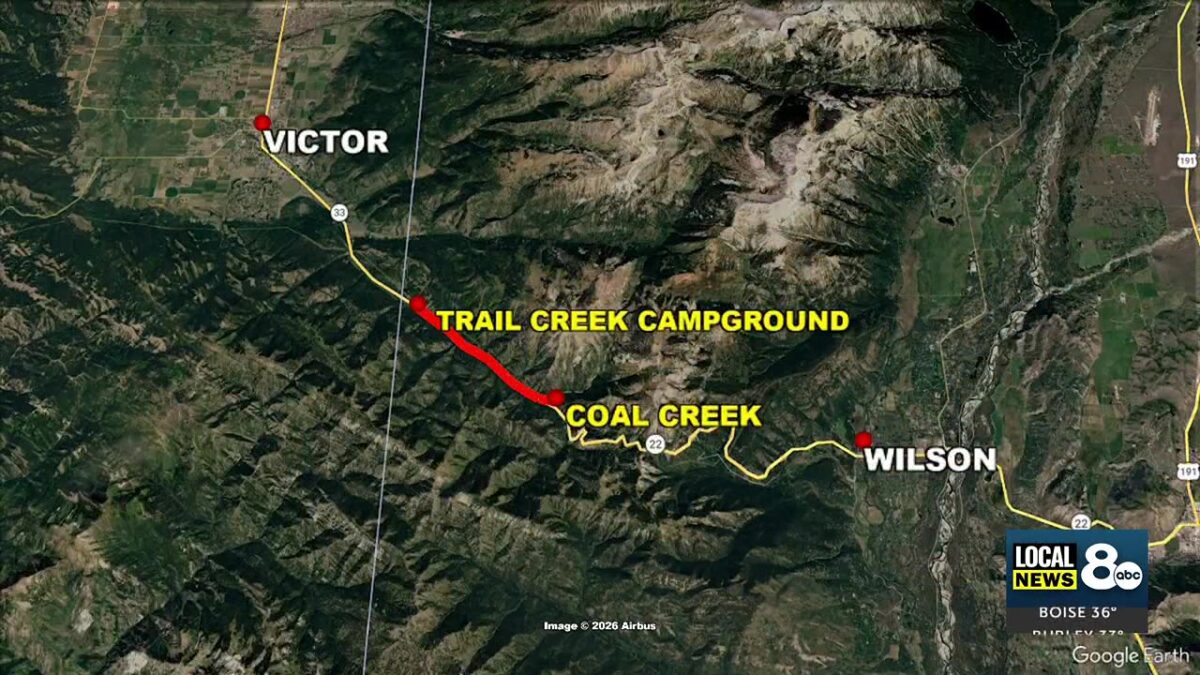
The proposed trail consists of a three- to four-mile stretch between Trail Creek Campground and Coal Creek on Wyoming State Highway 22, crossing technical terrain that requires sturdy, retaining walls.

Map of the Teton Pass Trail project in Wyoming.
“It’s very narrow, and it’s also the only way [for] people traveling by bicycle, the people that are going mountain biking, skiers that are coming back from a trip in the Tetons that are skiing back to their car – everyone has to use that road,” Young said.

The campaign has received more than 400 donations – capped with a $200,000 donation today.

Organizers have extended the deadline to March 1 to raise another $1 to $2 million to complete the project, Young said.

Interested individuals can visit tetonpass.org to learn more or donate.

Click here to follow the original article.

Mighty trees: Idaho Falls earns Legacy of Leaves award

David Pace

IDAHO FALLS, Idaho – The award-winning tree canopy in Idaho Falls has garnered another recognition.

The City of Idaho Falls received the “Legacy of Leaves” honor for 2025 by the Idaho Nursery and Landscape Association.

The award follows an Arbor Day celebration last spring where Sunnyside Elementary and Career and Technical Education Center students planted 17 trees at Heritage Park.

“We spend a lot of time and effort on our urban forestry canopy here in Idaho Falls,” the city’s Parks and Recreation Director PJ Holm said. 

Idaho Falls has also been designated a “Tree City, USA” for 33 consecutive years.

“We are a long-time recipient of Tree City, USA, which says that you put a portion of your city’s budget back into tree maintenance and tree canopies,” Holm explained.

The Idaho Falls Riverwalk and local parks boast a wide variety of tree species and flora.

“I love how when I walk through downtown and I walk through the park, I just see so many trees,” said Idaho Falls resident Hunter Demmerly. “I get to see the beautiful river that overlooks the city. It’s a kind of a highlight to my day when I’m on my way to work.”

Fellow Greenbelt stroller Nick Bellegante moved here from the state capital. 

“I lived in Boise for about a decade, and for a place called the ‘City of Trees,’ I have to say, Idaho Falls has it beat!” Bellegante said. “They’re everywhere! It really gives the town its own personality.”

District 91 students join Idaho Falls Mayor Rebecca Casper, unfurling a “Tree City USA” flag last spring at Heritage Park.
Click here to follow the original article.

Ski Patrol at Kelly Canyon on Alert amid High-Risk Season

Hadley Bodell

RIRIE, Idaho (KIFI) – Kelly Canyon Ski Resort is facing nearly half the amount of snow than they usually see, and with the addition of the terrain park, skiers are more prone to accidents than ever. Thankfully, the ski patrol at Kelly Canyon is hard at work hours before the mountain opens to keep everyone safe.

Avid skiers and snowboarders recognize the red-coated, swift-skiing athletes on the mountain anywhere-the ski patrol. Before the mountain opens, the ski patrol rides the lifts and sweeps all the runs at the resort, ensuring no hazards are present. They fix the fencing and signs as well as open the top shack. Inside, ski patrol members check the trauma packs for all the essential emergency gear so they are ready to go to the rescue if an accident happens.

Throughout the day, patrollers on shift stay busy even when patients aren’t inside the aid room. “We go on each run looking for, potential guests that are having problems either with their equipment or their injured,” said Dana Miller, Director of the Kelly Canyon Ski Patrol. “If we see anyone injured, then we radio for a toboggan. We go assess that patient, make sure they’re okay or not okay, and get whatever they may need.”

Some of the ski patrol members are paid, others are volunteers. There are over 100 members of the patrol, ranging from 20 years of experience to first-year patrollers. Ski patroller Susan Scheer-Shanklin has been patrolling for almost 10 years, and said she “loves every second of it.”

“I want people to know that we’re not there to catch them doing things wrong,” said Scheer-Shanklin. “We’re there to hopefully keep them safe.”

This season has been particularly strange because of the lack of snow. The opening of the terrain park has also led to almost 90 injuries reported by the ski patrol so far this season at Kelly Canyon.

“We also have a lot of beginning skiers, which leads to a lot of falls,” said Miller. “With the terrain park, we see a lot of upper extremity injuries.”

The patrol is ready to handle these kinds of emergencies because of their extensive training. Miller told me they all went through a four-month Outdoor Emergency Care course in addition to a training for outdoor rescues on the mountain.

Scheer-Shanklin said the comraderie amongst the entire ski patrol feels like family. The group of dedicated, well-trained professionals is always there to help on the mountain.

“They want to help people and they’re not in it for their own personal gain, but just because they want to help,” said Miller. “So when you get those kind of people, that attitude, it makes good patrollers.” 

Click here to follow the original article.

Idaho Falls Dealership wins prestigious award

Par Kermani

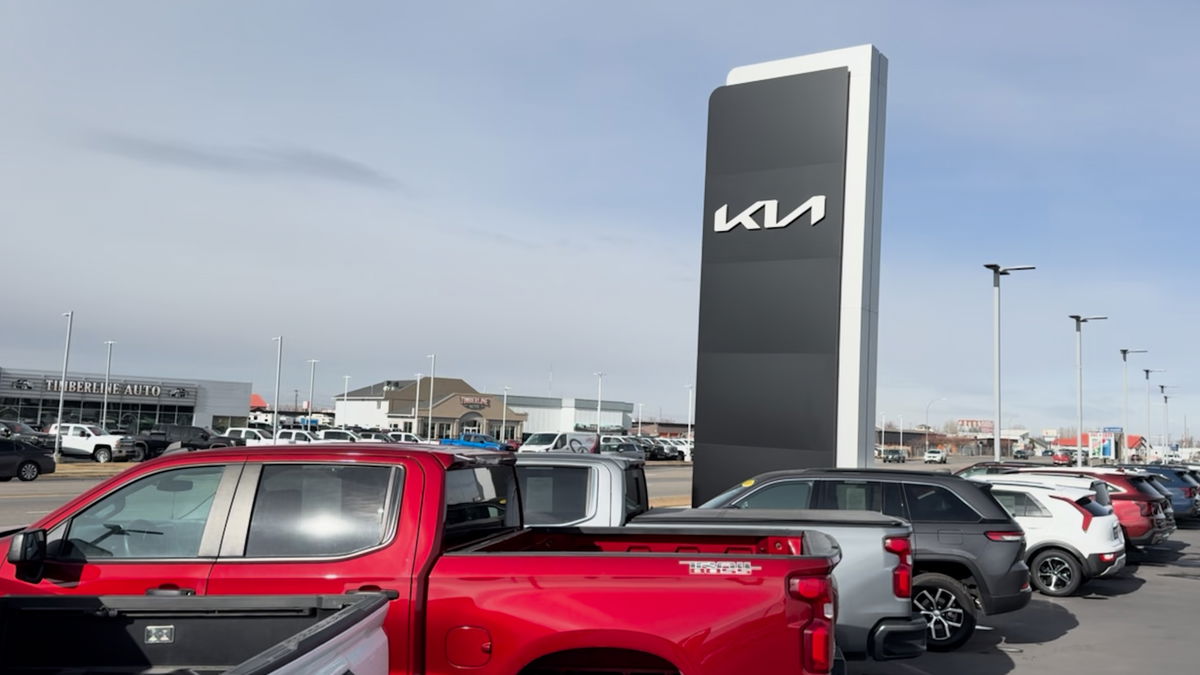
IDAHO FALLS, Idaho (KIFI) — Stones Kia has been named among the top 3% of Kia dealerships worldwide. This recognition is a testament to the dealership’s excellence in both operational performance and customer service.

The Idaho Falls-based dealership is one of only 100 dealers globally to receive the honor this year. The selection process, conducted by Kia, evaluates facilities based on high-level grading across sales, service, and parts departments.

“Something we didn’t expect to have in Idaho Falls, Idaho,” said Kyle Stringham, general manager of Stones Kia. “We’re very proud to win the prestigious award this year.”

Dealership success, according to Stringham, stems from a business model fundamentally rooted in consumer feedback and the quality of its staff.

Customer surveys and data collected by organizations such as J.D. Power are used to determine the rankings.

“The biggest thing I want to do is emphasize how proud I am of all my employees,” said Stringham. “I’m just one person. I don’t make this whole dealership run without all of my other employees to put this all together. This would not have been possible.”

Despite the global recognition, Stringham said the dealership remains committed to maintaining a “small-town feel” as the Eastern Idaho community continues to grow.

“We still want that camaraderie,” Stringham said. “We still want to feel like we’re dealing with friends and family and people that we know. And that’s what makes Stone succeed so well, because you come in here and we’re not talking to you like a customer… You’re our neighbor.”

Looking forward, the dealership plans to remain active in community events and maintain a service-first approach that extends beyond the Kia brand. Stringham, who started his career in detailing before working through every department in the industry, noted that his technicians are trained to assist travelers and locals regardless of the make or model of their vehicle.

“If we continue to treat people like that, we’ll always have a great business for people to come to,” Stringham said.

Click here to follow the original article.