Gov. Little returns from “productive” D.C. trip, Idaho Democrats denounce “cruel” withholding of SNAP benefits

Seth Ratliff

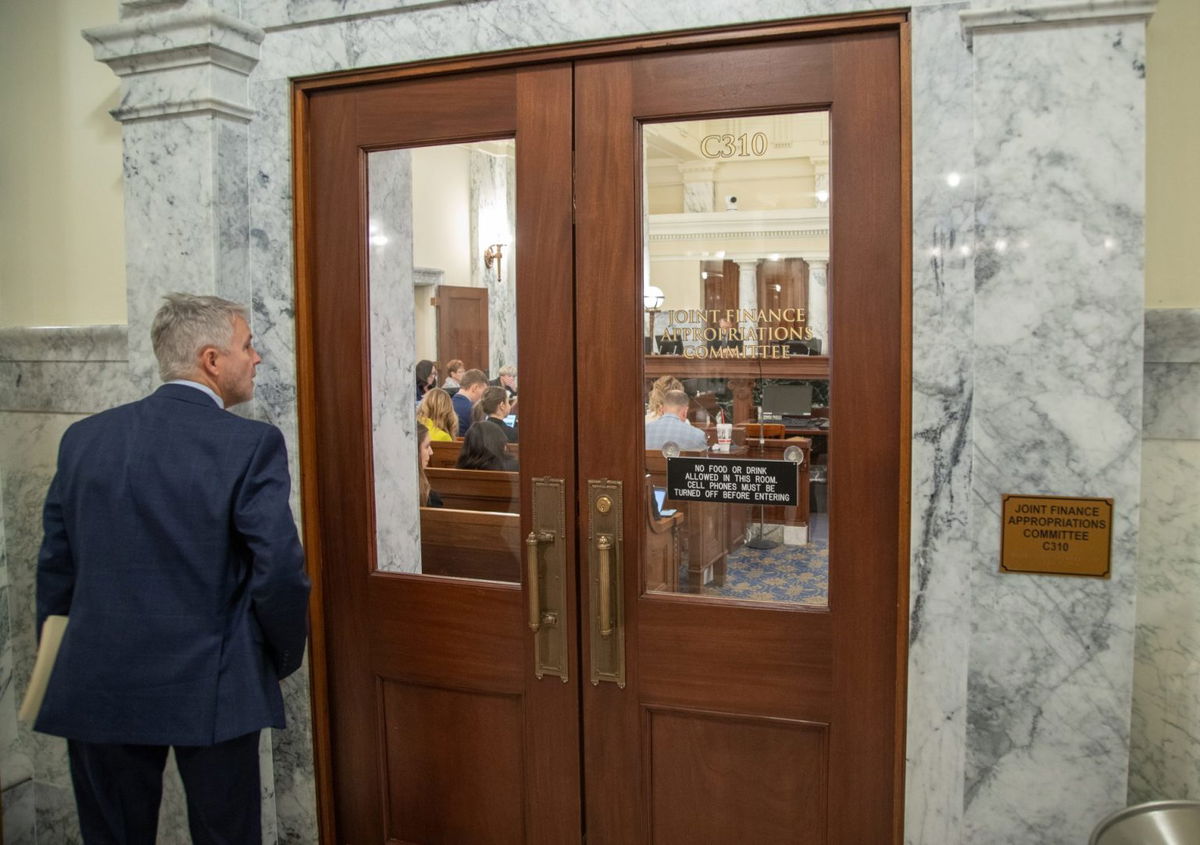
WASHINGTON, D.C. (KIFI) — Governor Brad Little recently wrapped up a high-profile trip to Washington, D.C., meeting with President Donald Trump and other top federal officials to discuss state priorities. Chief among them the impact of the ongoing government shutdown on Idaho families.

Key Meetings and State Priorities

Governor Little summed up his visit saying, “I am so pleased I was able to meet with President Trump and his team during a productive and patriotic visit to Capitol Hill. We covered a lot of ground in our discussions, and I renewed an invitation to the president to visit Idaho.”

Little’s office says their discussions focused mainly on the Idaho launch program and how the current government shutdown is hurting Idaho families.

Little also met with House Speaker Mike Johnson to address the shutdown’s threat to the Supplemental Nutrition Assistance Program (SNAP), commonly known as food stamps. The USDA has warned states that the ongoing shutdown makes it almost certain that over 42 million Americans, including over 130,000 Idahoans, who rely on these essential benefits will not receive crucial funds in November.

Related: No SNAP benefits for November means local food banks bracing for surge in demand

Other meetings included talks about land management, forest health, trade with Japan and Canada, and supporting veterans in Idaho. He also met with Idaho native Alex Adams, with the U.S. Health Department, to discuss child welfare reforms and cutting bureaucratic red tape. The Governor expressed optimism that these discussions will lead to stronger federal-state partnerships in the coming months.

Democratic Criticism: “Cruel” Withholding of Funds

While the Governor struck a hopeful tone, his return from his D.C. visit came amid sharp criticism from the state’s Democratic leaders, who pointed to the trump administration’s handling of SNAP benefits.

Idaho Democratic Party Chair Lauren Necochea released a scathing statement, placing the blame squarely on the Trump administration for failing to authorize the nearly $6 billion in available USDA contingency funds that could keep food aid flowing into November.

“The Trump regime is more focused on ballrooms and billionaires than on making sure Idaho families can put food on the table,” Necochea stated. “His decision to withhold food assistance rather than access $6 billion available in contingency funds is cruel.”

Necochea also criticized Idaho’s entire Republican delegation—including U.S. Representatives Russ Fulcher and Mike Simpson, and Senators Jim Risch and Mike Crapo—as “complicit” in the withholding of funds, stating they “refused to lift a finger” to protect food benefits. She specifically attacked Little for returning “empty-handed” and failing to take action to protect both SNAP and the nearly 100,000 Idahoans facing doubled health care premiums.

“He made zero effort to protect nearly 100,000 Idahoans whose health care premiums are about to double and took no action to ensure families can afford groceries,” stated Necochea. “Idahoans deserve leaders who will fight for them, not politicians who treat Trump’s approval like it matters more than feeding Idaho families.”

Click here to follow the original article.

Blackfoot firefighters, aided by off-duty/volunteer crews, tackle structure fire in 30 minutes

Seth Ratliff

BLACKFOOT, Idaho (KIFI) — Over the weekend, a small crew of Blackfoot firefighters, with the help of volunteers and off-duty personnel, tackled a dangerous structure fire in under 30 minutes despite minimal staffing.

The emergency began on Saturday afternoon, October 25. A Blackfoot Fire Department Ambulance was heading to Blackfoot from Rockford on Highway 39 to provide coverage, as multiple other ambulances were out on calls. While driving, the crew suddenly spotted a column of smoke and flames coming from a shop building near the highway. They immediately radioed the alarm to Station 1, quickly geared up, and began an initial walkaround of the burning structure.

Due to heavy demands on the department from ongoing ambulance calls, Engine 3 was dispatched with only one firefighter on board. In the critical opening minutes of the operation, BFD says there were only three firefighters on scene.

Despite these challenging odds, the crew’s actions were fast and decisive, bringing the fire under control within 30 minutes of the initial call. This was largely due to the help of multiple off-duty and volunteer firefighters, along with a water tender from the Fort Hall Fire Department, says BFD.

At the same time, a search team firefighter found an individual who had been sleeping in an attached exposure building, a nearby structure that was at risk, and safely guided them to safety.

The Blackfoot Fire Department extended its sincere thanks to the Fort Hall Fire Department and their dedicated volunteers, stating, “We are proud to serve the citizens of Blackfoot and Bingham County and are always ready to answer the call, wherever and whenever it comes.”

Click here to follow the original article.
Live Video: Local News 8/Chamber of Commerce host Idaho Falls Mayoral Debate

Seth Ratliff

IDAHO FALLS, Idaho (KIFI) — With Election Day less than a week away, Local News 8 and the Greater Idaho Falls Chamber of Commerce are hosting a special mayoral debate tonight, October 29, at 6 p.m.

LIVE UPDATES6

6:58 PM: In closing remarks, Ashcraft highlights the history of the area and how the challenges of the past played a role in creating the City of Idaho Falls. “Right now growth is a challenge… but perhaps the better word is opportunity, I think it’s an opportunity for us to innovate and unify… I think that’s the opportunity we have today. And that’s the opportunity I want to work towards,” says Ashcraft.

6:56 PM: Burtenshaw emphasizes her experience in City Leadership. “I am ready to be the mayor on day one. I know the issues the city is facing…I recognize that growth is causing issues and frustrations. I am ready to be the mayor for all… I am an employee of the city of Idaho Falls. I work for you.”

6:53 PM: The candidates begin their closing statements. Alldridge goes first. “Idaho Falls is at a crossroads. We could continue down the road we’re on or we could introduce a change in leadership… moving back to what the citizens want. We want to maintain our character and improve growth the right way…” says Alldridge. He continues to emphasize how new leadership brings new opportunities to citizens and city workers.

6:45 PM: Alldridge responds, “The things we know we have to keep are public safety and the things that are owned by the city…My desire wouldn’t be to cut, but to figure out how we could be better stewards of those tax dollars.”

6:44 PM: Long asks Alldridge, “Can you explain how state holdbacks and recent state tax rate reductions might affect city revenues? What city projects would you cut or protect?”

6:42 PM: Burtenshaw’s response, she doesn’t know what her opponents would do, but she would encourage the City to work more with the Chamber of Commerce. “I do believe that the role of government is to get out of the way of businesses.”

6:42 PM: Baker asks Burtenshaw. “Do you agree with that definition of a business-friendly environment, or does it mean something different to you? And specifically, how would your approach to working with the Chamber and local businesses differ from your opponent’s?”

6:40 PM: Ashcraft emphasizes using the Idaho Falls Redevelopment Agency to make a property more desirable. “I think we need to encourage the developers and help them know that it’s our vision.”

6:34 PM: Long asks Ashcraft How would you encourage developers to look at infill lots which create liabilities for the city while not providing social or economic return?

6:10 PM: Ashcraft goes on to explain his time at BYU-I and working for the city of Ammon, and how that experience can apply to the City. In response, Burtenshaw highlights her time at BYU and her engineering degree, as well as her work on the Idaho Falls City Council. Alldridge comments on how his time as an entrepreneur will help the City.

6:08 PM: Doug Long asks the candidates to outline their education and how that would apply to the “job interview” of running the City of Idaho Falls. Ashcraft is the first to answer.

6:06 PM: Ashcraft begins his opening statement — “I’m not sure it’s hard to pinpoint that cities became something that I came about. I know that on my mission, I convinced my companion to attend a city council meeting in France so I could see how they did things there.” Ashcraft goes on to highlight how he participated in student government at BYU-I. ” I think there is a lot of stuff that I learned from the journey that I’d like to bring to Idaho Falls, to use the knowledge that I’ve learned and gained.”

6:04 PM: Burtenshaw begins her opening statement — “I was raised here in Idaho Falls, graduated from Bonneville High School and went on to get a degree in mechanical engineering from BYU…I think like an engineer and I act like an engineer.” Burtenshaw goes on to explain that to run a City, a leader needs connections to the State. “It requires a lot of relationships in the legislature; I have the knowledge.”

6:02 PM: Alldridge begins his open statement — “Idaho Falls is a special place… we wanted to be part of this amazing community. As time’s gone on, we’ve seen things that have changed.” Alldridge emphasizes in his address how he’d like to bring his experience in the private sector into city management. “I think people think of the Mayor as more of a ceremonial thing. But a mayor has a lot of executive needs.”

6:00 PM: Local News 8 Anchor Doug Long starts off the debate, coming to you live from the campus of the College of Eastern Idaho in Idaho Falls. Over the next hour, candidates will have the opportunity to answer questions from the moderators

Rules, each candidtate will give a 2 minute opening statement. Following that, moderators Long and Baker will ask each candidate a direct question. They’ll have 2 minutes to respond.

5:55 PM: The candidates have taken their podiums as Chamber CEO Paul Baker addresses the crowd.

5:30 PM: Lisa Burtenshaw, Jeff Alldrdige, and Christian Ashcraft have entered the room, milling with the small crowd that has already gathered as we prepare for the debate to begin.

ORIGINAL:

Candidates Lisa Burtenshaw, Jeff Alldrdige, and Christian Ashcraft are scheduled to attend. Local news 8’s Doug Long and Idaho Falls Chamber CEO, Paul Baker, will be moderating the event.

This event is designed as a true debate to highlight the differences in policy and platform among the candidates, moving beyond the public forum style of events in the past few weeks. Paul Baker emphasized the goal, saying, “We want to dive in and get past the surface and find out what’s going on underneath and what they’re thinking as to what the future of the city should be.”

Debate questions have been sourced from a poll of Chamber members.

“Given that we’re from the Chamber of Commerce, a lot of it is going to be around economic growth,” Baker noted. “What are we doing to make sure that we’re still appealing to other people who want to move in and set up shop here? As well as, [how will we] enhance and grow what we already have here to ensure that we continue to be healthy and strong?”

Tune in or join us in person tomorrow night at Building Three at the College of Eastern Idaho. Doors will open at 5:30 p.m. There is limited seating available.

Click here to follow the original article.

No SNAP benefits for November means local food banks bracing for surge in demand

Chris Nestman

IDAHO FALLS, Idaho (KIFI) — The United States Department of Agriculture recently announced that, due to the government shutdown, Supplemental Nutrition Assistance Program or SNAP benefits (also known as food stamps) will not be issued for November.

The cut in funding means Americans who rely on the system to buy food will have to find alternative means to get the food they need. It also means that unless the government shutdown is ended and funding is restored, food banks around the state are preparing for a large surge in demand over the next few days and weeks.

“We are expecting a surge in demand,” said Rebecca Larsen, a director with the Eastern Idaho Community Action Partnership in Custer and Lemhi counties, who operates a local food bank. “The families that get SNAP benefits now are not going to get them next month. So we are expecting an influx of those families.”

Larsen says SNAP recipients in rural areas are especially vulnerable, as there are limited grocery options in town to shop at, and many who can’t afford to travel to cities like Idaho Falls or Pocatello to buy in bulk. It means the only option is turning to food pantries like what Larsen runs in Salmon and Challis.

It’s a similar story with the monthly Clark County Food Pantry in Dubois, where they’ll have to make available donations stretch farther.

“We’re a small community, and so we don’t necessarily expect more people,” said Tom L. Strong with the Dubois-based food pantry. “But we expect those people will need more food than they normally would.”

Strong said their pantry provides boxes of food once a month for the Clark County community until its gone. “Hopefully, we can give them enough to supplement them through this,” said Strong.

Both Strong and Larsen say the best way to help local food banks immediately is through direct food donations. They will accept monetary donations as well, but food donations mean they can turn around and get it to people in need quickly.

“We really appreciate the proteins: peanut butter, canned meat, canned chicken, canned tuna,” said Larsen. “Proteins really go far, and that’s something that our food bank is lacking right now.”

For those interested in donating to any local food bank. A map with information and phone numbers across the state can be found HERE.

Click here to follow the original article.

Idaho Falls Shelter: Pet surrenders aren’t just a -post-holiday problem—The need for help is year-round

Maile Sipraseuth

IDAHO FALLS, Idaho (KIFI)– As winter sets in, animal shelters across the country brace for an unfortunate trend: a surge in surrendered pets.

According to most reports, animal shelters fill up more during the winter months, most often after Christmas. But for the Idaho Falls animal shelter, they see influxes of animals coming into their shelter throughout the year.

“We do see an influx in dogs and cats after Christmas, when people realize a pet wasn’t a good fit or they just weren’t prepared,” explains Officer Danielle Harker of the Idaho Falls Animal Control. “But we also generally see an increase in the summer months when it gets a little bit warmer, and people are leaving their dogs outside more often; they tend to escape and get out.”

The most demanding time of year, however, is often spring.

“We’re always looking for fosters, especially for cats and kittens. We go through what we call kitten season in the spring months,” Officer Harker notes. “We are constantly getting little bottle babies that need to be bottle-fed around the clock, or ones that just aren’t quite big enough for adoption yet.”

Besides fostering or adopting, communities can help through social media.

“Sharing our Facebook posts when we post any animals that are available for adoption or stray animals is always super helpful. The more we can get their pictures out there, the quicker we can get them reunited with their families,” Officer Harker said.

Animal shelters face overcrowding for several reasons, including rising pet care costs, failure to spay or neuter, overbreeding, and staffing shortages, according to ASPCA.

With the needs of the shelter fluctuating throughout the year, there are several ways Idahoans can help the Idaho Falls Animal Shelter and other rescues in the region manage the constant flow of animals:

Volunteer! Spend time with furry friends.

Foster or adopt an animal.

Donate money and/or supplies.

To help your local animal shelter, check out the links below:

For the Idaho Falls Animal Shelter, click HERE.

For the Snake River Animal Shelter, click HERE.

For the Blackfoot Animal Shelter, click HERE.

For the Pocatello Animal Shelter, click HERE.

Click here to follow the original article.
“It was magic”: A father hunts moose with his adopted son with Down syndrome

CNN Newsource

Originally Published: 27 OCT 25 17:05 ET

By Steve Dent

Click here for updates on this story

    BOISE, Idaho (KIVI) — Brady Murray drew a moose tag for unit 73 in southeast Idaho, and what followed captivated the hunting community, with his son Cooper attempting to harvest a moose.

Brady grew up in Idaho and now lives in Utah. In 2007, the Murray family welcomed their first son. Nash was born with Down syndrome, and after advocating to adopt orphans with disabilities, the Murray family adopted Cooper out of China.

“People with Down syndrome are super capable, you just got to give them a shot,” said Brady. “We loved Nash so much we felt in our hearts we should adopt another child that has Down syndrome, and that’s adopted Coop.”

This past summer, Brady and Cooper spent hours practicing shooting at the range. When August rolled around, they started scouting for moose in unit 73. This father-son duo spent essentially every weekend hunting through September.

“Yeah, that was one thing I was so impressed with Coop, he never complained once,” said Brady. “We were on long four-wheeler rides, big hikes, and we were up there when it was cold.”

In October, they brought along Nash and Cooper’s other brother, Mason. On this trip, they found a moose, and after about an hour of stalking it, Coop took his shot and harvested a giant moose after all that work.

“It was magic,” said Coop. “Were you nervous?” asked Brady. Coop let out an emphatic no. “He never gets nervous for whatever reason,” said Brady.”

Throughout the saga, Brady was posting updates in an Idaho Facebook forum, and the community started following their journey. Throughout the process, people offered advice. They supported the duo, and they cheered when they saw Coop with the moose. It also led to a big surprise.

“I was just so amazed when Chad Draper of Blue Ridge Taxidermy out of Blackfoot reached out and said, ‘I’ve been following the story and I want to donate a shoulder mount of Coop’s moose as a gift to him, ‘” said Brady.

“I just think that is a great representation of what our Idaho hunting community really is.”

Please note: This content carries a strict local market embargo. If you share the same market as the contributor of this article, you may not use it on any platform.

The-CNN-Wire™ & © 2025 Cable News Network, Inc., a Warner Bros. Discovery Company. All rights reserved.

Click here to follow the original article.
This Date With 8: October 27, 1981 — “Whiskey on the rocks”

Phillip Willis

IDAHO FALLS, Idaho (KIFI) — On October 27, 1981, a submarine crash just south of Sweden caused an international incident known as “Whiskey on the rocks”, and this cold one goes down hot.

The Soviet S-363 was a ‘Whiskey-class” submarine, and the crew was top-self according to the submarine’s political officer, Vasily Besedin.

The sneaky submarine was only 10 kilometers from one of Sweden’s largest naval bases when disaster struck. The Soviet sub accidentally struck an underwater stone, got stuck, and was forced to partially surface in Swedish waters. From the Soviet perspective, the situation sucked.

Swedish naval forces swiftly reacted to the shameless breach of sovereignty, sending an unarmed naval officer to board the stagnant submarine. Unsurprisingly, the Soviets, surrounded, let the Swedish officer enter.

According to The Law of the Sea: The European Union and Its Member States, the Swedish officer demanded an explanation from the Soviet captain, who claimed a simultaneous failure of several systems across the sub. This was later contradicted by the Soviet Navy, who stated the boat had been forced into Swedish waters due to severe distress; however, no distress signal had been sent up to that point.

After some guarantees of immunity, the Soviet captain set off into Swedish custody, instructing his crew to scuttle the ship should the Swedes attempt to secure control of the vessel. He was then interrogated in the presence of Soviet representatives.

During this time, the Swedish National Defence Research Institute secretly scoured the sub using spectroscopy from a specially configured Coast Guard boat, and they detected radioactive material that was almost certainly from nuclear weapons on board the Soviet submarine, according to the March 1982 edition of the Bulletin of the Atomic Scientists. So cliché.

As the Soviet captain was interrogated, the weather took a turn for the worse, and the Soviet submarine sent a distress signal across the sea. Two ships from the direction of the Soviet armada were seen off in the distance, coming toward the shore.

The Swedes went to “action stations”, and the Swedish Air Force scrambled strike aircraft. After 20 minutes, it was discovered serendipitously that the two ships were not Soviet, but in fact German merchant ships.

The submarine was stuck on that rock for ten days before it was hauled off of the rocks by Swedish tug ships, and eventually handed over to the Soviet fleet.

Click here to follow the original article.
Habitat Improvement Team allocates over $900,000 for 5 Southeast Idaho conservation projects

Seth Ratliff

POCATELLO, Idaho (KIFI) — Five conservation projects across southeast Idaho have received a major boost to enhance and protect the Gem State’s landscapes and wildlife habitats. The Habitat Improvement Team (HIT) has allocated more than $900,000 to these five initiatives. This funding is slated for critical work like restoring rivers and wetlands, bolstering fish and wildlife habitats, and protecting the region’s expansive open spaces.

The funds are made possible through the Southeast Idaho Wildlife Mitigation Fund, an initiative spearheaded by Itafos Conda, LLC. Since 2017, the mining company has committed over $2 million to offset the environmental impacts of its operations by financing habitat restoration and conservation efforts.

The impact of this initial investment has been exponentially increased through State, federal, and private partnerships. Donors and grants have provided an additional $6.6 million in matching funds, meaning that for every dollar invested by Itafos Conda, more than $6 was added by partners to expand the scope and impact of conservation projects.

Curtis Hendricks, southeast region habitat manager for Idaho Fish & Game, said he was “truly appreciative of the collaborative nature of the (HIT) and the sincere desire to produce wins for wildlife and wildlife habitat across the project area.”

Project Breakdown

The funds will support diverse projects, including river and wetland restoration, enhancing fish and wildlife habitat, etc. The individual projects and awards are detailed below:

Trout Unlimited & U.S. Forest Service – McCoy Creek Wet Meadow Restoration Project

$75,000 awarded; $429,500 total project cost

Restoring McCoy Creek’s natural wet meadow system by reconnecting the stream to its floodplain, encouraging beaver activity and creating multiple flow paths. The project will protect and restore up to 77 acres, improving resilience for Yellowstone cutthroat trout and riparian wildlife.

Trout Unlimited – Blackfoot River Avian Mitigation and Habitat Enhancement

$673,000 awarded; $1.12 million total project cost

Enhancing Yellowstone cutthroat trout habitat above the Blackfoot Reservoir by restoring riparian vegetation, stabilizing streambanks and reconnecting the river to its floodplain. These improvements will reduce predation vulnerability and support long-term fish population resilience.

Trout Unlimited – Cub River Habitat Restoration

$52,800 awarded; $57,800 total project cost

Designing restoration for 39 acres of Cub River property to reestablish a meandering channel, expand wetlands and restore riparian vegetation. The project will improve habitat for cutthroat trout, amphibians, birds and wetland wildlife while strengthening water quality and watershed health.

Sagebrush Steppe Land Trust – Lanes Creek Conservation Easement

$89,500 awarded; $5.85 million total project cost

Protecting nearly 3,800 acres in the Blackfoot–Willow Creek Highlands priority area through a perpetual conservation easement. The property secures vital migratory routes, winter range and upland grassland habitat for species of greatest conservation need, including greater sage grouse and Columbian sharp-tailed grouse.

Sagebrush Steppe Land Trust – Thunder Ridge Preserve Fee Title Disposition

$35,400 awarded; $97,400 total project cost

Maintaining permanent protection of the Thunder Ridge Preserve through a “protect-sell” model. SSLT will retain a conservation easement while transferring ownership to a private landowner, ensuring the property remains open and undeveloped while enhancing landscape connectivity in the Bear River watershed.

Hannah Murphy, Southeast Idaho Project Manager for Trout Unlimited, expressed gratitude for the funding and is looking forward to “getting boots on the ground,” emphasizing the multi-stakeholder effort involved.

“This project has been years in the making with multiple stakeholders,” she said. “This conservation work would not be possible without their support.”

“These projects show what’s possible when partners come together with a shared commitment to conservation,” adds Heath Mann, executive director of Sagebrush Steppe Land Trust. “By leveraging local dollars to acquire matching funds, we’re not only protecting and improving open spaces today, we’re ensuring that fish, wildlife and working lands in southeast Idaho will thrive for generations to come.”

To learn more about the Southeast Idaho Wildlife Mitigation Fund and the projects it supports, click HERE.

Click here to follow the original article.
Nearly 2,000-pound pumpkin crushes car in spectacular finale to 35-year journey

CNN Newsource

Originally Published: 27 OCT 25 17:26 ET

By Spencer Burt

Click here for updates on this story

    PLEASANT GROVE, Utah (KSTU) — What do you do if you have an old, broken-down car and a pumpkin that weighs more than it? The answer is simple: you get a crane and see what happens when you drop the latter onto the former.

In the video above, some of you may recognize the car from a FOX 13 News story earlier this year. Millville resident Alan Gebert has been driving his 1991 Geo Metro for nearly 35 years, and his wife’s video about his loyalty to the compact coupe went viral.

Gebert, who grows giant pumpkins, had had an idea: if the Metro stopped running, he’d drop one of them onto the car — and that’s exactly what he did.

“It’s just something that we’ve talked, me and my wife have talked about for a long time, that this would be the best way for it to go, and it happened, so it’s been kind of fun,” Gebert said.

Before dropping the pumpkin nearly 14 stories onto his car at Hee Haw Farms in Pleasant Grove, Gebert entered it into the Utah Giant Pumpkin Festival weigh-off, where it came in first place at 1,917 pounds. Safe to say, the Geo Metro was no match.

And believe it or not, that wasn’t the only instance of giant pumpkin vs. car on Saturday in northern Utah.

The North Logan Pumpkin Toss, organized by Utah State University’s engineering program, added a competitive element and drew an impressive crowd. Competitors launched pumpkins with trebuchets they built themselves. There was a distance competition and a contest to see who could hit the targets (old pianos, trampolines, and more broken-down cars).

Then at the end, they dropped a 750-pound pumpkin onto a minivan. The gigantic gourd clipped the edge of the roof, caving it in a few inches — although the ratio of car-to-pumpkin mass may have had something to do with the difference in damage.

Just before that, to hype up the crowd, USU mascot “Big Blue” did some pre-damage by jumping onto the windshield.

Please note: This content carries a strict local market embargo. If you share the same market as the contributor of this article, you may not use it on any platform.

The-CNN-Wire™ & © 2025 Cable News Network, Inc., a Warner Bros. Discovery Company. All rights reserved.

Click here to follow the original article.
Mother says she couldn’t care for her 3-year-old while zip-tied during Wilder raid

CNN Newsource

Originally Published: 27 OCT 25 17:11 ET

By Victoria Rodriguez

Click here for updates on this story

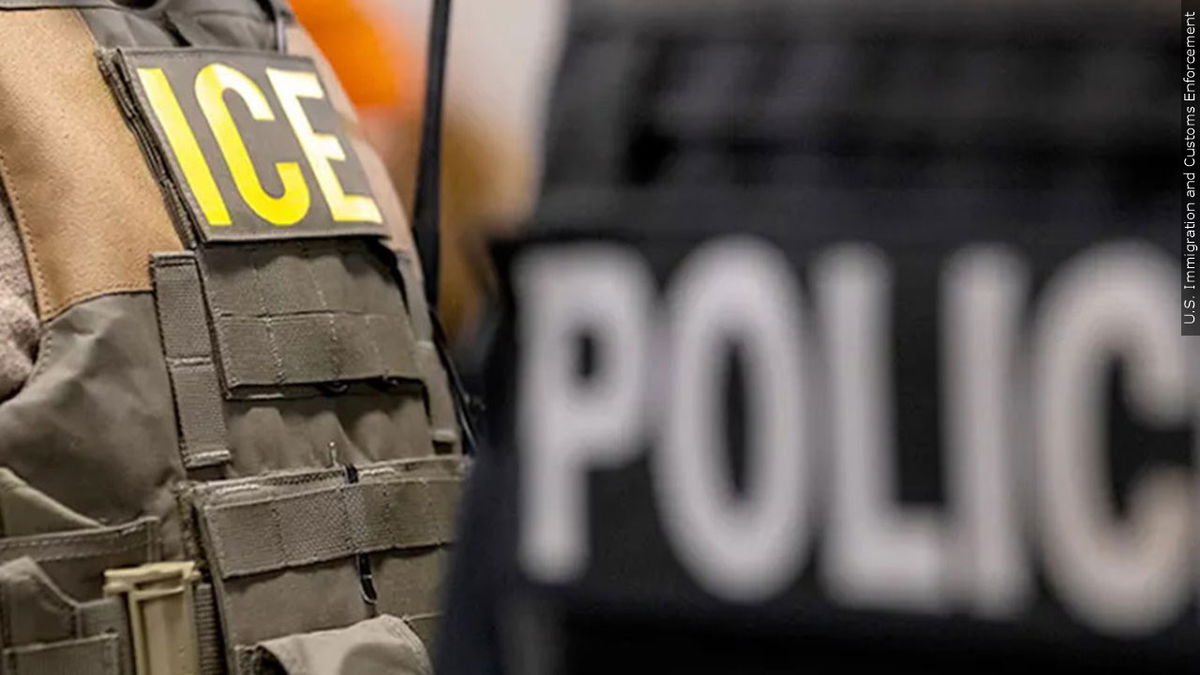
    CANYON COUNTY, Idaho (KIVI) — A Wilder woman says she was unable to care for her 3-year-old son as she was zip-tied during Sunday’s federal raid in Wilder.

During the law enforcement operation, agents took her father into ICE custody. He was just one of 105 people detained by ICE.

Juana Rodriguez attended the event at La Catedral Arena with her father and young son, unaware that alleged gambling was taking place at the venue.

“A lot of people would have been smart and would’ve known that, you know— not to go or not to be there, but it was a family event,” Rodriguez said.

Before agents restrained her with zip-ties, Rodriguez told her father to stay close to her and her son. Once her hands were bound, she says she couldn’t tend to her child’s basic needs.

“I told my dad I was like, please stay with me, don’t go anywhere— just stay with me and, and the baby,” Rodriguez said.

She noticed other parents with young children who weren’t restrained and asked agents for help.

“I did see a couple of people that had younger kids like mine that were, uh, not zip-tied, so I asked one of the agents, and I was like, ‘Can you just please untie me? My son needs me right now,” Rodriguez said.

Rodriguez watched helplessly as her son cried for food and water while she remained restrained.

“He kept asking me, ‘Mom, I’m hungry, Mom, I’m hungry, Mom, I’m thirsty,’ and I wasn’t able to do anything,” Rodriguez said.

After processing, her father was taken into ICE custody. Rodriguez says the most difficult part was that her son witnessed everything.

“My dad was doing his process, and unfortunately, he wasn’t able to make it out, so they ended up taking him. It’s just— it’s so hard. The thing that breaks me more is that my son [had] to be there and he had to witness everything,” Rodriguez explained.

Rodriguez says her son and father share a close bond. Now, she struggles to explain her father’s absence to the 3-year-old.

“Now he will see a cop car or any type of person with the suit, and if he knows he has weapons or anything, he will be like ‘the police, the police, [where’s] grandpa,'” Rodriguez added.

The raid fractured multiple families other than hers, affecting employment and daily routines, Rodriguez said.

“You’re affecting a lot of jobs; there are people that, you know, couldn’t return back to work, and my dad was one of them,” Rodriguez said.

The experience has left lasting emotional scars on both Rodriguez and her son.

“I might say it’s just a 3-year-old, but I know it’s hitting him because every day he’ll ask me and he’ll be like, ‘Where’s my grandpa?'” Rodriguez said. “He saw how we were separated from my father, his grandpa, and it’s just something that is going to haunt us for the rest of our lives.”

This story was initially reported by a journalist and has been, in part, converted to this platform with the assistance of AI. KIVI’s editorial team verifies all reporting on all platforms for fairness and accuracy.

Please note: This content carries a strict local market embargo. If you share the same market as the contributor of this article, you may not use it on any platform.

The-CNN-Wire™ & © 2025 Cable News Network, Inc., a Warner Bros. Discovery Company. All rights reserved.

Click here to follow the original article.