Tanker truck compromises Riverton Bridge, halting all I-15 traffic

News Team

UPDATE:

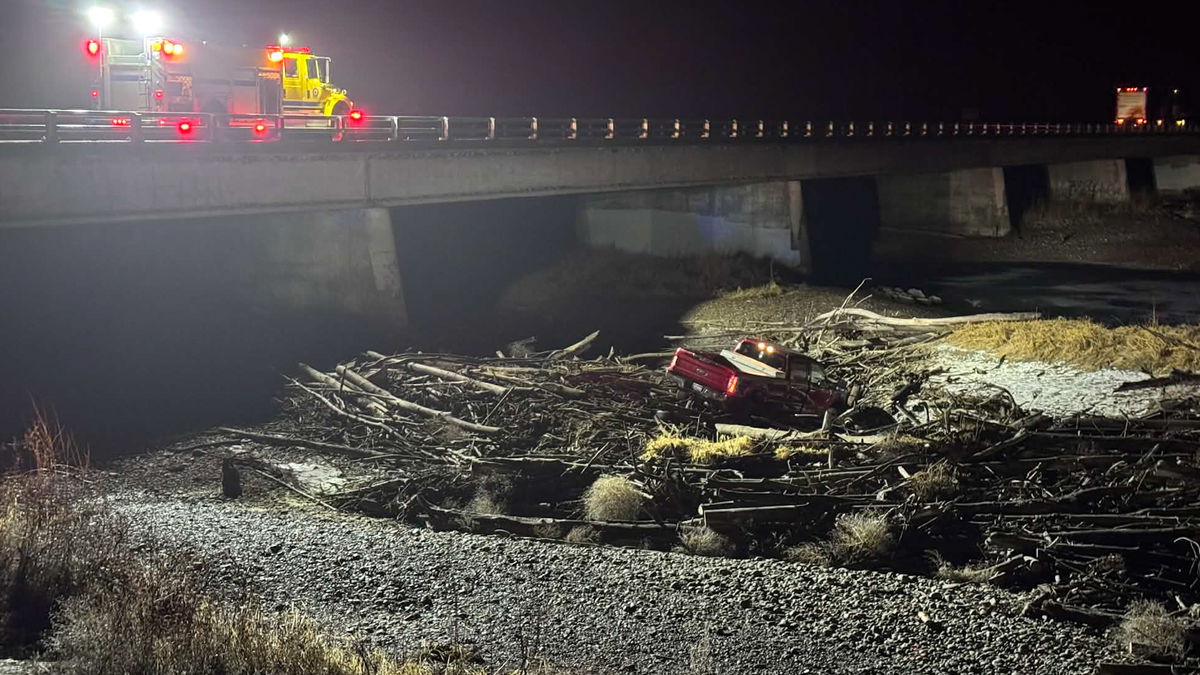
BLACKFOOT, Idaho (KIFI) — All lanes of Interstate 15 are shut down in both directions near the Riverton Road Overpass, after a severe crash late Thursday night. Police say a tanker truck barreled into a support pillar of the bridge, causing significant damage that has compromised the bridge’s structural integrity.

The Idaho Transportation Department has closed the interstate and the overpass to all traffic indefinitely while they investigate the damage.

Crash Details and Investigation

ISP says the crash took place around 8:7 p.m. on Thursday, October 30th, near milepost 92.

Police say a 46-year-old man from Jerome, driving a white 2026 Kenworth towing an empty milk tanker, veered off the left side of the southbound lanes and slammed into the foremost bridge pillar.

The driver was seriously injured in the crash and was air-lifted to a local hospital for treatment. The incident remains under investigation by the Idaho State Police.

Commuter Alert: Extensive I-15 Detours

Drivers are being told to plan for delays and use detours to exits 89 and 93. All detoured traffic should use the I-15 business loop and US 91. For updates, click HERE.

ORIGINAL STORY:

BLACKFOOT, Idaho (KIFI) – All lanes of I-15 are closed south of Blackfoot, following a tanker truck crash that happened late Thursday night at Milepost 93 in Bingham County.

The Riverton Road overpass will be closed until further notice due to damages sustained in the crash.

Traffic is being diverted at exit 93.

Local News 8 will update this story as we receive new details.

Click here to follow the original article.

Man accused of killing Patrick Shelton enters Alford plea

Ariel Jensen

CHALLIS, Idaho (KIFI) – The man responsible for killing 47-year-old Patrick Shelton of Custer County has entered an Alford plea.

70-year-old Alan Douglas Bruce of Challis was arrested in May on felony charges of murder and destruction of evidence related to Shelton’s disappearance.

His body is believed to be scattered in the Salmon River. 

By entering an Alford plea, Bruce admits the evidence surrounding the case is enough to prove him guilty, but he does not admit to committing the crime. The court will still sentence him as if he had pleaded guilty. 

A sentencing date has been set for November 17th. 

Local News 8 reached out to Shelton’s family to get their reaction. They said this is not what they had hoped for, but they feel this is the best outcome they could get.  

DNA and skull fragments were found in Shelton’s truck in May, but the rest of his remains still haven’t been found, even after a lengthy search by Custer County Search and Rescue.  

Click here to follow the original article.
Plea agreement with former Pocatello funeral director not accepted by judge

Curtis Jackson

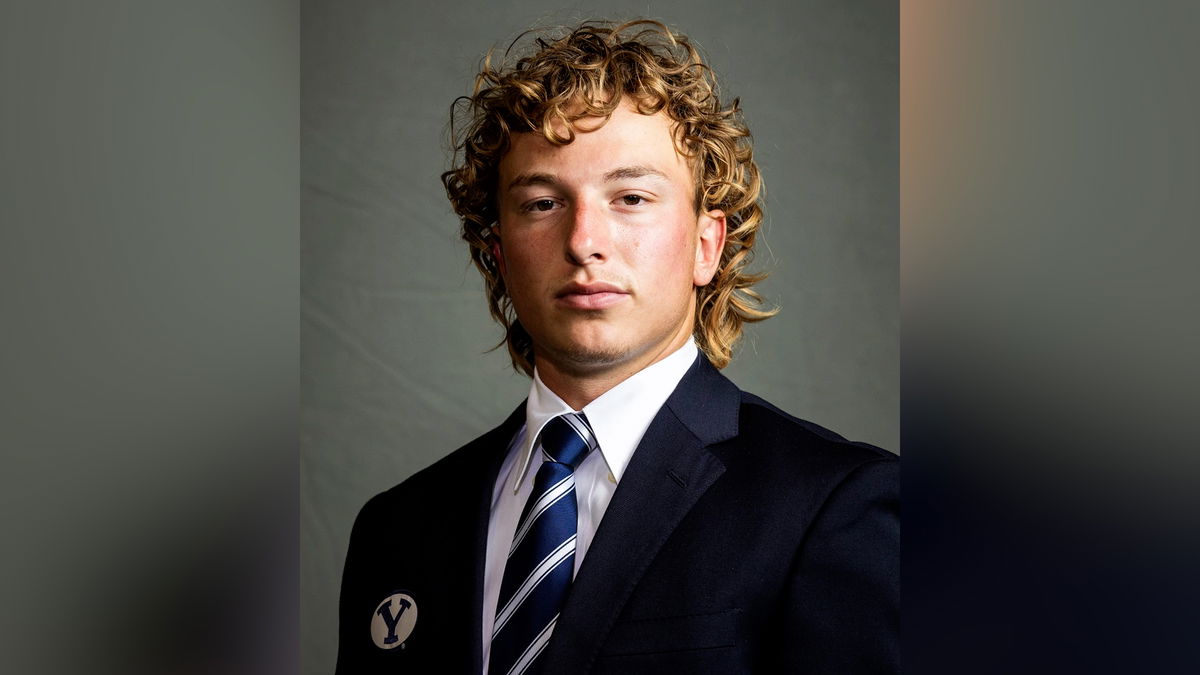
POCATELLO, Idaho (KIFI )—A District Judge will not accept a plea agreement with a former Pocatello funeral home owner charged with mishandling dead bodies.

Lance Peck was scheduled to be sentenced on Thursday, but was surprised by the judge’s decision.

Lance Peck is the former owner of the Downard Funeral Home. In 2021, police found dozens of decomposing bodies inside the funeral home, along with unmarked cremated remains.

This past June, Peck agreed to a plea agreement with prosecutors on a long list of charges, including grand theft and fraud.

Lance Peck sits in a Bannock County Courtroom on Thursday, October 30, 2025.

On Thursday, Judge Javier Gabiola said he could not accept the plea agreement. He gave no reasoning as to why he wouldn’t accept the agreement.

A status hearing was set for Dec. 1, 2025, at 9:30 a.m.

In the plea agreement, Peck could have faced three to seven years in prison on each charge.

The funeral home has since been demolished, and the site serves as a parking lot for Pocatello High School.

Families who attended Thursday’s hearing were shocked at the decision.

This is a developing story and will be updated.

Click here to follow the original article.
Idaho Department of Insurance issues cease and desist order for UnitedHealthcare

Noah Farley

BOISE, Idaho (KIFI) — The Idaho Department of Insurance has issued a cease and desist order to UnitedHealthcare.

The Department of Insurance says in September 2025, it found UnitedHealthcare was deliberately limiting access to Medicare Advantage products by restricting access to the necessary online applications.

Among other things, the Idaho Department of Insurance says UnitedHealthcare overstates its expenses and increases its profits by not paying the agents who serve their customers.

The order says Idaho Legislature created the Trade Practices Law to define and prohibit any insurance business practices that are unfair or deceptive. The Idaho Department of Labor’s director is authorized to decide what business practices count as unfair or deceptive. 

Therefore, UnitedHealthcare is ordered to stop any action meant to limit or conceal Medicare Advantage plans from consumers in Idaho; altering its contracts with agents to withhold commissions meant to manipulate the insurance market; concealing Medicare Advantage plans on its applications that makes it difficult to apply for another plan; etc.

UnitedHealthcare can file a motion for reconsideration. It also has two weeks from receiving the cease and desist order to request a hearing.

Click here to follow the original article.
Cirque Italia brings spectacular water circus to Idaho Falls

Danielle Mullenix

Idaho Falls, Idaho (KIFI) – Cirque Italia is set to dazzle southeast Idaho audiences this year with an all-new, magical dream adventure. The Cirque Italia III show “Water Circus” will be held on October 31- November 3 at the Grand Teton Mall in Idaho Falls.  

Residents of Idaho Falls are invited to experience a show unlike any other, promising unforgettable entertainment for all ages.

This year’s production takes audiences on a retrofuturistic journey through the steampunk Victorian era.

The Platinum Unit cast will transport spectators to an era defined by airships, clockwork automatons, and steam-powered contraptions, and nostalgic appreciation for older technologies and aesthetics. The result is a high-energy show designed to captivate audience members of all ages.

Featuring a talented international cast from Argentina, Brazil, Romania, and beyond, Cirque Italia showcases master jugglers, low wire artists, contortionists, trampoline performers, and the thrilling wheel of death. Attendees will witness breathtaking feats and unforgettable performances throughout the show.

Cirque Italia is committed to providing high-class, family-friendly entertainment. All shows are strictly animal-free, ensuring an inclusive environment for guests of every age.

Dates: October 31 – November 2, 2025

Location: 2300 East 17th St, Idaho Falls, ID 83404

Venue: Grand Teton Mall (Parking Lot)

Showtimes:

Friday, October 31: 7:30 pm

Saturday, November 1: 1:30 pm, 4:30 pm, 7:30 pm

Sunday, November 2: 1:30 pm, 4:30 pm

Tickets and Information: Tickets are now available for purchase starting at $10.00-$50.00, based on availability. For every full-priced adult ticket in levels 2 or 3, one child receives free admission (offer not combinable with other promotions). To receive the promotional code for the Idaho Falls shows, please call 941-704-8572.

Box Office Hours:

The on-site box office will open on Tuesday during the week of the show.

Non-show days: 10 am – 6 pm

Show days: 10 am – 9 pm

For more information on ticket purchases and other details, click here.  

Click here to follow the original article.
This Date with 8: October 29, 1969 — ARPANET Starts with a Typo

Phillip Willis

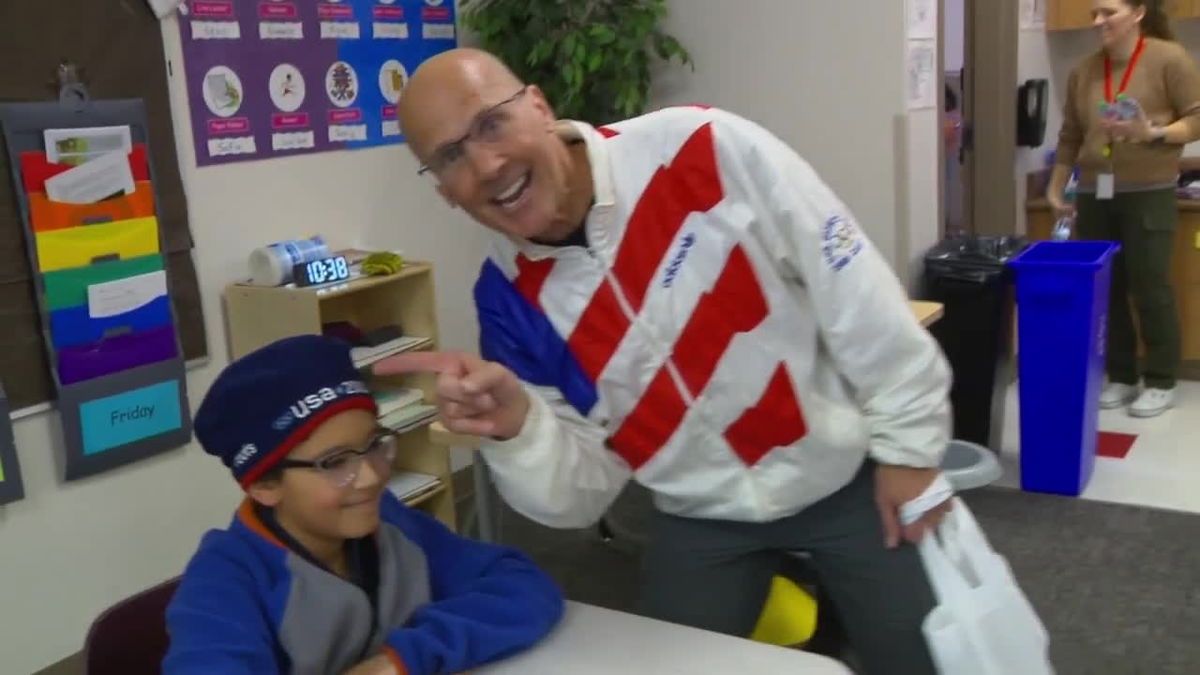
IDAHO FALLS, Idaho (KIFI) — Today is October 29. On this day in 1969, around 10:30 p.m., the first message was sent over ARPANET, the precursor to the internet.

UCLA Professor of Computer Science Leonard Kleinrock and his student Charley Kline had been at work, setting up a message transmission to go from the ‘UCLA SDS Sigma 7 Host’ computer, all the way to the ‘SRI SDS 940 Host’ computer, which was manned by Bill Duvall at the Stanford Research Institute, 350 miles away.

The professor had been working on a method of information transfer called packet switching that was implemented in ARPANET, which broke down information into smaller bundles of information that could be routed independently and reassembled at the destination, with lost packets retransmitted as needed.

Charley manned the helm, sending off the first message, which was meant to be “login”. However, the system crashed after the first two letters were sent. So the first message on the internet was just “lo”. A couple hours later, they completed the transmission. This one message began a chain reaction that led to the internet as we know it today.

Sources used for this story:

https://www.history.com/this-day-in-history/october-29/first-electronic-message-sent-arpanet-internet-precursor

https://www.lk.cs.ucla.edu/internet_first_words.html

Click here to follow the original article.

Bus drivers, police alarmed by ‘shocking’ surge in drivers ignoring school bus stop signs

Maile Sipraseuth

IDAHO FALLS, Idaho (KIFI)– A sharp rise in drivers ignoring school bus stop signs in Bonneville County has bus drivers and deputies on edge, warning that one careless mistake could cost a child’s life.

In just nine weeks of the school year, Bonneville bus driver Jenny Sharp has already recorded as many stop arm violations as she saw all of last year, a surge local law enforcement calls for concern.

“So far this year, I have seen an increase of stop arm violations. In the nine weeks, ten weeks that we’ve been in school, I have had as many so far in these nine and ten weeks as I had all last school year,” Sharp said.

Bryan Lovell from the Bonneville County Sheriff’s Office says this increase in school bus stop violations is shocking.

“Our deputies have been receiving six to 10 stop arm violations a week just in the last month or so. And that’s that’s quite a bit. It’s quite unusual,” Lovell said.

But why? Both Sharp and Lovell believe that drivers are either not paying attention or in a hurry.

“I want to tell the drivers to slow down, especially when you see a school bus driver. If their amber lights are on, that doesn’t mean speed up and get around them. That means come to a complete stop before the red lights come on,” Sharp said.

“It’s important to really remind drivers and message out to motorists that they need to use extra caution and pay attention around these big yellow buses,” Lovell said.

Click here to follow the original article.

ITD wraps up major summer construction as temps drop

Ariel Jensen

IDAHO FALLS, Idaho (KIFI) — Typically, the middle of the summer is considered the heaviest time for construction projects. But as temperatures drop, the Idaho Transportation Department works to wrap up some of its work before winter sets in.

One of its bigger projects in eastern Idaho this summer has been the reconstruction and repair overhauls on several bridges north of Idaho Falls on Interstate 15. These are in Spencer, Stoddard Creek, Hammer area in the direction toward Sage Junction.

“There’s less traffic out there, but they’re very well-used recreational areas, and those bridges needed some attention. So we’ve been able to do that all summer long and through last winter too. And right now on those I-15 bridges, we are trying to just finish those up, get the paving done while it’s still warm enough to be able to during those certain windows of the day,” said Sky Buffat, Public Information Officer for the Idaho Transportation Department. 

There are still a few areas with lane closures as they continue work in preparation for next spring. 

“We go back in the spring, we can immediately do what’s at hand quicker,” said Buffat. “Paving has to be done in a certain temperature window, and we just simply don’t pave when it’s too cold because it won’t last. So it would be a waste of money. And we’re really careful about those kind of specifications, making sure to meet them.”

Not all the projects will be completed before winter, but most roads will reopen for drivers. 

“We really try to open up traffic as much as possible and not leave closures or traffic control in place all through the winter. There are occasions where it can’t be avoided, but for the most part, those work zones will be, cleared off so that winter traffic can get through and not have to worry about that,” said Buffat.

Other projects include one on State Highway 48 near Rigby, where they will install a traffic signal at one of the main intersections next spring.

They are also doing some repairs in Rexburg on the State Highway 33 near Pioneer Road, which is by Maverick. 

Drivers are reminded to use caution while driving through construction zones and to keep workers safe.

Click here to follow the original article.

Daylight Saving Time is controversial. Here’s why the US kept it

CNN Newsource

Originally Published: 05 NOV 22 10:22 ET

Updated: 29 OCT 25 13:54 ET

By Katia Hetter and Stephen Mays, CNN

Editor’s note: Sign up for CNN’s Sleep, But Better newsletter series. Our seven-part guide has helpful hints to achieve better sleep.

(CNN) — It’s almost time for clocks to “fall back” one hour, allowing many people across the United States to gain one hour of sleep.

On the first Sunday of November, at 2 a.m., clocks fall back an hour to standard time. On the second Sunday of March, at 2 a.m., clocks in most of the United States and many other countries move forward one hour and stay there for nearly eight months in what is called Daylight Saving Time.

The current March to November system that the US follows began in 2007, but the concept of “saving daylight” is much older. Daylight Saving Time has its roots in train schedules, but it was put into practice in Europe and the United States to save fuel and power during World War I, according to the US Department of Transportation’s Bureau of Transportation Statistics.

Pro tip: It’s Daylight Saving Time, with singular use of “saving,” not “savings.”

Reasons for Daylight Saving Time

The US kept Daylight Saving Time permanent during most of World War II. The idea was put in place to conserve fuel and keep things standard. As the war came to a close in 1945, Gallup asked respondents how we should tell time. Only 17% wanted to keep what was then called “war time” all year.

During the energy crisis of the 1970s, we tried permanent Daylight Saving Time again in the winter of 1973-1974. The idea again was to conserve fuel. It was a popular move at the time when President Richard Nixon signed the law in January 1974. But by the end of the month, Florida’s governor had called for the law’s repeal after eight schoolchildren were hit by cars in the dark. Schools across the country delayed start times until the sun came up.

By summer, public approval had plummeted, and in early October Congress voted to switch back to standard time.

In the US, states are not required by law to “fall back” or “spring forward.” Hawaii, most of Arizona and some territories in the Pacific and Caribbean do not observe Daylight Saving Time.

The twice-yearly switcheroo is irritating enough to lawmakers of all political stripes that federal lawmakers have tried to make Daylight Saving Time permanent over the past few years. New versions of the bill were introduced in the House and Senate this year.

Why do we need Daylight Saving Time

Studies over the past 25 years have shown the one-hour change disrupts body rhythms tuned to Earth’s rotation, adding fuel to the debate over whether having Daylight Saving Time in any form is a good idea.

The issue is that for every argument there is a counterargument. There are studies, for example, that show we have more car accidents when people lose an extra hour of sleep. There are also studies that show robberies decline when there is an extra hour of sunlight at the end of the day. We also know that people suffer more heart attacks at the start of Daylight Saving Time. But what about our mental health? People seem to be happier when there is an extra hour of daylight.

Of course, there’s the economy, which pays for all that outdoor fun in the sun. Although saving energy was often put out as a reason to have Daylight Saving Time, the energy saved isn’t much — if anything at all.

Instead, the lobbying effort for Daylight Saving Time came mostly from different sectors of the economy. In the mid-20th century, lobby groups for the recreational sports industry (think driving ranges) wanted more customers to come out after a day at the office. It’s easier to do so when there is more light at the end of the day.

But the movie industry didn’t like Daylight Saving Time. You’re less likely to go to a movie when it’s bright outside. Despite the myth, farmers didn’t like it either because it made it difficult to get their food to the market in the morning.

The bottom line: It’s not clear whether having that extra hour of sunlight at the end of the day versus the beginning is helpful. It just depends on who you are and what you want. And it doesn’t look like Daylight Saving Time in the US is going away anytime soon.

The-CNN-Wire™ & © 2025 Cable News Network, Inc., a Warner Bros. Discovery Company. All rights reserved.

Click here to follow the original article.

Museum of Idaho receives a 50k donation and presents “Mummies of the World” exhibit

Danielle Mullenix

Idaho Falls, Idaho (KIFI) – The Museum of Idaho is excited to announce a generous $50,000 donation from Oklo, an advanced nuclear technology company developing its first commercial Aurora powerhouse in Idaho at Idaho National Laboratory. This partnership marks a major contribution to the region’s cultural and educational fabric, reinforcing Oklo’s deep commitment to the Idaho Falls community.

The donation will support the Museum’s mission to inspire lifelong learning through dynamic exhibits, educational programming, and ongoing research in science, history, and archaeology. It comes during the run of “Mummies of the World”, a major traveling exhibit currently on display at the museum.

“We’re not just here to build essential infrastructure and deploy advanced nuclear technology,”remarked Bonita Chester, Head of Communications and Media at Oklo. “Our mission is to both enrich and improve the communities in which we operate. We couldn’t be more excited to be the newest members of the Idaho Falls community.”

Chris Sheetz, Director of Corporate Partnerships at the Museum of Idaho, said: “We are incredibly grateful for this generous donation, which means so much to the Museum of Idaho’s mission. This donation will directly support the growth of our educational programs, the curation of powerful exhibits, and the development of exciting new traveling exhibitions that serve and engage our community.”

The partnership between Oklo and the Museum of Idaho began earlier this month with the unveiling of a hands-on, community mural project in the museum’s Maeck Education Center.

From September 13–19, local residents participated in painting a large-scale paint-by-number mural celebrating East Idaho’s culture, landscapes, scientific achievements, and pioneering spirit in nuclear innovation.

Created by award-winning Idaho artist Rett Longmore and painted with help from local community members, the mural brings together Idaho’s past and future through energy innovation.

Featuring both the Oklo Aurora powerhouse and the Experimental Breeder Reactor II (EBR-II), the artwork highlights how history and innovation meet in Idaho—and how community is at the center of building what comes next.

The Aurora powerhouse is a sodium-cooled fast reactor that utilizes metal fuel and is based on the proven design and operating heritage of EBR-II, which operated in Idaho from 1964 to 1994. Oklo is placing its first Aurora powerhouse at Idaho National Laboratory (INL) and is proud to have worked alongside the community to bring this vision to life—looking forward to continuing that partnership as the Aurora-INL takes shape in Idaho.

The collaboration culminated in a special reception hosted at the museum, where Oklo presented a surprise $50,000 check—underscoring the company’s intention to be a long-term partner in Idaho Falls’ cultural and educational development.

This all comes as the museum continues to display its latest exhibit: “Mummies of the World”. Mummies of the World brings together naturally and intentionally preserved mummies from South America, Europe, and ancient Egypt.

Presented with dignity and respect, the exhibition blends modern science, interactive displays, and multimedia to uncover the lives, environments, and cultures of ancient civilizations.

Since its debut in Los Angeles in 2010, Mummies of the World has captivated over 2.4 million visitors across 23 cities in the U.S. and Europe. With exhibits over 4500 years old, this display will continue to be showcased at the museum until January 6th, 2026.

For more information about the latest exhibit, donation, and upcoming events, click here.

Click here to follow the original article.