Breaking down to blowing up: Nathan ‘Doggface208’ Apodaca looks back on the viral ride that changed his life

Maile Sipraseuth

IDAHO FALLS, Idaho (KIFI)– What started as a broken-down car, a skateboard, and a bottle of juice turned into a life-changing moment for Nathan Apodaca, better known as ‘Doggface208’. Now, he’s reflecting on the ride that made him an internet icon and the whirlwind that followed.

“I was just heading to work and everything. Just going as normal. I had to get there on a certain time, this day, because they were offering a $25 bonus that I never got,” Apodaca said.

Then, his morning took an unexpected turn.

“My car broke down, so I was like, okay, now I might not get it. You know? So I was like, I can sit there and call my mom, you know, sit there and just wait for someone to give me a jump for something. So I told myself, nah, you know what? You got your board right here. Let’s just go!” Apodaca said.

At the time, Apodaca had 750,000 followers, but was reluctant to post the video. When he checked his phone after work, he saw the video had skyrocketed.

“It was just crazy after that, you know, and I just went to work like normal, I didn’t think anything was going to happen. I didn’t think anything was gonna come from it,” Apodaca said.

Before the video, Apodaca says he faced challenges, including homelessness, but he always stayed positive.

“I was just having fun, working on family things…Before I got into my little trailer. You know, I was staying over there by the Snake River or whatever. I was staying in a tent. I had a job, so I didn’t really look at it as homeless. I was homeless, obviously, but I didn’t look at it as like I was, you know, down and out and everything because I was basically just camping, going to work,” Apodaca said.

Post internet fame, he says his experiences have been nothing short of exciting, from meeting his favorite celebrities to being on TV.

Dogface208 meets Wiz Khalifa

Dogface208 along side Snoop Dog

Courtesy: Dogface208

“It’s just it just blows my mind, you know, I am doing music is one of the biggest things as well. Being involved with a song with Snoop Dogg just it was always something I dreamed of, you know what I mean? Growing up when I was younger, just talking about it, and then for management to make that a reality just blew my mind,” Apodaca said.

For viewers who want to pursue being an influencer, he says to stay positive and follow your heart no matter what.

“There’s always going to be someone out there to put you down. You know, as long as you get over that hump and just realize you’re out here to make yourself happy, it’s it’s amazing, you know what I mean? And then as soon as you get past that little barrier, you open yourself up to the world,” Apodaca said.

He ended up getting his $25 bonus.

Apodaca will also be hosting a turkey giveaway on Nov. 22 as his way to give back to the community that was always there for him.

Credit: @Doggface208 via Instagram

Click here to follow the original article.

Inmate dies in custody at Bannock County Detention Center

Seth Ratliff

POCATELLO, Idaho (KIFI) — The Bannock County Sheriff’s Office is conducting an internal investigation and review following the death of an adult male inmate who died of a possible overdose at the Bannock County Detention Center earlier this month.

On Wednesday morning, November 12, 2025, deputies found 35-year-old William Carringer of Pocatello unresponsive in his jail cell. Deputies immediately began life-saving efforts and notified Emergency Medical Services. Upon arrival, EMS personnel determined that the 35-year-old was deceased and subsequently transferred care to the Bannock County Coroner’s Office.

The Coroner’s Office has notified Carringer’s next of kin and initiated an autopsy and toxicology testing to confirm the official cause and manner of death. Final determinations following the Coroner’s investigation, but the preliminary observations suggest Carringer died of an overdose, according to the news release.

Carringer was in custody on charges of felony drug possession.

Per agency policy, the Sheriff’s Office says it has launched an internal review of the incident. In addition, an external and independent investigation is being conducted by the Tri-County Sheriff’s Association, led by the Madison and Jefferson County Sheriff’s Offices, to ensure objectivity and transparency.

The Bannock County Sheriff’s Office stated it will release further information to the public only after the investigations are complete.

Click here to follow the original article.
Viral video captures man’s “dangerous” and “reckless” encounter with Yellowstone wolf pack

News Team

YELLOWSTONE, Montana (KIFI) — A wild and flat-out reckless moment in Yellowstone National Park has gone viral after a wildlife photographer captured a man walking directly toward a pack of wolves.

In early October, wildlife photographer Keith Allen Kerbs caught the dangerous encounter. According to witnesses, nearly 100 people watched in disbelief as the man continued towards the pack of animals, even firing off bear spray as he drew closer.

“He almost didn’t make it out alive,” Kerbs wrote on Instagram, sharing the video and apologizing for the strong language of the nearby photographers who shouted, “Get the hell away from them!”

Yellowstone regulations direct park visitors to stay at least 100 yards away from wolves and never approach the wildlife. The National Park Service (NPS) confirmed that the individual was identified and cited following the incident, as reported by PEOPLE magazine.

Lupine experts say the danger wasn’t the wolves in this situation, it was the man’s poor decisions. “Wolves rarely pose a threat to people, but if they become too comfortable around humans, safety concerns can arise,” states Yellowstone’s website.

“It is the visitor’s responsibility to maintain a safe distance at all times,” an NPS spokesperson told PEOPLE. “Never approach, feed or disturb wildlife. If an animal moves toward you, back away and give it space. Zoom with your lens, not with your feet. Never approach or pursue an animal to take its picture: use binoculars or telephoto lenses to get a better view.”

Park officials stress that these are wild animals, not photo ops.

Click here to follow the original article.

Non-profit investigation outlines 7 reforms to address unchecked sex abuse in Idaho prisons

InvestigateWest

Independent oversight, policy changes in other states show steps to protect Idaho inmates at risk of victimization

Editor’s note: “Guarded by Predators” is an investigative series exposing rape and abuse by Idaho’s prison guards and the system that shields them. Find the entire series at investigatewest.org/guarded-by-predators.

Originally Published: Nov. 20, 2025

By Whitney Bryen / InvestigateWest

BOISE, Idaho — Dozens of Idaho inmates have suffered unchecked sexual abuse by women’s prison guards and faced retaliation when they spoke up. As Idaho officials promise to review problematic policies and accusations revealed by InvestigateWest, other states offer ideas for increased transparency and reform.

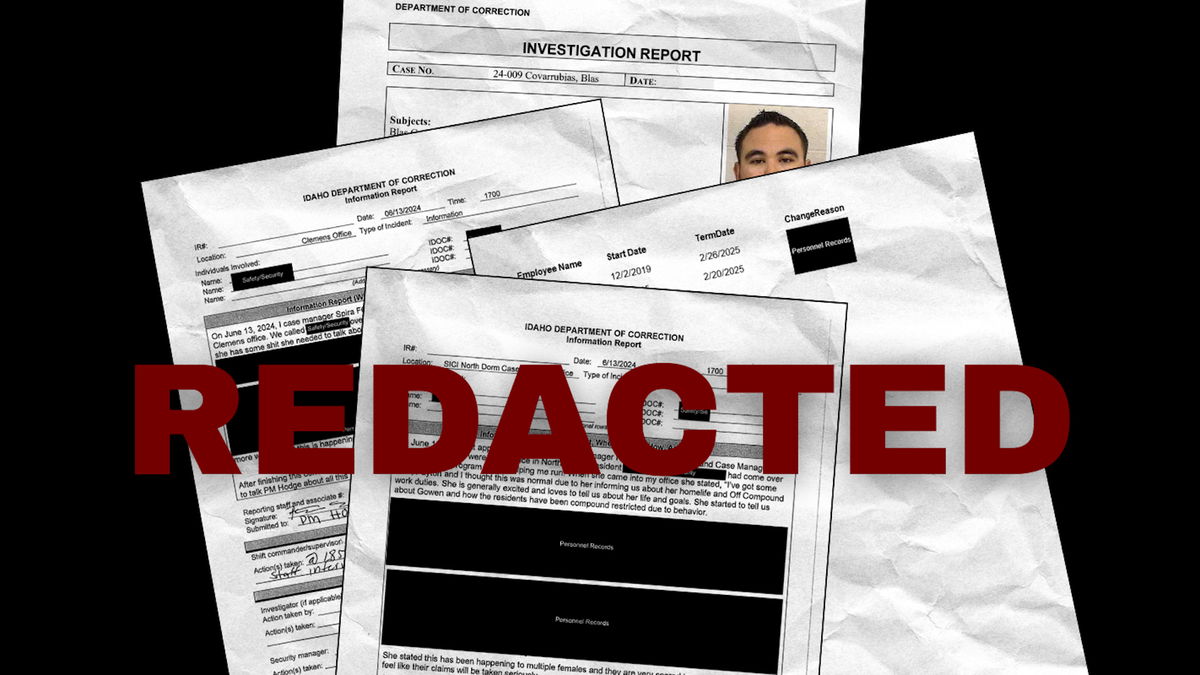
During a yearlong investigation, current and formerly incarcerated women told InvestigateWest how they were raped in janitor’s closets, employee offices and at work sites where cameras couldn’t see. They said guards exploited closed-door disciplinary hearings to coerce sexual favors. Some women refused to file reports against the correction officers who harassed, groped and assaulted them for fear that they would be written up, placed in segregated housing, or chastised by other inmates and staff. And when they did speak up, their complaints were frequently ignored and investigations were sloppy.

The Department of Correction rarely referred cases to law enforcement for criminal investigation, keeping most allegations hidden from the public. Since 2015, at least 18 guards accused of sexual misconduct were allowed to quietly resign, leaving their employment records clean and enabling them to take jobs at facilities in other states.

Idaho is not alone in grappling with widespread sexual abuse by prison staff. One of the biggest challenges to addressing this nationwide crisis is the “iron curtain” that protects prisons from independent and public scrutiny, said Michele Deitch, who runs the National Resource Center for Correctional Oversight.

“When an institution has total control over people’s lives, abuse can happen,” Deitch said. “Independent oversight is critical as a way to alert the public to what’s going on inside and provide a vehicle for people inside to share their concerns about what’s happening to them.”

We looked at efforts in other states to improve transparency and accountability for incarcerated victims of sexual abuse and violence, including an Arizona governor’s executive order and a decade-old settlement in Washington.

Problem: Idaho’s rape law is ‘very narrow’

Reform: Expand the criminal definition of sexual assault when the victim is in custody

Idaho limits its definition of sexual assault when the victim is an inmate. Even though federal standards say all inappropriate touching by prison workers and even suggestive comments or voyeurism are illegal, Idaho’s law protects inmates from abuse only when staff touch the victim’s genitals or they’re made to touch the genitals of staff.

Brenda Smith, director of the Project on Addressing Prison Rape at American University, said Idaho’s law is “very narrow” and could leave the state liable.

State laws that closely align with federal standards protecting inmates from rape, sexual assault, coercion and harassment by prison staff make it easier for prosecutors to hold abusers accountable. Idaho lawmakers could amend the current law or pass new ones that more closely mimic federal guidance.

Brenda Smith is the director of the Project on Addressing Prison Rape at American University in Washington, D.C., and has studied the federal standards and state laws designed to protect inmates from sexual abuse. She says Idaho’s law is ”very narrow” compared to other states and could leave the state liable. (Provided by American University Washington College of Law)

Since 2015, only three Idaho women’s prison guards have been charged with sexual contact with a prisoner, InvestigateWest found.

Arizona and Nevada allow prosecutors to charge guards and other correction workers for coercion and harassment, in addition to rape and sexual assault. In Arizona, guards can be charged for attempting or requesting sexual contact or exposing their private areas to inmates, which includes the inner thighs, breasts and buttocks that aren’t covered by Idaho’s law.

Oregon and Washington have felony laws similar to Idaho’s, but also have laws with reduced punishments that allow prosecutors to charge guards for less severe abuse of an inmate.

Problem: Camera blind spots enable abuse

Reform: Increase visibility in high-risk areas

Following a 2007 lawsuit filed by women alleging sexual assault by guards, Washington state’s Department of Corrections installed additional security cameras in high-risk areas, limited guards’ access to those areas and added viewing windows to rooms where sexual misconduct had been reported. The settlement also required prisons, inmate work sites and community custody facilities to implement new training and procedures for responding to misconduct.

In a statement from the inmates’ attorneys announcing the settlement, lawyer Beth Colgan said the changes “have made the prisons a safer place so that women in Washington do not have to experience the horror of being locked up with and unable to escape their abusers.”

Problem: Investigations lack independence

Reform: Designate a corrections ombudsman who inmates can contact

A growing number of states are using corrections ombudsmen to increase independent oversight of the prison system and provide additional protection for inmates, including those reporting sexual abuse by guards.

Idaho inmates have several options for how to file a report alleging sexual abuse by staff. However, each option leads to an employee of the Department of Correction, often a co-worker or supervisor of the person being accused. Inmates are unable to report abuse directly to police, leaving it up to the prison system to notify law enforcement of potential crimes. But that rarely happens, InvestigateWest found.

Thursday July 24, 2025: Andrea Weiskircher is pictured outside of the Ada County Courthouse in Boise, Idaho. Weiskircheron was on her way to drug court. Weiskircheron is currently on parole for Grand Theft by Any Common Law Larceny, Embezzlement, Extortion or Receiving Stolen Goods, etc. and on probation for burglary. Kyle Green/InvestigateWest

Corrections ombudsmen in Washington, Oregon, Texas and New Jersey operate independently of the prison system, but unlike law enforcement, inmates can contact them directly, and the ombudsmen have access to prison files including abuse allegations and investigations. They identify gaps in procedure, help inmates and their families understand their rights, and investigate complaints.

Washington’s Office of the Ombuds has a budget of $2.5 million and 15 staff, while Oregon spends less than $400,000 on one ombudsman. Both offices report directly to the governor.

Last year, Idaho lawmakers created a similar statewide office to monitor youth treatment facilities after InvestigateWest uncovered years of child abuse and neglect that was met with little to no punishment from state regulators. Lawmakers established the Health and Social Services ombudsman to ensure youth facilities comply with state rules. In September, the ombudsman reported to lawmakers that the state still isn’t penalizing facilities where kids could be at risk.

Problem: Limited oversight

Reform: Require state-level inspections

News reports of sexual abuse against inmates across the country have led to increased public scrutiny of prisons nationwide.

National standards require prisons to be audited at least every three years to ensure they’re following policies designed to prevent and respond to sexual abuse. Auditors are chosen and paid by the prison system they’re inspecting. InvestigateWest reviewed the most recent audits of all three Idaho women’s prisons and found that auditors recorded discrepancies but passed the prisons as “in compliance” anyway. Even when facilities are marked as noncompliant, enforcement is limited.

Some states require prisons to undergo state-level inspections to ensure the safety of people in custody. Following reports of sexual abuse against Arizona inmates and beatings of staff, an executive order by Gov. Katie Hobbs established a committee of lawmakers, advocates, former inmates and people with corrections experience to inspect state facilities. Inspectors assess prison conditions and safety protocols, including the inmate grievance process and how long it takes staff to respond.

Department of Correction Director Bree Derrick has not responded to questions about what the agency is doing to ensure the safety of women in custody since InvestigateWest’s findings were released. (Provided)

In New Jersey, Washington and Minnesota, lawmakers created a corrections ombudsman’s office that performs regular inspections of state prisons in addition to investigating complaints from inmates. Deitch, whose corrections oversight project published a list of independent supervision models in each state and model legislation, said several states are adopting this model.

“States that have had the best success with independent oversight is when it comes out of a non-adversarial approach rather than waiting for a lawsuit to require it,” Deitch said. “It’s when the Department of Correction sees the benefit to them also that we all benefit from that collaboration.”

Idaho does not require state-level inspections of prisons or jails.

Problem: Victims lack support and access to counseling

Reform: Partner with nonprofits and victim advocates who provide medical, legal and emotional support to inmates victimized behind bars

Most prison staff are not trained to provide counseling to victims of sexual abuse, leaving inmates to suffer in silence. Restrictions and costly fees associated with making phone or video calls from prison make it difficult for victims to access resources after they experience harassment or assault. Some women who told InvestigateWest they experienced sexual abuse in Idaho prisons said they requested mental health treatment from a provider who does not work for the prison system because they feared retaliation. But they were denied.

Prisons in South Carolina, Washington and Texas partner with victim service agencies to fill those gaps in inmate care. Some prisons provide office space for rape crisis counselors to meet with inmates. Those partnerships allow advocates to accompany victims to forensic exams and operate confidential hotlines that are free to call and accessible from prison phones. And they help victims navigate law enforcement investigations and charges.

Problem: Victims face retaliation and isolation

Reform: Limit segregated housing, closely monitor victims of abuse

Idaho women’s prison guards accused of preying on inmates faced few consequences, InvestigateWest found. But the women who spoke up say they were the ones punished. Reporting sexual abuse can mean that victims get moved away from fellow inmates and into restrictive housing for their safety. Women described that as the “hole” — small cells where prisoners are confined up to 23 hours a day, like a maximum-security prison.

The outside of the women’s facility at the South Idaho Correctional Institution outside of Boise, ID. (Whitney Bryen/InvestigateWest)

Placing inmates in solitary confinement after they report sexual abuse “may significantly suppress reporting at the facility,” according to a guide from the National Prison Rape Elimination Act Resource Center. The 10-year-old report from the center that sets national standards for preventing and responding to prison rape encourages prisons nationwide to avoid isolating inmates at risk of sexual abuse.

In one Pennsylvania prison, victims are placed in standard housing units without roommates or moved to an area where it’s easier for staff to monitor them. The Segregation Reduction Project, an initiative by the nonprofit Vera Institute that works with prisons to reduce use of isolation, called it a model for other states.

In Oregon, case managers trained in sexual assault response meet regularly with at-risk inmates to address any safety concerns.

Problem: Staff exploit private disciplinary hearings

Reform: Allow inmates to have a representative present in disciplinary hearings

After an inmate is written up for violating a rule in Idaho prisons, a disciplinary hearing offers the inmate a chance to respond to the accusation. A correction officer presides over the hearing and either dismisses the write-up or imposes sanctions such as solitary confinement or commissary restrictions. Those hearings are conducted behind closed doors, out of sight of security cameras, usually by a sergeant with no other witnesses. Department of Correction policy allows inmates to request a hearing assistant — a prison worker who has been trained to help inmates through the disciplinary process — but only if the inmate is unable to gather evidence or understand the proceeding.

Multiple women told InvestigateWest that officers used these hearings to offer leniency in exchange for sexual favors. The Department of Correction said it was only aware of “one complaint of this nature.”

In 2021, New York passed the Humane Alternatives to Long-Term Solitary Confinement Act allowing inmates to have a representative present during disciplinary hearings in order to reduce their risk of exploitation. Representatives can include an attorney, paralegal, law student or another incarcerated person. In a statement supporting the law, the nonprofit We the Action that connects attorneys with people who need representation wrote: “Having representation can help beat those charges and attempts, and help ensure that people are treated more humanely and fairly.”

Idaho lawmakers could pass a similar law. Or, the Department of Correction could change its policy to permit inmates to have a representative present at hearings.

InvestigateWest (invw.org) is an independent news nonprofit dedicated to investigative journalism in the Pacific Northwest. Reporter Whitney Bryen covers injustice and vulnerable populations, including mental health care, homelessness and incarceration. Reach her at 208-918-2458, whitney@invw.org and on X @WhitneyBryen.

Click here to follow the original article.
Wilder raid detainees released from Elmore/Bingham County

News Team

Editor’s Note: The following article was provided by our trusted news partners, KIVI Idaho News 6 in Boise, who reported the original story on Nov 19, 2025.

By: Victoria Rodriguez , KIVI Staff

MOUNTAIN HOME, Idaho (KIVI) — Previously detained individuals who were taken into custody during the federal law enforcement raid in Wilder have been released from the Elmore County Jail.

Mari Ramos, the executive director of the Idaho Hispanic Foundation, says that people detained during the raid in Wilder were going to be released Wednesday evening from the Elmore County Jail and the Bingham County Jail, after a court order mandated that they be freed from custody.

Jasmine Amador, whose father was released from the Elmore County Jail, shared her feelings about the reunion.

“I mean, I’ve been missing him for like over a month, so I just was really glad to see him because he’s my dad and he’s such a good dad. I’ve just been missing him a lot.”

A woman previously interviewed by Idaho News 6 was at the Elmore County Jail, reuniting with her father tonight.

“I said I was going to fight for him until I was able to have him back into my arms,” she said. “I couldn’t be more thankful for all the support and all the love, and I am just glad my dad is back home.”

Idaho News 6 is still working to obtain a copy of the court order that mandated the release. We will provide updates on any developments

Click here to follow the original article.
Bush, Biden and former vice presidents honor Dick Cheney, while Trump, Vance snubbed for funeral invitation

CNN Newsource

By Jamie Gangel, Michael Williams, Eric Bradner, CNN

(CNN) — Political figures from across the aisle gathered Thursday in Washington, DC, for former Vice President Dick Cheney’s funeral — sending off a key figure of pre-MAGA Republican politics.

The funeral, which was attended by two former presidents and all living former vice presidents, was a bipartisan who’s who of Washington dignitaries yet with the notable absence of two of the country’s current leaders.

Neither President Donald Trump nor Vice President JD Vance attended the service, and they were not invited to the funeral, according to a source familiar with the matter. Vance said Thursday that the former vice president was “a guy who served his country,” and wished his family “all the best in this moment of grieving.” Trump has not publicly expressed his condolences or commented on Cheney’s death.

Cheney received full military honors at the invitation-only memorial service at Washington’s National Cathedral. Former Presidents Joe Biden and George W. Bush and former first ladies Jill Biden and Laura Bush attended as well as former Vice Presidents Kamala Harris, Mike Pence, Al Gore and Dan Quayle.

Bush eulogized his former vice president as a consummate public servant who could be relied on, and who “lifted the standards” of those around him.

“His abilities were self-evident, without need of calculation or self-promotion,” Bush said. “His talent and restraint exceeded his ego.”

The former president recalled that Cheney was initially tapped to help him find a running mate during his 2000 presidential run. But after going over the list of names, Bush said he came to realize that Cheney himself was the best man for the job.

The former president said Cheney rattled off a list of reasons why he should not serve as his running mate when Bush approached him with the idea.

“I told him that, at such a moment, most in his position would have jumped at the chance, but Dick stayed detached and he analyzed it before I made my decision,” Bush said. “He insisted on giving me a complete rundown of all of the reasons I should not choose him.”

Cheney would go on to serve two terms with Bush, becoming one of the most influential and powerful vice presidents in modern history.

Also in attendance at the memorial service were a number of Supreme Court Justices, including Chief Justice John Roberts and Justices Brett Kavanaugh and Elena Kagan. A large number of past and present Cabinet members from both Republican and Democratic administrations were also expected, as well as congressional leaders from both sides of the aisle.

Speaker Emeritus Nancy Pelosi was present along with Senate Majority Leader John Thune and former leader Mitch McConnell.

Cheney, who served as Bush’s vice president from 2001 to 2009, died on November 3 at the age of 84. Prior to being elected vice president, Cheney served as defense secretary, White House chief of staff and as a congressman representing Wyoming.

He was further remembered for his progressive stance on several social issues, including gay marriage, but his role as the architect of the Iraq War saw him leave office deeply unpopular and cemented a polarizing legacy.

Pete Williams, who worked as Pentagon press secretary during Cheney’s time as defense secretary, recalled offering to resign from his position after a magazine outed him as gay in 1991.

“He wouldn’t hear of it, and for several days after that article appeared, he would call me on the direct line to my desk at the Pentagon to ask how I was doing and to tell me to get on with the job,” Williams said.

While official Washington funerals usually include invites to the White House, excluding Trump should not be a surprise.

Cheney was a lifetime hardline conservative who endorsed Trump’s 2016 campaign. But he spent the last years of his life speaking out against Trump, particularly after his daughter then-Rep. Liz Cheney drew the president’s ire for her prominent role in a congressional committee investigating the January 6, 2021, insurrection at the Capitol.

Liz Cheney made a reference to her father’s decision to support Harris over Trump last year. “For him,” she said, “a choice between defense of the Constitution and defense of your political party was no choice at all.”

The funeral’s guest list itself was also a nod to a time when Washington was not so polarized and politicians from both sides of the aisle paid their respects when a dignitary passed away.

In 2022, Cheney described Trump as a coward and said no one was a “greater threat to our republic.”

Pence, who similarly broke with Trump over the president’s efforts to overturn the 2020 election, said that Cheney gave him two pieces of advice shortly after Pence was elected vice president in 2016. He urged Pence to spend “a lot of time on Capitol Hill” and to receive the president’s daily brief first thing in the morning, before attending any meeting with the president, in order to be better prepared for what would be discussed.

“It was a way that he said, ‘You will be better equipped to be able to advise the president if you know in advance what’s coming and can run that through the filter of the president’s priorities,’” Pence told CNN’s Jeff Zeleny before the funeral.

The White House offered a muted reaction after Cheney’s death with press secretary Karoline Leavitt telling reporters that Trump was “aware” the former vice president had died and noting that flags had been lowered to half-staff.

CNN has reached out to the White House for comment on Trump not being invited to the funeral, which Axios was first to report.

Honorary pallbearers at Cheney’s funeral included members of his Secret Service detail; his former chiefs of staff, David Addington and Scooter Libby; and photographer David Hume Kennerly.

On one of the last pages of the service leaflet was a quote from the writer and naturalist John Muir, saying: “The mountains are calling and I must go.”

This story and headline have been updated with additional information.

The-CNN-Wire™ & © 2025 Cable News Network, Inc., a Warner Bros. Discovery Company. All rights reserved.

Click here to follow the original article.

300 Ballots Untallied: Elmore County orders full hand count

News Team

ELMORE COUNTY, Idaho (KIFI) — Elmore County election officials have ordered a countywide hand count of all November election ballots after an audit confirmed that approximately 300 physical ballots were not included in the final election results.

The move comes after a team from the Idaho Secretary of State’s Office confirmed a discrepancy between the number of physical ballots cast and the initial count.

Idaho Secretary of State Phil McGrane announced the issue on Monday, November 17, stating that the county clerk’s office had informed his team of the approximately 300 uncounted ballots.

On Tuesday morning, officials from the Secretary of State’s Office conducted an audit confirming the error.

Elmore County Clerk Shelley Essl acknowledged the lapse and immediately ordered a full countywide hand count. The count is scheduled to begin on Monday morning, November 24.

“This should never have happened,” said Elmore County Clerk Shelley Essl. “I am committed to ensuring that all votes are counted. I appreciate the Secretary of State’s office working with us throughout this difficult situation.”

Clerk Essl has requested that the hand count be conducted by the Idaho Secretary of State’s Office to ensure a complete and independent review.

To ensure transparency and integrity, officials from the Elmore County Prosecuting Attorney’s Office and the Idaho Attorney General’s Office will be present to observe the entire process. In addition, the ballots will remain in the custody of the Sheriff’s Office throughout the duration of the count.

“Our primary concern is to ensure that the will of the voters is reflected in the final results and that Idahoans can be confident every vote counts,” Secretary McGrane added. “Voters deserve clear, accurate results, and we’re taking immediate action to make sure that happens. There is no evidence of foul play, and the discrepancy appears to be the result of a procedural error. Once the count is complete, we will continue our investigation to determine the root cause and implement safeguards to prevent this from happening in the future.”

The new count of ballots will take place on Monday, November 24, beginning at 8:30 am at the Elk’s Lodge, 325 S. 3rd W. St., Mountain Home, Idaho.

Click here to follow the original article.
Teton County Sheriff’s Office seizes over a kilogram of cocaine during traffic stop near Victor

Seth Ratliff

VICTOR, Idaho (KIFI) — A routine traffic stop led to a major drug seizure in Teton County, as the Sheriff’s Office recovered more than a kilogram of cocaine valued at over $100,000. Two men are now in custody following the bust, which deputies say took approximately 20,000 doses of the drug off the street.

On November 10, 2025, a Teton County Sheriff’s Corporal initiated a traffic stop near Victor after he spotted multiple violations. During the stop, he learned the driver, later identified as Alejandro Rene Morales of Victor, was operating the vehicle without a valid driver’s license.

During the stop, the Corporal spotted several red flags that led him to suspect the two men were involved in criminal activity. Acting on his suspicion, the Corporal asked the driver to search the vehicle, uncovering more than a kilogram of concealed in the vehicle.

The Corporal arrested both the driver, Morales, and the passenger, Ignacio Contreras Chaves of Jackson, Wyoming. Both men have been booked into jail on felony charges of Drug Trafficking in Cocaine.

“This is a win for Teton County,” said Sheriff Clint Lemieux, highlighting the significance of the seizure. “Teton County Deputies will continue to work hard to keep our schools and community safe.”

Click here to follow the original article.
ITD seeks public input on long-range transportation plan

Ariel Jensen

IDAHO FALLS, Idaho (KIFI) – The Idaho Transportation Department (ITD) is hosting a meeting to share upcoming transportation plans, and they are looking to get public input.

ITD is making comments on the long-range transportation plan statewide. This is a federally required strategy document that is updated every five years.

These plans will help them network out to the year 2050. They will consider a variety of factors, including growth, travel demands, land use, safety, and more.

“This policy document looks at current conditions, existing plans, and future trends in Idaho and lays the foundation for ITD to continue to deliver on our mission of safety, mobility and economic opportunity,” said Amy Schroeder, the division administrator for planning. “It’s not necessarily about identifying specific projects. It’s about determining, through data analysis and public input, the best strategy for investing in the transportation system given the variability of future revenue.”  

People will have a chance to voice their options at the Idaho Falls Crosspoint Community Church tonight, November 19th, from 3 to 7 P.M.

The public comment period to review the draft plan is expected to go on till the summer of 2026, and it is scheduled to release the plan in the year  2027.

Click here to follow the original article.

Idaho Family Policy Center proposes renaming State Highway 16 the “Charlie Kirk Memorial Highway”

Seth Ratliff

BOISE, Idaho (KIFI) — Idaho State Highway 16 could soon get a new name. The Idaho Family Policy Center (IFPC) is partnering with state lawmakers to introduce a bill during the next legislative session that would rename State Highway 16 the “Charlie Kirk Memorial Highway.”

The proposed name change would honor Charlie Kirk, the founder of the conservative student organization Turning Point USA (TPUSA), who was killed in September while speaking at an event at Utah Valley University. Idaho State Highway 16 runs north to south, connecting the cities of Emmett and Star, Idaho.

The IFPC released a statement arguing that Kirk’s influence is significant in the state, citing thousands of students involved in Turning Point chapters across Idaho. Blaine Conzatti, president of the Idaho Family Policy Center, emphasized the need for public recognition and a stance against violence.

“Our state should recognize Charlie’s legacy—and stand up to those who would kill us for sharing our Christian faith and our political viewpoints,” Conzatti said. “Renaming the highway will serve as a reminder that free speech and the Christian faith are vital for a functioning constitutional republic—and that we ought never tolerate political violence as a response to robust civil discourse.”

Kirk, a prominent conservative speaker and political activist, had previously held events in Idaho, including at Boise State University in 2021 and earlier in 2025. Austin Rose, President of the TPUSA chapter at Boise State University, says Kirk’s legacy is defined by his dedication to teaching a generation of young Americans.

“Kirk’s leadership inspired young people to challenge the status quo and help shape the future of our nation,” said Rose in the release. “After Charlie’s assassination, his mission has only grown more impactful. Charlie Kirk will always be remembered—and the mission that he started will be finished by the people whom he inspired.”

Click here to follow the original article.