Ryan Suppe
Originally posted on IdahoEdNews.org on September 8, 2026
BOISE, Idaho — Gov. Brad Little on Tuesday appointed two new members to the Idaho State Board of Education: Mary Lynn Hartwell of Idaho Falls and Joel Beck of American Falls.
Pending confirmation by the Idaho Senate, Hartwell and Beck replace William Gilbert and Cindy Siddoway, whose terms expired last month.
The State Board oversees Idaho’s K-20 public education system, including setting policy and allocating funding for public schools, colleges and universities. State Board members also serve as trustees for Idaho’s four-year higher education institutions.
The governor appoints seven of the board’s eight members, with approval from the Idaho Senate, to five-year terms. The eighth member is the elected state superintendent of public instruction.
“Mary Lynn Hartwell and Joel Beck bring a wealth of experience, a deep commitment to public service and a strong connection to Idaho’s communities and schools,” Little said in a news release. “Their professional backgrounds and firsthand experience with education and community leadership will be valuable as the State Board works to strengthen Idaho’s education system and prepare students for success.”
Hartwell worked in the insurance industry for four decades before retiring in 2013 from the Hartwell Corporation, an insurance agency, where she was executive vice president. She serves on the company’s board of directors.
Hartwell is also a member of the College of Eastern Idaho’s finance committee and is president of the Civic Center Performing Arts Foundation. Previously, she held leadership roles with United Way of Idaho Falls and Bonneville County, Zonta Club, Idaho Falls Rotary, Idaho Falls Arts Council and Eastern Idaho Regional Medical Center.
“I’m honored to serve Idaho in this role and give back to the state and community that have given me so much,” Hartwell said in the news release. “I look forward to working with the other members of the State Board of Education to support Idaho students, families and educators.”

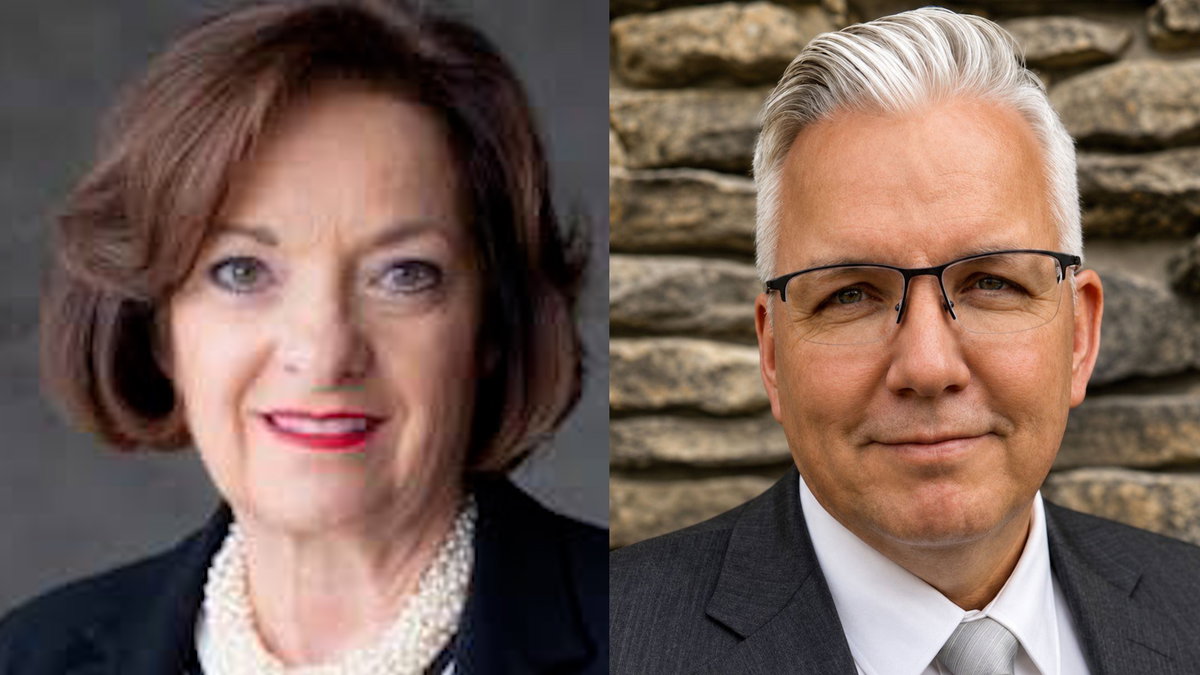
Mary Lynn Hartwell (Photo: LinkedIn)

Joel Beck (Photo: Ruchti & Beck Law Offices)
Beck is an attorney and former public school trustee. A partner and owner of Ruchti & Beck Law Offices in Pocatello, Beck has practiced law in Idaho for more than two decades. Sen. James Ruchti, D-Pocatello, is the other partner and owner of the law firm.
Beck also serves on the Sixth Judicial District Magistrate Commission and on boards for the Idaho Trial Lawyers Association and Friends of the Children – Eastern Idaho.
“As a product of Idaho’s public schools and a former school board trustee, I understand the importance of ensuring Idaho students have access to a strong education and the opportunities they need to succeed,” Beck said in the news release. “I’m honored to serve Idaho in this capacity.”
Hartwell and Beck’s appointments are not yet official; they must be confirmed by the Idaho Senate next legislative session.
The Senate rarely rejects gubernatorial appointees, but that happened in 2023 with Little’s choice for the Idaho Public Charter School Commission. Senators voted down the appointment of Karen Echeverria.
Meanwhile, Hartwell and Beck will serve as interim State Board members. State Board chairman Kurt Liebich welcomed them Tuesday.
“We look forward to working together as we remain committed to strengthening Idaho’s schools and universities for the next generation,” Liebich said in the news release.
Click here to follow the original article.