“Gaurded by Predators” – Case closed: Inside Idaho State Police’s handling of prison sexual abuse complaints

InvestigateWest

Editor’s note: The article discusses sexual assault. “Guarded by Predators” is a new investigative series obtained through partnership with InvestigateWest, exposing rape and abuse by Idaho’s prison guards and the system that shields them. Find the entire series at investigatewest.org/guarded-by-predators.

Originally Published: OCT. 14, 2025

By Wilson Criscione and Whitney Bryen

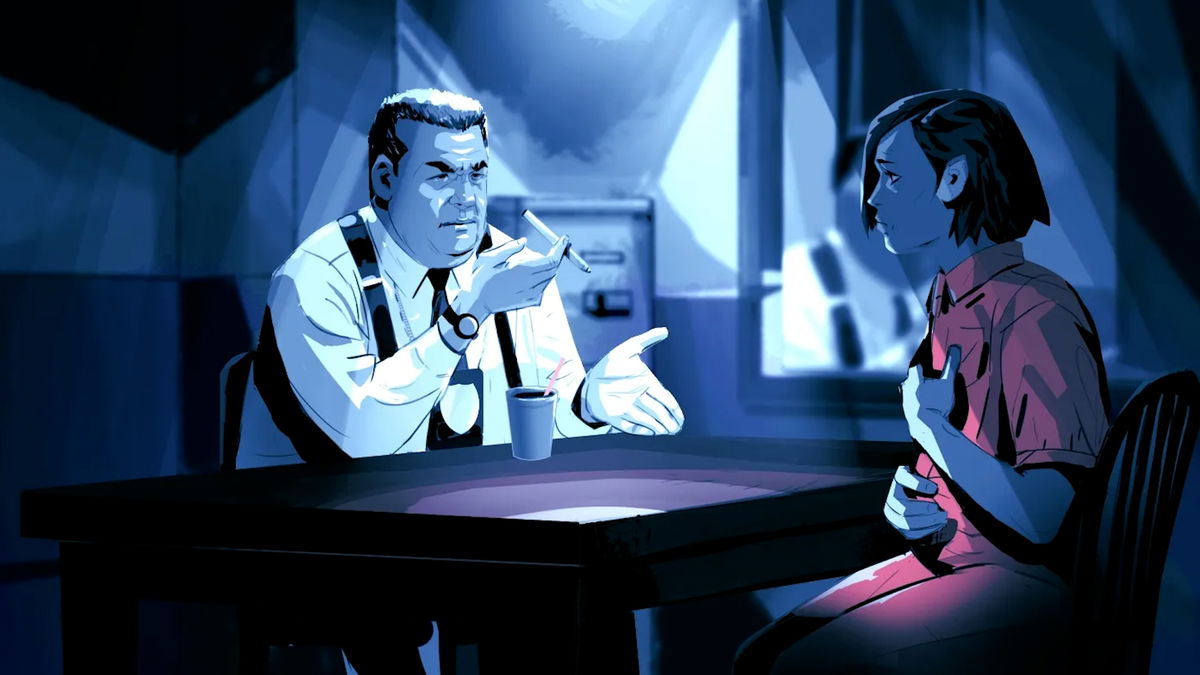
BOISE, Idaho — At a medium-security prison in the desert outside Boise, two Idaho State Police detectives begin to interview corrections Sgt. Brian Klingensmith. All three officers dedicated their lives to keeping criminals in line, but now Klingensmith is accused of raping one. 

At 2:02 p.m. on Oct. 29, 2024, one of the detectives begins recording their conversation. 

“So, like we said, the allegation came up from your supposed involvement back in 2011 when you worked at the Boise Work Center,” Detective Brandon Eller begins, referring to a women’s prison where inmates are allowed to work off-site during the day. Charee Nelson, an inmate who was under Klingensmith’s supervision, filed a report against him in summer 2024 alleging decade-old abuse.

Eller briefly sums up Nelson’s account. “She’s basically claiming that there were a total of five occasions that you guys, um, had sex, so to speak.”

“No,” Klingensmith softly says. 

The detectives move on less than a minute into the interview without directly asking Klingensmith if he had sex with Nelson. Nor do they ask if he offered to waive a disciplinary write-up that could have jeopardized her upcoming release date in exchange for oral sex. Or whether he made up assignments to get her alone and request sexual favors. Or if he knew that Nelson was four weeks pregnant when she was released from the women’s prison. 

But the detectives do tell Klingensmith that they are targeting inmates who file complaints of sexual abuse by guards for false reporting. 

“I feel like it’s a personal attack on me and my family,” Klingensmith tells the detectives. “And what happens to somebody who just makes shit up? Nothing?” 

“It’s the culture that you work in,” Detective Chris Pohanka says. “We’re trying to get some things changed on false allegations. I think we’ve had a couple prosecuted for that, or we have a couple maybe coming up for prosecution on those. Problem is, it’s a misdemeanor. That’s the problem.” 

Idaho State Police detective Brandon Eller at the Ada County Courthouse in Boise, Idaho, on Aug. 16, 2017, in a trial on his claim the agency retaliated against him as a whistleblower. Eller worked on the team of detectives that routinely handled reports of sexual abuse by staff at Idaho state prisons. (Kyle Green/Idaho Statesman) 

When prisoners are victimized by guards, they can’t call 911 or report it to police. Dispatchers won’t accept calls from prison. Instead, inmates can tell another Idaho Department of Correction employee — usually co-workers or supervisors of the accused. It’s then up to the guard’s employer to report it to law enforcement. Idaho prison policy and federal law require all potentially criminal allegations of sexual assault or harassment to be reported to and investigated by police. But according to the department’s own annual reports and federal audits of Idaho prisons, that rarely happens. 

When it does, the responsibility falls to the Idaho State Police, which has been investigating these cases statewide since 2023. Previously, local law enforcement, most often the Ada County Sheriff’s Office, investigated crimes reported at prisons in their jurisdiction. InvestigateWest has found that since state police took over, detectives have dismissed evidence, ignored leads and treated survivors as suspects, allowing abusers to escape justice and leaving victims to face the consequences. 

Idaho State Police spokesman Aaron Snell declined interview requests and refused to answer specific questions from InvestigateWest about Nelson’s case and others involving allegations against prison employees. In an email, Snell said all investigations are taken seriously. 

“Our role is to investigate criminal complaints, and we handle them the same way as any other case: by following the evidence, applying Idaho law, and focusing on what can be presented in court,” Snell wrote. “Allegations that arise in correctional settings can be particularly complex and challenging to corroborate, making these cases uniquely difficult.”

Nelson was one of seven women who, in the summer of 2024, accused prison workers of sexually harassing and assaulting them. The alleged abuse spanned decades, took place at women’s facilities across Idaho, and was perpetrated by different prison guards, probation officers, and commissary contractors. 

But one thread connects all of the women’s claims — none were thoroughly investigated by state police, an InvestigateWest review of the case files and detectives’ interviews revealed.

Allegations made by four of the women were never criminally investigated.

The other three women’s claims were merged into one case even though they accused different men on different dates who worked at different prisons. 

One woman’s case was closed as “determined not to have occurred” after a detective misrepresented the facts in her case file, claiming that she told him she never had any sexual contact with prison guards — despite an audio recording of his interview proving otherwise.

Only one of the seven accused men was contacted by police.

None of the men was charged in these cases.   

“They weren’t there for us,” Nelson said, referring to the police.

Charee Nelson at Christmas with her family’s cat in 2016. Nelson is one of seven women who filed complaints of sexual abuse against Idaho prison workers in the summer of 2024. InvestigateWest found that none of their complaints were properly investigated. (Photo courtesy of Nelson’s family)

‘Put everything to rest’

The Department of Correction said in an emailed statement that it had received some of the complaints that the seven women filed in summer 2024, but would not reveal which ones were investigated or the outcomes of those investigations. 

Though federal standards require prisons to send reports of all possible crimes to law enforcement, the department instead only notifies police of accusations against staff if evidence has been uncovered by department investigators, according to Department Director Bree Derrick. Those investigators lack the authority to conduct criminal investigations.

But an Ada County judge pressed for police to investigate accusations by Nelson and two other women following their pleas for help. Judge Andrew Ellis, who ruled on protection orders filed by the three women, promised at an Aug. 5, 2024, hearing to contact county Prosecutor Jan Bennetts’ office and “ask that she look into it and not just sweep it under the rug.”

“Typically, when the prosecutor gets a phone call or an email or has a meeting with a judge, they pay attention,” Ellis said. “I will do that much to make sure that there’s some attention being paid to your case.”

The next day, Idaho State Police opened an investigation into the complaints. 

Detectives combined the three women’s complaints into a single case, even though they were accusing different guards who worked at different prisons in different years — a sign of “sloppy” detective work, said Fara Gold, a longtime state and federal prosecutor who wrote the U.S. Department of Justice 2024 framework for prosecuting sexual assault against women. 

“It just makes no sense,” Gold said. “If three different women accused their husbands of domestic abuse, you wouldn’t combine those investigations. If they’re all accusing different perpetrators, they need to be treated as separate cases, because they do file separately in court.” 

Andrea Weiskircher stands outside the Ada County Courthouse in Boise, Idaho, on July 24, 2025, ahead of a drug court hearing. Weiskircher, now 43, has spent nearly 13 years in prison where she says she was harassed and coerced by guards to perform sexual favors in exchange for prohibited items like a cellphone, sodas or candy. Weiskircher’s decision to file complaints inspired scores of women to step forward with their own allegations of abuse by Idaho prison staff. (Kyle Green/InvestigateWest)

Snell, the state police spokesman, declined to respond directly to questions about the investigation into these women’s allegations, including why they were lumped together. 

One week after they were assigned the cases, detectives stopped seeking evidence of abuse for one of the women who refused an interview with them. Idaho State Police detectives were unavailable to comment for this article, Snell told InvestigateWest. In the emailed statement, he wrote that if a victim “chooses not to cooperate, we cannot proceed.”

The woman who didn’t want to be interviewed by state police, Karyn Simpson, said she had already told a detention officer who took her report about how a prison-work supervisor had groped her on a job site and how a parole officer — who was later charged with extortion in a separate case — offered to help her out in exchange for a video of Simpson and her wife having sex. She didn’t think she could relive that again, she told InvestigateWest. 

“You don’t want to reinterview the victim unnecessarily,” Gold said. “There are many reasons why you don’t reinterview the victim over and over again, not the least of which is that it’s retraumatizing. Just making her rehash it for no other purpose than you weren’t there to listen the first time, there’s nothing valuable in that.”

On the same day Simpson said no to detectives, Andrea Weiskircher made a different decision. She spent more than an hour with the investigators. According to audio of that interview and case files obtained by InvestigateWest, she provided locations, a timeline, witness names and other details about her abuse and the abuse of others. None of the men Weiskircher accused were ever contacted, let alone questioned, by the detectives, records show. Neither were the witnesses she named. Screenshots of a phone log showing calls she received from one of the accused men and sexual Facebook messages from others were emailed to one detective, but were not included or even referenced in the case files. Weiskircher also told detectives about messages sent to her through the prison’s communication system. The case files, which Snell called the “official record of the work performed,” make no mention of efforts to retrieve those messages. 

During the interview with Weiskircher, Detective Pohanka asked her if she had any “inappropriate sexual contact” with correction officers between 2018 and 2021. Weiskircher said “yes” twice, and yet when detectives closed their investigation, they falsely noted that she said “no” when asked if she had any sexual contact with prison employees. An audio recording of the interview confirms Weiskircher’s account — directly contradicting the detective’s written report.  

A subsequent notice declaring that the state police had closed her investigation identified Weiskircher’s accusations as “determined not to have occurred.”

An excerpt from a November 5, 2024 Idaho State Police report written by detective Chris Pohanka on the investigation into separate claims of sexual abuse brought by three former inmates, including Andrea Weiskircher. The investigative report states that Weiskircher answered “no” when asked if she has had sexual contact with Idaho Department of Correction employees, but audio of that interview reviewed by InvestigateWest shows Weiskircher said “yes.” 

One week before detectives Eller and Pohanka assured Sgt. Klingensmith that they were going after women for false reporting, they received copies of Nelson’s medical records from an ER visit 12 days after she was released from prison. Nelson was pregnant, but the baby had no heartbeat, according to the records. 

“The approximate age of the fetus would have put her becoming pregnant when she lived at the Boise Work Center,” Pohanka’s notes state. 

Nelson told InvestigateWest she knew she couldn’t prove paternity more than a decade after her miscarriage, but she was hopeful that the test results would convince detectives to take her allegations seriously. 

Detectives never mentioned Nelson’s pregnancy when they interviewed Klingensmith on Oct. 29, 2024. 

Instead, they questioned Klingensmith about how often prisoners were unsupervised on the way to and from their jobs. 

“Nelson was able to go to outside employment and return to the facility at night,” detectives noted. “She was not constantly watched during her time on and off the campus.” 

An excerpt from a Nov. 5, 2024, Idaho State Police report written by detective Chris Pohanka on the investigation into separate claims of sexual abuse brought by three former inmates, including Charee Nelson, who alleged that a guard overseeing her at a Boise Work Center, Sgt. Brian Klingensmith, had sexually assaulted her. The investigative report noted Nelson’s medical records from an ER visit 12 days after she was released from prison showed she would have become pregnant when she still lived at the work center. 

When Nelson was at the prison, Klingensmith told detectives that he was sometimes the only guard on duty, prompting them to ask about “manipulative” prisoners. It’s a fear instilled upon corrections officers in training — that they could become victims of inmates who use their sexuality to blackmail guards for contraband or other favors, former employees say. 

“What are some of the behaviors you got to experience with some of those inmates, with some of the women, being there by yourself?” Pohanka asked. “I mean, were they flirty, anything like that?” 

“No,” Klingensmith said. 

“Manipulative?” Pohanka pressed. 

“Not to me,” Klingensmith said. 

Nelson wasn’t the first inmate to accuse Klingensmith of sexually abusing people under his charge, he told detectives. During the interview, Klingensmith provided the last name of another inmate who filed a complaint against him. Detectives make no mention of the second allegation in their reports.  

Investigative records show that detectives did request employment history from the Department of Correction for the four men accused by Nelson. 

Officer Bill Lloyd, who Nelson said threatened to move her to a more restrictive unit if she did not have sex with him, was later charged and pleaded guilty to sexual contact with another inmate in 2009, according to court records. In a message on Facebook to InvestigateWest, Lloyd denied Nelson’s allegation and blocked a reporter when asked about his criminal charge. 

Officer James Burkman, Nelson’s work supervisor whom she accused of coercing her into oral sex and intercourse in 2008, was removed from his position later that year for similar allegations from other inmates, but the Department of Correction no longer had those records, detectives noted. He did not respond to emails or a letter from InvestigateWest. 

Another sergeant, who Nelson said forced her to give him oral sex, had no other complaints or allegations noted against him. He retired from the department in 2016.  

In Idaho, rape charges are exempt from the five-year statute of limitations for felonies, though the exemption does not apply to the charge of sexual contact with a prisoner. Klingensmith, 53, retired in December 2024, less than six months after Nelson filed her complaint. Klingensmith did not respond to calls and messages from InvestigateWest. When reached at their home, Klingensmith’s wife declined to speak to a reporter on her husband’s behalf. He is the only man accused by Nelson who was contacted by detectives, according to their notes.

“I don’t think anybody’s really checked into this stuff, because it’s kind of bounced around, and I just feel the duty to actually look into it to see if there are claims,” Detective Eller told Klingensmith. “And if not, put everything to rest.”

One week later, on Nov. 5, 2024, the state police detectives did just that. 

“Based on the investigation of the alleged claims, I have found no evidence to corroborate the allegations outside of the victims’ own statements,” Pohanka wrote, referring to Nelson and the other two women her case was tied to. “No other witnesses were identified beyond the three victims.”

Idaho State Police detective Chris Pohanka, pictured on the right in this handout photo from Jan. 30, 2025, receives a commendation for helping to prevent a highway accident months earlier. Pohanka worked on the team of detectives that routinely handled reports of sexual abuse by staff at Idaho state prisons. (Idaho State Police handout) 

‘Makes me sick’

The Prison Rape Elimination Act — the 2003 federal law that defines sexual misconduct in corrections facilities and how complaints should be handled — requires criminal investigations to “be completed any time criminal activity has been suspected of taking place regarding sexual abuse or harassment allegations.” The Idaho Department of Correction can discipline, demote or fire employees for sexual abuse, but it lacks the authority to arrest or charge perpetrators.

Criminal investigations used to fall to local police depending on the facility’s location. Most Idaho prisons are located near Boise. Ada County sheriff’s deputies handled those cases. The only women’s prison outside of Ada County is four hours east in Pocatello, where Idaho State Police had begun investigating allegations behind bars before taking over Ada County prison cases in July 2023. 

Since then, state police have investigated three sexual abuse cases against staff at Idaho women’s prisons, including Nelson’s case that was combined with two other victims, according to records obtained by InvestigateWest. In another case, an Ada County prosecutor declined to charge a guard accused of sexually assaulting four women at South Idaho Correctional Institution. The prosecutor’s office refused to say why. The third case resulted in charges against a Pocatello guard. 

But the women who report these crimes say they have learned not to expect justice.

Correctional Officer Justin Tillema was fired early this year after multiple complaints accused him of coercing and sexually assaulting an inmate he supervised, according to Department of Correction investigative records obtained by InvestigateWest. His officer certification was revoked for “criminal conduct whether charged or not” and “inappropriate sexual conduct while on duty,” as well as failing to cooperate with or lying to investigators, data from the agency that certifies prison guards reveals. But according to law enforcement records, he was never investigated by state police. InvestigateWest sent messages to Tillema on social media and at his last known address. Tillema could not be reached for comment.  

Since incarcerated victims are unable to report abuse directly to police, federal standards outline the Department of Correction’s obligation to notify law enforcement each time a crime is reported. But federal auditors, who are charged with ensuring prisons are following protocols, found that’s not happening in Idaho. 

Idaho Department of Correction Director Bree Derrick, who was appointed by Gov. Brad Little in March 2025. (Idaho Department of Correction)

Auditors — who are trained by the U.S. Department of Justice, paid by Idaho’s prison system and chosen by the facility they’re inspecting — recorded the discrepancies but passed the prisons as “in compliance” anyway. 

Last year, an auditor identified one sexual abuse complaint against a worker at South Boise Women’s Correctional Center. That allegation was not criminally investigated, according to the audit report, which passed the women’s prison with no violations. 

One sexual harassment and three sexual abuse complaints were identified in 2023 during the most recent audit of South Idaho Correctional Institution, which houses both men and women. One of the sexual abuse allegations was substantiated by the Department of Correction. None were criminally investigated, but the auditor still wrote that the prison was in compliance because the state employs a full-time Prison Rape Elimination Act coordinator, has a written zero-tolerance policy and most inmates interviewed by the auditor “said they felt safe.” That same year, the same auditor was invited to Pocatello Women’s Correctional Center. There, he found four sexual abuse complaints against staff but was unable to conclude how many received criminal investigations, noting conflicting numbers in his report before passing the facility. 

According to the U.S. Department of Justice guide to prosecuting government workers accused of violence against women, “an investigation should not be automatically closed or a case declined just because there is no apparent physical evidence or eyewitness testimony.”  

A 2022 investigation by state police into kitchen officer Derek Stettler unearthed allegations of sexual abuse by at least three other guards at Pocatello Women’s Correctional Center. State police investigated none of these allegations, according to records provided by the agency. 

When detectives do uncover enough evidence, they send cases to prosecutors who decide whether to charge the suspect with a crime. 

When state police investigators Spencer Knudsen and Mark Hulet questioned a Pocatello guard who was accused of sexually assaulting an inmate in 2022, one of the detectives explained it this way: “I’m the one that can go and talk to prosecutors from here and say, ‘This guy’s an upstanding guy. He just made a mistake.’ You understand that, right?” In an audio recording of the conversation, it is unclear which detective made the statement, and Snell, the police spokesperson, declined to identify him. 

The guard being questioned, Alveris Tomassini, had passed sexual notes back and forth for weeks with an inmate before he allegedly touched her genitals, according to the case files. Detectives reviewed video footage from the prison that shows Tomassini placing a roll of toilet paper through a slot in the victim’s door around 4 a.m. and then pushing his arm deeper into the cell where it stayed for 37 seconds, according to detectives’ notes. As he exited the hall, Tomassini turned back and gave a thumbs-up. 

When they released the case files to InvestigateWest in response to a public records request, the Idaho State Police omitted the video evidence and a photo of Tomassini giving the victim a thumbs-up. When questioned about the missing records, which Idaho law makes available to the public, one of the clerks in charge of gathering those files told a reporter that she was disturbed by the possibility that InvestigateWest might publish some of the details of the crime. 

“Some of this is so, so personal,” Administrative Assistant Lynn Reese said. “The thought that it might go out in the world makes me sick.” 

When pressed by the InvestigateWest reporter, Reese and her supervisor later said technology problems were to blame for the omitted records.  

Tomassini, who was still in training when the incident occurred, told detectives that he was fired for the accusation, but that he didn’t do it. He told them the inmate would undress in front of him and flirt with him but that he reported that to his training supervisor. Yet he also acknowledged that sexual contact between staff and inmates is common in the prison. 

“According to everybody in the prison, it’s not the first time,” Tomassini said to detectives. “I guess it hasn’t been the last time. It’s happened a ton of times before, with other people, other guards.”

Detectives did not ask for names of any of the guards who Tomassini said were committing similar crimes. 

Tomassini was later arrested and charged with sexual contact with an inmate, a felony under Idaho’s rape statute that says inmates cannot consent to sexual acts with guards who control nearly every aspect of their lives. He pleaded guilty to aggravated battery and was sentenced to probation. 

Tomassini is the only women’s prison guard who has been charged with sexual contact with an inmate since Idaho State Police took over these cases in 2023, according to court records. None of the men named in the complaints filed in summer 2024 by Nelson and others were charged. 

On a phone call from jail waiting for a prosecutor to decide her fate, Nelson learned from an InvestigateWest reporter that detectives had closed her case and the men she had accused faced no consequences.   

“I’m just shocked and outraged,” she said. “They don’t care. They don’t care. They just don’t care. It’s ‘protect their own.’ They’re allowed to abuse us and get away with it, and that’s what the police believe is OK, and that’s just how it is, because we don’t matter.”

This reporting was supported by the Fund for Investigative Journalism and the Pulitzer Center.
Click here to follow the original article.

Idaho Women’s Expo kicks off at the Mountain America Center

News Team

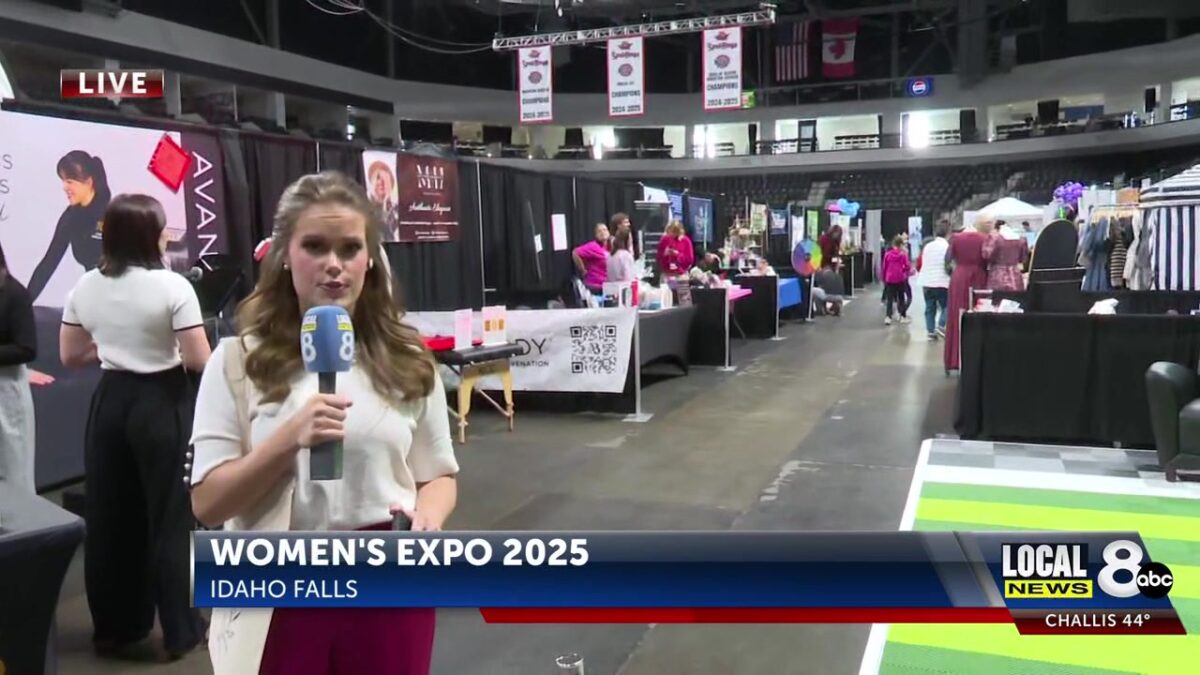
IDAHO FALLS, Idaho (KIFI) — The annual Women’s Expo is back, transforming the Mountain America Center into a vibrant hub of inspiration, connection, and commerce specifically for the ladies of Southeast Idaho. The two-day event begins today, Friday, October 17, and runs through Saturday, October 18.

Dozens of local businesses and vendors are set to showcase products and services. This year’s Expo also coincides with Breast Cancer Awareness Month, and businesses like Steele Lake Specialty say their focus will be on Women’s Health and awareness.

“It’s Breast Cancer Awareness Month, so we’re going to be focusing on that because we take care of a lot of breast cancer patients,” explained Mikki Ingle of Steele Lake Specialty. The multi-specialty practice—which specializes in routine general surgery, podiatry, and cosmetic surgery—is using its booth to promote awareness and proactive health.

The Expo is also rewarding its early visitors. The first 250 women through the door will receive a special goodie bag and a “passport” that will allow them to enter into a drawing for a variety of raffle prizes.

Ingle gave a sneak peek at some of the items her practice is contributing: “I know from our practice, we’re bringing slippers, a blanket, a nice body wash. All the things you can do to relax.”

The Expo is open Friday, October 17, from Noon to 6 p.m., and Saturday, October 18, from 10 a.m. to 4 p.m. For more information on tickets and pricing, click HERE.

Click here to follow the original article.

CEI recognized as Greater Idaho Falls’ Top Trade/Technical School for fifth consecutive year

News Team

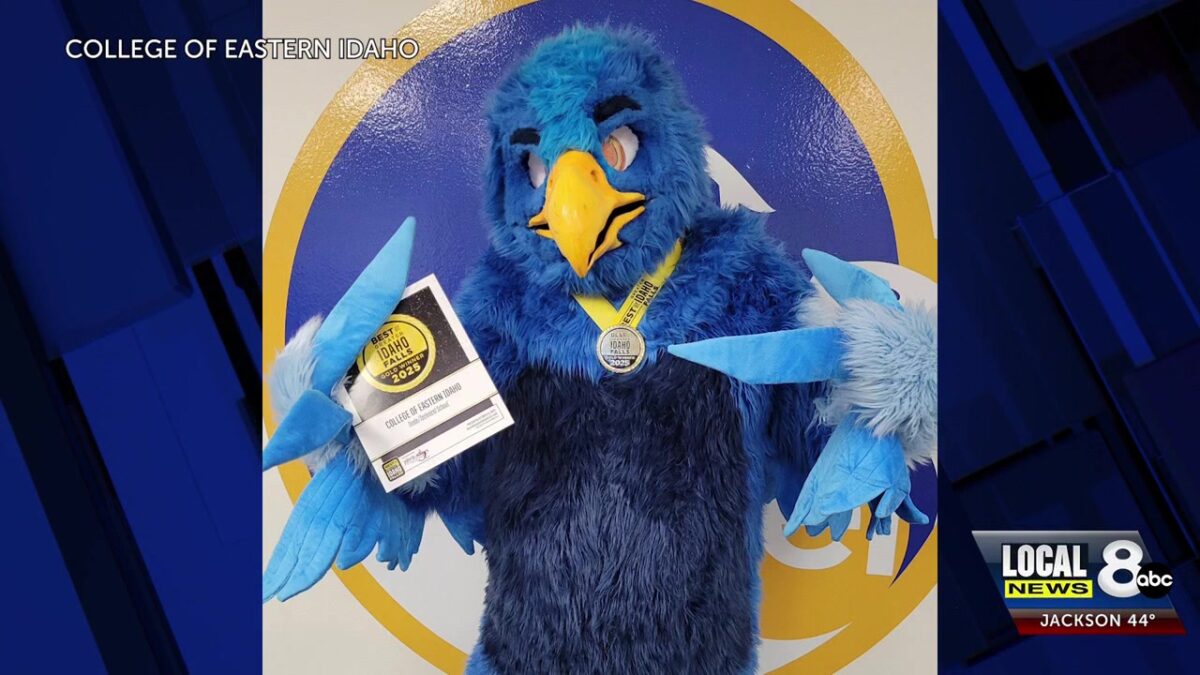
IDAHO FALLS, Idaho (KIFI) — The College of Eastern Idaho has once again been recognized for its unwavering commitment to excellence. For an incredible fifth year in a row, CEI has brought home the gold award for the best trade/technical school in Greater Idaho Falls.

This recognition celebrates CEI’s continued commitment to excellence, accessibility, and high-quality education and training, the college wrote on Facebook.

The college says this award is a reflection of its dedication to serving the community — and they’re thanking students, staff, and supporters for making it possible. CEI adds that this honor belongs to everyone who believes in its mission — and they’re just getting started.

Click here to follow the original article.

Boo! It’s Science: ISU’s Haunted Science Laboratory returns October 25th

News Release

The following is a news release from Idaho State University:

POCATELLO, Idaho — Now’s your chance to see the not-so-spooky side of science.

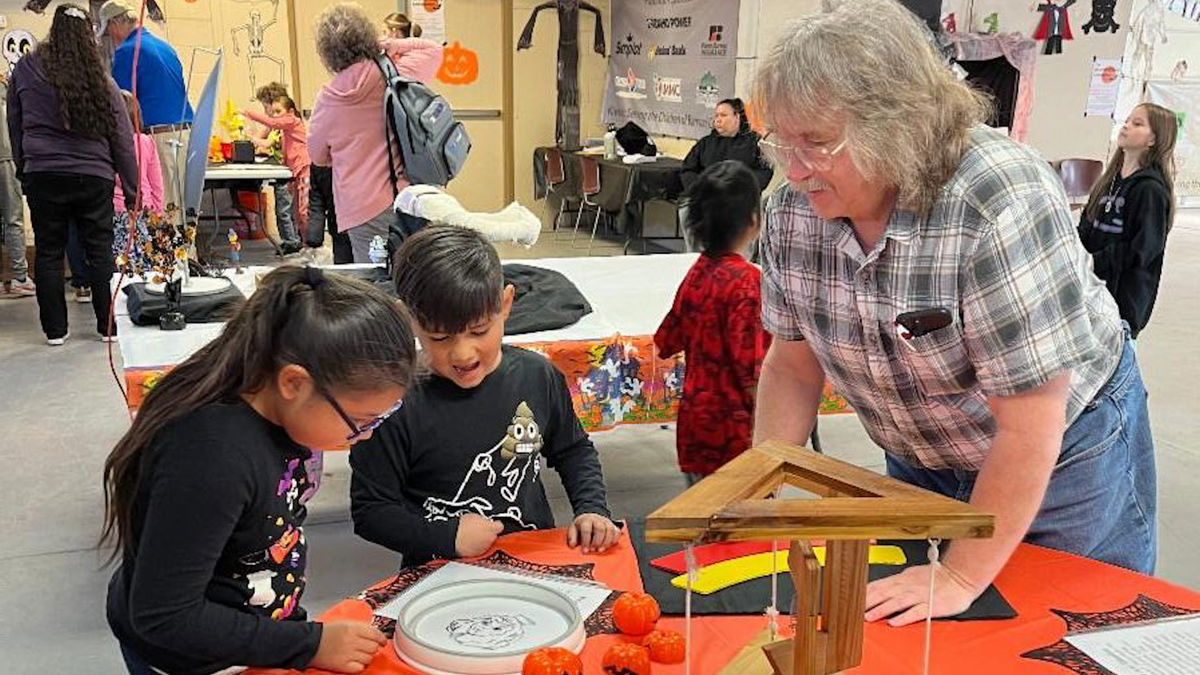
Idaho State University Department of Physics and Kiwanis Club of Pocatello’s Haunted Science Laboratory will be open to the public on Saturday, October 25, from 4 to 9 p.m. at the Bannock County Event Center, Commercial Building B, just north of the Pocatello Downs Grandstand. The Haunted Science Lab features a Van DeGraaf generator, lasers, and multiple educational and interactive science activities designed to delight, fright, and educate kids of all ages. Some exhibits use the same principles as Disneyland’s Haunted Science Mansion, except they are explained. 

“This is a great opportunity to share the wonder of science with your family and have some spooky fun,” said Steve Shropshire, professor of physics at Idaho State University. “And like any good Halloween event, costumes are more than welcome.”

The cost to attend is $5 per person or $10 per family (limit 6), and cash only. All proceeds from the event go toward Kiwanis-supported charities that benefit children in Southeast Idaho.

For over a decade, Idaho State’s Department of Physics and the Kiwanis Club of Pocatello have hosted the Haunted Science Laboratory as a free field trip for local schools prior to opening to the public. In 2024, nearly 2,000 local students and adults from around the region visited the Haunted Science Laboratory on a field trip, and when it opened to the public, more than 450 visitors stopped by the lab.

If you have questions about the event, contact Jasmyne Jensen, ISU Department of Physics Administrative Assistant, at (208) 282-2350 or coseoutreach@isu.edu

More on ISU’s Department of Physics can be found at isu.edu/physics

Click here to follow the original article.

Student-built planes earn FAA certification in North Idaho

CNN Newsource

Originally Published: 16 OCT 25 18:00 ET

By Tori Luecking

Click here for updates on this story

    SANDPOINT, Idaho (KXLY) — Middle and high school students in North Idaho achieved a noteworthy milestone when the Federal Aviation Administration certified two airplanes they built as airworthy this month.

On October 4, students from the North Idaho High School Aerospace Program received certificates of achievement from the FAA for their building of a Van’s RV12 plane and Zenith 750 STOL plane.

Eric Gray, a former student who worked on the Zenith in high school, will serve as the test pilot for both planes during the upcoming FAA-approved flight testing program.

The two aircraft represent years of work by students who gathered every Saturday in rented hangars at Sandpoint Airport.

Under guidance from volunteer mentors, the students developed both aviation-related skills and leadership abilities while constructing the planes from kits.

The nonprofit North Idaho High School Aerospace Program operates on approximately $15,000 annually and has guided nearly 60 graduates into aviation careers or training programs during its 13-year history.

The program offers academic credit courses at Sandpoint High School, discounted flight training, and hands-on aircraft construction through its Aerospace Center for Education and Skills (ACES) workshops.

As the certified planes move into flight testing, students are also working to build a Jabiru J430 composite aircraft.

The program relies heavily on donations and grants, and hopes to secure additional funding to purchase another plane kit. For more information and to support the program, visit highschoolaerospace.org.

Please note: This content carries a strict local market embargo. If you share the same market as the contributor of this article, you may not use it on any platform.

The-CNN-Wire™ & © 2025 Cable News Network, Inc., a Warner Bros. Discovery Company. All rights reserved.

Click here to follow the original article.

“Gaurded by Predators”: In Idaho women’s prisons, guards get away with sexual abuse and victims are blamed

InvestigateWest

Editor’s note: The article discusses sexual assault. “Guarded by Predators” is a new investigative series obtained through partnership with InvestigateWest, exposing rape and abuse by Idaho’s prison guards and the system that shields them. Find the entire series at investigatewest.org/guarded-by-predators.

Originally Published: OCT. 13, 2025

By Wilson Criscione and Whitney Bryen

BOISE, Idaho — If they hadn’t met in prison, none of it would have happened like this. On the outside, Jamie Hamilton would have been polite to Derek Stettler, maybe have had “a conversation,” she’d later tell an investigator. It probably would have ended there. She would have avoided years of trauma. He might still be alive.

But Hamilton met Stettler in 2015 at Pocatello Women’s Correctional Center, one of three women’s prisons in Idaho that shield guards like him from consequences for sexually abusing inmates. 

Hamilton was serving a two-year sentence for repeat driving-under-the-influence offenses. Stettler — 5-foot-10, balding and, as she remembers him, a “good Mormon boy” — seemed kind. “Brotherly.” They bonded over nerdy jokes and video games.

“He would always tell me, ‘You’re not the type of person that should be in here,’” she says.

It made her feel special. Human, in a place with little humanity. After two years, he told her to call him when she got out. “Absolutely,” she said sarcastically, with no intention of doing so. “Top of my list.” When she returned to the prison in 2021 after another DUI, both of them were going through a divorce, and their bond grew more intense. He passed her love notes, even called her mother to try to win her over. 

He flirted, groped and kissed her in linen closets away from the cameras.

“What am I supposed to do?” she asked her mom on the phone from prison, transcripts show. “Am I supposed to yell? Fight him off? Put my time at risk?”

Rumors of the inappropriate relationship made it to the warden, Janell Clement, who confronted Stettler. He told police later that it was his “chance” to come clean that he wished he’d taken.

There was no further investigation by the prison. His fixation on Hamilton continued.

Former Pocatello Women’s Correctional Center food service officer Derek Stettler (inset) was fired by the Idaho Department of Correction in 2022 and charged with the rape of an inmate. Stettler died by suicide before he could be convicted. (Idaho Department of Correction records)

In November, Hamilton was cleaning a bathroom when Stettler walked in. He unzipped his pants. The door closed and locked behind him. 

“He whipped out his penis, and he grabbed my face and he pushed (me) onto it, and I looked at him with this face of just utter — like, I don’t even know. I just remember my face saying everything,” Hamilton tells InvestigateWest. 

She wanted to “bite his dick off,” but both of them knew she wouldn’t, not there. “It felt like rape,” Hamilton would tell detectives. 

He apologized after, pleading that she keep it quiet. 

‘A big problem’

In recent decades, the number of women entering prison nationwide has skyrocketed even when compared to the rate of men — a result of stricter drug laws like mandatory minimum sentences for low-level crimes. But few states, if any, have committed to the mass incarceration of women more than Idaho, where the population of imprisoned women increased by 50 times since 1980, far outpacing population growth in the state, which doubled in that time. Today, Idaho incarcerates women at a rate higher than any other state, three times the national average. 

The Idaho Correctional Center south of Boise, Idaho. (AP Photo/Charlie Litchfield)

And a year of reporting by InvestigateWest has uncovered the unjust reality for those roughly 1,300 women currently in Idaho prisons: Once thrown behind bars, they’re kept there by guards — mostly men — who control every aspect of their lives; who can harass, grope, and sexually assault them with confidence that it will be kept quiet; and who, if caught, receive a kind of leniency from wardens, police, and judges that the women — most serving time for nonviolent drug convictions — could only dream of.

This culture was described to InvestigateWest by more than two dozen women who say they were sexually abused or harassed by Idaho prison staff. And a review of prison records, police reports and court documents reveals how the prisons bury allegations of staff misconduct, leaving women vulnerable to retaliation within a system that views them as criminals even when they’re the victims of a crime.

In a statement, the Idaho Department of Correction disagreed with the notion that it has a culture problem. 

“Protecting the safety and dignity of the individuals in our custody is a top priority, and we remain committed to maintaining a safe and secure environment for everyone in our facilities,” the statement said.

Idaho agreed to adopt the Prison Rape Elimination Act 10 years ago. The federal standards consider any sexual contact between a prison worker and an inmate to be sexual abuse, even if the inmate is willing in the moment. It calls for any potential criminal abuse or harassment to be investigated by law enforcement. 

Yet wardens and departmental leadership routinely allow guards to quietly resign without treating the abuse as the crime it is according to federal and state laws, InvestigateWest has found. Most accusations of staff sexual abuse are never referred to law enforcement by the Idaho Department of Correction, according to public reports compiled by the state prison system in accordance with the federal standards. 

Former employees told InvestigateWest that the department pressures guards to resign in exchange for dropping an investigation or avoiding one altogether, leaving their employment records clean and enabling them to take jobs at facilities in other states.

These patterns can be found in men’s facilities, too. But women in prisons across the country are particularly vulnerable to sexual abuse: A 2020 report from the U.S. Commission on Civil Rights found they are more likely than men to be sexually abused and harassed either by other inmates or by staff. 

In Idaho, sexual abuse by staff is reported at higher rates in women’s prisons than men’s, according to an InvestigateWest review of annual reports that the department compiles for a federal auditor. Reports of staff-on-inmate abuse at Pocatello Women’s Correctional Center, the largest women-only prison in the state, were filed at about three times the rate of men’s prisons from 2021-2023. 

There’s no centralized database comparing state-by-state rates of staff sexual abuse in women’s prisons. And the official numbers don’t capture the totality of the problem. 

The Department of Correction provided only 24 cases when reporters asked for all sexual misconduct complaints against women’s prison workers in the last five years — a number that conflicts with the department’s own count in its annual reports mandated under the Prison Rape Elimination Act. After reporters asked about the discrepancy, the department provided a new list of reports, which still did not match the annual reporting data. Through police and court records, InvestigateWest identified more cases that had in fact been documented by the Department of Correction, but the department either could not find those records or withheld them from reporters.  

“That’s a big problem,” said Julie Abbate, a D.C.-based attorney who spent 15 years investigating sexual abuse in women’s prisons at the Civil Rights Division of the U.S. Department of Justice. Abbate helped write the standards of the Prison Rape Elimination Act and is a certified auditor. Prisons, she said, are supposed to retain that information and have the records for misconduct allegations readily available. 

Julie Abbate, the national advocacy director for Just Detention International, testifies at a September 25, 2024 U.S. Senate Judiciary subcommittee hearing on sexual assault in prisons. Abbate spent 15 years investigating sexual abuse in women’s prisons at the U.S. Department of Justice Civil Rights Division, and also helped write the standards of the Prison Rape Elimination Act. (U.S. Senate Judiciary Committee) 

More concerning for Abbate is that InvestigateWest identified 59 documented allegations in Idaho women’s prisons since 2020. That number totals allegations recorded either by the department or other law enforcement agencies, and given how frightening it is for an imprisoned victim to file a report, it’s almost surely the “tip of the iceberg,” Abbate said.  

When an investigation is launched, department policy allows victims to be moved away from other inmates and into segregated housing. In practice, many women said they were moved to the “hole” — small cells where prisoners are confined up to 23 hours a day like a maximum-security prison. Victims said it felt like punishment. The department says “restrictive housing is very seldomly used to house potential victims of sexual abuse.”

Of the 25 victims InvestigateWest spoke to for this story, many confirmed that they did not report their experiences for fear of retaliation. Others said they attempted to report misconduct through an “inmate concern form,” only for nothing to come from it.

Hamilton, too, initially chose not to report it. But what happened next briefly lifted the curtain of the typically opaque Idaho prison system. Hamilton wasn’t the only woman being sexually abused by Stettler. And Stettler wasn’t the only guard at Pocatello Women’s Correctional Center who was getting away with it. 

Widespread abuse

Accounts from several former inmates and guards suggest that seemingly everyone around Hamilton and Stettler knew something was going on between them in 2021. But few saw Stettler as the perpetrator. 

That reflects a common mindset described to InvestigateWest within Idaho’s prison system: that male guards are the victims of women manipulating them with their sexuality.

Former employees of the Idaho prison system often referred to abusive staff as being “compromised” by women under their charge who use flirting as a way to get what they want. Tim Higgins, who worked for the department for 30 years, oversaw all prison investigations statewide and conducted many of his own involving alleged staff sexual misconduct. He said inmates, especially women, view sexuality as a “game” to use against guards. Some women who perform sexual favors receive special treatment or contraband smuggled in by guards.

“They would do things like expose themselves intentionally right towards the door,” Higgins said. “That’s why I never worked in a female facility, and I only worked in the female housing units when I absolutely had to, because I did not like those games that were always being played. It was difficult. It was hard.”

Stettler saw it the same way. “I know that 99.99% of what they tell me is a lie because they are trying to manipulate me,” he’d later tell police. 

But he also knew what he was doing with Hamilton was wrong. 

“I’m an instructor, I literally teach people not to do this,” he said. 

Hamilton’s mother could see the imbalance from the outside: Her daughter was a Ferrari, she said. Prison was Stettler’s only chance to drive one.

Hamilton emphasized that she never received any contraband from Stettler. Still, “people started saying it was my fault … that I was asking for it.”

One guard who also worked in the kitchen, Jennifer Urban, documented in her reports how obvious the relationship was becoming. Other inmates felt uncomfortable because Hamilton was “purposely putting herself” near Stettler, according to an Aug. 27, 2021, report. Urban declined to comment for this article.

The next day, Urban wrote that “the kitchen is in an uproar” about the rumors of a relationship with the two. Urban, according to the report, told Stettler to be “vigilant on where he positions himself” but told Hamilton that “her mannerisms are inappropriate.” Hamilton insisted she wasn’t trying to do anything like that on purpose.

Both reports were reviewed by the warden, Clement. (The warden declined to comment for this story.)

A few months later, in November, Hamilton said she sought help from Urban after Stettler followed her into the bathroom and forced her to perform oral sex.

“She pretty much shut me down, called me a liar and said that it was probably my fault and that I asked for that kind of behavior,” Hamilton said.

Urban, however, later wrote in a report that no one had acknowledged or talked to her about her previous reports of the relationship.

“I assumed it either wasn’t a big deal, or it had been looked at and the issue been dropped,” she wrote in the November report. She then detailed several examples she witnessed of inappropriate behavior, including an instance in which Hamilton followed Stettler into an office. “I finally had to tell her to stop following Stettler around like a puppy-dog,” Urban wrote. But she added that she has told Stettler on “several occasions” to stop putting himself where there are no cameras.

It was around this time in late 2021 that Clement had a conversation with Stettler about the suspected relationship, according to Stettler’s statement to police. The Department of Correction, however, did not provide records of this conversation. Hamilton said she remembered being told twice that year there was some kind of investigation being done into Stettler, but then nothing came of it. Whatever inquiries occurred did not involve interviewing her, she told InvestigateWest.

The prison finally launched an investigation the following spring on March 12, 2022, when Urban filed a fourth report, and another inmate reported that Hamilton and Stettler had been “in a relationship.”

The Idaho State Police soon followed with its own investigation. Together, the investigations revealed evidence of widespread sexual abuse in the prison that the state had let disappear without further inquiry.

The investigators discovered Stettler was sexually abusing a different woman in the summer of 2021. In addition, Hamilton told state police detectives that she knew of another sexual relationship between an inmate and a sergeant who resigned roughly one year after she gave her statement to police. Another witness in the investigation said a different officer had a sexual relationship with an inmate a few years earlier, with the witness saying that officer and Stettler would cover for each other. That officer had already resigned by the time the Stettler investigation had launched. InvestigateWest identified two other officers who were fired or resigned shortly after they were accused of sexual misconduct in 2022 and 2023. 

In 2021 and 2022, the Department of Correction’s annual reports showed nine allegations of sexual abuse by staff, and all of them were deemed “unfounded” or “unsubstantiated.” That’s despite two officers, including Stettler, being charged criminally with sexual contact with a prisoner for incidents during that period. 

The second charged officer, Pocatello prison guard Alveris Tomassini, was arrested after touching an inmate’s genitals through a cell door in 2022. The victim, Korena Weymouth-Bell, tells InvestigateWest that she had a romantic relationship with another guard at the prison named Brennan Horton. The pair passed notes back and forth for six months before Weymouth-Bell’s roommate reported it, she said. Horton, who could not be reached for comment, had also been named by a witness in the Stettler investigation who accused him of trying to follow her into a closet. Horton resigned on Oct. 7, 2022, for “personal” reasons, according to department records. 

“There’s been quite a few, and it’s not just me,” Weymouth-Bell said, referring to sexual relationships between staff and inmates. “It happens quite a lot, actually.”

Barbed wire fencing wraps around the South Idaho Correctional Institution outside of Boise. It’s the only Idaho prison that incarcerates both men and women. (Whitney Bryen / InvestigateWest)

The Department of Correction declined to answer any questions regarding the Stettler investigation. 

Marnie Shiels, a former Justice Department attorney adviser who specialized in the Prison Rape Elimination Act, says the federal law does little on its own to change prison culture around staff sexual misconduct. Each prison can choose its own federal auditor, and some of those auditors simply read the prison’s policies instead of talking to victims and digging into how those policies are actually implemented. 

Idaho prisons, she added, are not alone in holding victims responsible for their own abuse.“It’s a consistent problem,” Shiels says. “I’ve seen policies that even have that language referring to them as criminals. And it’s like, yes, in some other contexts, they’re criminals. But in this context, you’re talking about a victim, or an alleged victim.”  

In the dark

The flurry of allegations that arose around Stettler surfaced through investigatory records from the Department of Correction and Idaho State Police. 

But Pocatello isn’t the only Idaho women’s prison to see clusters of guards resign following alleged sexual misconduct. Former inmates and employees describe similar periods of upheaval due to staff sexual misconduct at South Idaho Correctional Institution and South Boise Women’s Correctional Center. 

The accusations against most of those guards, however, never came to light. An Idaho prison policy, known as “resignation in lieu of discipline,” suspends the disciplinary process for misconduct once an employee quits. When an employee chooses to avoid a discipline by resigning, Idaho’s prison system notes the decision in its personnel files, which are not public record, leaving victims without justice and future employers in the dark. Officers, meanwhile, avoid facing rape allegations. 

The department says “we do not encourage employees to resign. We encourage them to participate in the investigation,” and it says those reviews continue even if the employee resigns and is no longer obligated to answer questions. If misconduct is found, it is “documented,” though the department would not release those records, or say where it is documented or who has access to that information. 

InvestigateWest has identified at least 18 prison guards who resigned or retired after allegedly sexually abusing incarcerated women since 2015. Eight others were fired. The Department of Correction said it could not provide complaints or investigations regarding officers. 

Prison investigation records are included in criminal files if law enforcement investigates, but the prison system refers very few sexual abuse allegations to police, despite federal standards that say all allegations should be investigated criminally. Only three women’s prison guards have been criminally charged with sexual contact with an inmate since 2015.

Abbate, the certified prison auditor and attorney, said all of this points to a “really, really troubled culture.”

“The indicator that 18 of the workers resigned shortly after the misconduct was reported is super telling. Folks don’t tend to resign if there’s not something there,” she said. 

Co-workers or superiors of the accused are typically the first to investigate abuse complaints. Prison employees deem some allegations serious enough to tap the department’s Special Investigations Unit to avoid a conflict of interest. All complaints, including those accusing an inmate of sexual assault, should trigger a notification to the Department of Correction’s Prison Rape Elimination Act coordinator. (That role is currently vacant after Teresa Jones, who previously held the job, left the agency in August.) 

South Boise Women’s Correctional Center Warden Nick Baird, pictured second from the right, poses with other Department of Correction staff in this October 2019 photo posted to the Idaho Department of Correction Facebook page. (Idaho Department of Correction) 

If it’s an inmate accused of sexual abuse, the coordinator will refer it to police no matter what, substantiated or not, the annual report says. If it’s a prison worker, not an inmate, accused, then the coordinator will only refer it to police if the prison’s own investigators find evidence to substantiate the abuse, according to the department’s most recent annual report. 

That falls short of the federal standard, and prison staff hardly investigate allegations before closing cases and deciding not to tell police. Of all the staff sexual abuse or harassment reports that the department provided from women’s prisons since 2020, more than three-quarters were marked “unsubstantiated” or “unfounded” with little evidence of an investigation done, records show. 

Idaho isn’t alone in allowing accused abusers to quietly leave their jobs and avoid facing more severe consequences. Nationwide, nearly one-third of substantiated incidents of staff sexually abusing inmates resulted in the prison worker resigning before an investigation was complete, a 2024 Department of Justice report shows. In 38% of substantiated incidents, accused staff were fired or otherwise lost their jobs, according to the national report which analyzed 2019-2020 data.   

Higgins, the former lead investigator for the Idaho Department of Correction, said prison investigators “are much more aggressive and much more able to find out the truth than they would be someplace else.” 

He pointed to video evidence from cameras placed throughout Idaho prisons and the swiftness and ease of conducting interviews, searching inmates’ cells and confiscating personal items for evidence without a warrant. 

“If somebody wanted to search your house at home, they would have to get a warrant,” Higgins said. “With an inmate, I say, ‘I want you to go remove John from his cell and put him into the rec yard right now and then … I want every piece of paper removed from his property. I want to look at every piece of paper.’ And I could take all day and do that, and I did that without a warrant. It’s a warrantless search, because it’s our job to provide oversight.”

https://www.datawrapper.de/_/fnf7h

But staff know where the blind spots are, women told InvestigateWest. Several current and former inmates said guards used closets, vehicles, staff break rooms or offices without cameras to intimidate and coerce them. To unearth evidence in those cases, investigators may need to lean more on the victim’s account. But victims say they’re not always given the chance to provide information that might prove their allegations. 

Five women who filed complaints against prison workers in the summer of 2024 told InvestigateWest that they were never interviewed by investigators or updated on the results of an investigation. A year later, in July 2025, a guard who was monitoring inmate emails saw a message from one of those women, Donya Tanner, telling an InvestigateWest reporter that no one had investigated her complaint. A week after that, the guard informed Tanner that an investigation had occurred, but it was closed.  

The Department of Correction either could not find or withheld those investigative records requested by the news organization. 

‘Culture of retaliation’

When the Pocatello prison began investigating Stettler in spring 2022, Hamilton was transferred to South Idaho Correctional Institution in Boise. Within months, prosecutors charged Stettler with rape. 

A woman incarcerated at the South Idaho Correctional Institution outside of Boise makes a call from stationary phones that line a wall. (Whitney Bryen / InvestigateWest)

Hamilton was ostracized by other inmates who called her a “rat” or “teller” after Stettler got fired. She was unable to go to the work center, a minimum-security area. She remembers a lieutenant one day telling her it was because of her “indiscretions at previous facilities,” and that staff was not supposed to be alone with her because she “might claim that they raped” her.

In December, an arrest warrant was issued for Stettler after he missed a court hearing. Detectives went to his house to investigate and found his car in the driveway covered with snow. Another guard and Stettler’s son also lived at the house, but they said they hadn’t heard from Stettler in two days, according to a police report. Detectives searched a shed in the backyard and found Stettler dead — an obvious suicide. His death made the news, and word spread throughout the prisons. 

Hamilton was blamed by staff. 

“I was called a murderer,” she says. “A black widow.” 

“A lot of the higher up officers were ruthless, just absolutely ruthless with her,” said Joslin McNeece, who was an inmate at South Idaho Correctional Institution then. Monica Bowman, a fellow inmate at that time, said prison staff “definitely treated (Hamilton) differently than the rest of us.”

Idaho Department of Correction Director Bree Derrick, promoted this year from her previous role as deputy director, said accounts like Hamilton’s don’t represent reality for most women in state prisons. If you were to ask random female inmates about their experience, she says, “you’re not going to find a culture of retaliation.”

Idaho Department of Correction Director Bree Derrick, who was appointed by Gov. Brad Little in March 2025. (Idaho Department of Correction) 

She adds, however, that “there’s much more we could be doing to shift the environment and the interventions that we provide for women.” She says the prison system has largely been designed around men, and the department as a whole needs to recognize that women enter prison typically for different reasons. 

“There’s a whole gender-responsive initiative that we’ve been kind of working on, on a slow burn, that I think could be scaled up,” Derrick said. “As it relates to (the Prison Rape Elimination Act), I think one of the main things that I would say we should do is, obviously, have a little bit more transparency around what the heck is happening.” Hamilton is convinced there needs to be bigger changes. 

Before she was in prison, Hamilton was studying forensic psychology, preparing to become a lawyer. 

Since her release, she has gone back to school and is finishing a doctorate in psychotherapy. She hopes to become a therapist for those in the correctional system suffering from trauma. 

She sued the Department of Correction for failing to protect her from Stettler, and the state settled the case for $62,500. Much of it went toward attorney fees, Hamilton said. She says Idaho prison officials argued there “wasn’t enough evidence to prove I didn’t bait” Stettler. 

It’s one of many reasons why she’s moved far away from Idaho. It’s also why she’s cynical about what it would take to enact real change in Idaho’s three women’s prisons. “An act of God,” she quips. Everyone from the ground up would need to be replaced, she says.

“In one way or another, it was known in all three facilities, all the way up, what was going on,” she says. “And they chose to overlook it.” 

This reporting was supported by the Fund for Investigative Journalism and the Pulitzer Center. 

Click here to follow the original article.

Pocatello man arrested for alleged Idaho Capitol bomb threat

News Release

The following is a news release from the Idaho State Police:

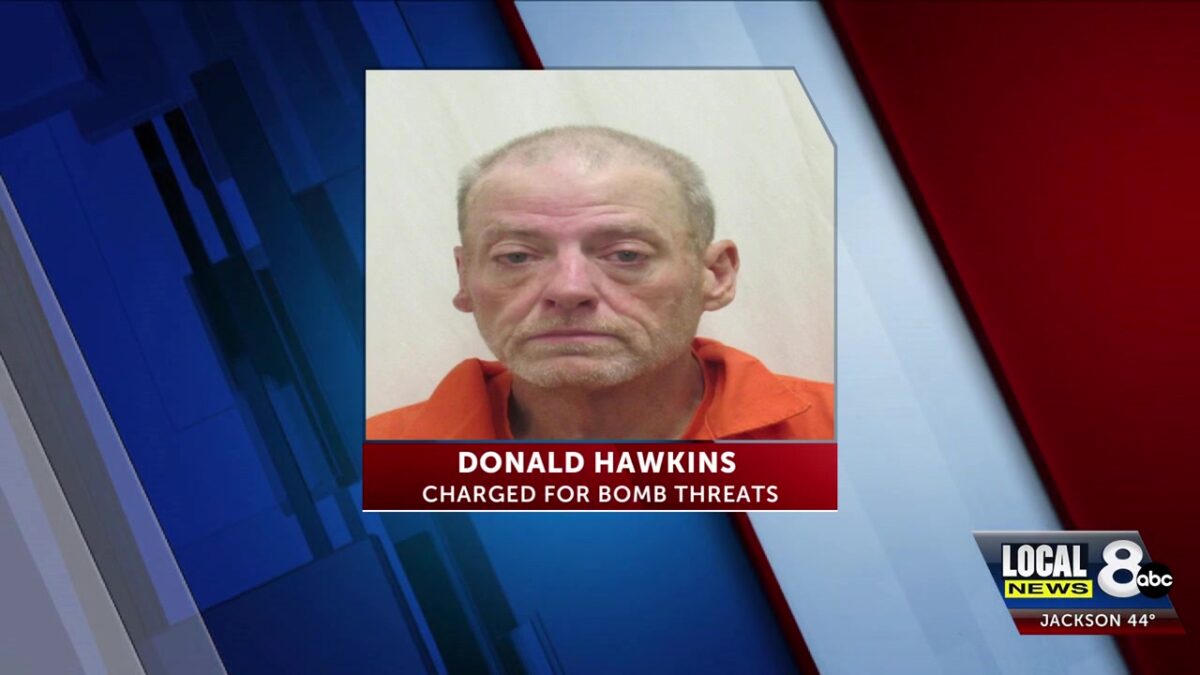
POCATELLO, Idaho (KIFI) — A Pocatello man has been arrested in connection with a bomb threat made earlier this month to a state government building in Boise.

On October 8, 2025, at approximately 10:14 a.m., the Pocatello Police Department responded to a report of a 58-year-old man making multiple threatening phone calls to employees of a property management company in Pocatello. During those calls, he allegedly made statements threatening violence, including threats to “blow them up.”

Approximately 20 minutes later, at about 10:35 a.m., employees at the Idaho State Capitol complex in Boise received multiple threatening phone calls from the same phone number. In the first call, a male claimed a bomb had been planted in the building. The Capitol was promptly evacuated as a precaution.

Two additional voicemails were received from the same number, which included threatening language consistent with the initial call.

Later that morning, Pocatello Police located the man and took him into protective custody. A subsequent investigation by Pocatello Police and Idaho State Police detectives linked the man to the Capitol threats.

On October 14, investigators confirmed the identity match between the man and the voice on the Capitol threat recordings. On October 16, he was arrested and booked into the Bannock County Sheriff’s Office jail on probable cause for one felony count of false reports of explosives in public or private places, in violation of Idaho Code § 18-3313.

No explosives were found at the Capitol, and there is no ongoing threat to public safety.

Troopers thank the Pocatello Police Department and the Idaho Department of Administration for their coordinated efforts in working the case.

The Idaho State Police continues to investigate the incident.

Click here to follow the original article.

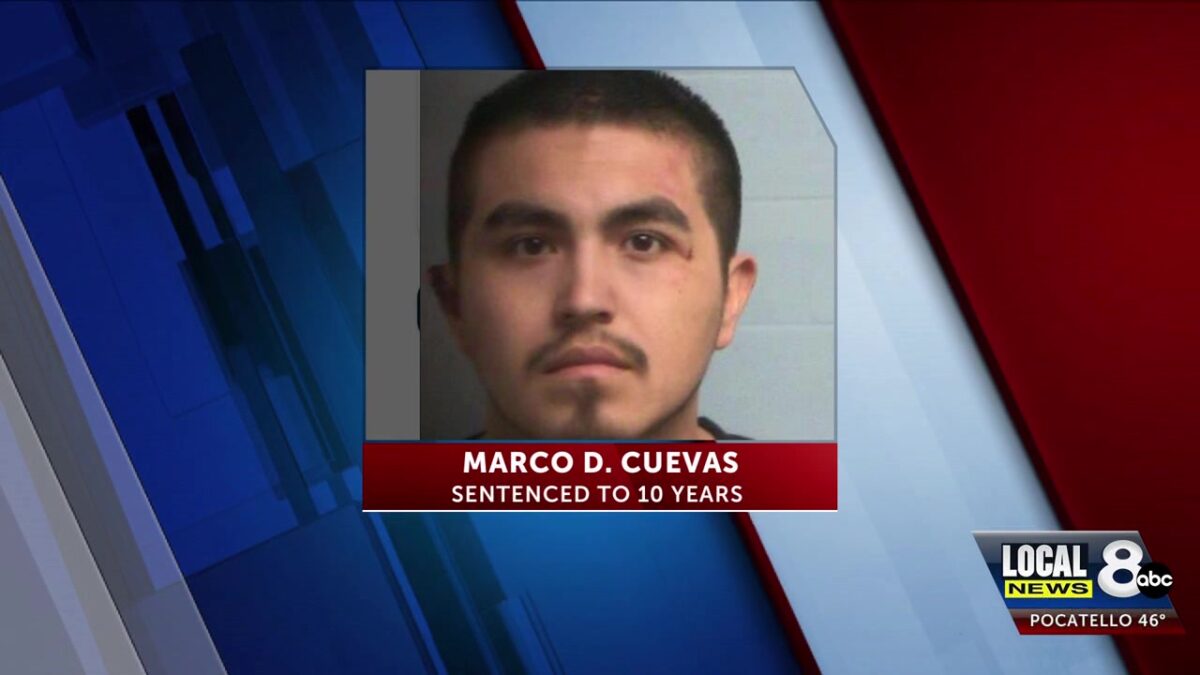
Driver sentenced to 10 years for 2023 DUI crash that killed teen passenger

Seth Ratliff

BLACKFOOT, Idaho (KIFI) — Marco Dimitri Cuevas was sentenced to 10 years in state prison yesterday after pleading guilty to Felony Vehicular Manslaughter in a 2023 crash that killed his teenage passenger.

The fatal incident took place over two years ago, on the night of October 14, 2023, near Snake River High School. According to initial police reports, Cuevas was driving a GMC pickup truck while under the influence. He reportedly ran a stop sign and collided with another truck. Both Cuevas and his 17-year-old passenger, later identified as Jesus Ortiz, were ejected from the vehicle. Ortiz died from his injuries at a local hospital, while Cuevas and the driver of the other truck were both injured.

RELATED: Arrest made after accident that killed 17-year-old

The teen’s online obituary says he was the youngest of four siblings and a “bubbly person” who loved his family.

The case, prosecuted by Bingham County Prosecuting Attorney Ryan Jolley, progressed slowly due to an evaluation of Cuevas’s competency to stand trial. Jolley confirmed that Cuevas remained in custody during this process. Once his competency was established, the case moved forward, and Cuevas chose to plead guilty.

Under the terms of the sentence, Cuevas must serve a minimum of 7 years before being eligible for parole. The remaining 3 years of the sentence are “indeterminate,” meaning they are dependent on his behavior while incarcerated.

“My thoughts and prayers go out to the victim’s mother and family, who were so deeply affected by this tragedy,” Jolley said following the sentencing.

Click here to follow the original article.

Part 1: “Corporal Q”: The Idaho prison guard who preyed on women — and the system that hid his ‘predatory’ conduct

InvestigateWest

Editor’s note: The article discusses sexual assault. “Guarded by Predators” is a new investigative series obtained through partnership with InvestigateWest, exposing rape and abuse by Idaho’s prison guards and the system that shields them. Find the entire series at investigatewest.org/guarded-by-predators.

Originally Published: OCT. 12, 2025

By Wilson Criscione and Whitney Bryen

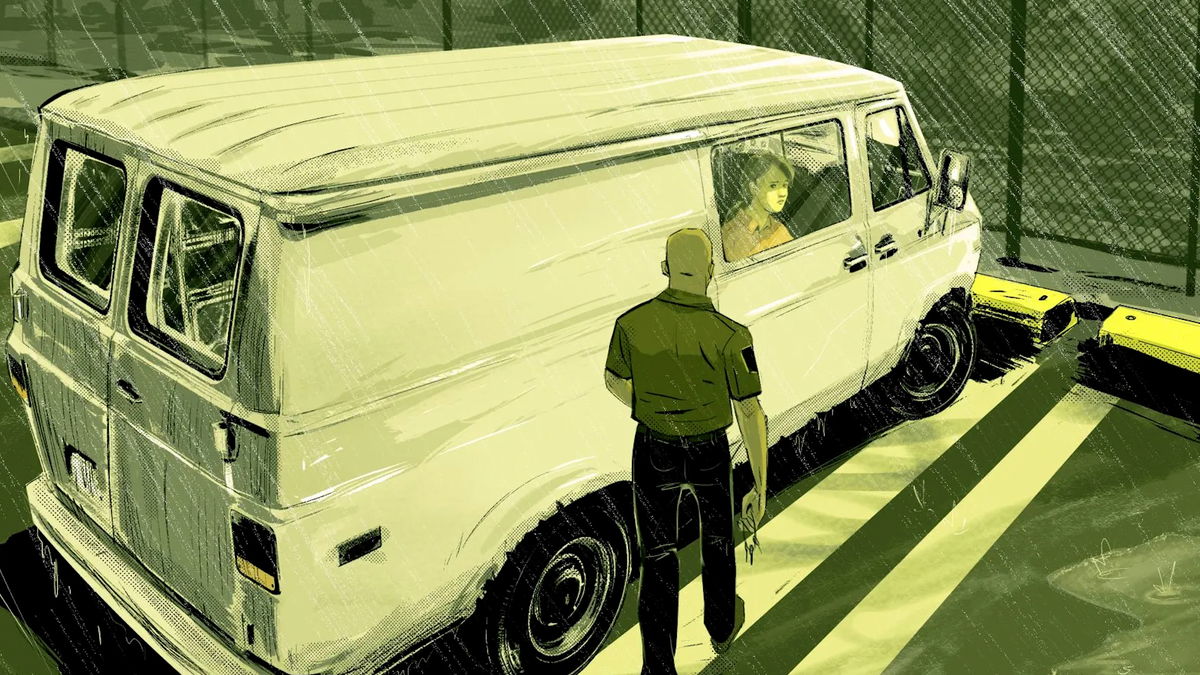
BOISE, Idaho — In January 2018, a woman imprisoned at South Idaho Correctional Institution outside Boise was taken to a medical clinic to get abnormal cervical tissue removed. A guard named Ricardo Quiroz — known among inmates as “Corporal Q” — was her only escort, and he let her sit up front in a white van.

Afterward, still in pain and bleeding from the procedure, she and Quiroz walked back to the van. This time, she tells InvestigateWest, Quiroz told her to go all the way to the back. She complied. He followed her, telling her to take off her pants, says the woman, who asked to be referred to by her middle name, Lynn.

“There’s certain times where you fight, and there’s certain times that you don’t, and when you’re an inmate …,” Lynn trails off.

He raped her, Lynn says. Then he went back up to the driver’s seat and drove her back to prison.

Two years later, after Lynn got out of prison and away from Quiroz, she reported what happened. Investigators then discovered that just weeks before Quiroz drove Lynn to her medical procedure, he used his access to prison records to locate and contact a second woman who had recently been released from prison for a sexual encounter, police reports show.

Ada County prosecutors declined to press charges for the second woman. But based on Lynn’s report, they did charge Quiroz, now 34, with one count of sexual contact with a prisoner. He was convicted in 2021 of the felony, considered rape under Idaho law. He had to register as a sex offender and spend nine months in the custody of the Idaho Department of Correction.

The Ada County Sheriff’s Office made heavy redactions to a report containing allegations that former South Idaho Correctional Institution prison guard Ricardo Quiroz (inset) assaulted an inmate. Quiroz was later charged and convicted in 2021 of sexual contact with a prisoner.

Though such charges against an officer typically become major local news stories, Quiroz’s case received zero coverage — until now. Neither the Idaho Department of Correction nor the Ada County Sheriff’s Office, which investigated Quiroz, notified the public that a prison guard had been arrested for preying on a woman in his custody. To this day, four years since his conviction, both agencies have declined to release basic information about the crime that Quiroz pleaded guilty to. 

InvestigateWest learned of the case after requesting from the Idaho court system all cases involving the charge of sexual contact with a prisoner since 2015. Reporters relied on a heavily redacted police report, audio of court hearings, and interviews with the victim and others aware of the case to produce this story, which reveals how the Idaho Department of Correction failed to prevent a guard from abusing vulnerable women he was tasked with keeping safe and then hid details from the public. The department declined to discuss the case with reporters for this story.

The case against Quiroz stands out as the only time in the last 10 years that an Idaho women’s prison guard has received a prison sentence for sexually assaulting an inmate. Most sexual abuse allegations, according to public reports compiled by the state prison system, are never referred to law enforcement by the Idaho Department of Correction — a likely violation of a federal law meant to stop prison sexual abuse. The cases that Idaho law enforcement does investigate rarely result in criminal charges, sometimes despite evidence that a guard had sexual contact with a prisoner, a felony whether or not the inmate is a willing participant in the moment. Even fewer guards are convicted of the crime if they are charged. 

Although Quiroz is the rare exception, Lynn doesn’t see the case as a victory for sexual assault survivors. Instead, she calls it an “infuriating” example of why sexual abuse by guards is so common. 

Ada County prosecutor Katelyn Farley, pictured here at an April 2022 trial for another case, prosecuted former South Idaho Correctional Institution guard Ricardo Quiroz for a felony charge of sexual contact with a prisoner. Farley told an Ada County judge at Quiroz’s sentencing that Quiroz “used his position, his authority, and the power he had as a correctional officer to make these women sexual conquests.” (Brian Myrick/The Idaho Press-Tribune via AP)

‘Its Me’

By 2018, Quiroz had built a reputation in his five years at South Idaho Correctional Institution, a 700-bed men’s and women’s prison. His supervisors described how Quiroz would “make a game of these sexual conquests with not only the inmates, but with other staff,” according to a statement made by Ada County prosecutor Katelyn Farley during his 2021 sentencing hearing. Farley declined an interview for this story. Quiroz did not return several messages seeking comment. 

“He was making these decisions long before January of 2018. The sentencing material showed that he was engaged in inappropriate sexual relations since 2013. He was aware of these behaviors because it led to his divorce with his first wife,” Farley said in the hearing. The sentencing material she was referring to is not available for the public to obtain.

The investigation of Quiroz focused on two alleged victims, one of them being Lynn. In police reports, the second alleged victim, whom InvestigateWest is not naming, described how when she was incarcerated at the prison’s prerelease center in late 2017, she would talk to “Q” — she didn’t know his real name — frequently about football. Eventually, he began flirting with her and rumors began to circulate within the prison, leading to internal investigations that hit dead ends, she said, because at that point, they hadn’t done anything physical. But she “enjoyed being treated like someone other than an inmate” and thought Q was attractive. 

One day, she went into a janitor’s closet for cleaning supplies and he followed her in. Cameras could not see them. She told police that he tried to kiss her, but she turned her face away before rushing out when they heard voices.

A Department of Correction investigator interviewed her about the incident, but she “wasn’t honest with investigators” at the time, the police report says, “fearing her prison term would be extended for her involvement.” Q told her to look him up when she was released from prison. 

Weeks later, in January 2018, she was out on probation and was living in a halfway house in Boise. She got an email that said “Its Me” as the subject — it was Q. Quiroz told her he looked her information up in internal department records, which the general public does not have access to, according to her account in a police report. 

The Idaho Correctional Center south of Boise, Idaho. (AP Photo/Charlie Litchfield)

The two emailed back and forth, and they met up in his truck outside of her house. He was still in his uniform. The two began kissing, and Q put his hand on the back of her head, forcefully pushing it down toward his lap, according to the police report. 

It is not clear exactly what happened after that. The Ada County Sheriff’s Office redacted from the police report all descriptions of sexual contact that Quiroz allegedly had with any women, despite “sexual contact with a prisoner” being the crime for which he was convicted. 

In an email exchange included within the investigative file, the woman called Quiroz a “good kisser” and Quiroz replied to say she is too, “as well as everything (else) you did for me.” 

The two stopped talking on Jan. 8, 2018, when she found out Quiroz had a girlfriend, the emails show. InvestigateWest was unable to reach the woman for comment. 

Lynn, meanwhile, told InvestigateWest that Quiroz had been chatty with her during her time in the prison for drug possession. She’d heard rumors of “Q” having relationships with inmates, but she didn’t know if they were true. She thought he was a nice guy, and she trusted him to keep her safe during her medical appointment on Jan. 22, 2018. 

Brenda Smith, director of the Project on Addressing Prison Rape at American University in Washington, D.C., said despite the safety risk, prison transports are often conducted by a single guard and provide an easy opportunity for sexual assault.

“It’s high risk and that has happened often,” Smith said. “That’s not something where somebody should go alone.”

Brenda Smith is the director of the Project on Addressing Prison Rape at American University in Washington, D.C., and has studied the federal standards and state laws designed to protect inmates from sexual abuse. She says Idaho’s law is ”very narrow” compared to other states and could leave the state liable. (Provided by American University Washington College of Law)

Lynn considered reporting the assault to prison officials, but she thought it was too risky. 

“Either you’re gonna make your time worse, or you might get lucky and somebody will believe you, and things will get better,” she said in an interview. 

Though Lynn didn’t report the rape officially, she told another inmate what happened when she got back to the prison that night. That inmate later told police investigators that Lynn seemed scared of Quiroz after that and that Lynn had been in pain for several days afterward. 

She got out of prison later that year, but in 2020 she was arrested again for a probation violation in north Idaho. The county jail asked her a series of standard questions while booking her, including whether she had been sexually assaulted by an officer. She told the truth. 

“I was like, ‘OK, well, I know I’m going to get time, maybe they won’t send me to that prison,’” she said. 

‘A high standard’

Quiroz entered a guilty plea for the charge against him in November 2020. During the hearing, he admitted that he had sexual contact with Lynn and that the “whole allegation was true,” though no other victims were mentioned during the hearing.

But in his sentencing hearing a few months later, Farley, the prosecutor, noted that in the presentencing documents, Quiroz repeatedly used the word “consensual sex” when referring to what happened with Lynn. “This was in no way, shape or form ‘consensual sex,’” Farley said. 

“(Lynn) paints a very different picture than what the defendant paints, and quite frankly it’s the more believable picture,” Farley said. “She discussed how that medical procedure was very painful, and she talked about how the defendant was forceful with her, that he demanded that she engage in this behavior.” 

The prosecutor said the women in the prison may have been criminals, but they have also been through trauma, which is sometimes why they may turn to drugs to cope. Lynn, 33, says that was true of her. She grew up in Washington and 10 years ago was working toward a college degree, hoping to be a social worker working to keep families together. But she spiraled into depression and alcohol abuse, and soon after, she began using meth. 

In some ways, prison is “the only safe place these women have” away from drugs, Farley said in the hearing. But that also leaves them extremely vulnerable. 

“They can’t flee, they can’t get away. They feel as if they can’t resist, or their chances of freedom will be taken. And this defendant preyed upon those women. He used his position, his authority, and the power he had as a correctional officer to make these women sexual conquests,” Farley said. 

The outside of the women’s facility at the South Idaho Correctional Institution outside of Boise. (Whitney Bryen/InvestigateWest)

Quiroz’s defense attorney, Joseph Filicetti, wrote Idaho’s sexual-contact-with-a-prisoner law in the ’90s — a fact he reminded the court of frequently during the case. He asked the judge only to impose probation, adding that he’s known Quiroz since he was an “amazing” kid, when Quiroz played soccer with Filicetti’s twins. He joined the U.S. Army as an infantryman, then came back from war to become a prison guard in 2013. Filicetti described Quiroz as someone deeply affected by his time in the military that caused post-traumatic stress disorder.

“When I saw him after he came back … he was a completely different kid. He was not social. He was very aggressive. When he came in and saw me on this case, my heart was broken for him because I could tell he really had done the things,” Filicetti said. 

Quiroz’s dad testified in support of his son’s character. And then Quiroz himself spoke up, admitting he made “unethical decisions” and engaged in “reckless behavior” that he attributed to his mental health. 

“I took my mental health for granted, and that caused me to fail as a human being. I am deeply sorry for all the pain I have caused everyone here today, the victims that are in this case, the disappointment I have brought to my family, my friends, my wife and my daughter. 

“I will never hurt anyone again,” he said. 

The judge, Patrick Miller, called Quiroz a “good kid who served our country in the military,” but called his conduct “extremely reprehensible” and “predatory.”

“We have to hold people who are in positions of power to a high standard,” Miller said. 

He imposed a prison term of 10 years, with two years fixed. But Quiroz didn’t have to go to prison right away — instead, he first was to serve a “rider,” an alternative sentencing option in Idaho that offers defendants intensive rehabilitation in state custody, but away from the general prison population. If completed successfully, Quiroz wouldn’t have to serve his full term. 

Only nine months into it, Quiroz had finished his rider successfully. Farley, noting that Quiroz “did a really good rider,” did not object to his release, and the judge adjusted the sentence. Quiroz now only had to get through probation. 

Kept quiet

Since 2021, only a few cases of sexual abuse charges against Idaho Department of Correction staff have made headlines. One guard at the Pocatello Women’s Correctional Center, Derek Stettler, took his own life in 2022 after he was charged with the same crime as Quiroz. A probation officer named Saif Sabah Hasan Al Anbagi fled the country after multiple women he supervised accused him of forcing them into sexual activity.

Women incarcerated at the South Idaho Correctional Institution play cards. (Whitney Bryen/InvestigateWest)

InvestigateWest has interviewed dozens of women who accused many more guards of sexual abuse, and reporters requested records that may document allegations of misconduct against more than 40 guards, including Quiroz. The department failed to provide records on all but two guards, and in some cases records clerks said they were not sure some of the guards ever worked for the department, even though other state records and victim accounts proved otherwise. 

When asked why the Department of Correction did not notify the public or release records regarding its investigation into Quiroz or other guards, a spokesperson said in an email that the department does not release personnel records. The department declined to say whether it determined the allegations of sexual abuse against Quiroz were substantiated and why Quiroz was allowed to resign in June 2018. 

Reporters also requested sexual misconduct cases that the Department of Correction referred to the Ada County Sheriff’s Office, which until 2022 was the agency that investigated most allegations of sexual abuse in Idaho’s prisons. The sheriff’s office asked InvestigateWest to pay more than $5,000 for 85 police reports, and added that they could not guarantee all those reports were relevant. The sheriff’s office, including its spokespeople, refused to work with reporters to narrow the request. The sheriff’s legal adviser Spencer Lay told InvestigateWest’s attorneys, who were working pro bono, that the office had information that could reduce the cost of the request but refused to provide it to reporters, saying it was “no longer available for free per Idaho code.” He added that the sheriff’s office “is not the research arm” of InvestigateWest.

Idaho’s public records law allows agencies to waive fees if the information is in the public interest and the requester can’t pay the cost, but Lay denied a waiver, too, arguing it is “unclear” how allegations against publicly employed prison guards are in the public interest. InvestigateWest declined to pay the costs without assurance that doing so would result in Ada County providing the relevant documents without heavy-handed redactions. 

InvestigateWest then asked for reports on Quiroz alone. Ada County Sheriff’s Office provided the reports, but redacted descriptions of the alleged crimes that it called “personal information” that “would constitute an unwarranted invasion of personal privacy.” Yet in some instances, the reports did not redact victim names or their medical information. 

Lynn, released from prison for the last time shortly after Quiroz pleaded guilty, said she searched the internet for news coverage of the case. She wasn’t itching for the case to draw attention, but she was surprised to see none. 

“Why not tell the public? It’s something the public should know, what’s happening in the prison system. And it’s something that needs to be changed,” she says. “There’s so many things that go on in those walls that people don’t even realize.”

It took years for Lynn to get her life back on track. She did two years of counseling before becoming a recovery coach, helping other people get through trauma. Today, she’s married and has a daughter.

“For the longest time, I felt like I was still in my own prison, and I felt like I couldn’t trust men, obviously, like it wasn’t just that situation, but that one definitely increased it, because it was one of those situations that I couldn’t just leave where I was at. I was stuck there,” she says.

She listened to the hearings in the case for the first time this year, when provided by InvestigateWest. Despite what he did, she felt some sympathy and forgiveness for Quiroz, knowing he was going through his own mental health battle.

“At least I can see him now as a person,” she says.

Still, she worries that the leniency that the prison system and the courts gave Quiroz only made it more likely other women will be abused.

“If that’s what one deputy gets for taking advantage of his position where he’s supposed to keep people safe,” she says, “then why wouldn’t other deputies do that and have little to no consequences?”

This reporting was supported by the Fund for Investigative Journalism and the Pulitzer Center.

Click here to follow the original article.

Idaho Falls Zoo’s kicks off annual ‘Boo at the Zoo’

Ariel Jensen

IDAHO FALLS, Idaho (KIFI) – An ensemble of colorful costumed characters descended upon Tautphaus Park for the open night of the annual Boo at the Zoo. The Halloween event helps raise funds for the Idaho Falls Zoo and marks the end of the season for the year.

This time of year, the zoo is decked out with lights and filled with local vendors, where you can walk around with friends and family to see all the animals in a merry, not scary environment.

The fun starts on October 16th and continues through the 17th and 18th from 5:00 p.m. to 8:30 p.m.. For more information or to donate, click HERE.

Click here to follow the original article.