How Heat Impacts Wine Flavor and Harvest in San Luis Obispo County

Evan Vega

PASO ROBLES, Calif. – Winemakers at DAOU Winery in Paso Robles, like Mikee Mott, closely monitor local climate patterns each year to guide their harvest strategies.

“As much as a little rain is good, when you have that much rain all at once, it doesn’t go into the ground and provide that deep water we need for the grapes,” said Mott.

Wine grapes have surpassed strawberries as San Luis Obispo County’s top crop, according to the county’s 2024 Crop Report. The region’s vineyards generated more than $270 million in gross value last year, signaling a continued rise in the area’s winemaking influence.

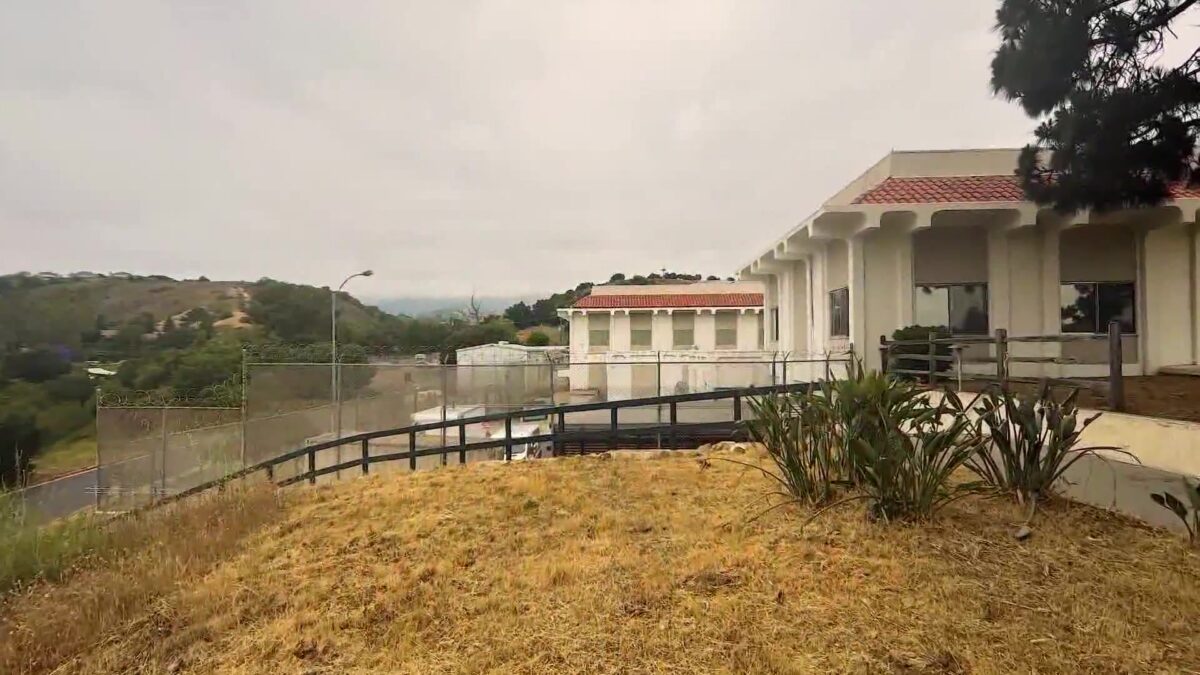
DAOU Winery in Paso Robles

Mott described the ideal growing season as one that begins with a mild, wet spring, followed by a warm summer and fall—key conditions for developing a wine’s flavor profile.

“In a vintage that has a lot of water, you’re going to see fewer aromas and flavors in that wine. It’s going to be a lot more diluted. It definitely dilutes the sugar, the flavor—everything in that wine. On really hot days, it can stop sugar production, so it’s not as sweet and has less alcohol, but it can also create more cooked fruit flavors,” Mott said.

Temperatures above 95 degrees can be too hot for grapes, halting ripening and affecting quality. However, DAOU’s vineyards sit at elevations above 2,000 feet, allowing for cooler nights and broader temperature swings. That high-altitude climate helps preserve acidity and balance, even during extreme heat.

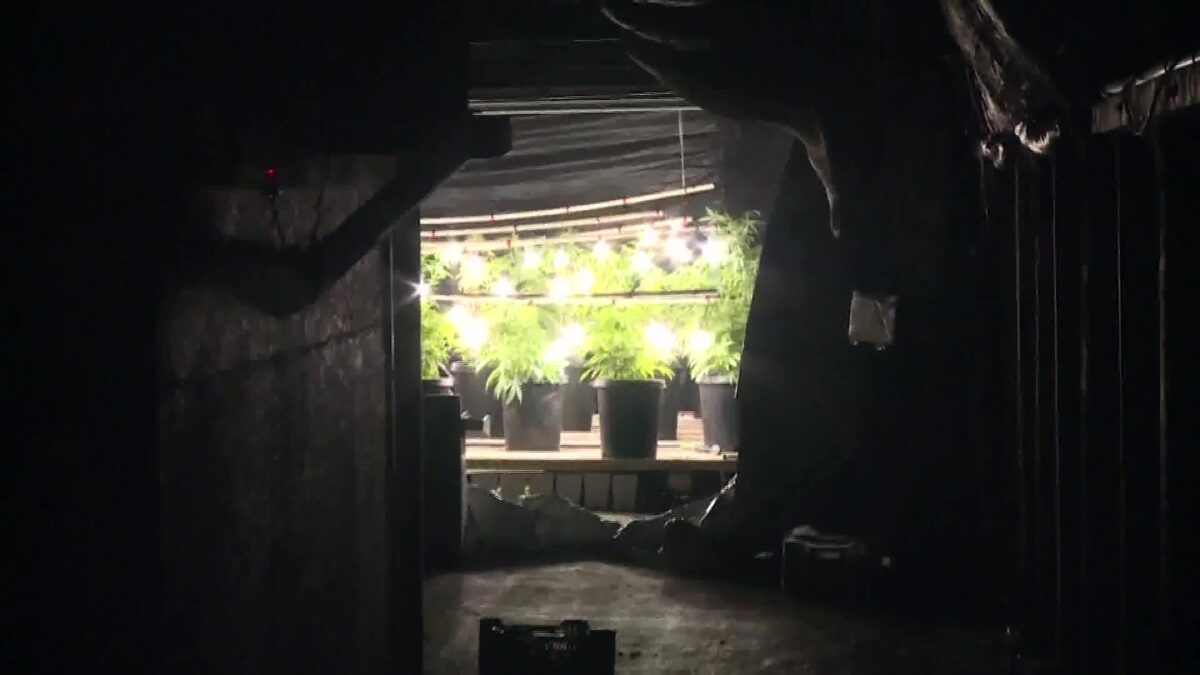
Wine barrels at DAOU Winery

Experts say long-term shifts in climate—especially more intense heat waves and irregular rainfall—are prompting many Central Coast wine growers to adjust irrigation, canopy management, and harvest timing.

Paso Robles has become one of California’s most dynamic wine regions, known for bold reds like Cabernet Sauvignon and Rhône-style blends. While Napa Valley maintains international recognition, Paso’s rapid rise in quality and production has positioned it as a leader in the state’s wine economy.

The region’s wine boom is also fueling a broader tourism surge. Vineyard visits, tasting rooms, and wine festivals now make up a major part of the local economy, supporting jobs in agriculture, hospitality, and retail.

Click here to follow the original article.

Agency Volunteers Helping Inmates at Santa Barbara County Jail’s Behavioral Health Units

Patricia Martellotti

SANTA BARBARA, Cali. – Carey Bradshaw is on her way to the Santa Barbara County Jail. 

“We’ve been volunteering at the Santa Barbara County Jail for one year … and we go in to their behavioral Health units … four separate units … and bring our therapy dogs in to visit with the inmates,” said Bradshaw.

Bradshaw’s partner, Dandilion is from therapy dogs of Santa Barbara.

She believes this furry friend is changing lives during each visit.

“There was an inmate who had not come out of his cell or talk to anybody in two months he came out he was crying or petting our dog … and talking to our volunteers, and our staff was just amazed at the transformation they witnessed,” said Bradshaw.

Volunteers from a about a dozen agencies are meeting regularly with men and women in the newly developed Behavioral Health Units.

“The value of this is that men and women can be together … and have time in the day room and they can have individual individuals come in and provide structured programming,” said programs manager Alice Perez of the Santa Barbara Sheriff’s Office.

That’s where the volunteers come in. 

They’re working to help inmates inside both jail facilities in Santa Barbara  and Santa Maria to regain their mental wellness during their incarceration.

“What I personally do is I have lived experience in homelessness, mental health and addiction and recovery from all of that … so I share my own story while also educating them about post traumatic stress disorder and how to get help … either from homelessness addiction or mental health issues … when they get out,” said lead advocate Cathie Ortiz of Transitions Mental Health Association.

Managers at the Santa Barbara County Jail hope to continue this behavioral wellness program to help those experiencing mental illness.

“Dandelion was such a big hit … every time we go back the inmates can see us walking down a long haul before we actually get to their unit … and they are pressed up against the glass saying …Dandelion Dandelion,” said Bradshaw.

The volunteers along with Dandilion’s help hope their efforts will enhance the inmates’ chances of a successful reentry into the community.

Directors of the Santa Barbara County Jail project the number of volunteers participating in the Behavioral Health Units will continue to increase in the next several years.

For more information, visit: https://www.sbsheriff.org/command-and-divisions/custody-operations/south-county-custody-operations-division/jail-facilities/.

The Latest Breaking News, Weather Alerts, Sports and More Anytime On Our Mobile Apps. Keep Up With the Latest Articles by Signing Up for the News Channel 3-12 Newsletter.

Click here to follow the original article.

Vintner vs. Cannabis Grower: Feuding Neighbors in Wine Country

Melinda Burns

BUELLTON, Calif. – A class action lawsuit with broad implications for outdoor cannabis growers and their neighbors is approaching a pivotal moment, three years after it was filed in Santa Barbara County Superior Court.

The plaintiffs in the case are Pence Vineyards & Winery, at 1909 West Highway 246; and Quantum Wines, the indoor and outdoor tasting rooms at that location. The defendants are Santa Barbara Westcoast Farms, a 50-acre outdoor cannabis operation across the road, at 1800 West Highway 246; and Scott Rudolph of La Jolla, a Westcoast manager.

Blair Pence, the owner of the vineyard and tasting rooms, alleges that the smell of pot from Westcoast has driven away his customers, lowered his property values and exposed him to “noxious odors and harmful chemical compounds,” court records show. He claims that the visitors to his indoor and outdoor tasting rooms dropped from 7,600 in 2021, when Westcoast began operations, to 3,300 last year.
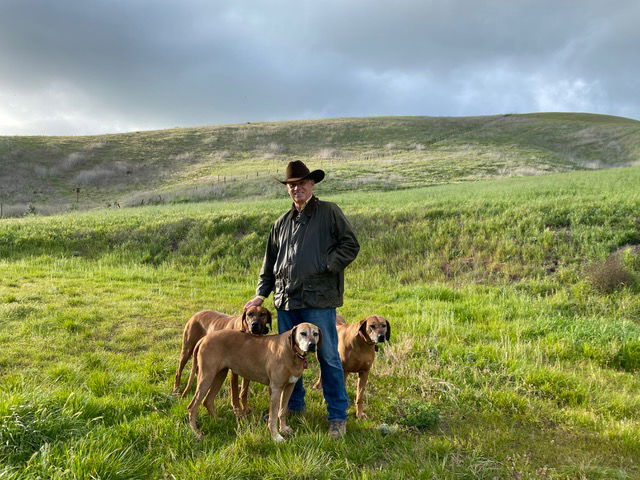
Blair Pence is the owner of Pence VIneyard & Winery and Quantum Wines, the plaintiffs that are suing Westcoast, seeking monetary damages for business losses that they allege are linked to the smell of pot from the cannabis operation across Highway 246. Courtesy photo.

A table of the monthly net sales of wine for Quantum Wines, included in court files, shows an overall decline from a peak of $113,00 in October 2021 to $44,000 in October 2024.

On July 2, Superior Court Judge Patricia Kelly is expected to rule on whether to certify dozens of homeowners and business owners within a two-mile radius of Westcoast as a “class” that could collectively seek damages in the case.

“The Smell Crescendos”

Buellton-area complaints from vintners and residents about the smell of pot from the outdoor cannabis “grows” to the west and upwind of the city, including Westcoast, are longstanding. The Sta. Rita Hills west of Buellton is a federally designated American Viticultural Area, and a number of vintners operate tasting rooms in the region.

In the Carpinteria Valley, the county Board of Supervisors recently required cannabis greenhouse growers to install clean-air technology to get rid of the smell of pot that wafts out of their open roof vents and into urban neighborhoods. But the board has not generally tackled the smell from outdoor operations. Some North County growers are cultivating cannabis under hoops, but many others, like Westcoast, are growing it in open fields.

These tiny marijuana plants will be ready for harvest in the fall. Photo by Carl Perry.

In court files, Pence describes the smell that he attributes to Westcoast as “a thick, heavy, strong stench of cannabis during the growing and harvesting seasons that can occur for three months at a time and as often as twice a year.” His customers don’t keep track of which periods are better or worse, Pence says.

“I think the issue is the general stigmatization of the business and the property,” he said in a March 25 deposition this year. “ … As the smell crescendos, we understand those details of it but the consumer doesn’t. The consumer just knows there’s a problem at Pence, that there is a cannabis stench at Pence … And the consumer doesn’t want to drive through a pot smell area to go tasting. It’s a turn-off.”

“Hints of Sweet/Chocolatey”

Like other outdoor growers, Westcoast was granted a county zoning permit for two annual harvests — one in the spring and one in the fall. In 2022 and 2023, there was only one harvest at Westcoast.

Westcoast’s representatives argue that the smell from their operations is “floral” in nature, dissipates in the wind and doesn’t travel far. It is present only during the three or four weeks of harvest, they say.

“For between five and eight months a year, the only plants growing on the property are mustard seed, oats and other typical cover crops,” Kavaughn Baghbeh, the Westcoast project manager, states in a May 28, 2025 declaration for the court.

Westcoast contends there is no evidence that the smell of cannabis from their operation is linked to Pence’s claim of diminished property values. Baghbeh notes that three other cannabis farms are cultivating within a two-mile radius of Westcoast. They are Central Coast Agriculture at 8701 Santa Rosa Road, Castlerock Family Farms at 2200 West Highway 246 and BDZ at 7369 West Highway 246.

Greg Wolff, an environmental engineer who supervised a study of 180 air samples around Westcoast, states in court records that the smell of pot was “infrequent, localized and low in intensity” throughout the growing season and harvest.

“Any odors offsite would be considered faint to the average person,” Wolff said.

At 50 acres, Westcoast is the sixth largest cannabis operation approved by the county. Outdoor growers are allowed to plant twice a year. Photo by Carl Perry. 

Unlike the “skunky” smell from other cannabis operations in the vicinity, the smell from Westcoast “could be described as a marijuana/earthy/floral base with hints of sweet/chocolatey,” Wolff said.

At the same time, according to court records, an engineering firm contracted by the county to sample the air last year around cannabis operations in the North County and Carpinteria Valley found “a considerable amount of odor coming from Westcoast’s grow operation.”

Record of Complaints

Westcoast is the sixth largest outdoor cannabis operation in the North County, out of 35 that have been approved for permits to date — in all, 1,100 acres of pot, though much of it is not currently under cultivation.

In recent years, a number of growers have abandoned their projects or fallowed their land. Since 2021, the wholesale price of cannabis in California has fallen 57 percent, on average, amid a glut on the market, state records show. Prices for outdoor cannabis are down 74 percent.

Back in 2020, the coalition sued the county for allegedly failing to conduct adequate environmental review before approving Westcoast and other outdoor cannabis operations between Buellton and Lompoc along 246, the scenic eastern gateway to the Santa Ynez Valley. But the county prevailed.

Since then, as cannabis has moved into the region, residents from Buellton to Solvang have told the county in letters, in person and in formal odor complaints that the smell of pot from outdoor cannabis travels on the wind and settles into low-lying residential areas with the nighttime fog. The smell also is noticeable, they say, in Beullton’s schools, at the recreational center, the local Albertsons and along the Avenue of the Flags.

According to court records in the Pence Vineyards case, residents have filed more than 40 anonymous odor complaints with the county about the smell from Westcoast in recent years. On Oct. 4, 2024, for example, a resident wrote, “It smells so bad I can’t even go outside. My house smells like I am growing cannabis in the living room.”

(Wolff’s study for Westcoast in fact detected a skunky cannabis odor during the evening hours in low-lying Buellton residential areas off Highway 246.)

“There is already ample evidence of the horrible odors” that travel from Westcoast’s property, the plaintiffs state in court records.

Misting System

Westcoast operators are among a handful of outdoor cannabis growers who were required by the county to install odor control as a condition of their zoning permits. Specifically, a system of pipes along the northern and eastern boundaries of Westcoast’s cannabis operation sets up a curtain of perfumed, plant-based mist that is designed to neutralize the smell of pot.

In court documents, however, Pence complains of the “malodors emanating from chemical deodorants” and says “particulate matter” from the odor control system is landing on his properties and destroying his landscaping.

As part of its defense in court, Westcoast submitted signed declarations from 20 people who live, work or own property in the vicinity, including farms and ranches, stating that they either did not smell cannabis or were not bothered by the smell. One person shared a property line with Westcoast, one was across the street, and a few were more than two miles away.
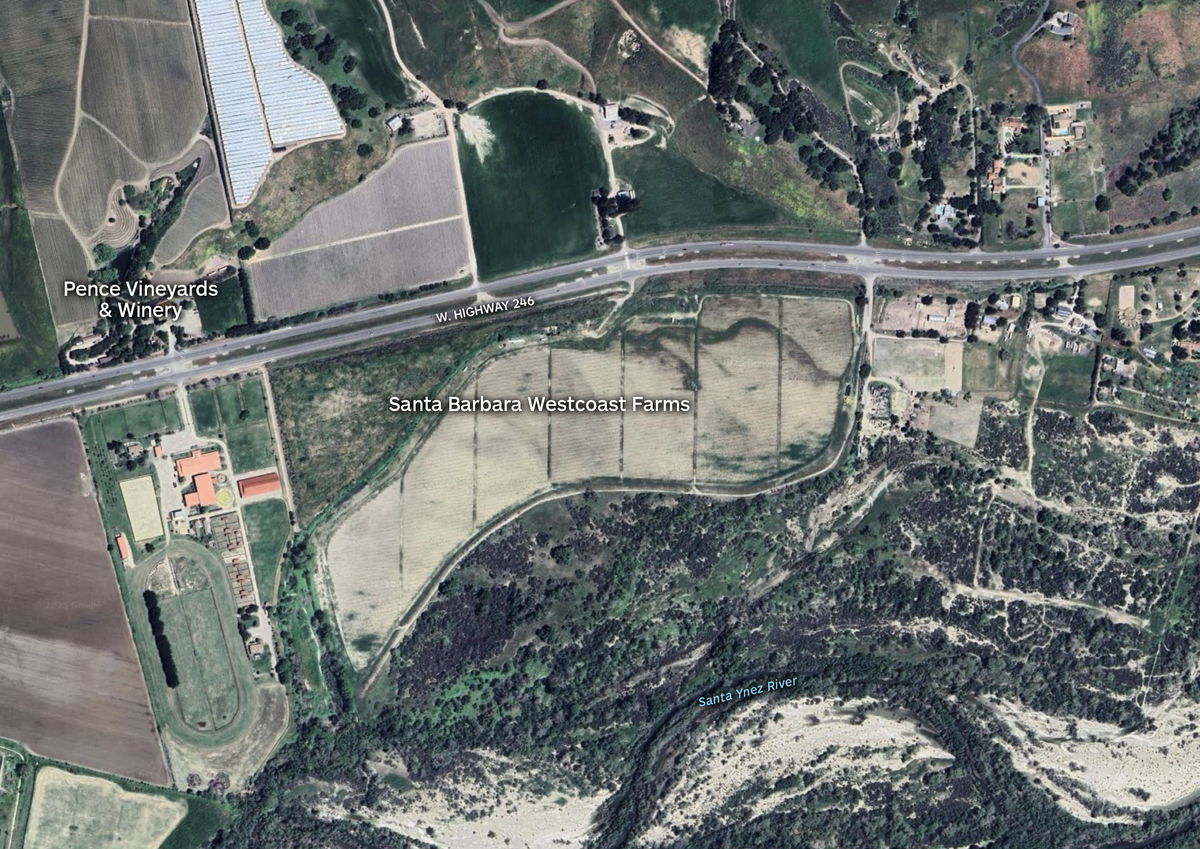
Cannabis is grown seasonally in the fields shown as light brown at Westcoast Farms. The dark green northwestern corner of the property is undeveloped. Google Earth photo.

“Yes, there is some cannabis odor for a short period of time,” wrote Chris Rickman at 926 West Highway 246, “but the same can be said for many vegetables grown to the west of us as well.

Westcoast’s farm is clean and not unsightly. They grow a crop, have permits to do so, and pay taxes. Let them farm.”

Class Certification

Last March, in a class action lawsuit alleging “nuisance odor” from Valley Crest, a cannabis greenhouse operation in the Carpinteria Valley, Superior Court Judge Thomas Anderle certified the homeowners within a one-mile radius of Valley Crest as the “class” in question.

The Valley Crest lawsuit was filed by the Santa Barbara Coalition for Responsible Cannabis, a countywide advocacy group that is led by Pence, who also supports the group financially; and several homeowners and business owners on Casitas Pass Road. The case is scheduled for trial on the merits next year.

If Judge Kelly similarly rules in favor of class certification in the Pence Vineyards case, it would mean that people living within a two-mile radius of Westcoast could join the lawsuit as co-plaintiffs. They would have to show proof that their property values or businesses had suffered because of the smell of pot from Westcoast.

Conversely, if the judge rules against class certification, people living near outdoor cannabis operations would face the cost and challenge of filing separate “nuisance odor” claims.

In court files, Westcoast’s representatives contend that the designation of a two-mile radius for class certification is arbitrary and lacks any scientific basis. They say there is no evidence of odor impacts from its cannabis operation within that area. And if there were impacts, they argue, the harm and resulting damages should be individually litigated, based on “their own particular facts.”

“We feel very strong about our position, but we’ve got to wait and see what Judge Kelly decides,” Lawrence Conlan, a Santa Barbara attorney for Westcoast, said this week.

“Unfair Competition”

Pence Vineyards and Quantum Wines are seeking unspecified monetary compensation for the business losses and reduced property values that they allege are linked to the smell of pot from Westcoast. They also allege that the cannabis operation is violating state law and engaging in “unfair competition” by pumping water from the floodplain of the Santa Ynez River during the dry months, “to the detriment of existing agricultural operations,” including his vineyards.

Under state water law, cannabis growers are banned from pumping ground water from subterranean stream during the months from November 1 to March 31. Cannabis critics say the law has not been enforced.

Westcoast argues, in turn, that the plaintiffs have not proven that any violation of water law has occurred. They say that the location of the cannabis operation near a river “is insufficient on its own to allege a violation of any regulation.” Nor have the plaintiffs explained how the alleged pumping of water from the Santa Ynez River has financially harmed their wine-making business, Westcoast says.

Pence and Robert Curtis, a Santa Barbara attorney who is representing Pence Vineyards and Quantum Wines against Westcoast and the coalition against Valley Crest, did not respond to requests for comment this week.

Melinda Burns is an investigative journalist with 40 years of experience covering immigration, water, science and the environment. As a community service, she offers her reports to multiple publications in Santa Barbara County, at the same time, for free.

The Latest Breaking News, Weather Alerts, Sports and More Anytime On Our Mobile Apps. Keep Up With the Latest Articles by Signing Up for the News Channel 3-12 Newsletter.

Click here to follow the original article.

County Sheriff’s Cannabis Enforcement Team Is Disbanded: Shrinking revenues, fewer raids lead supervisors to shift funds elsewhere

Melinda Burns

SANTA BARBARA COUNTY, Calif. – The team of four county Sheriff’s deputies and a sergeant that busted dozens of illegal pot operations and confiscated tens of millions of dollars’ worth of marijuana, beginning in 2018, has been broken up.

The move was made official on Tuesday at a county Board of Supervisors hearing on the budget for the coming fiscal year.

Cannabis tax revenues have dropped from a high of $15.7 million in 2020-21 to $5.4 million in 2024-25.

A glut on the market, much of it illegal pot, continues to depress prices; and the board was looking for ways to save money.

The $2 million cost of the enforcement team, including a $19,185 monthly lease for office and warehouse space in Santa Maria, has been the largest single line item in the county’s year-to-year cannabis budget. And during the early years of legal cannabis, there were plenty of illegal “grows” to raid.

In its first nine months of operation, back in 2018-19, the cannabis enforcement team confiscated marijuana plants valued at $106 million and dried marijuana valued at $15 million, records show. As the years went by, the team continued to seize substantial amounts of illegal cannabis, though at a slower rate.

“Progress has been achieved in this field,” Sheriff Bill Brown told the board on Tuesday. “Our county has significantly reduced the black market presence and discouraged illegal operators … This is not the time to let our guard down.”

In recent years, though, the enforcement work had largely shifted to the time-consuming investigation of illegal sales of pot; and the supervisors decided they had other priorities.

Earlier this month, the board cut one deputy from the cannabis team, leaving $1.5 million in the budget for it. On Tuesday, the board shifted two of the team’s remaining deputies to the Sheriff’s narcotics enforcement team — one for the North County and one for the South Coast, as specialists in cannabis.

The board also cut the sergeant’s position from the cannabis team.

The supervisors then decided that the position of the last remaining cannabis team deputy would become that of a “felony warrant” detective.

He or she will track down people who have been charged with felonies but who have failed to show up in court and are now in hiding, with warrants out for their arrest.

Supervisor Steve Lavagnino of Santa Maria had brought up this longstanding problem at the June 4 budget hearing.

Brown told the board that his department was holding nearly 10,000 “unserved warrants”, including warrants for about 2,000 felonies and 8,000 misdemeanors, some for crimes that were committed decades ago. About 1,300 people have multiple warrants for their arrest, Brown said.

The designated “warrant detective”, he said, would create a “most wanted” list and, in coordination with other departments, begin to focus on bringing those people to justice who pose the greatest risk to public safety.

The cost, designated as a one-time expense, will be $302,000 for this fiscal year, ending June 30, 2026.

In a testy exchange on Tuesday, Board Chair Laura Capps questioned Brown about the expensive Santa Maria lease for the cannabis enforcement team, which she noted has cost the county $1.2 million since 2019.

“That is news to me,” said Capps, who had asked the Sheriff for more information on the lease in advance of the hearing. “It’s an alarming eye-popping number that shows me I’m not sure we’re using these funds efficiently.”

In preparation for Tuesday’s hearing, Brown proposed moving the team after six months out of the Santa Maria warehouse and into a smaller space, for half the rent.

Capps said, “I’m all for enforcement, but I don’t know what could justify a lease of $20,000 a month, and now you’re willing to shift it away because the scrutiny has occurred.”

Brown said, “That is absolutely not the case.” He explained that in addition to the cannabis enforcement team, the narcotics team was housed at the Santa Maria building because an existing Sheriff’s office in the South County was “falling apart” and was “almost uninhabitable.” And Lavagnino pointed out that the Santa Maria building had been used to store confiscated marijuana from past raids.

Brown said he was proposing to downsize the Santa Maria lease because the South County building (the former food bank on Hollister Road) is being refurbished and will be available for use during this fiscal year.

“There’s nothing surreptitious about this,” Brown said.

For now, the Santa Maria lease remains in the cannabis budget for the narcotics team, for $239,000.

With some of the funding freed up from cannabis enforcement, the board funded a half-time Sheriff’s deputy position for cannabis business licensing, if needed; and it restored $70,000 out of $90,000 that had been previously cut from the budget for tax audits of cannabis growers.

Finally, the board allocated $240,000 in cannabis revenues to the Immigrant Legal Defense Center, a non-profit group with offices in Santa Barbara and Santa Maria.

The funds will pay for two therapists to work with family members who are suffering from the consequences of deportations.

There are presently 65 people on a wait list for mental health services at the center, including children.

Melinda Burns is an investigative journalist with 40 years of experience covering immigration, water, science and the environment. As a community service, she offers her reports to multiple publications in Santa Barbara County, at the same time, for free.

Click here to follow the original article.

Summer Fire Outlook for the Central Coast

Andie Lopez Bornet

VENTURA, Calif. – High fire season is now underway in California.

“That increased fire risk across the interior areas first for June and then spreading toward the coast as we head into July and August,” said National Weather Service Meteorologist, Robbie Munroe.

A La Niña means drier, warmer weather – particularly here on the central and southern coast.

“We’re starting to see that season shift towards drier vegetation and starting to see some smaller fires out there. That’s a signal we’re in fire season and things will likely get worse from here.”

The National Weather Service says the main impact of La Niña on fire weather is that La Niña years are statistically less rainy, which may have contributed to the fuels still being very dry in January during the Santa Ana winds.

2025 began with a series of damaging wildfires — including the Palisades and Eaton fires in Los Angeles.

So far this year, more than 57,000 acres have burned from San Diego to Ventura county.

The Kenneth fire in Ventura county burned more than 1,000 acres in January and was fueled by extreme Santa Ana winds.

“And we’re most concerned when they overlap with the really dry conditions, which is usually in the September through November time frame,” said Munroe. “But as we saw this past winter it can last into December or January.”

“Fire spreads based on a couple of basic principles, the fuels, the weather and the topography,” said Ventura County Public Information Officer, Andrew Dowd.

“We prepare for all types of weather conditions – we are prepared to respond to emergencies 365 days a year, 24 hours a day. When we know that there are sundowner wind events, red flag conditions, Santa Ana wind conditions, our agency will, depending on those conditions and severity, will consider up staffing,” said Dowd.

Santa Ana winds blow from the inland deserts toward the coast — they’re hot, dry, and strong — and can rapidly escalate wildfires.

These winds are most common in Fall and Winter, but they can strike at any time.

In Santa Barbara, sundowner winds create similar conditions – blowing from the northwest, down the mountains, toward the coast and are known for rapid fire spread.

Local fire agencies urge residents to prepare for wildfires early by creating a go-bad and clearing vegetation near homes.

You can get wind alerts in advance by downloading our First Alert Weather app.

The Latest Breaking News, Weather Alerts, Sports and More Anytime On Our Mobile Apps. Keep Up With the Latest Articles by Signing Up for the News Channel 3-12 Newsletter.

Click here to follow the original article.

Oxnard and Ventura Leaders React to Impacts of ICE Raids

Tracy Lehr

OXNARD, Calif. – Local farm owners have urged President Trump to pause ICE raids in their fields following a recent operation near Point Mugu, but workers and elected leaders worry the reprieve won’t last long.

This week, ICE agents targeted workers in an industrial area and held a U.S. citizen overnight.

The incident occurred after Juan Ramirez Diaz began recording video of his father’s arrest. His father is not a U.S. citizen.

Oxnard Mayor Luis McArthur said he spoke with Ramirez Diaz’s wife on Wednesday and learned the family was safe, but they remain concerned for the children’s grandfather, who is still in custody and has not been in contact.

“You know, what it’s doing is creating a lot of trauma in our community,” McArthur said. “I spoke out against the operations of ICE. I spent over 35 years with the Oxnard Police Department, and what we’re seeing—the tactics and methods ICE is using—I think they’re unjust, unwarranted, very harmful, and creating a lot of chaos.”

Before winning his mayoral race, McArthur served as Oxnard’s police chief.

He has defended local law enforcement from criticism by social justice groups accusing officers of being complicit in the raids. He said the police department he once led is not collaborating with the sweeps and is not legally allowed to under California Senate Bill 54.

However, video shared on social media Wednesday showed an unmarked car parking directly in front of the police station.

McArthur said that when a watch commander recently asked ICE agents to leave, they responded that it was a public lot.

Like McArthur, Ventura’s Mayor Pro Tem Doug Halter has been vocal on social media about the recent enforcement actions. He said he’s not convinced ICE will leave farms alone and warned that the raids are already hurting local businesses.

“Some of our more vital streets, like Ventura Avenue, are usually bustling with activity,” Halter said. “It’s pretty quiet now.”

He also said some students and parents skipped graduations out of fear.

“The reality is this—we know the immigrants in our community are deeply intertwined with all of us. Whether people realize it or not, many of them have been here for 20, 30, even 40 years. They’ve been a huge part of our community,” Halter said.

“The threat hanging over everyone’s head is real and life-changing. I just hope it’s not life-ending, because it’s that severe.”

Ventura County’s $2.4 billion agricultural economy relies heavily on strawberries and other top crops.

McArthur said he has advised farmers to put up fences and continue paying their workers—even if they’re afraid to show up—so their operations can survive.

He emphasized that farms have rights, too.

Ventura County Republican Party Treasurer Deborah Baber also weighed in on the situation, including the detention of the U.S. citizen.

“Their concern is misplaced when we’re talking about upwards of 20 million illegal aliens in this country—and that is the official term,” Baber said. “To point out that one person was picked up incorrectly is not even a drop in the bucket, not even a mist.”

“My response is: yes, there are some really fine and decent people who will get hurt. But the whole point of the Trump administration’s approach to ICE and deportation activity is to protect as many people as possible. That’s why they try to carry this out in public places where individuals who are here illegally can be detained safely.”

Baber reiterated her views during the Oxnard City Council meeting this week, despite vocal opposition.

She said she loves all people, but does not want undocumented immigrants taking jobs that she believes others could and would do.

“Their first crime was coming here illegally,” she said.

Meanwhile, businesses are feeling the impact.

Gas stations and market stands that serve undocumented workers have seen fewer customers in recent days, as fear of raids keeps people at home.

Unmarked ICE vehicles have also been spotted at local hotels.

The Latest Breaking News, Weather Alerts, Sports and More Anytime On Our Mobile Apps. Keep Up With the Latest Articles by Signing Up for the News Channel 3-12 Newsletter.

Click here to follow the original article.

CSUCI Teams Return Tidewater Gobis to the Wild

Tracy Lehr

CAMARILLO, Calif. – CSU Channel Islands faculty members and students have been busy caring for tidewater gobis.

They rescued 700 of them from the Topanga Lagoon following the devastating Palisades Fire in Pacific Palisades and Malibu.

For the past 5 months they have been held in two aquariums.

That gave the lagoon time to heal from toxic runoff and phos check used to fight the fire.

A CSUCI Environmental Science student and representatives from several wildlife agencies, who used nets to rescue the endangered 2-inch long fish, returned to the lagoon to return them to the wild.

They said the tidewater gobis are critical to the food web.

CSUCI Environmental Science and Resource Management faculty member Dr. Brenton Spies, and CSUCI Environmental Science student Sophia Hoolihan, who graduated in May, are credited with leading the rescue, care and return.

Spies specializes in studying the tidewater gobis.

“Today is the day to release them back to their home to send them home and start doing their gobi thing. so very exciting a huge team effort an now we let them do their thing,” said Spies.

CSUCI students and faculty will continue to monitor their progress in the lagoon.

For more information visit https://www.csuci.edu

The Latest Breaking News, Weather Alerts, Sports and More Anytime On Our Mobile Apps. Keep Up With the Latest Articles by Signing Up for the News Channel 3-12 Newsletter.

Click here to follow the original article.

Col. Nick Hague, First Space Force Guardian in Space, Speaks at Vandenberg

Jarrod Zinn

LOMPOC, Calif. – U.S. Space Force Col. Nick Hague, the first active-duty Guardian to travel to space, shared his experience aboard the International Space Station during a visit to Vandenberg Space Force Base on Wednesday.

Hague launched aboard the SpaceX Dragon spacecraft on Sept. 28, 2024, as commander of NASA’s SpaceX Crew-9 mission. The flight marked an historic milestone, making him the first active-duty Space Force Guardian to fly to space and one of the first humans to launch from Space Launch Complex 40 at Cape Canaveral Space Force Station in Florida.

He returned to Earth on March 18, 2025, following a mission that spanned more than 171 days and was extended due to adjustments in the Crew-10 timeline. Hague and his fellow Crew-9 astronauts landed off the coast of Florida aboard the Dragon spacecraft.

“Over the two and a half decades that we’ve been sending crews to the station have built a database of experience doing long duration missions,” says Col. Hague. “And so we’re collecting that data and trying to understand how it affects the body.”

While in orbit, Hague participated in more than 150 scientific investigations designed to advance human spaceflight and improve life on Earth.

“There’s a lot of stuff in space, and you can see it,” says Col. Hague. “That’s why I’m here at Vandenberg. They track it, but then if something’s going to come close to the station, then they’re calling Houston Mission control and they’re letting us know.”

His research on board the station focused on critical issues such as blood clotting in microgravity, vision changes in astronauts, and plant growth in space.

“Being in space challenges your senses on so many different levels,” says Col. Hague. “The way you understand yourself as your body goes through all its adaptations to microgravity, the way your mind processes, the things around you and their behavior, because they start doing things that you’re not familiar with.”

On Jan. 16, 2025, he conducted a six-hour spacewalk alongside an Expedition 72 crewmate to replace a station component and service an external research instrument, helping ensure the continued functionality of key systems used for Earth and space observation.

He also completed the Space Force T-Minus 10-Miler virtually—running 10 miles on the station’s treadmill in about 90 minutes, the same time it takes the ISS to complete one orbit around Earth.

Col. Hague, who has now logged more than 350 days in space across multiple missions, called this a pivotal time for young people to pursue careers in the space industry. He emphasized the rapid growth of new technologies and the vital importance of teamwork—a lesson he said was among the most surprising and rewarding aspects of spaceflight.

“We’re developing new suits, we’re developing new lunar rovers, new lunar landers, the Rockets that are going to get us there,” says Col. Hague. “You’ve got all of these new opportunities, and it takes a huge team.”

For more information about SpaceX, you can visit their website here.

The Latest Breaking News, Weather Alerts, Sports and More Anytime On Our Mobile Apps. Keep Up With the Latest Articles by Signing Up for the News Channel 3-12 Newsletter.

Click here to follow the original article.

Climate change, climate patterns, and rising sea levels cause growing threat to the bluffs in Isla Vista

Christa Kurkjian

ISLA VISTA, Calif. — The bluffs in Isla Vista are a prime example of how erosion is speeding up along California’s coastline. There is a growing threat to coastal homes because of rising sea levels and climate change.

Charles Lester, the Director of UC Santa Barbara’s Coastal Policy Center, posed an important question that experts are studying year after year, “How do we deal with an eroding shoreline that’s going to be eroding even faster?”

Historically, the Isla Vista bluffs erode at an average rate of six inches per year, but Lester warned that six inches might turn into six feet if the current trend continues. Lester explains that even though this isn’t a perfect science, it is a well developed science that points to the sea levels increasing rapidly.

Lester added, “Rising sea levels is going to mean that those waves are going to be hitting further back and with more energy over time as the levels of the ocean get higher.”

Additionally, the changing climate patterns are causing more problems for the homes along Del Playa Drive. In February 2024, several balconies of those homes collapsed into the ocean.

“But I like to think of it as a, as a spectrum. It’s, you know, it’s a front row of homes on the cliff, and Isla Vista are the ones that are in danger now, and in ten or 20 or 30 years, they’re going to be in even more danger. That doesn’t mean the next row of houses in danger, right?” Lester added.

Santa Barbara County runs a monitoring program to stay ahead of the erosion. They step in once buildings get too close to the edge. Some homeowners have proposed building seawalls, but Lester is skeptical and doesn’t think that is a good long term solution. UC Santa Barbara is developing its own long-term plan to adapt to sea level rise and protect the campus coastline.

Click here to follow the original article.

Summertime Safety Concerns Heat Up with Campers Heading into the Backcountry

John Palminteri

LOS PADRES NATIONAL FOREST, Calif. – Campsites covered with oak trees and the Santa Ynez River still holding pockets of water for swimming spots will be a lure for campers this summer. Safety has been emphasized as a top priority for the Los Padres National Forest.

Over the years, there have been emergency responses during the crowded summer season for hiking injuries, swimming spot high-diving issues, and out or control campfires leading to wildland fires.

You don’t have to be a veteran camper or forest official to know, they all can usually be avoided.

Preplanning your trip, letting someone know your destination, and going with others is a safe start.

On Wednesday, Paradise Road off Highway 154 was relatively quiet but campsites were welcoming.

The popular Red Rock swimming spot had a small crowd, but the setting was perfect for those looking for a getaway about 40 minutes from Santa Barbara and deep in the hills to escape the normal beach crowds and parking traffic.

“Yeah, it’s a lot of fun. I mean, it’s so awesome. It’s just like, in our backyard.” said Dylan Kracke a day use visitor and local student.

The U.S. Forest Service is patrolling regularly along with a private contractor, Parks Management Company, to manage the area and make sure those who are coming out have paid their day use or overnight camping fees as required and following all the rules.

The Los Padres Forest Law Enforcement is in the area, but the response zone is very large.

That means the mutual aid with the Santa Barbara County Sheriff’s Department and California Highway Patrol is a key element to an overall safety and enforcement plan.

Fire agencies are staffed for a full response at the first sign of smoke. That includes brushfire trucks, bulldozers and helicopters. Choppers are ready to go at the nearby Santa Ynez airport. Air tankers are based at the Santa Maria Airport.

Los Padres Fire Chief Mark Gerwe said at a recent fire season meeting, when it comes to fire pits, “just check it, be sure it’s put out. Camp hosts can support or help you if you need it. If there’s not somebody from the Forest Service around, we’re always willing to.”   

He said a runaway fire can turn on you. “You’re not just out there where something could happen, that you ignite a fire, but you’re in the path of a fire.”

High school student Javin Arcuri from Santa Barbara was swimming with friends and plans to come back often. He has camped with his family and his latest outing was with friends. “We don’t usually go to bed if even embers (are burning.)  My mom is always very careful about that. “

A camper in the area from San Diego County Steve Clark said, “we, got a real good bead on what we need to do. And and how to do it.”

He was in the Red Rock and Sandstone day use areas and camping nearby. When it comes to fires, keep an eye on the flames and weather. “That’s just common sense. And, you know, especially if it’s a windy, you know, you don’t want to have a big fire because the embers can take off. “

Adam Stern who enjoys the rock diving said, “it’s very important to check the angles, make sure you can make the jump, and then definitely check how deep the water is.”

Conditions are changing regularly. “Just check for branches or sticks that have blown into their dive area.” He says gradually, ” work your way up to the a higher and higher (spot). “

If you are off on a hike be aware of what can affect you that you don’t normally deal with. Gerwe says, “the heat, illness or heat exhaustion really gets more people every year. They over anticipate their ability, maybe not carry enough water, but when you head out in the forest, just think it’s going to be hot, there’s going to be bugs.”

With Independence Day coming up, there are no fireworks allowed in any area of the forest to celebrate the 4th of July.

For more information go to: Los Padres National Forest

Click here to follow the original article.