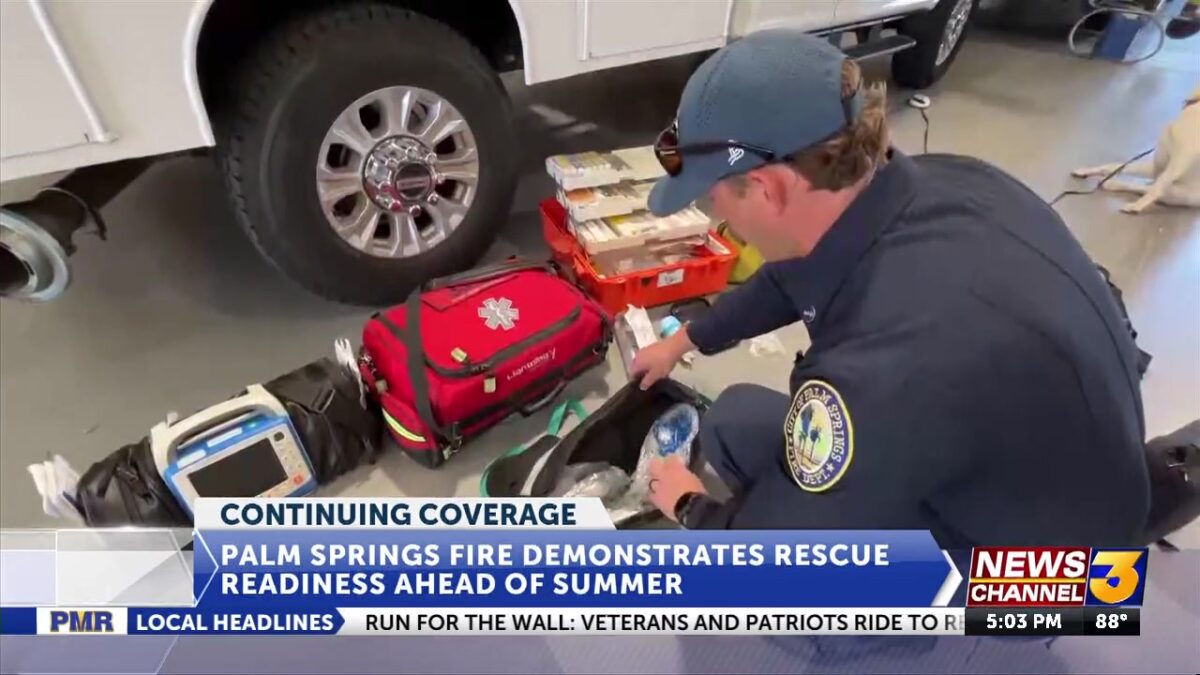
Palm Springs Fire demonstrates readiness to perform hiker rescues as hot summer months approach

Gavin Nguyen

PALM SPRINGS, Calif. (KESQ) – Hiking in the heat: it’s one way some valley residents choose to exercise during the hot summer months.

Each summer, firefighters urge hikers to use caution when taking to the trails in the desert heat.

But what if someone does need help on the trails this summer? Fire officials say they’re ready.

Captain Ronald Skyberg, Public Information Officer for the Palm Springs Fire Department, says last year, the department responded to 38 hiker incidents. This number accounts for the times crews were able to locate a victim and take them from the trail. This year, he says they have already completed 12 incidents.

So far, these rescues have mostly involved injuries like sprained ankles, but as the summer months approach, Skyberg says heat-related rescues will likely increase.

“We’re going to see an increase in maybe not necessarily hiker calls necessarily, but when we do go to these hiker calls, an increase in emergency is due to dehydration, heat exhaustion, heat stroke,” says Skyberg.

The fire department trains with law enforcement partners from the Riverside County Sheriff’s Department and California Highway Patrol yearly. This ensures communication between the agencies are clear and the helicopter is able to locate firefighters and patients on the ground.

“If we’re not able to get a location for the helicopter to bring down their hoist line, to hook the patient and to hoist the patient back into the helicopter, we’re – it’s never going to work,” Skyberg says.

Aboard their engines and medic squads, firefighters also keep bags – which can often weigh upwards of 60 pounds – filled with gear they need for hiker rescues. Depending on the situation, they’ll do their best to condense their equipment to improve their mobility and decrease the physical demand as they trek long distances to locate injured hikers.

At their disposal: backboards and Stokes baskets to carry victims down the trail, oxygen cylinders, masks, IV drips, and more. Carrying this equipment takes a physical toll.

Engineer Paramedic Nicholas Wood says, “It’s physically demanding on us. We wear our full uniform when we hike out there. We carry all this gear. But that’s why it’s important in our job to, you know, stay physically fit so that we can, you know, help help the community.”

Fire officials highlight three main takeaways for you to consider if you’re planning on hiking over the next few months:

Hike in the morning to beat the heat

Keep a charged cell phone with you

Always hike with a partner; never hike alone!

Click here to follow the original article.

CSUSB Palm Desert nursing student hopes to transform healthcare

Athena Jreij

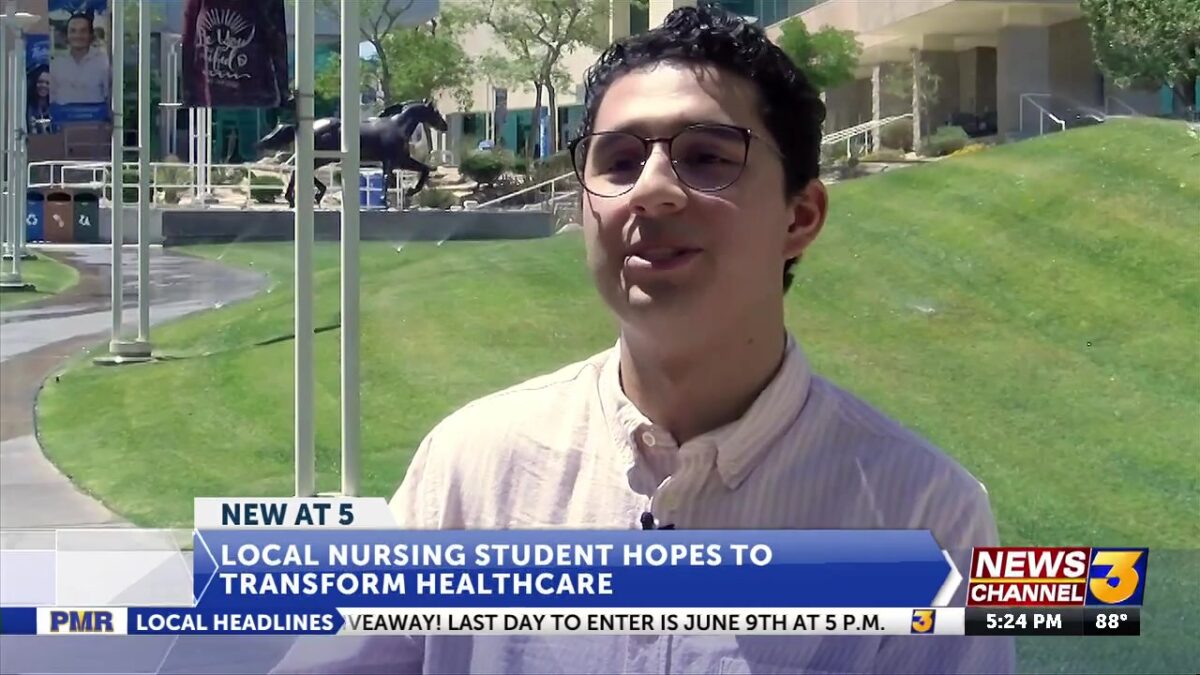
PALM DESERT, Calif. (KESQ) — Inspired by the COVID-19 pandemic and Coachella Valley’s nursing shortage, Jason Davalos is graduating California State University, San Bernardino Palm Desert Campus (PDC), with a degree in nursing.

Davalos graduates this weekend as PDC’s Outstanding Student of the year and as a University Legacy Scholar, a scholarship that provided a full-ride to the school. He hopes to transform healthcare by breaking down language barriers and providing clinical care to at-risk patients.

Davalos says he was drawn to the profession when he saw the need for nurses during the COVID-19 pandemic. His own personal experience with immigrant parents also inspired him.

“My parents, they both came from low-income, immigrant households. I think they really dared to dream. Many times, I’m that they felt the odds were stacked against them, especially with my father having such a huge language barrier,” Davalos said.

While he received a full scholarship at PDC, he says when things got rough it was the hands-on learning programs that kept him there.

“Our street medicine program, that’s when we go out into the community, we host community clinics with mainly unhoused individuals, but also migrant farmworkers out in the East Valley. Also, low income and uninsured individuals. I think that for me, I made some very meaningful connections with community members,” Davalos said.

According to him, the biggest challenges facing local families are a lack of insurance and language barriers.

“With the street medicine program, we’re able to bridge that gap, we’re able to serve as that intermediary between the health care system and, and our community. So expanding those services, bringing services to them, is a huge goal of mine,” Davalos said.

While his time at CSUSB-PDC comes to an end, he says there’s still unfinished work in his community.

“Everybody here would agree that the goal is to see this campus as California State University Palm Desert. A standalone campus here in the Coachella Valley that’s unique to our population, unique to our student’s needs.”

Click here to follow the original article.

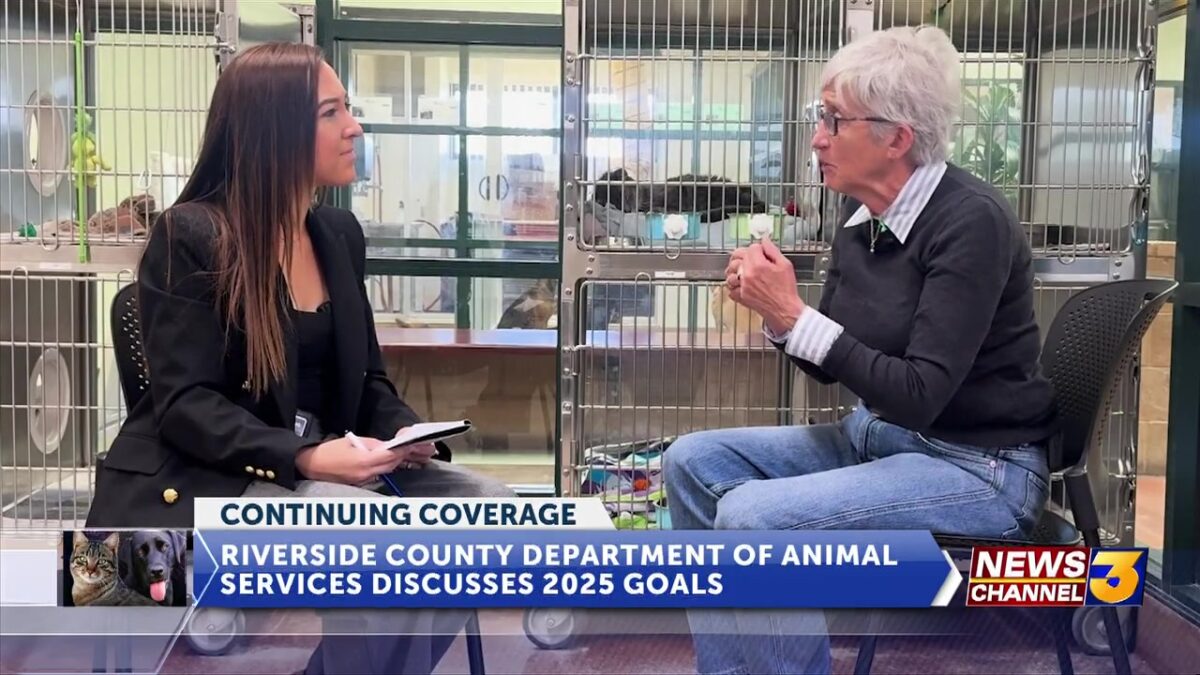
Newly hired Director of Riverside County Department of Animal Services discusses shelter goals for 2025

Tori King

RIVERSIDE, Calif. (KESQ)– A new report found the euthanasia rate for the Riverside County Department of Animal Services dropped by 33%. Data shows in 2025, there have been 540 fewer animals euthanized this year compared to this same time period last year.

According to the Riverside County Department of Animal Services, a report on the progress from the first part of 2025 showed measurable gains in lifesaving, pet reunification, and adoption outcomes. Mary Martin, the newly hired director for the Riverside County Department of Animal Services, says the data in the Year-to-Date Highlights show the early impact of targeted, ongoing operational changes implemented in collaboration with Riverside County, Outcomes Consulting Group, RCDAS staff, volunteers, and community partners.

“I like a challenge,” said Martin. “There are a lot of improvements we can make day to day, but change takes time.” The new report showed the effects of the improvements being made in 2025 so far.

Positive Outcomes So Far This Year:

Live release rate increased to 80.9%, up from 72% during the same period last year

Euthanasia decreased by 33%, with 540 fewer animals euthanized

Adoption rate increased to 42%, up from 34% compared to same period last year

Transfer-out rates rose across both cats and dogs

The department says it is focused on removing barriers and increasing placement opportunities for animals through multiple ongoing operational improvements.

Key Operational Improvements:

Expanded public access by opening shelters on Sundays and extending hours on Wednesdays, making it easier for families to adopt or reclaim pets

Waived Return-to-Owner fees to remove financial barriers and help more lost pets return home

Increased the frequency of fee-waived adoption events, leading to faster placements and reduced length of stay

Completed cross-country pet transfer flights and enhanced partner rescue outreach, creating more adoption opportunities in partner regions and reducing local overcrowding

Enhanced marketing and visibility for adoptable animals through improved photography, promotion, and outreach

Martin just recently stepped into her new role this year, and has only been on the job for eight weeks. Martin was first introduced in March, and spoke with News Channel 3 about her decision to take on the role. As the shelter system continues to make substantial changes, Martin says she has a plan for the county’s shelters as she steers the department into the future.

News Channel 3’s Tori King spoke with Martin about the changes she has been able to make so far. “These results are a testament to the hard work of our staff and the strength of our community partnerships,” Martin said. “The team made real progress in just a few months, and we are committed to continuing this momentum to save more lives.”

RCDAS has been criticized for it’s euthanasia policies, namely in 2023 when the shelter system had the highest animal kill rate in the county. In 2024, the county’s overall live release rate was 71%, which lagged behind the Coachella Valley Animal Campus’s 80% rate.

“Hearing data like that feels like taking a bullet,” said Martin. “No one wants to see animals be euthanized at that rate. But I think the really important thing to focus on is not that the shelter is euthanizing that many animals. I mean we have to address it. But in order to fix it, we need to ask why the animals are coming to us in the first place. Why are animals losing their homes at the rate that they’re losing their homes?”

These rates have caused some local leaders and advocates to file a lawsuit against the county over shelter conditions.  

“I can’t speak to the lawsuit itself, but what I can tell you is that we are laser focused on making sure that we’re doing all the things that we need to do for the animals in our care,” said Martin. “I think, once again, I keep coming back to this hiring of dozens of people, because I do think that the crew here want to do the right thing for animals, and just simply haven’t really been able to.”

Martin knows monumental efforts like this take a village.

“People here love animals,” said Martin. “I think we all agree that we love animals and don’t want to see them harmed. There is that laser focus on life saving so I think, there’s not enough people, and so greatness doesn’t shine through as much as it should. Because they’re so split in having to try to solve multiple problems at a time.”

To achieve no-kill status, shelter’s must hit a 90% release rate. And it’s something Martin has experience with after taking a Maricopa County shelter from 82% to 96% live release rates. But she says in order to make this a possibility in the future, the shelter needs more funding, and more employees.

Over the last two years, RCDAS had a budget of around $39,000,000 per year. When asked if that was enough money annually to make the shelter system eligible for no-kill status, Martin said no.

“If that were the budget and we weren’t going to get any additions, I would say probably not,”: siad Martin. “Given the amount of animals coming to us, it’s just not enough funding to get there. I believe the county is dedicated now to improving conditions in the shelters, not just for for the community, but for the people who work in the shelters too.” However, with more funding she says nothing is impossible.

“There’s no magic number,” explained Martin. “Do I believe it can happen one day? Yeah, I do. With the investment, with the community stepping up to help us. I don’t believe we can do it alone. Absolutely not.”

Click here to follow the original article.

Palm Springs launching Blue Zones Project to boost community health and longevity

Garrett Hottle

PALM SPRINGS, Calif. (KESQ) Palm Springs is launching a bold new health movement aimed at helping locals live longer, healthier lives. Called the Blue Zones Project Palm Springs, the initiative officially begins with a community kick-off celebration on Thursday, May 15, from 5:30 to 7:30 p.m. at the Festival Theater. The free event will include a talk from the founder of Project Blue Zones – Dan Buettner, who will unveil a community-driven plan designed to make healthy living simpler and more enjoyable for everyone.

The Blue Zones Project takes a grassroots approach, focusing on reshaping policies, public spaces, and social connections to support better everyday habits. The goal is to mae it easier for people to eat healthier, move more naturally, and stay socially connected in their daily routines.

The launch event will also feature a relaxed reception with wine and light refreshments, giving attendees a chance to connect the Palm Springs Blue Zones team and national project leaders. This kickoff marks the start of a five-year plan to bring the Blue Zones Life Radius model to life in Palm Springs emphasizing permanent and semi-permanent changes to local infrastructure, food access, public policy, and social networks that make healthier choices more intuitive.

The Palm Springs project is part of a wider effort across Riverside County, backed by partners like Riverside University Health System Public Health, Inland Empire Health Plan Foundation, Kaiser Permanente, Molina Healthcare, and Eisenhower Health. Together, they aim to create measurable improvements in community health and well-being across the region.

News Channel 3’s Garrett Hottle will be speaking with Blue Zones Project Palm Springs’ Community Engagement Lead, Chris Ruetz, on this exciting development and what it means for region.

Be sure and tune into News Channel 3 at broadcast at noon, 4pm, 5pm, and 6pm!

Click here to follow the original article.
Marinelli Bros Circus premiering at The Shops at Palm Desert tonight

Allie Anthony

PALM DESERT, Calif. (KESQ) — The Marinelli Bros Circus premieres tonight at The Shops at Palm Desert, with performances running through May 26. The show is brand new, and Palm Desert is only the third city on its tour.

From trapeze and aerial straps to high-wire feats, the show offers thrilling entertainment for the entire family. The circus is performing under its own big top, bringing fans even closer to the action. The intimate setup allows the audience to be fully immersed in the experience.

Whether you’re a lifelong circus enthusiast or introducing your family to the magic for the first time, the Marinelli Bros Circus presents a performance that’s bold and bursting with energy.

The circus runs nightly through May 26 at The Shops at Palm Desert.

For ticket information head to this site. 

Click here to follow the original article.
Desert Ensemble Theatre announces 15th anniversary 2025-2026 season will be its final

KESQ News Team

PALM SPRINGS, Calif. (KESQ) – Desert Ensemble Theatre announced its 15th anniversary and upcoming final season on Tuesday.

The non-profit company, founded in 2011 by playwright and director Tony Padilla, has focused on the production of contemporary plays.

DET Executive Director Shawn Abramowitz cites a diminishing Canadian audience in the upcoming season as one of the reasons to take a final bow after the last play runs in mid-2026. He also feels potential cuts in funding from the National Endowment for the Arts may affect contributions from the many organizations that provide financial support to DET.

Artistic Director Jerome Elliott Moskowitz adds that DET has already seen cuts in grant funding from the California Arts Council due to “state budget woes,” and although he will be submitting a new grant proposal to the CAC soon, there is no guarantee of DET receiving any set amount in the future.

The 2025–26 final season opens October 10 with “Singing with the Desert Stars IV,” a musical fundraising gala supporting DET’s education initiatives. Following the gala, the mainstage productions run November through April. These include “The Roommate” by Jen Silverman, “Dispersion of Light” by Rich Rubin, “Meteor Shower” by Steve Martin, and “Knife to the Heart” by Stan Zimmerman & Christian McLaughlin.

Both Abramowitz and Moskowitz say in a statement, “As we enter our final season, we’re proud of the impact we’ve made on the cultural life of the Desert.”

The 2025-2026 final season tickets go on sale June 1st for renewing subscribers and on July 1st for new subscribers.

For more information, visit desertensembletheatre.org.

Click here to follow the original article.

New affordable housing project planned in Desert Hot Springs

Shay Lawson

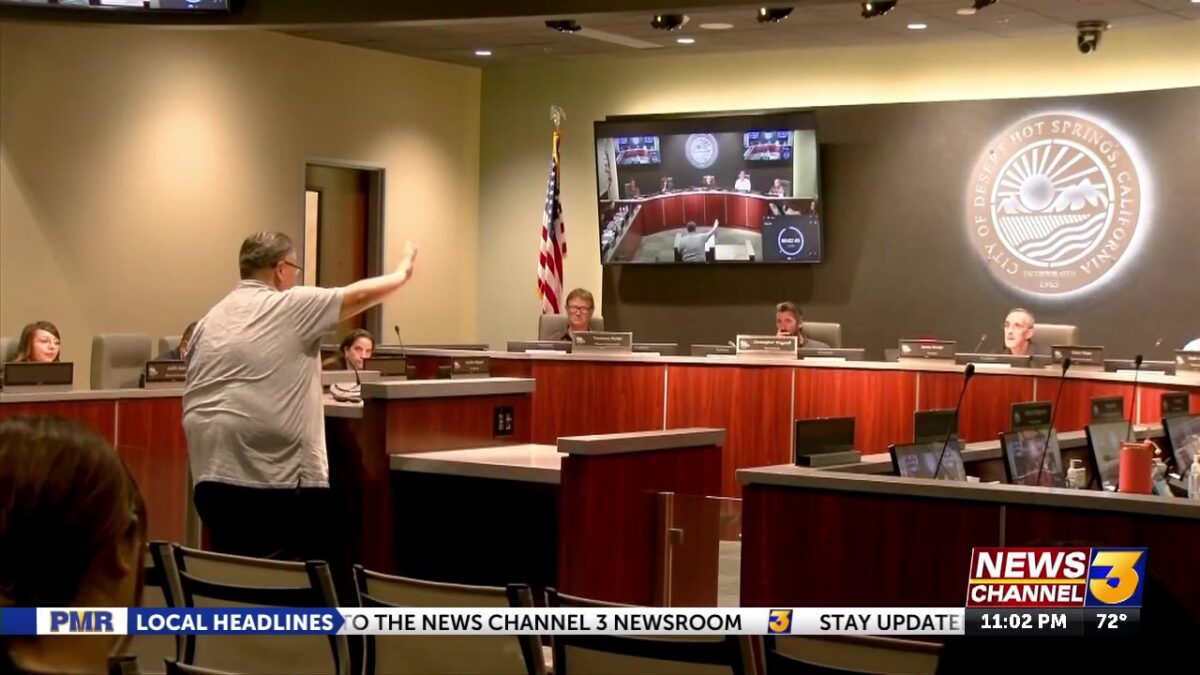
DESERT HOT SPRINGS, Calif. (KESQ) – The Desert Hot Springs Planning Commission gave the green light on Tuesday in moving forward with a new affordable housing project just off Palm Drive and Park Lane.

Supporters packed the room at the Planning Commission meeting, backing the proposal for the “Park Lane Homes” project.

The Commission unanimously approved the project, which will include about 167 affordable units, an 11,000 square foot early childhood education center, a pool, and a community park to be built on a parcel just over 7.5 acres.

Now that they have the go-ahead, developers say the next step is to secure funding from the state.

Stay with News Channel 3 for updates on this project.

Click here to follow the original article.
Desert Hot Springs considers new disaster preparedness plan to unlock federal aid

Shay Lawson

DESERT HOT SPRINGS, Calif. (KESQ)  – The Desert Hot Springs Planning Commission approved a plan that helps the city better prepare for natural disasters — and unlocks critical federal and state funding for emergency improvements on Tuesday.

It’s called the Local Hazard Mitigation Plan (LHMP) — and while it’s already been approved by FEMA, the city still needs to formally adopt it to make it official.

“The Local Hazard Mitigation Plan is a plan that the city completes to analyze the risk a community has during natural disasters such as floods, earthquakes and fires,” said Deputy City Manager Daniel Porras. “It also makes recommendations to implement various projects for mitigating those risks.”

Tuesday’s vote is the first step of two.

Porras said now that the Planning Commission has recommended approval, the plan will move to the City Council for final adoption.

Porras said this kind of planning made a real difference after Hurricane Hilary.

He said the storm destroyed four major crossings in the city — but because the city already had a hazard mitigation plan in place, it qualified for emergency federal funding to quickly repair the damage.

“We were able to complete the construction or reconstruction of all the four intersections within 270 days of the storm, which made a little bit over $9 million available to the city almost immediately in a reimbursed basis,” Porras said. “Which was able to open the roads and not affect our general budget or any type of budget that we have here in the city.”

The updated plan would replace the one adopted in 2017.

“The biggest difference is one, updating all of our hazards here. So flood, water, fire anything new that has happened here. Then acknowledging all of the improvements that have been done since 2017,” Porras said. “And, what new mitigation measures we can implement based on the changes that have happened over the years.”

According to the city, Desert Hot Springs is now home to more than 32,000 people and continues to grow.

Porras said this plan affects residents in a major way.

“This affects residents in a way that it allows the city to receive funding from the state and the federal government to implement mitigation projects,” said Porras. “Instead of using local city funds that we use to operate.”

Click here to follow the original article.

CAL FIRE: Under Pressure Part One

Karen Devine

2025 is off to a burning start across the state. 

The Los Angeles wildfires, back in January, are now projected to be one of the costliest natural disasters in U.S. history.

In an I-Team exclusive, CAL FIRE under pressure.

News Channel 3’s Karen Devine watched as wildland-trained firefighters went through grueling exercises, being tested to make sure they are ready for the summer firefight that’s expected.

“Fire is a big threat to the residents of California, and we like to stay 100% ready. And, we like to meet the CAL FIRE State mission of keeping all vegetation fires to 10 acres or less throughout the state,” said Eric Sauerwein, Battalion Chief, CAL FIRE Riverside County

Over the last several years California has had its worst wildfire history. 15 of the top 20 most destructive wildfires have occurred.

Find out what new tools are being implemented this year and if there’s enough help on the front lines to save lives and property.

Click here to follow the original article.

Funding cuts threaten LGBTQ+ support amid rising challenges 

Luis Avila

PALM SPRINGS, Calif. (KESQ) – Officials at the Transgender Health and Wellness Center told News Channel 3 on Monday that half a million dollars in federal funding was pulled from the ‘Marsha P Johnson LGBTQ Youth Drop-In Center,’ putting it at risk of shutting down.

But those funds go far beyond the center, and help support other local programs like the Gay, Straight, Alliance club at Palm Springs High School.

The club offers a safe space for students, something Elena Song, club advisor, says is the biggest need facing LGBTQ+ students right now.

A community that is facing increasing challenges. According to the Trevor Project, more than one in ten LGBTQ+ youth have seriously considered attempting suicide in 2024.

“I just hope that our politicians would see that great need for our students because the fact that they can’t be who they are, there’s that high risk of suicide and that is something that can be avoided if we have the funding to help support these students.”

Elena Song, GSA club advisor

The club has been receiving funding support from the Transgender Health and Wellness Center, helping pay for shirts, funding scholarships for graduating seniors, and sponsoring trips. But with that funding now pulled, Song is having to look for other ways to keep these initiatives going.

“We need to get together and brainstorm different types of fundraisers. We’ll reach out to community members… Hopefully we’ll get a lot of participation from our community and community members.”

Elena Song, GSA club advisor

Stay with News Channel 3 for more.

Click here to follow the original article.