Library founded in 1854 receives book checked out over 100 years ago

By Loureen Ayyoub

Click here for updates on this story

    SAN FRANCISCO (KPIX) — Founded in 1854, the Mechanics’ Institute has managed to maintain its presence after earthquakes, wars and sweeping changes across San Francisco, all while continuing to serve as a cultural hub in the city’s downtown core.

Led by CEO Katherine Bella, the private nonprofit library and cultural institution has spent nearly two centuries adapting to the needs of the community while preserving its historic roots.

“We were started almost 172 years ago by a group of forward thinkers of their time, and we have adapted over the years since,” Bella said.

Among the institution’s longstanding traditions is its chess club, considered the oldest in the United States. Originally established for unemployed gold miners during the Gold Rush era, the institute now offers a broad range of public programming and community resources.

“We offer a general interest library here, lots of arts and cultural programming, including author talks and writing workshops, discussion panels,” Bella said.

The institute is also celebrating a rare literary acquisition: a poetry book dating back to 1874 that once belonged to the library and is believed to have survived the fires following the 1906 San Francisco earthquake.

“I think it’s symbolic of San Francisco’s resilience. We’re able to rebuild, we preserve history,” said Myles Cooper, library manager. “And this work is so potent too because it’s about the Gold Rush, it’s about Western life, and so it’s really fitting that it came back to us. And it’s really an interesting volume that people can still read if they become members here.”

Annual memberships typically cost $120, though many cultural programs and public events remain open to nonmembers.

“We are right here at the BART and Muni stop in downtown San Francisco, and we are a part of the fabric of downtown as well,” Bella said. “We have a very wide range of community residents – doers and thinkers and makers, writers, people interested in arts and culture that gather here. And it’s really a cultural home for folks that live here in the Bay Area.”

After more than 170 years, the Mechanics’ Institute continues to stand as both a center for culture and a living piece of San Francisco history.

Please note: This story was provided to CNN Wire by an affiliate and does not contain original CNN reporting. This content carries a strict local market embargo. If you share the same market as the contributor of this article, you may not use it on any platform.
Pinball experiencing a renaissance comeback as pinballer competes in tournaments

By Charlie Lapastora

Click here for updates on this story

    ELK GROVE, California (KOVR) — Walking into civil engineer Rick Deml’s home, you’re immediately greeted with a “Welcome to Rick’s gameroom” sign. It started with two pinball machines and now there are 13.

“It just brings back childhood memories,” Deml said. “It’s a good relaxation for me. Gets my mind off of the daily grind.”

While he manages highway and bridge projects for local agencies like Caltrans, he’s engineering ways to master his pinball craft when he clocks out. Around five years ago, he found out there were tournaments and so he decided to compete.

“In terms of compensation for going to tournaments, you’re not going to make money, it’s not like NBA basketball,” Deml said.

Deml said you may get money to pay for your trip, but that it’s more for the love of the game. Similar to any sport, practice pays off and it’s in his own home where he gets his training in and streams his games. The pinball pro is ranked in the top 255 in the world.

It’s getting to the point where Rick’s wife, Jeanette, said she needs to get him a trophy case after all those competitions. Jeanette said Rick plays for 12-15 hours some days in competitions, so she goes to get massages and facials wherever they are and brings him food, making sure he eats it.

The Demls bonded over pinball early in their relationship. Their love for each other and pinball continues.

“I enjoy playing for fun, but I don’t like the competition,” Jeanette Deml said.

There are also life lessons to glean from pinball.

“You got to be able to adjust, which is something unique about pinball,” Deml said. “Every game is different. Every situation you enter into life might be different. Take it in stride. Everything’s not going to always go your way. You’re not always going to win, but you put up a good fight and good things will happen to you.”

Including winning and taking home the Oklahoma State Championship in January, he doesn’t plan on stopping, looking to win back-to-back titles in Oklahoma.

Deml also recognizes the popularity of pinball today. He is involved in pinball communities that help each other fix and maintain their pinball machines, and has found lifelong friends through pinball–including inviting them to his home to play pinball.

“It’s not going away anytime soon,” Deml said. “In fact, the games are getting more and more complex with the rules, the light shows, the graphics, the shot layout, the ramps.”

The global pinball machines market size is projected to be valued at $90 million this year, with growth to $110 million by 2035, according to Business Research Insights. But this didn’t come without some bumps in the road, years after what Pacific Pinball Museum president Larry Zartarian says was the golden age, from the 1940’s to the ’60’s.

“The pinball industry was more profitable than the motion picture industry,” Zartarian said. “It was raking in money like you wouldn’t believe the reason why pinball did so well is because they were just about everywhere. I mean, they were at bus stops, laundromats, grocery stores, drug stores and then there were, obviously, arcades that were devoted to nothing but pinball machines.”

Then, video games were introduced in the late ’70’s.

“So, in 1980 through ’82, the video game industry took in more quarters than the city of Las Vegas,” Zartarian said. “It was at the slot machines. It was that popular. So pinball almost became extinct because of that. It almost died out completely.”

After some manufacturers produced pinball machines throughout the years, it wasn’t until 2005 when Zartarian said Stern Electronics and Jersey Jack started producing pinball machines again.

“And now, fast forward to today, there’s at least 10, maybe 11, companies producing these things still,” Zartarian said. “And it’s enjoying somewhat of a renaissance for the last, probably, 20 years, I would say.”

A renaissance, continuing for Rick and Jeanette, along with so many more pinball players who are playing for the first time or returning to the game they love and they’re just ramping up.

Rick will be competing in this weekend’s Golden State pinball festival at the Lodi Grape Festival Fairgrounds. Families are welcome to attend, where there will be at least 300 pinball games and proceeds will benefit local charities. Larry will also be recognized for contributing to the pinball community on Friday.

Please note: This story was provided to CNN Wire by an affiliate and does not contain original CNN reporting. This content carries a strict local market embargo. If you share the same market as the contributor of this article, you may not use it on any platform.
Man who received kidney from movie fan now paying it forward

By Laura Phillips

Click here for updates on this story

    COLORADO (KCNC) — A Colorado man in need of a kidney was saved by a movie fan. Now he’s working to help others find donors through cinema.

A few years ago, Ricky Hernandez was living a happy, healthy, active lifestyle. Then seemingly out of the blue, he was diagnosed with kidney disease.

“It was a little hard to believe because I was competing in karate tournaments, and I was healthy. I felt healthy. I didn’t feel anything,” Hernandez said. “I started slowly seeing the symptoms, so it was hard, really hard to grasp it mentally.”

Eventually, he was told he needed a transplant.

“I walked around, and I’d look at things and wonder, is this the last time I’m going to do this? Is this the last time I’m going to see this person? Is this the last time I’m going to talk to my daughter?” Hernandez questioned.

But he found hope at work. Hernandez is the Director of Customer Service at National CineMedia (NCM), an advertising company that produces commercials for movie theaters. Soon Hernandez’s search for a donor hit the big screen. He says he received more than 300 applications, and at least one was a match.

“Without the ad’s help, I would not be here,” Hernandez said. “The ad really put my story out there in front of people I’d never even met. In every state.”

NCM ads appear on more than 17,000 movie screens across the nation’s three major theater chains.

After Hernandez’s successful kidney transplant, he was ready to pay it forward. He reached out to the non-profit organization Kidneys for Communities, founded by Atul Agnihotri. Agnihotri is also a kidney transplant recipient and wanted to create a pathway for living donors to play a role in who receives their kidney.

“We’ve studied the data quite extensively in how people donate to each other, and we’ve determined that 96% of individuals donate to someone that they either know or they identify with, which is what we call communities,” Agnihotri said. “For example, you could be wearing the same uniform, meaning you could be part of the first responders. You could have gone to the same high school. You could be attending the same church.”

Or you could be movie fans. Now Hernandez, Agnihotri and NCM have partnered to get more kidney patients in front of a captive, phone-free audience.

“Cinema advertising has this unique ability to reach millions of people,” Agnihotri said.

And he said that they’ve found that when potential donors answer the movie, even if they’re not found to be a match for the patient in the ad, they tend to remain on the list of potential living donors.

According to the National Kidney Foundation, receiving a living donor transplant has several benefits, including the fact that, on average, a kidney from a living donor lasts about 15 to 20 years, compared to seven to 10 years for a kidney from a deceased donor.

And this summer, Denver will host thousands of donors, recipients and their friends and families for the 2026 Transplant Games. Those interested can register to compete, volunteer, or donate to the cause.

Please note: This story was provided to CNN Wire by an affiliate and does not contain original CNN reporting. This content carries a strict local market embargo. If you share the same market as the contributor of this article, you may not use it on any platform.
Father seeks answers after police fatally shoot his son at neighborhood party

By Briseida Holguin, Doug Myers

Click here for updates on this story

    FORT WORTH, Texas (KTVT) — “My son didn’t deserve to get gunned down like that.”

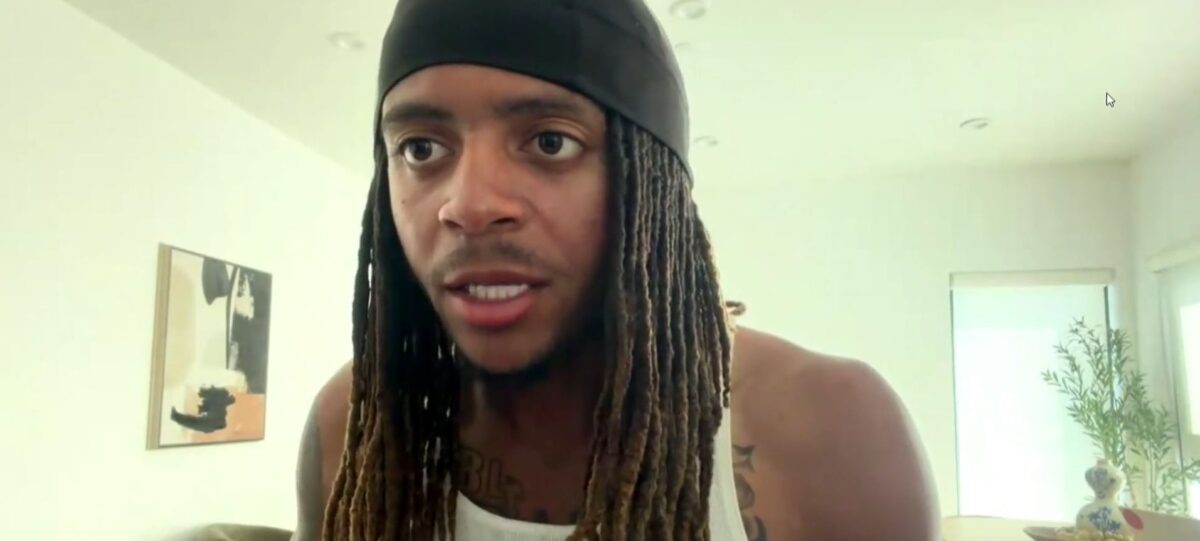
That’s how Emmitt Mayo began speaking out Saturday about the death of his 26‑year‑old son, Elijah Mayo, who was fatally shot by Fort Worth police during one of two officer‑involved shootings that started at the same location overnight.

As investigators continue piecing together what happened, the father says he’s still trying to understand how his son’s life ended in gunfire in a neighbor’s front yard.

Emmitt Mayo says Elijah had gone to a neighborhood party to perform under his stage name, Eastwood Dub. He says his son never made it to the stage because gunfire erupted before the performance.

“They said, well, we just had a shooting over here,” his father said. “So he asked the guy, could I still get my money right for his show and his flyer? And … they had a little altercation behind that.”

He says Elijah tried to get away from the situation when the police arrived.

“They fired shots at him first. He returned fire to protect himself,” Mayo said.

Police Chief Eddie Garcia said officers found the man armed with a handgun and opened fire after he allegedly pointed it at them and ignored commands to drop it.

The shooting happened in the front yard of neighbor Carolyn Green.

“One thing led to another, and he was laying there the ambulance came out I said, ‘That man is dead,'” Green said.

As officers were investigating Elijah Mayo’s shooting, Garcia said a driver sped past and allegedly tried to hit officers. A pursuit began, continuing onto I‑820, where police used a PIT maneuver to stop the vehicle.

Garcia said officers opened fire after the driver ignored commands and grabbed an officer’s handgun as they approached the vehicle.

The driver died at the scene and has not yet been identified.

Police have not said whether the two incidents are connected. Meanwhile, Emmitt Mayo says he is still waiting for clarity and wants to understand why his son’s night ended in gunfire.

Please note: This story was provided to CNN Wire by an affiliate and does not contain original CNN reporting. This content carries a strict local market embargo. If you share the same market as the contributor of this article, you may not use it on any platform.
Park district director used taxpayer credit card for daughter’s prom helicopter, invoice shows

By Jermont Terry

Click here for updates on this story

    MARKHAM, Illinois (WBBM) — The Markham Park District executive director caused quite the scene last weekend after hiring a helicopter for her daughter’s prom send-off, which landed in a public park without proper authorization.

Now, there’s new fallout about who paid for the stunt and how the city wants a restraining order to stop the spending.

There’s a split reaction about this prom helicopter send-off, with some saying no one was harmed while others, including city leaders, say the park’s director didn’t have the right to authorize the photo op for her daughter—a photo shoot with at least the deposit charged to a credit card that taxpayers pay for.

Less than a week after this helicopter landed at a park, catching many by surprise, the stunt for the park director’s daughter has turned political.

The Park District’s executive director, Quintina Brown, told officers she had the OK for the helicopter landing, but city leaders never authorized the landing in the public park where children were playing. The pilot told officers that day he had approval to land, even presenting a signed notice by the park director herself to the questioning officer

The company later handed over an invoice to the city attorney. The receipt raises many deeper questions.

The bill was for a minimum of $800 for one hour. At the bottom, there’s a credit card number linked to Brown. She named Markham Parks as the company and even used the address of the fieldhouse and provided her signature on a taxpayer-funded credit card.

“The plot thickens, as they say,” said city attorney Burt Odelson.

He says there’s no way Brown accidentally entered all that information by mistake. He also spoke with the helicopter company.

“They told me that the deposit was charged to the card, and they have not been successful in getting the remaining $800 off the card, for whatever reason,” he said.

Using the park district credit card either to pay or hold the reservation is why Markham’s mayor, Roger Agpawa, says residents should be concerned, asking why no one questioned the purchase.

In fact, the city started questioning the spending by the park district and its board in the fall of 2025.

CBS News Chicago reported when Brown was first caught on body cam getting served with an injunction. Leaders alleged she and the park board were not paying bills and left most parks with broken equipment and deplorable conditions.

“They’ve been landing helicopters in different ways over there,” said Agpawa.

There’s a line in the invoice that says every additional six minutes over the hour would be $80. It was learned that the helicopter was grounded for at least three hours.

Now the question is who will pay for the extra minutes and for the original booking? The company that booked it, Markham’s Park District, which is funded by taxpayers, or Brown herself.

CBS News Chicago reached out to Brown about the matter, but has yet to hear back.

Please note: This story was provided to CNN Wire by an affiliate and does not contain original CNN reporting. This content carries a strict local market embargo. If you share the same market as the contributor of this article, you may not use it on any platform.

Caledonia Senior Living seeking volunteers for cycling program

By Noel Brennan

Click here for updates on this story

    RIVERSIDE, Illinois (WBBM) — You don’t need to pedal to feel the rush of a bike ride.

Some residents at a senior living center in the western suburbs know that well.

“This is a little piece of Scotland hidden away in the forest preserve of North Riverside,” said Gus Noble, president of Caledonia Senior Living. “We take care of seniors with a lot of love. We’ve been around for over a century.”

No matter your age, fresh air always feels good.

“Nature is a big part of life here,” he said. “We like to bring the forest preserve into the home and the home into the forest preserve.”

For Noble, he says it’s the most wonderful experience in his life—making sure his residents get a healthy dose of fresh air, along with wind in their hair.

“It invigorates you a little bit,” said resident Rich Desimone.

Desimone, 81, cruises like the old days. He can hitch a ride thanks to the program, Cycling Without Age.

“Cycling Without Age gives us an opportunity to keep us all fit and vital,” Nobel said.

It’s a worldwide movement in 41 countries, but Caledonia Senior Living started the first chapter in Illinois—bringing joy to residents and staff at the facility. Donors helped the facility buy two electric trishaws and a wheelchair bike.

“I love the wind. It’s probably messing up my hair,” said resident Lynn Sullivan.

Staff and trained volunteers steer the specialized bikes for any resident who wants a ride.

“For day trips, for ice cream, just wherever our whim takes us. It’s great fun,” Nobel said.

“It was fun and bouncy at times and interesting, and it was beautiful,” said resident Darlene Downs.

Nobel says what they need now is more volunteers—calling out to anyone with a little time to spare and want to help others enjoy the rush of wind in their hair.

Please note: This story was provided to CNN Wire by an affiliate and does not contain original CNN reporting. This content carries a strict local market embargo. If you share the same market as the contributor of this article, you may not use it on any platform.
TBM Avenger Reunion, air show featuring WWII vets and planes, takes of

By Noel Brennan

Click here for updates on this story

    PERU, Illinois (WBBM) — The TBM Avenger Reunion, an air show featuring historic World War II planes, kicked off on Friday in Peru, Illinois, about 90 miles southwest of Chicago.

The event is also a special reunion for veterans who once flew the warbirds.

Weathered warbirds from World War II still have life and lift under their wings as they put on a show at the TBM Avenger Reunion.

“Every airplane that you see out here is a veteran military airplane,” said coordinator Tim Gillian.

But more impressive than the planes is one veteran hanging in the hangar.

Alvin Gould is 100 years old now, but he was once a 17-year-old in the Navy – more nervous around girls than torpedo bombers.

“I’m not that shy around them now,” he said.

A lifetime later, he still lives for the feeling of flying in a warbird.

“I probably have thousands of hours, as old as I am. I started at 17; been flying for 83 years,” he said.

His plane of choice hasn’t changed – the TBM Avenger, the Navy’s main torpedo bomber during World War II, particularly in the Pacific theater.

Gould swears he’s in better shape than the aircraft.

“I’m not that rusty yet,” he said.

During the war, Gould was a turret gunner, and he can still show off exactly what that was like.

Every year of the TBM Avenger Reunion, it’s like a tight squeeze back in time, and suddenly, a 100-year-old is 17 again – almost.

“I was a lot younger then, and more resilient,” he said.

It’s hard to imagine anything more resilient than a veteran or the vintage planes they once flew. The TBM Avenger Reunion reunites them both.

Is there an air show like it anywhere else in the country?

“I don’t believe so that really honors veterans quite as much as we do,” Gillian said.

Peru will keep the show going for vets like Gould as long as there’s life to live and lift under wings.

Please note: This story was provided to CNN Wire by an affiliate and does not contain original CNN reporting. This content carries a strict local market embargo. If you share the same market as the contributor of this article, you may not use it on any platform.
How businessman Julius Rosenwald used his fortune to transform education

By Edie Kasten, Joe Donlon

Click here for updates on this story

    CHICAGO (WBBM) — In the early 1900s, a brilliant Chicago businessman set the standard for corporate success and used his fortune to help transform education across the U.S.

At the turn of the 20th century, Chicago was the place to be.

“It was one of the fastest growing if not the fastest growing city in the world,” said Nicholas Foster, Assistant Instructional Professor in Chicago Studies at the University of Chicago.

As the city grew, so did the career of Julius Rosenwald, the major force behind retail giant Sears, Roebuck and Co.

His beginnings were simple. The son of Jewish immigrants, he was born in 1862, in a house in Springfield, Illinois.

He dropped out of high school after two years to apprentice at his uncle’s clothing business in New York.

“Then moved back to Illinois, settling in Chicago, where he started a clothing business, and he made readymade suits,” said Chicago History Museum director of exhibitions Paul Durica. “And it was this business that brought him into the orbit of R.W. Sears and really kind of changed Rosenwald’s destiny.”

Sears pioneered the mail order catalogue.

“Sears essentially took the department store and put it in a catalogue that you could reach from home. So, you could buy the goods available in big cities. You didn’t have to travel to Chicago,” foster said.

In 1895, Rosenwald bought a stake in Sears, and by 1908 he was president of the company.

“He grew Sears from a secondhand department store to a national model of logistical empire,” Foster said.

Despite his top position, Rosenwald referred to the thousands of Sears’ employees as his co-workers. He soon became a multi-millionaire and a major philanthropist.

“He felt that as long as he was able to meet the needs of himself and his family, whatever else he had, he should give back, whether it was giving it back to his co-workers at Sears or to the larger community,” Durica said.

When hard financial times hit the nation, Rosenwald used his own money to keep the company and his co-workers afloat. He also was a pioneer of company profit sharing, but his concerns reached beyond the corporate world.

“He was also willing to confront and admit that there are deep racial problems in the United States,” Durica said. “You have to look it directly, and you have to confront it, and the only way for the country to overcome it is if everybody is engaged and involved in it.”

In 1910, Rosenwald met author and Tuskegee Institute founder Booker T. Washington.

“He visits Tuskegee Institute, he becomes close friends with Washington, and he invites Washington to come back and stay at his home in Kenwood,” Durica said.

Together, they created a plan to build schools for Black children throughout the segregated South, but Rosenwald believed in helping people to help themselves.

“Local communities would raise part of the funds, and they would really help to kind of develop and design the schools,” Durica said. “Then Rosenwald would match what they were doing to make sure that the schools get built and were sustained.”

The schools inspired learning, featuring gardens and tall windows to let in light.

Over 30 years, the Rosenwald Fund helped build more than 5,000 schools, community shops, and homes for teachers in 15 states. Graduates of those schools included author Maya Angelou and Congressman John Lewis.

A fellowship program offered grants to promote education and achievement. Recipients included singer Marian Anderson, authors Ralph Ellison and Langston Hughes, and the first African American to win the Nobel Peace Prize, Ralph Bunche.

“The fund is set up in such a way that all of it has to be expended within 25 years of his death, and that was intentional,” Durica said. “He wanted to make sure the fund was providing immediate support in the areas where it was most needed, and then he also wanted to basically put it forward as a challenge to future and fellow philanthropists.”

Rosenwald died in 1932. In his lifetime, he donated the equivalent of more than $1 billion in today’s money. Giving to others was one of his greatest joys.

“So few people had done so much public good – not just in Chicago, but across the country – and received so little public recognition,” Durica said. “But, being the humble man he was, that’s exactly the way he wanted it.”

Rosenwald also funded construction of YMCAs across the county, founded the Museum of Science and Industry, and was an early supporter of the NAACP.

There is a campaign to recognize him and the Rosenwald schools as a national historic park. A visitor center in Chicago and several schools are on the wish list.

Please note: This story was provided to CNN Wire by an affiliate and does not contain original CNN reporting. This content carries a strict local market embargo. If you share the same market as the contributor of this article, you may not use it on any platform.

America’s first coast-to-coast road still runs through western Pennsylvania

By Christopher DeRose

Click here for updates on this story

    PITTSBURGH (KDKA) — Though gas prices are a bit high right now, you may still be planning a summer road trip. And if you have the time, why not take a spin on the old Lincoln Highway, America’s first coast-to-coast road that still runs right through the heart of the Pittsburgh region.

In the five years after the first Model T Ford rolled off the assembly line in Detroit in 1908, Americans became obsessed with the automobile.

But while cars were becoming more common in cities and towns across the country, decent roads were not.

“In the early years, if you owned an automobile, you could only really get around a little bit in the town because you couldn’t drive to the next town,” said Brian Butko, director of publications at the Heinz History Center and author of several books on the Lincoln Highway.

He says that before automobiles, if you wanted to travel long distances, you either took a train or tried your luck on dirt wagon roads never designed for cars.

Thankfully, he says, there were visionaries like automotive pioneer Carl Fisher, who rallied the auto industry and car clubs alike to create America’s first coast-to-coast highway named in honor of President Abraham Lincoln.

“The Lincoln Highway Association was incorporated on July 1, 1913,” said Butko. “And I am sure that is not a coincidence because that would have been the 50th anniversary of the battle of Gettysburg. And there was a real push at that time to bring the country together. And what better way than a highway that would join east to west, and people from the north and south could go on it.”

The Lincoln Highway was completely privately funded and stretched more than 3,000 miles from New York City to San Francisco, crossing 12 states and running right through the heart of Pennsylvania.

The Lincoln Highway Association had a string of local ambassadors along the highway’s route to represent their association in local affairs, assist visitors, and monitor and maintain their portion of the road.

Communities from Gettysburg to Greensburg and beyond experienced a tourism boom as motorists traveling east and west stopped along the way.

Travelers spent money at quirky roadside attractions like Bedford’s Coffee Pot gas station and the famous S.S. Grand View Point Hotel, perched high atop the Allegheny Mountains.

The highway lasted roughly 15 years before being numbered and absorbed into the federal highway system, and today, much of the Lincoln Highway is known as U.S. Route 30.

But historians say the roughly 200-mile stretch that cuts across Pennsylvania remains one of the best-preserved Lincoln Highway corridors in the country.

If you want to experience that history for yourself, just outside Latrobe sits the Lincoln Highway Experience Museum, where visitors can learn about what still survives from the old road and what has been lost to time.

Spencer Simpson, the manager of visitor services at the museum, is one of many people dedicated to preserving the legacy of the Lincoln Highway. Simpson says part of the Lincoln Highway’s charm is that even today, there is still something for everyone willing to leave the interstate behind and take the scenic route.

“There is something about American life that is fairly consistent over the last century where there is a touchpoint for everybody,” Simpson said. “And finding the point that everyone can relate to as an individual, and expanding upon that. Thinking, what might it be like for you if you were traveling the Lincoln Highway back in the 1920s or 1930s, and what would you find interesting as you are driving along? It might not be the Ship Hotel or the giant Coffee Pot, but it might be the beautiful state parks and forests we have in Pennsylvania. There is something here for everybody because life is very different from it was back then in some ways, in other ways it is very much the same.”

So whether you want to “see the USA in your Chevrolet,” or explore Pennsylvania from a different perspective, consider taking a modern-day trip into the past, on the road that helped change America forever.

Please note: This story was provided to CNN Wire by an affiliate and does not contain original CNN reporting. This content carries a strict local market embargo. If you share the same market as the contributor of this article, you may not use it on any platform.

Meta glasses may have captured shooting that left man with head wound

By Kerri Corrado

Click here for updates on this story

    PHILADELPHIA (KYW) — Police are investigating whether a pair of smart glasses captured video of a shooting that left a man wounded in South Philadelphia on Thursday night. Authorities say the suspects fired several gunshots, striking the man in the head.

It was a close call for one man who lives on Kater Street in Philadelphia’s Bella Vista neighborhood. He showed CBS News Philadelphia multiple bullet holes that ripped through his home following the shooting.

“This one here. If it would have gone a-little bit further it would have gone into the bedroom,” he said.

He did say that he heard the shots and when he looked outside, he saw a man on the ground. Police say one man in his 20s was shot in the head and taken to Jefferson University Hospital in critical condition.

“Next thing I know my house is a crime scene on each side. And police are knocking on my door and everything. It’s crazy,” he said. “I’m a little nervous now because it’s like 10-feet away from where I was at.”

Police say officers were in the area of 12th and Bainbridge when they heard the shots. They also say they found a car abandoned up the street with bullet holes in it. They do not believe anyone was injured.

As police try to piece together exactly what happened, they say they did find a pair of Ray-Ban Meta glasses that may have recorded the incident.

Neighbors say they heard it all too and the police response was quick.

“It was very loud. And I think half the neighborhood came out,” Sunny Payne said. “And there as a massive police response I mean almost instantaneously.”

Neighbors say the shooting is upsetting, but say despite that, they still feel safe and love their neighborhood.

“This is the safest neighborhood. I’ve been here forty years and it has, over time, gotten better and better and it’s so safe here. We don’t ever have problems,” Payne said.

Please note: This story was provided to CNN Wire by an affiliate and does not contain original CNN reporting. This content carries a strict local market embargo. If you share the same market as the contributor of this article, you may not use it on any platform.