Fence goes up outside ICE facility in Broadview, Illinois

By Darius Johnson

Click here for updates on this story

    BROADVIEW, Illinois (WBBM) — New security measures were in place early Tuesday in front of a U.S. Immigration and Customs Enforcement facility in the west Chicago suburb of Broadview, which has drawn protests for days.

A tall wire fence has also been set up surrounding the building to block access to it. It was not clear what kind of clearance was needed for agents to get in and out.

Police have also blocked the street outside the ICE facility, with barriers set up.

Two protesters were seen outside the ICE facility at 5 a.m. Tuesday.

Meanwhile, protesters, elected officials, and ICE representatives all offered comment Monday after at least 16 people were taken into custody during clashes with federal agents last week.

Some of the protesters said they were held in custody for hours and denied basic necessities — and then hit with serious charges.

Cellphone video captured the arrest of Rogelio Huerta of Berwyn. He showed CBS News Chicago a black eye — a result of what he said happened behind the gate of the ICE processing facility.

Huerta said he was packed into a small room with dozens of detainees and left without basic necessities. Huerta said six hours after he was detained, he walked out with a citation for assaulting a federal officer.

“They refused me a phone call, they refused food, they refused any kind of essentials that I needed. So if I needed a cover, a blanket, they didn’t even have anything for me,” Huerta said.

Late Monday, ICE fired back, calling protesters “rioters” and defending their actions.

Officials said detainees are transferred to other facilities after processing, and called their allegations about conditions inside the Broadview facility false.

The agency also accused protesters of throwing rocks and fireworks, slashing tires, and endangering officers and the immigrants inside.

Meanwhile, a coalition of 47 elected officials is pushing back — calling the federal response heavy-handed when protesters, journalists, and family members were hit with tear gas and pepper balls over the weekend.

Please note: This content carries a strict local market embargo. If you share the same market as the contributor of this article, you may not use it on any platform.


Northwestern doctors treat metastatic eye cancer with chemotherapy aimed directly at liver

By Adam Harrington

Click here for updates on this story

    CHICAGO, Illinois (WBBM) — Northwestern Medicine announced Tuesday that for the first time, its doctors have successfully treated metastatic eye cancer using a method that delivers chemotherapy directly to the liver.

The treatment involved a patient with uveal melanoma — a rare cancer of the eye — that had spread to the patient’s liver. Doctors at the hospital used a Hepzato Kit, which sends chemotherapy right to the liver.

Northwestern Medicine said the Hepzato Kit treatment could help patients with stage 4 uveal melanoma live longer, as it can shrink tumors that have spread to the liver and cannot be removed through surgery.

“This type of therapy has been shown to prolong survival for patients while also offering a very tolerable side effect profile, which are two things we want to prioritize,” Dr. Sunandana Chandra, medical director for melanoma and cutaneous oncology with the Robert H. Lurie Comprehensive Cancer Center of Northwestern University at Northwestern Memorial Hospital, said in a news release. “It’s especially meaningful to have a therapy that helps us maintain a good quality of life for patients as we navigate a cancer that can be quite challenging to treat.”

Bozena Wojtach, 66, of Niles, became the first patient to undergo Hepzato Kit treatment at the Northwestern Medicine on April 3, the medical group said. The procedure involves several small tubes placed by interventional radiologists, which isolate the blood supply of the liver from the rest of the body before chemotherapy is administered for about half an hour, Northwestern Medicine said.

After the chemotherapy, the separated blood supply is filtered for another half hour before being returned to the body, Northwestern Medicine said.

Dr. Robert Lewandowski, director of interventional oncology at the Lurie Cancer Center at Northwestern Medicine, said in a news release that the process removes more than 80% of the chemotherapy drug after it is administered — reducing the amount that ends up elsewhere in the body.

Wojtach, a native of Krakow, Poland, spent her youth skydiving and flying planes before beginning a career in nursing, Northwestern Medicine said. She immigrated to the United States with her husband in 1966, had twin sons, and began working as a nurse in the Chicago area until retiring in 2022, Northwestern Medicine said.

Wojtach cared for oncology patients, as well as cardiology and pediatric patients.

Wojtach noticed flashing lights in her vision in 2024, and visited her optometrist, Northwestern Medicine reported. She found out a mass had developed in her right eye, and Northwestern Medicine ophthalmologist Dr. Randy Christopher Bowen diagnosed her with uveal melanoma.

Proton therapy successfully treated the tumor in Wojtach’s eye, but it turned out that the cancer had spread to her liver — the most common site for metastasis for uveal melanoma, Northwestern Medicine said.

The tumors affected less than half of Wojtach’s liver, and thus, she was a candidate for the Hepzato Kit therapy, Northwestern Medicine said. Patients can receive up to six cycles, but Wojtach only needed two to reduce her tumors by more than 50%, Northwestern Medicine said.

“I have energy. I have no pain. I don’t have any nausea or vomiting like other patient has,” said Wojtach. “I feel like I’m healthy — like I have no cancer at all.”

Doctors have recommended that Wojtach complete at least four more cycles of the treatment, Northwestern Medicine said. She hopes in the future to travel, work in her garden, and spend time with her husband and adult sons.

Please note: This content carries a strict local market embargo. If you share the same market as the contributor of this article, you may not use it on any platform.
After decades of hoping, Work to Ride finally has new $15 million facility

By Janelle Burrell

Click here for updates on this story

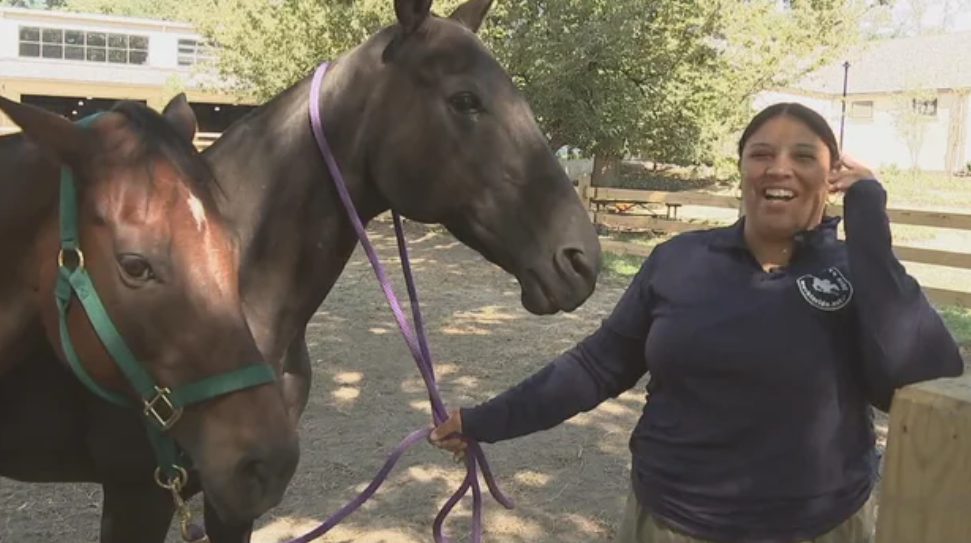
    PHILADELPHIA, Pennsylvania (KYW) — For more than half her life, Chamounix Equestrian Center in West Fairmount Park in Philadelphia has been a second home to Samantha Rahe-Krick.

The space is the heart of Work to Ride, a nonprofit organization that has given kids, including Rahe-Krick’s own son, access to horse riding for the last 32 years.

But as Rahe-Krick will tell you, little had changed since she started here when she was 10 years old.

“Horses were in the pasture with mud, probably up to my knee,” Rahe-Krick said. “The barn was very old.”

Their base was this old mounted Philadelphia police barn, but after decades of hoping and years of planning, McCausland Arena, a new 45,000-square-foot, $15 million facility, is theirs.

“Jaw on the floor, unrecognizable,” Rahe-Krick said.

Lezlie Hiner, Work to Ride’s founder and executive director, said it’s surreal.

“There’s nothing like this in any other major city, I can tell you that much right now,” she said.

The state-of-the-art space will not only allow the kids to ride year-round, but the new arena will also be rented out for events to generate income for the program.

The organization offers riding lessons to the public, and they teach polo classes too.

“Philly is a big sports town,” Hiner said, “so I’m really hoping that this will become a center for people to come and participate in our polo matches, our horse shows and really just introduce a community to the horse world.”

“It still has the same feeling that this is home,” Rahe-Krick said. “It still has that same feeling and same community here, so it’s really nice that the outside now matches the inside.”

On Saturday, Work to Ride will host its first-ever Philadelphia Arena Polo Championship at the new arena. It will feature Work to Ride alumni and other local champions.

There will be food trucks and vendors. Its annual Philadelphia Polo Classic will return next fall. Tickets for the polo championship are on sale now.

Please note: This content carries a strict local market embargo. If you share the same market as the contributor of this article, you may not use it on any platform.
Man celebrates 100th birthday with 62 grandchildren and a legacy of activism

By Jolie Sherman

Click here for updates on this story

    MADISON HEIGHTS, Michigan (WXYZ) — Raymond Kell, a Madison Heights resident for over 50 years, celebrated his 100th birthday on Monday, surrounded by family members representing his impressive legacy of 62 grandchildren, including great-grandchildren and great-great-grandchildren.

“Well, I had a good wife and a lot of kids,” Kell said.

After serving in WWII, Kell met his wife Vivian, and together they had 10 children. Their partnership lasted nearly three-quarters of a century.

“She was a wonderful wife, and we were married for 70 years. She passed away when she was 94. I think I owe a lot to Vivian, more than I know, because I was working and traveling,” Kell said.

His career with General Motors took him across continents, requiring extended periods away from home.

“They sent me to Brazil and Argentina, Ecuador, South Africa…and I’d be gone for 2 or 3 weeks,” Kell said.

Despite his work travel, his children remember him as deeply engaged in family life.

“He and my mom were a real team. He was the fun one. He’s the guy that took us camping and played games with us, and took us to the beach after dinner during the work week,” said Ruth Kell, Raymond’s daughter.

The Kell family continued to grow exponentially over the decades.

“They just kept coming. Our kids had kids, and those kids had more kids,” Kell said.

For his centennial celebration, Kell received birthday wishes from family members nationwide and formal recognition from both Madison Heights officials and Governor Gretchen Whitmer.

“It’s not just that he is of a certain age; it’s during his time in the city; he’s been very active,” said Madison Heights Mayor Roslyn Grafstein.

Kell and his wife were known for their human rights advocacy, including for the LGBTQ+ community.

“I got arrested a few times and so forth in protesting,” Kell said.

His community involvement extended to environmental causes through the city’s Environmental Citizens Committee. He also remained physically active, playing in the city’s Senior Golf League until he was 99.

Through a century of experiences, Kell’s priority has remained consistent.

“All I know is we took life as it came, and we did a lot of stuff, and I tried to make them happy,” Kell said.

This story was reported on-air by a journalist and has been converted to this platform with the assistance of AI. WXYZ’s editorial team verifies all reporting on all platforms for fairness and accuracy.

Please note: This content carries a strict local market embargo. If you share the same market as the contributor of this article, you may not use it on any platform.

Merieme Arif
404-827-9473

16-year-old tech whiz tackles food insecurity during Hunger Action Month

By Lauren Pastrana

Click here for updates on this story

    BROWARD COUNTY, Florida (WFOR) — September is Hunger Action Month, a time to raise awareness to help end hunger across the country. More than a million people across South Florida are facing food insecurity and one local teen is using tech to try to keep bellies full.

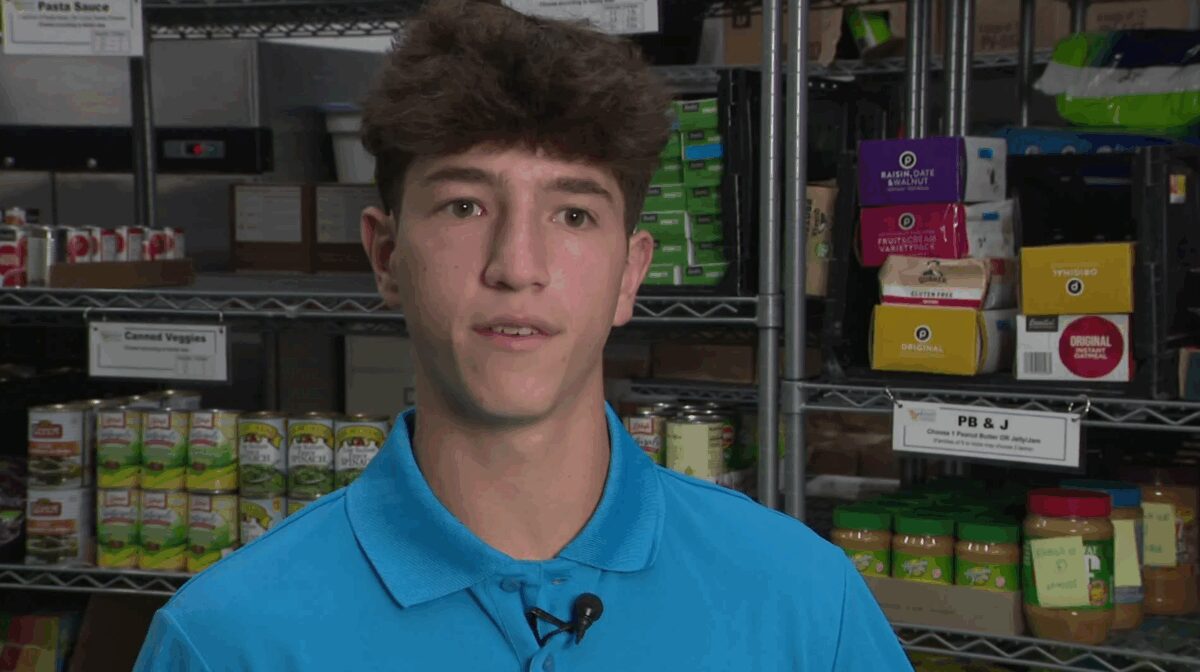
With every can and carton, Asher Belfer isn’t just filling a bag. He’s filling a growing need in our community.

“My work and everything that the Cupboard does is vital for every family in need of food in Broward County, because 1 in 6 people have food insecurity and I want to do as much as I can to help as many people as possible,” he said.

Volunteering sparks innovation

The 16-year-old has been volunteering at the Dorit and Ben J. Genet Cupboard in Davie for more than four years, but he wanted to make things run more efficiently. So he took what he learned in his computer science class and created software called VolunHelp, that’s been a recipe for success.

“It takes clients and it takes volunteers and it takes a food delivery event, and it puts everything in one place,” said Belfer.

“So instead of through email, emailing volunteers, and then on a different spreadsheet, adding clients in one place, we can create an event, add clients, and invite volunteers so that all you have to do is click one button and you can connect everything.”

Staff and volunteers benefit from tech

Asher works alongside Ross Adel, the director of the Cupboard.

“Asher saw the need for this and came to us and said, ‘You know, I feel like I can help.’ And it has been a tremendous help. It eliminates all of the paperwork,” Adel said.

While the staff is small, the Cupboard relies on volunteers from the office to the warehouse.

“It takes hundreds of Ashers to be able to serve as many families as we do in this community,” Adel said.

Using technology for a brighter future

While his plans for the future are still in the works, Asher knows his computer skills will be put to good use to keep making Miami Proud.

“Whatever I decide to do, I want to continue to use technology and help as many people as I can,” he said.

How to help fight food insecurity

To contribute to the Cupboard, visit JFS Broward.

Feeding South Florida and The Alliance to End Hunger are also battling food insecurity in South Florida. To learn more, visit Feeding South Florida and Alliance to End Hunger.

Please note: This content carries a strict local market embargo. If you share the same market as the contributor of this article, you may not use it on any platform.
More and more grandparents are raising their grandchildren. That comes with special challenges.

By Jennifer Bisram

Click here for updates on this story

    NEW YORK CITY, New York (WCBS) — The number of grandparents raising their grandchildren has risen over the past decade.

According to the American Society on Aging, over two million grandparents across the country are primary caregivers to their grandchildren. That comes with unique challenges, especially when it comes to housing and community support.

In New York state, there are over 120,000 grandparents who are the kinship caregivers. In New York City, about 250,000 children are being raised by relatives – mainly grandparents.

New York City has a special housing complex that helps “grandfamilies,” as they’re known, meet those challenges, so both the older adults and their grandchildren can survive, and thrive.

“I don’t know how long I can do this”

Seniors like Rosali Wynter have been taking on a second act of parenting after losing a child to death, addiction or incarceration.

Wynter, 77, is raising her 13-year-old granddaughter Aaliyah Myles. Wynter became Aaliyah’s caregiver when she was in her 60s, and Aaliyah was just 6 months old. Aaliyah’s mother was battling drug addiction when she was born, and Aaliyah was placed in foster care as an infant, until her grandmother, who she now calls “mommy,” stepped in.

“At first, when she was much younger, it was harder because I have to take her to the babysitter, go to work, pick her up,” Wynter said. “I didn’t realize it was so much. I was always saying I don’t know how long I can do this.”

“She’s always there for me, and she’s always there for important times,” Myles said.

“It’s hard to raise a child at that stage in your life”

Advocates say more living spaces, financial support and and resources are needed to take care of the growing grandfamily population.

Wynter and Myles have been living in a grandparent family apartment in the Bronx for more than two years. It’s a 50 unit building designed specifically for grandfamilies, with a social worker on site 24/7. Chalonda Reid is the building manager.

“At this point in your life, you are not supposed to be parents. You are supposed to be enjoying life, and it’s hard to raise a child at that stage in your life,” Reid said.

The West Side Federation for Seniors and Supportive Housing is the organization behind the program, which is financed through public and private funding. It was started in 2005, and the building that houses grandfamilies is still the only one of its kind in New York City.

“How do you look at a senior, or child, in need of something, and you don’t help. That’s hard to do,” Reid said.

So is there help for grandparents who are caregivers?

“You have to go out there, and it’s not as plentiful as it should be. It’s hard,” Reid said. “The social workers here will help them get children enrolled in school, medical benefits, medical doctors themselves, finding the services they might need.”

Some additional resources for grandfamilies in New York can be found here, and for families in New Jersey, they can be found here.

“I know I’m not alone”

The building is more than an address. It’s a home, with shared stories and helping hands.

“I know I’m not alone in this situation,” Myles said.

“The grandparent, as well as the child, still see the family unit together somewhat. They get that love,” Reid said.

“The difficulty is just to let her listen and understand what life is all about,” Wynter said.

Wynter said Myles is starting to take care of her.

“If I tell her to do something, she will do it,” Wynter said. “At night she will say, grandma why don’t you go lay down, why don’t you go sleep.”

Myles said her grandmother has been her guiding light.

So what has given Wynter the strength to care for Myles all these years?

“Just pray and have faith, If I’m not around, whatever I teach her can can carry her through,” Wynter said.

Please note: This content carries a strict local market embargo. If you share the same market as the contributor of this article, you may not use it on any platform.

Spotted lanternflies are wreaking havoc on vineyards and ecosystem

By Ashley Paul

Click here for updates on this story

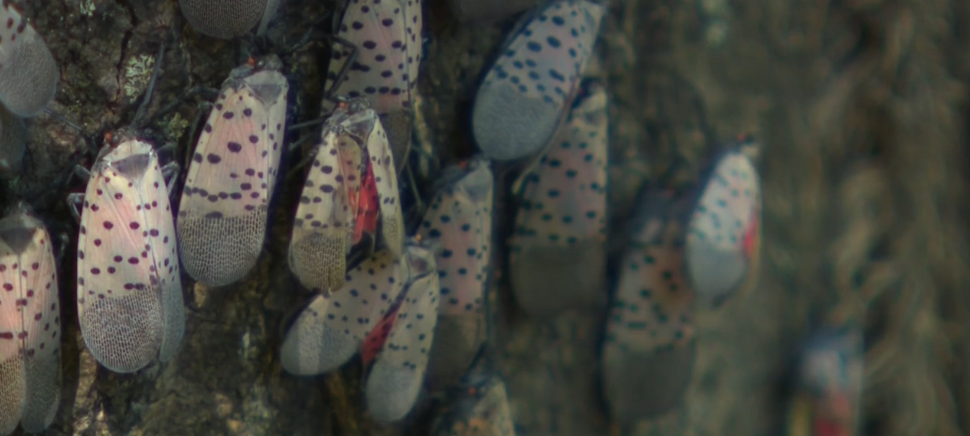
    BALTIMORE, Maryland (WJZ) — You’ve probably seen spotted lanternflies all around Maryland and Baltimore. They are tan and covered in black spots.

When they open their wings, a bright red flashes in front of you.

Spotted lanternflies are an invasive species in Maryland, and although they will not harm you, they are threatening our ecosystem and farms.

What are they and how did they get here?

Experts believe the spotted lanternfly came over from China on a stone shipment to Berks County, Pennsylvania, in 2014. They then entered Maryland in 2018.

Megan Carr, a Forest Ecologist with Baltimore City Recreation and Parks’ Forestry Division, said they were first found in Baltimore in 2021.

They are an invasive hopper insect that suck sap from grapevines and trees, including the weeping willow, maples, and black walnuts.

Jessica Boyles, an Environmental specialist and coordinator for the spotted lanternfly program at the Maryland Department of Agriculture, said you’ve probably seen what the adult looks like.

“Usually you see the pictures with the splayed wings, where you see the red underneath, and they’ve got those black dots on the forewings with the brown,” Boyles said. “That’s pretty typical. We also have fourth instars, which are right before adults. The fourth instars are rather small; people mistake them for spiders most of the time because they’re so low. They’re red and black and white.” The youngest ones are just black and white.

The insect will lay their eggs in the fall. The egg masses have been described as grey-white and look like mud or clay on a tree. Those eggs will hatch in April or June.

Local News Spotted lanternflies are wreaking havoc on Maryland vineyards and ecosystem baltimore By Ashley Paul September 22, 2025 / 6:52 PM EDT / CBS Baltimore

You’ve probably seen spotted lanternflies all around Maryland and Baltimore. They are tan and covered in black spots.

When they open their wings, a bright red flashes in front of you.

Spotted lanternflies are an invasive species in Maryland, and although they will not harm you, they are threatening our ecosystem and farms.

What are they and how did they get here? Experts believe the spotted lanternfly came over from China on a stone shipment to Berks County, Pennsylvania, in 2014. They then entered Maryland in 2018.

Megan Carr, a Forest Ecologist with Baltimore City Recreation and Parks’ Forestry Division, said they were first found in Baltimore in 2021.

They are an invasive hopper insect that suck sap from grapevines and trees, including the weeping willow, maples, and black walnuts.

Jessica Boyles, an Environmental specialist and coordinator for the spotted lanternfly program at the Maryland Department of Agriculture, said you’ve probably seen what the adult looks like.

“Usually you see the pictures with the splayed wings, where you see the red underneath, and they’ve got those black dots on the forewings with the brown,” Boyles said. “That’s pretty typical. We also have fourth instars, which are right before adults. The fourth instars are rather small; people mistake them for spiders most of the time because they’re so low. They’re red and black and white.” The youngest ones are just black and white.

The insect will lay their eggs in the fall. The egg masses have been described as grey-white and look like mud or clay on a tree. Those eggs will hatch in April or June.

Where do you see them?

In short, everywhere.

Their preferred tree host is the Tree of Heaven, which is invasive itself. It first came over as a landscaping tree because it provides good shade and beautiful flowers.

Boyles said the Maryland Department of Agriculture does a lot of management for vineyards and high-transportation pathways.

The Tree of Heaven grows in disturbed environments, like where roads and trains are built.

“We get a lot of reports of people going to Marc stations and seeing a ton of Spotted Lanternfly,” Boyles said.

How are they harmful?

“The good news to people is that it’s not harmful to humans, but it definitely has some impacts on our local ecosystems,” Carr said.

But she also said they rarely kill trees, and our forests aren’t losing canopy from them.

They hop around a lot and can be startling, but they do not bite or sting. However, they can attract others who do.

“My biggest concern about spotted lanternflies in a home landscape is that the honeydew will attract vast numbers of stinging insects,” said Michael Raupp, a former professor of entomology at the University of Maryland. “Yellow jackets, paper wasps, hornets, honeybees, this poses a risk to humans and pets in those landscapes.”

Boyles said it’s the secondary issues that can harm the trees. Since the bugs eat sap, they are creating wounds in the trees, which can open them to other pests and diseases.

Spotted lanternflies also excrete honeydew, which is just sugar and water. However, when it sits on vegetation, it creates sooty mold. “And that sooty mold stops photosynthesis,” Boyles said. “Or it decreases the ability for that plant to photosynthesize.”

The sooty mold can also get on your outdoor furniture and cars and cause a mess that’s hard to get rid of.

“The No. 1 complaint I get is that it reduced people’s quality of life, ” Boyles said. “Because they feel like they can’t enjoy their backyard.”

Broyles doesn’t have an answer on how to clean it up.

“I’ve heard some people say that if they took regular cleaning products to their grills and porches, they are able to get it up; sometimes it stains, but they are able to get it up. It’s not a good solution,” Broyles said.

The bugs can also deter people from getting outside and enjoying nature and the city’s forests.

“For us, our main issue is that they’re really just kind of gross,” Carr said. “You see all these bugs moving around, some people are afraid of them. And sometimes you’ll have the honeydew actually raining down on you. And those can be issues.”

Impact on vineyards All the experts that WJZ spoke to about the spotted lanternfly seem to agree that one of the biggest threats of the insect is to vineyards and grapes.

“When spotted lanternflies are able to feed on them, they reduce their ability to overwinter, deplete nitrogen, and they can reduce the ability for the vines to grow profitable grapes the following year, sometimes they’re really sickly,” Broyles said. “They can stunt the growth of young vines, so it’s an awful, awful sentence for vineyards.”

Edward Boyce and his wife planted the first grapes at Black Ankle Vineyards in Mount Airy in 2003.

Farming can always come with unforeseen challenges, but Ed says on average, they are probably down about 60% in their harvest so far this year. And the bugs are a big part of it.

“We’ve been through multi-colored Asian Lady Beetles, been through stink bugs, been through a couple other invasive insect pests,” Boyce said. “Eventually, you deal with them. That’s farming. This is the worst. By far.”

Boyce said the invasive bugs tend to go to the edges of his field. That’s because they aren’t the best flyers, but tend to hop to nearby plants.

“The middle is down maybe 40-50% but the edges are literally nothing,” Boyce said about his grape production this year.

And nature is not helping much.

Boyce has seen some yellow jackets attack them, but not much else.

“The only thing I’ve actually seen eat them is my cat. Who just whacked one out of the air. Who looked at it and gobbled it right up,” Boyce said. “But there’s a few too many for my cat to eat them all.”

To try to mitigate the problem, Black Ankle Vineyards knocked down the Tree of Heaven they had around their property. They also work with the Maryland Department of Agriculture.

And, they scrape off egg masses when they see them.

But when the bugs start killing the vines, they have to start spraying insecticide, which he does not like to do.

“That’s really frustrating because we worked so hard to build a good balance in the vineyard between the good, bad, and the bad bugs,” Boyce said. “And the good bugs keep the bad bugs in balance and to a dull roar, and everyone’s happy. Then something like this happens, and it throws the whole balance off. And it’s a lot of work and a long time to get it back.”

Boyce said they usually harvest about 200 tons of grapes, but he thinks it will only be about a hundred or so this year. He believes it’s mostly due to the bugs.

Eventually, he said it will impact their profits.

“We have wine down here stored from the last couple of years. This just means we will have less in the future, and we are gonna run out, and I don’t know what we’re going to do from there,” Boyce said. “But that’s tomorrow’s problem. Today is just how much we can save with what we have.”

For the wine-loving consumer, Ed said his prices will not go up because of the competition.

“It’s a very local phenomenon,” Boyce said. “If there were a market for Maryland wine, then yeah, prices would go up. But we are competing with wine from France, California, Washington state, Chile, and wherever else. And they don’t have this problem.”

But looking at the bright side, the wine they do harvest could taste better.

“We may only have last or less of our normal harvest, but if we keep getting decent weather the next few weeks, we may make some really good wine, and that might compensate a little bit for it, with really good quality,” Boyce said.

Boyce remains optimistic.

“If I’ve been good about keeping on these things, then yes, next year’s looking better,” he said. “Just know we are all trying to deal with it the best we can. And help us by buying local.”

Please note: This content carries a strict local market embargo. If you share the same market as the contributor of this article, you may not use it on any platform.

Cafeteria cashier saves ER doctor with Heimlich maneuver: ‘I couldn’t breathe’

By ABC7 Chicago Digital Team

Click here for updates on this story

    MAYWOOD, Illinois (WLS) — A doctor thanked a cafeteria cashier for saving her life as she started choking at the Loyola University Medical Center.

Emergency room Dr. Joan Dimopoulos was eating a chicken sandwich, when she began to choke.

“I couldn’t breathe, and she recognized that I gave the universal choking sign. She had the courage to help me,” Dr. Dimopoulos said.

KeztlyAngel jumped into action to give Dr. Dimopoulos the Heimlich maneuver.

On Monday, the two women reunited at a ceremony attended by Angel’s children and Dr. Dimopoulos’s mother.

Angel said she learned the Heimlich maneuver as a student at Proviso East High School.

“It just goes to show you that you never know when you can help somebody,” Angel said.

Please note: This content carries a strict local market embargo. If you share the same market as the contributor of this article, you may not use it on any platform.

Farm owner brought back to U.S. after fleeing, charged with over 100 counts of animal cruelty


KYW

By Jessica MacAulay, CBS News Philadelphia Staff

Click here for updates on this story

    NEWTOWN, Pennsylvania (KYW) — A Pennsylvania farm owner who fled the country in 2024 was brought back to the United States and faces more than 100 counts of animal cruelty charges in what animal advocates are calling the largest case of farm animal cruelty in county history.

The Bucks County District Attorney’s Office identified the farm owner as Abigail Tuttle O’Keeffe, who was extradited to the U.S. from Belize and handed over to Newtown Township police Friday night.

The investigation into O’Keeffe began after more than 100 animals were seized from a farm in Newtown in August 2024, the Bucks County SPCA said, following multiple reports of sick and dying animals.

CBS News Philadelphia previously reported the animals were taken from the Narrow Way Farm on Worthington Mill Road. The farm, which had held “sip and snuggle” events for visitors to cuddle with baby goats, had “animals living in filthy conditions, dead animals, and reports from caretakers of young animals suddenly dying,” the BCSPCA said on social media.

A veterinarian who investigated the property found multiple sheep and goats had died from a heavy parasite load, which was “largely a problem of the environment,” according to the BCSPCA. Other animals had a contagious but treatable condition called foot scald, and others were displaying respiratory symptoms.

“The thin animals had been fed a poor diet,” the agency said.

The BCSPCA said O’Keeffe “was found to have left the country with no confirmation of when or if she plans to return,” adding they had negotiated with her to surrender the animals and care for them.

According to the Bucks County DA’s Office, once the animal charges were brought against her, O’Keeffe fled the country but was later arrested in Benque Viejo, Belize, on April 25 for possessing a gun. The U.S. State Department then alerted the U.S. Marshals Service that O’Keeffe was in custody, asking if they could bring her back into the country.

O’Keeffe’s criminal case in Belize was settled on Sept. 18; she was then handed over to the U.S. Marshals and extradited from Belmopan, Belize, to Philadelphia, according to the Bucks County DA’s Office.

The Bucks County District Attorney’s Office worked in tandem with the U.S. Marshals Fugitive Task Force in Philadelphia, the U.S. Marshals Office of International Operations, the U.S. Department of State, Bucks County Sheriff’s Office, INTERPOL Washington and law enforcement in Belize.

“This was an exceptional case in terms of the number of animals, severity of their suffering, and the interagency cooperation required to bring Ms. O’Keeffe back to the United States to face charges and gain justice for the animals,” Nikki Thompson, chief humane society police officer at Bucks County SPCA, said.

Please note: This content carries a strict local market embargo. If you share the same market as the contributor of this article, you may not use it on any platform.

Farm owner brought back to U.S. after fleeing, charged with over 100 counts of animal cruelty

By Jessica MacAulay, CBS News Philadelphia Staff

Click here for updates on this story

    NEWTOWN, Pennsylvania (KYW) — A Pennsylvania farm owner who fled the country in 2024 was brought back to the United States and faces more than 100 counts of animal cruelty charges in what animal advocates are calling the largest case of farm animal cruelty in county history.

The Bucks County District Attorney’s Office identified the farm owner as Abigail Tuttle O’Keeffe, who was extradited to the U.S. from Belize and handed over to Newtown Township police Friday night.

The investigation into O’Keeffe began after more than 100 animals were seized from a farm in Newtown in August 2024, the Bucks County SPCA said, following multiple reports of sick and dying animals.

CBS News Philadelphia previously reported the animals were taken from the Narrow Way Farm on Worthington Mill Road. The farm, which had held “sip and snuggle” events for visitors to cuddle with baby goats, had “animals living in filthy conditions, dead animals, and reports from caretakers of young animals suddenly dying,” the BCSPCA said on social media.

A veterinarian who investigated the property found multiple sheep and goats had died from a heavy parasite load, which was “largely a problem of the environment,” according to the BCSPCA. Other animals had a contagious but treatable condition called foot scald, and others were displaying respiratory symptoms.

“The thin animals had been fed a poor diet,” the agency said.

The BCSPCA said O’Keeffe “was found to have left the country with no confirmation of when or if she plans to return,” adding they had negotiated with her to surrender the animals and care for them.

According to the Bucks County DA’s Office, once the animal charges were brought against her, O’Keeffe fled the country but was later arrested in Benque Viejo, Belize, on April 25 for possessing a gun. The U.S. State Department then alerted the U.S. Marshals Service that O’Keeffe was in custody, asking if they could bring her back into the country.

O’Keeffe’s criminal case in Belize was settled on Sept. 18; she was then handed over to the U.S. Marshals and extradited from Belmopan, Belize, to Philadelphia, according to the Bucks County DA’s Office.

The Bucks County District Attorney’s Office worked in tandem with the U.S. Marshals Fugitive Task Force in Philadelphia, the U.S. Marshals Office of International Operations, the U.S. Department of State, Bucks County Sheriff’s Office, INTERPOL Washington and law enforcement in Belize.

“This was an exceptional case in terms of the number of animals, severity of their suffering, and the interagency cooperation required to bring Ms. O’Keeffe back to the United States to face charges and gain justice for the animals,” Nikki Thompson, chief humane society police officer at Bucks County SPCA, said.

Please note: This content carries a strict local market embargo. If you share the same market as the contributor of this article, you may not use it on any platform.